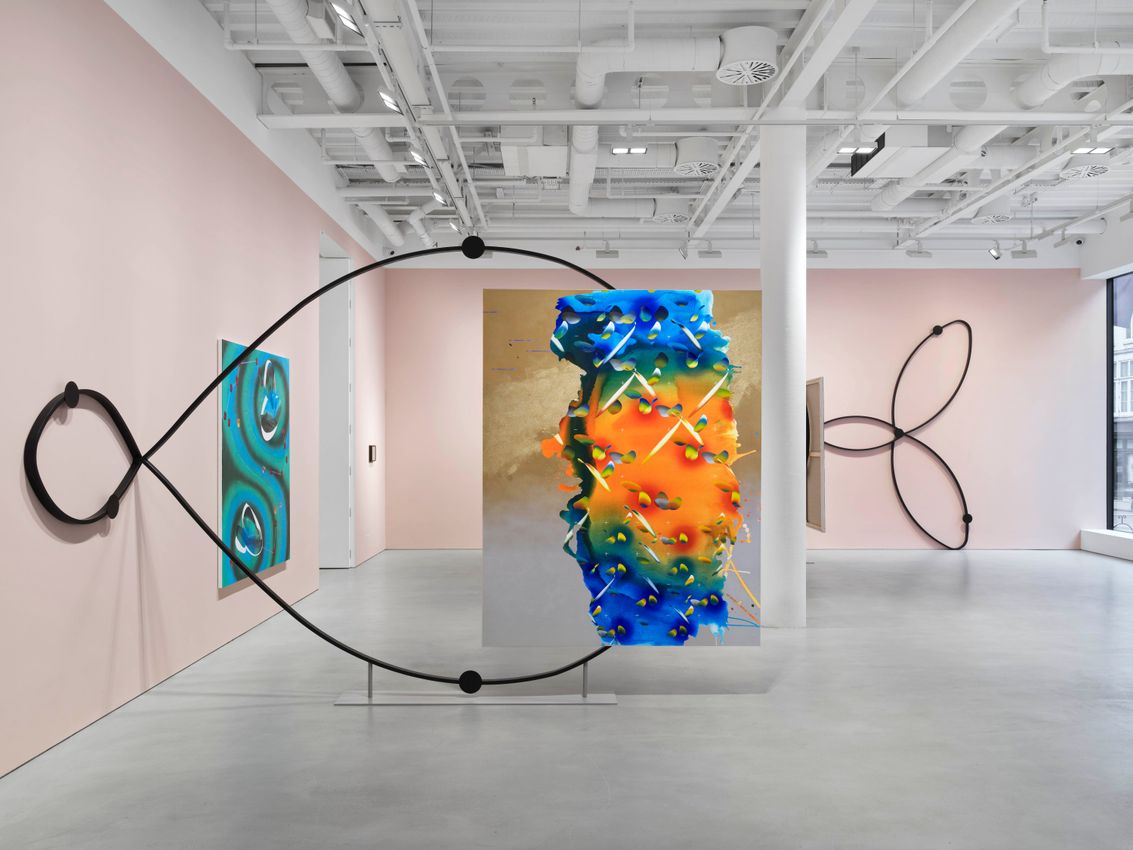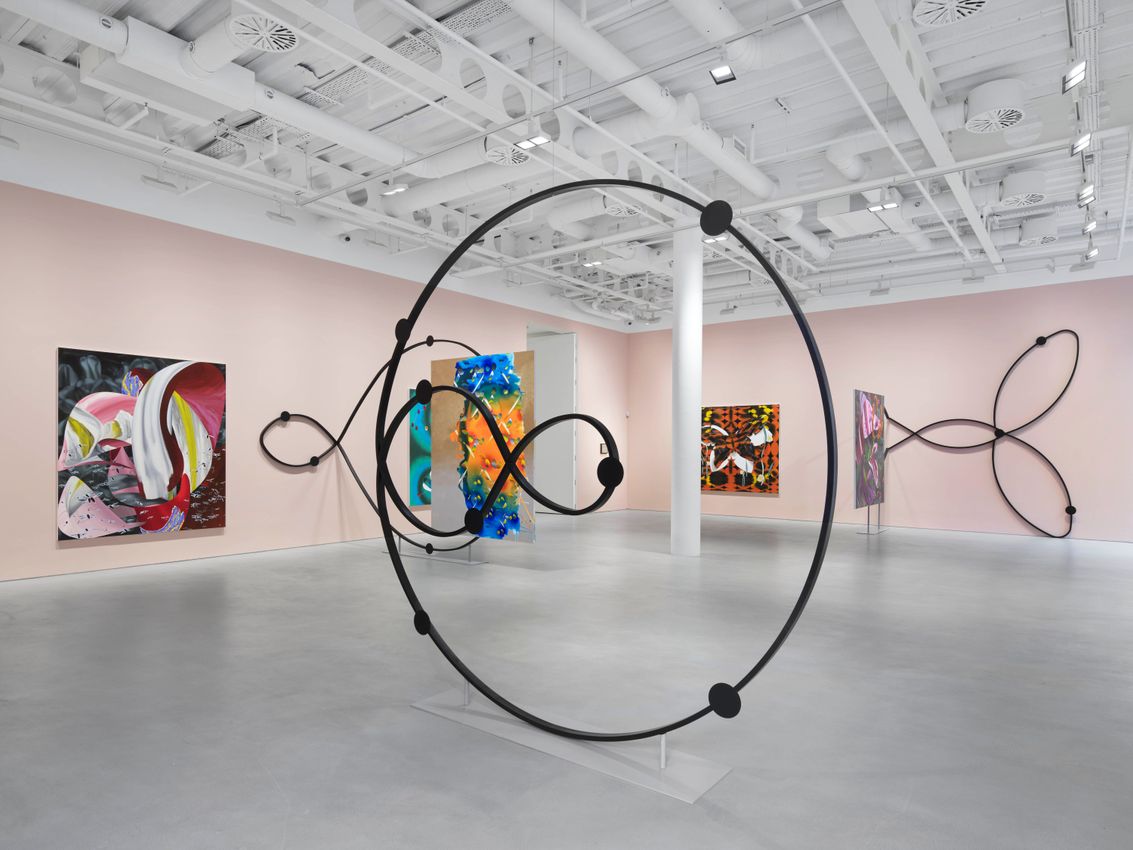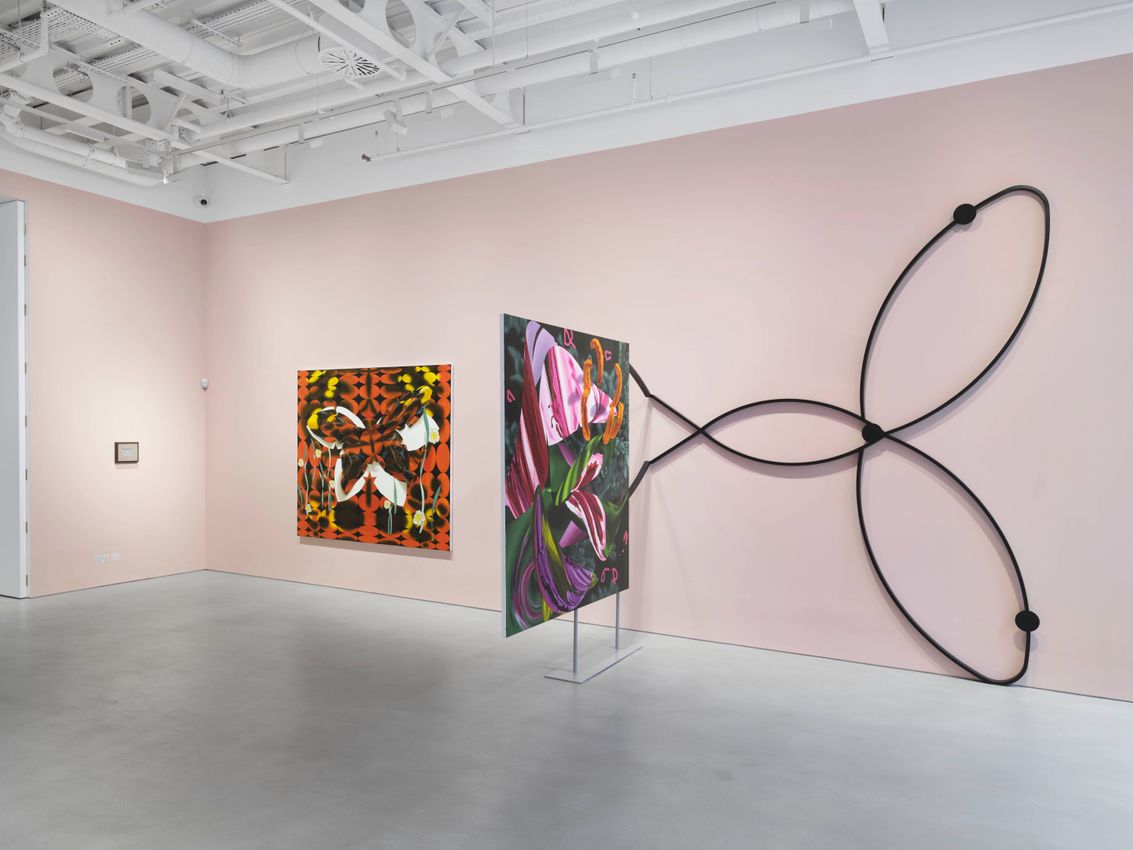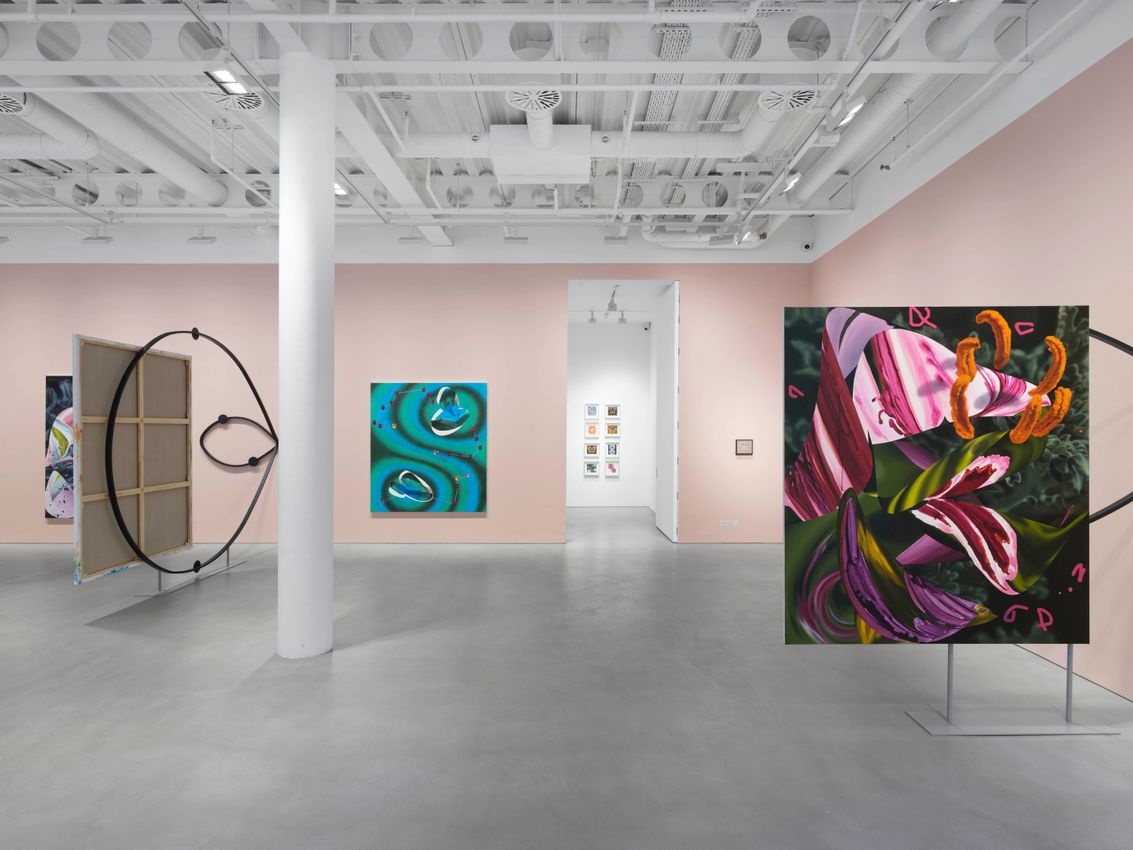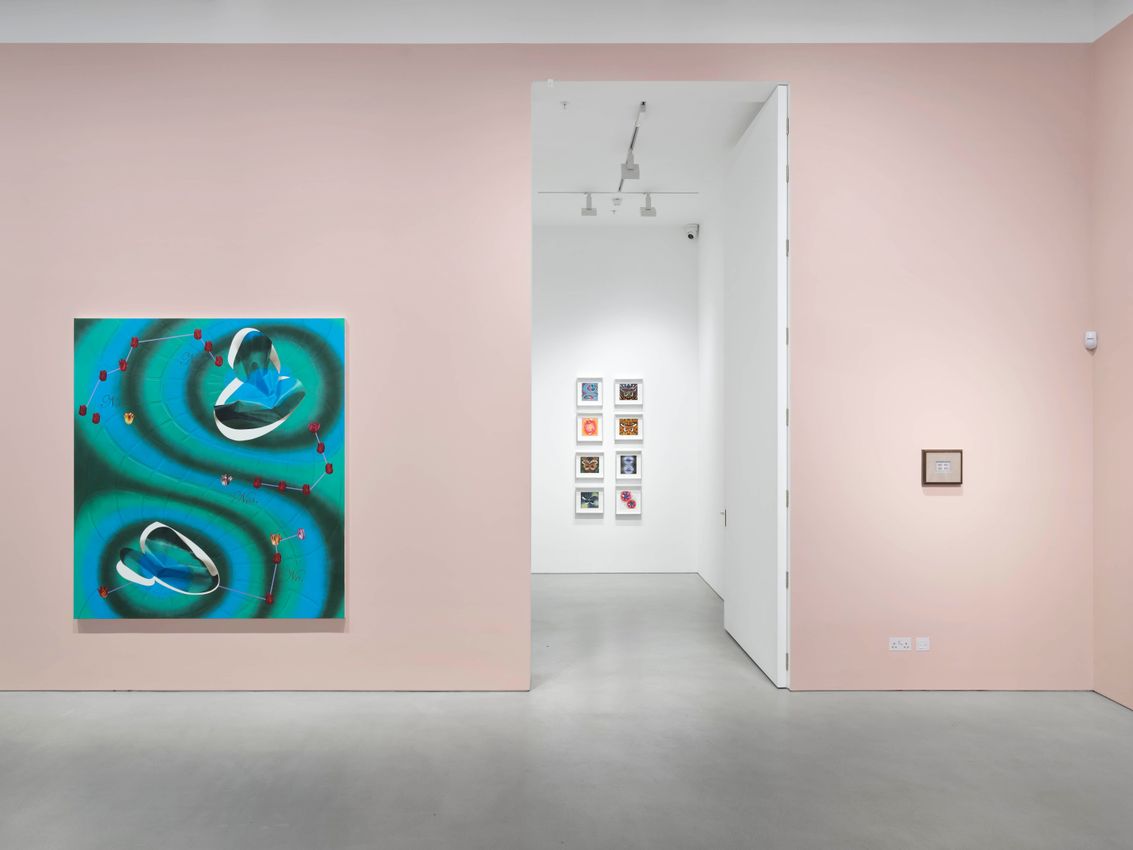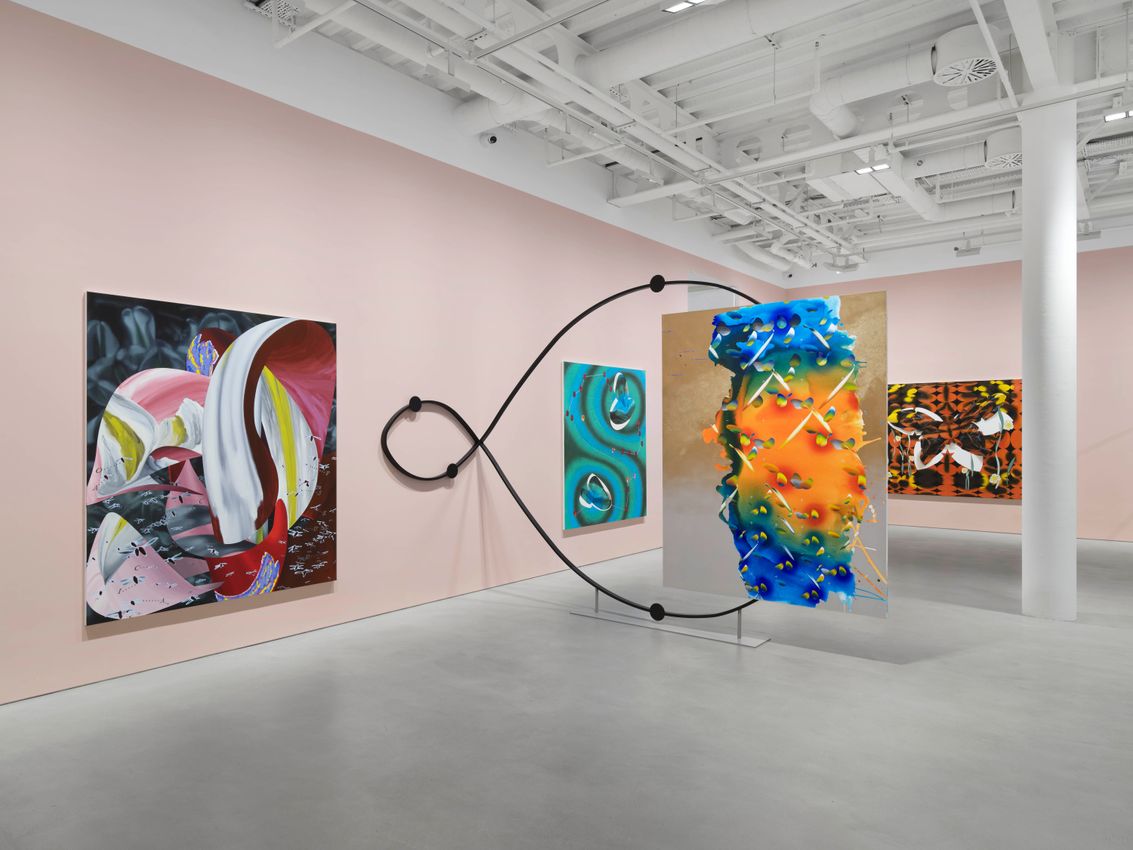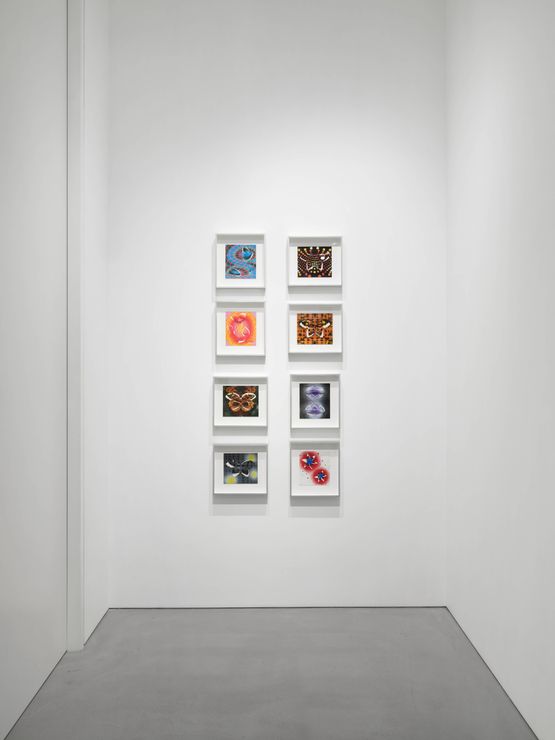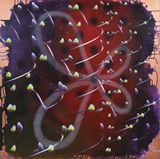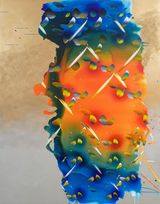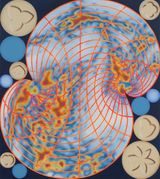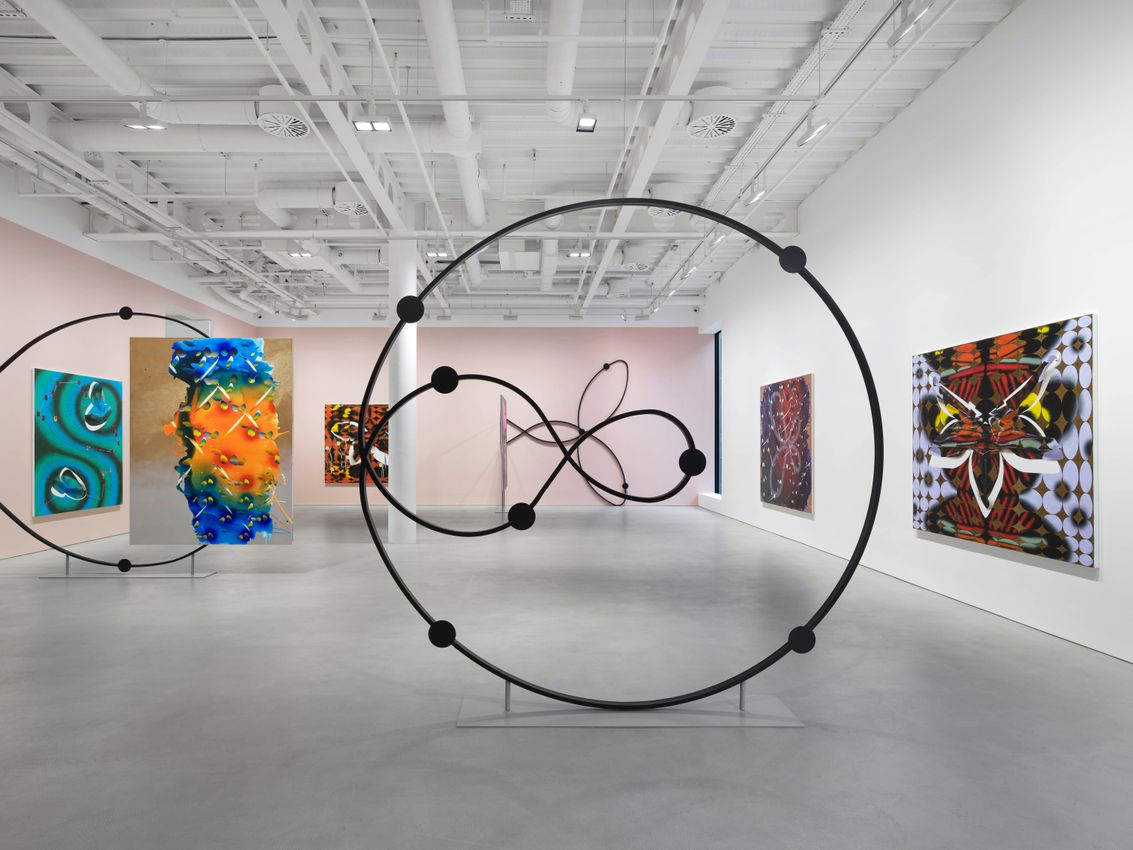
Pilar Corrias is pleased to present Flat Earth, Vivien Zhang’s second solo show with the gallery.
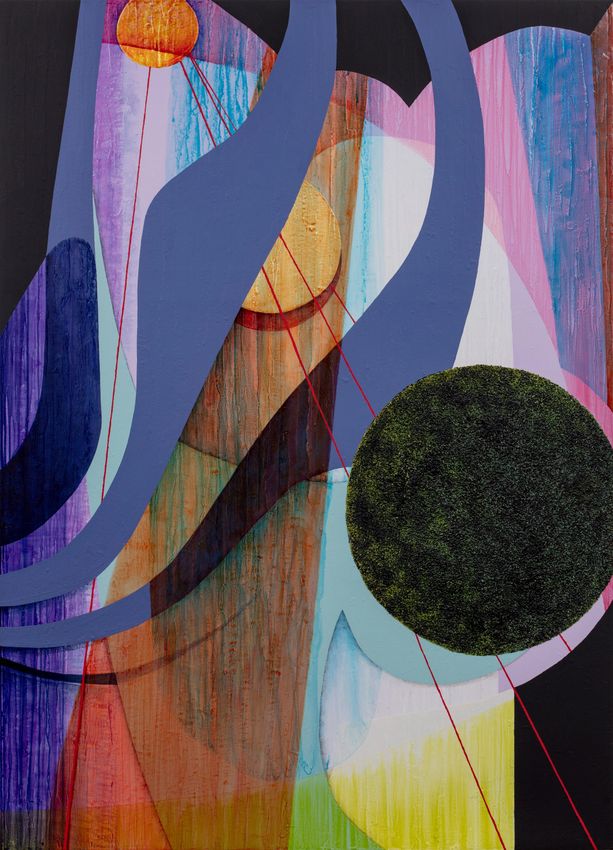
The exhibition marks a new development in the artist’s ongoing exploration of the flawed linguistic, visual and taxonomic systems that shape our view of a hyper-saturated world. In her new series of paintings, Zhang abstracts visual devices from a fbreadth of disciplines–from cartography, physics and botany, to the study of butterflies–to produce playful paintings that bring the sociopolitical implications of visual deception to the fore.
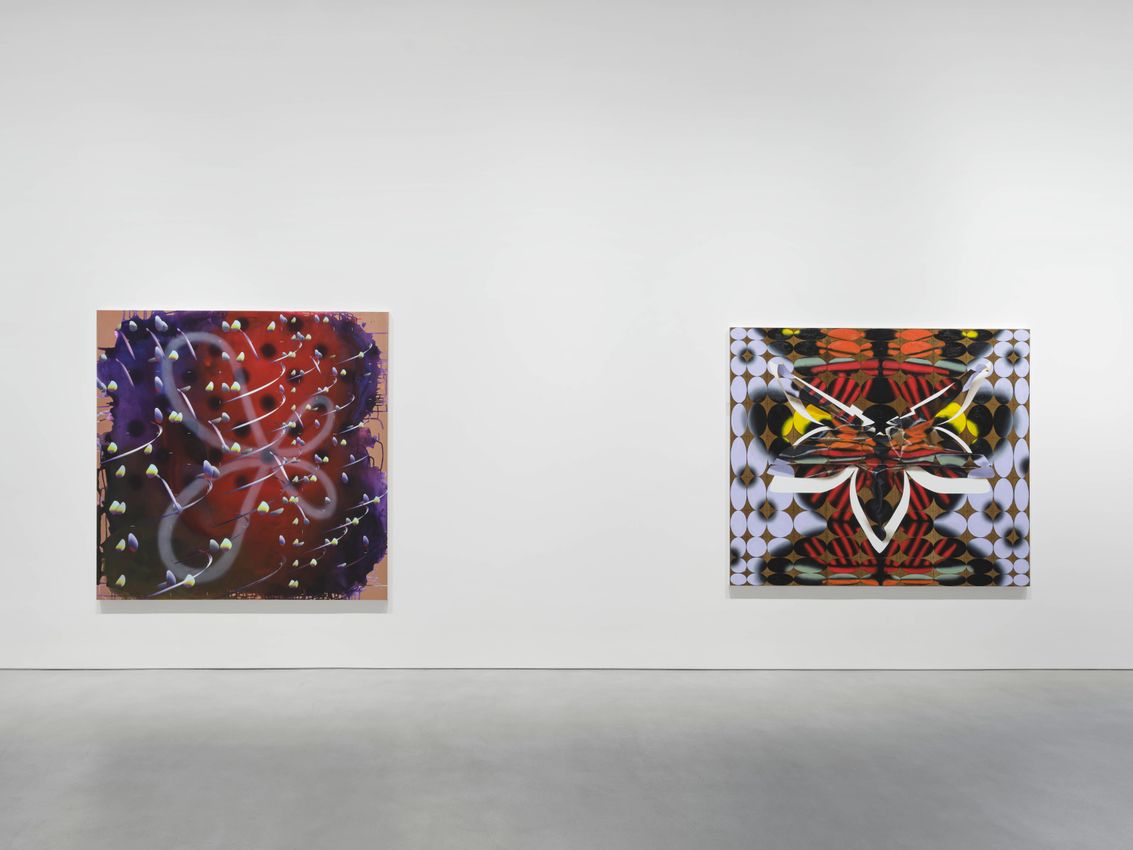
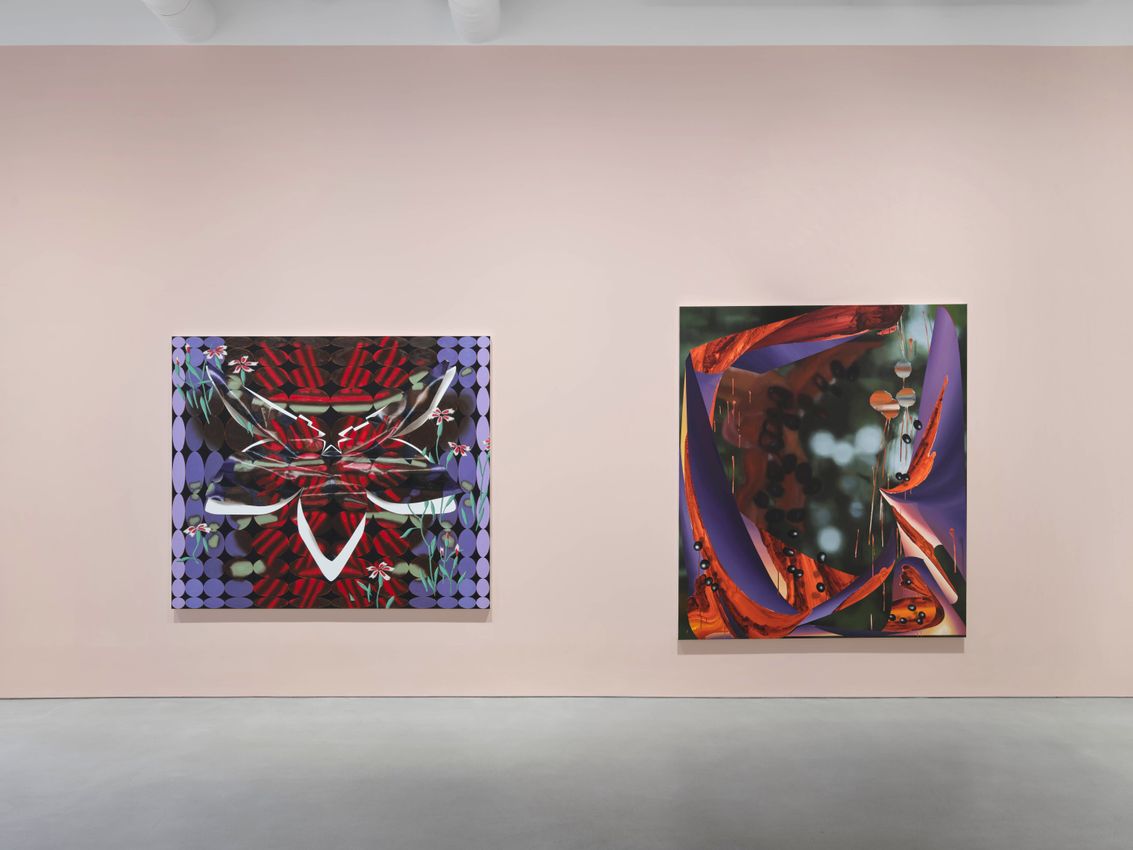
Reflecting on her own experiences of migration, Zhang uses the natural world as a prism through which the dictates of cultural assimilation can be examined. Several works depict the colourful patterns of butterflies that use forms of evolutionary mimicry. Such strategies include a harmless species mimicking a poisonous species that predators know to avoid, and two poisonous species developing similar warning signals for their mutual benefit. For Zhang, mimicry highlights the demands for authenticity and uniformity that the migrant must navigate as they settle among ‘legitimate’, local citizens. Alternatively, camouflage might be a subversive act of self-protection, permitting a person to exercise their right to disappear in a surveilled world.
In Zhang’s compositions, the insects’ patterns converge with the visual device known as the ‘Butterfly’ map projection (a method of representing the globe’s curved surface as a flat image). In contrast to the commonly-used Mercator projection, which has been criticised for distorting the relational size of geographical regions for geopolitical clout, the artist investigates alternative projections such as the Butterfly design, considered one of the more accurate in its scaling of land mass. The insects’ patterns mask the flattened globe, forming a common ‘skin’. Zhang uses trompe l’oeil techniques alongside moments of gestural mark-making, emphasising the ways in which digital imagery collapses our perception of depth and space.
Plant life is also put under the microscope, with Zhang producing studies of several species of flower that possess the prefix ‘pseudo-’ in their botanical names. Such plants are considered similar enough to another species to be lent its name, but lack legitimacy on their own terms. For the artist, this group of plants demonstrates the inherent limitations of language.
As our knowledge of the world and its parts continuously expands, the status quo becomes unfit for purpose. Categories must be revised and truths unlearnt. In her paintings, Zhang purposefully ruptures some of our inherited information systems, and through the fissure offers a new way of looking at what we thought we already knew.
Vivien Zhang’s paintings present a cultural and geographical fluidity which interrogates the palimpsestic nature of contemporary culture and the paradoxes of our information age. As a digital native, Zhang assumes the role a passive recipient in an ever-increasingly digitally mediated world, and makes apparent the fragmented and sporadic ways in which we consume information.
A respected voice in contemporary art discourse.
Focusing on ambitious storytelling and insightful art-world commentary. Ocula Magazine publishes in-depth interviews, critical essays and timely analysis on the artists, exhibitions and ideas driving the global art world.
Learn more about Ocula Magazine
Showcasing the best of the art world.
Ocula partners with galleries from around the world to highlight their artists, artworks and exhibitions. Gallery membership is by application and invitation, with each member vetted by an independent panel.
Learn more about Ocula Membership

Specialises in the sale of major artworks.
Led by a team with deep ties to the world’s leading auction houses, galleries and collectors. Ocula’s advisory team offers bespoke services to high-net-worth clients from around the world who are looking to acquire the best of contemporary and modern art.
Learn more about our team and services