



Press Release

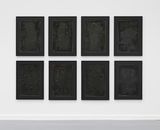
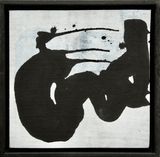
As a global and social notable figure, Yang Jiechang’s calligraphically paintings operate as a form of activism, addressing the relation between the Eastern and the Western world. With graceful and skillful executions, Yang Jiechang’s works deal with the divergent subjects of material and spiritual transcendence. Each work individually, reflects on nature’s texture, romanticisations and spirituality, following entirely layers of ink. Timeless ink paintings form are the central practice of his art, which is both thematically and aesthetically wide-ranged and includes drawings as well as video works, sculptures, installations and ceramics.Yang Jiechang’s aim is however to use art as a way of social and political action, to express sympathy and rebellion against any form of injustice. As a kind of participation, the artist explores traditional Chinese media and transfers it into a new modern way owing to the utilization of ink, mineral colour and calligraphy. By using the Chinese brush as a main tool, he takes part in the contemporary artworld. In addition, he adopts the performative expression of the traditional pattern, criticizing contemporary societies. The central concerns of Yang Jiechang’s artistic practice is to review power, wealth, violence and terror within new modern structures.

“Being an artist is above all an attitude based on experience and communication. Art is a message encouraging the individual to go beyond his/her limits, to break conventions and taboos.”

– Yang Jiechang

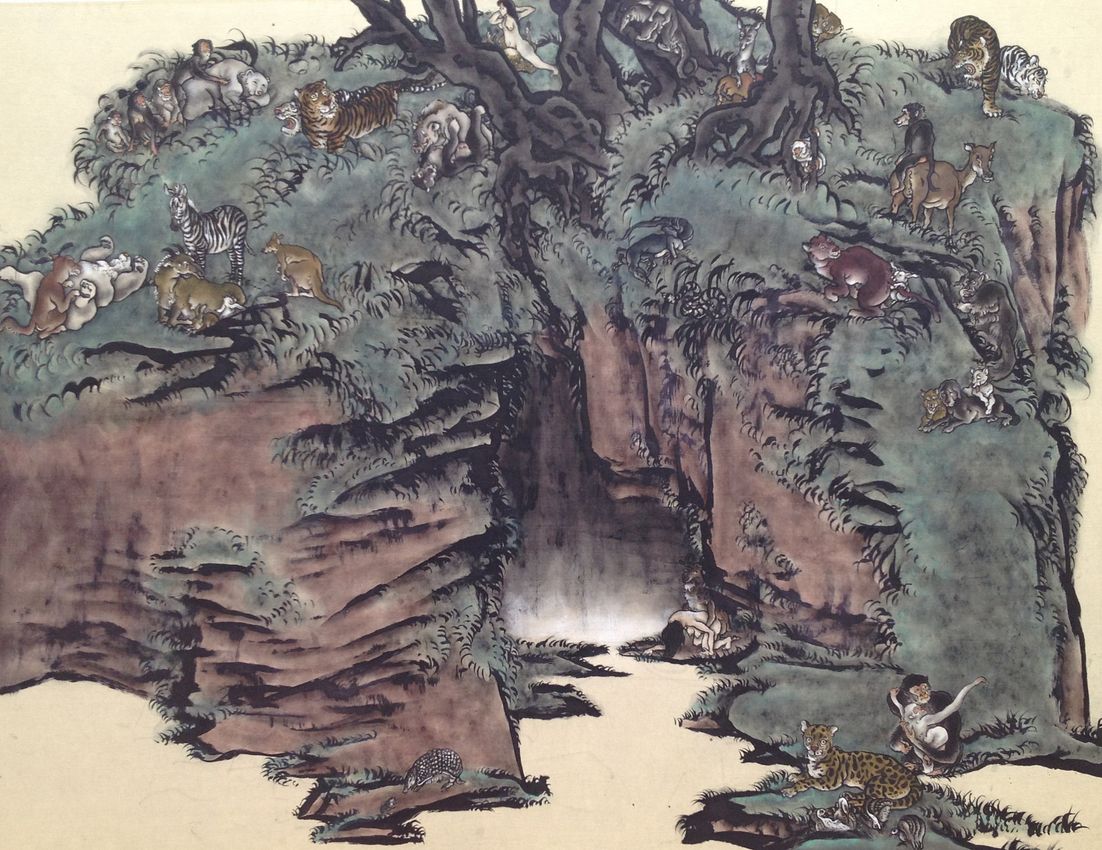
Yang Jiechang (b. 1956, based in Paris, FR and Heidelberg, DE), studied at the Guangzhou Academy of Fine Arts. After, he withdrew from art school to study with Buddhist and Daoist masters, who thaught him techniques which served as a base for his “Tales of the 11th Day” painting. The work depicts an imagined paradise roughly based on the setting for theDecameron, a work of fourteenth century Florentine literature by Giovanni Boccaccio. Whether copulating, embracing or simply observing living beings, it becomes clear that Yang’s imagined paradise is a non-coercive one—based on power dynamics, where violence is completely missing.

Yang, who belongs to the second generation of contemporary artists in China, grew up during the Cultural Revolution (1966–1976). The beginning of his artistic career coincides with China’s political opening in the late 1970s and early 1980s. From 1973 to 1978, he was trained at the ‚Folkart Institute’ in Foshan in paper mounting, calligraphy and traditional Chinese painting, which he further developed over several decades and redefined in the light of the present-day. The text refers in parts to the curator Heinz-Nobert Jocks, who was involved in Yang Jiechang’s exhibition in 2018.

Read More
About the Artist

Yang Jiechang grew up during the Cultural Revolution (1966–1976) and the beginning of his artistic career coincided with China’s political opening in the late 1970s and 1980s. His first appearance in Europe and the trigger for his emigration was his participation in the seminal exhibition Magiciens de la terre in the Centre Georges Pompidou in Paris in 1989. There he exhibited for the first time the series ‘Hundred Layers of Ink’, on which he worked for a decade and which made his renown.

View Artist Profile

Also Exhibiting at SETAREH

About the Gallery

Founded in 2013, SETAREH is a gallery with locations in Düsseldorf and Berlin that specializes in contemporary and modern art, showcasing a dynamic exhibition program and diverse presentations at leading art fairs.

View Gallery Profile
Address
Königsallee 27-31
Düsseldorf
Germany
(1)
Düsseldorf Königsallee 27-31
SETAREH
Königsallee 27-31, Düsseldorf, Germany
The art world in focus
