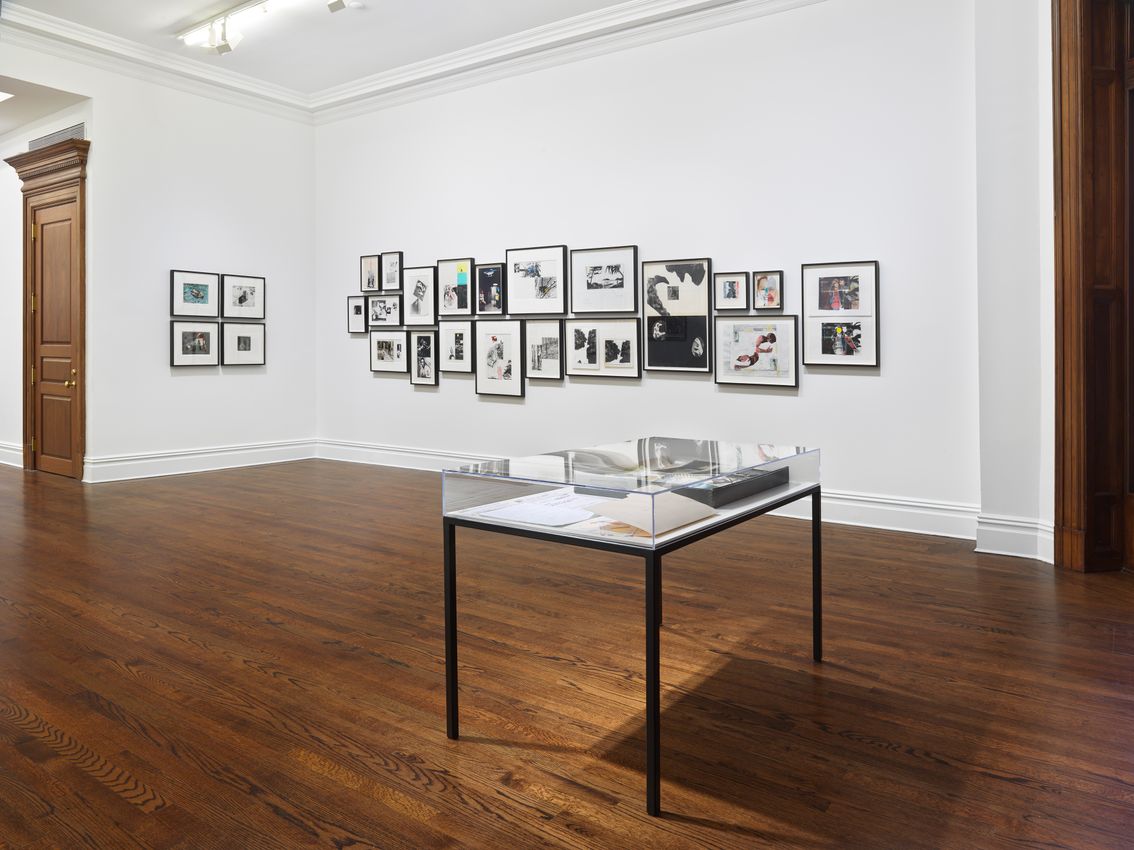
In his impressive and influential oeuvre spanning almost six decades, John Baldessari consistently exposed the complex and ambiguous narrative potential of images.
Drawing from a carefully collected pool of visual signs, he explored how meaning is not necessarily an inherent quality of an image, but is created, deconstructed or obscured when taken out of context, altered or combined with other images or words.Monika Sprüth and Philomene Magers, the global representatives of the Estate ofJohn Baldessari, are proud to present the first exhibition of the artist’s maquettes in over a decade. This will also be the inaugural exhibition at the gallery’s New York space, which opened this summer.
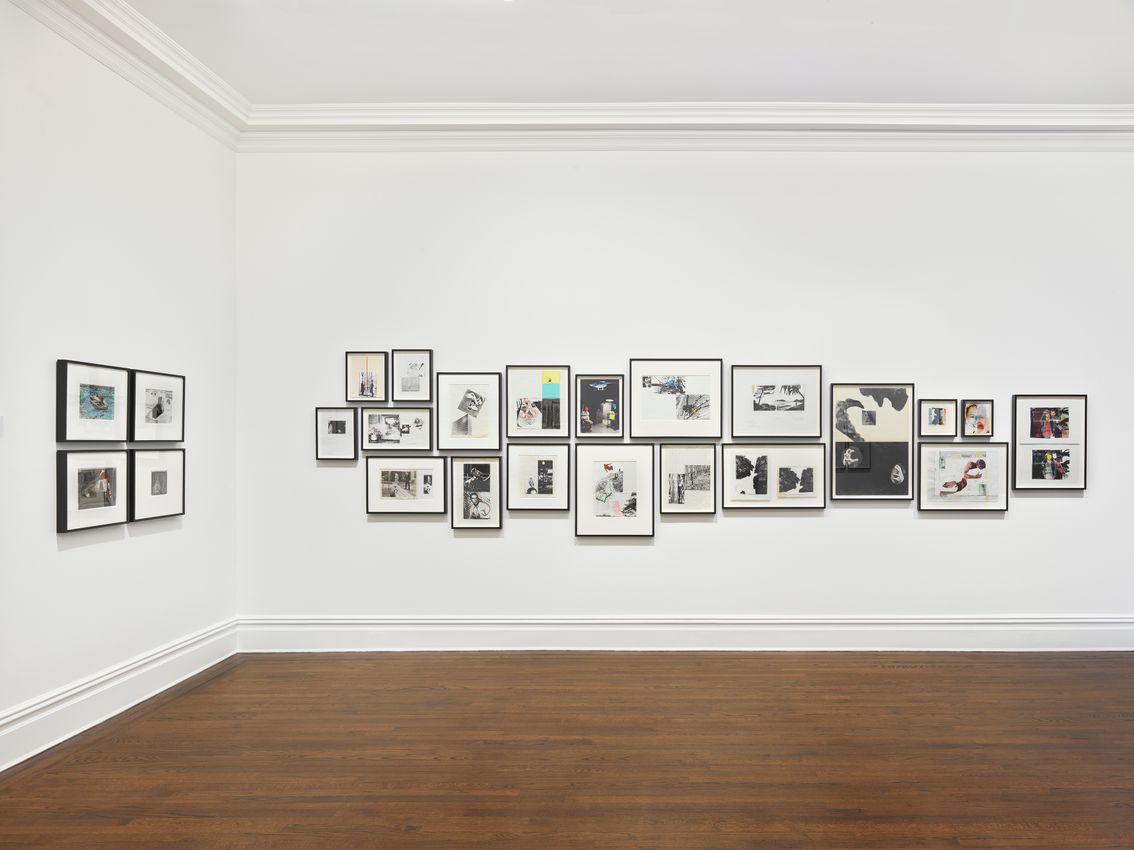
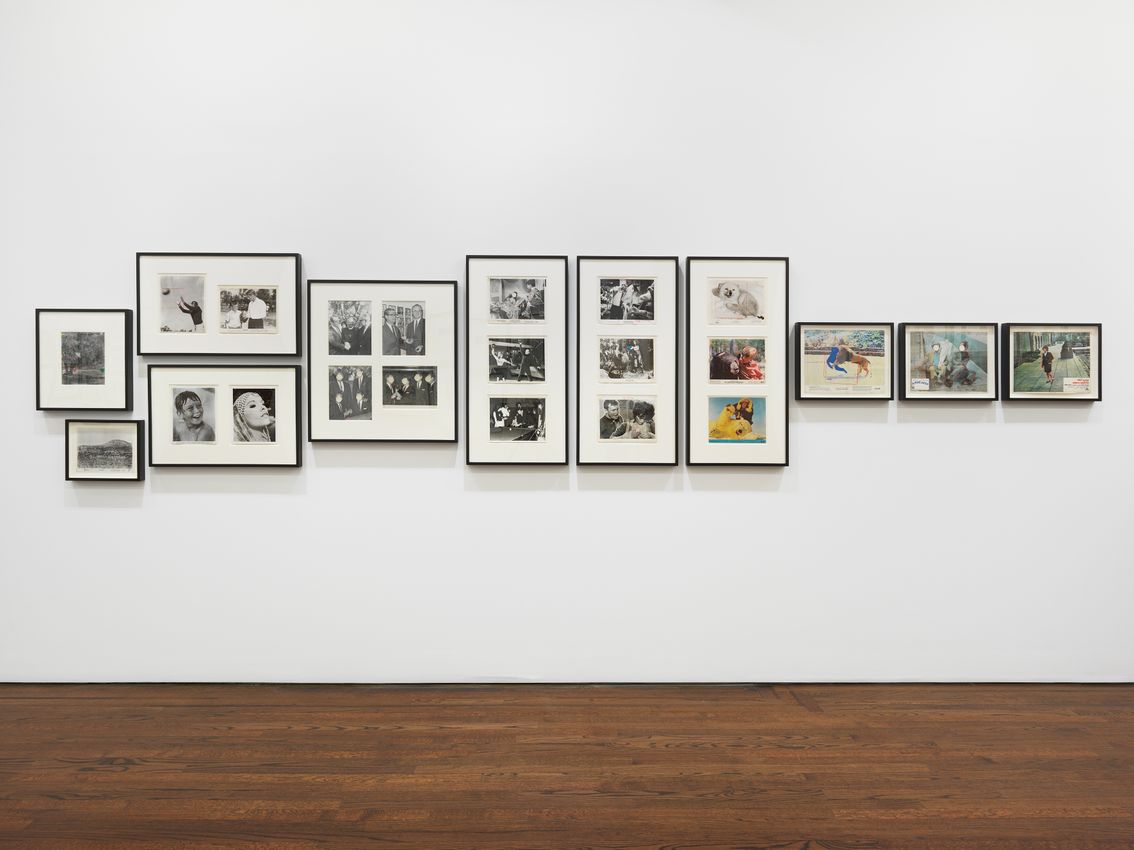
Curated by Nana Bahlmann and selected from a large body of rarely seen work, The Story Underneath assembles over seventy-five collages, photographs, film stills and drawings dating from the early 1980s to the early 2000s. The maquettes reflect how the artist anticipated the manifold ways in which we deal with and manipulate images today, long before Instagram or Pinterest came to dominate our visual environment.Reflecting the artist’s physical manipulations of his source material and the process of his pictorial reinventions, these works capture the heightened moment of transformation when commonplace images turn into artworks by Baldessari.
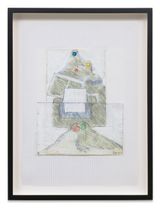
Created as preparatory works and sketches for his large-scale pieces, the artist’s maquettes grant extraordinary insight into his particular way of seeing and composing. Many of these works on paper reveal the original sources—film stills, lobby cards, found photographs—of the vast collection from which he drew inspiration, selected, extracted, removed, cut, reassembled and combined elements to create his works. Baldessari considered his maquettes to be artworks themselves, and they bear the traces of his hand as it marked, scribbled, crosshatched, cut out, copied, taped or stuck dots on these found images.
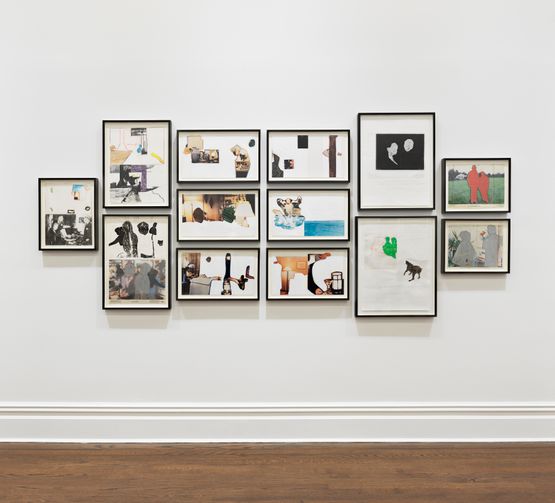
The Story Underneath presents several of the dominant formal interventions and artistic strategies that Baldessari employed throughout his career. Some maquettes in the exhibition consist of singular film stills and lobby cards, drawn on directly with crayon, outlining elements which were to be cropped and obscured with paint in the finished works. Others illuminate Baldessari’s art of juxtaposition and combination of images. Mostly assembled from photocopies of the photographic sources, these maquettes reveal the copy machine as an essential tool in Baldessari’s practice, easily replicated, replaced or taped onto each other to maximise compositional possibilities.
A final section of the exhibition examines another cornerstone in Baldessari’s practice:the art of removal. Covering faces with dots or painting over whole figures, he made subjects interchangeable and directed attention toward the surrounding contexts in which they appear. As the artist stated: ‘What I’m looking at in a photograph is usually the stuff that’s marginal... It’s the stuff you see out of the corner of your eye, rather than what you’d normally focus on.’ As The Story Underneath makes clear, the maquettes were a vital ground for Baldessari, where he could experiment with the images at hand, test the limits of narrative, and explore various alternatives on the way to his final celebrated works of art.
On the occasion of the exhibition, Sprüth Magers will publish a catalogue with full color illustrations and an essay by Nana Bahlmann.
John Baldessari (1931–2020) lived and worked in Venice, California. Selected solo exhibitions include Moderna Museet, Stockholm (2020), Laguna Art Museum, LagunaBeach (2019), Museo Jumex, Mexico City (2017), Städel Museum, Frankfurt(2015), Garage Center for Contemporary Culture, Moscow (2013), Fondazione Prada,Milan (2010), Stedelijk Museum, Amsterdam (2011) and Tate Modern, London(2009), which traveled to Museum of Contemporary Art, Barcelona (2010), LosAngeles County Museum of Art (2010), and Metropolitan Museum of Art, New York (2010–2-11). Selected group exhibitions include the 53rd Venice Biennial (2009), Whitney Biennial (2009, 1983), Documenta VII (1982), Documenta V (1972) and the CarnegieInternational (1985–86).
John Baldessari (1932—2020) was a pioneer of American conceptual art. Through his rejection of traditional notions and boundaries, and his expansion of our understanding of what art can be, he became one of the best-known artists of our time. Baldessari was based in Los Angeles and profoundly impacted several generations of visual artists—from David Salle and Jack Goldstein to Cindy Sherman and Barbara Kruger. He has been associated with the gallery since 1995.


A respected voice in contemporary art discourse.
Focusing on ambitious storytelling and insightful art-world commentary. Ocula Magazine publishes in-depth interviews, critical essays and timely analysis on the artists, exhibitions and ideas driving the global art world.
Learn more about Ocula Magazine
Showcasing the best of the art world.
Ocula partners with galleries from around the world to highlight their artists, artworks and exhibitions. Gallery membership is by application and invitation, with each member vetted by an independent panel.
Learn more about Ocula Membership

Specialises in the sale of major artworks.
Led by a team with deep ties to the world’s leading auction houses, galleries and collectors. Ocula’s advisory team offers bespoke services to high-net-worth clients from around the world who are looking to acquire the best of contemporary and modern art.
Learn more about our team and services