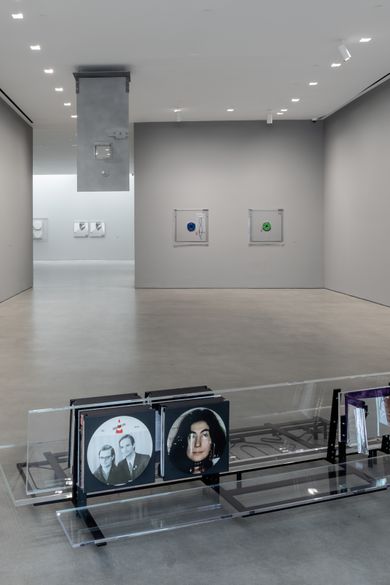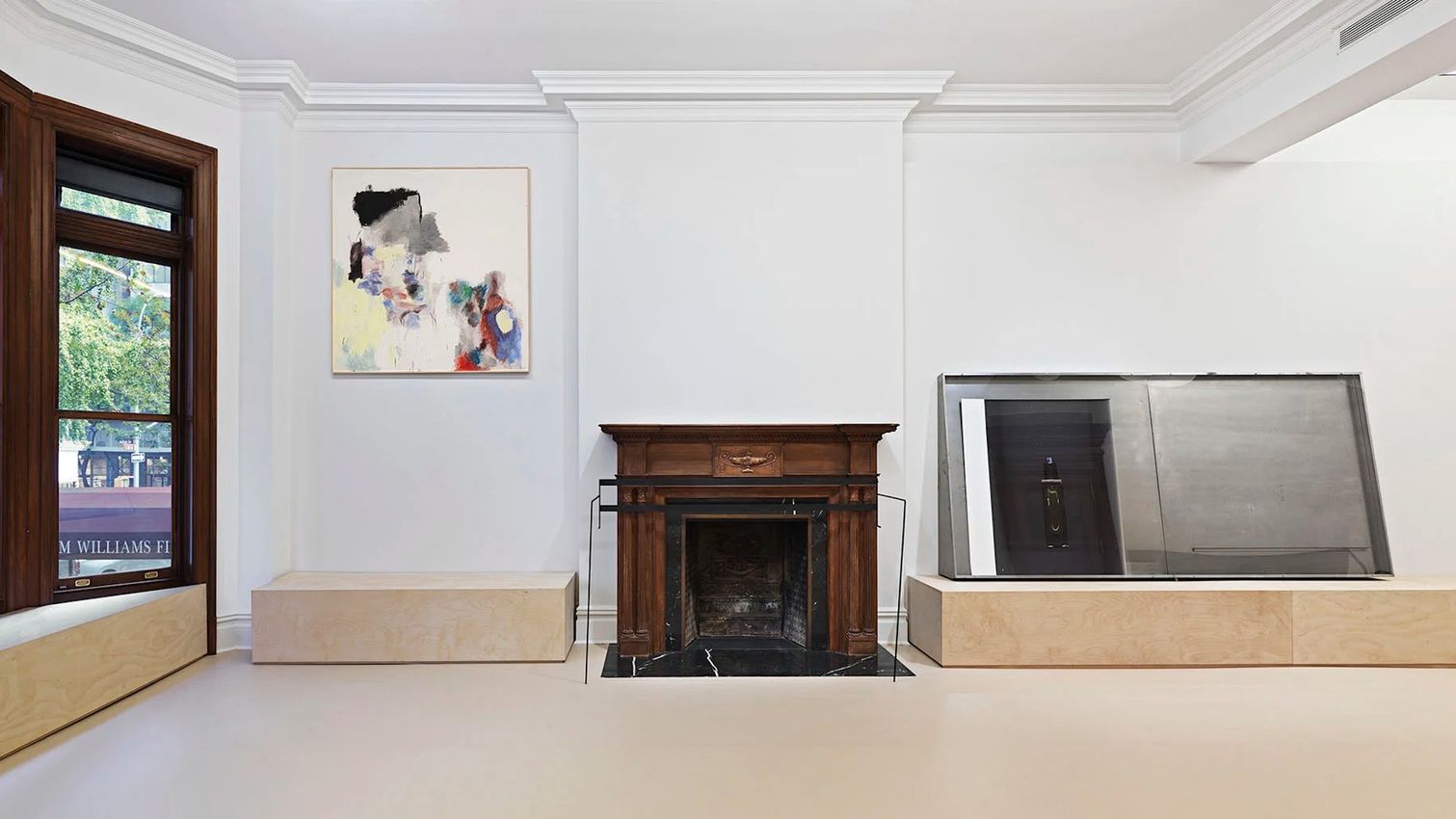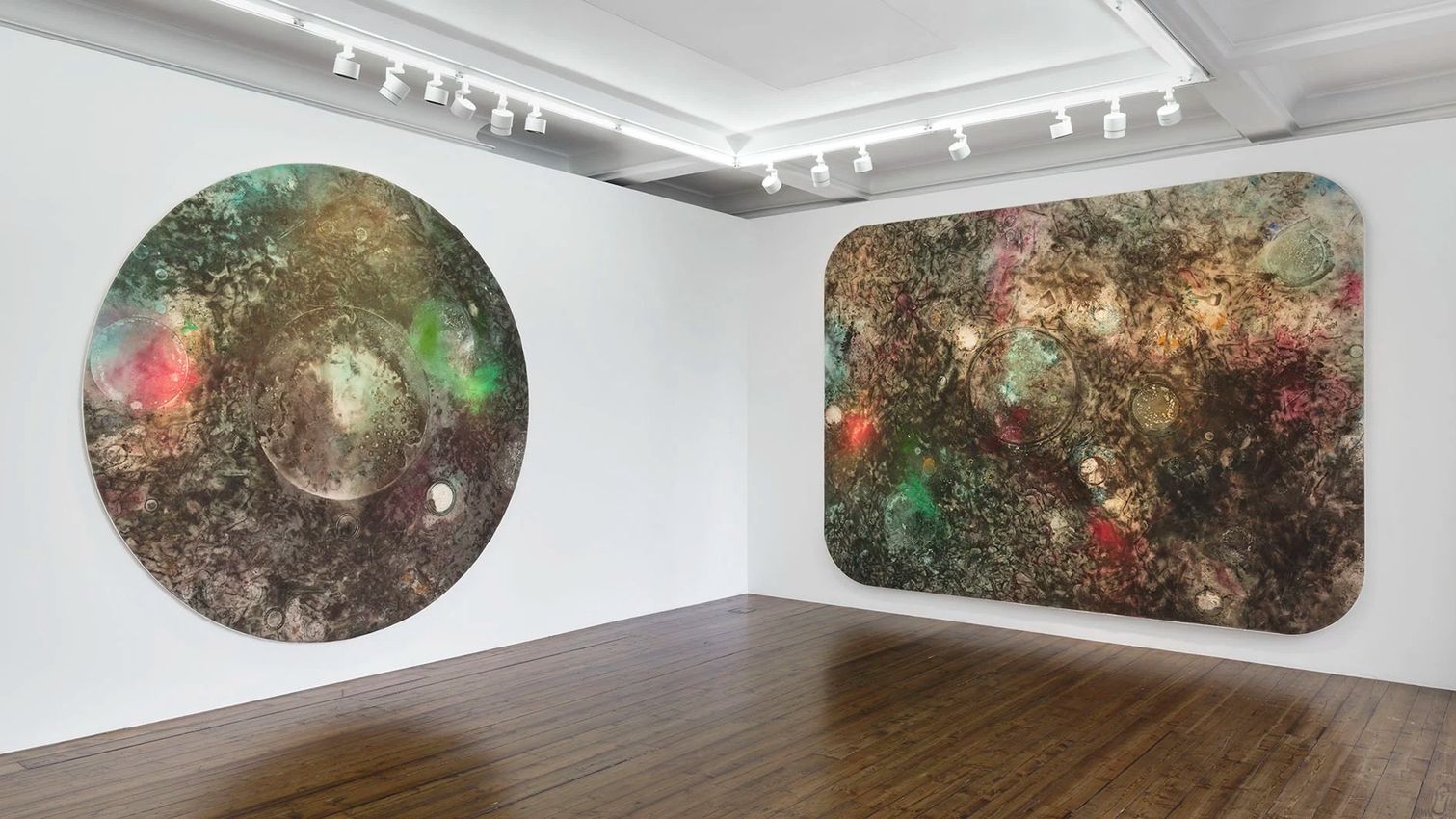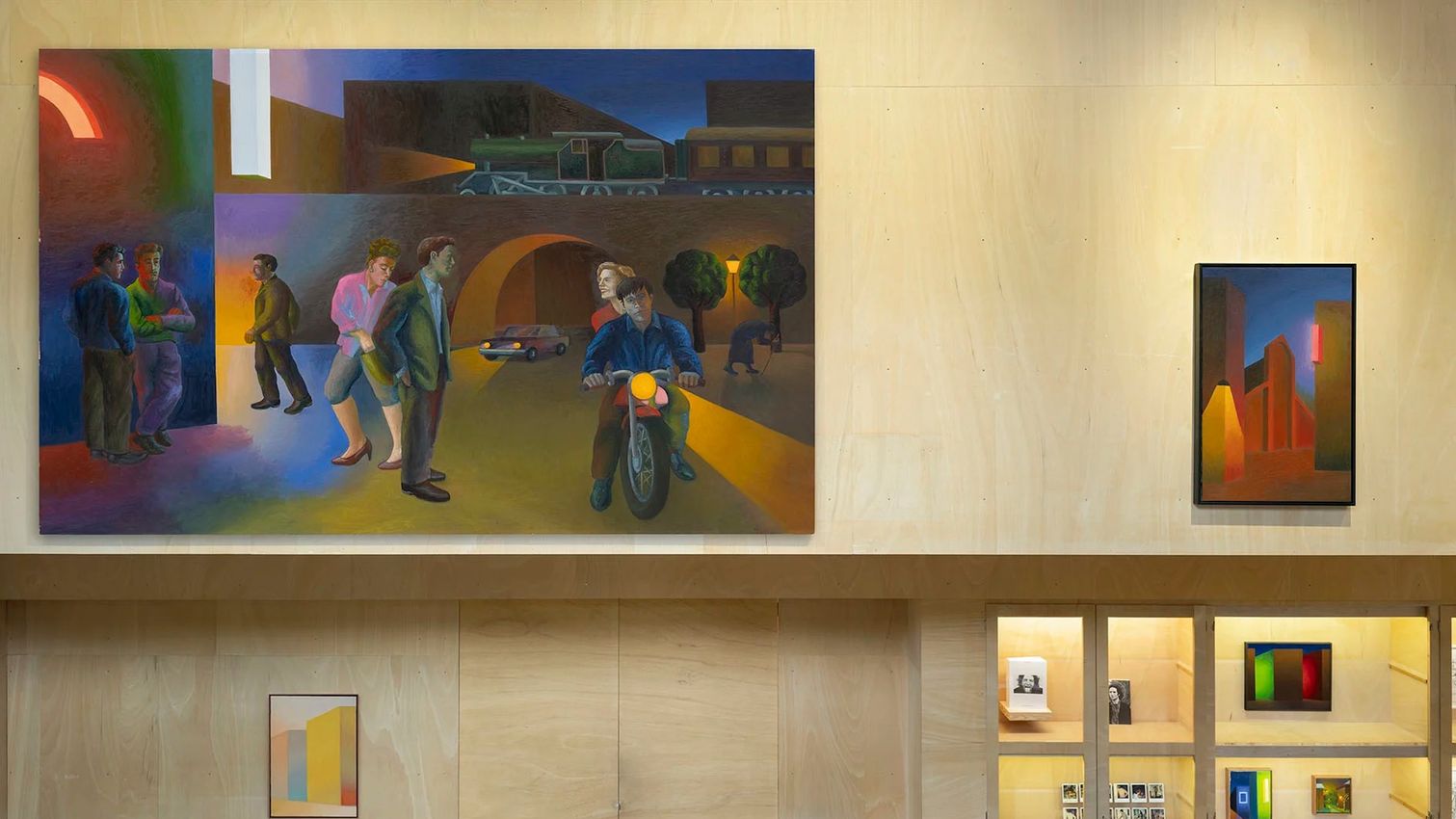




Rosemarie Trockel’s works blend conceptual challenges and material properties, notions of femininity and masculinity, everyday objects and art history. The exhibition Material navigates between theoretical concepts and physical experiences, with the artist’s works confronting prevailing ideas, often revisiting and reevaluating her own work in the process.
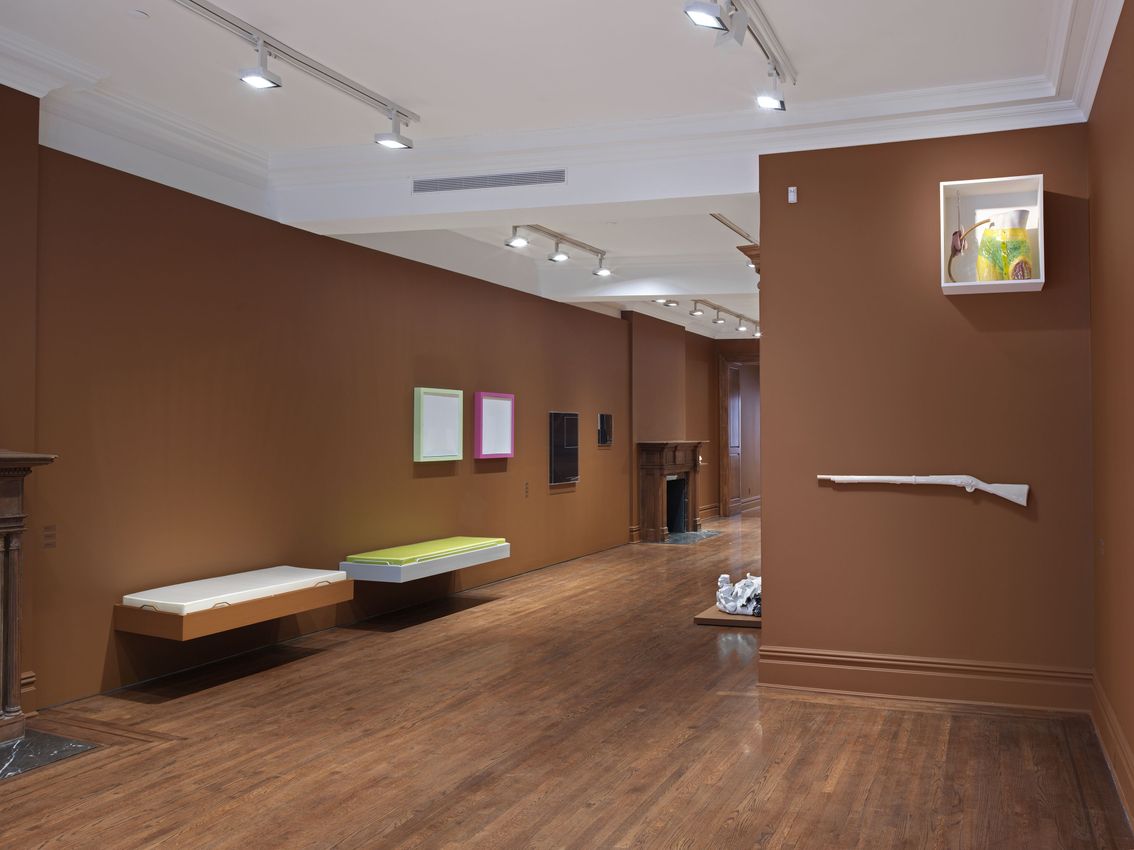
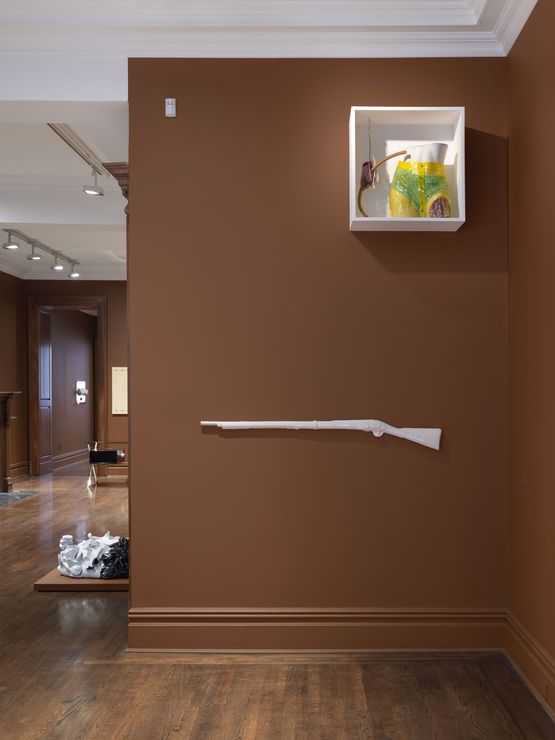
Trockel’s two-part exhibition—opening concurrently at Sprüth Magers and Gladstone in New York—continues to develop motifs and themes from the artist’s multilayered œuvre. The new works, created especially for The Kiss at Gladstone, are connected through a network of cross-references to both recent pieces and rarely shown historical works in Material at Sprüth Magers.
The sculpture Lol Stein (ca. 1990), named after Marguerite Duras’ novel The Ravishing of Lol Stein, serves as a tribute to one of the most important French literary figures. Duras’ story challenges patriarchal discourse by depicting a woman who confronts her psychological wounds through unconventional means, ultimately exploring her sexuality in a transgressive manner. Trockel’s sculpture comprises eleven small sponge rubber objects, lightly coated with paint in certain areas. Their diverse structures and forms, ranging from rounded mushroom-like shapes to those that resemble miniature cliffs, are presented like geological findings in a slender vitrine. These abstract visualizations of the novel’s themes play with malleability and the duality between softness and solidity, concepts underscored by the work’s title, as Stein not only refers to Duras’ protagonist but is also German for “stone.” The foam’s adaptability allows Trockel to create forms that evoke both domestic environments and conceptual ideas about identity, trauma and the female body.
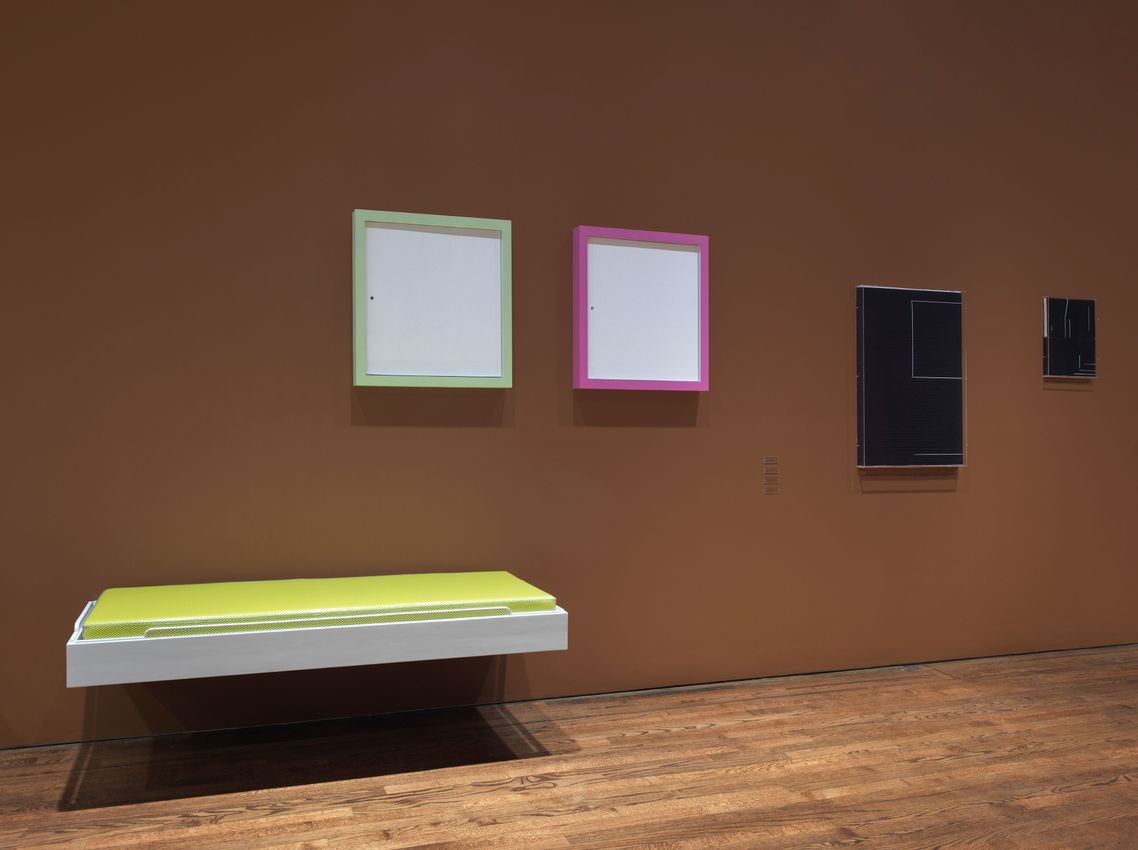
Material showcases a selection of tension-filled pieces rich in binary oppositions, inviting exploration of contrasting concepts such as firmness versus softness, external versus internal, opaque versus transparent, humanity versus animality, and nature versus culture.
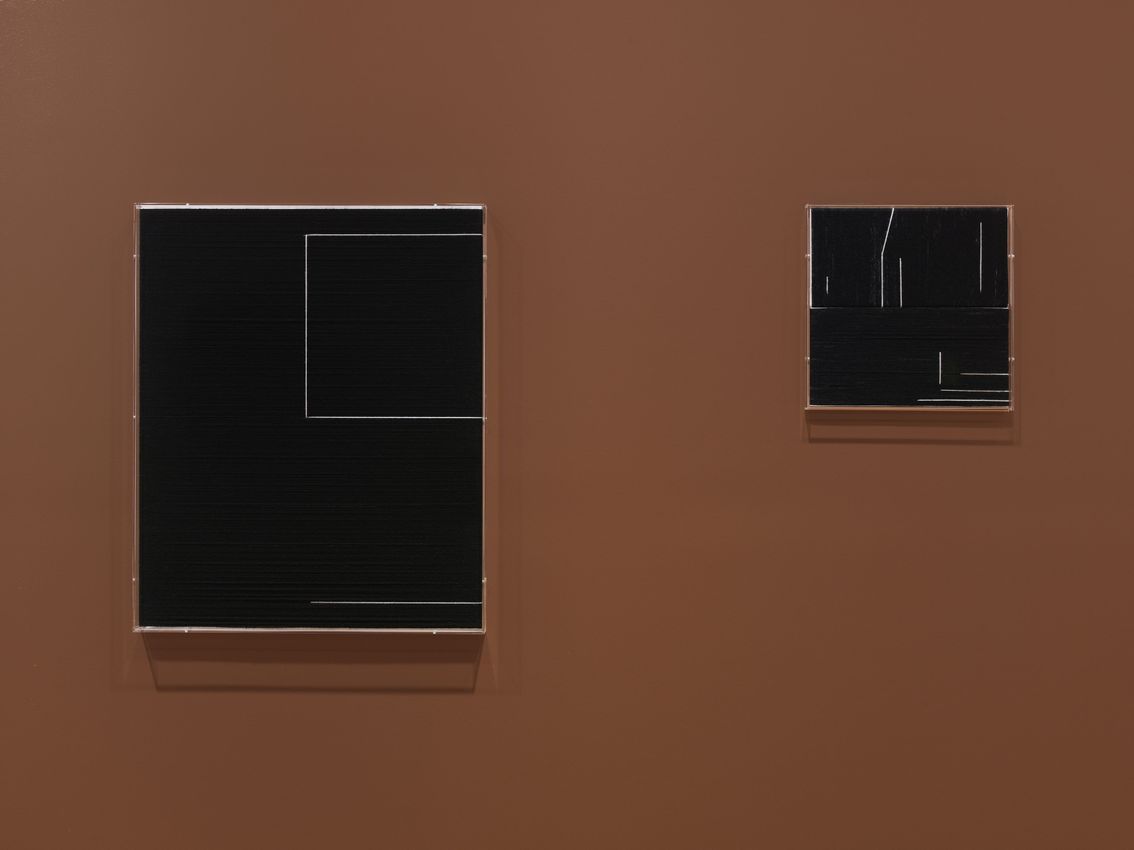
The series of plexiglass wallworks Less-than (2017/24) recalls the punch cards that once stored fabric designs for the semi-automated loom. Referring to this eighteenth-century invention that marked a pivotal moment in the history of computing hardware, the work engages with themes of feminism, artistic production, craft, industrial production and originality. These works relate to the influential “knitting paintings,” with which Trockel first garnered attention in the 1980s. Made from wool and machine-produced, these pieces engage with notions surrounding masculinity and manufacturing, yet are deeply intertwined with the materials associated with women’s labor and the techniques of traditionally feminine handicrafts.
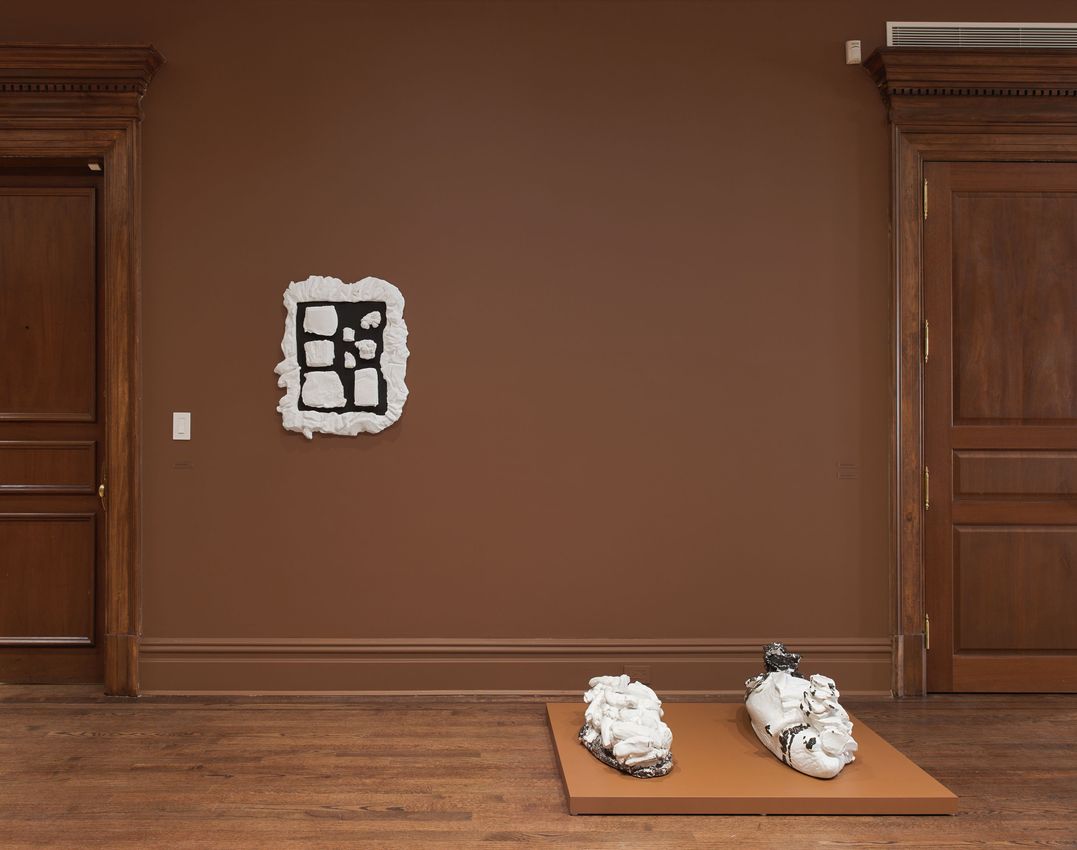
Many of Trockel’s sculptural works play on dichotomies and juxtapose materials and ideas: casts of cuts of meat, painted white or black and mounted on curved clear plexiglass panels, call to mind the complex interplay of disgust and pleasure, question notions of value and objectification, and vividly evoke brutality.

Rosemarie Trockel has always used a diverse range of genres and media in her work, from sculpture and drawing to collage, photography, video, and installation. She also uses a variety of materials, not least wool, with all its socially charged meanings. Her deep engagement and experiments with wool over many years have allowed Trockel to attain great freedom in her handling of the medium.

A respected voice in contemporary art discourse.
Focusing on ambitious storytelling and insightful art-world commentary. Ocula Magazine publishes in-depth interviews, critical essays and timely analysis on the artists, exhibitions and ideas driving the global art world.
Learn more about Ocula Magazine
Showcasing the best of the art world.
Ocula partners with galleries from around the world to highlight their artists, artworks and exhibitions. Gallery membership is by application and invitation, with each member vetted by an independent panel.
Learn more about Ocula Membership

Specialises in the sale of major artworks.
Led by a team with deep ties to the world’s leading auction houses, galleries and collectors. Ocula’s advisory team offers bespoke services to high-net-worth clients from around the world who are looking to acquire the best of contemporary and modern art.
Learn more about our team and services