



Press Release

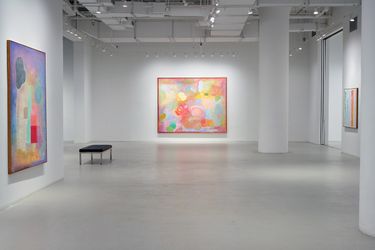
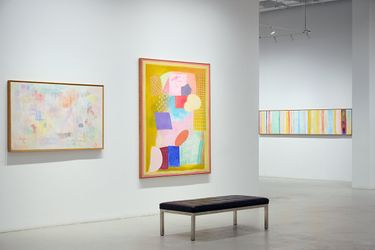
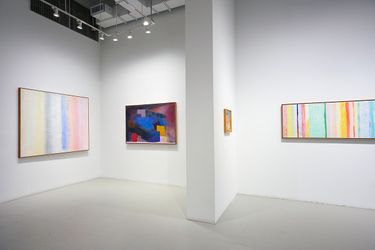
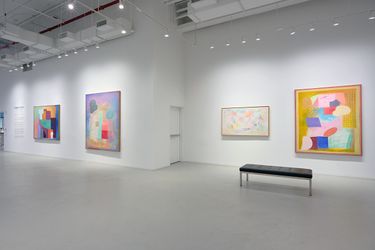
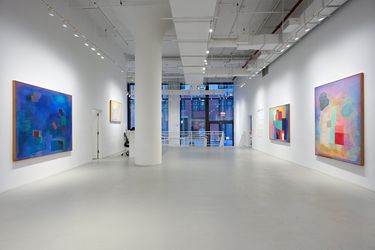
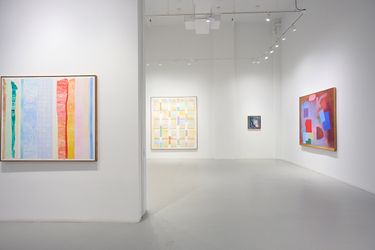
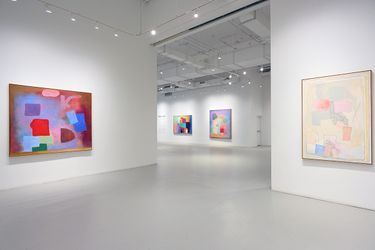
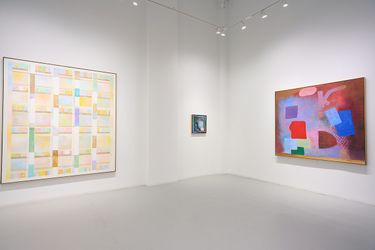
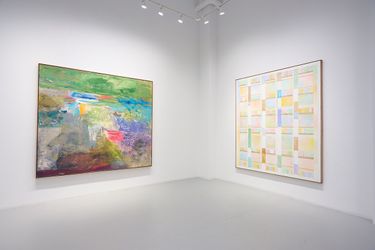
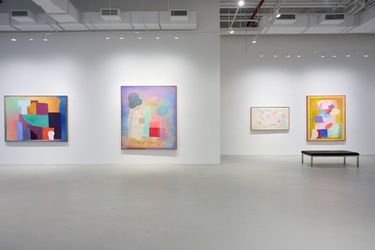
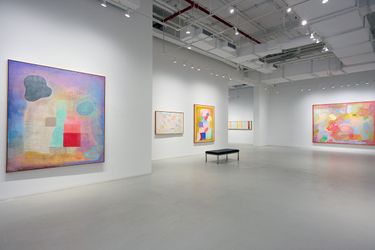
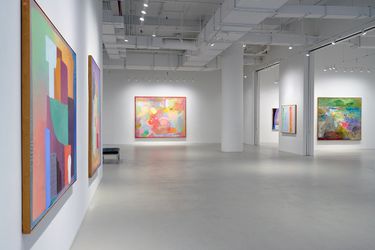
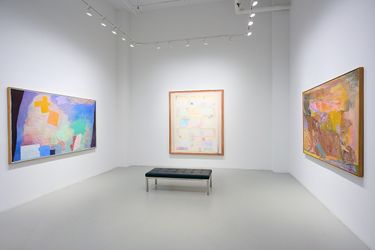
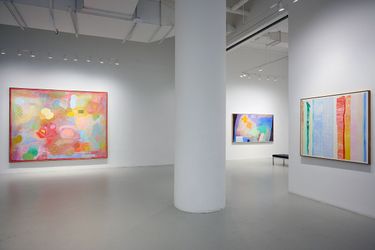
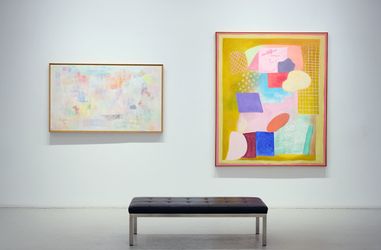
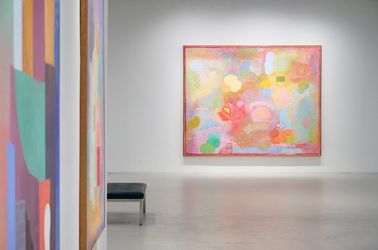
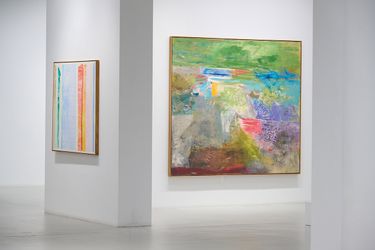
Sundaram Tagore Gallery is pleased to present a comprehensive exhibition of paintings by renowned American artist Robert Natkin (1930–2010). The exhibition, which brings together select works spanning five decades, is a rare opportunity to explore anew the range and depth of this prolific artist’s creative output. This is the gallery’s first solo presentation of Natkin’s work since assuming exclusive global representation of the artist’s estate in 2023.

Robert Natkin is internationally recognised as an unsurpassed colourist and for the beauty of his large-scale abstract canvases. He was represented by blue-chip New York gallerists Elinor Poindexter in the 1960s and André Emmerich in the 1970s. Today, his work is in the collections of New York’s Metropolitan Museum of Art, Museum of Modern Art, Guggenheim Museum and Whitney Museum of American Art, among others.

Born to a poor and unhappy Russian-Jewish family in Chicago during the Great Depression, Natkin would transcend his traumatic upbringing, often finding refuge in the colour and splendour of the movies, charting an industrious course through public art education and briefly co-founding a gallery, to become one of the foremost American abstract colourist painters of the 1960s, ‘70s and ‘80s. His paintings are life-affirming, sensual celebrations of visual delight, of glorious Hollywood Technicolor, of fascinating surface effects, enticing layers, and sunny outlooks.

Natkin’s painterly journey can be seen through its distinct and loosely phased series as he accumulated years of psychotherapy and read and looked voraciously. They reveal his drive for redemption not just through introspection, but by consistently forging new stylistic syntheses.

FEATURED SERIES****

The vigorous, gestural brushwork of Natkin’s early abstractions reflects the seismic impact of the Abstract Expressionists, including Willem de Kooning, and Jackson Pollock, whose work he encountered in an article about Abstract Expressionism in Life magazine in 1949. Natkin also found inspiration in French artists Matisse and Bonnard, among others in the collections of the Art Institute of Chicago where he studied from 1948–1952.

In 1957, Natkin married the painter Judith Dolnick and together they founded the Wells Street Gallery in downtown Chicago, exhibiting cooperatively with a group of young contemporaries who similarly explored free-form abstraction, including the sculptor John Chamberlain, Ann Mattingly, Gerald van de Wiele and friend Ernest Dieringer. Wells Street Gallery made its cultural mark but was commercially unsuccessful, closing two years later, whereupon Natkin and Dolnick moved to New York.

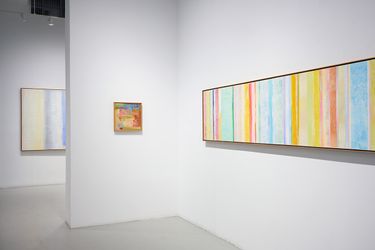
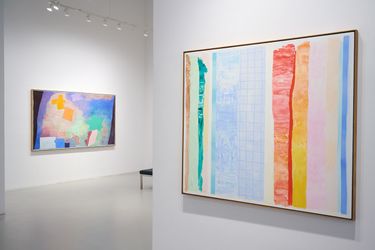
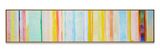
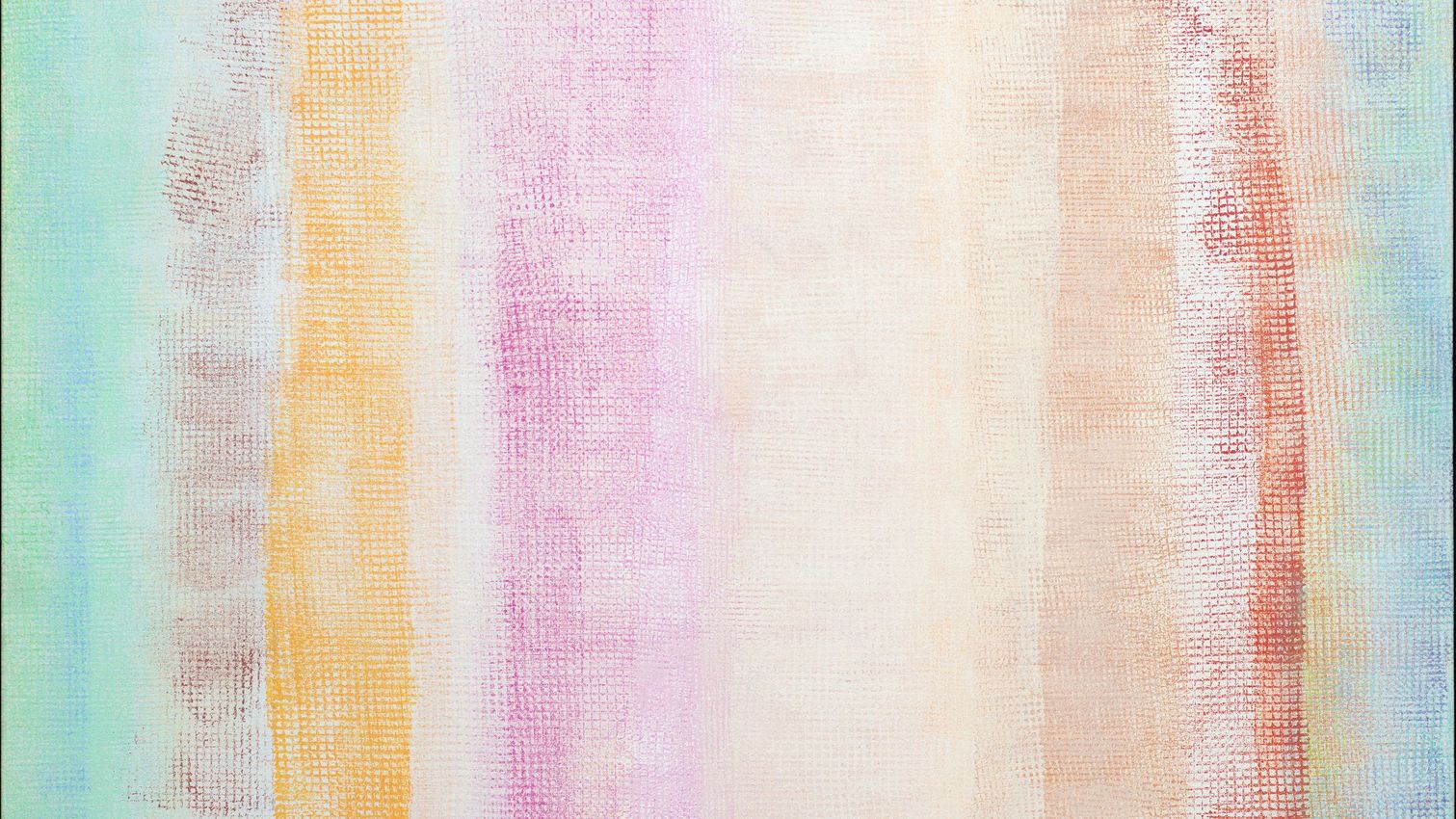
In New York, Natkin’s vigorously abstract paintings took on more rectilinear qualities, decisively so with his Apollo series, characterised by loose vertical bands of colour. The series began in the early 1960s under the inspiration of Rilke’s poem Archaic Torso of Apollo, based on a sculptural fragment in the Louvre, with its final imperative: ‘You have to change your life.’ Named after the Greek god of the sun, the arts and healing, the Apollos established for Natkin the purpose of his art as a means of transformation for self and society.

The Apollo series was long-lived, spanning the 1960s and revived in the mid-1970s. The later instances incorporated Natkin’s distinctive technique of applying acrylic paint with a sponge covered in cloths of various textures, which he discovered in 1971. At his Dolnick’s suggestion, Natkin made a painting on a dishcloth because she had seen him make little paintings on handkerchiefs to give to friends, and then came up with the idea of effectively printing from it. The technique increased his productivity and transformed his aesthetic.

The pointillistic, gauzy effect of this technique came into its own in the more muted, diaphanous visions of the Bath series, so named for the English city where Natkin was to have an exhibition. The subtle, atmospheric nature of the Bath paintings are akin to his earlier Intimate Lighting series, which ran through much of the 1970s, and were described by British art critic Peter Fuller as possessing hints of portraiture in their central focus and inspired by Cubism in the clearly applied blocks of sponge-and-cloth-painting.

Natkin’s Straight Edge and Step paintings emerged from a period in the mid-1960s when he was preparing to teach a course on colour at Pratt Institute in Brooklyn and read Josef Albers’ theories on its interaction. They also channel the modernist architecture of his native Chicago, his love of jazz singers Billie Holiday and Nina Simone, and the dynamic grid-pattern streets of New York.

He explored motile, fragmentary shapes from 1967 onward in the Field Mouse series, a reference to a poem by Ezra Pound about the passage of time. These visualizations of fleeting life-experience, by which Natkin sought to form a new emotional vocabulary, often resembled microscopic views of teeming organisms and organelles. For him, they were also complex emotional landscapes, reflecting a more romantic turn when the Natkin family moved from New York to the quiet of rural Connecticut in 1970.

In 1977, Natkin produced the i series, named for the Swiss capital where the Klee Foundation is located and where Natkin spent many hours among Paul Klee’s works. In this series, he uses more sharply delineated shapes against expansive fields of intense colour. Perhaps the boldest colours and shapes appear in the 1980s in the Hitchcock series, an homage to the great director and the movie-theatre origins of his artistic journey. Hitchcock’s interest in psychoanalytic themes where dark secrets often drive the narrative, and his charging of the carefully crafted scenery and props with menacing symbolism appealed to Natkin.

Robert Natkin died in 2010 after several years of declining health. Over the course of his career, he demonstrated a remarkable capability of spanning beauty and ugliness in his art, though he dedicated his prime to the struggle of the former over the latter, to the Apollonian ascendancy of light over darkness.

In Somewhere Over the Rainbow, a 1982 documentary by award-winning filmmaker Mike Dibb, Natkin says, “In one sense, I want to be superhuman, but in another sense, I feel I’m barely an animal. And it’s a practice that I think if I don’t always maintain, juggle both these kinds of reality, I could then very easily be done in by the very kind of reparation that I use to make myself and that I hope will help the rest of the world to become a better place. I want to become a better place! Not a person: I want to become a better place, because as a person, I’m going to be gone in—I don’t know—ten minutes or ten years, but I want to become a better place.”

The exhibition is accompanied by a full-colour printed book with an essay by Dr. Marius Kwint, the first major publication about the artist since British critic Peter Fuller’s monograph Robert Natkin from 1981.

COLLECTIONS AND EXHIBITIONS

Since 1957, Robert Natkin’s work has been widely exhibited in museums and galleries in the United States and Europe. He had solo shows at the San Francisco Museum of Art, now known as the San Francisco Museum of Modern Art (1969); the Hirshhorn Museum and Sculpture Garden, Washington, DC (1981); and The Aldrich Contemporary Art Museum, Ridgefield, Connecticut (1982). His work was featured in numerous group exhibitions, including at the Whitney Museum of American Art (1960), Solomon R. Guggenheim Museum (1973, 1974, 1975, 1977, 1979 and 1980), and The Jewish Museum, New York (1982). During the 1970s he had five solo exhibitions at the esteemed André Emmerich Gallery, New York. In 1981, Harry N. Abrams published Robert Natkin, a lavishly illustrated 350-page monograph with text by noted British art critic Peter Fuller.

Natkin’s work can be found in the collections of The Metropolitan Museum, The Museum of Modern Art, Brooklyn Museum, Solomon R. Guggenheim Museum, and Whitney Museum of American Art, New York; Los Angeles County Museum of Art; Hirshhorn Museum and Sculpture Garden; Carnegie Museum of Art and Carnegie Institute, Pittsburgh; Museum of Fine Arts, Houston; and Centre Pompidou, Paris, among others.

Read More

Installation Views

About the Artist

Celebrated as an unsurpassed colourist and for the beauty of his large-scale abstract works, Robert Natkin was a Chicago-born artist associated with the Color Field and Lyrical Abstraction painters. His hues are shamelessly seductive, whether deployed in vertical columns in his Apollo paintings, spread in gauzy veils in his Bath series, or strikingly textured in the Bern pictures. On his canvases, paint creates a seemingly infinite space in which iconographic details appear to hover or float through illusory depths.

View Artist Profile

Also Exhibiting

About the Gallery

Established in 2000 in New York City, Sundaram Tagore Gallery represents established and emerging artists from around the globe, specialising in work that is aesthetically and intellectually rigorous, infused with humanism and art historically significant. The gallery was founded with a mission to show that some of the best and most meaningful art was being created by artists deeply engaged in cross-cultural explorations. Our international roster of artists cross cultural and national boundaries, synthesising Western visual language with forms, techniques and philosophies from Asia, the Subcontinent and the Middle East. More than twenty years later, we continue to champion artists, particularly women and those from underrepresented cultures, whose work exemplifies our interconnectedness.

View Gallery Profile
Address
542 West 26th Street
New York
United States
Opening Hours
Tuesday – Saturday
10am – 6pm
(1)
New York 542 West 26th Street
Sundaram Tagore Gallery
542 West 26th Street, New York, United States

Opening hours
Tuesday – Saturday
10am – 6pm
The art world in focus