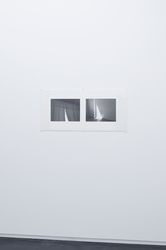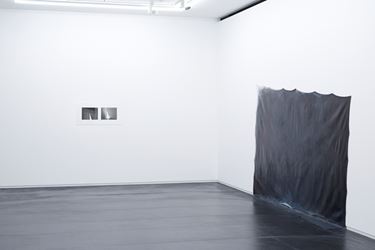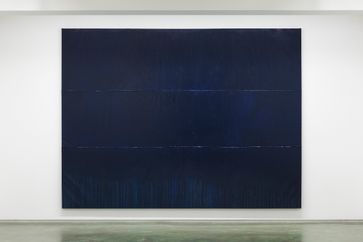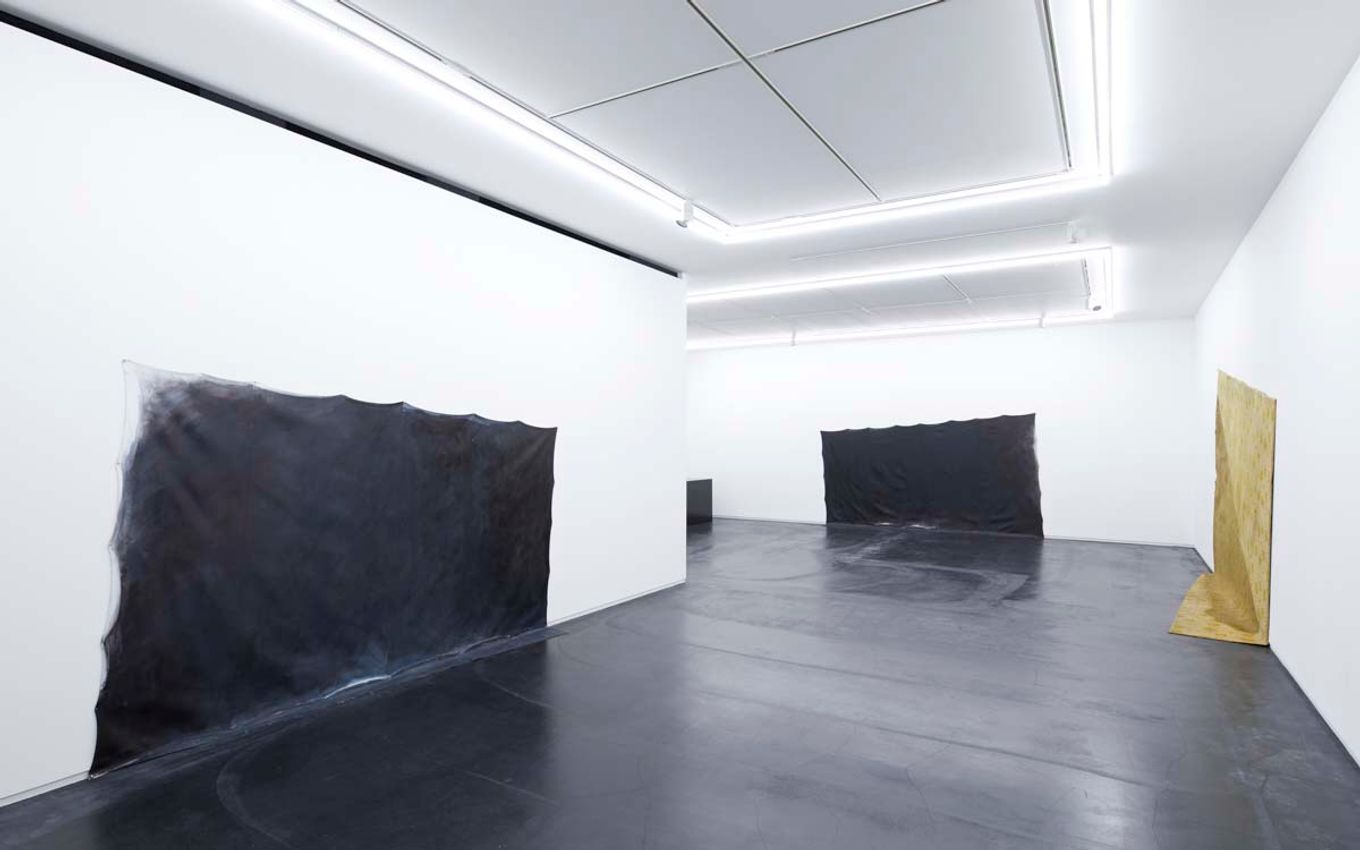
Taka Ishii Gallery is pleased to present Figure, a solo exhibition of works by Koji Enokura from October 20th to November 11th, 2017. The exhibition comprises a series of works on canvas entitled Figure which Enokura had produced extensively throughout the 1980s.
In order for our consciousness to realistically respond to the outside world, a conflict between the historical existence of the self and the current existence of the self is necessary. (...) When the bright light of the sun shines upon me, a certain sensation comes to encompass my body; the sensation of sitting on the porch as a child and feeling the sunlight on my face for a while, suddenly covering my eyes with my hands to playfully enjoy my momentary encounter with pitch black darkness that soon transforms into tones of deep blue, red, yellow, and purple, and sensing the warmth of the light that I had felt at the time. These sensations are different from the way I sense the light of the sun that permeates my current surroundings. The difference in sensation between now and the past not only pertains to my childhood days, but can also be felt in the context of what occurred 10 years ago, five years ago, one year ago, three days ago, or even just the day before. In other words, these deviations accumulate within my body in the form of a certain emotion. These “accumulated emotions” serve as a highly important base for me to respond to the outside world. (...) I at times find myself struck by the frustration of my existing here, frustrated of my thinking about the past, and frustrated by having to confront the transition of time...At such moments I am driven by the urge to proclaim within my mind my desire for the “repletion of tranquility,” yet what relieves this feeling of irritation are the “accumulation of emotions.” This “repletion of tranquility” also refers to the tranquility of things being in existence, and is also a state of sensitivity for myself to purely accept the existence of things. I believe that historical existence and aspects of current existence can respectively be described in terms “accumulated emotions” and “repletion of tranquility.” For example, suppose that there is a persimmon tree in front of me. In order to fully grasp within my hands this single persimmon tree that grows across this space accompanied by a landscape, I must first make sure that the wavelength of my own body corresponds to the wavelength of the persimmon tree. At this moment, the wave of “accumulated emotions” and the “repletion of tranquility” are released beyond my consciousness. These intertwine with the wavelength of the persimmon tree to create a state of discordance, and out of this discordance the contours of the persimmon tree come to faintly emerge. It emerges as a neutral, yet as a very specific “figure.” The “FIGURE” is a form that exists in a state of fluctuation between the real existence of the thing and my personal sensibility.
Koji Enokura, Showing Signs into Particles of Void, Gallery 21, 1983
For Enokura who through his work continued to question the means for building relationships between people and things as well as the space that surrounds them, the works themselves existed with a sense of tension between himself and the thing. The “accumulated emotions” and “repletion of tranquility” that is sensed throughout Enokura’s oeuvre as an artist who has produced works through use of various materials, could be considered to have arrived at a certain state of completion within the context of “Figure.”


Koji Enokura received an MFA in painting at the Tokyo National University of Fine Arts and Music in 1968, and taught there from 1975 until his death in 1995. During his lifetime, he had numerous solo exhibitions at Japanese galleries and museums, including the Saito Memorial Kawaguchi Museum of Contemporary Art and the National Museum of Art, Osaka, in 1994. In 2005, the Museum of Contemporary Art, Tokyo, held a major retrospective. Enokura’s work has also been included in landmark surveys, such as Re: Quest―Japanese Contemporary Art since the 1970s, Museum of Art, Seoul National University, Korea, 2013; Reconsidering Mono-ha, National Museum of Art, Osaka, 2005; Avanguardie Giapponese degli Anni 70, Galleria Comunale d’Arte Moderna di Bologna, 1992, and Setagaya Art Museum, Tokyo, 1993; Venice Biennale, 1978; Biennale of Sydney, 1976; Paris Biennale, 1971; and Tokyo Biennale ’70: Between Man and Matter, Tokyo Metropolitan Art Museum, 1970.

Since its opening in 1994, Taka Ishii Gallery has continued to maintain and develop an exhibition program based on the goals of introducing international contemporary artists within Japan and acting as an international platform for emerging Japanese artists as well as contemporary masters.

A respected voice in contemporary art discourse.
Focusing on ambitious storytelling and insightful art-world commentary. Ocula Magazine publishes in-depth interviews, critical essays and timely analysis on the artists, exhibitions and ideas driving the global art world.
Learn more about Ocula Magazine
Showcasing the best of the art world.
Ocula partners with galleries from around the world to highlight their artists, artworks and exhibitions. Gallery membership is by application and invitation, with each member vetted by an independent panel.
Learn more about Ocula Membership

Specialises in the sale of major artworks.
Led by a team with deep ties to the world’s leading auction houses, galleries and collectors. Ocula’s advisory team offers bespoke services to high-net-worth clients from around the world who are looking to acquire the best of contemporary and modern art.
Learn more about our team and services