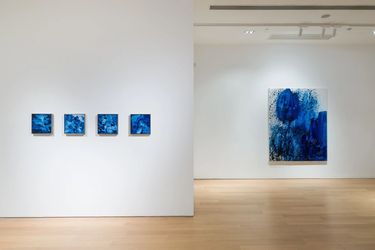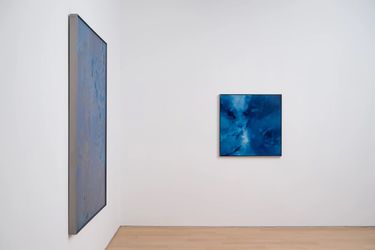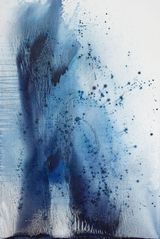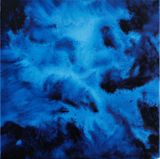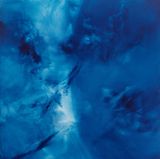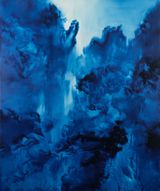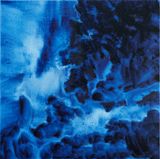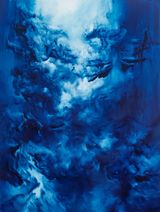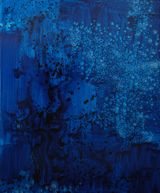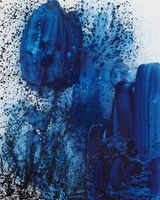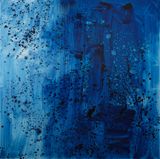




For a long time, the blue sky and white clouds rarely appeared above the city where Zhao Zhao lived. For years, smog persisted, only revealing a few days of clear blue during the harsh winter north winds or the warm spring. During that time, many artists focused on expressing the realities beneath the sky, immersed in stories of people and cities shrouded in gray, which often carried strong realist implications.
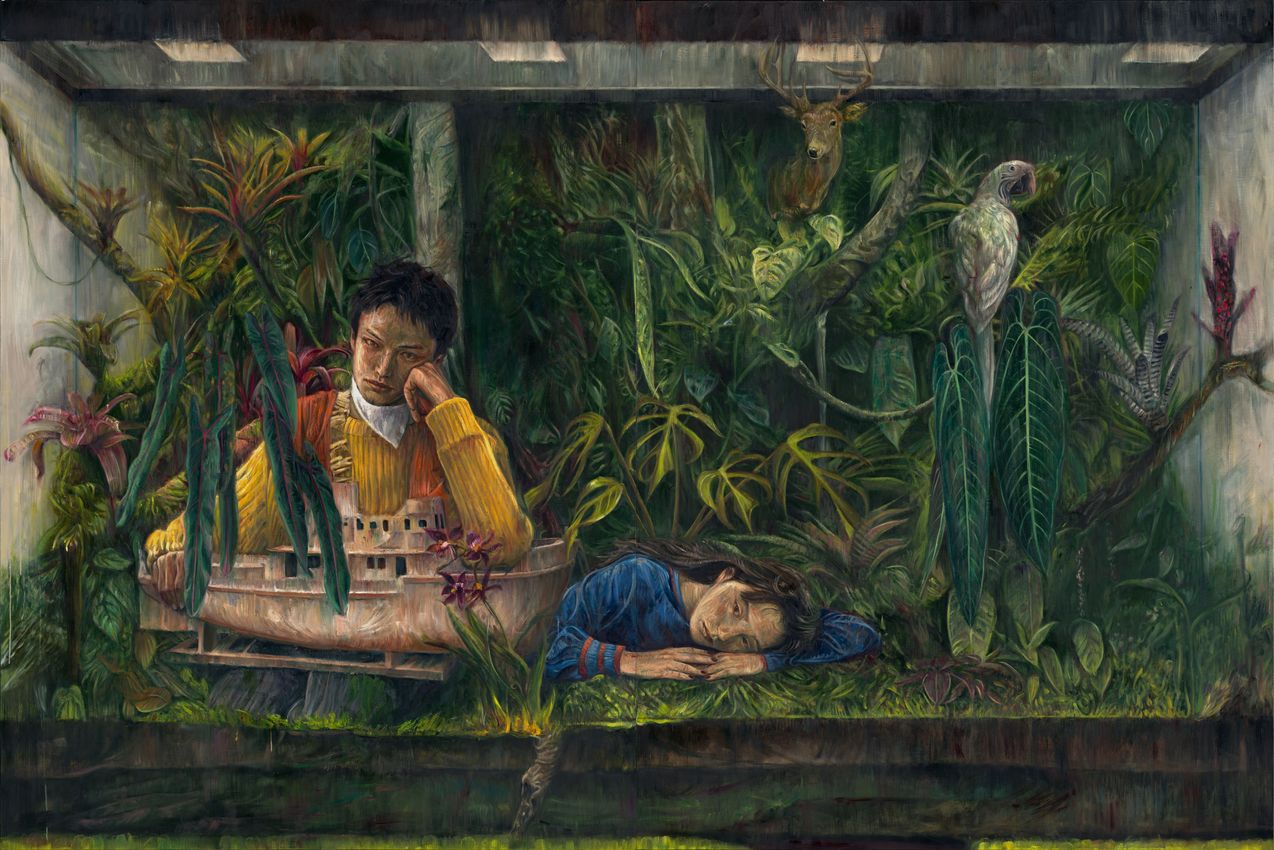
However, the charm of this ‘gray story’ often lies in an impressionistic portrayal of the sky and landscapes, akin to the common literary device of using scenery to express emotions or themes, enhancing the atmosphere of the stories and the psychological conditions of the characters. The absence of ‘blue skies’ was seldom directly depicted. In that period, the city lacked a sense of clarity, transparency, and brightness, making the sky a missing aesthetic.
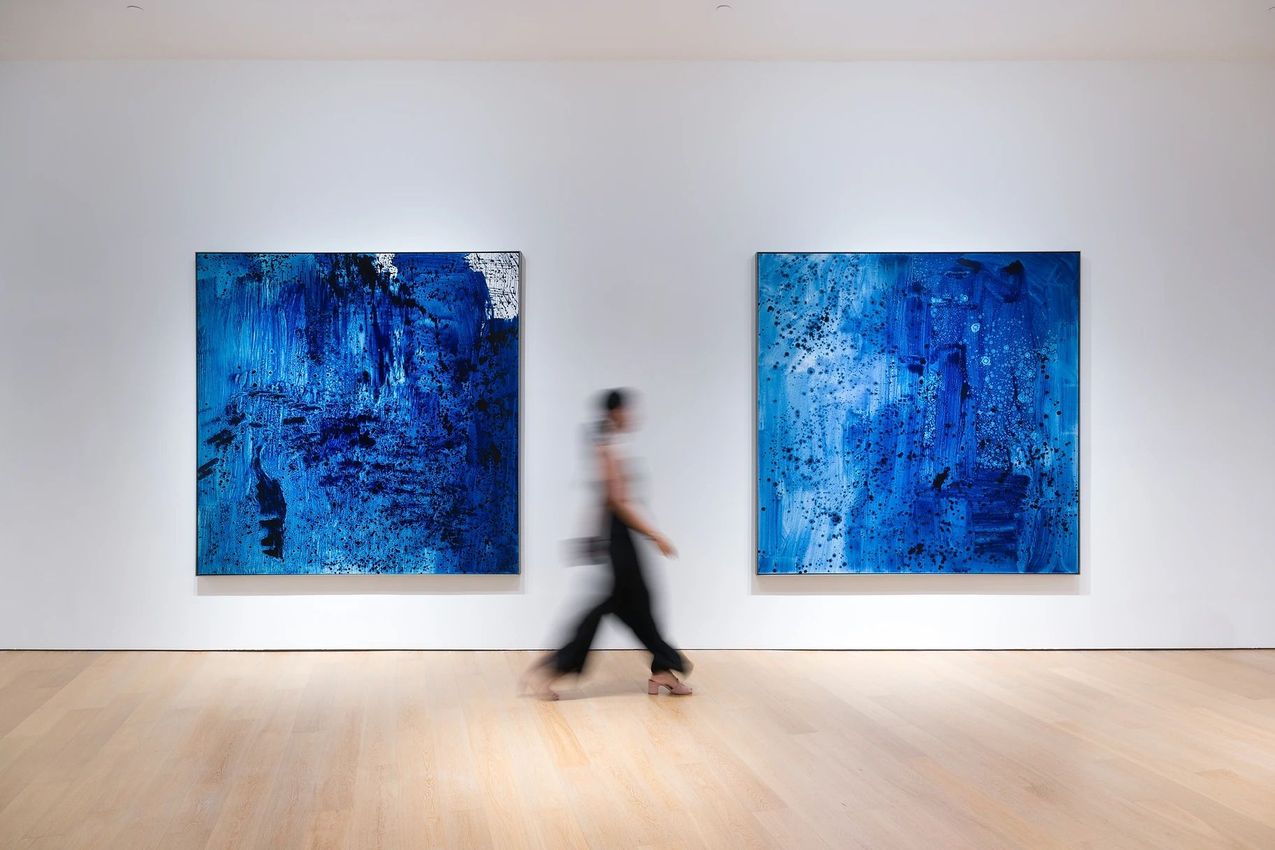
It was from that time that Zhao Zhao began his Sky series, which, along with the Constellation series, has since become two of his most longstanding artistic currents. In 2009, Zhao Zhao’s first Sky work was exhibited in Berlin, which contrasted sharply with the sky of his city. That year also marked the beginning of a rise in the public awareness of smog, and that the blue sky that people would occasionally look up to was going to face its prolonged absence. Stories always change due to the occurrence of other stories; three years later, Zhao Zhao spent a period isolated in a room numbered ‘305.’ The term ‘isolated’ is somewhat embellished; in that confined space, there was only a 20 x 20 cm window, which is the sole connection to the outside world. The sky outside became the only non-constant to Zhao Zhao’s life, with occasional blue skies providing a surprising contrast to the city’s persistent gray.
The stark contrast between gray and blue in the city created a captivating allure for the rare white clouds, capable of relieving stress and offering a brief escape from reality. Although the alternation between gray and blue resembled a series of enigmas without any pattern, gray always lingered in various corners of the city - room 305, a studio in the urban-rural fringe, dusk upon the 3rd Ring Road, and the empty city square. Yet, whenever there was a blue sky, photos of the sky or fiery clouds at dusk flooded the social circles of northern residents. Blue skies and white clouds, once a normal climate, had never been so tenderly observed.
‘Sky’ became the theme of Zhao Zhao’s paintings during that time. However, as the series progressed, the sky shifted from therealities of the present to more distant histories. Zhao Zhao began to focus on the overlooked backgrounds in art history, trying to imagine what the sky meant in the ancient world and what kind of imagination it held. Thus, he started compiling and reinterpreting the skies from famous artworks. In medieval paintings, the sky served as proof of God’s presence on Earth, casting holy light that illuminated all, reflecting the sacred halo of religion. During the Renaissance, the sky returned to humanity, becoming peaceful and tranquil. In the Romantic period, the sky re-emerged on the stage of historical upheaval, signaling the twilight of the old era and the dawn of the new. Throughout this history, the ‘sky’ became particularly lyrical, revealing distinct aesthetic images and spiritual worlds in night skies, dawn moons, morning mists, withered trees, or architectural ruins. Impressionism concluded this historical narrative, as the sky was reconsidered through the lens of natural science; late 19th-century painters depicted the effects of light and air on the sky at different times of the day. Ultimately, the Wright brothers’ airplane liberated the sky from divine ownership, transforming it into a realm for human flight, thus completing the transition of modernism towards cubism and futurism. The historical ‘sky’ evolved into a personal ‘sky,’ becoming a natural reflection of individual stories and subjective emotions.
Subsequently, the ‘Sky’ series consistently appeared in Zhao Zhao’s various solo exhibitions, acquiring elements of minimalism and conceptual art, existing in different emotional and spiritual states. At times, it embodied abstraction and eternity, hinting at the thousands of years of history experienced between the exhibits, and beyond that history, a timeless nature that transcended reality; at other times, it presented a momentary glimpse of the present, the abrupt changes of history and era, with time always being fleeting, everything poised to be consumed by the surging future.


Tang Contemporary Art was established in 1997 in Bangkok, later establishing galleries in Beijing and most recently Hong Kong. Tang Contemporary Art is fully committed to producing critical projects and exhibitions to promote Contemporary Chinese art regionally and worldwide and encourage a dynamic exchange between Chinese artists and those abroad.

A respected voice in contemporary art discourse.
Focusing on ambitious storytelling and insightful art-world commentary. Ocula Magazine publishes in-depth interviews, critical essays and timely analysis on the artists, exhibitions and ideas driving the global art world.
Learn more about Ocula Magazine
Showcasing the best of the art world.
Ocula partners with galleries from around the world to highlight their artists, artworks and exhibitions. Gallery membership is by application and invitation, with each member vetted by an independent panel.
Learn more about Ocula Membership

Specialises in the sale of major artworks.
Led by a team with deep ties to the world’s leading auction houses, galleries and collectors. Ocula’s advisory team offers bespoke services to high-net-worth clients from around the world who are looking to acquire the best of contemporary and modern art.
Learn more about our team and services