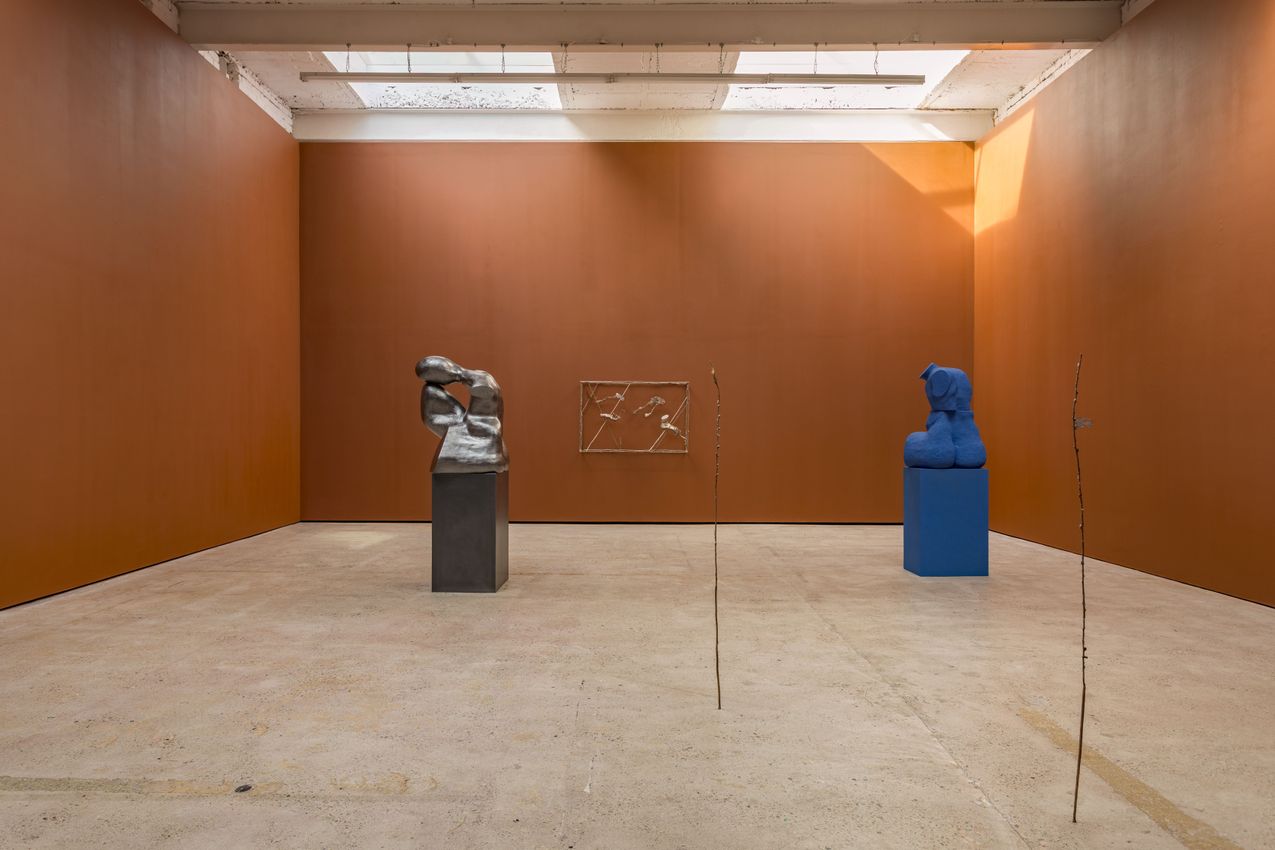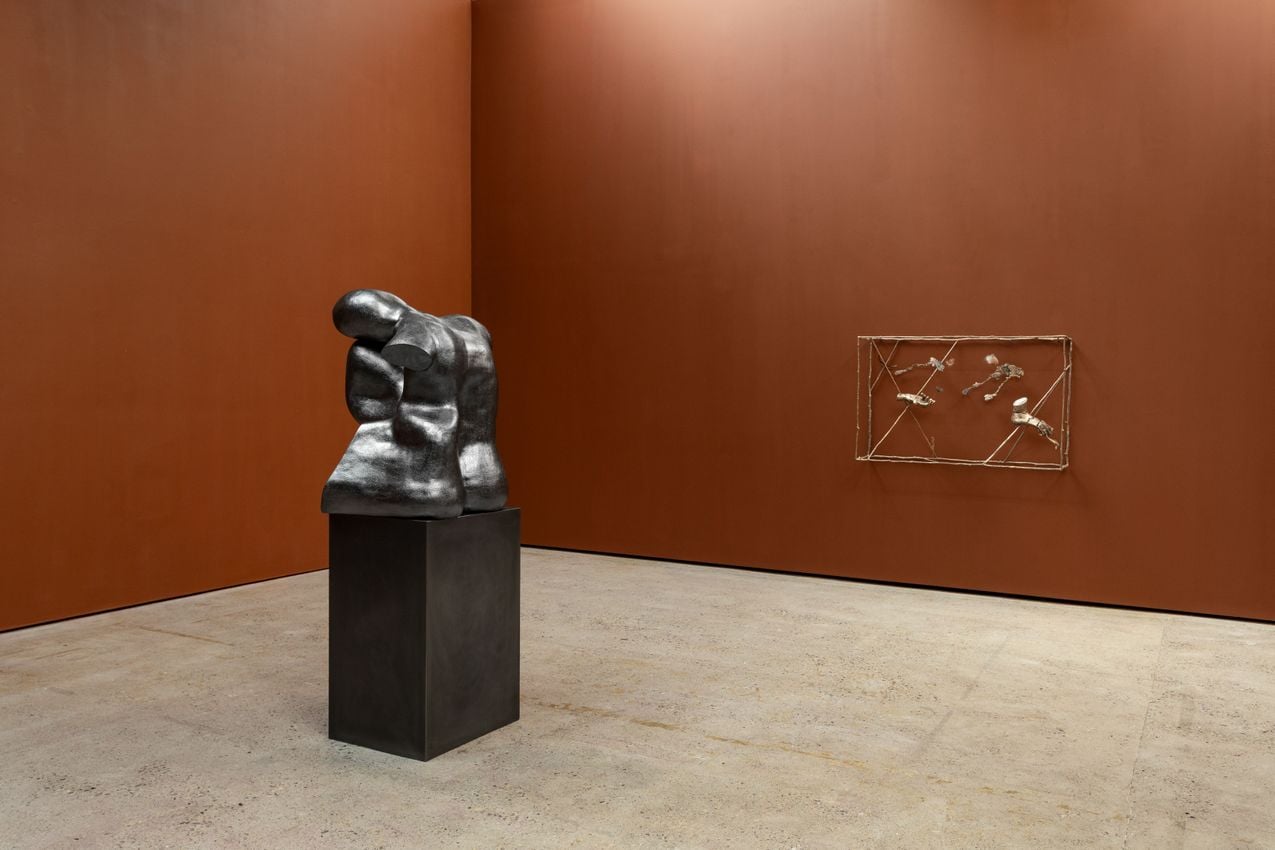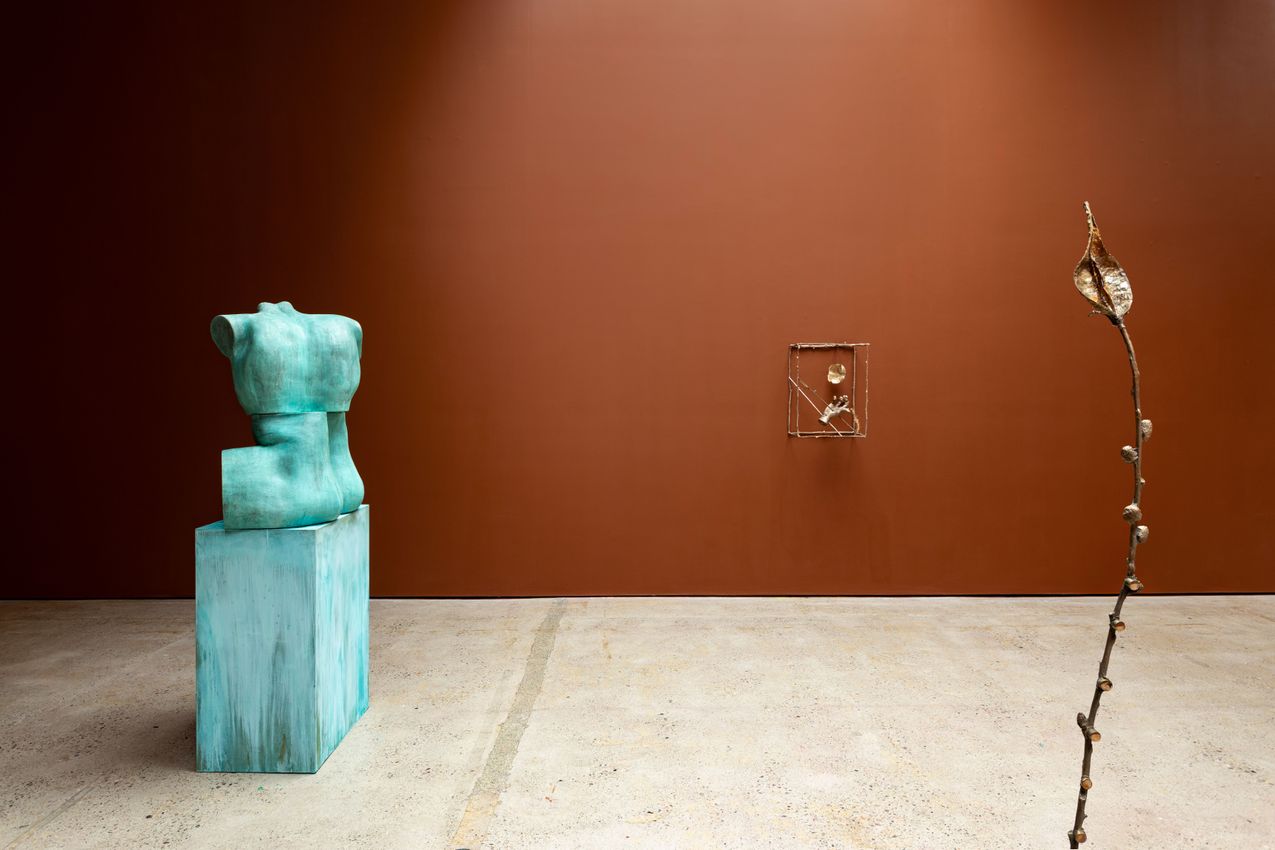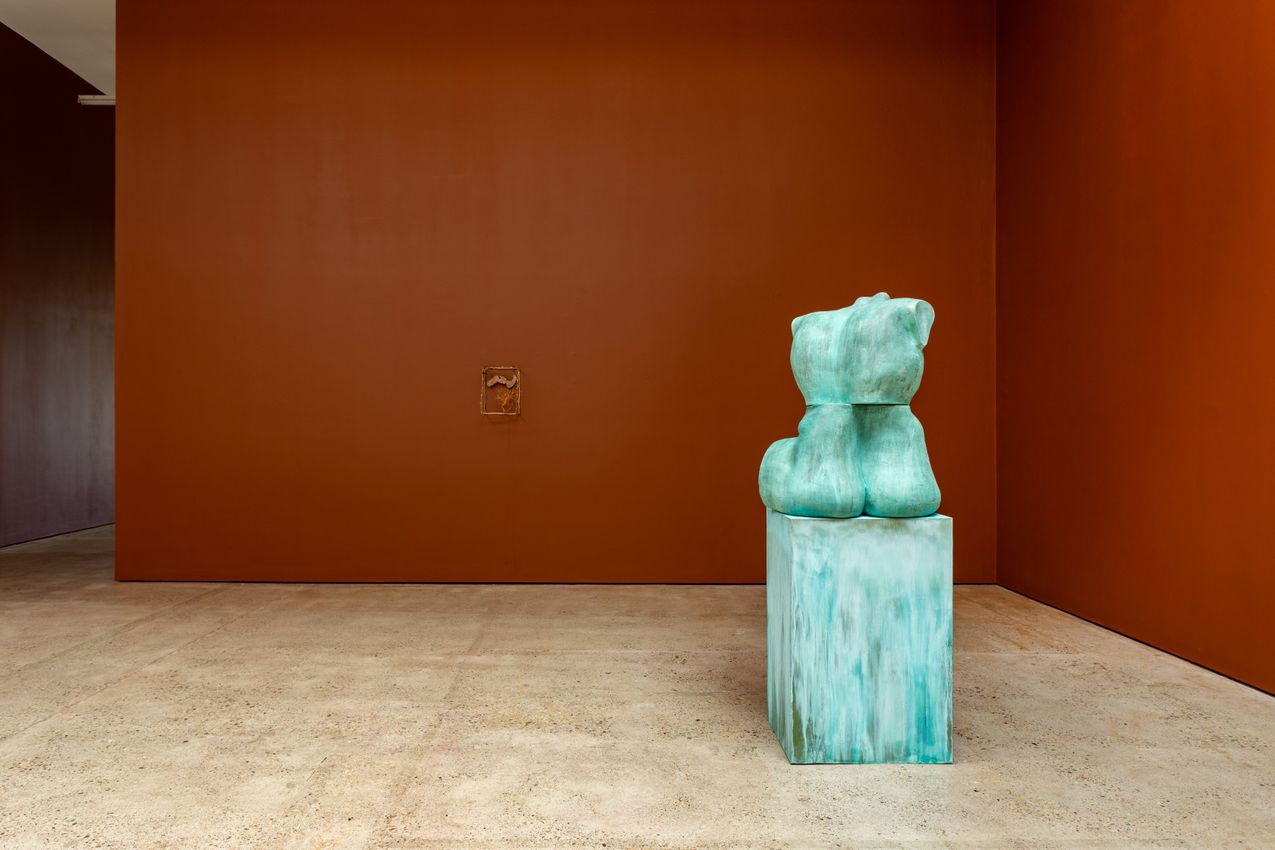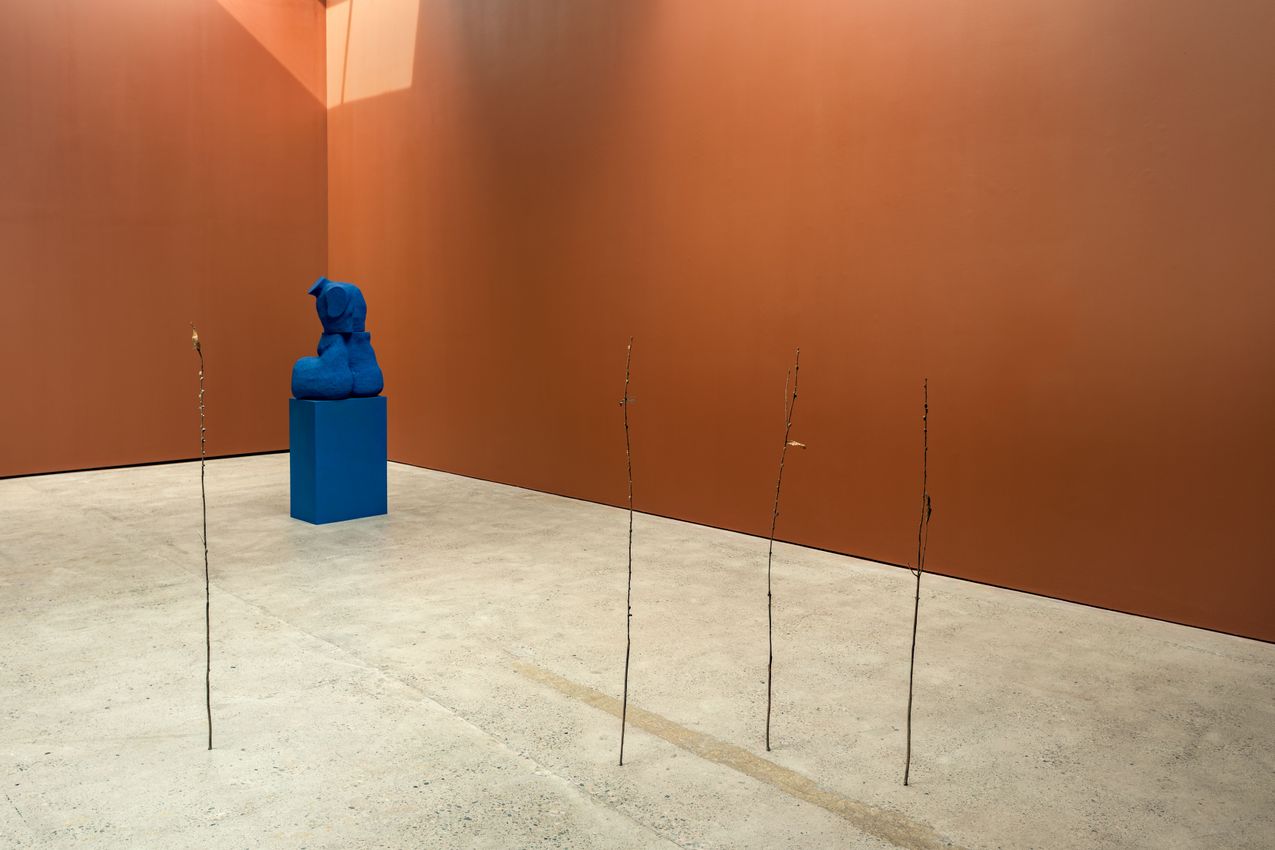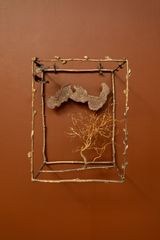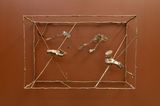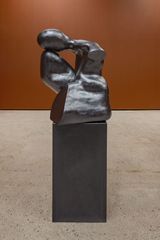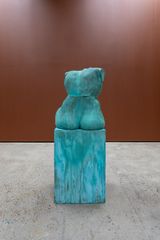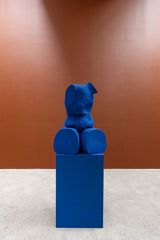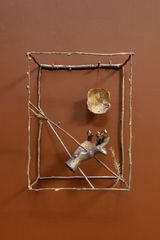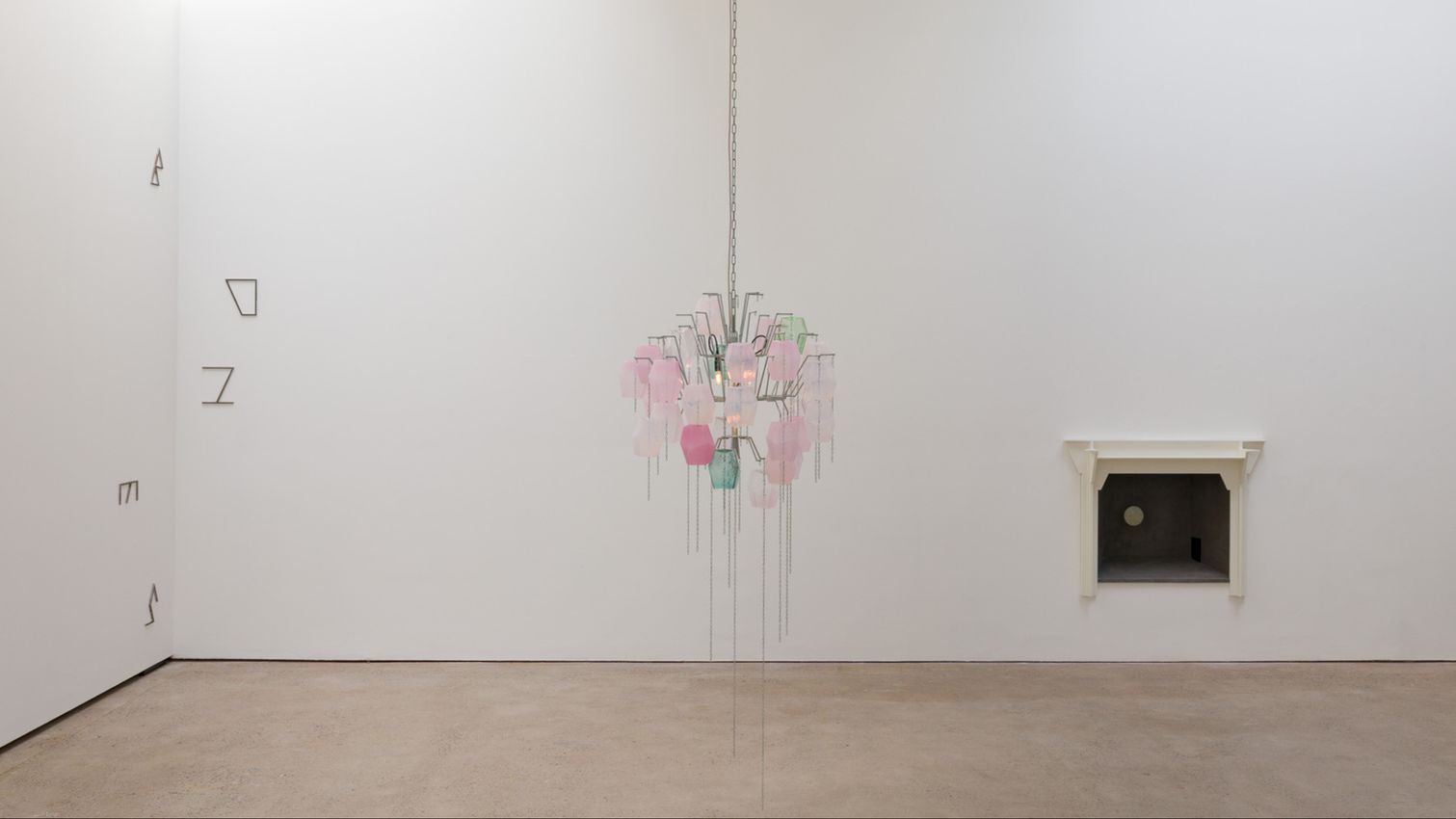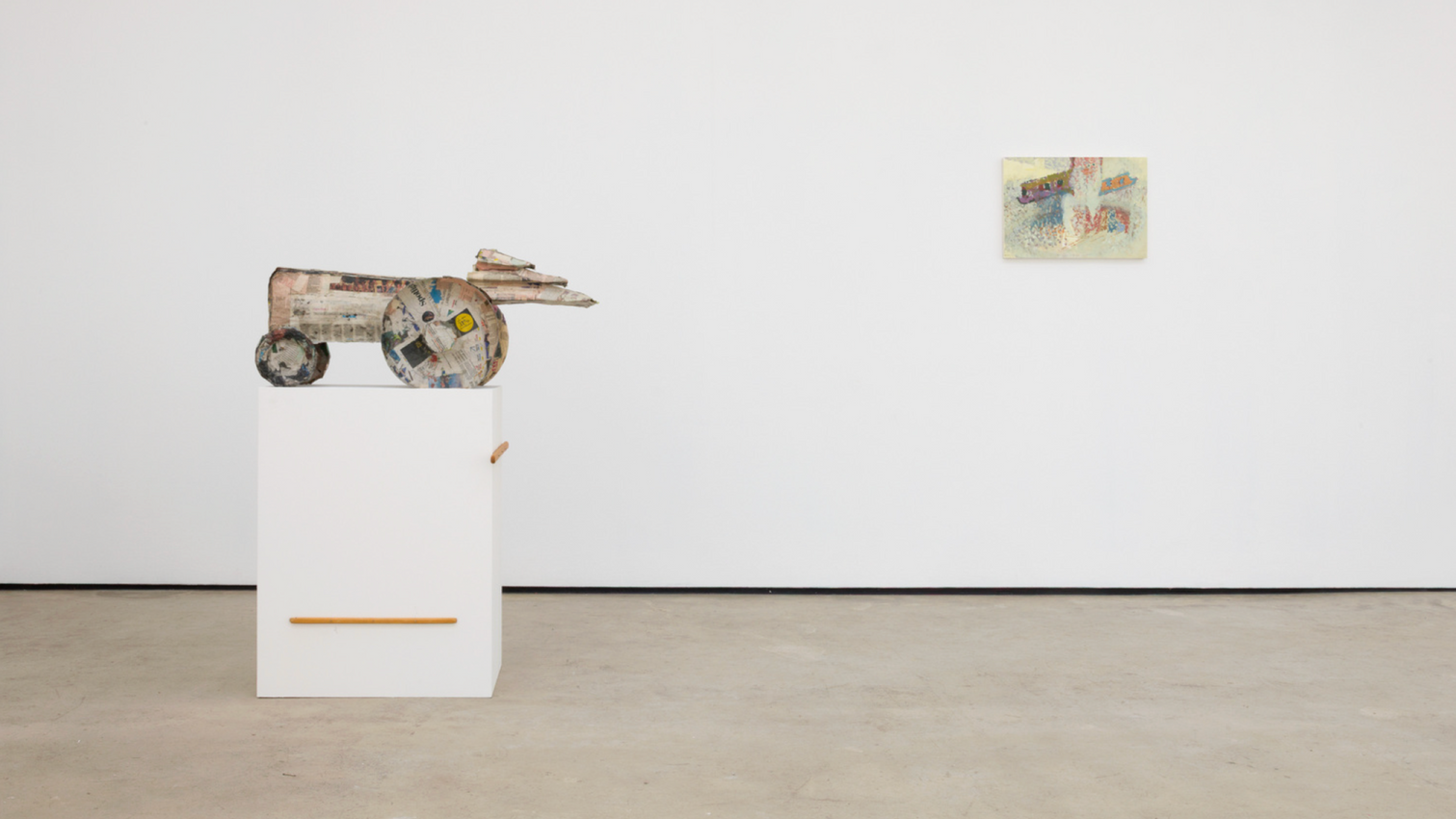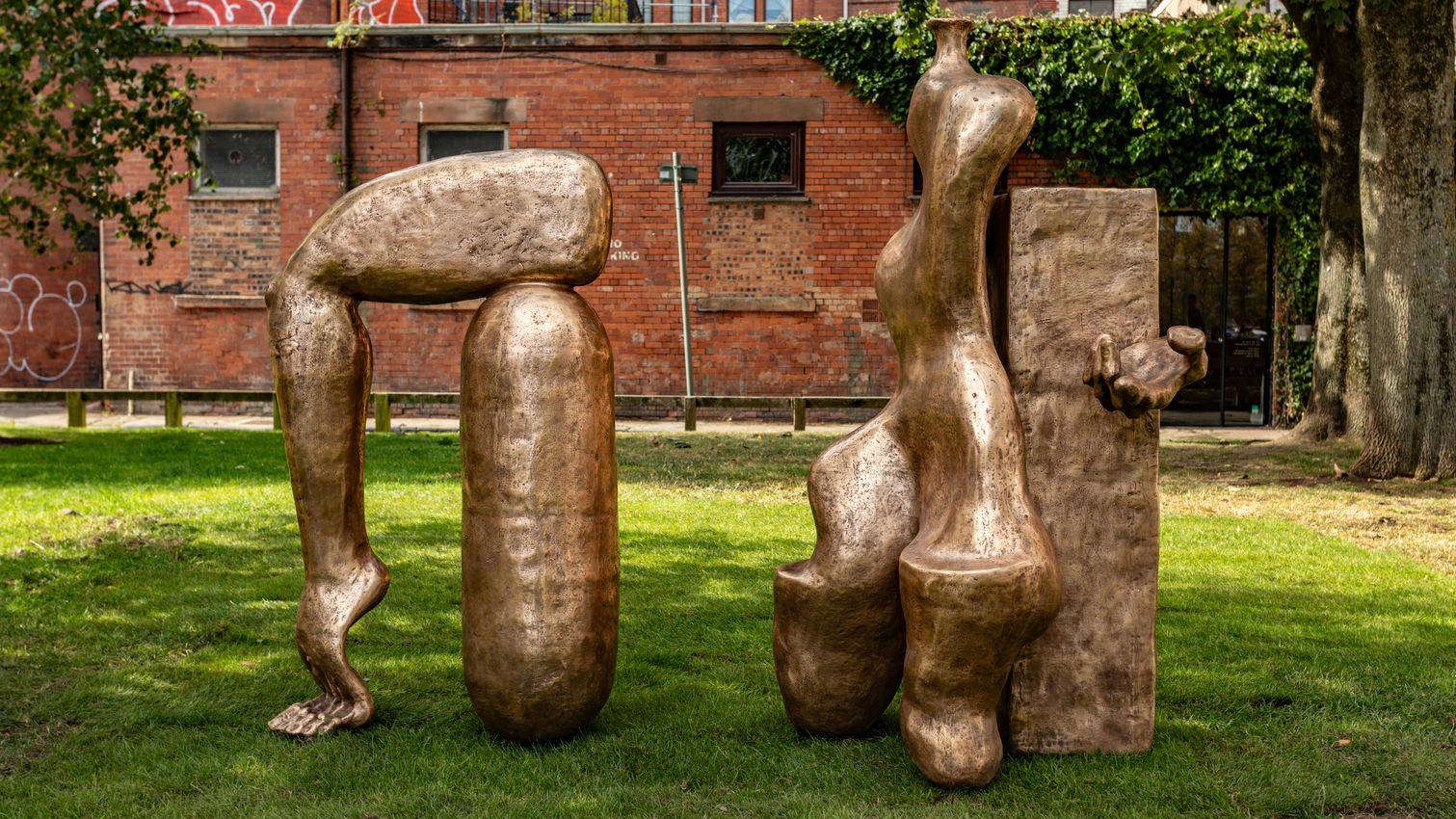
Jesse Wine’s new cycle of sculptures move in two directions, materially and conceptually. At once involved with the pull of memory and imagination as well as mass and the drag of gravity on bodies. Wine’s use of material creates this dialectic, with the show utilising a productive disjuncture between his more established work in clay and a newer body of work in bronze which the artist began following the loss of his father. The latter capture the sense of a renewed gaze, with attention paid to the poignancy to be found in the placement of objects and in small details. They have a lightness, incorporating casts of thin, intricate forms which often float or appear in suspension. In contrast, clay – itself the product of compacted force and compression – is used to depict bodies pulled down by their own heft. Together, the installation can be understood as bringing together notions of physical and spiritual pressure, alluding to the way our minds and bodies are often shaped by forces and events out of our control.
Metaphors and idioms around weight provide a framework for various philosophical issues: one can wear something lightly or let matters weigh heavily; people can tread lightly; you can carry the weight of the world on your shoulders. Wine’s sculptures invoke such figurative frames to convey the interconnectedness of the physical and psychological. The dual associations of lightness and heaviness – lightness as freedom but also fickleness, and weight’s connection to both meaning and inflexibility – are at the heart of his existential sculptures. The works cycle through these ideas and articulate the inherent interplay of desire and constraint in our lives. The exhibition title communicates these concerns, alluding to the downward pressure of gravity on the human form as well as an awareness of clock time and aging. The relationship between Wine’s painted and coated clay figures and the various heady stage-set bronzes captures this dynamic, setting out the relationship between our inner lives and physical bodies.


Working primarily with clay, Jesse Wine interrogates the performativity of the everyday and the sculptural medium. His ceramic sculptures range from small-scale objects, some recognisable and others not, to larger-than-life amalgam of human body parts and abstract forms.


The Modern Institute was founded in Glasgow in 1997. The gallery works with 45 internationally established and emerging artists including Martin Boyce, Jim Lambie, Richard Wright, Anne Collier, Cathy Wilkes, Simon Starling, Urs Fischer, Luke Fowler and Nicolas Party.

A respected voice in contemporary art discourse.
Focusing on ambitious storytelling and insightful art-world commentary. Ocula Magazine publishes in-depth interviews, critical essays and timely analysis on the artists, exhibitions and ideas driving the global art world.
Learn more about Ocula Magazine
Showcasing the best of the art world.
Ocula partners with galleries from around the world to highlight their artists, artworks and exhibitions. Gallery membership is by application and invitation, with each member vetted by an independent panel.
Learn more about Ocula Membership

Specialises in the sale of major artworks.
Led by a team with deep ties to the world’s leading auction houses, galleries and collectors. Ocula’s advisory team offers bespoke services to high-net-worth clients from around the world who are looking to acquire the best of contemporary and modern art.
Learn more about our team and services