

‘The trace is not a presence but is rather the simulacrum of a presence that dislocates, displaces, and refers beyond itself.’ - Jacques Derrida
THK Gallery is pleased to present Traces, bringing together Abdus Salaam, Miranda Forrester, Tshepiso Moropa and Duncan Wylie.
Through marking, layering, obscuring, concealing and remarking, traces are left as carriers of the past and caches for unimagined futures. Be they faint, minute, vestigial, broad or temporary, traces gesture to a record of presence — someone was here, or something was here.
Centred on mapping forms of relations and historical remnants of structures, records and the somatic, Traces is informed by lyrical abstraction, haptic memories, fantasy and folklore.
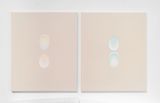
Characterised by repetitive strokes and a sense of restraint, Salaam’s painterly traces are muted and subtle, suggesting quiet encounters between materials and perceptions of space and time. Working in the meditative minimalist tradition of the late 1960s and early 1970s, his paintings use a distilled visual language, emphasising structure and clarity as explorations of the relationship between nature, ecology and spirituality. Each brushstroke is a reminder of the body’s posture in making the mark.
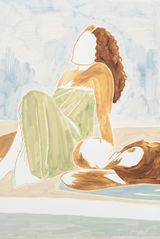
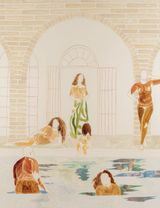
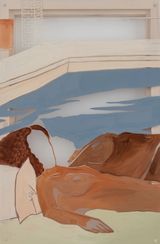
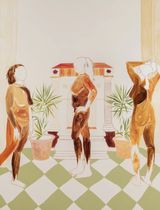
This sense of embodiment is reflected as tender intimacy in Forrester’s sensual and seductive paintings that depict figures in various states of rest. Rendered in earth tones and a sun-kissed palette, her figures lounge, bathe, caress, linger and nap, often near bodies of water. They are often naked, distinguished from nude in the manner that critic and novelist John Berger made the distinction: “To be naked is to be oneself. To be nude is to be seen naked by others and yet not recognised for oneself.” Her paintings, which trace the historical depiction of women, reflect an inward gaze and self-reflexivity, proposing possibilities and variations on ways of seeing - through a queer, black, femme and non-binary gaze.
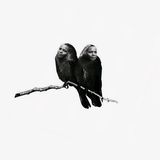
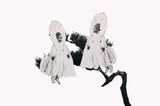
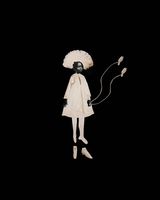
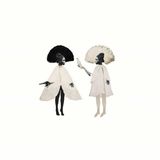
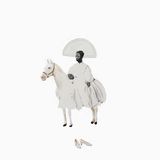
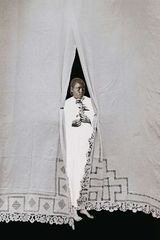
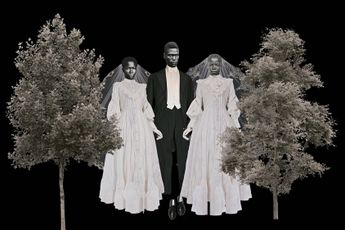
Where Forrester unsettles the gaze, Moropa unsettles the plot. At once folkloric and playful, her hand-crafted and digital assemblages revel in a sense of the uncanny. Oddly familiar and yet estranged, her storied creations trace oral histories as told through her family, formal historical archival records, contemporary lore, dreams, memories and fantasies. Though they are rooted in narrative, her eerie figures seem to float, unhindered by spatial and temporal boundaries.
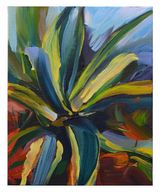
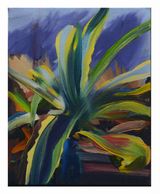
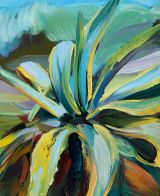
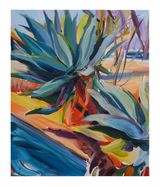
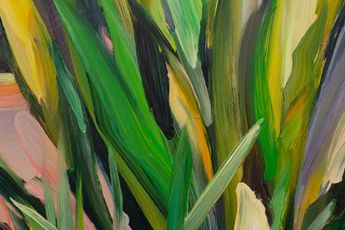
For Wylie, tension is produced through the friction between representing what is often diametrically opposed and yet inextricably linked - a tsunami, as a force of nature, for instance, and its impact on the natural landscape. Cacti and other flora are rendered in layers of oil paint to denote and trace the push and pull between the real and the symbolic. For him, juxtaposition and association can be used as painterly devices to produce new chimerical worlds.
Abdus Salaam, Miranda Forrester, Tshepiso Moropa and Duncan Wylie lend lived experiences with fantasy, the metaphysical and the historical, allowing for a closer encounter with each expressive mark and each textured trace.


A respected voice in contemporary art discourse.
Focusing on ambitious storytelling and insightful art-world commentary. Ocula Magazine publishes in-depth interviews, critical essays and timely analysis on the artists, exhibitions and ideas driving the global art world.
Learn more about Ocula Magazine
Showcasing the best of the art world.
Ocula partners with galleries from around the world to highlight their artists, artworks and exhibitions. Gallery membership is by application and invitation, with each member vetted by an independent panel.
Learn more about Ocula Membership

Specialises in the sale of major artworks.
Led by a team with deep ties to the world’s leading auction houses, galleries and collectors. Ocula’s advisory team offers bespoke services to high-net-worth clients from around the world who are looking to acquire the best of contemporary and modern art.
Learn more about our team and services