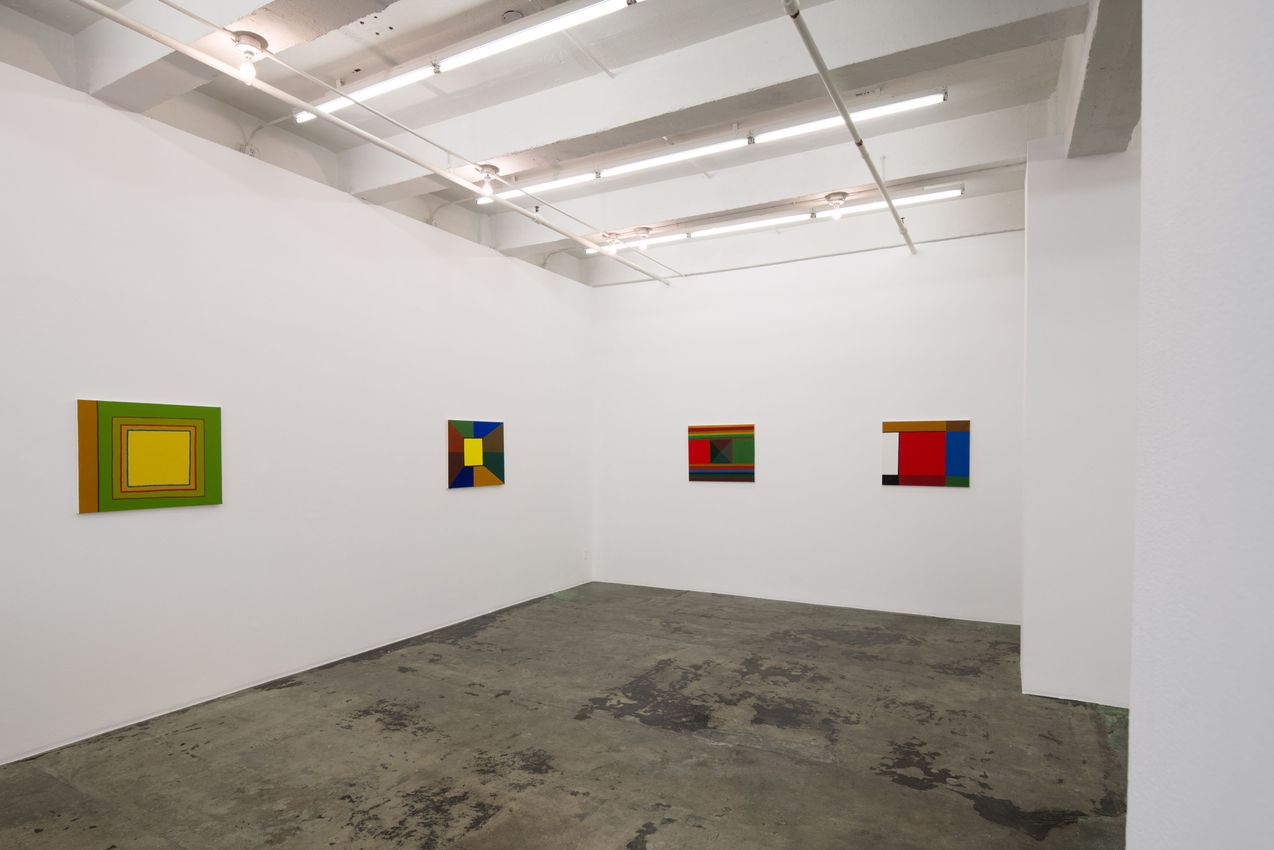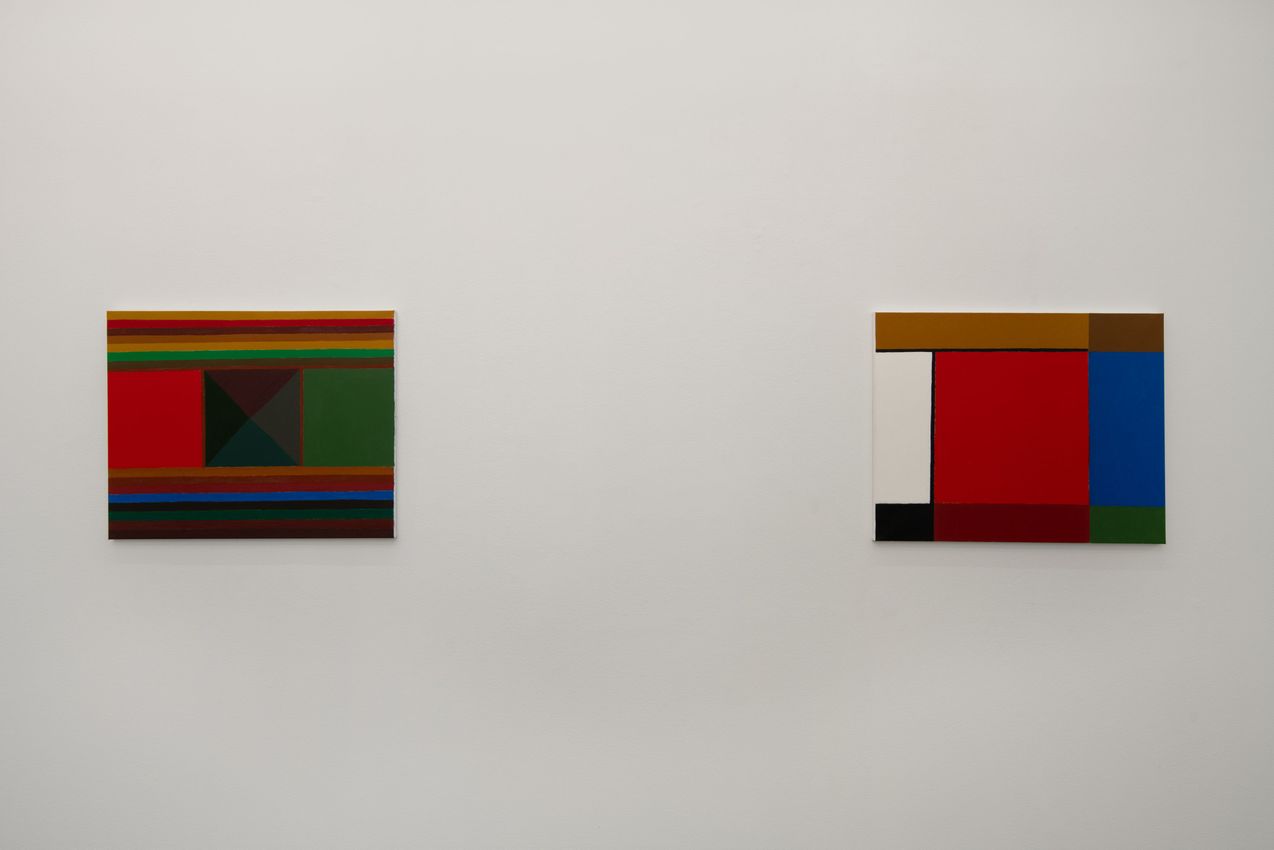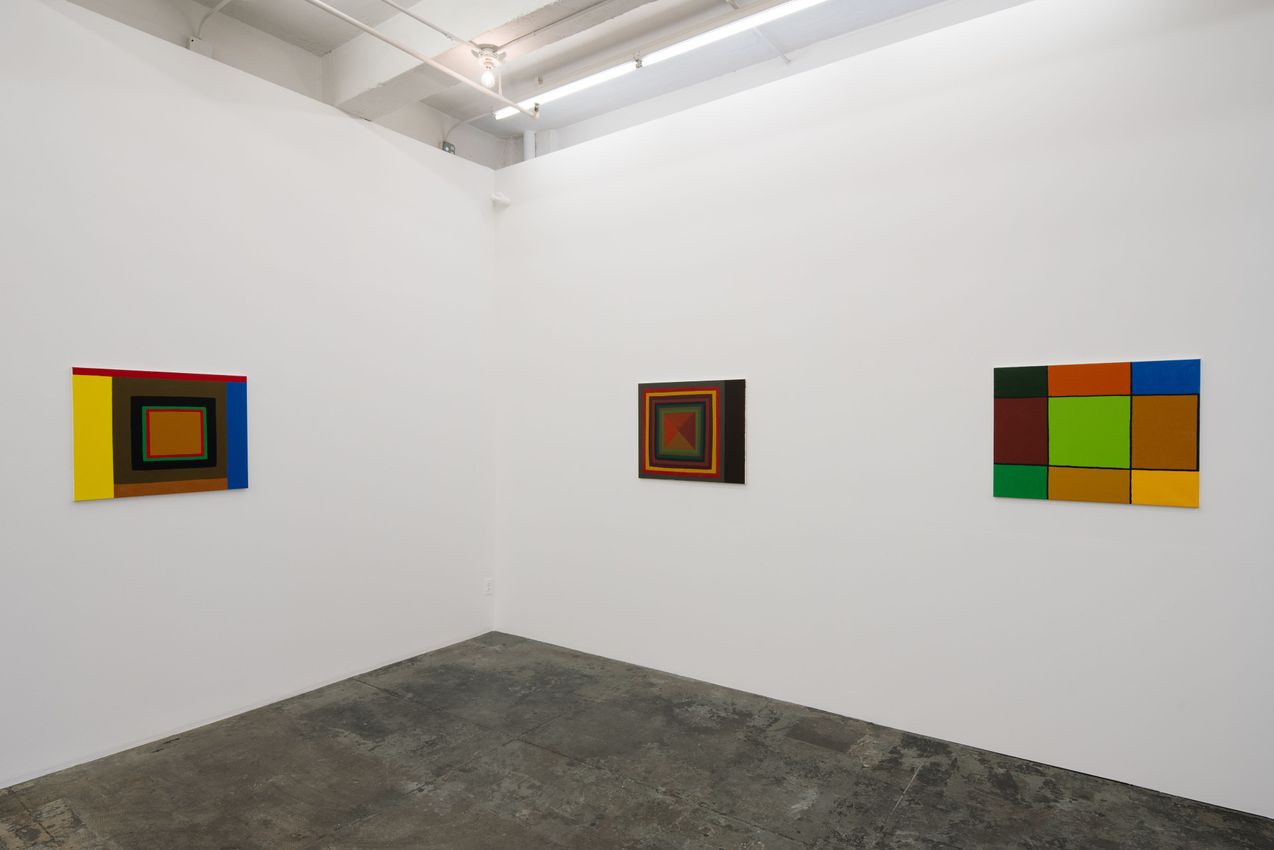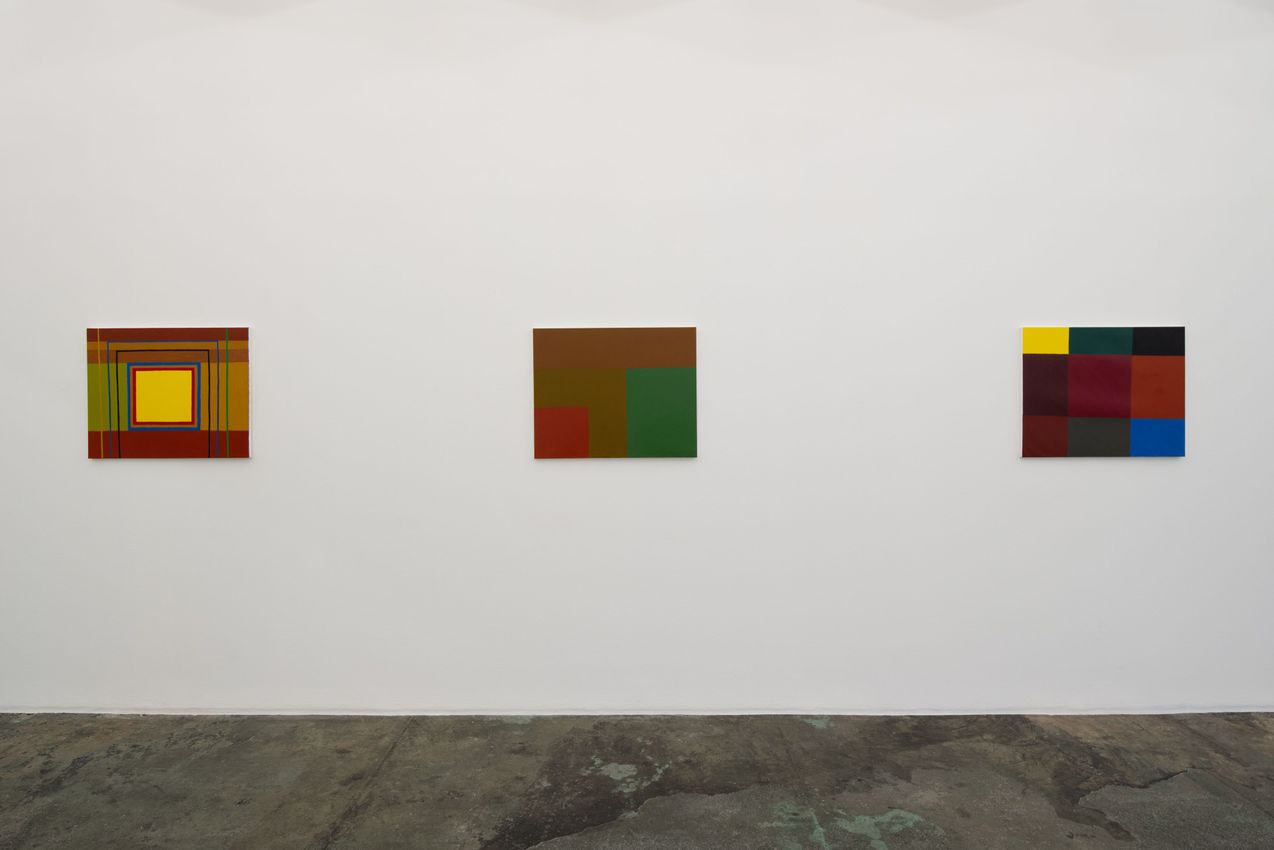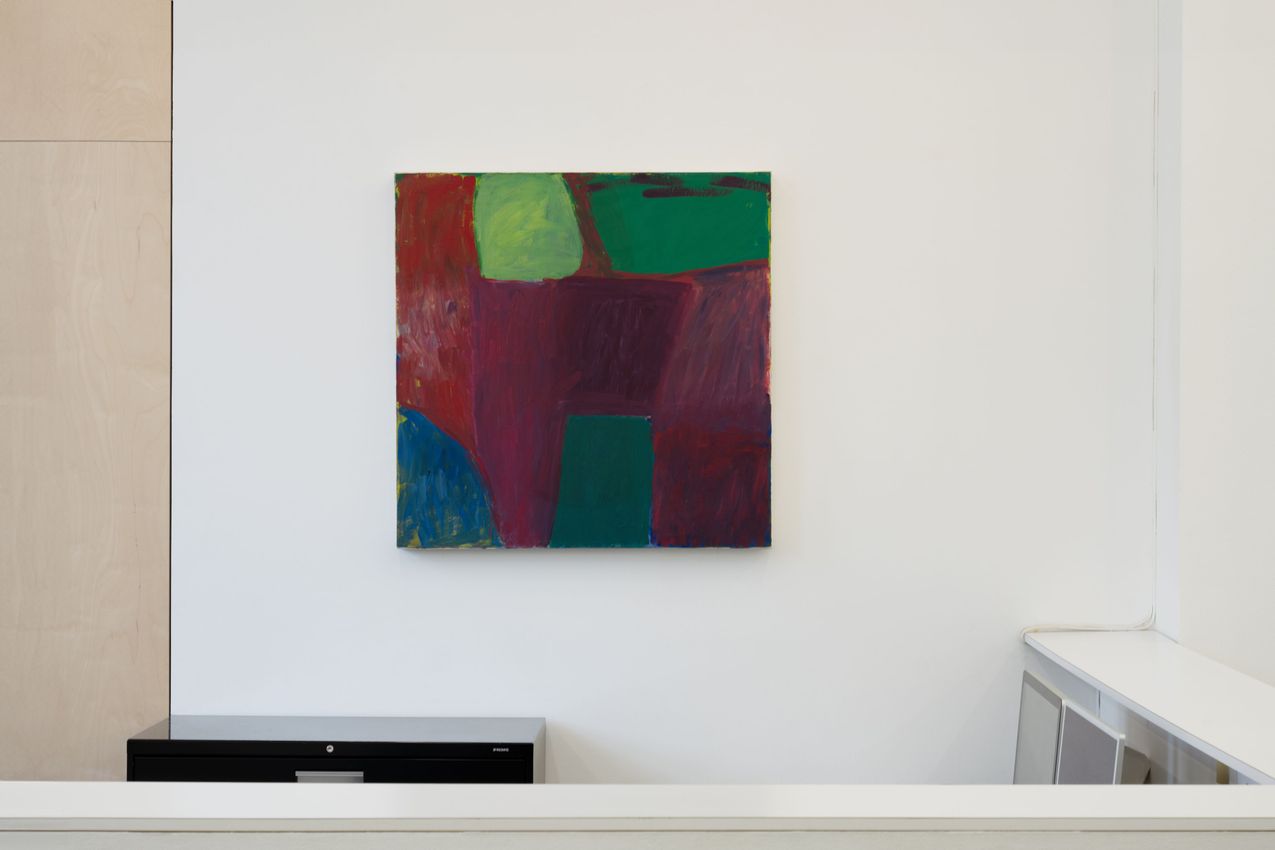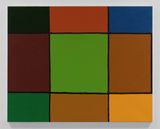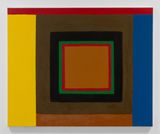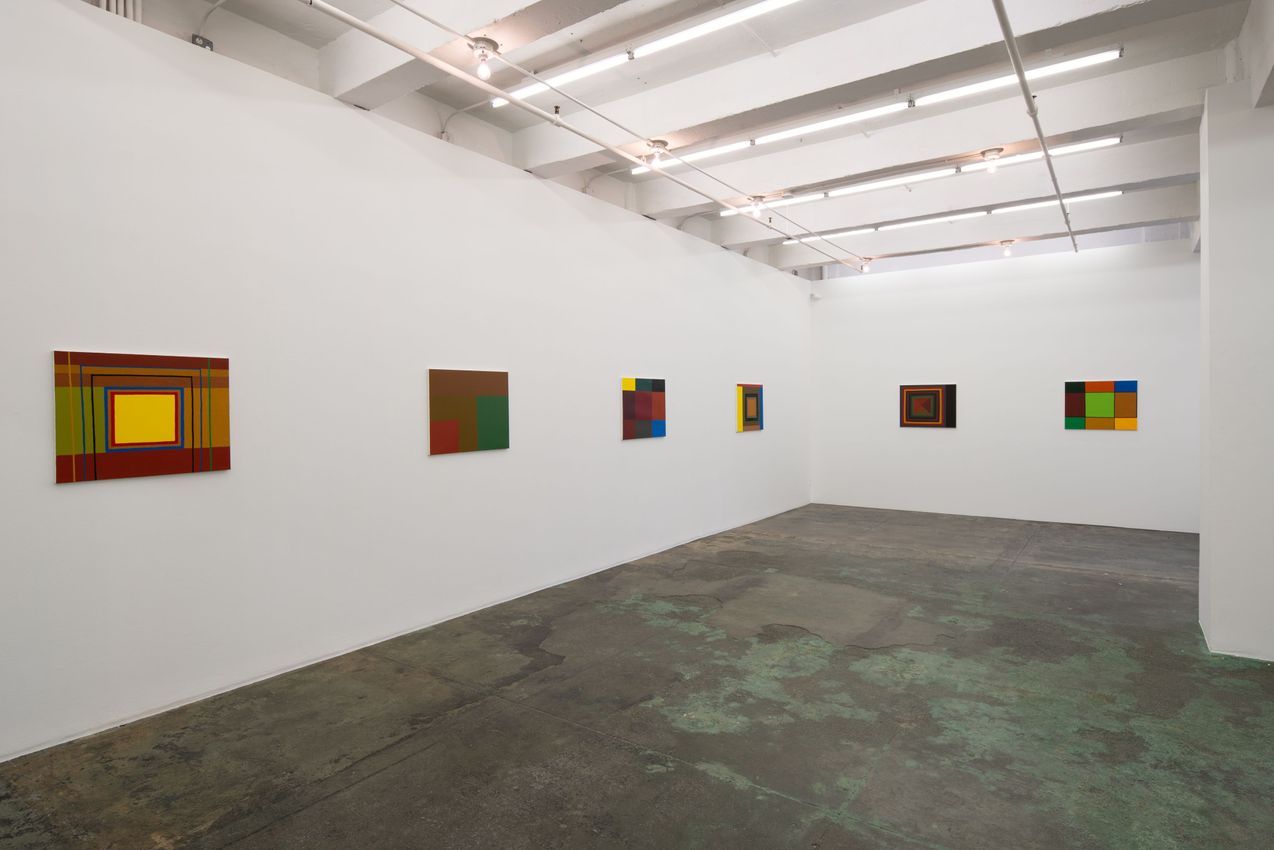
Thomas Erben is thrilled to present Portraits of Squares, 2022-23, Harriet Korman’s fifth exhibition with the gallery, which includes a solo presentation at Art Basel Miami Beach in 2021. This group of ten new paintings exudes a visual as well as intellectual vibrancy and attraction which, by far, exceeds their modest scale. Preparing for the exhibition, Korman wrote: ‘Geometric Abstraction isn’t always geometric abstraction. Sometimes my paintings seem to be like figures, not literal figures, but imbued with an essence of being or meaning.’
Though Korman was described ’... as one of New York’s purest abstract painters without a brand’ (John Yau, reviewing her 2020 survey exhibition), there are relationships between the various series in her work. These new paintings have a connection to Korman’s works presented in her widely praised 2018 and 2021 exhibitions. In 2018 she explored a quadrant format, where each quadrant was formulated with bars of random colour, resulting in different patterns, configurations, highlights and surprising outcomes. In her 2021 show the artist used a configuration of concentric rectangles, deciphering and adjusting fast intuitive drawings to necessarily slow paintings, a process she found intriguing.
Korman sometimes employs existing formats she feels she could expand upon in new ways. She describes: ‘In 1988 at a Donald Judd exhibition at the Whitney, looking at a box on the floor, a question came to me—how many ways could I paint a square? I finally got to it—Portraits of Squares.’
For its specific properties and symbolic value, the square has often been the subject of—mainly—modernist art. Though allowing for many allusions, Korman never leaves her own idiom and tries to embody each canvas with as much abstract identity and presence as possible.
Since 1996, Korman has not mixed any white into her colours, although she sometimes uses white as a separate area. Her paintings are completely flat with no references to light, space, or illusionism, reinforcing the fact that a painting is a painting, a two-dimensional surface. However, in exploring the absolute essentials of the medium itself, Korman articulates an archetypal, non-dogmatic space, or, as Katy Siegel already observed in Artforum’s Best of 2001: ’‘Seeing [these stunning, abstract paintings] at Lennon Weinberg was an experience curiously out of time— these are pictures neither burdened with nostalgia nor obviously beholden to current discourses of modernist revival or rejection. Absolutely new, as if they’d always been there.’
Thomas Erben Gallery has been working with Harriet Korman since 2018. Over the past few years, her work has received growing attention, garnering reviews from Roberta Smith for The New York Times, John Yau for Hyperallergic, and Raphael Rubinstein for The Brooklyn Rail, among many others.
Several of her paintings recently entered the Kienzle Art Foundation collection, Berlin, where they were part of a group show with works by Louise Fishman, Gerald Jackson, Jonathan Lasker, David Reed, Gary Stefan, and Jack Witten (2022). Her work was also included in the 30th anniversary exhibition at Carlier Gebauer (2021/22), curated by Dieter Schwarz (former director of the Kunstmuseum Winterthur). This interest builds on Korman’s earlier exhibitions with Galerie Rolf Ricke, Cologne (1970, ‘71 and ‘72), Galerie m, Bochum (1977), and Häusler Contemporary, Munich (2015).
In the U.S., Korman has participated in the Whitney Annual (1972), two Whitney Biennials (1973 and 1995), and was included in Ten Young Artists – The Theodoron Awards at the Guggenheim Museum (1971), as well as the traveling exhibition High Times, Hard Times: New York Painting 1967-75 and a three person show at MoMA PS1 (both 2007). Throughout her career, her work has received substantial critical support. She has shown extensively with such galleries as 112 Greene Street, Daniel Weinberg Gallery, Willard Gallery, and Lennon, Weinberg, Inc.
Since the 1960s, American painter Harriet Korman has produced dynamic geometric abstractions that intentionally destabilise the pictorial plane, revealing infinite possibilities within simple compositions.

Established in 1996, Thomas Erben Gallery focuses on rediscovering and introducing artworks that expand or deviate from the media usually associated with an artist.

A respected voice in contemporary art discourse.
Focusing on ambitious storytelling and insightful art-world commentary. Ocula Magazine publishes in-depth interviews, critical essays and timely analysis on the artists, exhibitions and ideas driving the global art world.
Learn more about Ocula Magazine
Showcasing the best of the art world.
Ocula partners with galleries from around the world to highlight their artists, artworks and exhibitions. Gallery membership is by application and invitation, with each member vetted by an independent panel.
Learn more about Ocula Membership

Specialises in the sale of major artworks.
Led by a team with deep ties to the world’s leading auction houses, galleries and collectors. Ocula’s advisory team offers bespoke services to high-net-worth clients from around the world who are looking to acquire the best of contemporary and modern art.
Learn more about our team and services