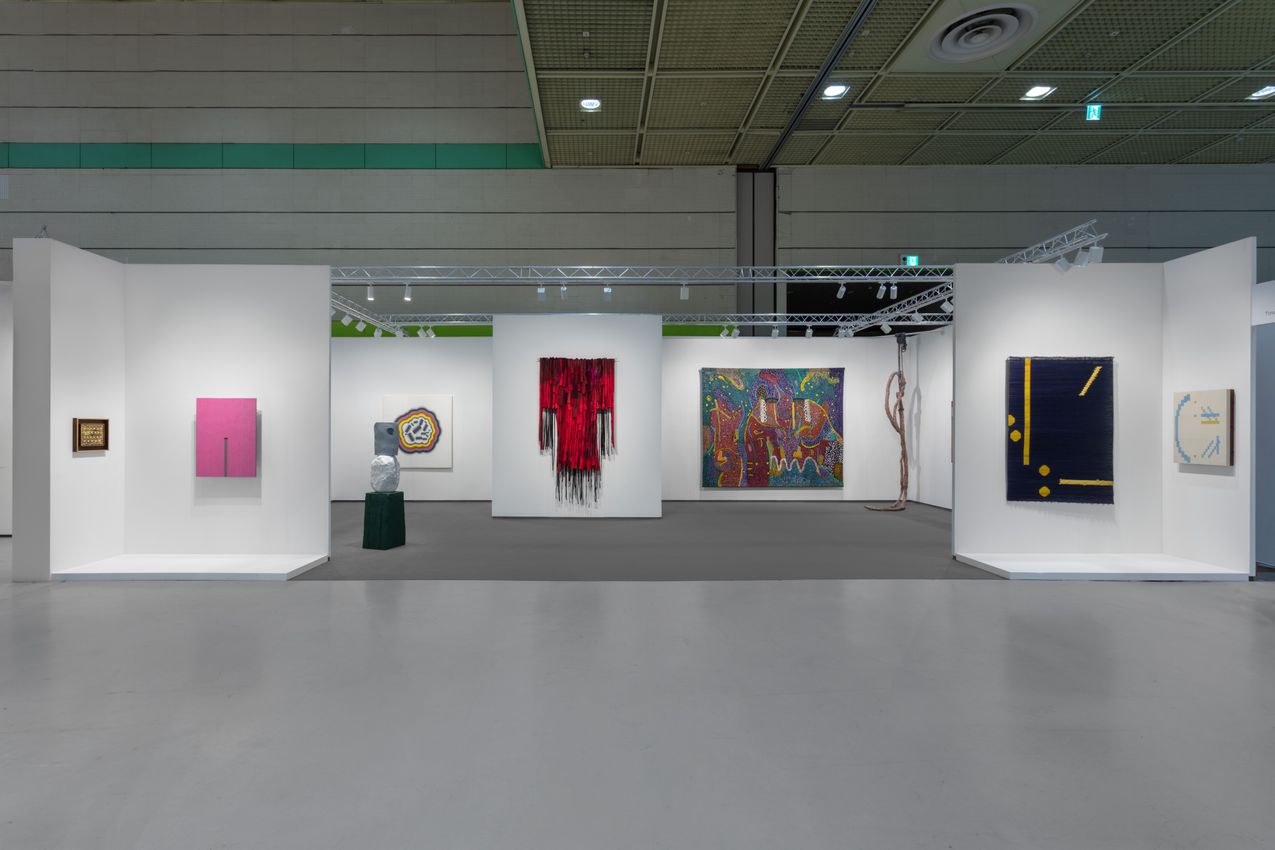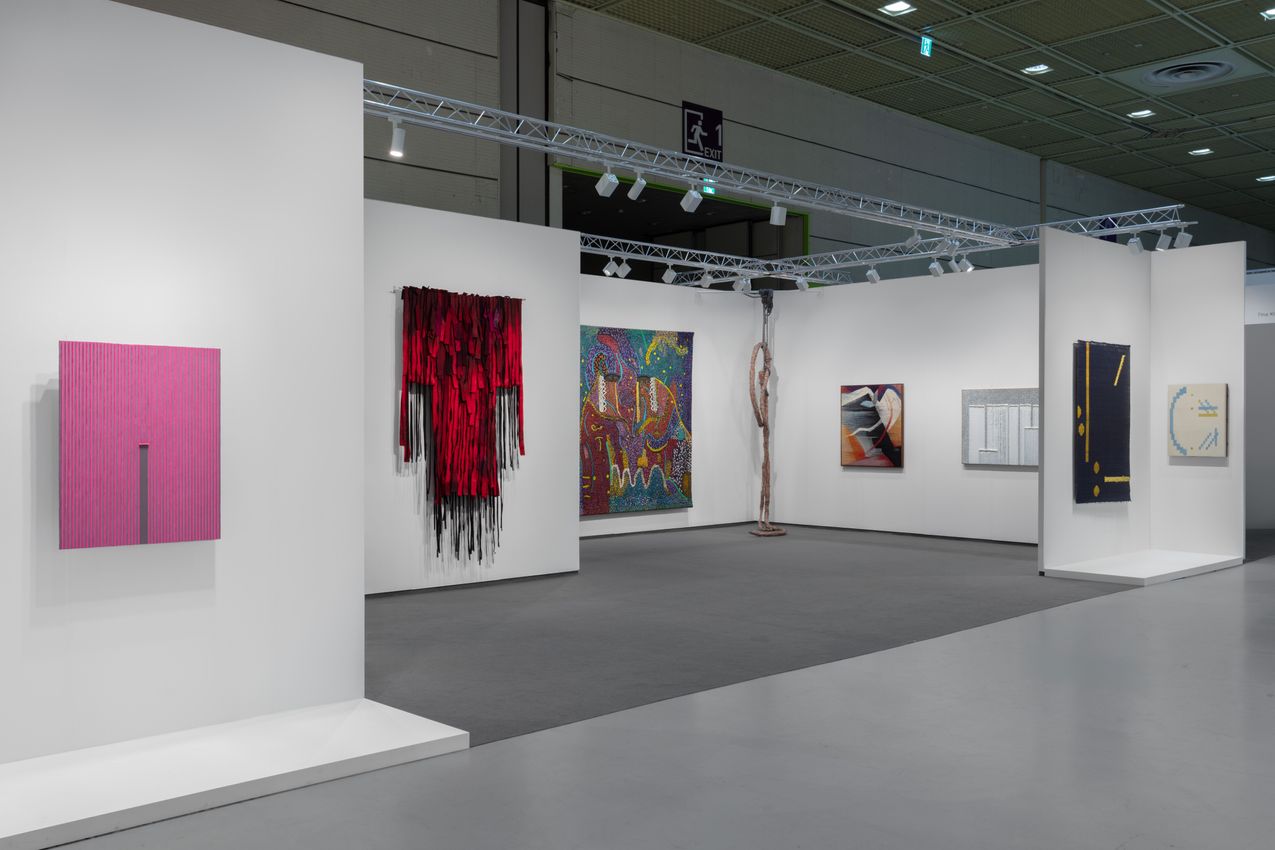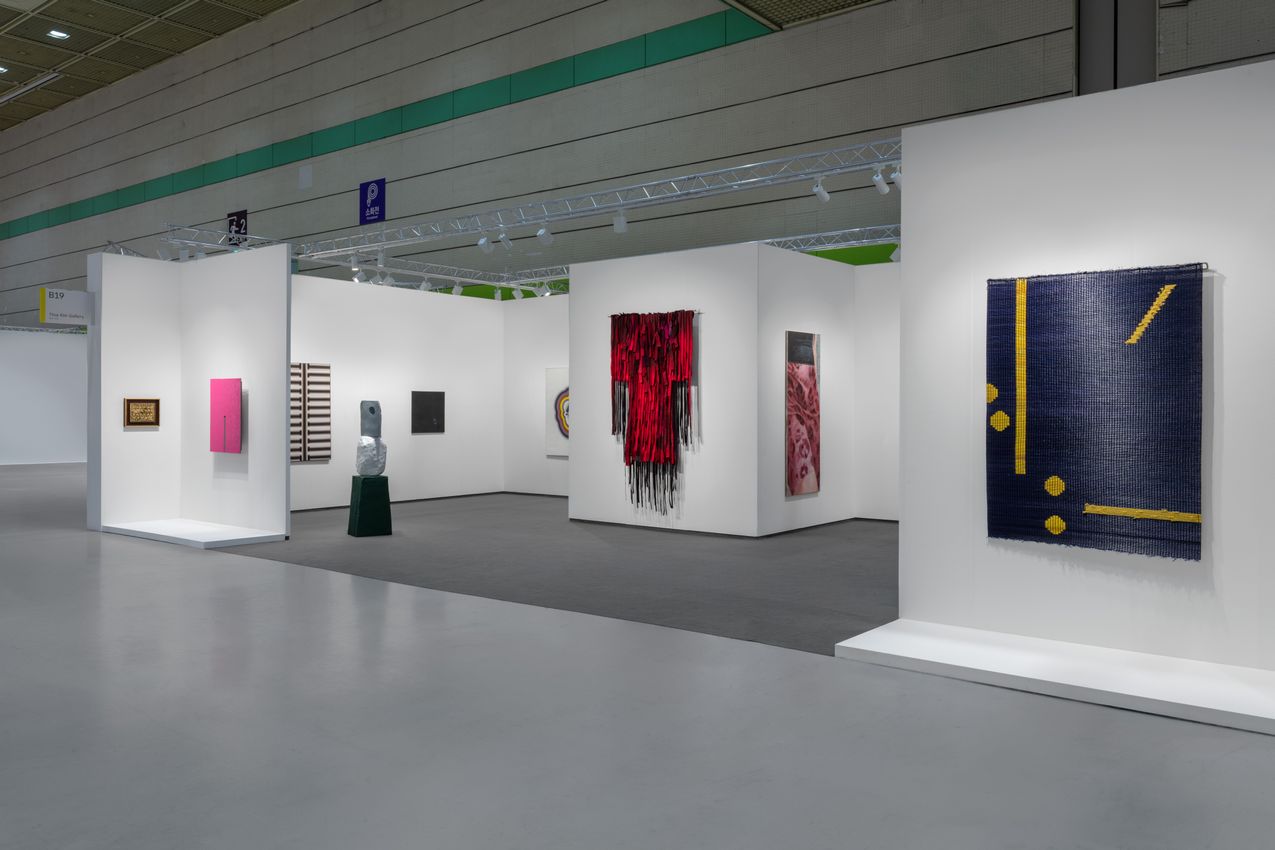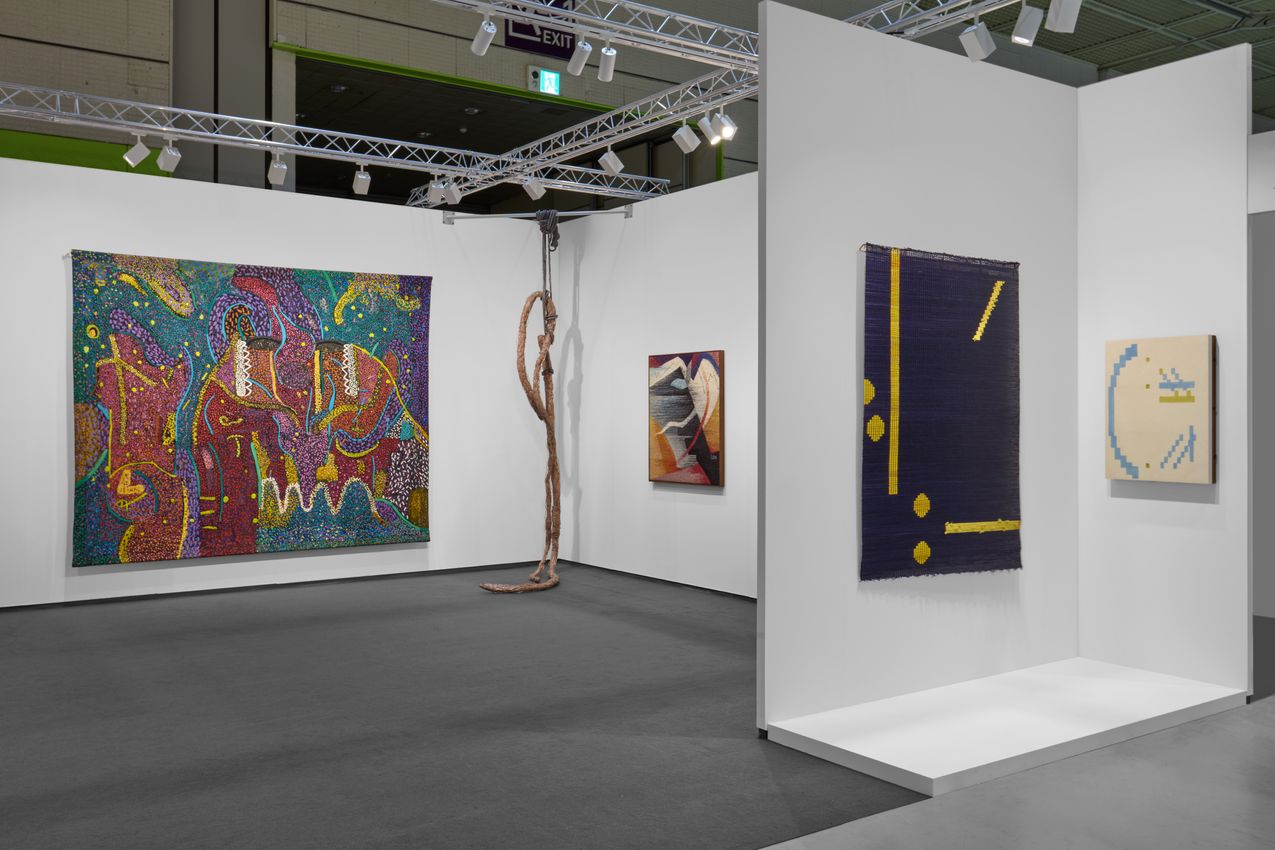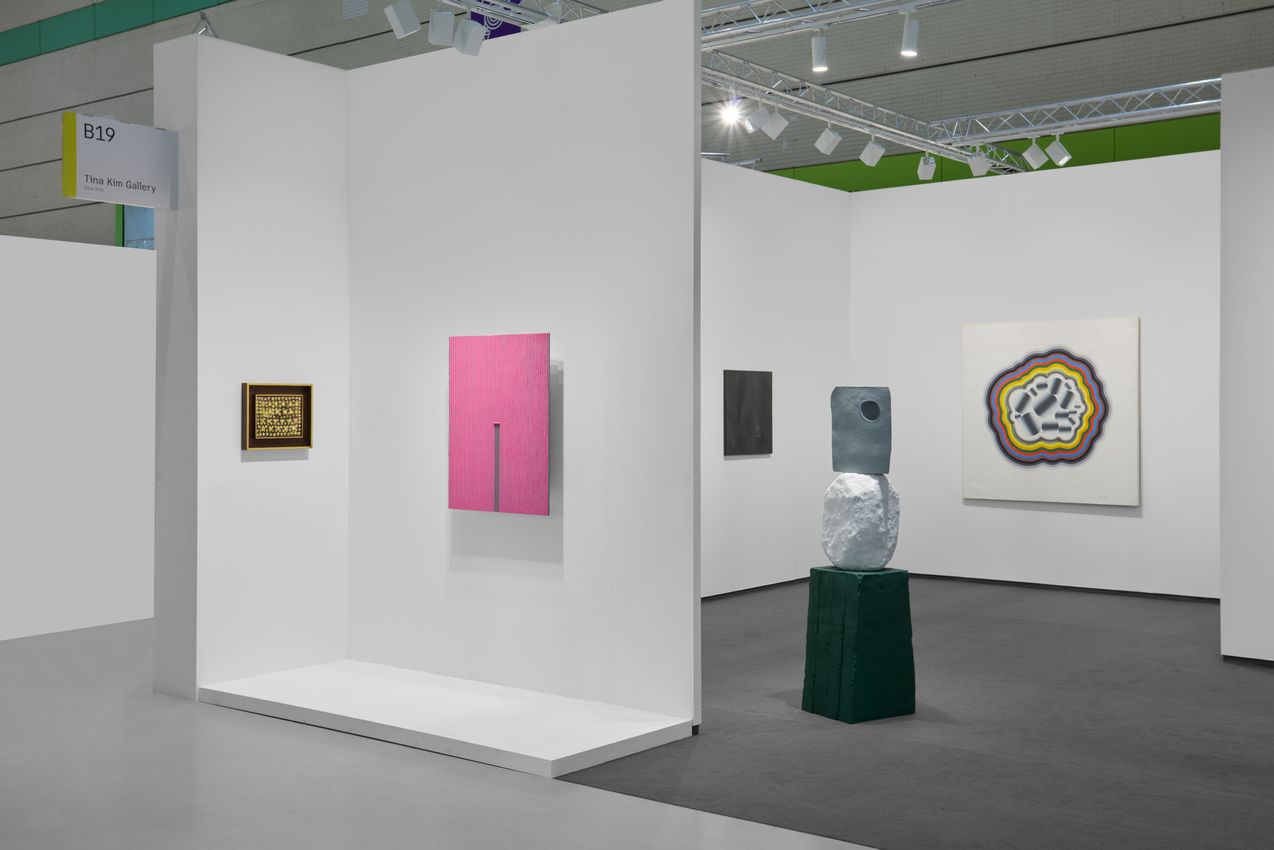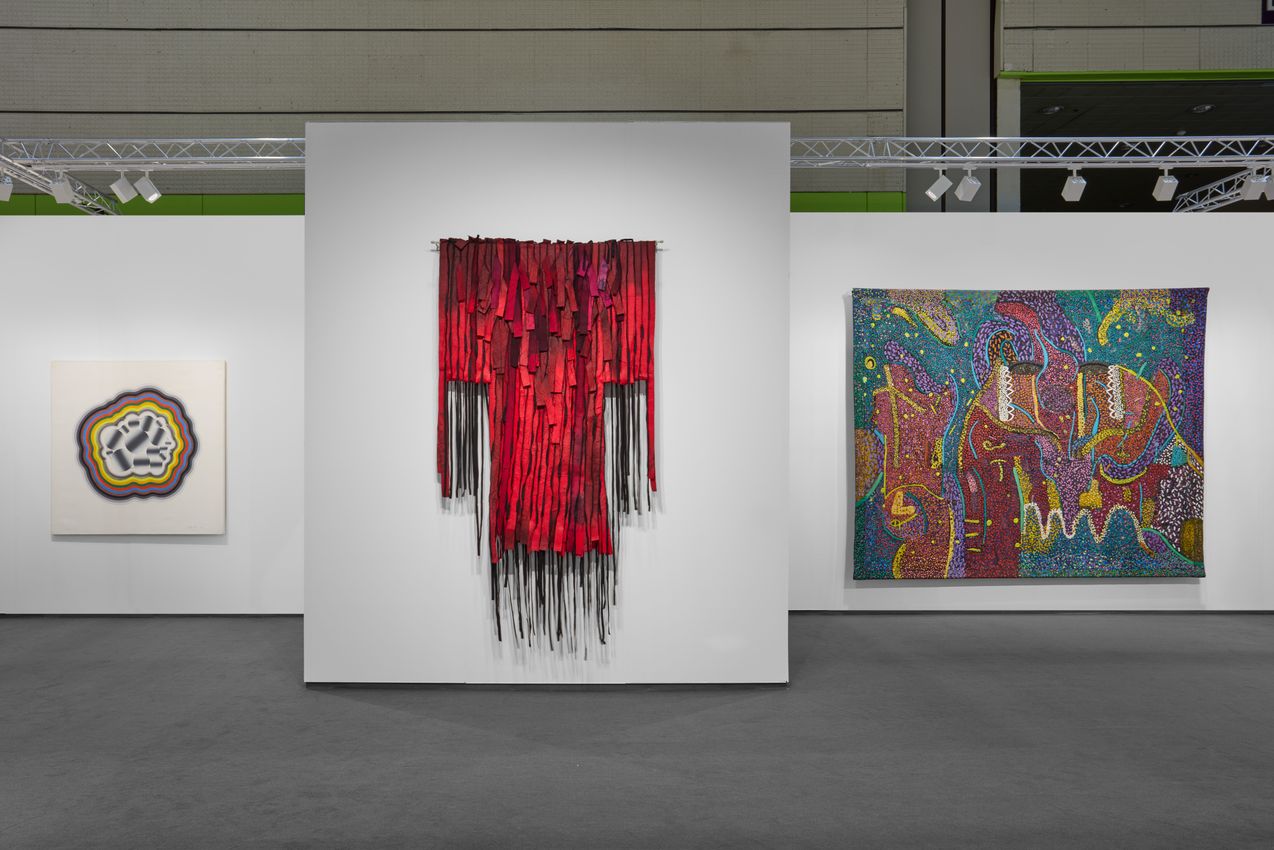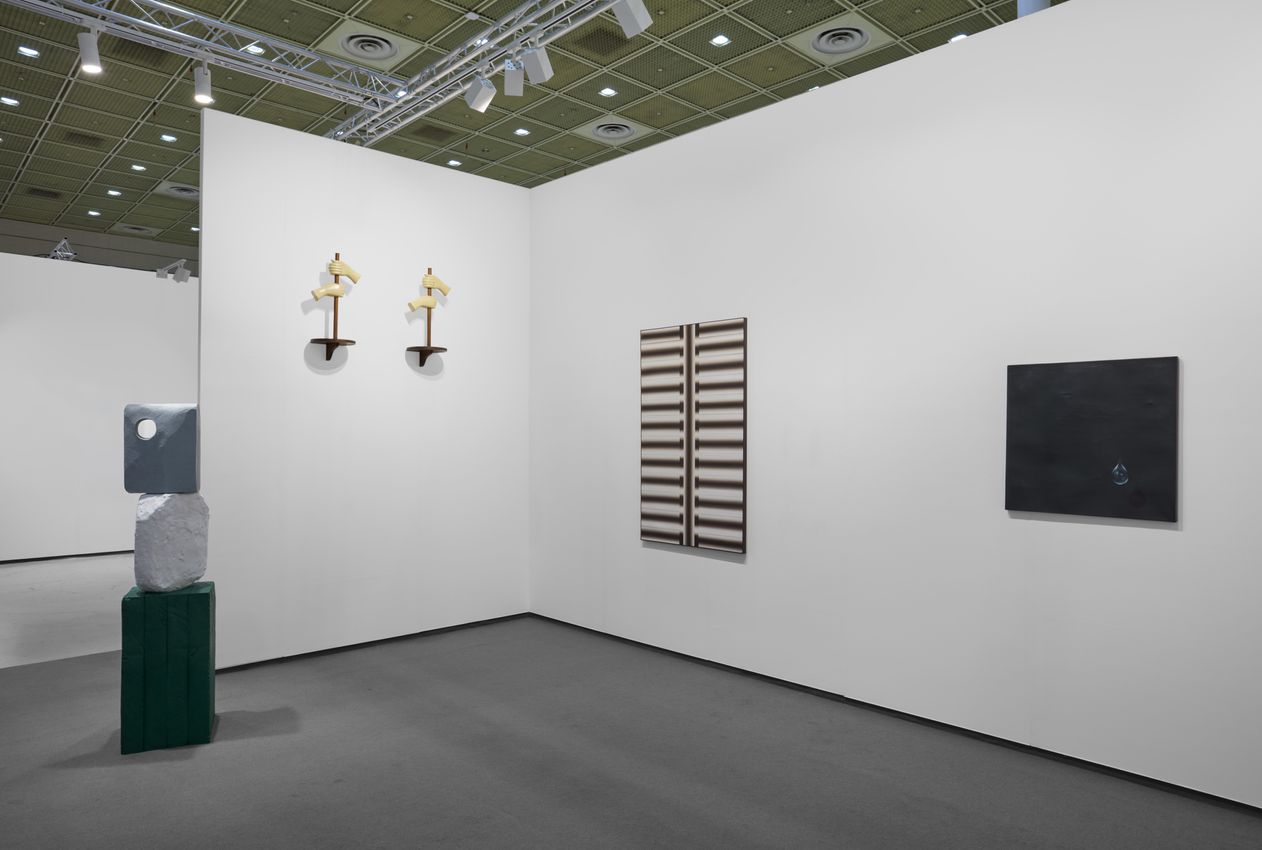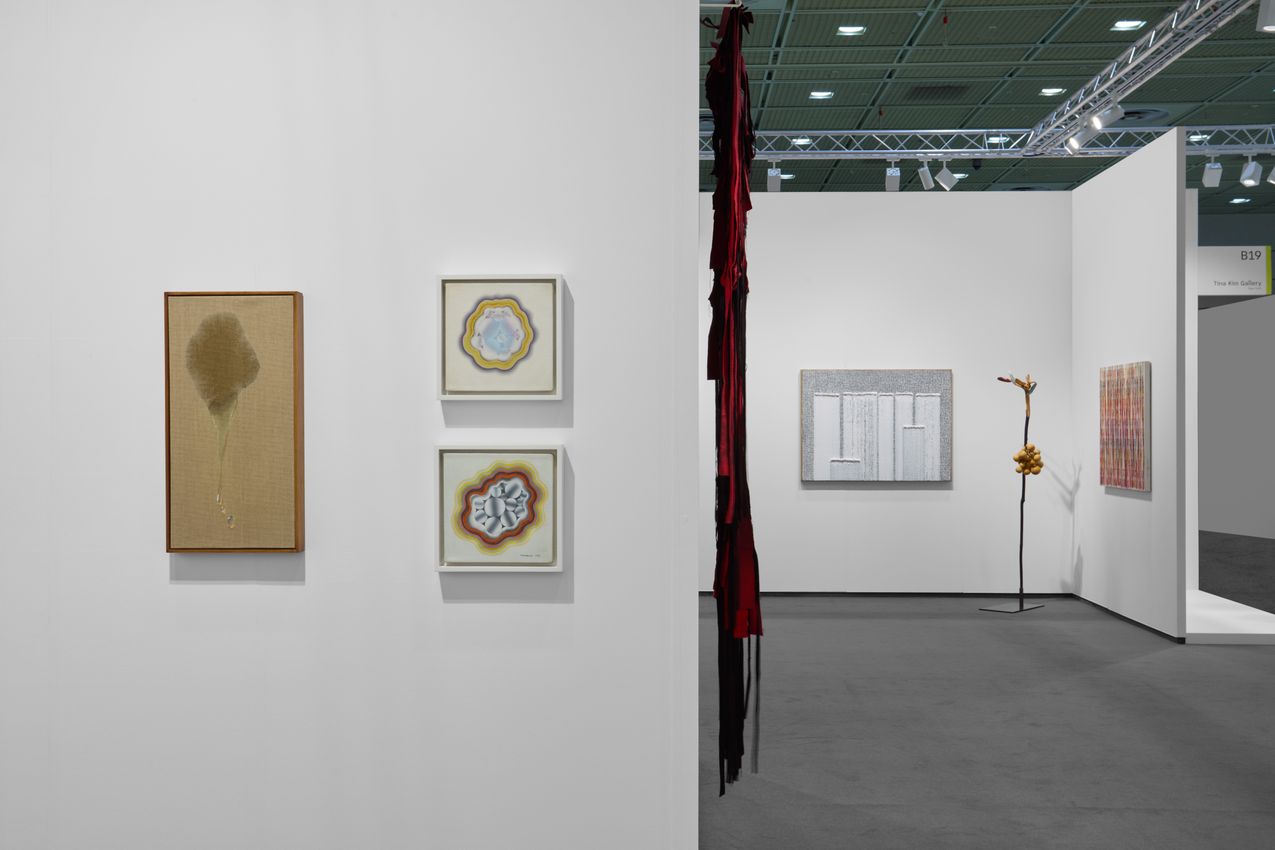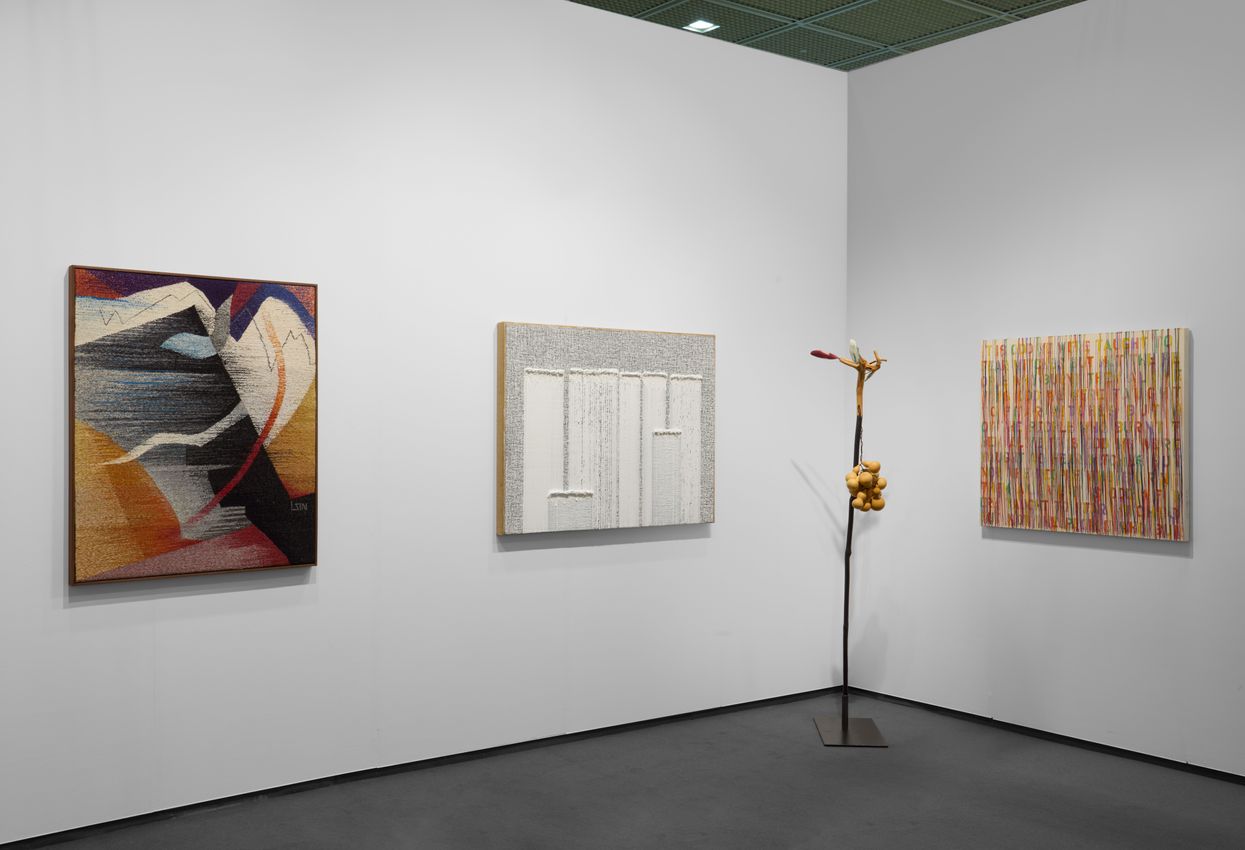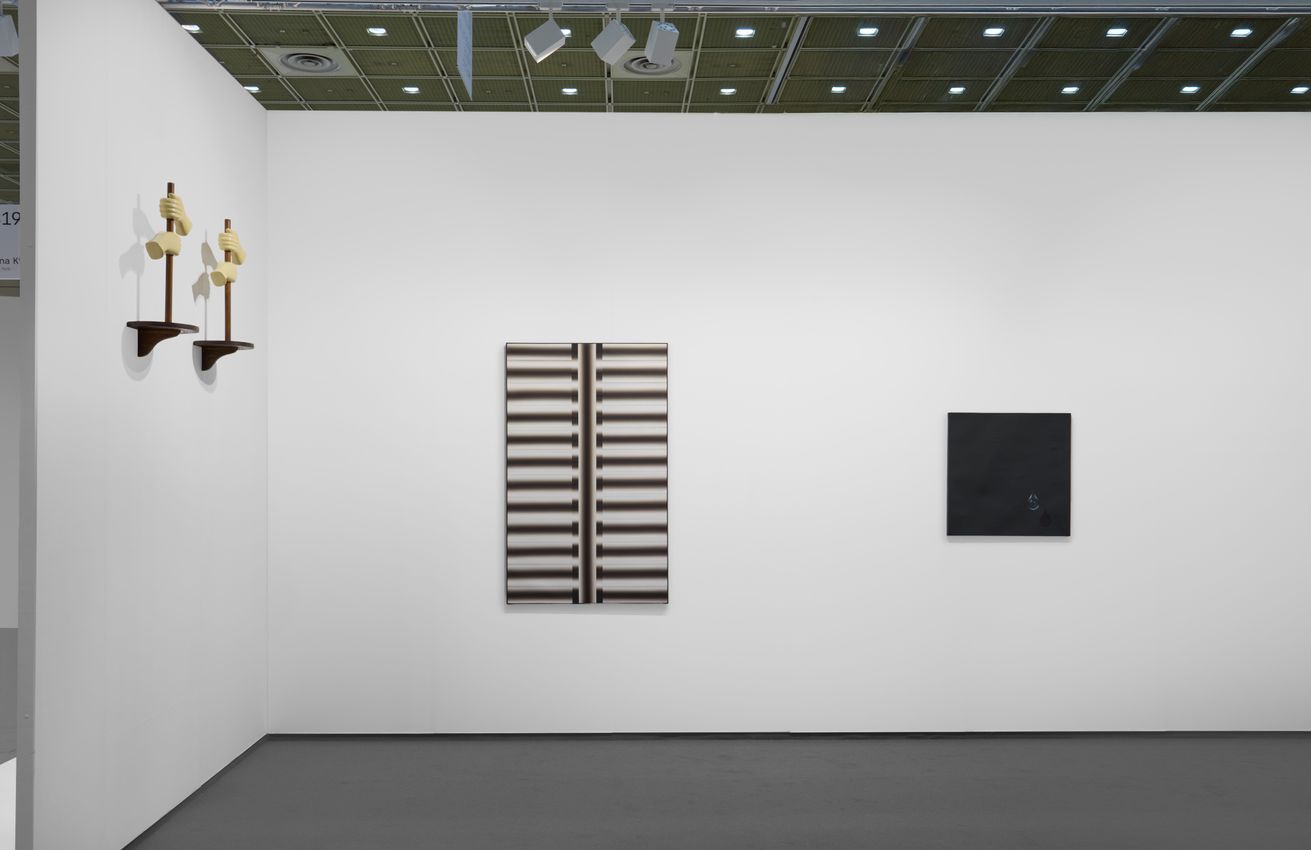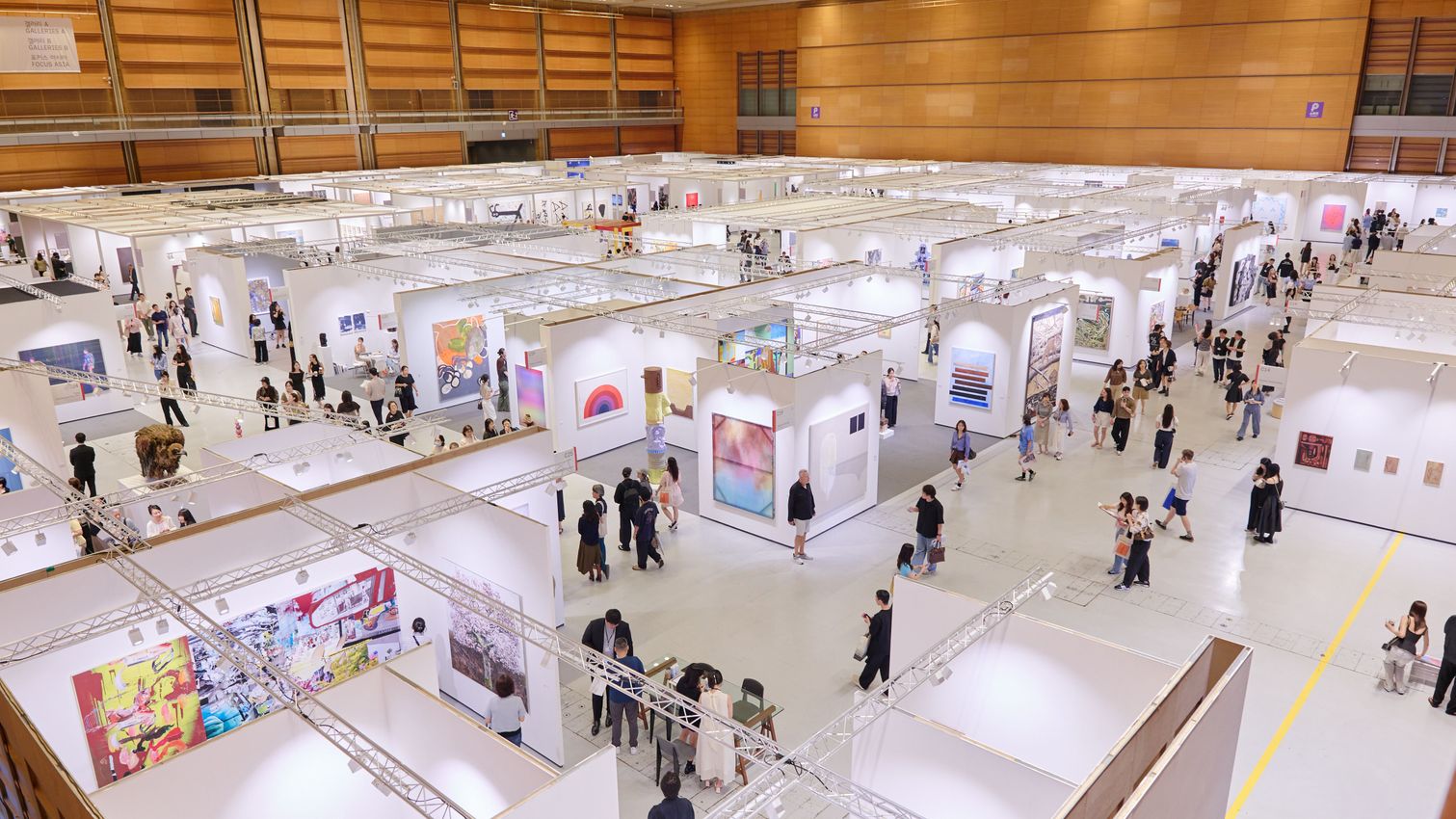
Tina Kim Gallery returns to Frieze Seoul with a presentation highlighting Korean artists from our roster, spanning pioneers of post-war abstraction to younger generations working across diverse mediums. Our selection includes artists grappling with relevant themes such as the position of the individual within contemporary society, the role of the artist within a consumer economy, the personal and political effects of global migration, and the collapse between the corporeal and the technological.
We are honored to feature works by Suki Seokyeong Kang—the beloved late Korean artist and Seoul native—who passed away this past April. In her practice, Kang navigated the tension between personal autonomy and the frameworks that shape collective life. Through an evolving vocabulary of grids, mats, and modular sculptures, her work explores how individuals inhabit space and time, while also drawing on elements of traditional Korean culture to reflect on contemporary life.
Renowned Korean painter Ha Chong-Hyun, a leading figure of the Dansaekhwa movement, is celebrated for his innovative bae-ap-bub technique of pressing oil paint through the back of a loosely woven burlap canvas. This year marks a milestone in Ha’s career with the opening of Ha Chong-Hyun Art Center in Paju, Korea during Frieze Seoul, as well as his solo exhibition Light Into Color, on view at Château La Coste, France through September 1.
Another key member of the Dansaekhwa movement, Park Seo-Bo gained recognition for his Ecriture series, originally made by inscribing marks into oil paint with pencil. We will present later works from the series, created after Park’s transition to working with the pulp of Korean hanji (mulberry) paper, which he scraped into vertical columns. The vibrant hues of these later works expand beyond the restrained palette typically associated with Dansaekhwa, channeling the vivid colors of nature.
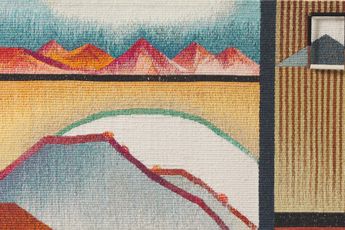
A contemporary of the Dansaekhwa artists, Korean fiber artist Lee ShinJa has played a crucial role in elevating fiber art into a respected medium in Korea. Throughout her seven-decade career, she has worked as an educator, mentor, and community leader; as a founding member of the Korean Fiber Artists Association, Lee helped establish the Korean Fiber Art Biennale in 1984. Experimenting with unconventional materials, techniques, and forms, Lee’s oeuvre ranges from semi-abstract landscapes to wearable artworks teeming with texture and color. Historically under-recognized in the global art scene, the artist’s first North American retrospective, Lee ShinJa: Drawing With Thread, is on view at the Berkeley Art Museum and Pacific Film Archive through February 1, 2026.
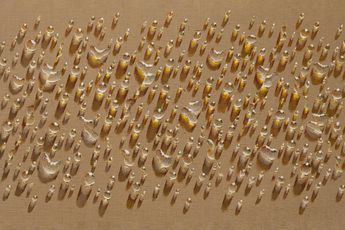
The late Korean painter Kim Tschang-Yeul is best known for his meditative waterdrop paintings, which he approached as both an exercise in catharsis and a means of dissolving the ego. In addition to these iconic works, we will be showing earlier paintings made during Kim’s time in New York, where he explored abstract, organic forms in bold colors influenced by Pop and Op art. A retrospective of Kim’s work—his first major museum exhibition since his passing in 2021—opens August 22 at the Museum of Modern and Contemporary Art, Seoul.
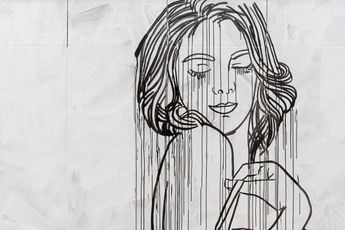
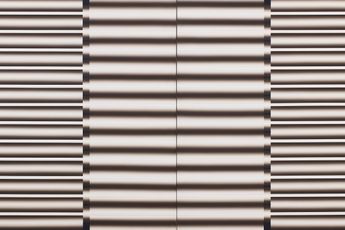
Our booth will include a painting by Lee Seung Jio, a pioneer of geometric abstraction in Korea and the subject of a solo exhibition at our New York gallery, opening September 18. Through repetitive arrangements of cylindrical, pipe-like forms, Lee’s signature Nucleus series evokes a sense of mechanical speed and rhythm. Lee traced the origins of this motif to the visual sensation he experienced while falling asleep on a moving train, linking the series to Korea’s rapid industrialization.
Also on view will be a sculpture from Gimhongsok’s Incomplete Order Development series. The Seoul-based artist is known for his humorous, ironic approach to art-making, using conceptual devices to question artistic value and the role of the artist within a consumer economy. The small, cement, humanoid figures of this series were first modeled in styrofoam and then cast in cement—a material that recalls Seoul’s urban landscape while retaining a raw, unfinished quality.
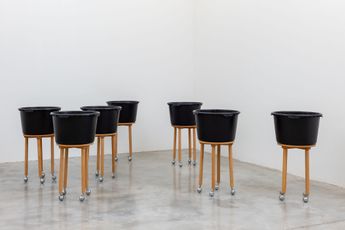
The paintings of the late Kang Seok Ho engage with the poetics of everyday life. While his paintings are rooted in figuration, these closely cropped, anonymous portraits verge into abstraction, focusing on the delicate layers of light and shadows of the sitter’s clothing. Chung Seoyoung similarly reimagines the quotidian, transforming everyday materials into enigmatic sculptures.
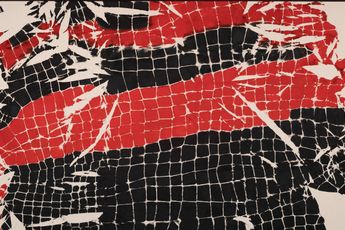
Maia Ruth Lee, who grew up between Korea and Nepal, uses a distinctive technique of binding and dyeing canvases as part of her Bondage Baggage series. This process references the methods used by Nepali migrant workers to secure their luggage, reflecting the artist’s interest in themes of displacement, transience, and transformation. The ink leaves behind a permanent trace of the ropes, forming an abstract, grid-like pattern on the canvas after it’s been unfurled.
The work of Korean artist Mire Lee has evolved through her large-scale installations, in which uncanny forms are animated by kinetic mechanisms. Our booth will feature a tentacle-like sculpture from Open Wound, her 2024 Hyundai Commission takeover of Tate Modern’s Turbine Hall, where a massive, rotating turbine was draped with these long, serpentine sculptures. Also on view will be an artist’s sketch from the same project, along with skin-like sculptures crafted from fabric and clay slip that were first shown in her 2023 solo exhibition Black Sun at the New Museum in New York.
A staff from Minouk Lim’s Portable Keeper series, engages with history and memory, like much of her multidisciplinary practice. The canes in this series were originally carved by fellow artist Chai Eui Jin, whose legacy as a survivor of a 1949 massacre is carried on by Lim’s work. With its delicate, slender form, the cane stands as a symbol of resilience and recovery from national trauma.
To round out our presentation of Korean artists, we will feature three additional international artists from our roster whose work spans across media.
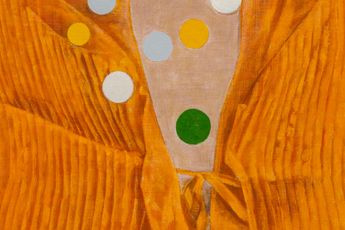
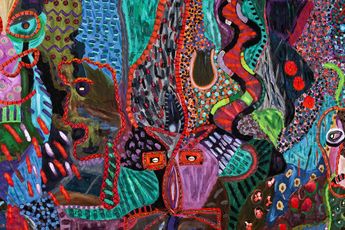
Featured in our booth are small-scale abstract paintings by the late Filipina-American artist Pacita Abad. Made in the early 2000s, these compact works are inspired by an earlier trip to Rajasthan, India, where the artist first encountered mirror embroidery, a decorative technique she incorporated into many of her quilted “trapunto” canvases. Like much of her practice, these paintings document the sensory impressions of her travels as well as her emotional states during painting. The range and depth of Pacita’s career was recently celebrated in her North American retrospective which opened at the Walker Art Center in 2023 and concluded this January at the Art Gallery of Ontario.
Embroidery works by Egyptian-born artist Ghada Amer challenge the traditional divide between women’s domestic labor and fine art, a long-running theme in her practice. These textile paintings critique gender inequality using bold, graphic messages, building upon the legacy of text-based feminist art. Also on view will be a bronze painting by Amer, a version of which was recently featured in the Metropolitan Museum of Art’s exhibition Flight into Egypt: Black Artists and Ancient Egypt, 1876–Now.
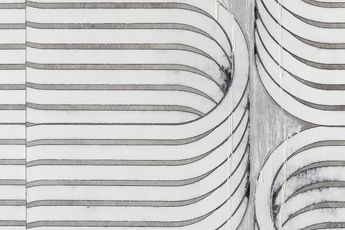
Italian-born Davide Balliano’s paintings draw on the minimalist tradition, featuring repetitive arches and curves that suggest forms extending beyond the frame. His work balances this repetition with moments of disruption, breaking the shapes through subtle offsets or dripped paint. Working with plaster and gesso, Balliano embraces surface abrasions and imperfections that evoke the weathered textures of ancient ruins. While much of his work has been grayscale, the artist has recently introduced deep red paint into his practice, reminiscent of blood flowing through veins.


A respected voice in contemporary art discourse.
Focusing on ambitious storytelling and insightful art-world commentary. Ocula Magazine publishes in-depth interviews, critical essays and timely analysis on the artists, exhibitions and ideas driving the global art world.
Learn more about Ocula Magazine
Showcasing the best of the art world.
Ocula partners with galleries from around the world to highlight their artists, artworks and exhibitions. Gallery membership is by application and invitation, with each member vetted by an independent panel.
Learn more about Ocula Membership

Specialises in the sale of major artworks.
Led by a team with deep ties to the world’s leading auction houses, galleries and collectors. Ocula’s advisory team offers bespoke services to high-net-worth clients from around the world who are looking to acquire the best of contemporary and modern art.
Learn more about our team and services