‘You go ahead. I need a moment to catch my breath. I’ll catch up.’ — So Yo Hen.
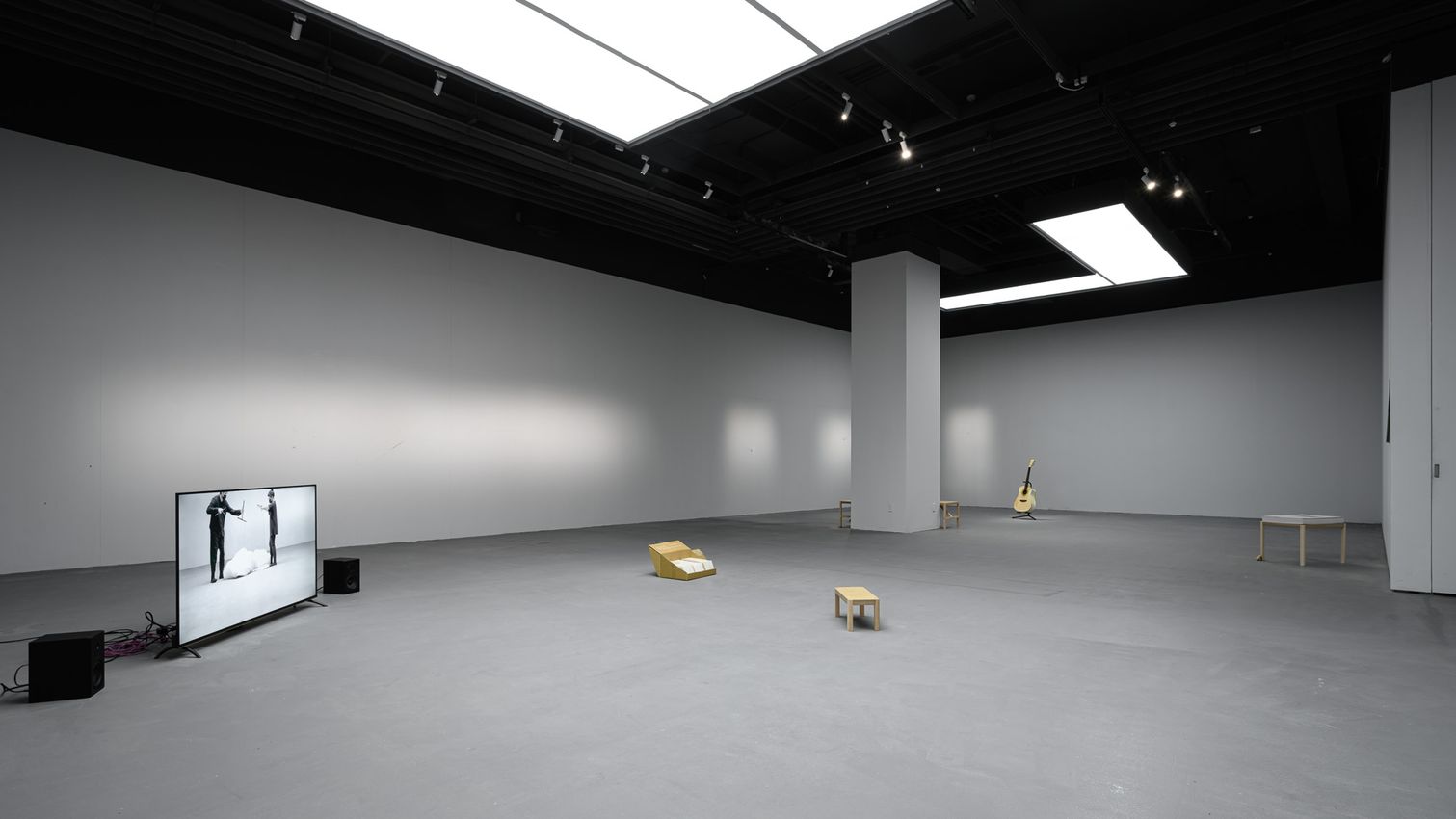
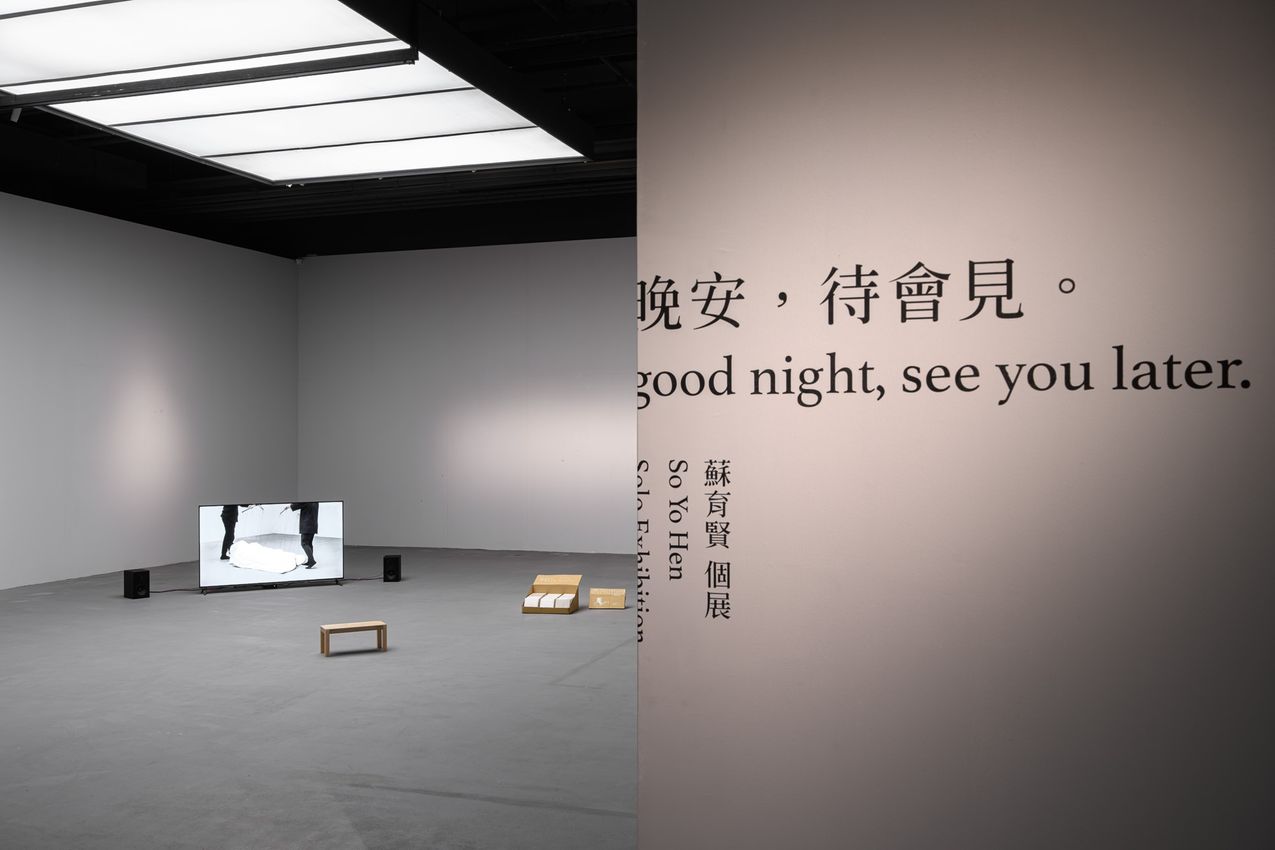
For his 2017 solo exhibition Plaster Gong, So Yo Hen recovered lost footage of Chen Ying-Zhen cracking a plaster gong in Huang Hua-Cheng’s play Prophet (1965) and transformed it into a series of sound experiments. By resurfacing this scene, which was often omitted from historical archives, he produced sounds carrying a cultural significance that echoes far beyond a mere return to history. Four years later, So has taken the destruction of an instrument into his own hands in the production of Good night, see you later., his latest solo exhibition at TKG+. Departing from his previous two exhibitions which featured works centred on archival research and field investigation, this exhibition incorporates more organic on-site productions. With this new in situ approach — in conjunction with the various physical and intangible quarantines imposed by the Covid epidemic that broke out in May — the scope of the exhibition has gradually expanded and condensed between the exhibition space and other locations.
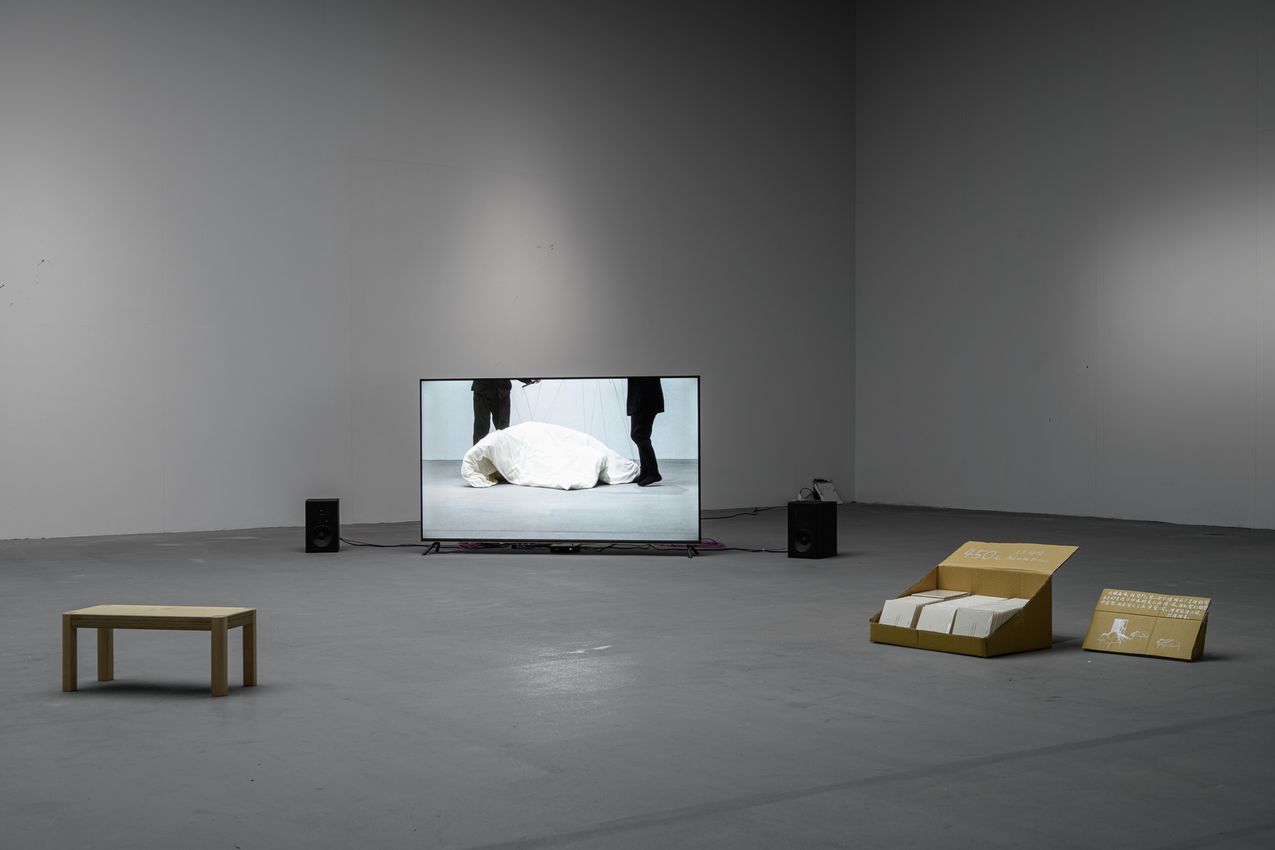
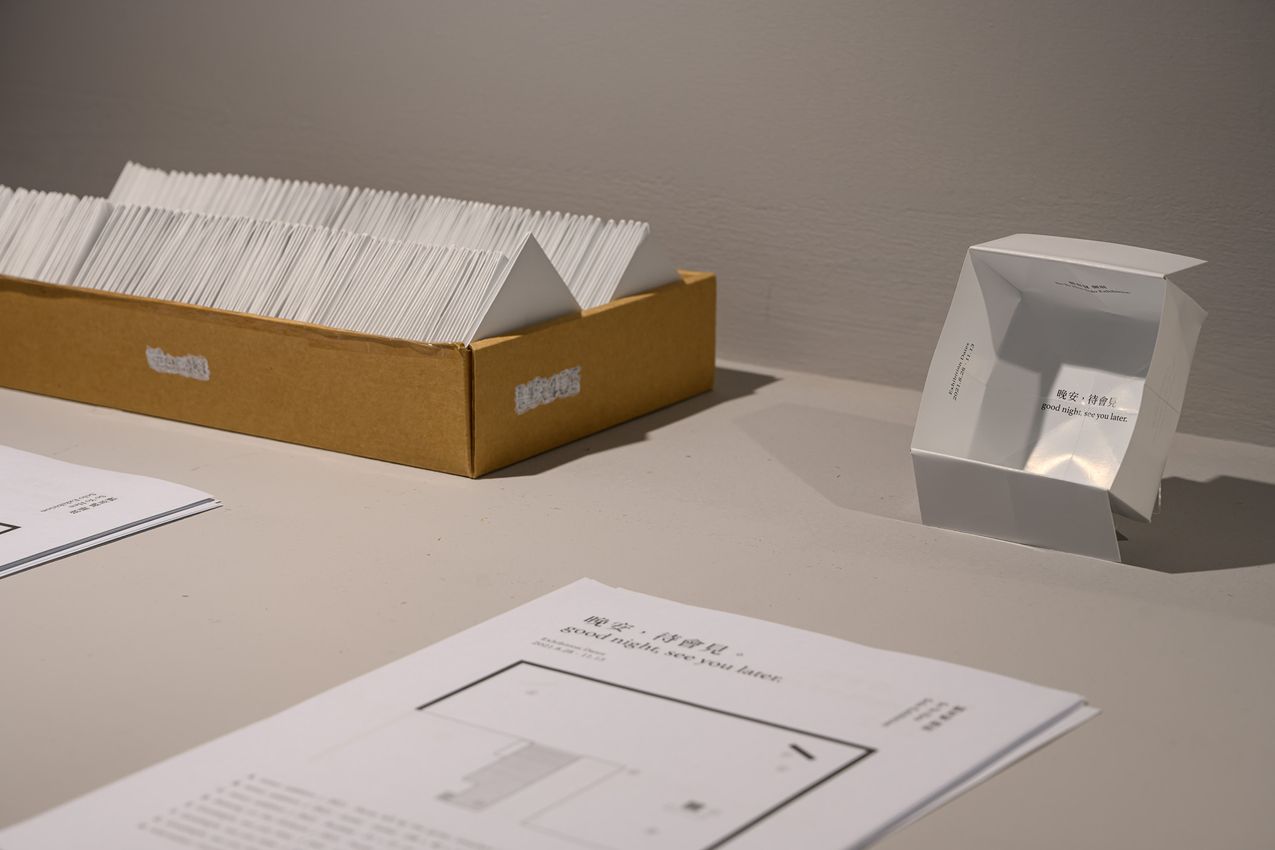
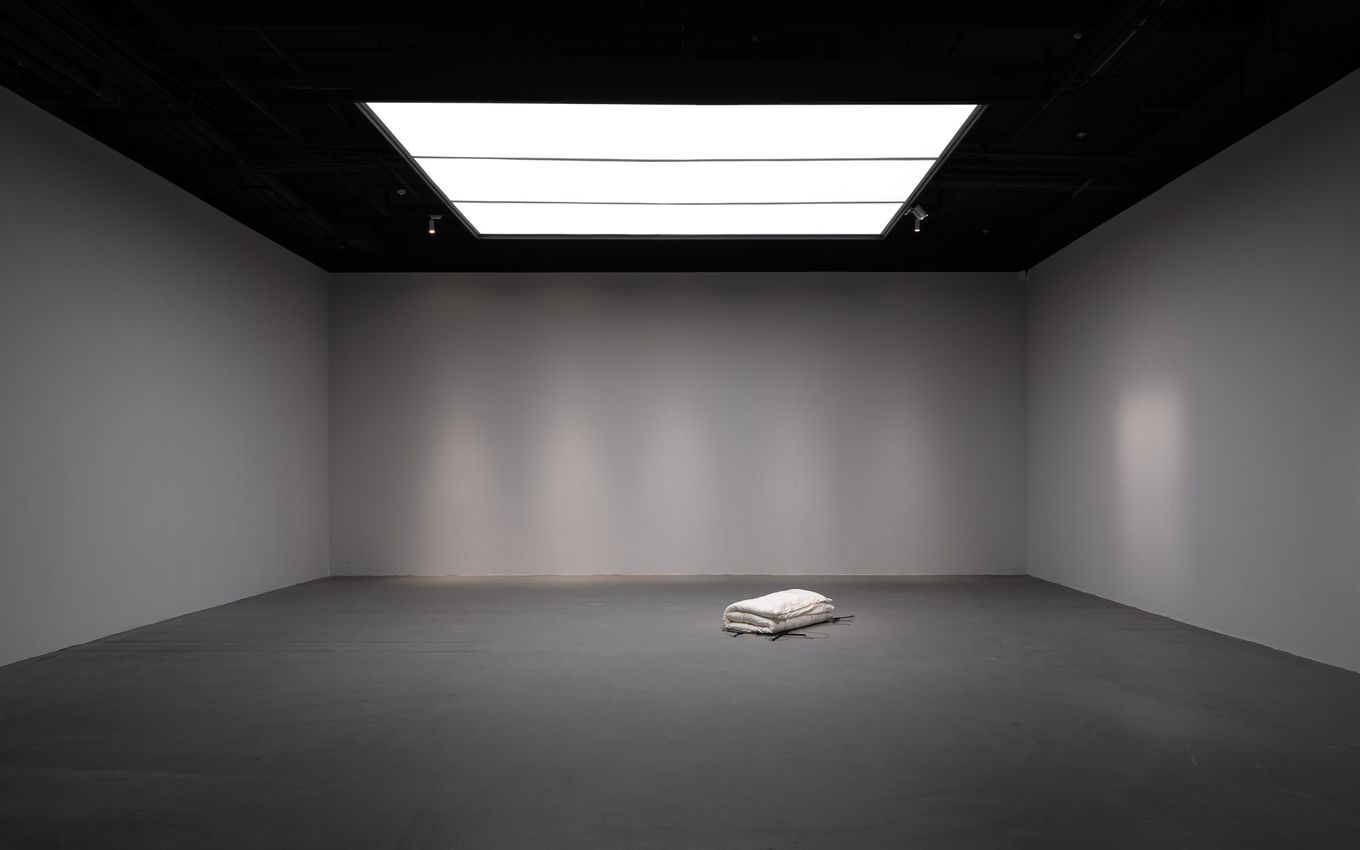
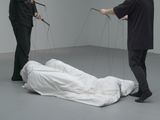
At times, as the exhibition title Good night, see you later. suggests, these locations point towards home. This intimate farewell is a reference to So’s parting words to his children when he sends them off to bed each night. When his children are awake, he plays the role of the father; when they are asleep, he may resume his role as an artist. As such, this unique phrase also signifies the compartmentalisation of his different identities in daily life. However, when So prepares to retire for the night, not only must he return to his bedroom silently, he must also position his body in a manner that is suitable for falling asleep without disturbing the person sleeping beside him. The sleepless artist thus transforms himself into a living sculpture set upon a bed pedestal, as seen in Good night, see you later. The video work uses marionette puppetry to portray a figure squirming beneath a quilt, demonstrating the struggle of an artist/father who must contort himself to fit various roles in juxtaposition to his family.
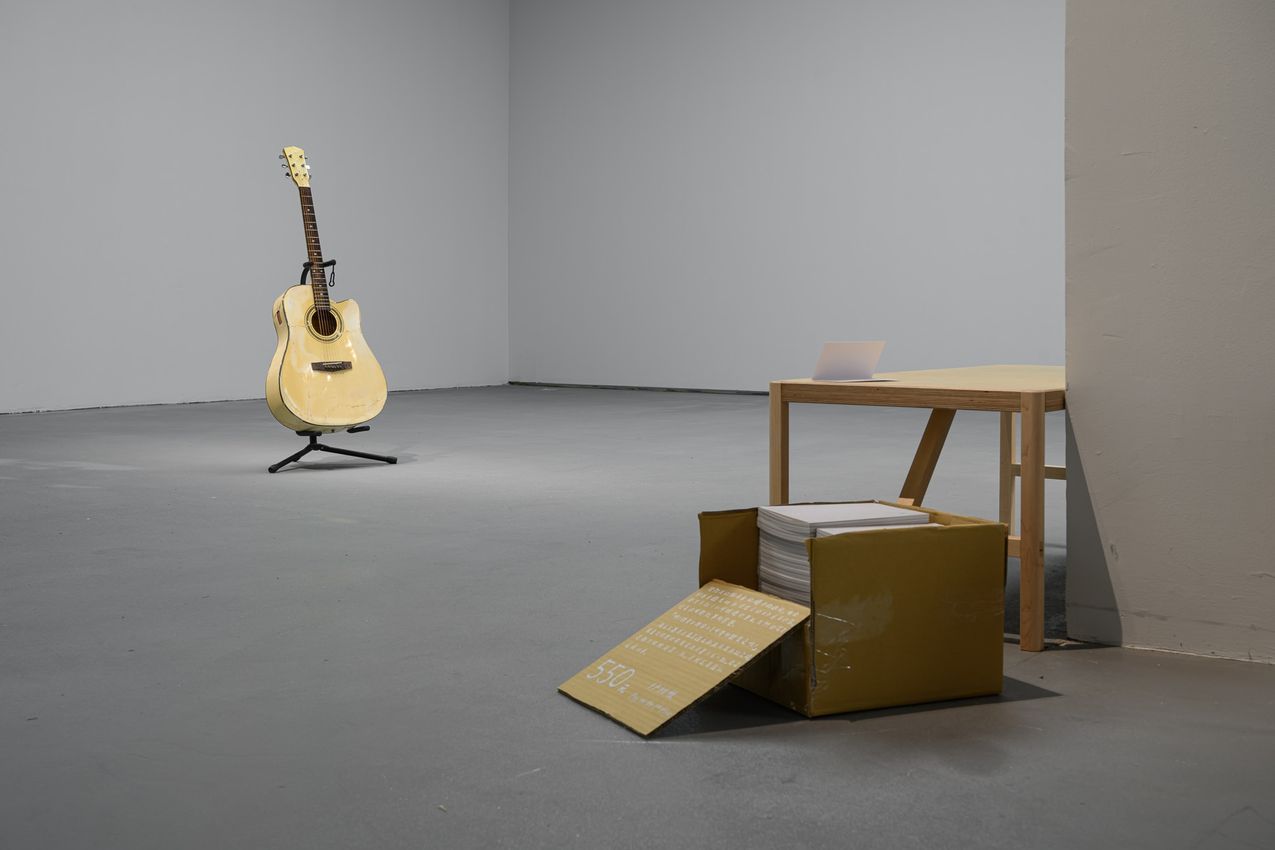
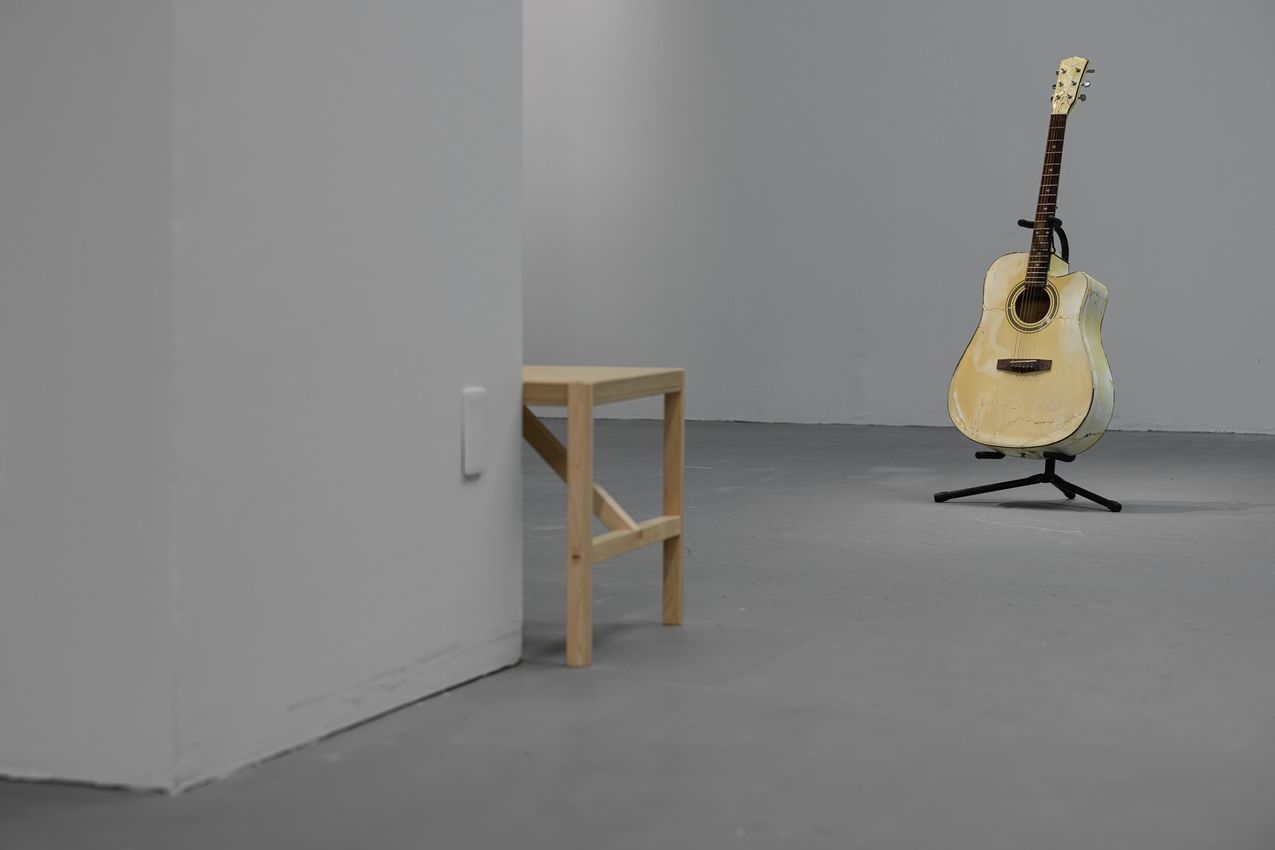
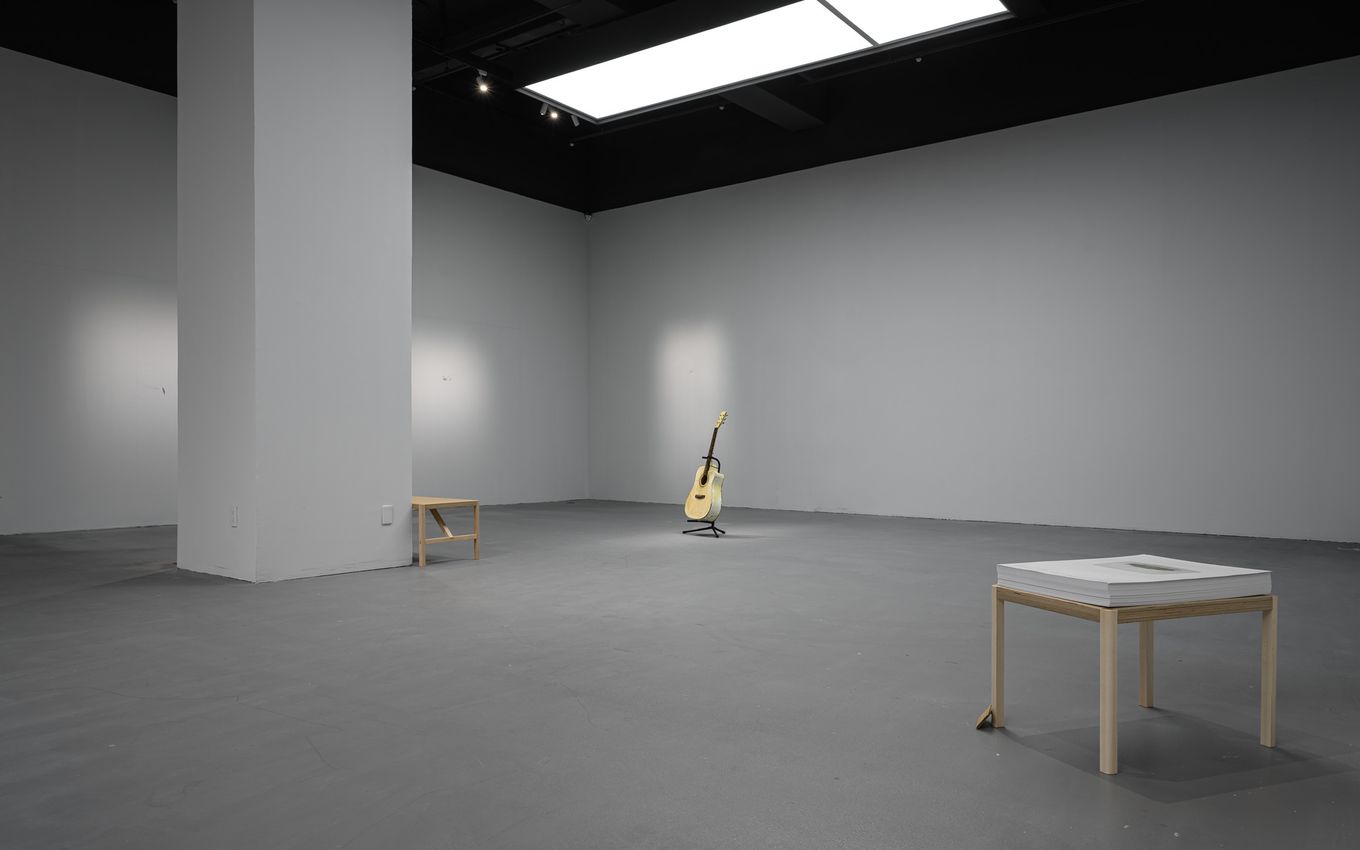
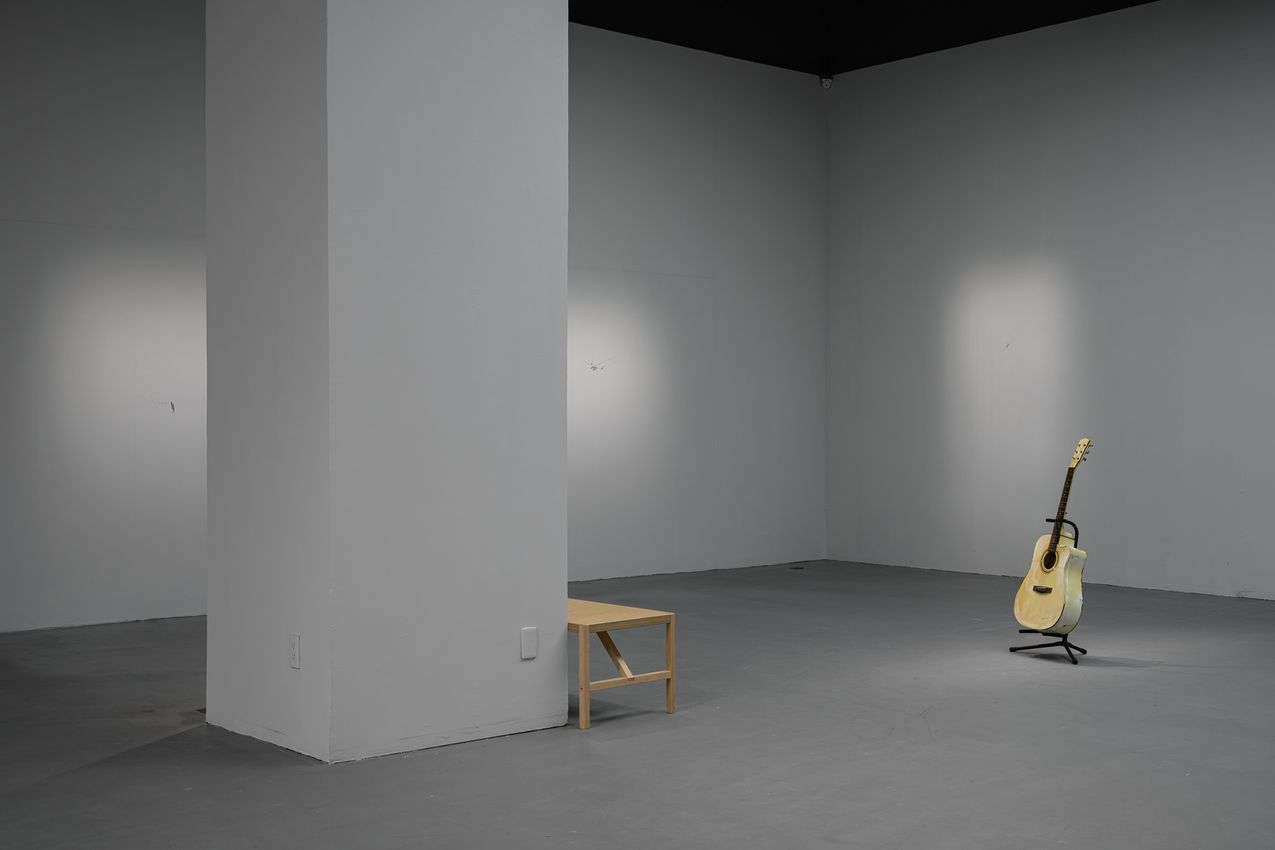
The work minus addition was initially scheduled to be produced on-site at TKG+ in mid-May. On the first day of production, So repeatedly smashed a guitar until it was shattered, leaving various traces of destruction along the gallery walls. However, that same day, the number of confirmed Covid cases in Taipei suddenly spiked from 29 to 180, forcing the artist to postpone his plans for on-site production. Because he was unable to continue working in Taipei, he took the guitar back to Tainan for repair. When he returned to Tainan to resume the course of his regular life, the restoration of the guitar became his primary focus. For So, this guitar that was destroyed in an instant, but required a tremendous amount of time and effort to restore to its original appearance, not only filled the gap left by his impeded production plans, but in the aftermath of the outbreak, opened up a consistent channel of bizarre remote interactions that are inevitable during times of self-isolation.
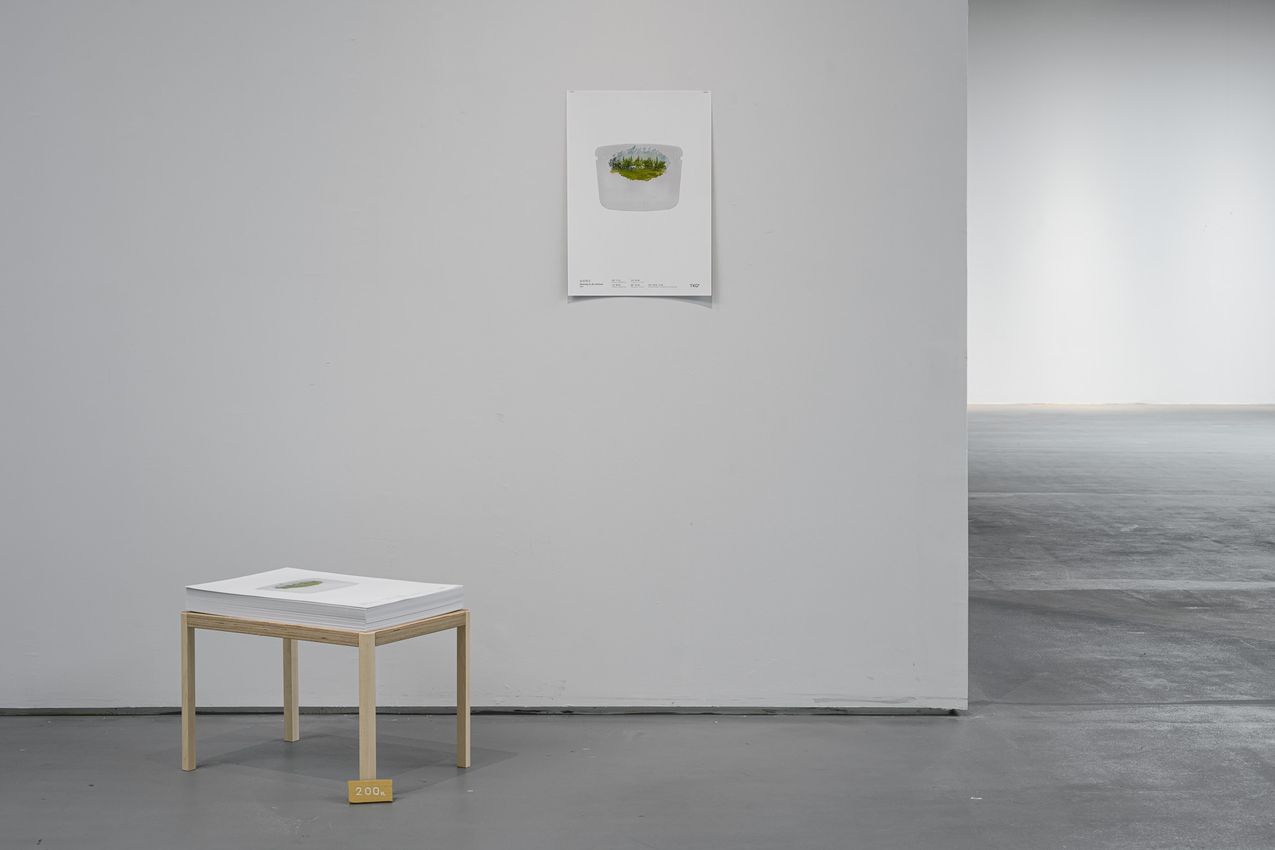
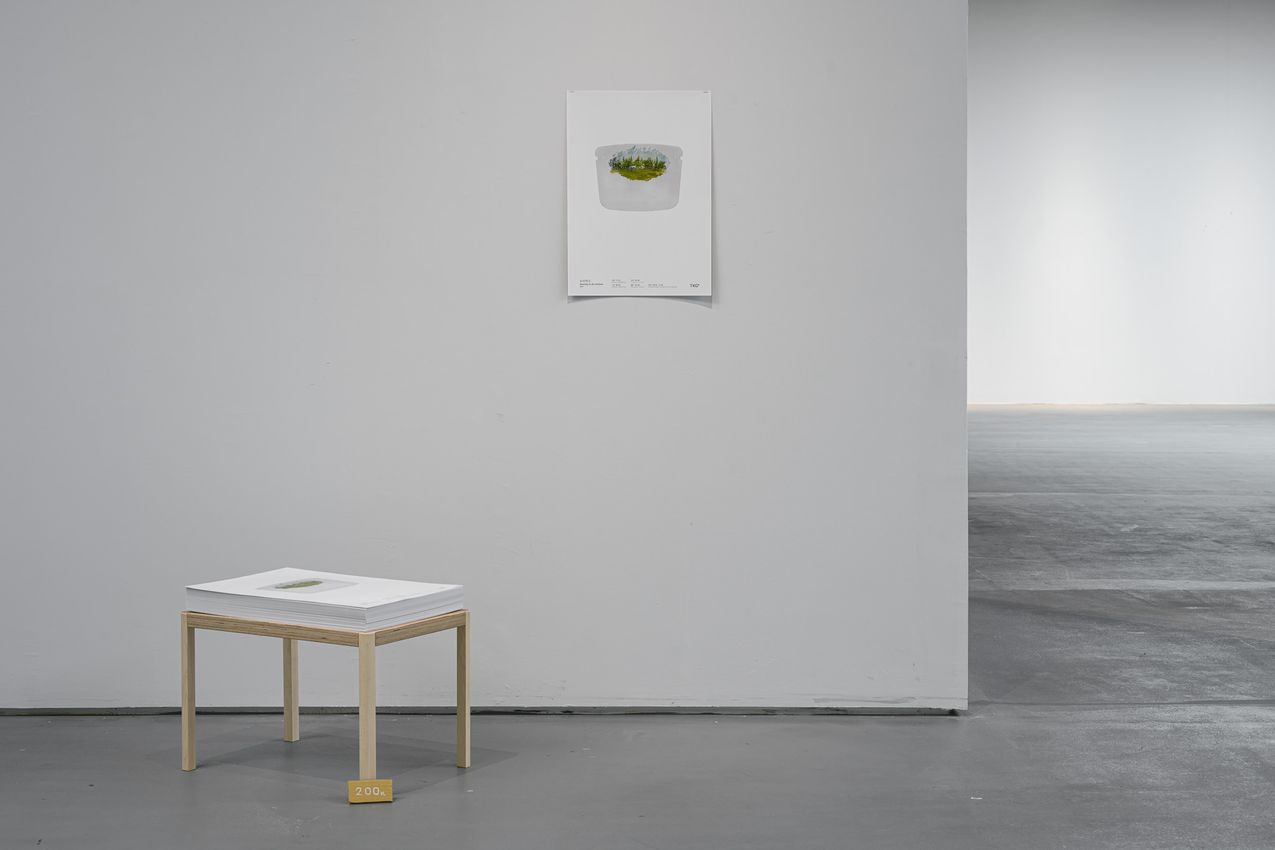
Such a channel transports us to places and situations that feel simultaneously familiar and foreign. This phenomenon is also reflected in So’s views on drawing from life. An artist preparing to create a sketch from life must erect a set of interfaces between himself and the objects in the foreground, so that he may carefully depict the scenery before him, thus educing an intermediary state between him and the landscape. On one hand, we must acknowledge that this interface functions as both a bridge and a barrier, even if extended interaction with it elicits the sensation of dissolving into the landscape. However, once the completed landscape is transferred to the exhibition site, the viewer’s observation of the work forms another set of interfaces that paradoxically permits and prevents the viewer from truly seeing the scenery.
Ultimately, the work Drawing on the Outlook forms an interface that acts as both a bridge and a barrier between the viewer and the scenery depicted in the landscape. In So’s own words, ‘The painter who wears a face shield draws the scene before him on the shield itself. Such a depiction is an expression of the phenomenon, but also a rejection of the phenomenon.’
This solo exhibition marks a major shift away from So’s previous approach of field research as a basis for his work, which he had been practicing since his 2013 solo exhibition Hua-Shan-Qiang. This shift runs parallel to the Covid outbreak, which can be attributed only to the arbitrary progression of the natural world (although conspiracy theories inevitably buzz amid the commotion). However, in the contemporary art sphere, there are ongoing controversies surrounding numerous issues and trends that are important to address. Wearing a mask and face shield, the artist meanders between the exhibition space and his home, with an attitude embodied by the phrase ‘I’ll catch up.’ In this way, his experience mirrors the experience that many have endured due to the imposition of level 3 lockdown restrictions in Taiwan. Meanwhile, during this time of ubiquitous self-isolation, the only faces we are able to see belong to those nearest to us, to whom we can say ‘Good night, see you later.’


A forerunner of Taiwanese modern art, the Tina Keng Gallery hinges upon the philosophy that art is a reflection of the times. The Tina Keng Gallery has its roots in the Lin & Keng Gallery (1992–2009) based in Taipei, Taiwan and Beijing, China. Delving into Western painting and Chinese art history, Lin & Keng tirelessly promoted the work of Asian classical masters, cultivating a critical thought on Greater Chinese modern art. The Tina Keng Gallery has continued this tradition by centering its focus on Asia, further excavating art history and rediscovering modern aesthetics. Upon this foundation, the Tina Keng Gallery is steadfast in nurturing Taiwanese modern and contemporary art, with hopes to capture the changing states of art through writings of history, in so doing highlighting the cultural underpinnings of its worldview. Art arises from culture, and culture mirrors the times. The Tina Keng Gallery endeavors not only to support Greater Chinese modern and contemporary art, but to shape a perspective that is elementally Asian.

A respected voice in contemporary art discourse.
Focusing on ambitious storytelling and insightful art-world commentary. Ocula Magazine publishes in-depth interviews, critical essays and timely analysis on the artists, exhibitions and ideas driving the global art world.
Learn more about Ocula Magazine
Showcasing the best of the art world.
Ocula partners with galleries from around the world to highlight their artists, artworks and exhibitions. Gallery membership is by application and invitation, with each member vetted by an independent panel.
Learn more about Ocula Membership

Specialises in the sale of major artworks.
Led by a team with deep ties to the world’s leading auction houses, galleries and collectors. Ocula’s advisory team offers bespoke services to high-net-worth clients from around the world who are looking to acquire the best of contemporary and modern art.
Learn more about our team and services