From the tenderness to the obstinate gripping tension; from being entranced by a stare to the sensation of feeling spaced out in a void; from the text of a story to the reading of an incident, these endpoints of differences in characteristics connect and create a “discrepancy.” It displays an undulating cadence in the narrative and infuses meanings to the anticipation in between, similarly to an exhilarating prelude developed into a mediocre ending or how the concealed surprise is unveiled in the indifferent everyday. If the narrative is a line, this line is formed by numerous connected dots when the pen and surface touch. But our naked eye can only see the line that is completed; our brain processes and archives it as an image of the linked endpoints. To push such connotation forward, that line, that every scene happening in the narrative exists only for us to perceive and feel the dots; to accommodate a poetic stroll on such narrative and thus think and make choices between the “in-between.”
The Chinese title of Joyce Ho’s exhibition, 事故 (literally “incident”), is a witty wordplay that invites interpretations. The myriad of possibilities, just to state out the obvious three, includes the double meaning of the words, homophony of the diction and the reading direction. Its English title NO ON can be read as two separate words NO and ON, or as one word NOON. In the forming of the word and its nuance in its kerning and syllable, the title of the exhibition lingers between the distance created by a spacebar and therefore creating the scope of a discrepancy. This scope becomes the first space Ho came across in her practice and the prelude and the starting point of the exhibition represented by a line. This way of manipulating the multiple meanings of symbols might seem straightforward at first. However, in contemporary society when symbols and their interpretations are disordered, this simple method revealed through the exhibition and the space attracts and draws viewers into perceiving their most intimate everyday stories.
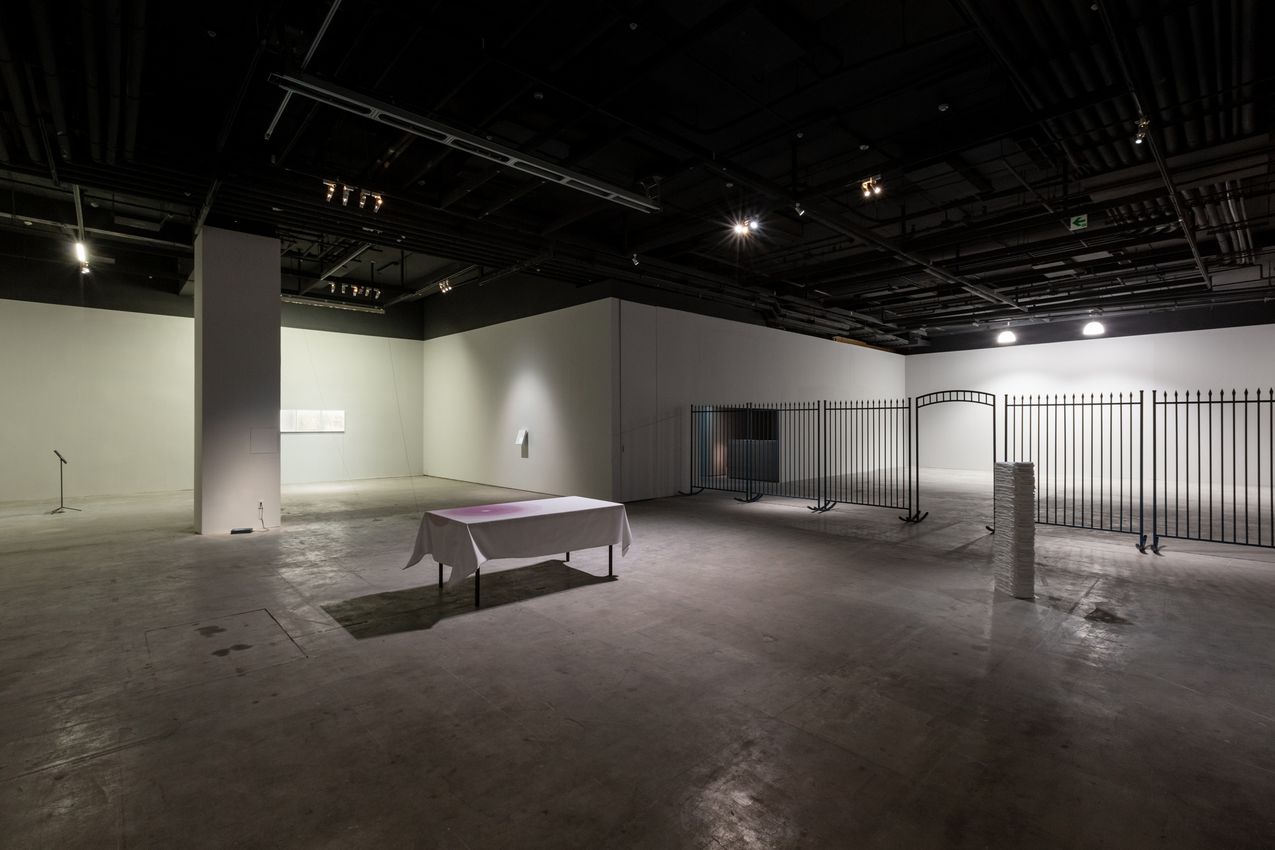
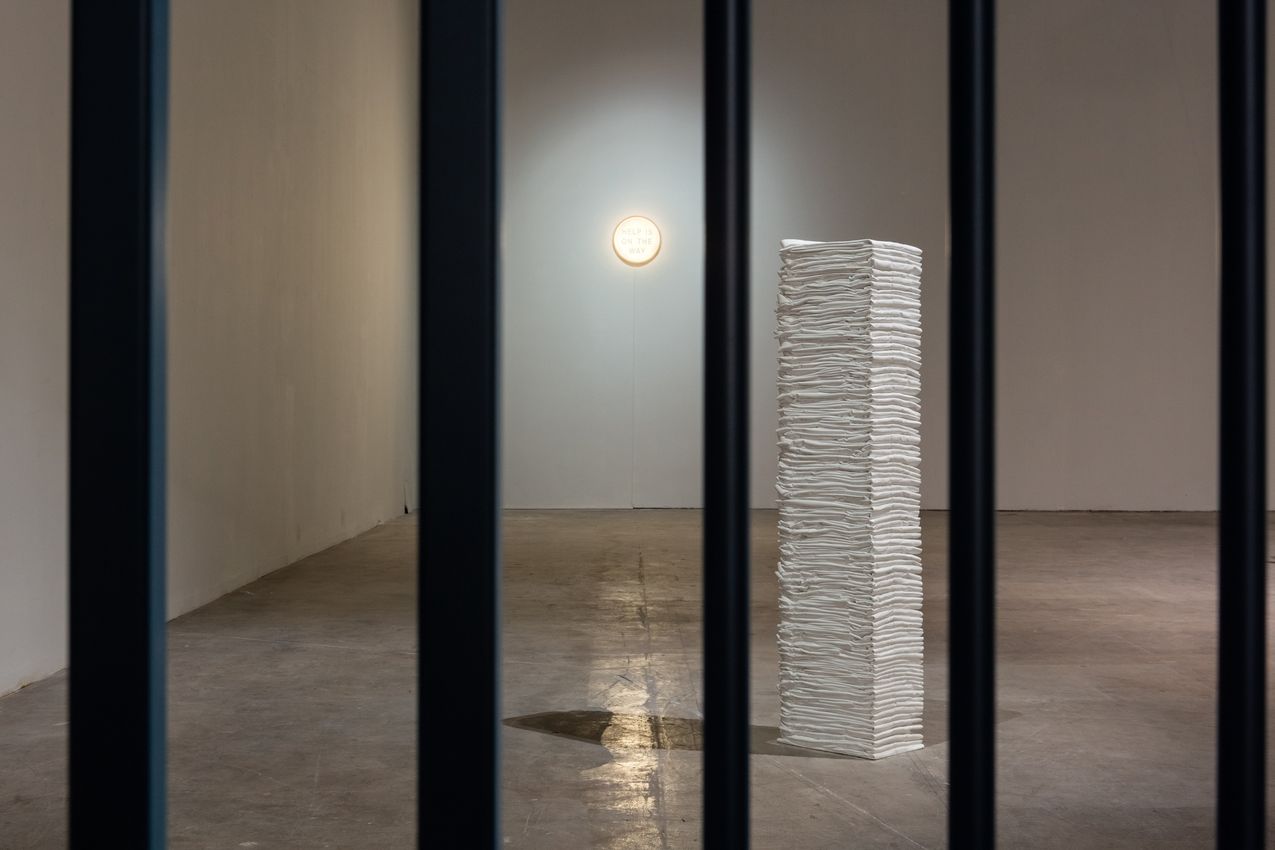
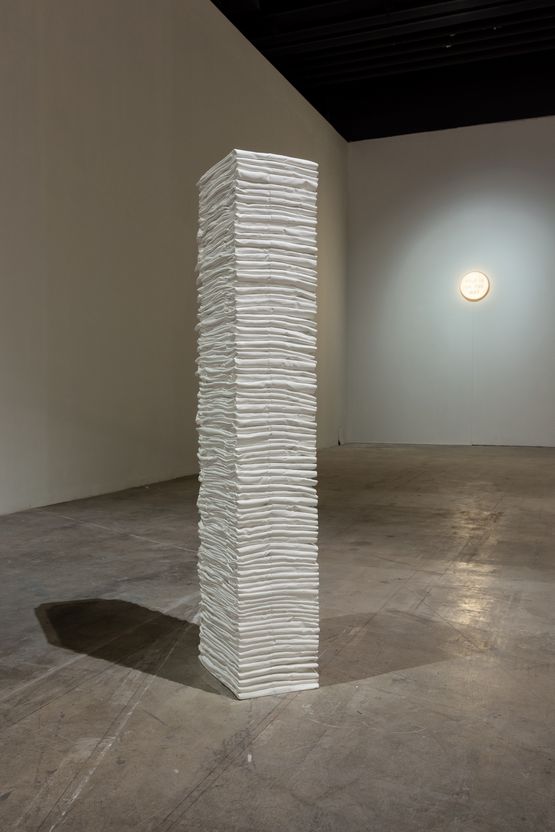
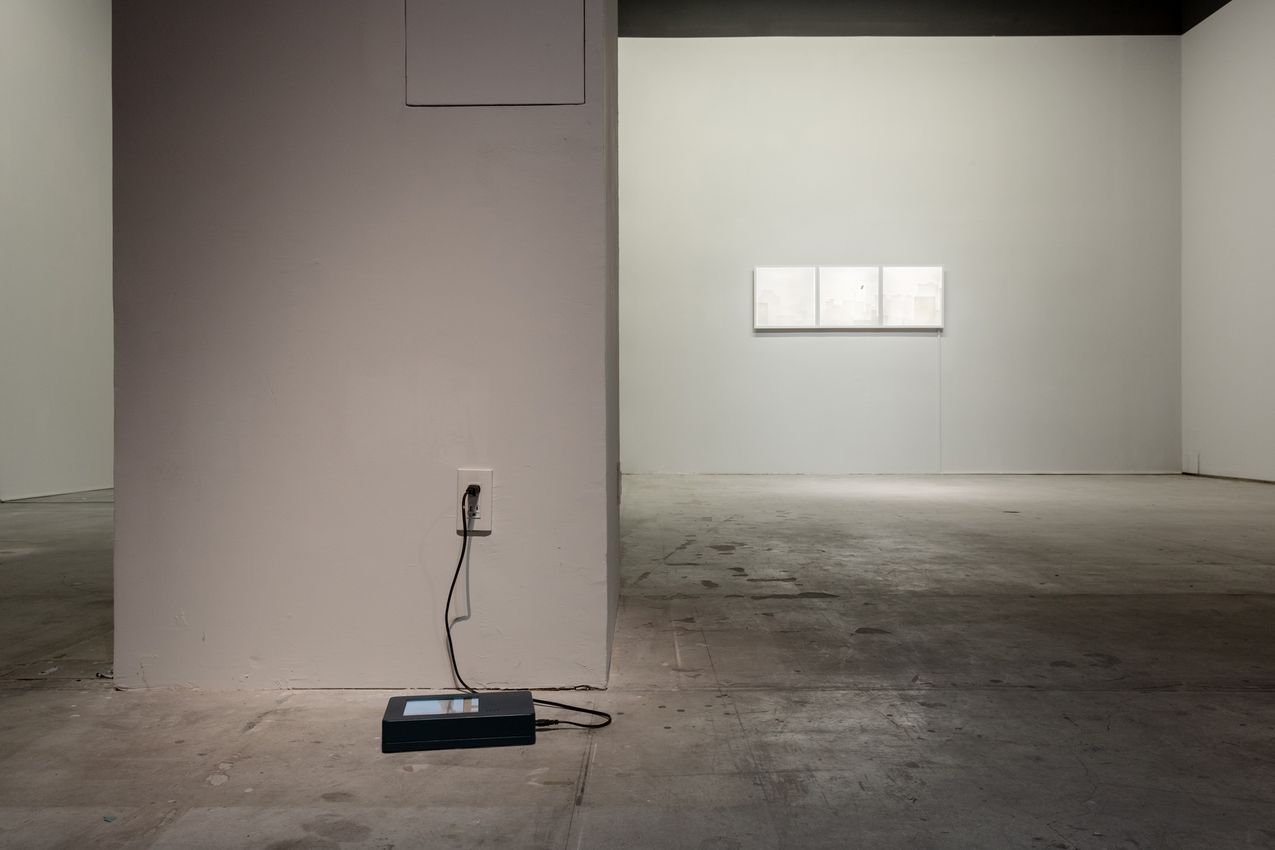
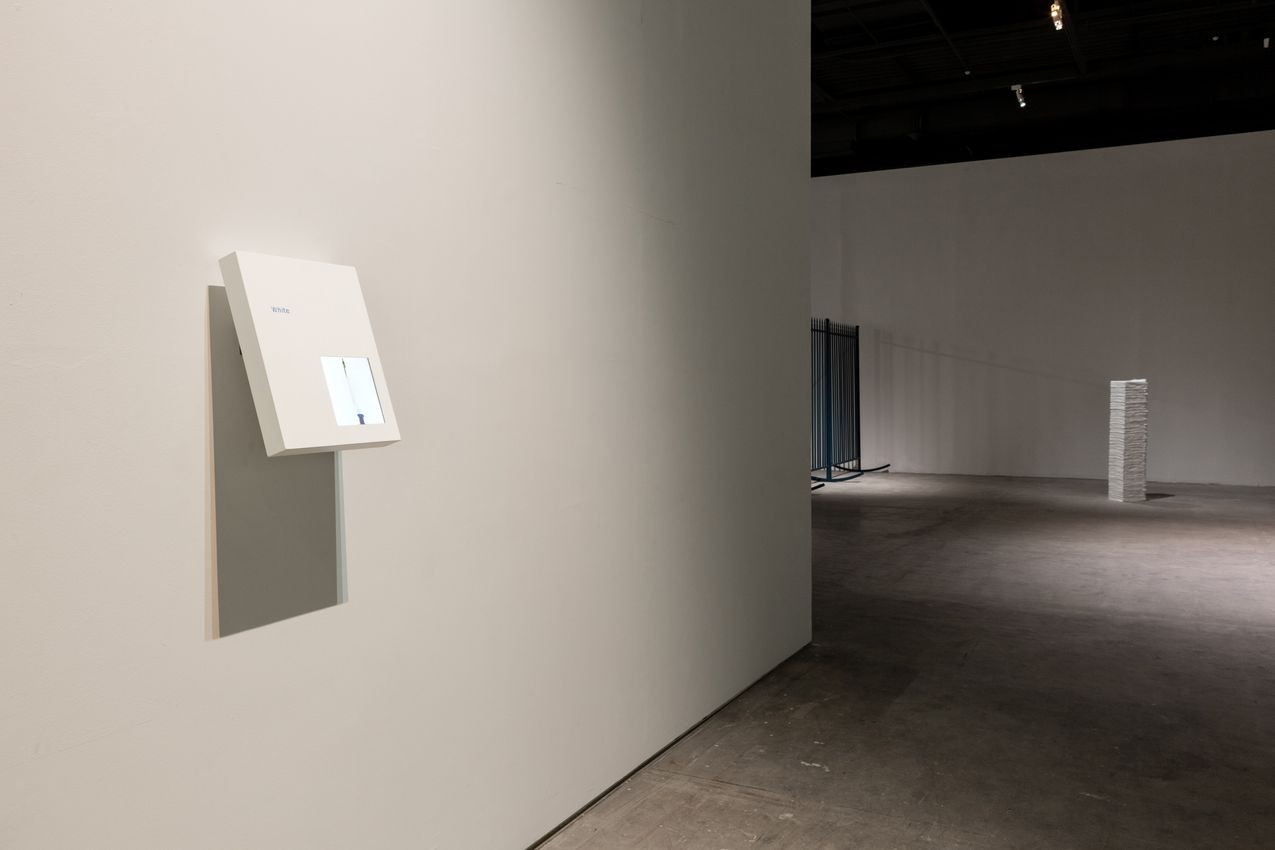
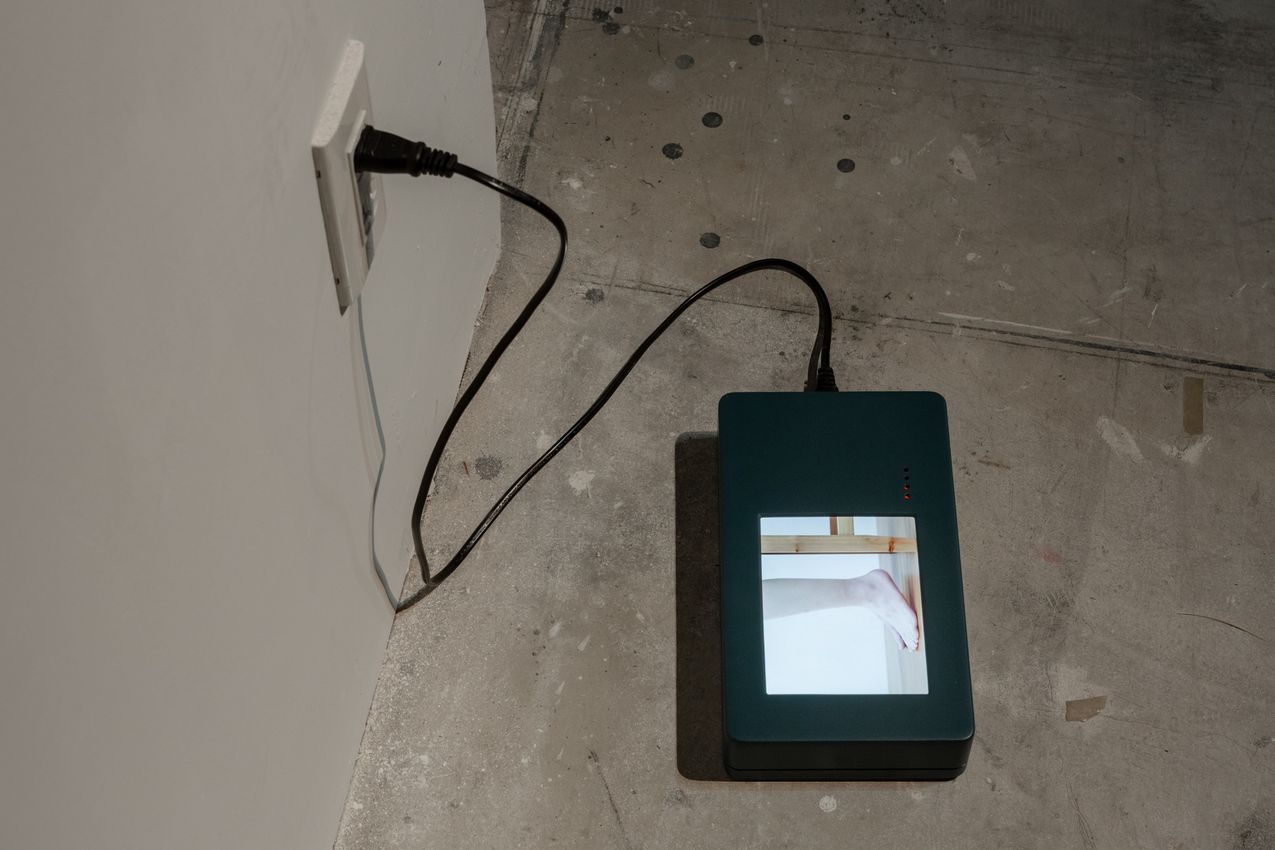
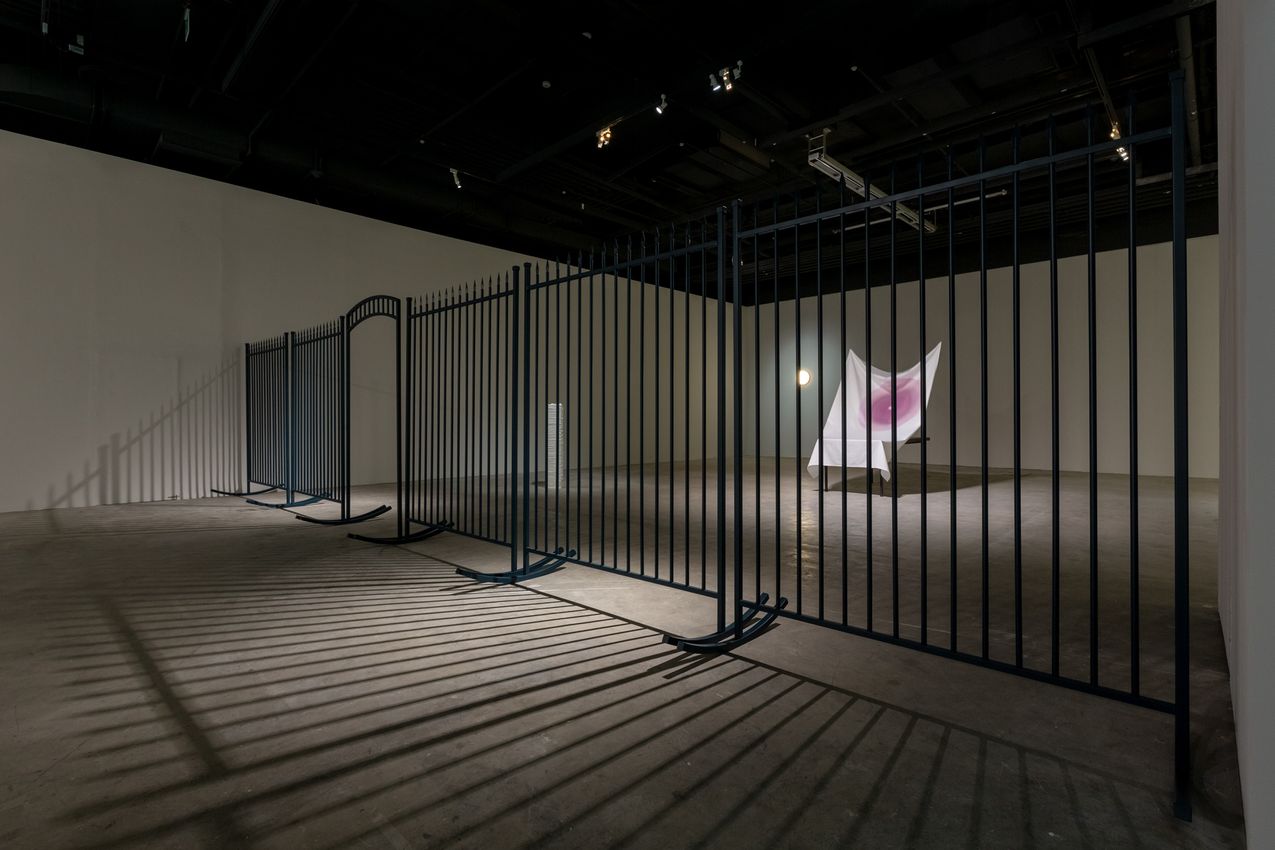
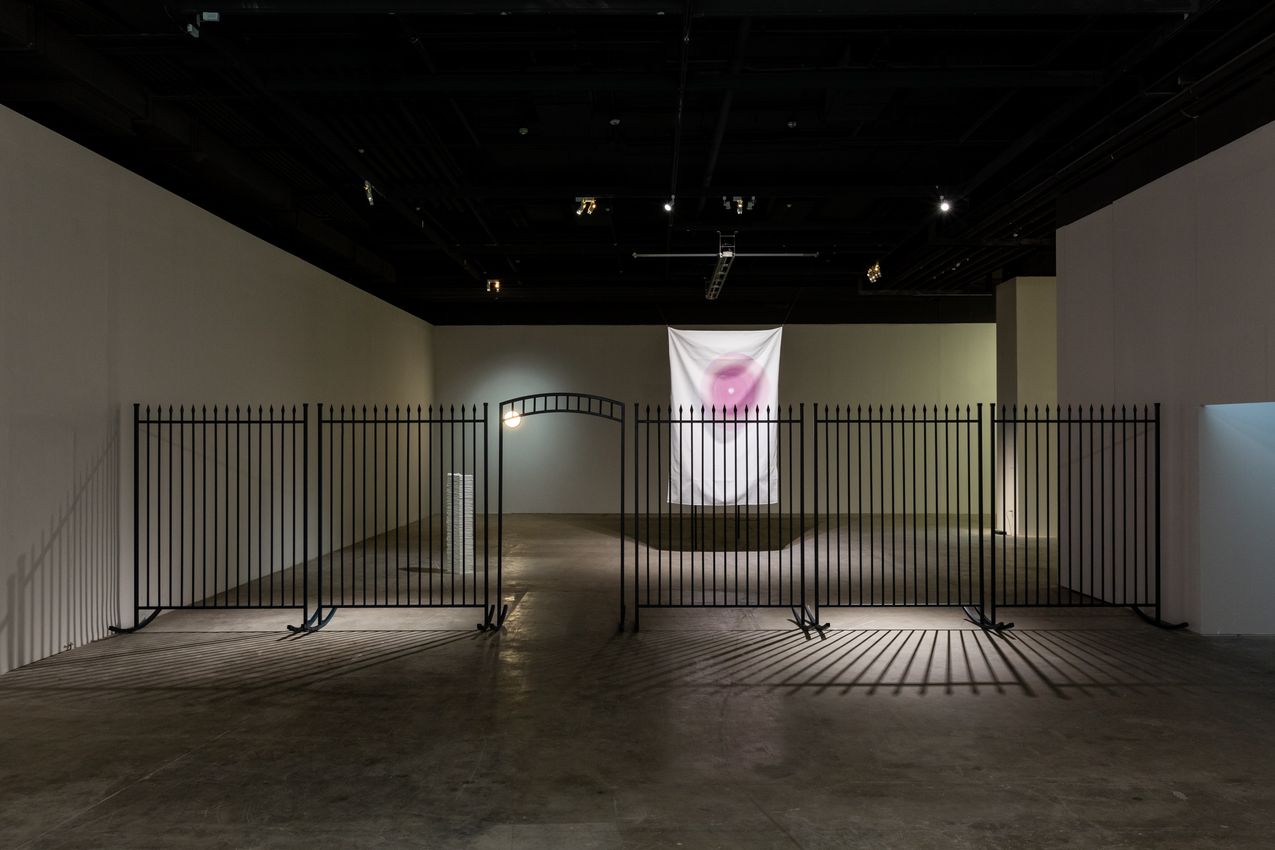
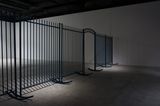
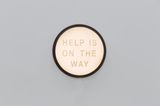
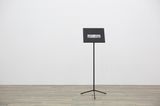
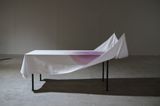
Before entering the exhibition space, there is a large digital billboard acting as a service guide for the exhibition. This combination of installation and performance imagery is a necessary starting point of the exhibition. After perusing the preface, we enter the exhibition space where lights flicker and flash. The flickering of lights interferes with the audience’s vision and throwing them off balance, offering an opportunity that they might regain and acquire a new sense of the space. The colossus that comes into view after the constant sense of wavering evokes a distant memory where we once as children nestled in a cradle; at the same time, it is also a fence erected as a barricade. For safety, viewers would speed up in order to pass through the dangerous rocking crib. In tandem, a piece of cloth floats through the air, drifting and falling slowly towards the table before floating again. Staring in awe, viewers are exposed to these repeated movements, enjoying this semi-automatic exhibition. The aforementioned events are merely descriptions of the exhibition. One might expect “incidents” to happen, yet it leaves to the viewers to draw the line to the other end of the narrative so as to let “stories” unravel and to own this corner of dots and lines.
Born in 1983 in Taipei, Taiwan, Joyce Ho received her M.A. in studio arts from the University of Iowa. She is an interdisciplinary artist, focusing specifically on painting, sculpture, and theater. Ho has worked as a script writer and theatre director since 2010.
A forerunner of Taiwanese modern art, the Tina Keng Gallery hinges upon the philosophy that art is a reflection of the times. The Tina Keng Gallery has its roots in the Lin & Keng Gallery (1992–2009) based in Taipei, Taiwan and Beijing, China. Delving into Western painting and Chinese art history, Lin & Keng tirelessly promoted the work of Asian classical masters, cultivating a critical thought on Greater Chinese modern art. The Tina Keng Gallery has continued this tradition by centering its focus on Asia, further excavating art history and rediscovering modern aesthetics. Upon this foundation, the Tina Keng Gallery is steadfast in nurturing Taiwanese modern and contemporary art, with hopes to capture the changing states of art through writings of history, in so doing highlighting the cultural underpinnings of its worldview. Art arises from culture, and culture mirrors the times. The Tina Keng Gallery endeavors not only to support Greater Chinese modern and contemporary art, but to shape a perspective that is elementally Asian.

A respected voice in contemporary art discourse.
Focusing on ambitious storytelling and insightful art-world commentary. Ocula Magazine publishes in-depth interviews, critical essays and timely analysis on the artists, exhibitions and ideas driving the global art world.
Learn more about Ocula Magazine
Showcasing the best of the art world.
Ocula partners with galleries from around the world to highlight their artists, artworks and exhibitions. Gallery membership is by application and invitation, with each member vetted by an independent panel.
Learn more about Ocula Membership

Specialises in the sale of major artworks.
Led by a team with deep ties to the world’s leading auction houses, galleries and collectors. Ocula’s advisory team offers bespoke services to high-net-worth clients from around the world who are looking to acquire the best of contemporary and modern art.
Learn more about our team and services