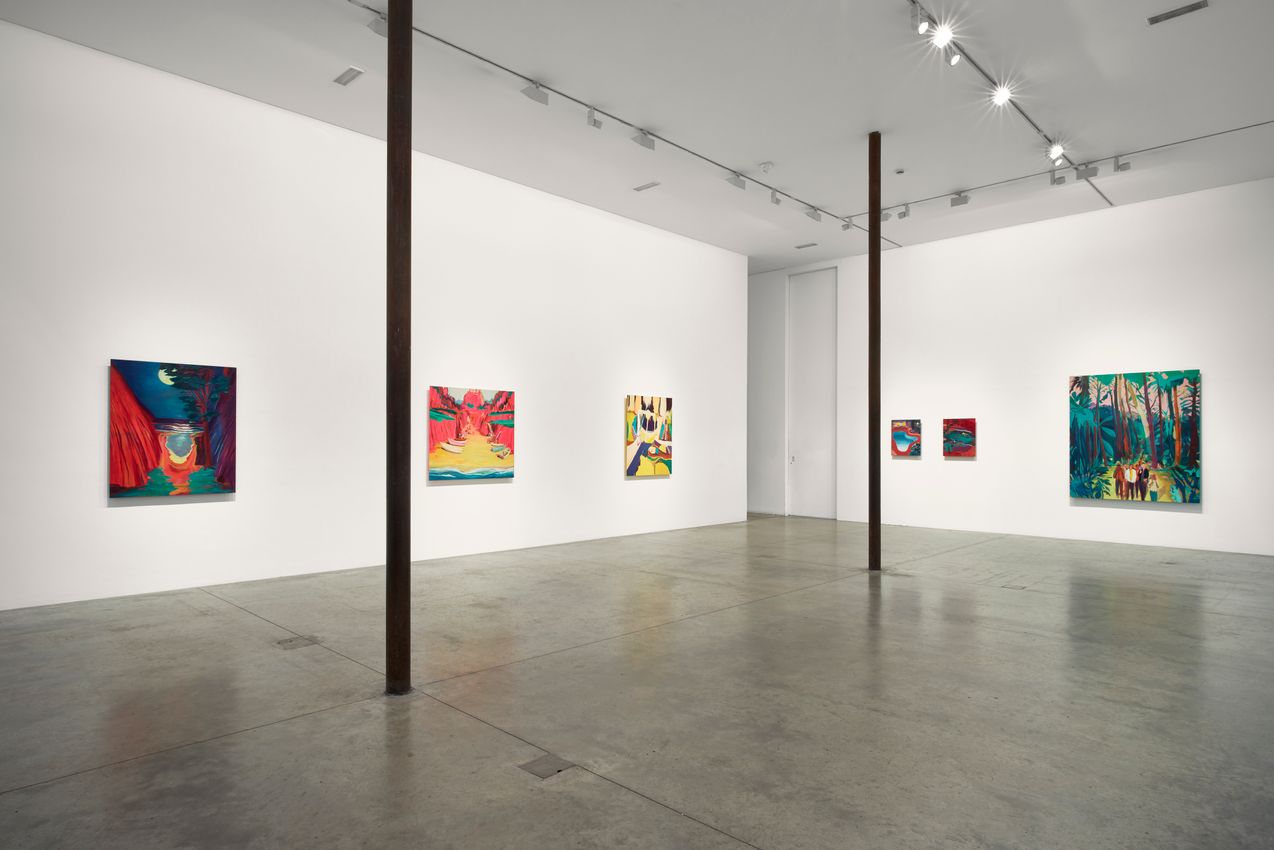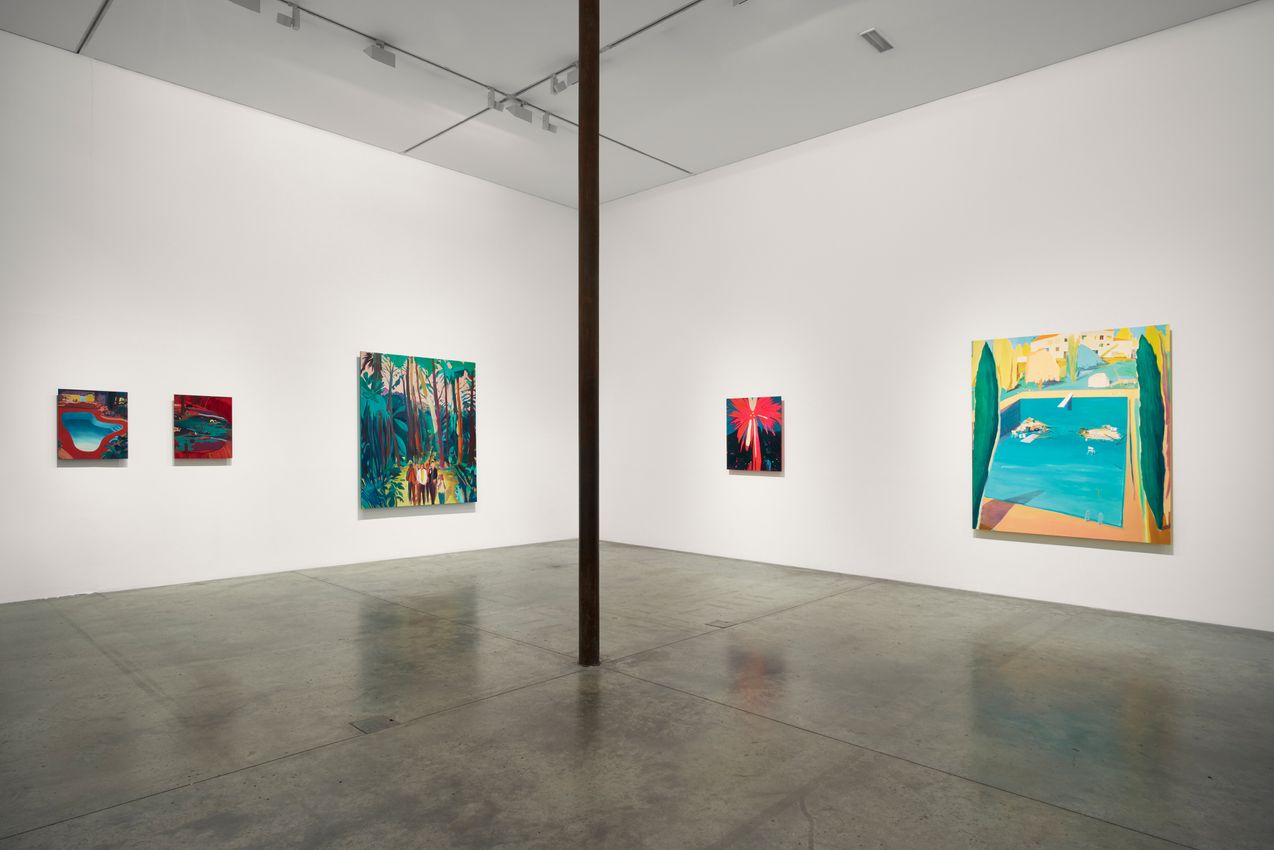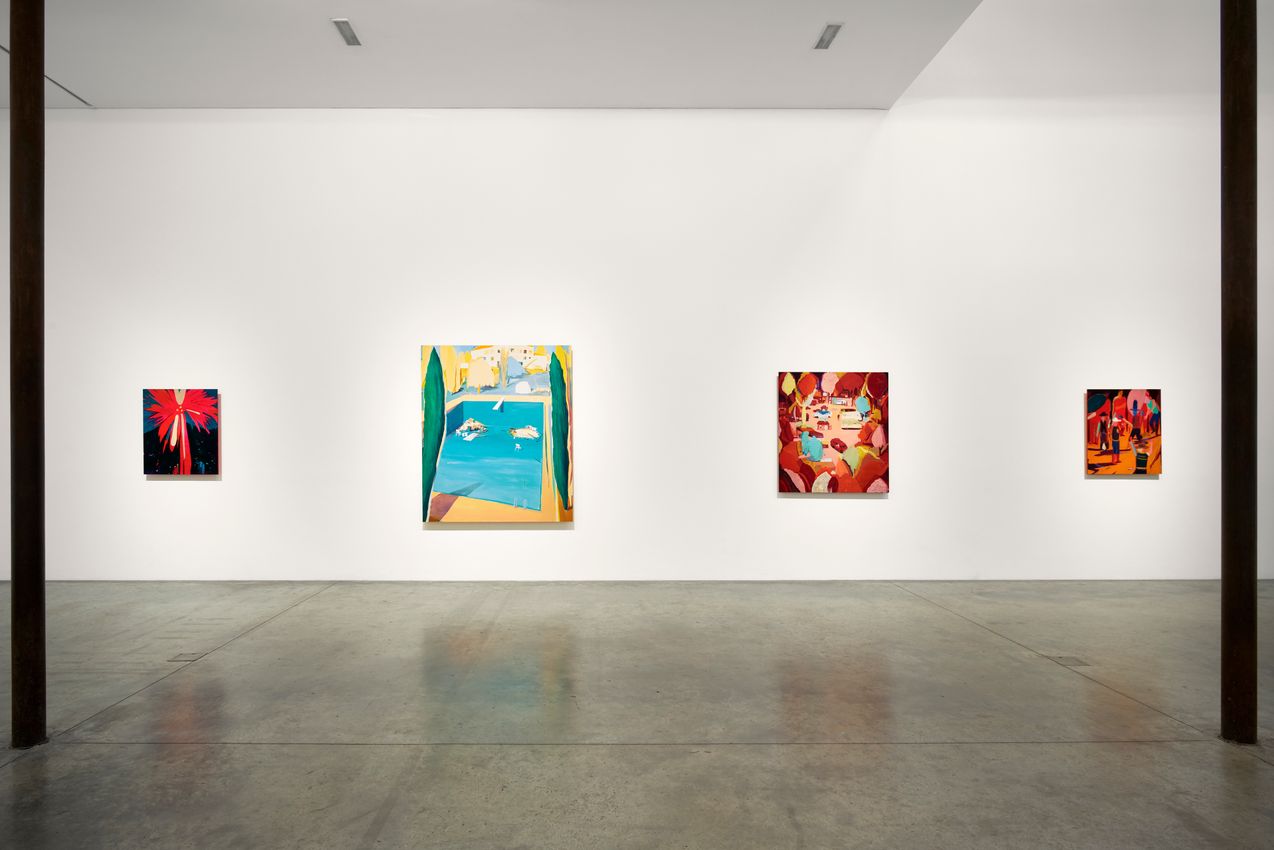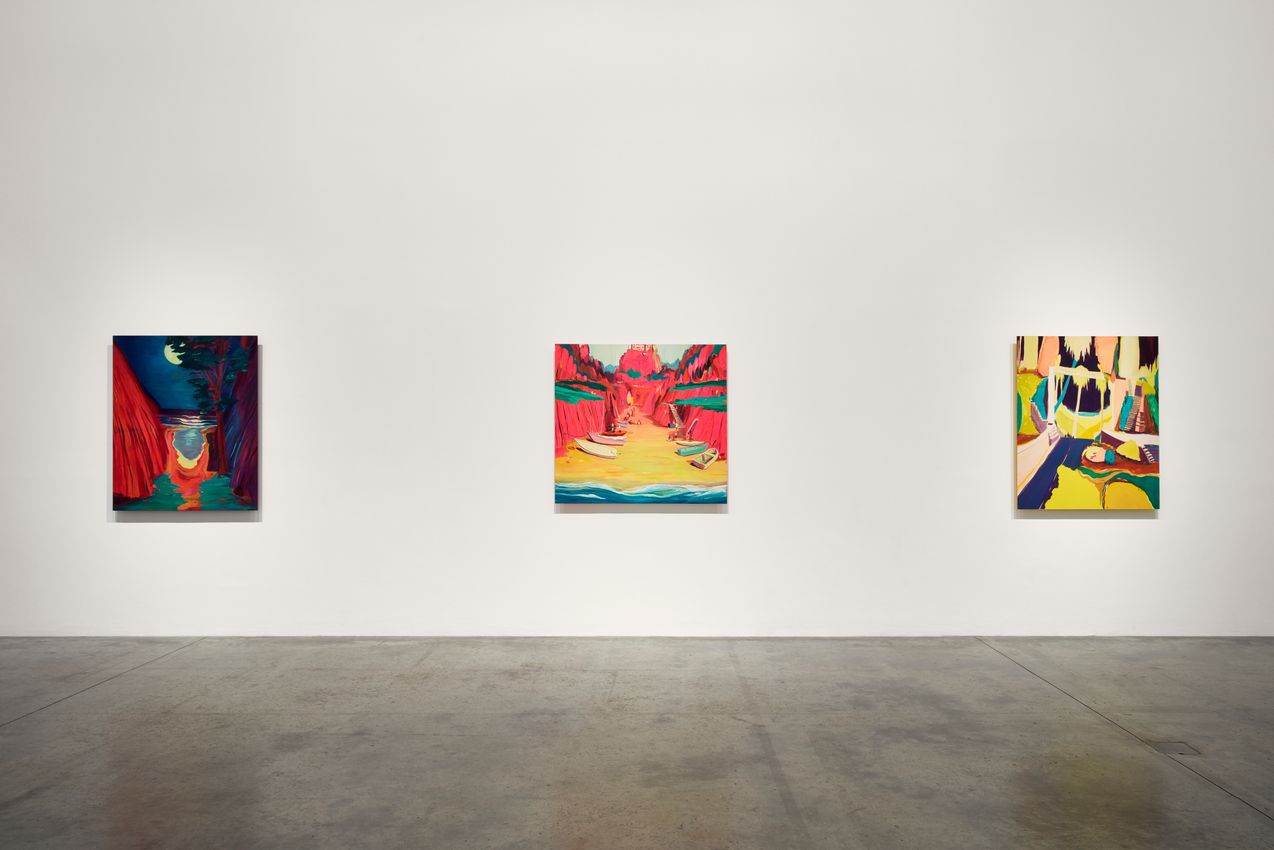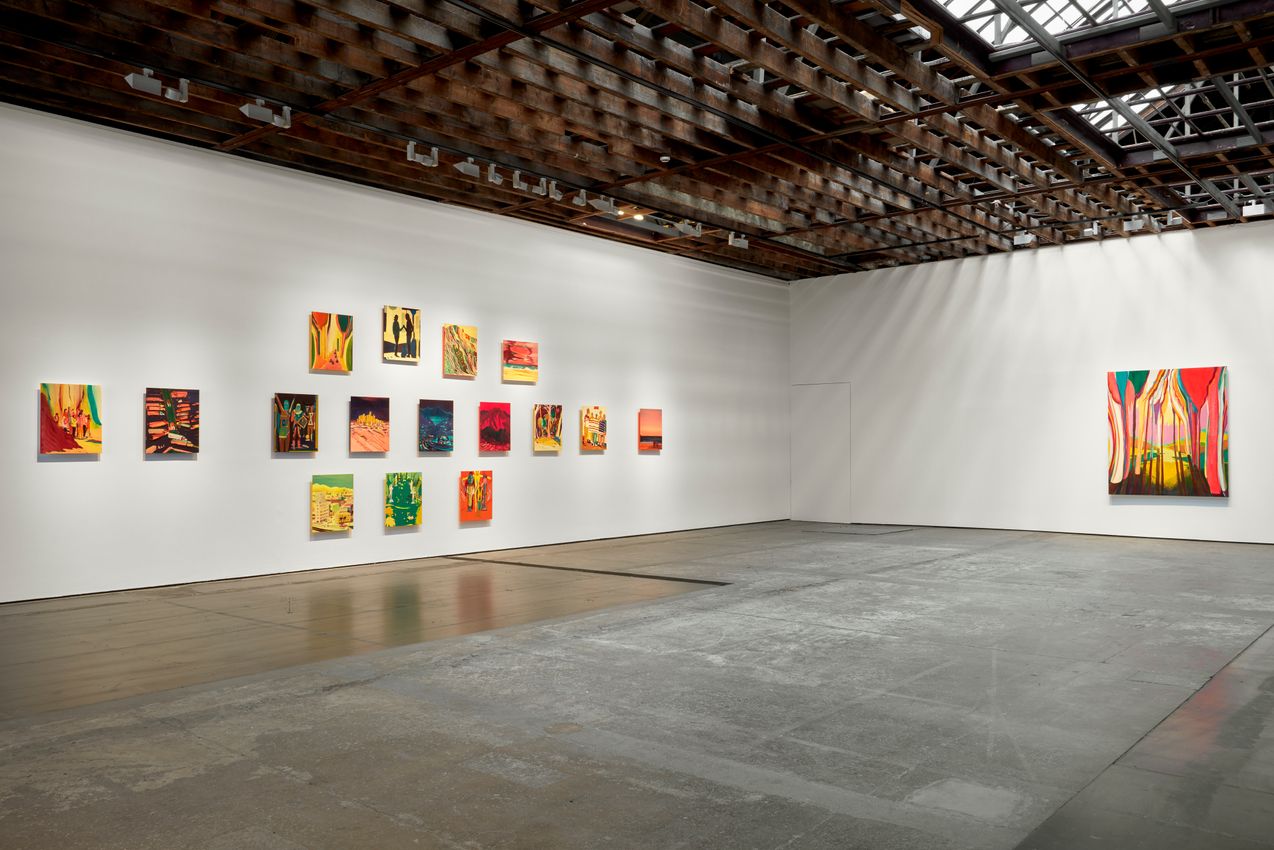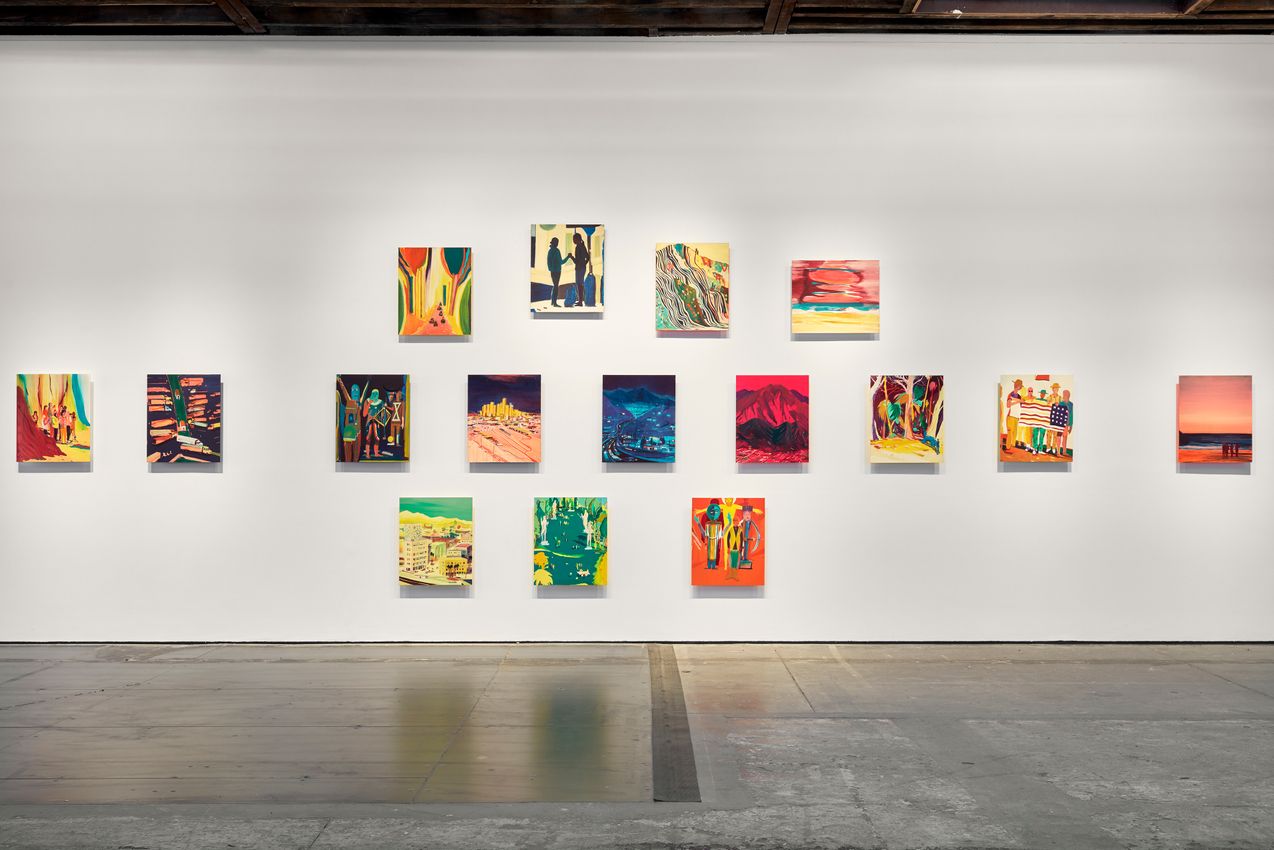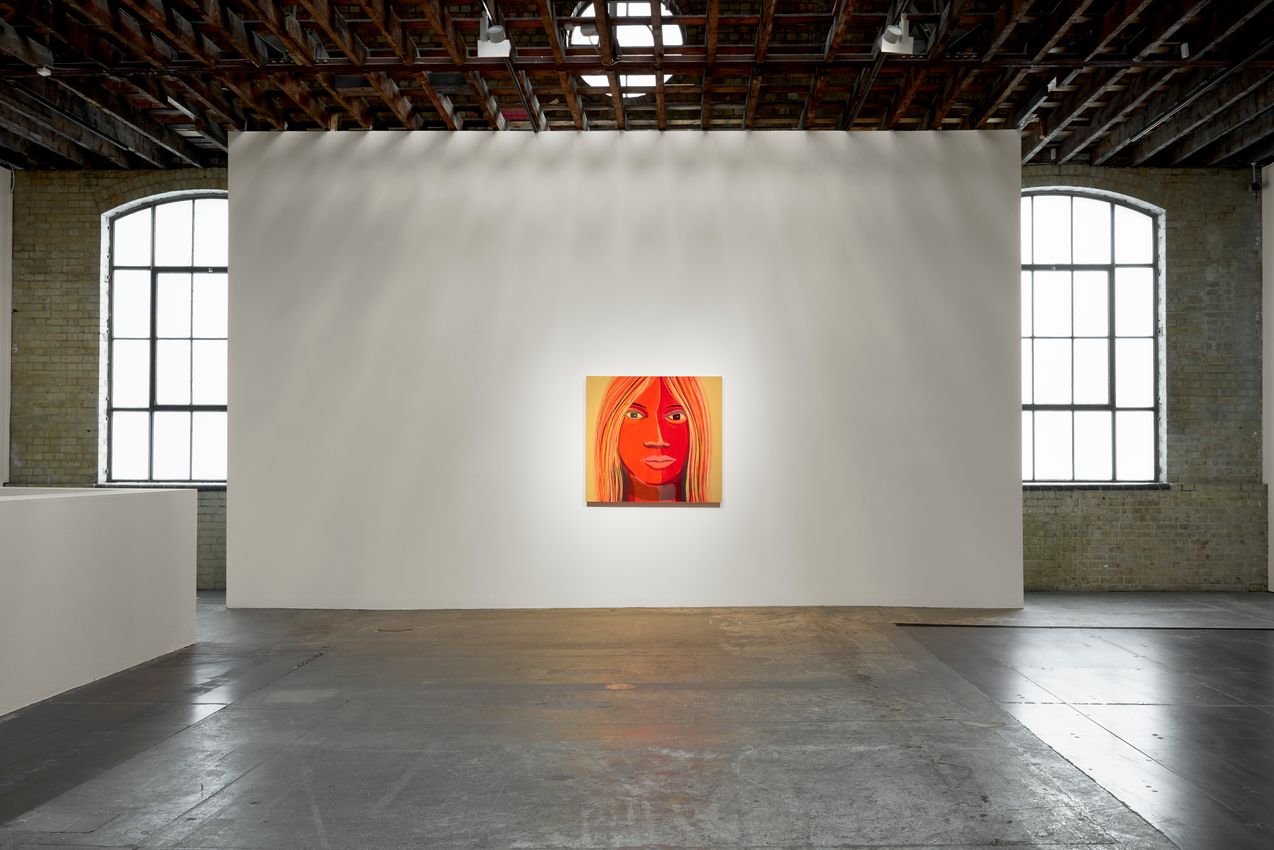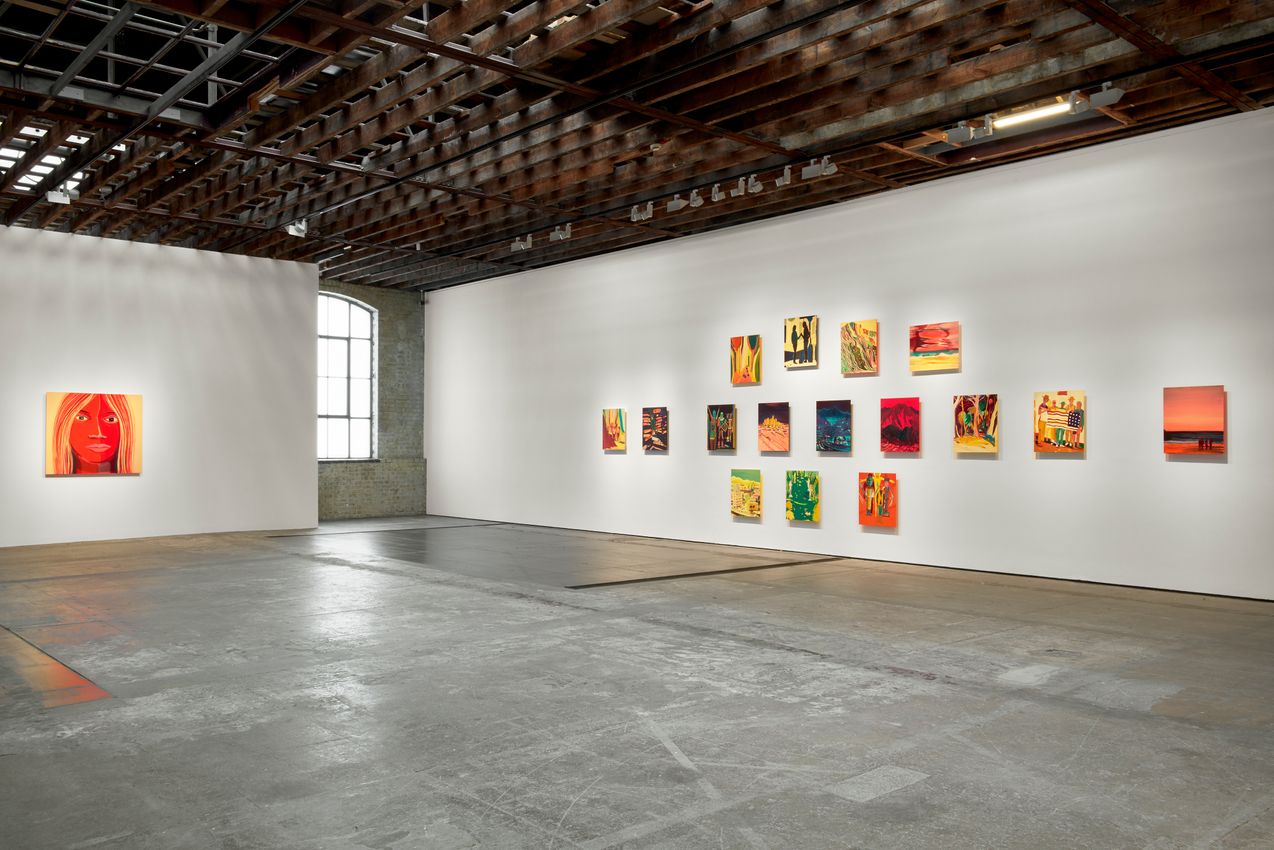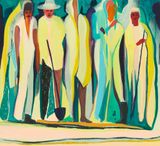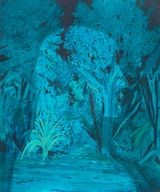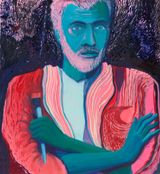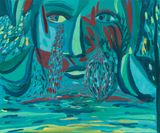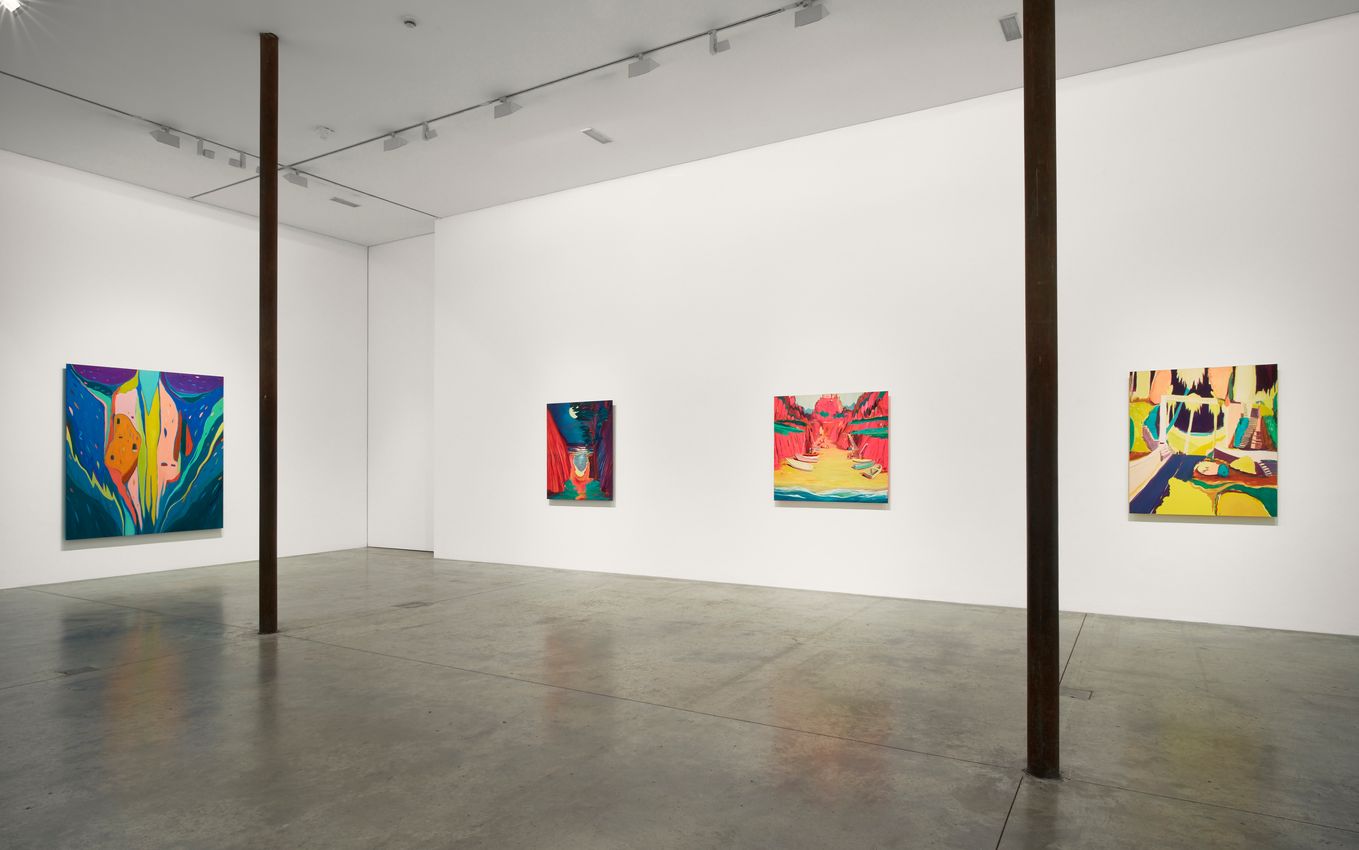
Victoria Miro is delighted to announce Stumbling Pioneers, the second solo exhibition at the gallery by Jules de Balincourt, which explores the frontier as a charged concept in contemporary culture. Painted on return to his hometown Los Angeles after a 20-year interval, these works road-trip through the mythic and geographically sprawling metropolis with an eye for man’s uncertain relationship with his environment.
Perched on the shores of the Pacific Ocean, Los Angeles has, since the pioneering age, been the limitless repository of America’s dreams of the frontier, of desires that saturate the sunsets, freeways, canyons and swimming pools that de Balincourt paints. This landscape, a disjunctured synthesis of the human, the architectural, and the organic, seems to temper idealistic energies: rather than striding boldly into the unknown, the figure drifts aimlessly through sunlit pockets of space, leisurely waiting for some ultimate opportunity for freedom. Here, the promise of the frontier – the hope of progress and the better life it inspires – coexists with a muddled reality of blurred boundaries between man and nature in a landscape that seems comprehensively colonised.
Poised between the strange and the familiar, the works that make up Stumbling Pioneers are rooted in the unmistakeable vibrant landscape of California, yet shaped by dreamlike associations that interconnect large-scale canvases and smaller works. Almost-transparent washes of paint build gradients of colour and form on these carefully constructed surfaces, on which the abstract remains visible amidst defined areas of representation. De Balincourt’s work gestures towards the incalculable process of painting, which he has described as beginning with, ‘a very intuitive dance in the dark of brushes and pigments […] So in a way it is about this intersection in my mind when I abandon the more unknowing primitive approach, finding something that inspires or I need to pursue.’
De Balincourt’s practice occupies a distinct emotional hyperspace, ranging with easy fluency across abstraction and figuration, collective imagination and singularised perception to make idiosyncratic connections within the landscape of contemporary westernised culture. Hard and fast dualities, whether psychological or sociopolitical, are suspended in this shifting space: together, his works invite us to journey across terrain in which it is no longer easy to distinguish between the utopian and the dystopian, the escape and the capture.
Jules de Balincourt, born in Paris, France in 1972, lives and works in Brooklyn, New York and Los Angeles. De Balincourt’s work has been the subject of a number of international solo exhibitions at institutions including Kasseler Kunstverein, Kassel (2015); The Modern Art Museum of Fort Worth, Texas (2014 - 2015); Rochechouart Museum of Contemporary Art, Rochechouart (2014); Montreal Museum of Fine Arts, Montreal (2013); Mori Art Museum, Tokyo (2010) and Vanderbilt University Fine Arts Gallery, Nashville (2008). His work has also been included in a number of significant group exhibitions, including L’Ange de l’Histoire, curated by Nicolas Bourriaud at le Palais des Beaux-Arts, Paris (2013); New York Minute, Garage Center for Contemporary Culture, Moscow (2011) and the 10th Havana Biennial, Museo Nacional de Bellas Artes, Havana (2009).
Evoking notions of utopia and dystopia, Jules de Balincourt’s paintings investigate public and private spaces and suggest an ever-changing landscape – both physical and psychological. In the paintings for which he first became known, de Balincourt worked from the position of an outsider (the Paris-born artist has lived in the United States since childhood), questioning structures of power and influence, laying bare injustices and hypocrisies while maintaining an amused attachment to the myths through which identity – individual and national – is constructed. From big screen legends, such as celluloid cowboy Clint Eastwood (Good, Bad, Ugly, 2008) to newsreel-like pronouncements (United We Stood, 2005), in these paintings de Balincourt employs a post-Pop painterly language to signal shifting sentiments or former glories, made all the more melancholy when they appear etched in mainstream culture.


A respected voice in contemporary art discourse.
Focusing on ambitious storytelling and insightful art-world commentary. Ocula Magazine publishes in-depth interviews, critical essays and timely analysis on the artists, exhibitions and ideas driving the global art world.
Learn more about Ocula Magazine
Showcasing the best of the art world.
Ocula partners with galleries from around the world to highlight their artists, artworks and exhibitions. Gallery membership is by application and invitation, with each member vetted by an independent panel.
Learn more about Ocula Membership

Specialises in the sale of major artworks.
Led by a team with deep ties to the world’s leading auction houses, galleries and collectors. Ocula’s advisory team offers bespoke services to high-net-worth clients from around the world who are looking to acquire the best of contemporary and modern art.
Learn more about our team and services