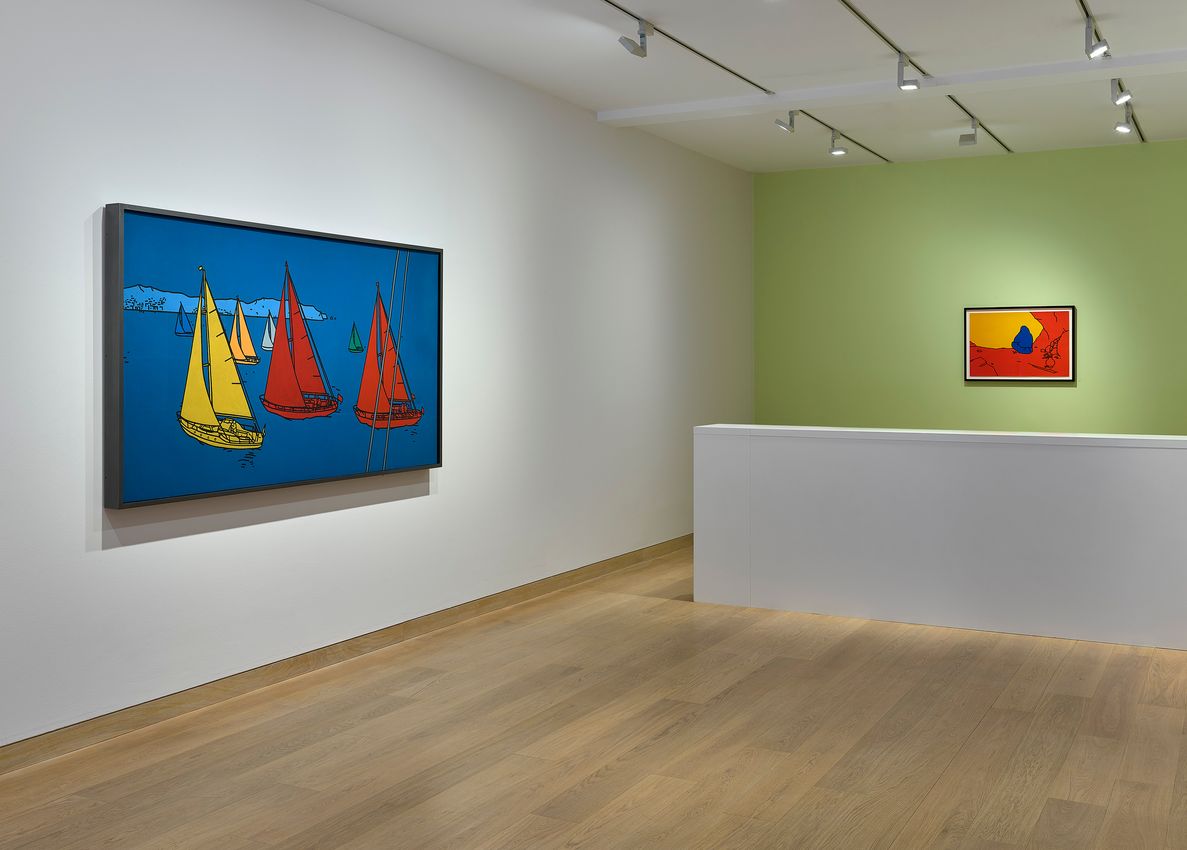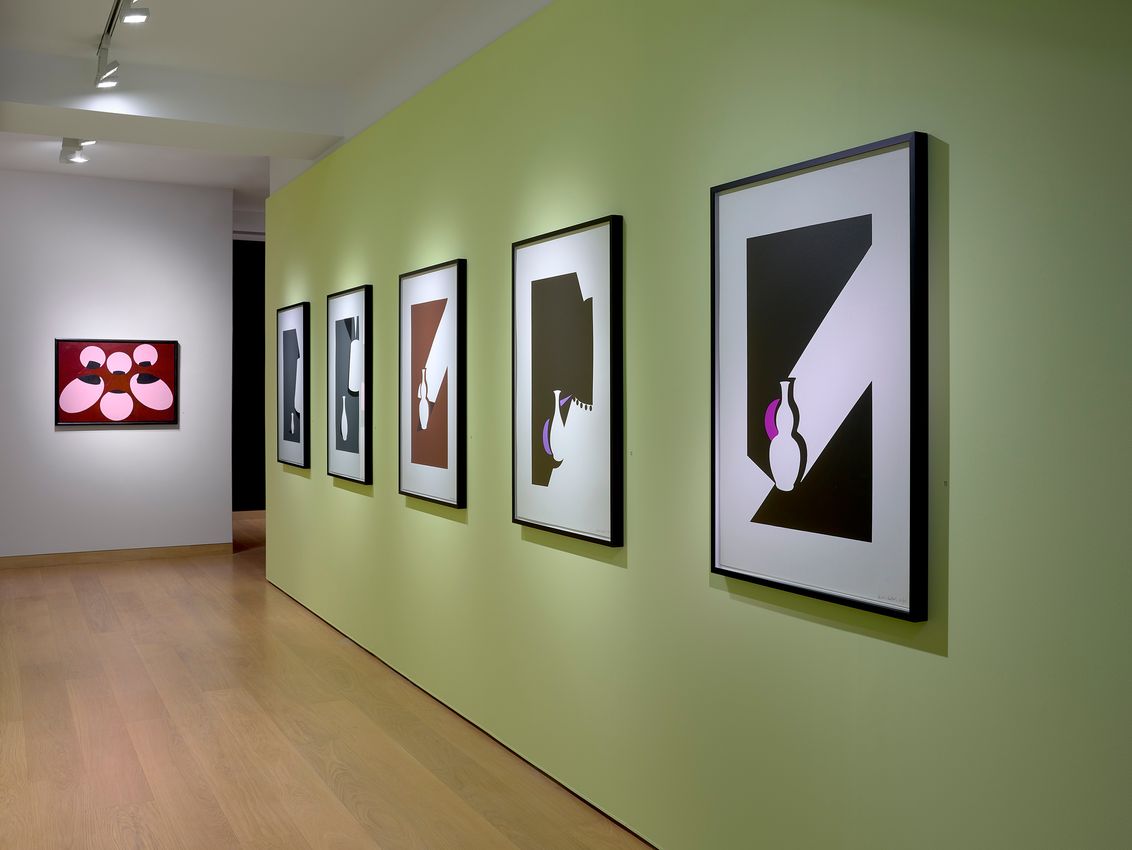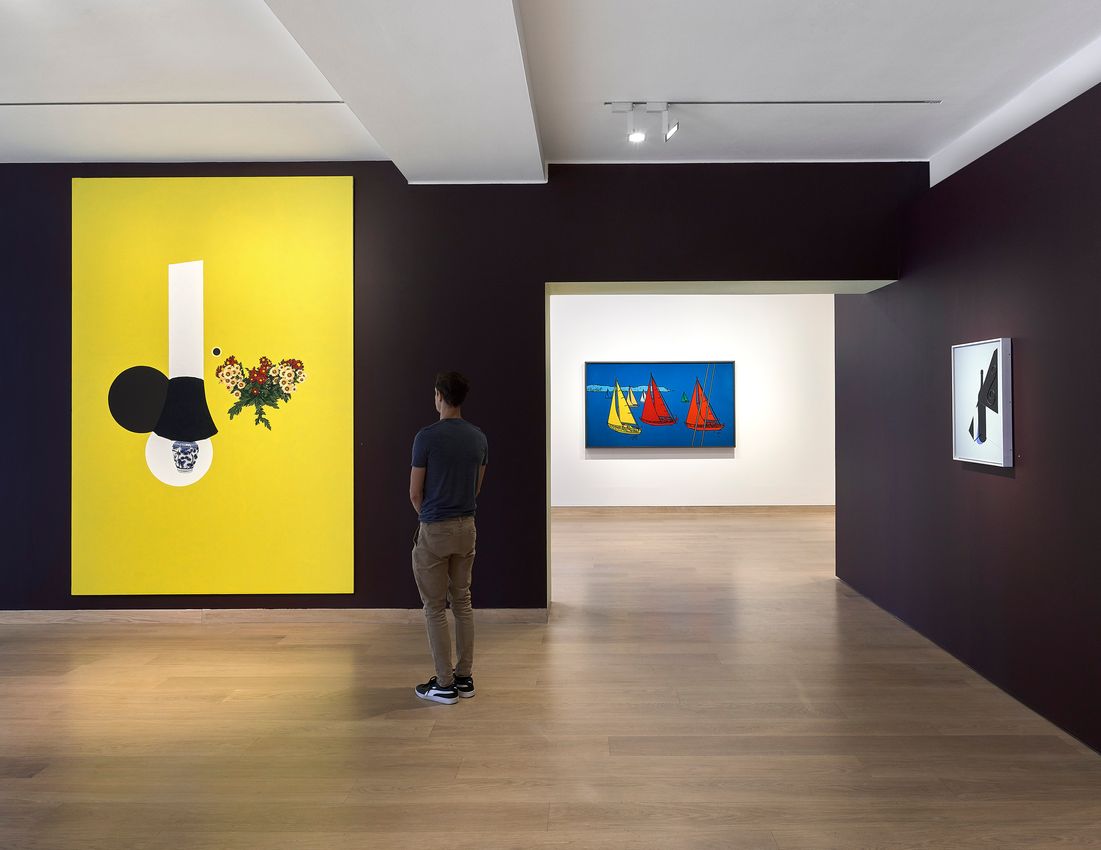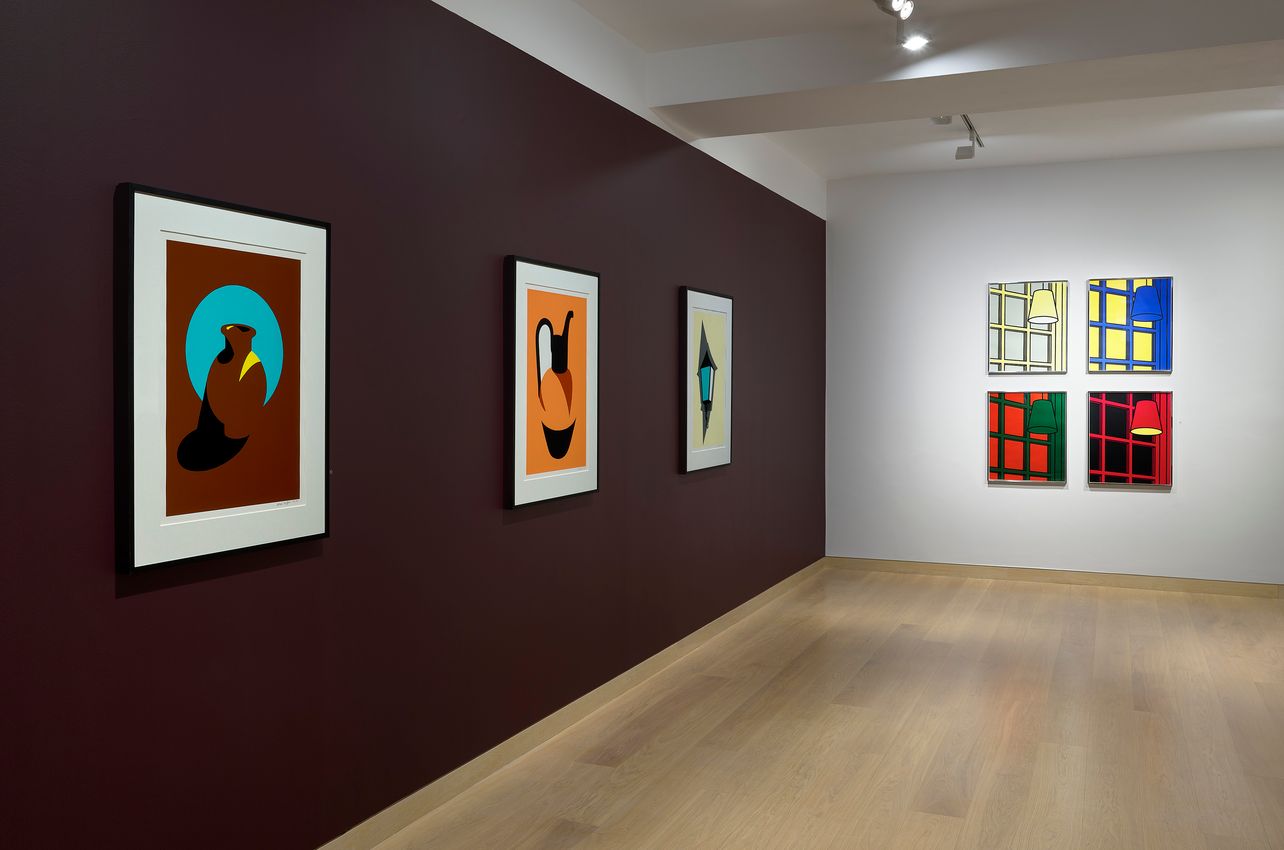




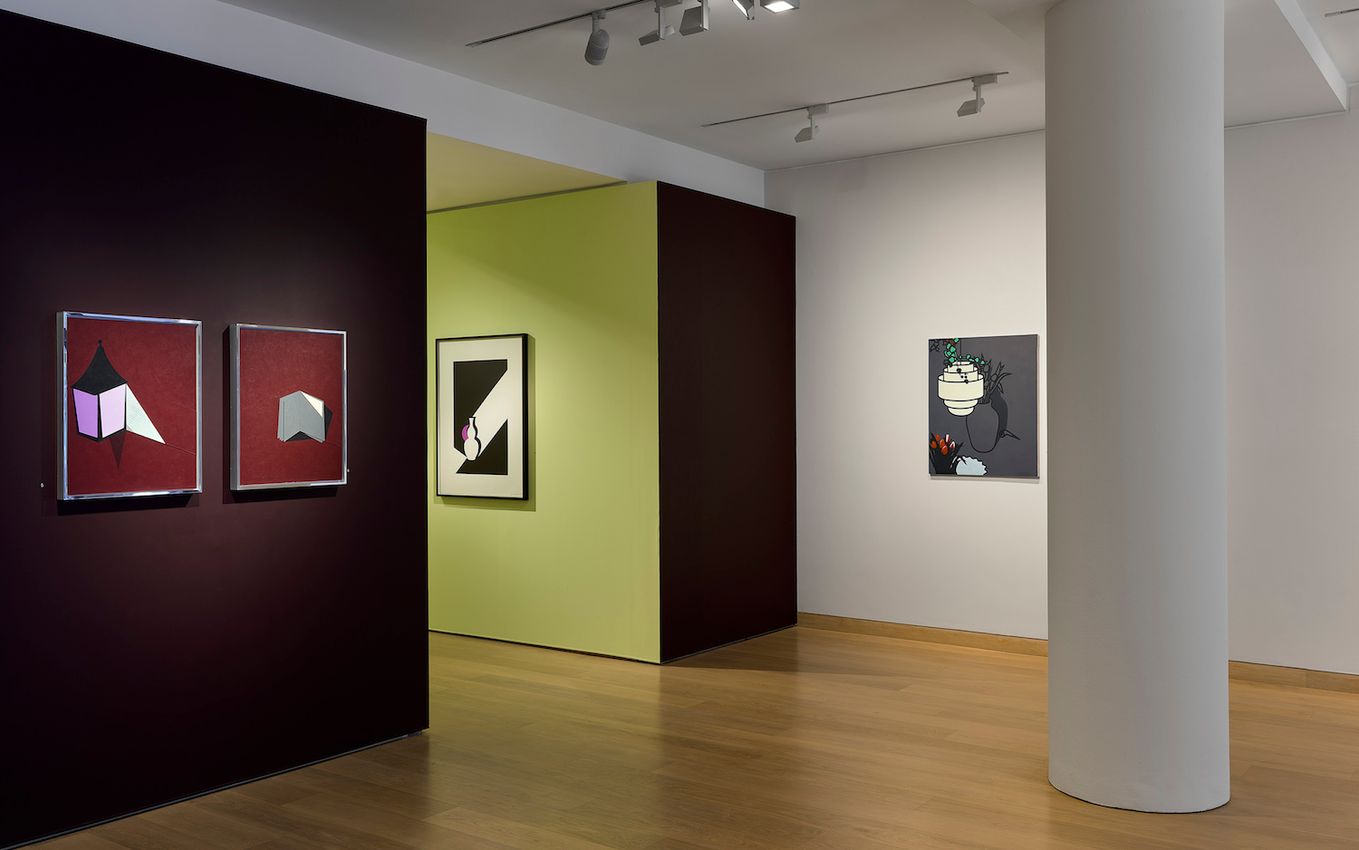
In a solo exhibition of the celebrated Patrick Caulfield (b. 1936-d. 2005), Waddington Custot look deeper at the artist’s practice across a number of different media, from oil painting to prints and his lesser known and rarely exhibited drawings, with particular attention to Caulfield’s preoccupation with light and shade.
Early in his career as a student at the Royal Collect of Art in the 1960s, Caulfield developed a strong, easily identifiable style of painting of flat-coloured planes and hard-edged black outlines, Working with ordinary domestic forms such as lampshades, vases, window panes and wine glasses, he pared down his subjects to slick and streamlined black outlines and areas of saturated colour. Lines are crisp, surfaces are impenetrably, impossibly smooth, and colours elegantly balanced.
In keeping with the gallery’s dynamic approach to exhibition-making, the Waddington Custot space on Cork Street will be split into several different sections, each painted different colours taken from Caulfield’s work. These spaces, each reflecting a different aspect of the artist’s practice, become an extension of the artworks themselves.
Many of Caulfield’s compositions play with the representation of different and conflicting sources of light: beams, shafts, pools and floods, and the humble glow of the domestic lamp. He created compelling compositions that play with the viewer’s perception and understood implicitly the ways in which light could fall on a subject.
Speaking to art historian Marco Livingstone in the early 1980s, Patrick Caulfield explained: ‘Once I got on to shadows, I really went to town; they became compositional elements, in fact more than the objects that the shadows came from...I’m not actually painting from observation of light, I’m making up an idea of how light could appear to be.’
Often assimilated into the Pop movement, Patrick Caulfield always rejected this label. The exhibition at Waddington Custot shows another side of his work, through his drawing and preparatory sketches which are rarely shown alongside major works by the artist.
Patrick Caulfield (b. 1936, London, England; d. 2005, London, England) is a British painter and printmaker known for his pared down, still lifes and interiors, carefully composed with thick black lines and even fields of colour. Human figures are rarely depicted, but tell-tale signs of human presence abound in Caulfield’s enigmatic world.


Waddington Custot was formed through the partnership of French art dealer Stephane Custot and long-time London art dealer Leslie Waddington, in 2010. Located in Cork Street since 1958, formerly as Waddington Galleries, the gallery has a rich heritage and an international reputation for quality and expertise in works by modern and contemporary masters, with a particular focus on monumental sculpture.

A respected voice in contemporary art discourse.
Focusing on ambitious storytelling and insightful art-world commentary. Ocula Magazine publishes in-depth interviews, critical essays and timely analysis on the artists, exhibitions and ideas driving the global art world.
Learn more about Ocula Magazine
Showcasing the best of the art world.
Ocula partners with galleries from around the world to highlight their artists, artworks and exhibitions. Gallery membership is by application and invitation, with each member vetted by an independent panel.
Learn more about Ocula Membership

Specialises in the sale of major artworks.
Led by a team with deep ties to the world’s leading auction houses, galleries and collectors. Ocula’s advisory team offers bespoke services to high-net-worth clients from around the world who are looking to acquire the best of contemporary and modern art.
Learn more about our team and services