Press Release

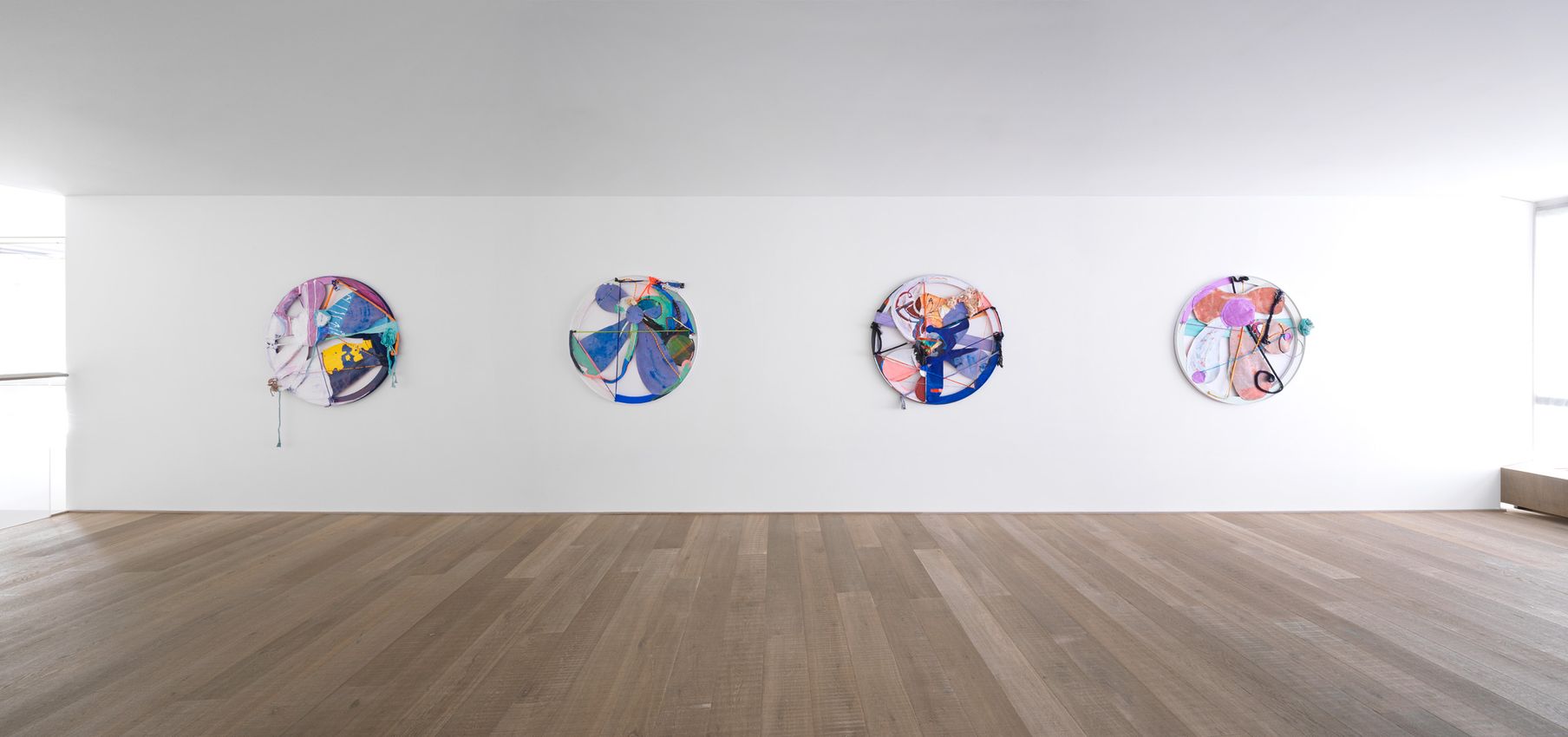
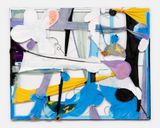
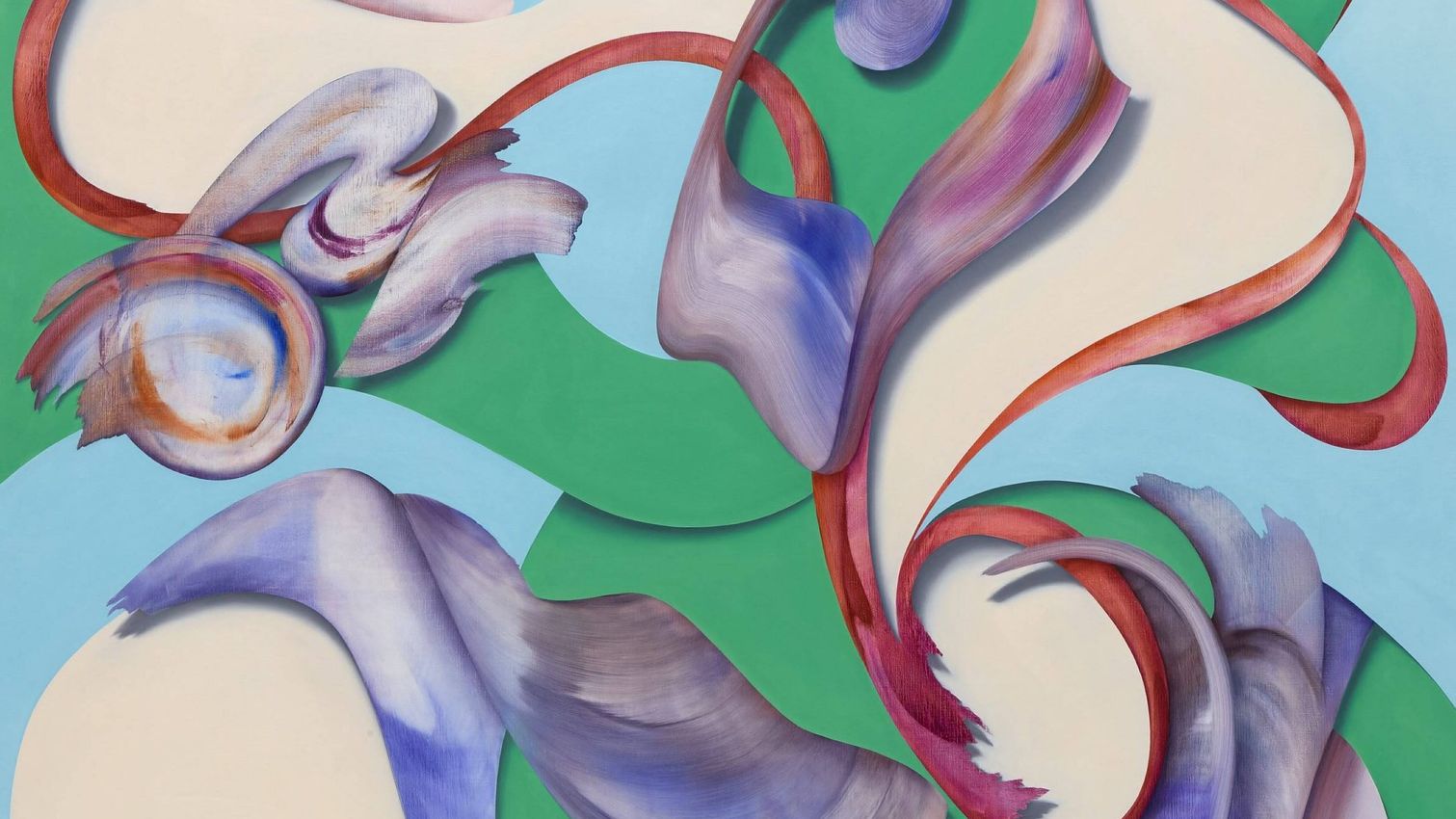
For Joy & Rain, American artist Rachel Eulena Williams (b. 1991, Miami) presents a body of work that showcases the range and depth of her lyrical and hybrid practice. Operating on the threshold of painting and sculpture,Williams has developed a unique visual language. Hers is a quiet yet powerful subversion of long-held artistic conventions.

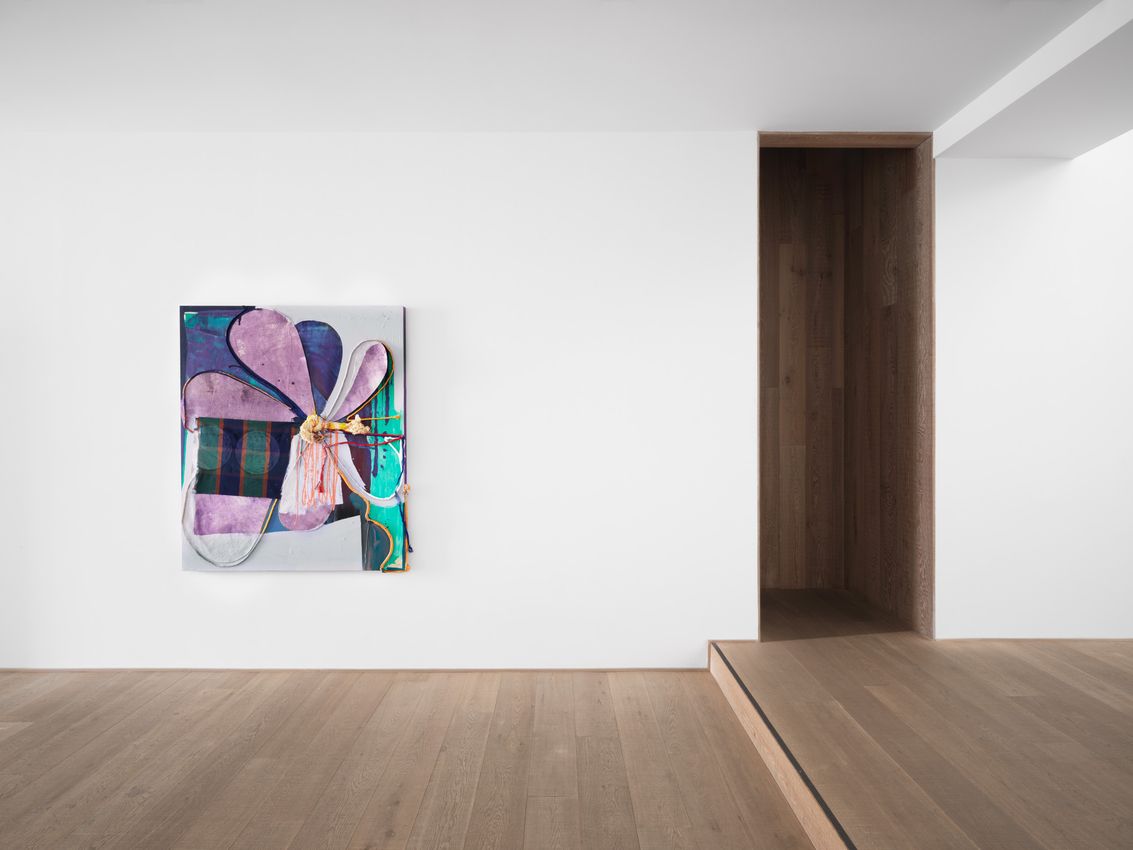
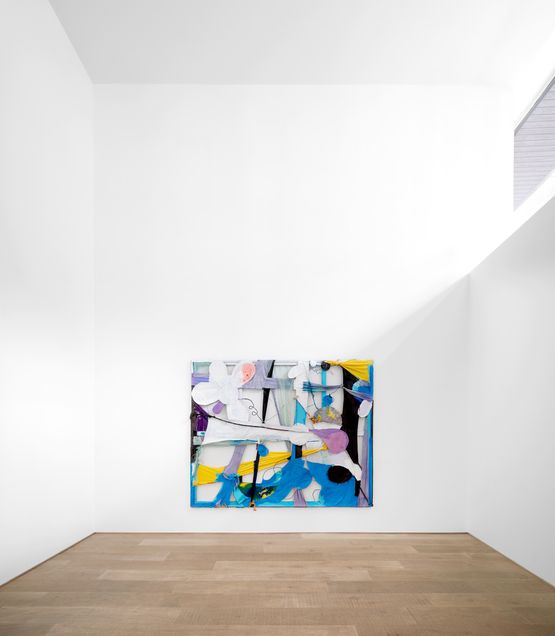
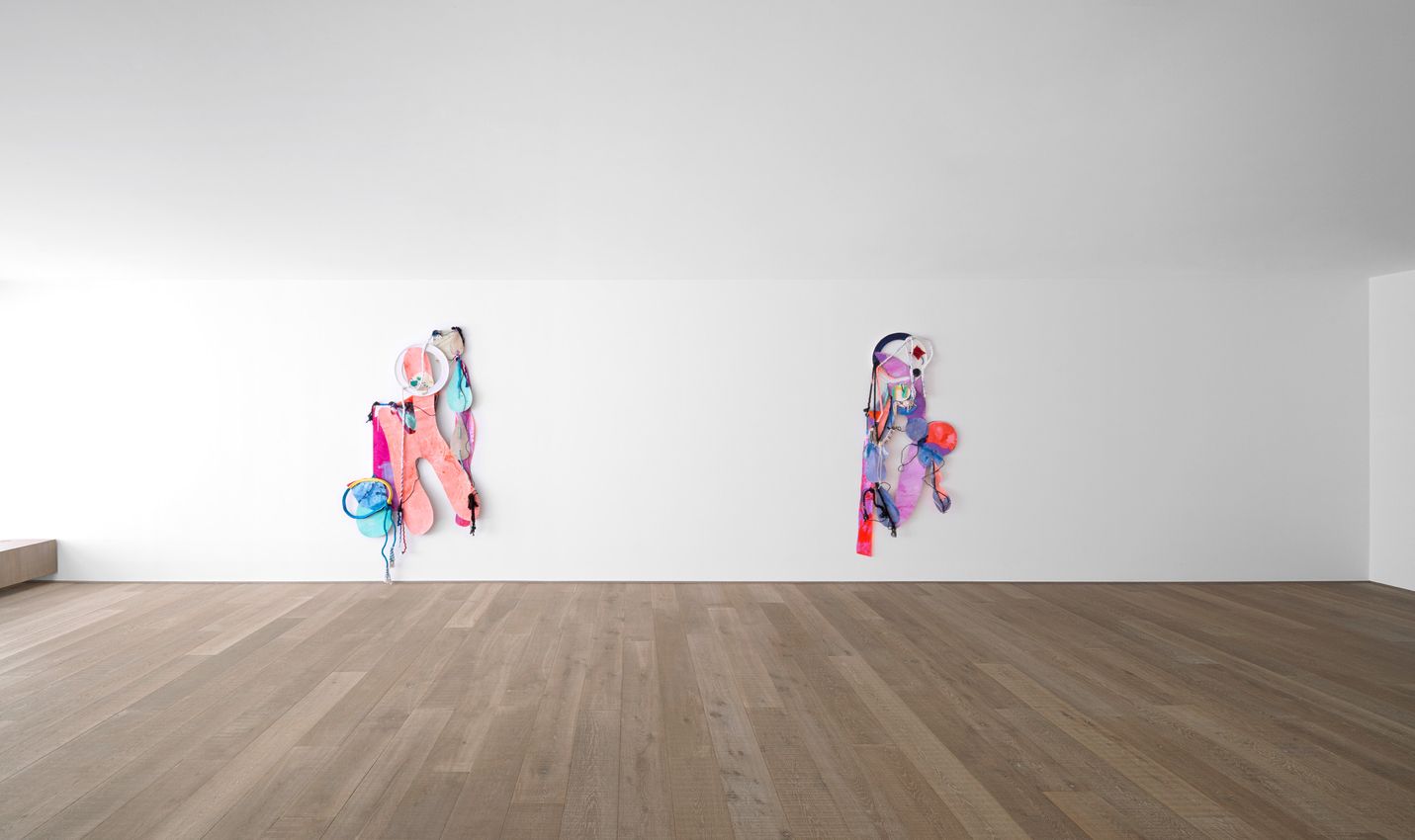
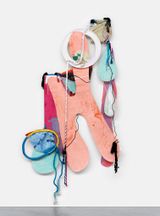
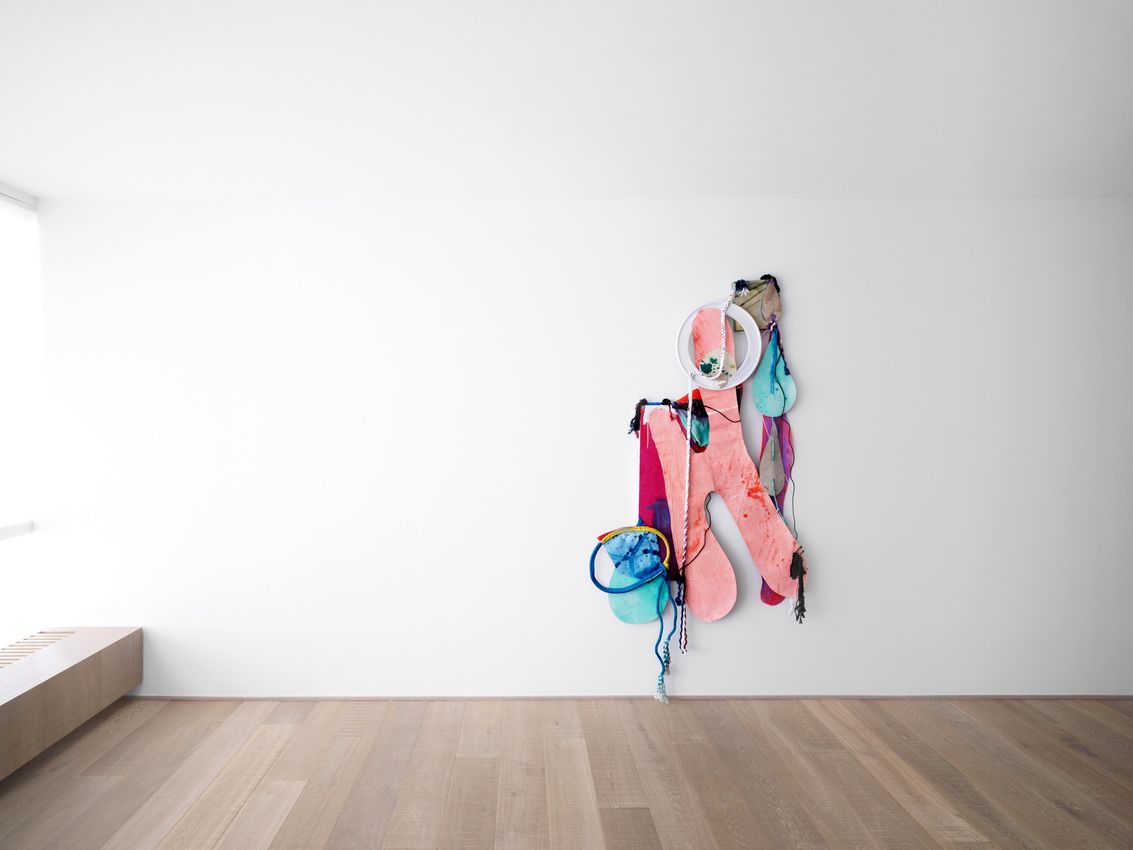
Understanding Williams’ artistic processes is a key to unlocking the multiple potential readings of her work. Regardless of format, everything begins with one basic material: rolls of untreated canvas and cotton. Williams hand colours the textiles using paints and fabric dyes before cutting them into disparate pieces. Through this action, the canvas is transformed from support to painterly medium. She then assembles the fragments into compositions that are glued, stitched and lashed together but also overpainted, with the final layer of pigment functioning as both a structural element and embellishment. An observant viewer will notice that pieces cut from the same cloth appear across multiple works. While the initial catalyst for a work can often be traced back to one of Williams’ drawings, the act of making is largely intuitive and improvisational. Ropes, cords and threads of every description–thick, thin, slack, taut, knotted, frayed, natural or synthetic–are also integral to the assemblages. Their significance is twofold. On the one hand, they introduce a linearity that is akin to drawing, while on the other, they are the connecting threads–both literal and figurative–that bind the atomised shapes into an integral whole.

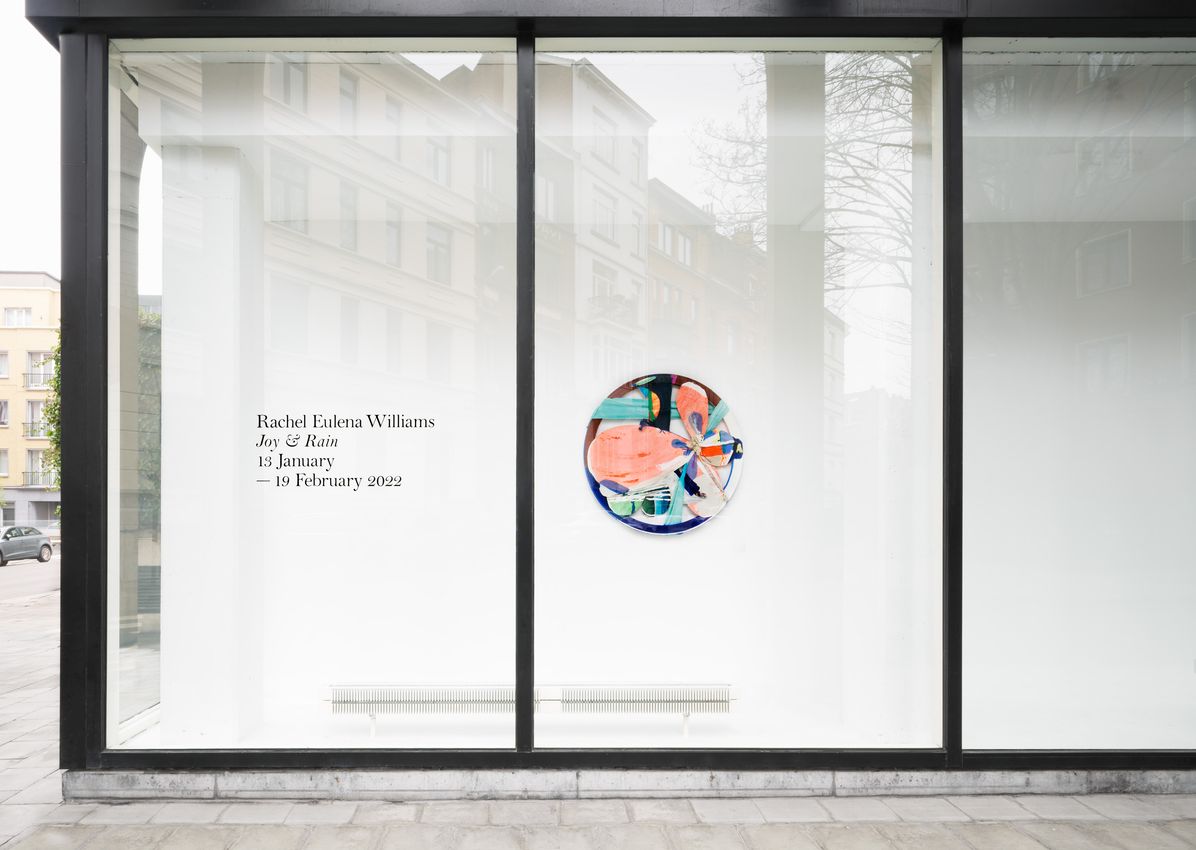
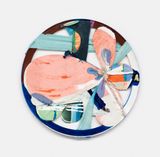
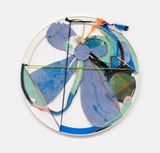
A powerful duality runs throughout Williams’ practice. It can be seen in the use of conventional materials to create works that both challengeand transcend genres, in the interplay between two- and three dimensions,in the contradiction between frugality and opulence (humble materialsversus luminous colour); not to mention the tension between optimism andsorrow (the joy of bricolage versus the social implications of cotton and rope).While the tondo is a familiar form in Williams’ oeuvre, the new series inJoy & Rain points to multiple evolutions: the incorporation of open, negativespace, the use of the raindrop motif as a recognisable and repeating form, andthe flower-like clustering of the droplets to create a focal point from whichthe energy of the work radiates. Both the raindrop motif and exhibition titlereference Melvonna Ballenger’s film Rain (Nyesha) (1978), a key source ofinspiration for Williams. Charting a female journey towards self-awarenessand empowerment, the video is a poetic meditation on the latent potency ofrainy days. For Ballenger, the wet weather is less a metaphor for melancholyand more an opportunity for reflection, change and renewal. Williams alsocaptures this atmosphere in the blue-toned colour palette and use of diluted,watery pigments.

The artist’s oeuvre can also be situated within the context of Black American artists’ contribution to modern art, with particular reference to pioneeringwomen such as Betye Saar (b. 1926) or Howardena Pindell (b. 1943). Williams’unorthodox use of materials and techniques can thus be seen as part ofthe ongoing reframing of art history and general pivoting away from theheavy classical traditions of what a painting or sculpture can (or should) be.The emotive and connective power of colour is yet another touchstone. As arthistorian and curator Zoé Whitley writes: ‘I turn to the work of a numberof Black women artists to be uplifted by their sublime use of rainbow-bright shades, not only for their evident beauty, but also for the unique ways in which they anchor their palette in our lived experience.’ An experience that, in bothhistorical and contemporary terms, is also reflected in the titles of the artworks(Strange Woman, American Fruit and Black and Blue, for example). Williams’working methods also relate to practices centred around community andsustainability, such as recuperation, recycling, patchwork and sewing, and thedichotomy between supposedly ‘high’ and ‘low’ artistic endeavours. As thefiltration device par excellence, and much like the creative process itself, herwork captures only what is essential and important.

Rachel Eulena Williams (b. 1991, Miami, Florida, USA) lives and works in Brooklyn, New York. She holds a BFA from Cooper Union for theAdvancement of Science and Art, also in New York.

Read More

Installation Views

About the Artist

Rachel Eulena Williams has developed a unique visual language operating on the threshold of painting and sculpture. A powerful duality runs throughout Williams’ practice. It can be seen in the use of conventional materials to create works that both challenge and transcend genres; in the interplay between two- and three dimensions; in the contradiction between frugality and opulence (humble materials versus luminous colour); not to mention the tension between optimism and sorrow (the joy of bricolage versus the social implications of cotton and rope). Williams’ working methods also relate to practices centred around community and sustainability, such as recuperation, recycling, patchwork and sewing, and the dichotomy between supposedly ‘high’ and ‘low’ artistic endeavours. As the filtration device par excellence, and much like the creative process itself, it captures only what is essential and important. Rachel Eulena Williams (b. 1991, Miami, Florida, USA) lives and works in Brooklyn, New York. She holds a BFA from Cooper Union for the Advancement of Science and Art, also in New York.

View Artist Profile

Also Exhibiting at Xavier Hufkens

About the Gallery
Xavier Hufkens is one of Europe’s leading galleries for contemporary art. Located in Brussels, the gallery maintains a diverse exhibition programme with solo exhibitions of the gallery artists as well as group exhibitions and special projects. The gallery deals in a distinctive combination of painting, drawing, sculpture, photography, video and installation-based work.

The origins of the gallery date back to 1987, when Xavier Hufkens opened a gallery space in an un-refurbished warehouse in the neighbourhood of the South Station (Midi) in Brussels. During the early years, the focus of the gallery was upon mid-career and emerging artists and the gallery is known for having introduced some of the most influential contemporary artists to Brussels at a time when they were still relatively unknown. British sculptor Antony Gormley, who is still affiliated with the gallery, Felix Gonzalez-Torres and Rosemarie Trockel all showed in Belgium for the first time with Xavier Hufkens (Gormley in 1987; Gonzalez-Torres in 1991 and Trockel in 1993).

In 1992, the gallery moved to a 19th-century townhouse at 6 rue Saint-Georges, close to the Avenue Louise. Completely renovated by Belgian architects Paul Robbrecht, Hilde Daem and Marie-José Van Hee, the house quickly gained a reputation for being not just one of the most beautiful contemporary art spaces in the Belgian capital, but also one of the most interesting. The expanded exhibition programme coincided with the additional representation of a number of established artists from Belgium and abroad, including Richard Artschwager, Thierry De Cordier and Jan Vercruysse. In 1997, Hufkens expanded the gallery further by annexing the adjacent building and a number of new artists joined the gallery, including Louise Bourgeois, Roni Horn and Thomas Houseago.

A second space in the same street, at 107 rue Saint-Georges, opened in spring 2013. Located in the Galerie Rivoli, a mixed-use commercial development from the 1970s, the new gallery space was designed by Swiss architect Harry Gugger, who was previously in partnership with Herzog and De Meuron. Slegten & Toegemann, Brussels, managed the project.

An eclectic but very clear vision underpins all of the gallery’s activities: ‘The definition of the gallery was established from the start. The common thread, then and now, is quality over and above everything else, which I find more intellectually challenging than a forced definition. From the early days I juxtaposed established artists such as Michelangelo Pistoletto with someone like Felix Gonzalez-Torres when he was totally unknown. Today I still mix my work: I have no problem showing Malcolm Morley … alongside Robert Ryman, or Willem de Kooning.’ [Xavier Hufkens in The Art Newspaper, Issue 220, January 2011, published online: 20 January 2011]

Xavier Hufkens represents some thirty artists from different generations. He was part of the six-member selection committee for Art Basel during seven years and also participates in up to five international Arts Fairs annually. The gallery has partnerships with the estates of Louise Bourgeois, Willem de Kooning, Robert Mapplethorpe and Alice Neel.
View Gallery Profile
Address
107 rue St-Georges
St-Jorisstraat
Brussels
Belgium
Opening Hours
Tuesday – Saturday
11am – 6pm
(1)
Brussels 107 rue St-Georges
Xavier Hufkens
107 rue St-Georges, St-Jorisstraat, Brussels, Belgium

Opening hours
Tuesday – Saturday
11am – 6pm
The art world in focus