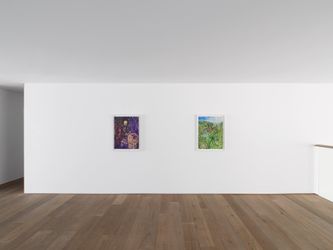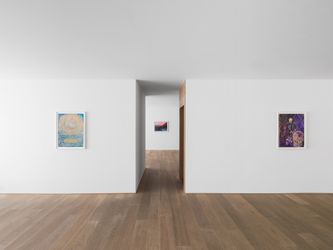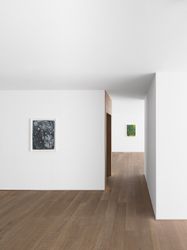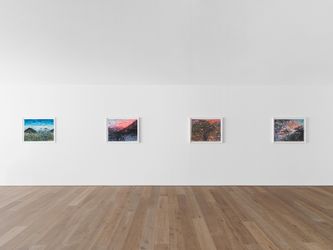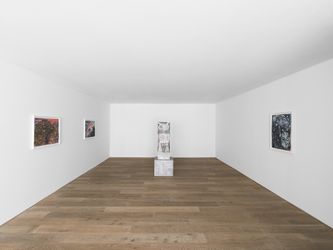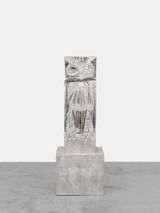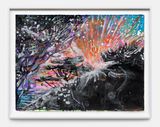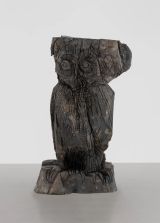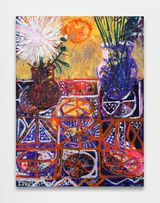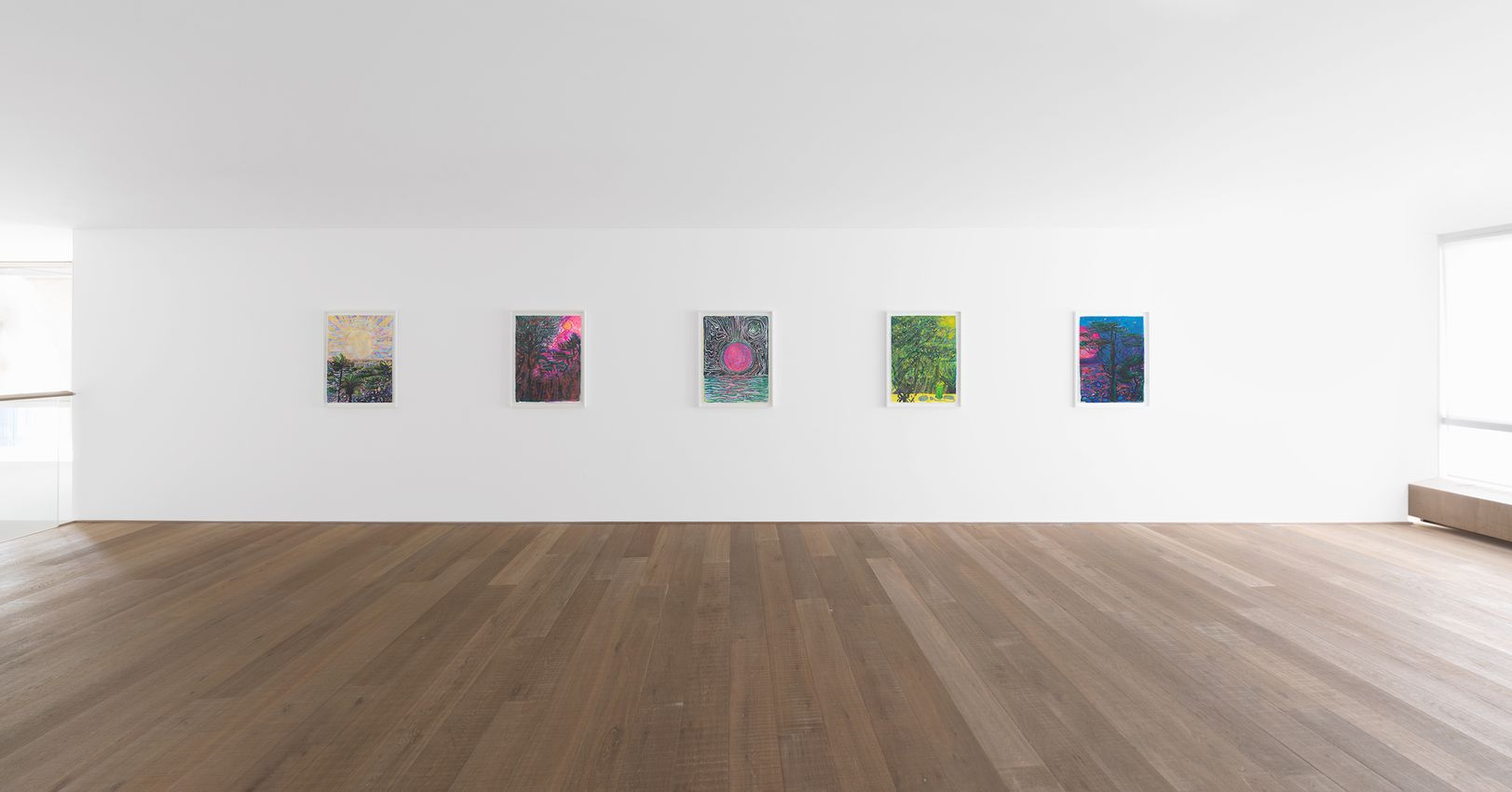
In this exhibition, Xavier Hufkens presents a new ensemble of paintings on paper by Thomas Houseago that were created in Malibu, USA. The key to the works lies in the title of the series, which suggests a gradual return to an improved state of mind or strength after a period of suffering. Articulate and open about his struggle with childhood trauma, often citing it as one of the driving forces of his creativity, Houseago has also spoken of how a number of unresolved issues have been exacerbated by a series of destabilising events. This has led to the period of change and recalibration to which Recovery Works belongs.
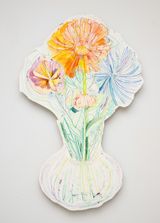
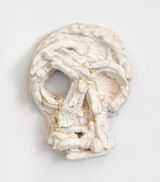
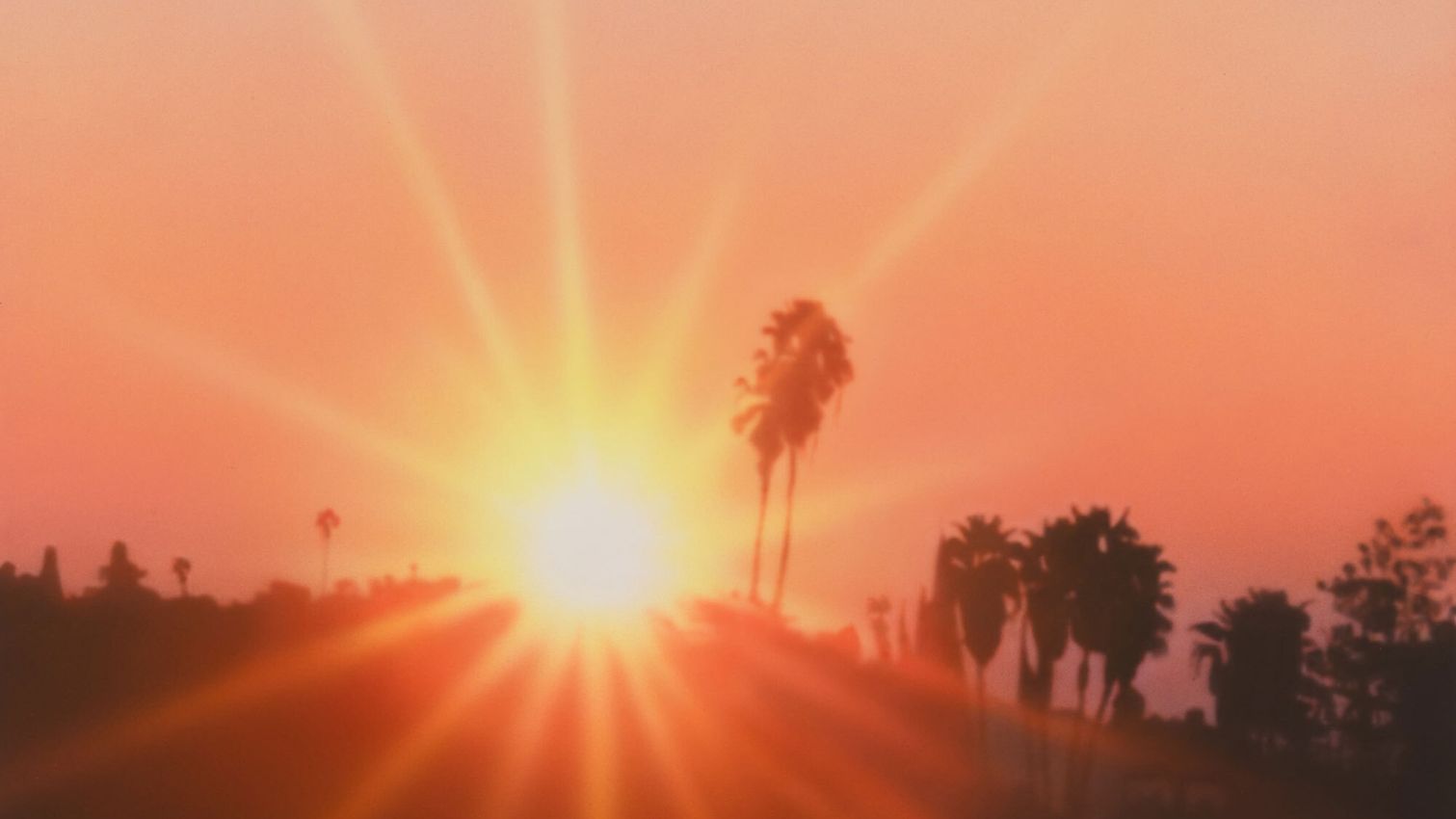
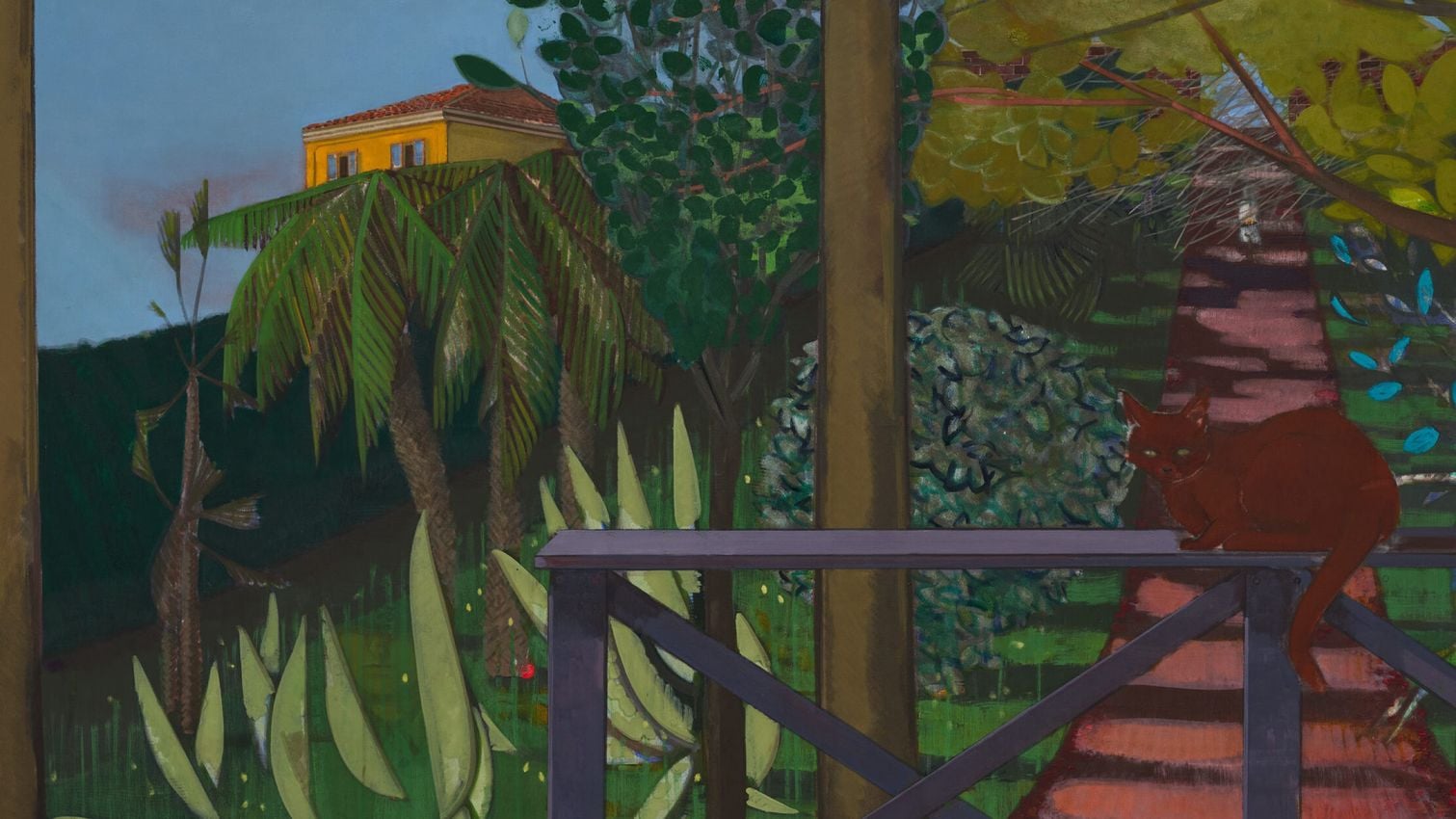
Recovery Works follows on from the Somatic Paintings that Houseago exhibited at the gallery in 2018. While the latter works were created during the artist’s engagement with this highly specific type of therapy and feature skulls enmeshed in dense networks of angular lines, Recovery Works revolves around an entirely different subject: the landscape. Although skulls and darkness are not wholly absent in this exhibition (which perhaps attests as much to the omnipresence of death in art as it does to the invidious nature of trauma), Houseago’s works are now suffused by light in both a literal and figurative sense. We see suns and moons, plants, flowers and trees, cobwebs and dew, all rendered in opulent, luminescent colours and pulsating, undulating lines. Nature feels primal, mysterious and seductive, all powerful and resplendent. Although these are deeply personal works, they also relate to larger traditions of landscape representation in European art. Interesting parallels can be drawn, for example, with the landscapes of Edvard Munch, such as The Sun (1909), Erich Heckel and the work of Ernst Ludwig Kirchner, the latter of whom produced similarly coruscating paintings after retreating into nature following a breakdown.
Drawing and painting has always been a fundamental part of Houseago’s artistic practice, both as an aid to the creation of sculpture and as a way of processing his innermost feelings. The roots of this can be traced back to his childhood, when drawing was both a lifeline and a survival tactic. Houseago has also spoken of how, in his youth, he would experience a sense of detachment that caused him to see his surroundings in terms of patterns. A similar quality can be detected in his mature works on paper, which he describes as ‘charts’ and ‘daydreams’. Music is another constant in Houseago’s life and functions in an identical way, being an escape route, a solace and a source of inspiration. In this, he acknowledges the influence of his father who was passionate about music. A formative memory, for example, is of his dad playing the psychedelic Magical Mystery Tour by The Beatles on repeat. It is perhaps no coincidence, therefore, that as Houseago excavates his past we see a surge of intense, vivid colours and swirling semi-abstract patterns. Recovery Works not only bears witness to Houseago’s discovery of a new way of processing physical energy, therefore, but also to the indivisible connection between music and art in his oeuvre.
Thomas Houseago (b. 1972) was born in Leeds, England. He received a BA in 1994 from Saint Martin’s School of Art, London, and studied at De Ateliers, Amsterdam, from 1994 to 1996. His work was included in the 2010 Whitney Biennial. Recent solo exhibitions include a large outdoor installation for the annual Summer Exhibition, Royal Academy, London (2019); Almost Human, Musée d’Art moderne de la Ville de Paris, Paris (2019); Lovers, Le Consortium, l’Académie Conti, Vosne-Romanée, France (2018); the monumental Masks (Pentagon), Rockefeller Plaza, New York, NY, USA (2015) and Thomas Houseago: Studies ‘98–‘14, Gemeentemuseum Den Haag, The Hague (2014).


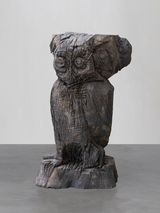
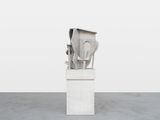
Thomas Houseago studied art at London’s Central St Martin’s college in the early 1990s before moving to Amsterdam to study at de Ateliers. He later moved to Brussels, where he lived and worked for several years, and had his first solo show with Xavier Hufkens in 2001. Houseago creates monumental, often figurative sculptures that have a striking ability to simultaneous convey states of power and vulnerability. Using materials associated with classical and modernist sculpture (such as carved wood, clay, plaster and bronze), as well as less traditional materials (steel rods, concrete and hessian), Houseago creates sculptures that emphatically reveal the process of making. Typical of his work is the combination of elements rendered in flat portions of wood with others sculpted in the round, together with hand-drawn components that are, in a technical tour-de-force, cast and printed onto the works. Whilst Houseago’s oeuvre can be seen as a continuation of a historical sculptural tradition, the unusual combinations of materials, the inclusion of references drawn from popular culture and the unusual interplay between two and three-dimensional elements, all challenge the hierarchy inherent within visual forms, and the materials and values associated with them.


A respected voice in contemporary art discourse.
Focusing on ambitious storytelling and insightful art-world commentary. Ocula Magazine publishes in-depth interviews, critical essays and timely analysis on the artists, exhibitions and ideas driving the global art world.
Learn more about Ocula Magazine
Showcasing the best of the art world.
Ocula partners with galleries from around the world to highlight their artists, artworks and exhibitions. Gallery membership is by application and invitation, with each member vetted by an independent panel.
Learn more about Ocula Membership

Specialises in the sale of major artworks.
Led by a team with deep ties to the world’s leading auction houses, galleries and collectors. Ocula’s advisory team offers bespoke services to high-net-worth clients from around the world who are looking to acquire the best of contemporary and modern art.
Learn more about our team and services