In the 1960s, Kazuo Kitai worked on a photographic series titled Resistance which took as its subject the people’s protest against the stopping of the US’s nuclear powered submarines at the port of Yokosuka, as well as other works that were as inspiring including the series titled Agitators and Barricade that photographed the students’ movement which demanded the democratisation of universities. In the 1970s, he captured with his camera the daily activities in agricultural communities that were in a rapid process of disappearance amidst the growth of Japanese economy in the photographic collection titled To the Villages and Somehow Familiar Places; his gaze was thus always cast upon the ongoing time in which he lived. In the 80s, when Japanese society was heading towards a bubble economy, Kitai shifted his interest upon the life of people living in apartment complex and newly developed residential area in the suburbs.
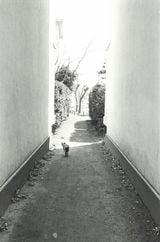
The project for Funabashi Story started when the city of Funabashi in Chiba prefecture, whose population rapidly expanded in the 1980s, asked the photographer to take pictures of the people living there and its town landscapes. Back then, Funabashi was going through the constructions of apartment complex and newly developed residential area to cater to its function as ‘bed town’ of Tokyo, and the eighty percent of the population consisted of so-called new residents (people who have moved into the suburb of a large city). They move into their houses as newly-weds, raise their children, and move to larger houses when the children get older. Such cycle of events that is calmly repeated within the domain of apartment complex where the buildings of identical size are ordered inorganically and uniformly in their adjusted city lots encourages further growth. However, despite a superficial joy that people felt of the fast speed that they have not before experienced which got things around them go swiftly, it is quite possible that they were quite startled by it. Kitai looked at the lives of the individuals from the area and carefully repeated the research and shooting to abstract the brightness that the place and the people there possessed.
“Speaking of the places of daily life, whereas those in villages were in ‘darkness,’ those in apartment complex were in the ‘light’ that was introduced through large windows into the room. In terms of objects and people’s existence, those in villages had ‘weight’ whereas those in apartment complex had the air of light, floating being; the two were pointing towards opposite directions in every aspect.”
Quoted from Pictures from My Cabinet of Memories by Kazuo Kitai
As Kitai himself commented, Funabashi Story is indeed about the glimpses of the daily life landscapes that the photographer captured earnestly and carefully, as he sensitively responded to the trends of the time in a changing state.
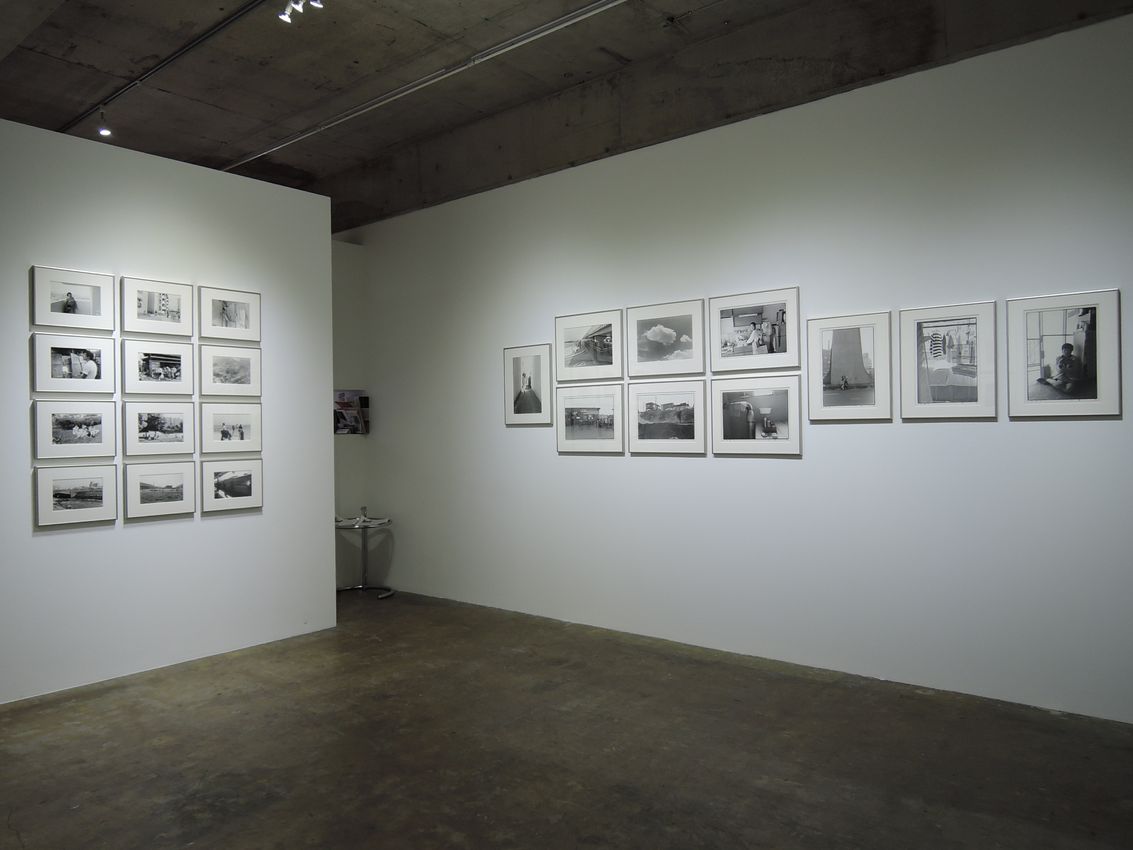
For the exhibition opening, a special talk by the artist and the guest speaker, Ryudai Takano, also a photographer will be held.

A respected voice in contemporary art discourse.
Focusing on ambitious storytelling and insightful art-world commentary. Ocula Magazine publishes in-depth interviews, critical essays and timely analysis on the artists, exhibitions and ideas driving the global art world.
Learn more about Ocula Magazine
Showcasing the best of the art world.
Ocula partners with galleries from around the world to highlight their artists, artworks and exhibitions. Gallery membership is by application and invitation, with each member vetted by an independent panel.
Learn more about Ocula Membership

Specialises in the sale of major artworks.
Led by a team with deep ties to the world’s leading auction houses, galleries and collectors. Ocula’s advisory team offers bespoke services to high-net-worth clients from around the world who are looking to acquire the best of contemporary and modern art.
Learn more about our team and services