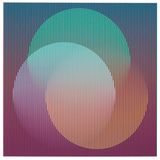
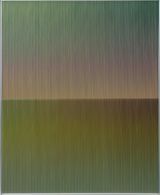
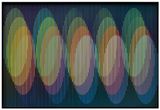
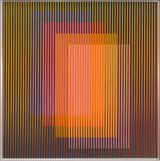
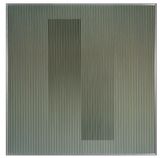
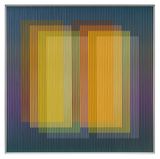
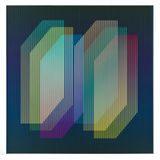
Carlos Cruz-Diez was a pioneer in the field of Op Art, a movement based on working with geometric forms to create optical effects. Cruz-Diez’s practice examined how colour and light created the illusion of movement and the transformation of colour.
Traversing site-specific installations, paintings, and prints, much of Cruz-Diez’s optical work is forged around spatial perception and the viewer’s participation in the experience of art.
Cruz-Diez conducted much research into colour theory, and today is understood as one of the key 20th-century thinkers in the field. His research contributed to the reconsideration of relations between the artist, spectator, and work of art, framing viewers within a participatory process rooted exclusively in the effects of colour.
‘With a practice centred on the perceptual experience of art, his research repositioned colour as the primary force in guiding an artwork’s visual response,’ Ocula Advisory explains.
Cruz-Diez’s rigorously theoretical approach to art making prompted him to view colour as a physical phenomenon that could be manipulated depending on both context and the viewer. His findings culminated in one of his most heralded series, ‘Physichromie, which focused on creating the illusion of movement through the manipulation of light and colour.
‘Physichromie’ series
In 1959, Cruz-Diez began his heralded ‘Physichromie’ series, which turned into a life-long investigation into the idea of chromatic autonomy and the exploration of the physicality of colour.
A product of the experiments he had been conducting on the heightened effects of ‘colour reflection’ while in Paris—where he subsequently moved the following year—this series of work embodied Cruz-Diez’s adoption of European modernism.
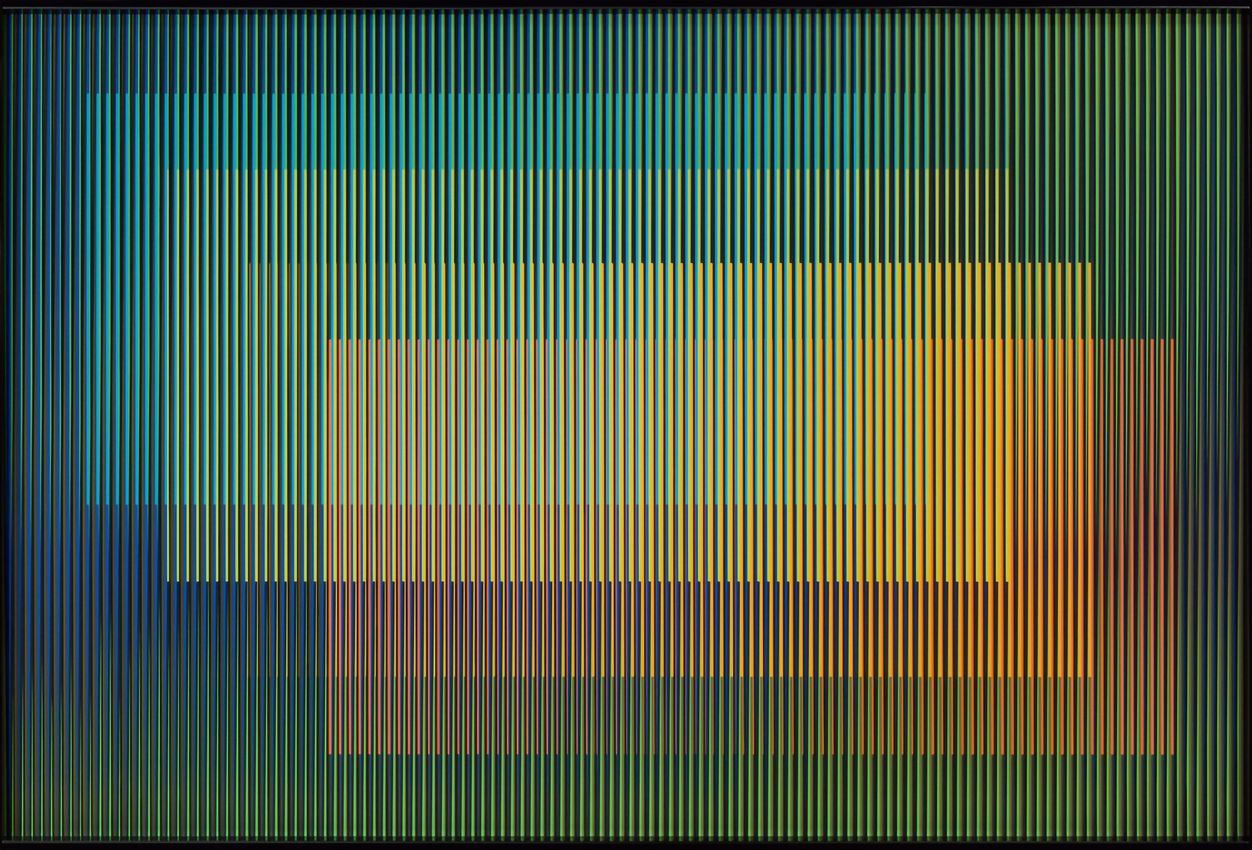
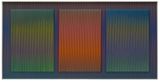
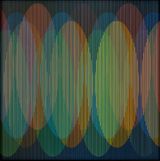
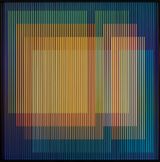
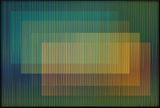
Drawing on George Seurat‘s pointillist technique and the colour theories of Josef Albers, works in this series, including Physichromie Panam 229 and Physichromie 2577, explore the physical effects of colour on the viewer, while encouraging the experience of colour transformation.
The works in the series are composed of thin, coloured bands that alternate between vertical strips of Plexiglass. Acting as a ‘light trap’, the surface’s colour alters radically depending on the viewer’s position, while the coloured bands appear to shift and vibrate.
The works in this series were included in many exhibitions of Op and Kinetic Art, including the landmark exhibition The Responsive Eye at New York‘s Museum of Modern Art in 1965.