





ELEONORE KOCH
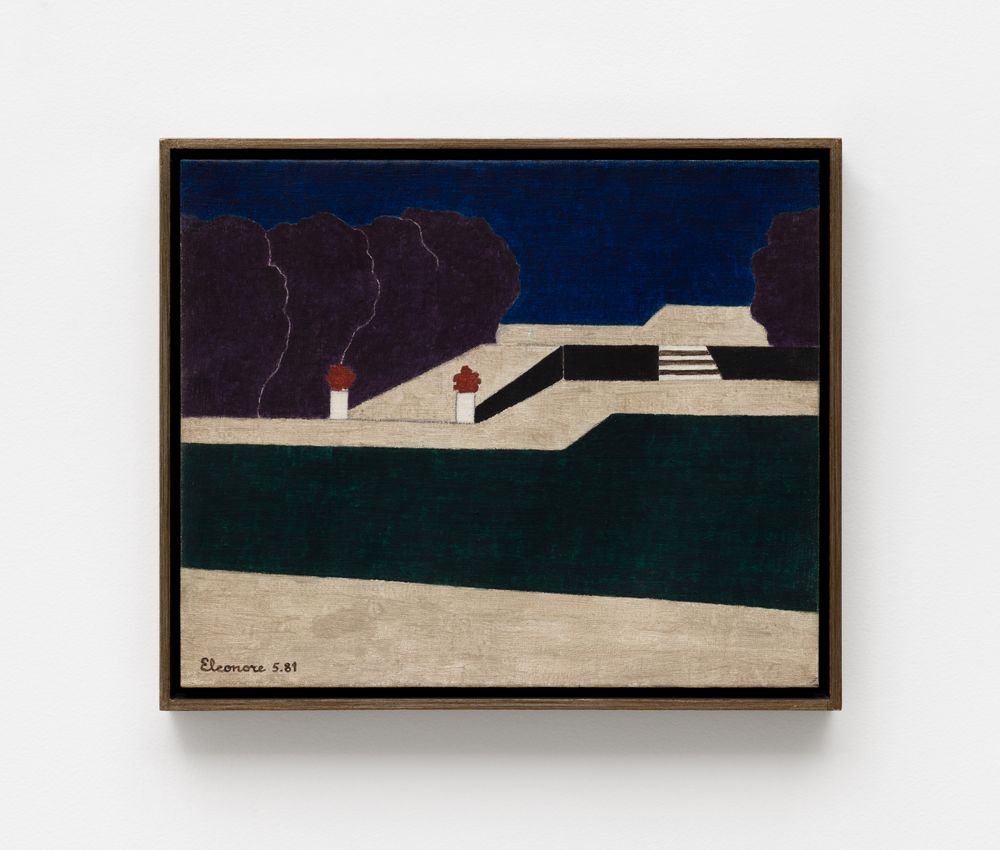
b. 1926, BrazilEleonore Koch is one of the most singular figures to have emerged in Brazilian art in the second half of the 20th century. She stands out as someone whose work doesn’t easily fit into any of the dominant artistic currents of her time and place, having stubbornly pursued her own pictorial language with remarkable discipline and coherence over more than four decades.
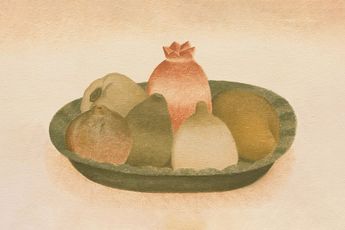
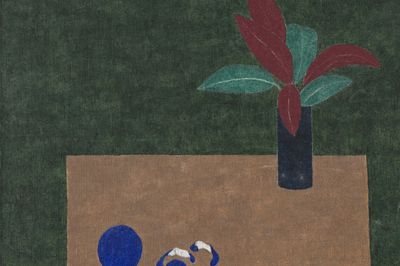
Besides landscape painting, Koch’s strict repertoire only included paintings of interiors featuring mundane objects that don’t appear to have any symbolic value: a blotter, a piece of crumbled paper, a chair, a vase, a peeled orange. At the same time, these objects have been singled out from a multiplicity of others and carefully reduced into synthetic forms that seem to have been sifted through a process of mental distillation which only allows the essential to remain. The result is far from ‘primitive’ or ‘simplistic’: images that are captured by the eye are submitted to an intense process of analytical deconstruction by the mind; only to be put together again by the hand, at which point they become infused with subjectivity.
Born in Berlin, Koch moved with her family to São Paulo as a child. In 1949 she traveled to Paris to study art, returning to Brazil in the early 1950s to study under Alfredo Volpi who introduced her to egg tempera, a medium she would continue to employ throughout her career. Koch also studied under many other artists, including Yolanda Mohalyi (1909-1978) and Elisabeth Nobiling (1902-1975).
Moving to London in 1968, Koch found an affinity with the figurative work of British painters like Patrick Caulfield and David Hockney. Distance from her home country gave her the freedom to further develop her style: the reduction of figures to the bare minimum, the rigorously demarcated areas of color, and the vast empty spaces that acquire a special vibrancy and luminosity through the treatment of the pictorial surface. In all of Koch’s works, the human figure is completely absent and the compositions are invariably characterized by an economy of elements with clearly demarcated zones of color that evoke different moods. Several commentators have drawn comparisons between Koch’s work and Italian metaphysical painting, pointing to the eerie atmosphere of these worlds devoid of human life.
Koch’s selected solo exhibitions include Mendes Wood DM, New York (2020); Rutland Gallery, London (1982 and 1972); MASP, São Paulo (1981 and 1956); Campbell & Franks Fine Art, London (1978), amongst others. The artist exhibited at the 2021, 1965, 1963 and 1957 Biennial of São Paulo and was featured in the group show 18 Women Artists, Barbican Art Gallery, London (1983).
Text courtesy Mendes Wood DM







Explore and Follow Artists Shaping Contemporary Art
A respected voice in contemporary art discourse.
Focusing on ambitious storytelling and insightful art-world commentary. Ocula Magazine publishes in-depth interviews, critical essays and timely analysis on the artists, exhibitions and ideas driving the global art world.
Learn more about Ocula Magazine
Showcasing the best of the art world.
Ocula partners with galleries from around the world to highlight their artists, artworks and exhibitions. Gallery membership is by application and invitation, with each member vetted by an independent panel.
Learn more about Ocula Membership
Specialises in the sale of major artworks.
Led by a team with deep ties to the world’s leading auction houses, galleries and collectors. Ocula’s advisory team offers bespoke services to high-net-worth clients from around the world who are looking to acquire the best of contemporary and modern art.
Learn more about our team and services