





FREDDY RODRÍGUEZ
1945-2022, Republic of DominicaFreddy Rodríguez was a Dominican American artist whose large-scale geometric abstractions fused New York School painting with Dominican history, Caribbean culture, and transnational issues. His work was included in the 60th Venice Biennale in 2024 and is held in major collections including the Whitney Museum of American Art, the Smithsonian American Art Museum, and the National Gallery of Art.
In 2026, the Guggenheim announced the acquisition of Rodríguez’s painting Guaroa (1973), acquired with support from the Latin American Circle, representing a significant addition to the museum’s collection of postwar abstraction. Other artists added to the museum’s collection included Varda Caivano, Sara Flores, Ximena Garrido-Lecca, Carlos Leppe, and Santiago García Sáenz.
Early Years
Rodríguez was born in Santiago de los Caballeros, Dominican Republic, in 1945, into a family with artistic roots—he was the grandnephew of Yoryi Morel, a pioneering figure in Dominican modernist art. Growing up during the 1950s and early 1960s under the brutal dictatorship of Rafael Trujillo, Rodríguez participated in student-led leftist protests, which put his safety in jeopardy.
He fled to the United States on Christmas Eve 1963, arriving in New York City at age 18 during a period of political instability following Trujillo’s assassination in 1961. In New York, Rodríguez studied painting at the Art Students League of New York under Sidney Dickinson, at The New School with John Dobbs and Carmen Cicero, and textile design at the Fashion Institute of Technology. He lived across the city—Greenwich Village, Chelsea, and Williamsburg—becoming what he described as a true ‘New York artist’.
Freddy Rodríguez Artworks
Freddy Rodríguez’s practice spanned abstraction, collage, sculpture, and public art, addressing themes of identity, freedom, colonialism, spirituality, and resistance across five decades of work.
Early Geometric Works (1970s)
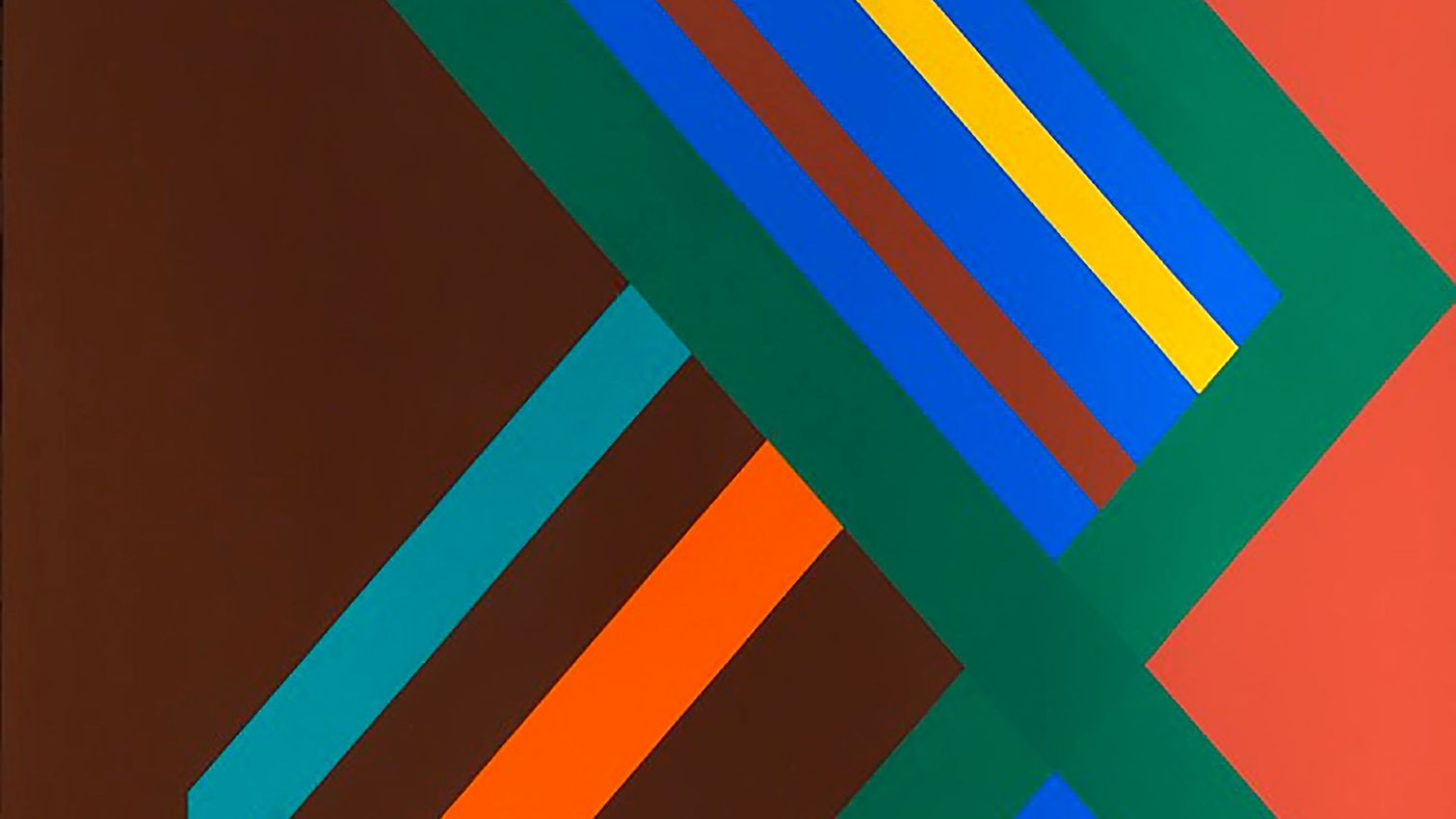
Rodríguez created his first geometric works in the early 1970s, drawing on graph paper for precision. His untitled works from 1971 feature rectangular bars, large squares, and straight-edged borders in muted earth tones, representing New York’s urban intensity.
A trio of large paintings from 1974—Danza de Carnaval, Danza Africana, and Amor Africano—feature sharp edges, vibrant colours, and pulsating rhythmic patterns that honour foundational African influences in Caribbean culture. These works, acquired by the Smithsonian American Art Museum in 2011, represent the energy of Dominican music through zigzagging lines.
Mulato de tal (1974), exhibited at the 2024 Venice Biennale, takes its title from the 1963 novel by Nobel Prize-winning Guatemalan writer Miguel Ángel Asturias. The work references a mixed-race man through geometric forms suggesting a body in movement, with warm colours evoking the racial taxonomies of Dominican life.
Y me quedé sin nombre (1974) became the first work by a Dominican-born New York artist to enter the Whitney Museum of American Art’s collection.
Paradise and Colonization Series (1990s)
Paradise for a Tourist Brochure (1990), acquired by the National Gallery of Art, is a large-scale collaged work of acrylic paint, sawdust, and newsprint on canvas. The work mimics a morbid tourist brochure: three bullet holes drip blood and bloody handprints line the bottom, symbolising atrocities of Trujillo’s regime. A blue butterfly contrasts with these violent elements, representing a silent witness to colonial brutality.
Casabe y Cruz II (1991), also acquired by the National Gallery, blends two opposing symbols: the Christian cross and casabe, a traditional Caribbean flatbread derived from yuca roots. Created before the 500th anniversary of Columbus’s arrival in the Caribbean, the work critiques the use of religion as a tool of colonial domination.
Select Public Commissions by Freddy Rodríguez
- Flight 587 Memorial, Belle Harbor, Queens, New York (dedicated 2006)
Select Awards and Accolades
- New York Community Trust—Oscar Williams & Gene Derwood Award, 2020
- Smithsonian Artist Research Fellowship, 2016
- Creating a Living Legacy, Joan Mitchell Foundation, 2013
- Joan Mitchell Foundation Fellowship, 2007
- Painters & Sculptors Grant, Joan Mitchell Foundation, 1995
- Gregory Millard Fellow in Painting, New York Foundation for the Arts, 1991
- NYSCA Artist in Residence, El Museo del Barrio, 1992
Freddy Rodríguez Exhibitions
Freddy Rodríguez was the subject of solo exhibitions and group exhibitions at important institutions and galleries worldwide. Below is a selection of important exhibitions.
Select Solo Exhibitions
- La Fiebre del Oro, Museo Ralli, Santiago, Chile (2019)
- America’s Pastime: Portraits of the Dominican Dream, Works by Freddy Rodriguez, The Newark Museum, Newark (2005)
- En Esta Casa Trujillo es el Jefe, Museo de Arte Moderno, Santo Domingo (2000); Jersey City Museum of Art, Jersey City (1999)
Select Group Exhibitions
- 60th Venice Biennale: Stranieri Ovunque – Foreigners Everywhere, Venice (2024)
- The Illusive Eye, El Museo del Barrio, New York (2016)
- Caribbean Art at the Crossroads of the World, Pérez Art Museum Miami (2014)
- Our America: The Latino Presence in American Art, Smithsonian American Art Museum, Washington, D.C. (2013)
- ¡Merengue! Visual Rhythms, El Museo del Barrio, New York (2006)
- IV Bienal Internacional de Pintura en Cuenca, Ecuador (1994)
To be kept up to date with upcoming exhibitions featuring Freddy Rodríguez, follow him on Ocula.
Collections
Freddy Rodríguez’s work is held in the following public collections:
- Whitney Museum of American Art, New York
- Smithsonian American Art Museum, Washington, D.C.
- National Gallery of Art, Washington, D.C.
- National Portrait Gallery, Washington, D.C.
- El Museo del Barrio, New York
- The Newark Museum, Newark
- Queens Museum of Art, New York
- Bronx Museum of the Arts, New York
- Jersey City Museum, New Jersey
- Museo de Las Casas Reales, Santo Domingo
Sign up to Ocula to follow the artist and learn more about Freddy Rodríguez’s art for sale.
Freddy Rodríguez FAQs
Who is Freddy Rodríguez?
Freddy Rodríguez (1945–2022) was a Dominican-American artist known for large-scale geometric abstractions that fused New York School painting with Dominican history, Caribbean culture, and critiques of colonialism. His work addressed themes including the Trujillo dictatorship, African influences in Caribbean culture, and religious colonisation, and is held in major collections including the Whitney Museum of American Art and the National Gallery of Art.
Where can I see work by Freddy Rodríguez?
Works by Freddy Rodríguez can be seen at the Whitney Museum of American Art in New York, the Smithsonian American Art Museum and National Gallery of Art in Washington, D.C., and El Museo del Barrio in New York. His painting Mulato de tal (1974) was exhibited at the 60th Venice Biennale in 2024.
Where did Freddy Rodríguez live?
Freddy Rodríguez lived and worked in New York City from 1963 until his death in 2022. He resided in various neighbourhoods including Greenwich Village, West Village, Chelsea, and Williamsburg, and maintained a studio in Queens.
How is Freddy Rodríguez’s name pronounced?
Freddy Rodríguez’s name is pronounced ‘FRED-ee rod-REE-gez’ in English, with the Spanish pronunciation being ‘rod-REE-geth’ with the stress on the second syllable of Rodríguez.
Where can I buy Freddy Rodríguez’s work?
What artistic movement is Freddy Rodríguez associated with?
Freddy Rodríguez’s style incorporates elements of Abstract Expressionism, geometric abstraction, Pop, and Minimalism. His early work engaged with minimalism and hard-edge abstraction, while later works fused conceptual elements from New York School painting with Dominican history and Caribbean culture.
What themes does Freddy Rodríguez explore in his work?
Freddy Rodríguez’s work addresses themes of identity, freedom, colonialism, spirituality, resistance, and redemption. Specific subjects include the conquest and colonisation of native peoples by Europeans, the figure of the ‘cimarrón’ (escaped slave), Catholicism, the dictatorship of Rafael Trujillo, and baseball.
Ocula | 2026


Explore and Follow Artists Shaping Contemporary Art
A respected voice in contemporary art discourse.
Focusing on ambitious storytelling and insightful art-world commentary. Ocula Magazine publishes in-depth interviews, critical essays and timely analysis on the artists, exhibitions and ideas driving the global art world.
Learn more about Ocula Magazine
Showcasing the best of the art world.
Ocula partners with galleries from around the world to highlight their artists, artworks and exhibitions. Gallery membership is by application and invitation, with each member vetted by an independent panel.
Learn more about Ocula Membership
Specialises in the sale of major artworks.
Led by a team with deep ties to the world’s leading auction houses, galleries and collectors. Ocula’s advisory team offers bespoke services to high-net-worth clients from around the world who are looking to acquire the best of contemporary and modern art.
Learn more about our team and services