





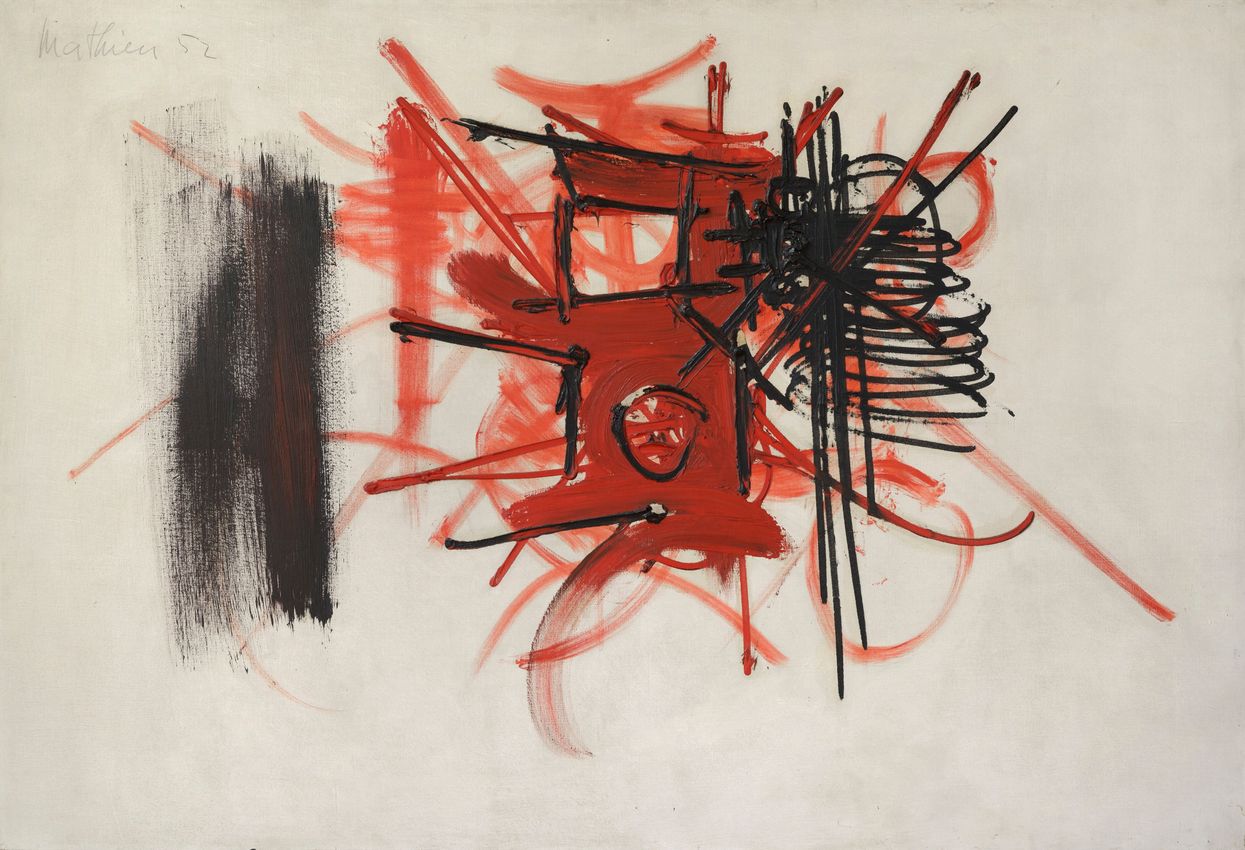
GEORGES MATHIEU
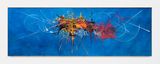
1921-2012, FranceThe New School of Paris boasted erudite essayists in its ranks, but no one conceptualized and theorized art as perspicaciously as Georges Victor Mathieu. Beginning his artistic journey with figuration, he soon decided that painting required no representation to justify its existence. From dripping in his early works to Zen in the 1960s and the abolishment of the center in the 1980s, the founding father of European lyrical abstraction was constantly probing. He published a number of manifestos to define lyrical abstraction, postulating four conditions that characterized the movement: primacy of speed, no preexisting shapes, no premeditated moves, and the ecstatic mind. He considered lyrical abstraction the sixth and last of all cyclical transitions in the history of art, liberated from realism by Impressionism, shapes by Cubism, and representation by Abstractionism, “henceforth in the history of shapes as in the history of the world, the sign precedes its meaning.”

Recently Exhibited








Explore and Follow Artists Shaping Contemporary Art
A respected voice in contemporary art discourse.
Focusing on ambitious storytelling and insightful art-world commentary. Ocula Magazine publishes in-depth interviews, critical essays and timely analysis on the artists, exhibitions and ideas driving the global art world.
Learn more about Ocula Magazine
Showcasing the best of the art world.
Ocula partners with galleries from around the world to highlight their artists, artworks and exhibitions. Gallery membership is by application and invitation, with each member vetted by an independent panel.
Learn more about Ocula Membership
Specialises in the sale of major artworks.
Led by a team with deep ties to the world’s leading auction houses, galleries and collectors. Ocula’s advisory team offers bespoke services to high-net-worth clients from around the world who are looking to acquire the best of contemporary and modern art.
Learn more about our team and services