

HA CHONG-HYUN
b. 1935, South KoreaKnown for his significant contribution to the development of abstract art in post-war South Korea, Ha Chong-Hyun was a member of both the Dansaekhwa (monochrome painting) and the Korean Avant Garde movements. Blending Eastern and Western philosophies and traditions, his experimental use of materials foregrounds texture and process.
Early Years
Born in 1935 in Sancheong, South Korea, at the height of Imperial Japanese occupation, Ha Chong-Hyun spent his childhood in Moji, Japan. When Korea gained independence in 1945, Ha came home and attended Hongik University in Seoul, graduating in 1959 and later working there as a professor for more than 30 years. South Korea’s economic and social instability influenced the materials Ha Chong-Hyun was able to use: burlap sacks left by American soldiers after the Korean War instead of canvases, for example. Ha took part in the 1961 Paris Biennale and the São Paulo Art Biennale in 1967.
Ha Chong-Hyun: Artworks
Speaking in 2025, Ha Chong-Hyun said: “One thing I have always maintained is that I’m not afraid of change, and I try not to follow others, but instead find my own path,” adding: “Material and action are the essence of my art. Therefore, the only part I can speak to is my action, and the material tells its own story.”
Ha Chong-Hyun’s artistic practice was initially influenced by the availability of materials: he painted with muted tones on hemp and burlap sacks, also losing barbed wire and scrap lumber, which blurred the boundaries between painting and sculpture. Squeezing paint through the back of the canvas instead of painting on the front—bae-ap-bub—he created three-dimensional artworks. As one of the pioneers of Korean modernism, he continued to experiment with materials throughout his career.
During the 1980s, action became a more significant part of his practice, which evolved during the 1990s through bold brushstrokes highlighting the physical act of painting (he also modified his colour palette to include darker shades). Focusing on form, materiality and process, his work magnified the crossover points between the conceptual and the physical sides of artmaking.
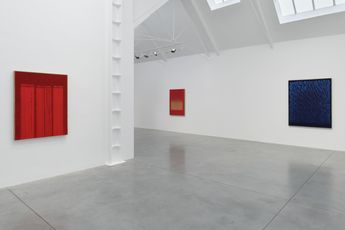
As his practice evolved into the 21st century, he added shades of red to his traditionally neutral and navy colour palette. Ha didn’t gain significant global recognition until the Dansaekhwa movement attracted interest during the early 2000s, despite serving as dean of the Fine Arts College at Hongik University between 1990–1994 and the director of the Seoul Museum of Art from 2001–2006. In August 2025 the Ha Chong-Hyun Art Centre opened in Paju.
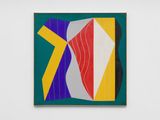
- The Urban Planning series—perhaps most notably personified by 1967’s White Paper for Urban Planning examined spatial composition in the context of the industrialisation and economic growth of Seoul. Ha Chong-Hyun was inspired by the modernisation to find tradition, so created modern pieces that included elements related to established culture. The piece includes bold colours, geometric forms and “folds” in the canvas.
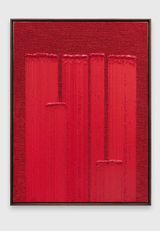
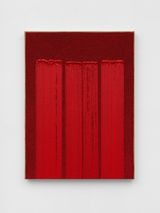
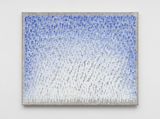
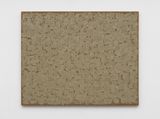
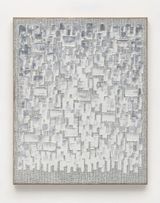
- Ha Chong-Hyun is perhaps best known for his Conjunctions series, a title he selected during the 1970s to describe the relationship between the hemp canvas and the paint, but also his own process. “I have continuously used the title ‘conjunction’ since the early 1970s,” Ha told Ocula in 2017, “because it is really the essence of my work: the conjunction between the materials—oil paint and hemp cloth—and my spirit and performance.” He began by using colours based on traditional Korean tiles and porcelain, but in the 21st century he added crimson shades inspired by patterns in architecture and musical instruments.
Ha Chong-Hyun: Select Exhibitions
Select Solo Exhibitions
- Almine Rech, Brussels (2026)
- Ha Chong-Hyun: Retrospective, Asian Art Museum (AAM), San Francisco (2026)
- Light Into Colour, Le Château La Coste, Pavillon Renzo Piano, Le Puy-Sainte-Réparade (2025)
- Ha Chong-Hyun 5975, Art Sonje Centre, Seoul. (2025)
- Ha Chong-Hyun for Lady art #8’ House of Dior, Seoul (2024)
- Almine Rech, Gstaad (2024)
- BLUM, Tokyo (2023)
- Almine Rech, Paris (2023)
- Ha Chong-Hyun, 59th Venice Biennale Collateral Event (2022)
- Kukje Gallery, Seoul (2022)
- Return to Colour, Tina Kim Gallery, New York City (2019)
- Daejeon Museum of Art (2020)
- Almine Rech Gallery, London (2020)
- Blum & Poe, Tokyo (2019)
- Kukje Gallery, Busan (2019)
- Cardi Gallery, Milan (2019)
- Conjunction, Tina Kim Gallery, New York City (2018)
- Almine Rech Gallery, London (2017)
- Almine Rech Gallery, Paris (2017)
- Blum & Poe, Los Angeles (2016), CA
- Conjunction, Tina Kim Gallery, New York City (2015)
- Kukje Gallery, Seoul (2015)
- Blum & Poe, New York City (2014)
- Wooson Gallery, Daegu (2014)
- Pyo Gallery, Seoul (2013)
- Ha Chong-Hyun Retrospective, National Museum of Modern and Contemporary Art, Gwacheon (2012)
- Galerie Winter, Weisbaden (2012)
- Severance Art Space, Seoul (2010)
- Seok Gallery, Daegu (2009)
- Gana Art Centre, Seoul (2008),
- Gallery Bijutsu Sekai, Tokyo (2004)
- Fondazione Mudima, Milan (2003)
- Contemporary Art Museum, Hongik University Museum, Seoul (2000), South Korea
- Wellside Gallery, Seoul (1997)
- Wassermann Galerie, Munich (1994)
- Kamakura Gallery, Tokyo (1985)
- Gallery SPACE, Seoul (1977)
- Gin Gallery, Tokyo (1972)
Select Group Exhibitions
- Out of Passion: The Maximilian and Agathe Weishaupt Collection, Kunstmuseum Ahlen (2026)
- The Spirit of Korean Artistry, The Columns Gallery, Singapore (2025)
- Only the Young: Experimental Art in Korea, 1960s–1970s, Solomon R Guggenheim Museum, New York City (2023) (and touring)
- Un Hiver à Paris, Almine Rech, Paris (2021)
- Renegades in Resistance and Challenge, Daegu Art Museum, Daegu (2018)
- Korean Abstract Art: Early Works, Waldorf Astoria Hotel, New York City (2016)
- Korean Avant-Garde Drawing: 1970–2000, Seoul Olympic Museum of Art (2010) *Corée: Pays du Matin Calme (Korea: Land of the Morning Calm), Musée des Arts Asiatiques de Nice (1999)
- 24th Seoul Olympiad: International Contemporary Art Exhibition, National Museum of Contemporary Art, Gwacheon (1988)
- Korean Contemporary Art Exhibition: The Latter Half of the 1970s—An Aspect, Tokyo Metropolitan Art Museum and National Museum of Modern Art (1982) (and touring)
- The First Seoul Biennale’ National Museum of Modern Art, Seoul (1974)
Further Reading
- Ha Chong-Hyun’s Instagram
- 2017 conversation from Ocula
- Artist profile page at Tina Kim Gallery
- Press release about Conjunction exhibition in 2018
- 2025 interview in Jing Daily (via Tina Kim Gallery)
Ha Chong-Hyun FAQs
What was the Dansaekhwa movement?
Dansaekhwa translates as “monochrome painting” and it was a loosely organised artistic movement originating in South Korea amid the political turmoil of the 1970s. The artists used abstraction and experimented with different materials, blending Korean and Western ideas in a quest for calm and balance.
What is bae-ap-bub?
Instead of applying paint to the front of burlap canvas, bae-ap-bub (“back pressure method”) sees the artist pushing paint through the back (verso). Different sizes of pores in the fabric, and varying amounts of pressure forcing the paint through, lead to different effects. “I was interested in creating a whole new method of creating that involved both the back and front of the surface. Although it sounds simple, there are many variations when paint is pushed through the holes of a hemp cloth,” Ha told Ocula in 2017.
What materials and techniques does Ha Chong-Hyun use?
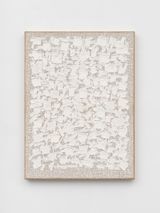
In addition to bae-ap-bub (see above), Ha Chong-Hyun also uses a palette knife to create thick impasto lines, turning his paintings into truly three-dimensional objects. The materials he used during the 1960s and 1970s reflected the sociopolitical context of the era: burlap and barbed wire were all he was able to afford, and he had to mix the colours for each painting, rather than being able to order colours, as he did in his later practice. However, Ha was conscious of other artists’ practice and has always been keen to explore materials to create entirely new works.
What was the Korean Avant-Garde Association?
Speaking in 2025, Ha Chong-Hyun explained that: “The avant-garde movement in Korea emerged as an aesthetic rebellion following the decline of abstract painting, which captured the political, social turmoil and poverty of post-war Korea.” Ha was one of the group of artists and critics who founded the Korean Avant-Garde Association in 1969, which played a key role in advancing experimental Korean art. The group’s journal, AG, reflected the members’ philosophy. The group also organised the 1974 Seoul Biennale.
Ocula

Works at The Columns Gallery


Recently Exhibited


Exhibiting Elsewhere

Works Elsewhere













Ha Chong-Hyun in Ocula Magazine







Explore and Follow Artists Shaping Contemporary Art
A respected voice in contemporary art discourse.
Focusing on ambitious storytelling and insightful art-world commentary. Ocula Magazine publishes in-depth interviews, critical essays and timely analysis on the artists, exhibitions and ideas driving the global art world.
Learn more about Ocula Magazine
Showcasing the best of the art world.
Ocula partners with galleries from around the world to highlight their artists, artworks and exhibitions. Gallery membership is by application and invitation, with each member vetted by an independent panel.
Learn more about Ocula Membership
Specialises in the sale of major artworks.
Led by a team with deep ties to the world’s leading auction houses, galleries and collectors. Ocula’s advisory team offers bespoke services to high-net-worth clients from around the world who are looking to acquire the best of contemporary and modern art.
Learn more about our team and services