






JORDAN WOLFSON
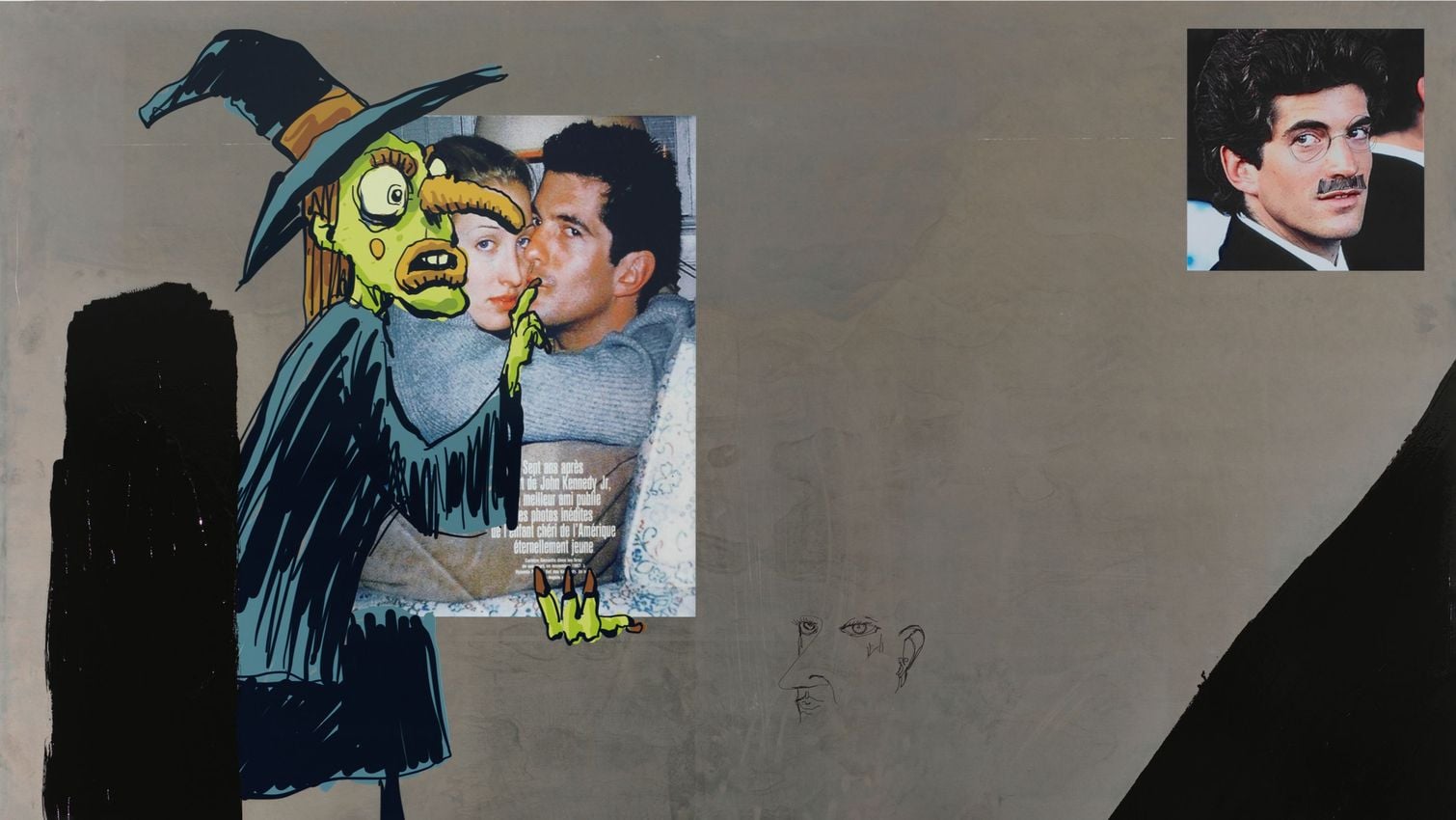
b. 1980, United StatesJordan Wolfson (b. 1980, New York) is an American artist known for disturbing, technically sophisticated works that fuse animatronic sculpture, video, and virtual reality to probe violence, desire, and the ethics of looking. Working between Los Angeles, New York, and Europe, he has become one of the most closely watched artists of his generation for a series of highly mediated installations that confront viewers with grotesque spectacle and their own complicity. Signature works such as (Female Figure) (2014), Colored Sculpture (2016), and the virtual reality piece Real Violence (2017) have been widely discussed and protested in equal measure. Wolfson’s work has been presented at institutions including the Whitney Museum of American Art, The Broad, Fondation Beyeler, the National Gallery of Australia, and the Brant Foundation, cementing his profile in both museum and market contexts.
Early life and career
Born in New York in 1980, Wolfson studied art in the United States before emerging in the late 2000s with videos and installations that appropriated found imagery from advertising and digital culture. Early exhibitions such as Animation, masks (Kunsthalle Wien, 2012) and Raspberry Poser (2012–13, REDCAT and Chisenhale Gallery) established his interest in cartoonish characters, disembodied voices, and the uneasy overlap of innocence and aggression. This phase of his practice already foregrounded questions about how images format subjectivity, prefiguring the more immersive, technologised works that would follow.
Animatronic sculptures and the gaze
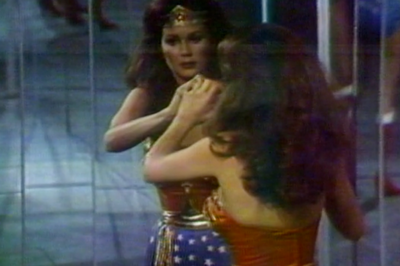
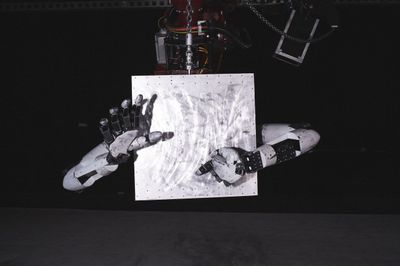
Wolfson’s breakthrough came with a series of animatronic sculptures that combine robotics, cinematic timing, and theatrical mise-en-scène to produce unsettling encounters with quasi-human figures. (Female Figure) (2014), now in the collection of The Broad, presents a hyper-sexualised robotic woman in thigh-high boots and a negligee, her face partly obscured by a witch mask, dancing mechanically in front of a mirror while speaking in the artist’s male voice. Driven by facial-recognition software, the figure locks eyes with viewers, inverting the traditional ‘male gaze’ and recasting them as the objects of scrutiny. In the equally notorious Colored Sculpture (2016), a cartoon-like marionette suspended from chains is repeatedly hoisted and slammed into the floor by an industrial mechanism, an almost ritualised choreography of punishment that fuses slapstick and brutality.
These works use the visual language of pop culture—music videos, theme-park animatronics, cartoon archetypes—to stage scenes in which viewers are not passive spectators but implicated witnesses. The sculptures’ capacity to ‘look back’ and respond choreographically to the audience makes the experience feel personalised, amplifying discomfort and raising questions about power, objectification, and the status of the human body in an image-saturated culture.
Virtual reality and Real Violence
Wolfson extended this logic into virtual reality with Real Violence (2017), first shown in the Whitney Biennial in New York, where it quickly became one of the exhibition’s most contentious works. The 90-second VR film places viewers on a city street as the artist, playing an anonymous man, suddenly beats a kneeling victim with a baseball bat and then stomps on his head while Hebrew prayers play over the scene. Devoid of narrative context or backstory, the work is experienced as an almost pure distillation of brutality; viewers cannot intervene and instead must decide whether to keep watching or look away.
The piece provoked intense debate about whether it was an incisive critique of mediated violence or an ethically dubious spectacle, with critics and audiences split over its necessity and intent. Wolfson has described the work as a test of virtual reality’s capacity to generate authentic experience and to foreground how viewers exercise (or relinquish) authority over what they see. Subsequent VR installations, such as Little Room (2025) at Fondation Beyeler, further explore body-swapping and disorientation, inviting participants into scenarios where their sense of self and bodily integrity is destabilised.news.
Body Sculpture and recent projects
Wolfson’s interest in animatronic bodies and choreographed aggression culminated in Body Sculpture (also known as Body Sculpture (Colored Sculpture II)), a large-scale robotic installation acquired by the National Gallery of Australia in 2020 at a cost said to represent a significant portion of the museum’s annual acquisitions budget. The work was finally unveiled in Canberra in 2023 after delays connected to the COVID-19 pandemic, marking the artist’s first major solo presentation in Australia. Installed alongside selections from the national collection, it underscored how his hybrid sculptures—part machine, part character, part allegory—converse with broader histories of figurative and kinetic art.
Recent years have also seen focused presentations of (Female Figure) at the Brant Foundation in New York, where it was housed in a dedicated room, and continued institutional and gallery exhibitions across Europe and the United States. Projects like Little Room at Fondation Beyeler confirm Wolfson’s ongoing investment in immersive technologies that collapse the boundaries between spectator and protagonist, while maintaining his distinctive blend of cartoonish imagery and existential dread.
Themes and critical context
Across media, Wolfson returns to a cluster of interrelated concerns: the violence embedded in popular imagery, the construction of gender and sexuality, the mechanics of the gaze, and the ways digital tools mediate empathy and cruelty. His works often juxtapose childlike or kitsch aesthetics with acts of psychic or physical harm, producing a friction that many critics find both compelling and deeply unsettling. Rather than offering clear moral lessons, these pieces stage situations in which viewers must confront their own thresholds for looking, their appetite for shock, and their position within systems of representation and control.
Wolfson is frequently discussed within the context of post-internet and new-media art, yet his work also extends longer histories of performance, kinetic sculpture, and the depiction of the body in states of extremity. By drawing on the languages of advertising, cinema, gaming, and theme-park entertainment, he compresses contemporary experience into tightly scripted encounters where spectacle and critique are inseparable.
Exhibitions and Collections
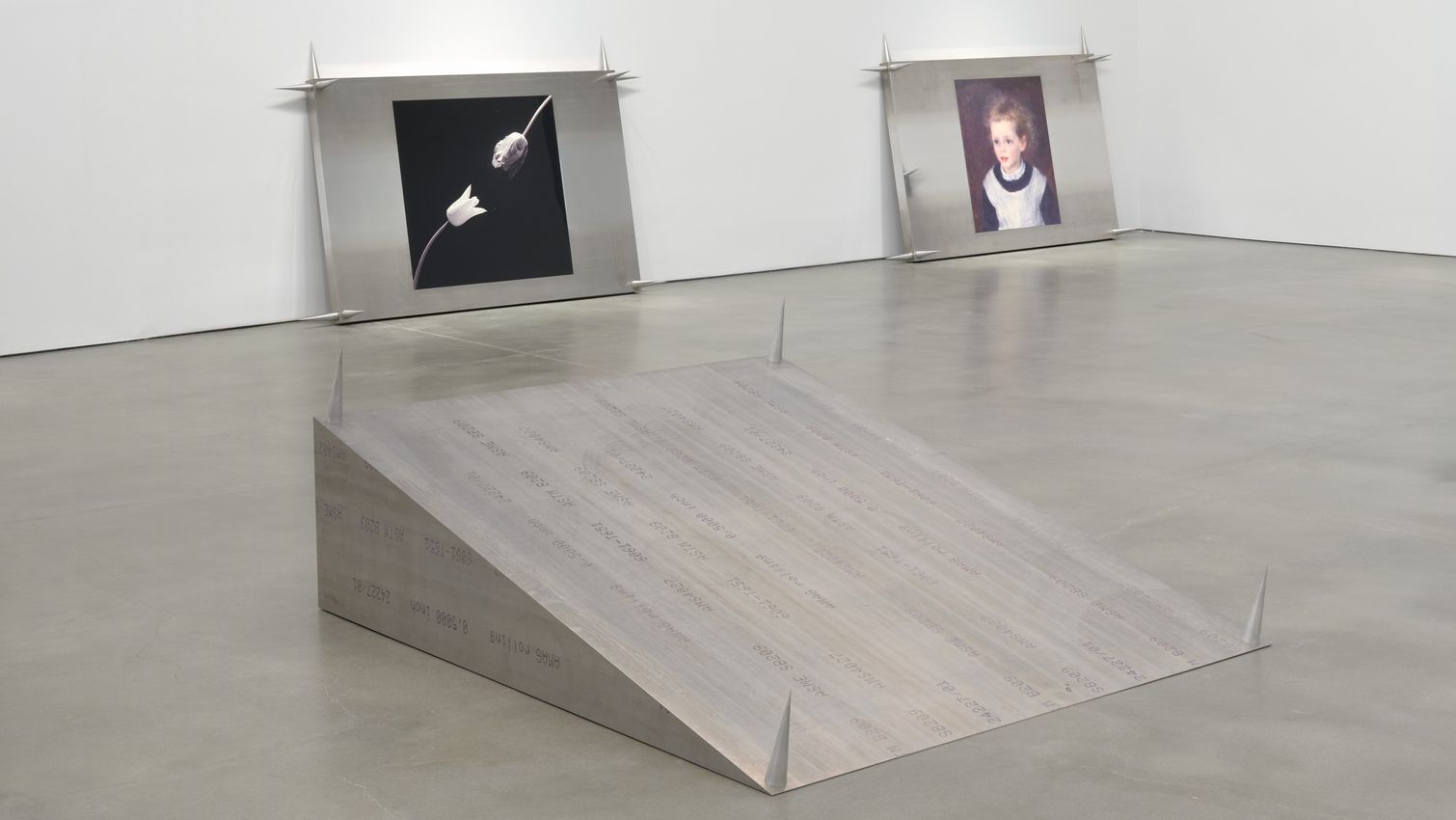
Wolfson’s work has been featured in major solo presentations and group exhibitions worldwide. Key shows include Animation, masks at Kunsthalle Wien (2012), Raspberry Poser at REDCAT, Los Angeles, and Chisenhale Gallery, London (2012–14), (Female Figure) at 14 Rooms (Art Basel, curated by the Beyeler Foundation and Serpentine) and later at The Broad, Los Angeles, and the Brant Foundation, New York, and Riverboat Song at Sadie Coles HQ, London, and David Zwirner, New York (2017–18). Real Violence was a focal point of the 2017 Whitney Biennial in New York, and his more recent projects include Body Sculpture at the National Gallery of Australia (2023–24) and Little Room at Fondation Beyeler (2025).
His works are held in public collections such as The Broad Art Foundation, the National Gallery of Australia, and other major institutions in Europe and the United States. Represented by galleries including David Zwirner and shown by organisations such as Gagosian and Sadie Coles HQ, Wolfson occupies a prominent position at the intersection of institutional scrutiny and market attention.
Jordan Wolfson FAQs
What is Jordan Wolfson best known for?
Jordan Wolfson is best known for his confrontational animatronic sculptures and virtual reality installations that force viewers into uncomfortable proximity with violence, misogyny, and control. Works like (Female Figure) (2014), Colored Sculpture (2016), and Real Violence (2017) have become touchstones in debates about the ethics of representation in contemporary art.
Why is Jordan Wolfson considered controversial?
Wolfson is considered controversial because his work often stages graphic or psychologically intense scenarios—such as a brutal VR beating in Real Violence or the abusive choreography of Colored Sculpture—without offering clear narrative justification or moral framing. Critics and viewers disagree over whether these pieces expose the violence embedded in visual culture or risk reproducing it as spectacle, and this tension is central to his reception.
What themes does Jordan Wolfson explore?
Wolfson’s work explores how images shape identity and desire, how spectators participate in systemic violence, and how new technologies intensify the dynamics of looking and being looked at. Recurring motifs include masked or cartoonish figures, disembodied voices, and choreographed acts of aggression that implicate the viewer through eye contact, immersion, or bodily mirroring.
Where can I see Jordan Wolfson’s work?
Wolfson’s major works have been shown at institutions such as the Whitney Museum of American Art (New York), The Broad (Los Angeles), the Brant Foundation (New York), Fondation Beyeler (Riehen/Basel), and the National Gallery of Australia (Canberra), among others. His work also appears in gallery exhibitions and art-fair presentations organised by his representing galleries.
What is ‘Real Violence’ about?
Real Violence (2017) is a short virtual reality work in which viewers witness the artist beating a kneeling figure on a city street while Hebrew prayers play on the soundtrack. Rather than explaining the act, the piece confronts the audience with an unresolvable situation, prompting reflection on their own decision to watch, the status of VR as ‘real’ experience, and the circulation of violence as mediated content.
What is Jordan Wolfson’s ‘Little Room’?
In Little Room (2025), a virtual reality work premiered at Fondation Beyeler, visitors enter an experimental environment where they play a central role in the unfolding scenario. The piece pushes VR beyond passive immersion, examining darker aspects of human experience and how technologies shape consciousness and perception.
What is Jordan Wolfson’s ‘Body Sculpture’?
Body Sculpture (2023) is a large-scale animatronic sculpture commissioned by the National Gallery of Australia as a major acquisition for its collection. Over a half-hour cycle, the work moves through gestures ranging from seductive to self-destructive, combining performance, robotics, and sound to create a demanding physical and emotional encounter for viewers.
Ocula | 2026


Exhibiting Elsewhere

















Explore and Follow Artists Shaping Contemporary Art
A respected voice in contemporary art discourse.
Focusing on ambitious storytelling and insightful art-world commentary. Ocula Magazine publishes in-depth interviews, critical essays and timely analysis on the artists, exhibitions and ideas driving the global art world.
Learn more about Ocula Magazine
Showcasing the best of the art world.
Ocula partners with galleries from around the world to highlight their artists, artworks and exhibitions. Gallery membership is by application and invitation, with each member vetted by an independent panel.
Learn more about Ocula Membership
Specialises in the sale of major artworks.
Led by a team with deep ties to the world’s leading auction houses, galleries and collectors. Ocula’s advisory team offers bespoke services to high-net-worth clients from around the world who are looking to acquire the best of contemporary and modern art.
Learn more about our team and services