






KIM TSCHANG-YEUL
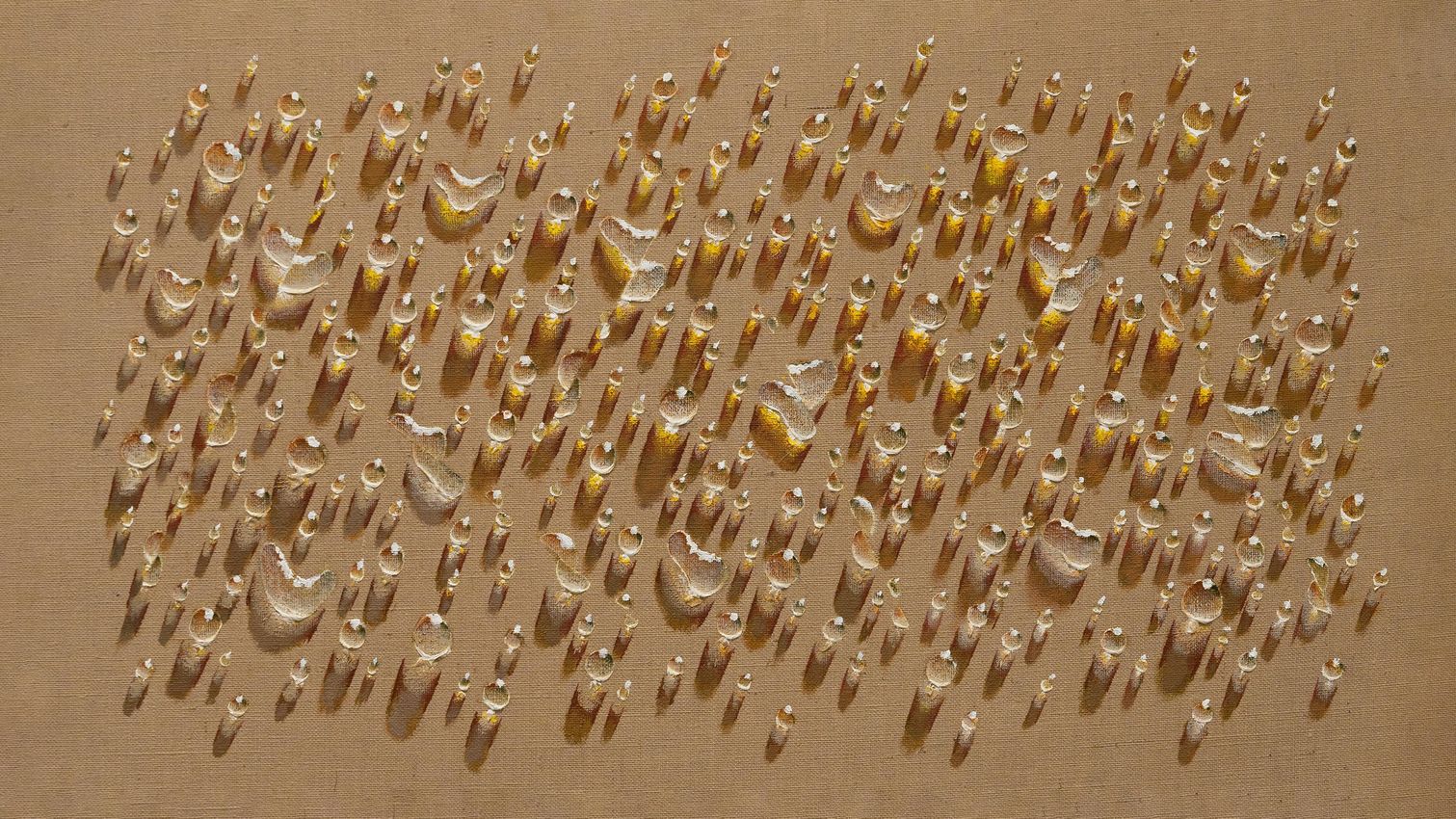
1929-2021, South KoreaDrawing on inspiration ranging from Eastern philosophy, the trauma of war and a chance discovery in a French barn, Kim Tschang-Yeul produced abstract work spanning oils and acrylics. However, it was his hyperrealistic water drops brought him global artistic acclaim.
Early Years
Kim Tschang-Yeul was born on 24 December 1929 in Maengsan (now part of North Korea). The eldest of six children, he lived with his extended family—his grandfather taught him Chinese characters because he wanted Kim to become a scholar. However, finding a book about Leonardo da Vinci in a local library, he set his heart on becoming a painter (not even a long letter from his grandfather put him off). “Everyone in my family opposed me painting,” he recalled in 2016. “My mother was the only one who supported me and my decision to become a painter.” In 1947, he was arrested while in possession of an anti-Communist pamphlet—after 10 days in jail he ran away to Seoul, eventually studying art at Seoul National University until the Korean War broke out in 1950. “I saw countless dead bodies scattered on the streets,” he remembered (the war also claimed the life of one of his sisters). Escaping to Jeju Island, he worked as a police officer, before returning to Seoul.
As a key player in Korea’s Informel movement, he embraced Abstract Expressionist concepts, which took him to the 1961 Paris Biennale. He studied at the Art Students League of New York between 1966–1968, eventually settling in Paris in 1970, where he spent the next 45 years.
Kim Tschang-Yeul: Artworks
Kim’s early works were influenced by his experience of the Korean War and his desire to paint in the Informel style—1959’s Shacks, for example, is an abstraction painted in a muted colour palette featuring thick layers of oil.
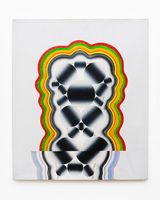
Moving to New York City in 1965, Kim swapped those thick paint layers for a flatter surface, such as in Procession (1967), black and white acrylic forms on a pale canvas and Composition (1969), Op Art-adjacent coloured layers surrounding silver-grey spheres that look as though they want to squeeze out of the canvas.
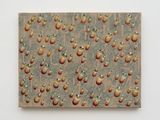
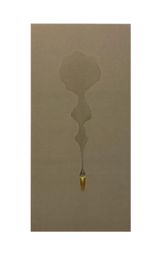
- 1972’s Événement de la nuit (Event of the night) was Kim’s first water droplet painting, marking the beginning of the subject that would live with him throughout the rest of his career. The hyperrealistic drops of liquid became his trademark—in 2016’s Water Drops SH201901 they appear like diamond rings, balancing on small gold stands.
- The Recurrence series, beginning during the late 1980s, combined water droplets with Chinese calligraphy, marking a full-circle moment for Kim to return to his grandfather’s teachings.
Kim Tschang-Yeul: Select Awards
- Kim was bestowed with the French Order of Arts and Letters (1996)
- National Order of Cultural Merits of Korea (2012)
- French Order of Arts and Letters (a second award) (2017)
Kim Tschang-Yeul: Select Exhibitions
Select Solo Exhibitions
- L’origine du vide (The origin of the void), Almine Rech, Brussels (2025)
- Kim Tschang-Yeul, National Museum of Modern and Contemporary Art, Seoul (2025)
- Water, Boghossian Foundation, Villa Empain, Brussels (2023)
- Kim Tschang-Yeul, The Stillness of Water, Tina Kim Gallery, New York City (2021)
- Récurrence, Kim Tschang-Yeul Art Museum, Jeju (2018)
- Gallery Hyundai, Seoul (2013)
- PYO Gallery, Seoul (2009)
- Gallery BHAK, Seoul (2002)
- Sakamoto Zenzo Museum of Art, Kumamoto (1998)
- National Museum of Modern and Contemporary Art, Gwacheon (1993)
- Sigma Gallery, New York City (1991)
- Suzukawa Gallery, Hiroshima (1989)
- Gallery Moos, Toronto (1987)
- Staempfli Gallery, New York City (1983)
- Gallery Hyundai, Seoul (1979)
- Abbaye Saint-Michael de Frigolet (1975)
- Knoll International, Paris (1973)
- Press Centre, Seoul (1963)
Select Group Exhibitions
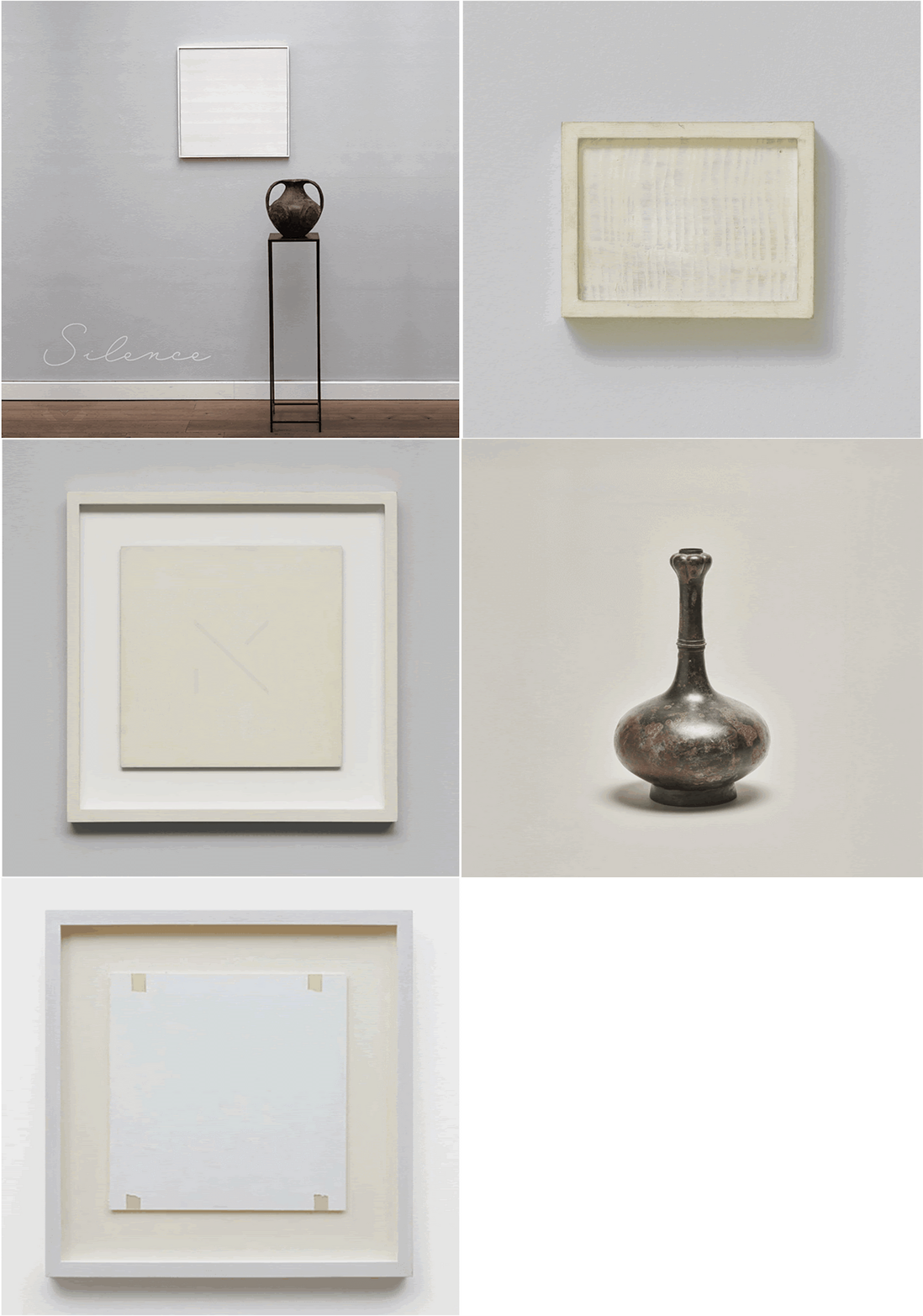
- Silence, Beck and Eggeling International Fine Art, Düsseldorf (2026)
- Making of Modern Korean Art: The Letters of Kim Tschang-Yeul, Kim Whanki, Lee Ufan, and Park Seo-Bo, 1961–1982, Tina Kim Gallery, New York City (2025)
- Dual Perspectives : Humanity and Nature, UNESCO Headquarters, Paris (2024)
- Water, Boghossian Foundation, Villa Empain, Brussels (2023)
- Abstraction(s), Song Art Museum, Beijing (2019) , China
- Ways of Seeing, Boghossian Foundation, Villa Empain, Brussels (2016) (and touring)
- Thoughts in Korean Modern Art, Pohang Museum of Steel Art (2012)
- Colour of Nature—Monochrome Art in Korea’, Wellside Gallery, Shanghai (2009)
- Poetry in Motion, Galerie Beyeler, Basel (2007)
- Work on Paper by 4 Korean Artists, Gallery Bijutsu Sekai, Tokyo (2004)
- Gwangju Biennale 2000 Special Exhibition, The Facet of Korean and Japanese Contemporary Art, Gwangju Museum of Art (2000)
- Working with Nature: Traditional Thought in Contemporary Art from Korea, Tate Liverpool (1992)
- Olympiad of Art: The International Contemporary Painting Exhibition, National Museum of Modern and Contemporary Art, Gwacheon (1988)
- Korean Contemporary Fine Arts Exhibition—The Stream of the 1970s, Taipei Fine Arts Museum, Taipei (1984)
- Reality of Illusion Traveling Exhibition, Denver Art Museum (1979)
- 15th São Paulo Biennale (1977) Salon de Mai, Paris (1972)
Further Reading
- Kim Tschang-Yuel official Instagram
- Obituary in _The New York Times
- 2016 interview with the Yonhap News Agency
- Artist profile page at Tina Kim Gallery
Kim Tschang-Yeul FAQs
Why did Kim Tschang-Yeul paint water drops?
Water drops were Kim Tschang-Yeul’s trademark, yet their appearance on canvas was an accidental discovery. During the early 1970s, Kim was living and working in a barn on the outskirts of Paris. Wanting to reuse a canvas, he sprayed water on it to remove the dried oil paint and left it overnight. The next morning, the drops were caught by light shining through a window. “It was spectacular. It was like a symphony,” he recalled in 2016. He photographed the water drops and began to think about how to depict them on canvas. When asked why he’d painted them so many times, he said: “For me, thinking about transparent water drops is an act of making bad things go away. I’ve dissolved and erased horrible memories by painting them countless times.”
Is there a Kim Tschang-Yeul museum?
Yes, the Kim Tschang-Yeul Museum opened in 2016 on the island of Jeju, where Kim briefly lived during the Korean War. He donated 220 works to the institution. A decade later, in May 2026, the Kim Tschang-Yeul Atelier in Pyeongchang-dong, Seoul (the home and studio where the artist worked and lived for around 30 years) opened to the public. The space was built in 1984 and designed by Kyu Sung Woo.
Did Kim Tschang-Yuel live in a refugee camp?
Yes, when he fled Maengsan for Seoul in 1946, the city was under US control and Kiim spent a year living in a refugee camp. After this, he was able to study art in the city, in private studios and then at the National University.
Ocula















Kim Tschang-Yeul in Ocula Magazine








Explore and Follow Artists Shaping Contemporary Art
A respected voice in contemporary art discourse.
Focusing on ambitious storytelling and insightful art-world commentary. Ocula Magazine publishes in-depth interviews, critical essays and timely analysis on the artists, exhibitions and ideas driving the global art world.
Learn more about Ocula Magazine
Showcasing the best of the art world.
Ocula partners with galleries from around the world to highlight their artists, artworks and exhibitions. Gallery membership is by application and invitation, with each member vetted by an independent panel.
Learn more about Ocula Membership
Specialises in the sale of major artworks.
Led by a team with deep ties to the world’s leading auction houses, galleries and collectors. Ocula’s advisory team offers bespoke services to high-net-worth clients from around the world who are looking to acquire the best of contemporary and modern art.
Learn more about our team and services