






LOUISE BONNET
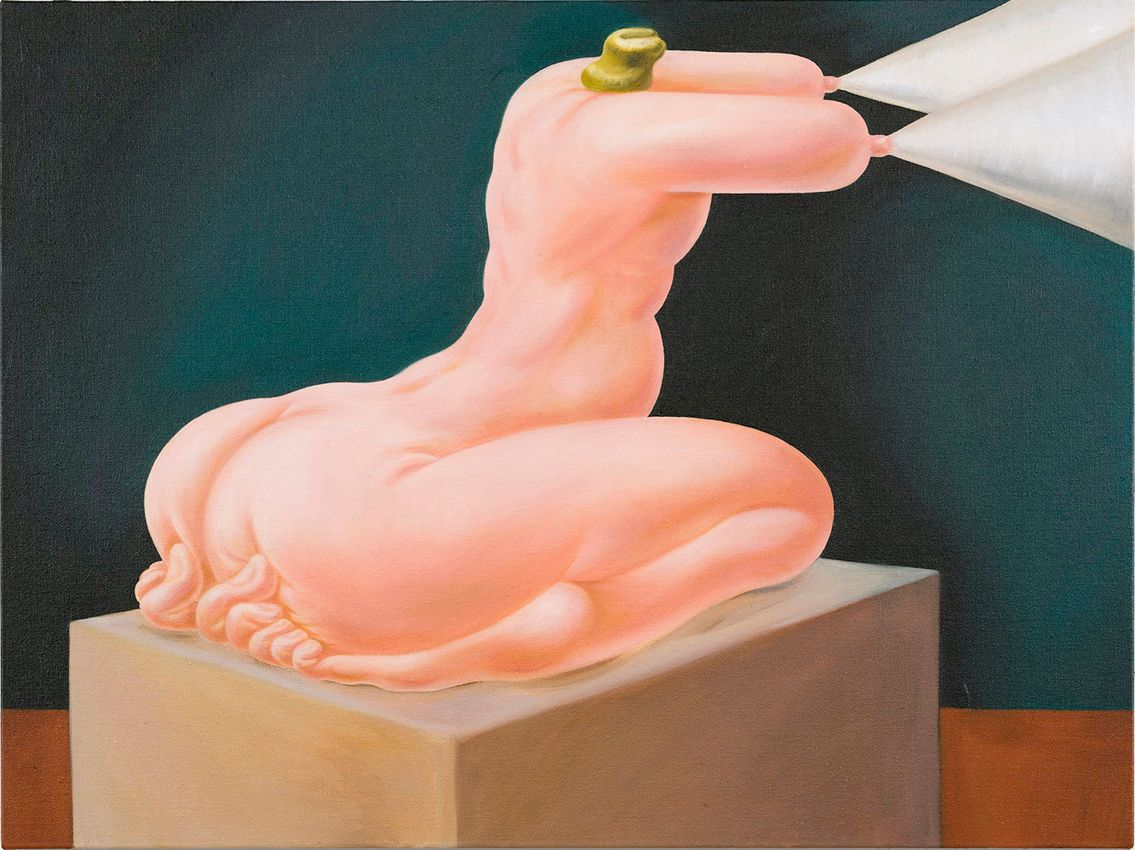
b. 1970, SwitzerlandLouise Bonnet is a contemporary artist known for her psychologically charged, surreal figurative paintings that depict distorted bodies suspended between beauty and grotesquery.
Early Years
Born in Geneva in 1970, Louise Bonnet grew up in a French-speaking Swiss household before relocating to Los Angeles, where she now lives and works. She studied at the École nationale supérieure des arts décoratifs in Paris before earning her BFA from ArtCenter College of Design in Pasadena, California. The shift from the subdued, tradition-bound atmosphere of Switzerland to the expansive eccentricity of Southern California has informed the tension and theatricality that define Bonnet’s art.
Prior to devoting herself fully to painting, Bonnet worked as an illustrator, developing a graphic precision and stylised exaggeration that would later become hallmarks of her figurative artworks.
Artworks
Louise Bonnet’s artworks are rooted in a distinctly contemporary kind of figuration—one that wrestles with repression, discomfort, and corporeality, while drawing from Old Master painting and pop surrealism alike.
Monumental Figures and the Grotesque
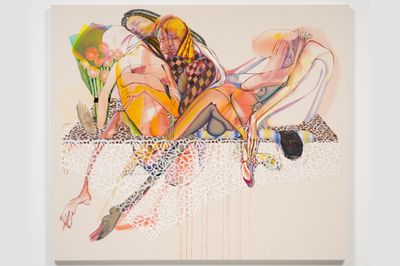
Bonnet’s early works established her interest in the absurdity and tragedy of exaggerated bodies. Her figures—often swollen, with elongated limbs, swollen cheeks, or drooping flesh—evoke a bodily excess that borders on cartoonish yet remains deeply human. In paintings like The Hours (2018) and The Bath (2019), the artist renders large, fleshy bodies in tightly cropped compositions, heightening feelings of claustrophobia, shame, or solitude. The detailed handling of light and surface recalls the works of Renaissance painters, yet her distorted forms channel the satirical spirit of Philip Guston and the physical tension of Lucian Freud.
Melancholy and Myth
In later series, such as her contributions to the 59th Venice Biennale (2022), curated by Cecilia Alemani, Bonnet turned increasingly to allegory and mythology. Her figures—trapped mid-transformation or caught in futile acts—convey an existential anguish laced with deadpan absurdity. Paintings like Pisser Triptych (2021) combine classical compositional structures with bodily functions and surreal, grotesque mutations, pushing the boundaries of propriety and beauty in contemporary art.
Influences and Technique
Bonnet cites a wide range of influences, from the pathos of Matthias Grünewald and the grandeur of Rubens to the cinematic suspense of Alfred Hitchcock and the comic contortions of Tex Avery. Her meticulous technique and chiaroscuro palette further connect her paintings to European art history, while her subjects reflect a contemporary unease with embodiment, self-exposure, and psychological pressure.
Exhibitions
Louise Bonnet has been the subject of both solo and group exhibitions at important institutions and blue-chip institutions. A selection of important exhibitions are provided below.
Solo Exhibitions
- Louise Bonnet and Elizabeth King: De Anima, Swiss Institute, New York (2025)
- Louise Bonnet: Reversal of Fortune, Galerie Maz Hetzler, Berlin (2024)
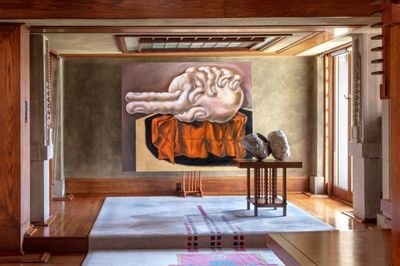
- Louise Bonnet: Entanglements, Hollyhock House, Los Angeles (2023)
- Louise Bonnet: 30 Ghosts, Gagosian, New York (2023)
- Louise Bonnet: Sphinxes, Gagosian, Basel (2021)
Group Exhibitions
- Once Within a Time: 12th International, SITE Santa Fe (2025)
- A Leisurely Stroll - The Tenth Anniversary of The Long Museum, Long Museum, Shanghai (2023)
- Dark Light: Realism in the Age of Post-Truths, Aïsthi Foundation, Beirut (2022)
- Women Painting Women, Modern Art Museum of Fort Worth (2022)
- The Milk of Dreams, Venice Biennale, Venice (2022)
Louise Bonnet’s Instagram can be found here.
Critical Reception
Bonnet’s paintings have been widely discussed in publications such as Artnet News, ARTnews, and The New Yorker.
Louise Bonnet FAQs
What is Louise Bonnet known for?
Louise Bonnet is known for her large-scale figurative paintings depicting distorted, emotionally charged bodies. Her exaggerated forms—bloated limbs, drooping features—explore themes of shame, repression, and absurdity. Painted with classical technique, her works blend the grotesque with psychological depth, creating a tension between beauty and discomfort. Bonnet’s art has gained international recognition for its haunting balance of pathos and humour, notably through her inclusion in the 59th Venice Biennale and exhibitions at Gagosian and major contemporary art institutions.
What style of art does Louise Bonnet create?
Bonnet creates surreal, figurative paintings that merge classical techniques with psychological tension. Her art features distorted, melancholic bodies rendered with painterly precision and chiaroscuro lighting. The result is a style that feels both timeless and disconcertingly modern. Influenced by Renaissance painting, pop surrealism, and cartoon exaggeration, her figures evoke emotional states like grief, shame, or absurdity. Bonnet’s unique visual language—at once grotesque and elegant—places her firmly within the canon of contemporary art’s figurative resurgence.
What are Louise Bonnet’s influences?
Bonnet draws influence from Old Masters like Grünewald and Rubens, whose dramatic compositions and depictions of flesh inform her own. She also references the emotional intensity of Lucian Freud and Philip Guston, and the elastic absurdity of animators like Tex Avery. Hitchcock’s cinematic suspense contributes to the mood of her scenes, while Northern Renaissance techniques inspire her lighting and surface detail. This eclectic mix of high and low culture shapes Bonnet’s signature balance of grotesquery, pathos, and technical refinement.
Ocula | 2025


Recently Exhibited








Explore and Follow Artists Shaping Contemporary Art
A respected voice in contemporary art discourse.
Focusing on ambitious storytelling and insightful art-world commentary. Ocula Magazine publishes in-depth interviews, critical essays and timely analysis on the artists, exhibitions and ideas driving the global art world.
Learn more about Ocula Magazine
Showcasing the best of the art world.
Ocula partners with galleries from around the world to highlight their artists, artworks and exhibitions. Gallery membership is by application and invitation, with each member vetted by an independent panel.
Learn more about Ocula Membership
Specialises in the sale of major artworks.
Led by a team with deep ties to the world’s leading auction houses, galleries and collectors. Ocula’s advisory team offers bespoke services to high-net-worth clients from around the world who are looking to acquire the best of contemporary and modern art.
Learn more about our team and services