





ROY COLMER
1935-2014, United KingdomRoy Colmer’s art from the 1970s operates within a curious median space between what has previously been considered discrete fields of painting and experimental electronic arts.
Across his various outputs, Colmer’s work is defined by a curiosity for the mechanics of vision and media. From experimental spray paintings to his photographic index of New York City’s doors, his work explores the tensions between technology, abstraction, and experience.
Early Years
Born in London in 1935, Colmer was conscripted into the British Army at the age of twenty and stationed in Germany. After his military service, he studied painting at the Hochschule für Bildende Künste in Hamburg on a full scholarship, where he was taught by professors Almir Mavignier, Eduardo Paolozzi, and Georg Gresko. It was during this time in Germany that Colmer was introduced to media theory.
Roy Colmer Artworks
Colmer worked across painting, photography, print and video, with several distinct periods of his art practice marked by a shift to a new medium. In 1966, he relocated to New York, where he continued his painting practice and began experimenting with film and photography.
By the early 1970s, Colmer began to incorporate this telegenic feedback directly into his practice, increasingly working in video and film. Colman’s exploration and manipulation of electronic signals aligned him with artists like Nam June Paik and Bruce Nauman.
Stripe paintings
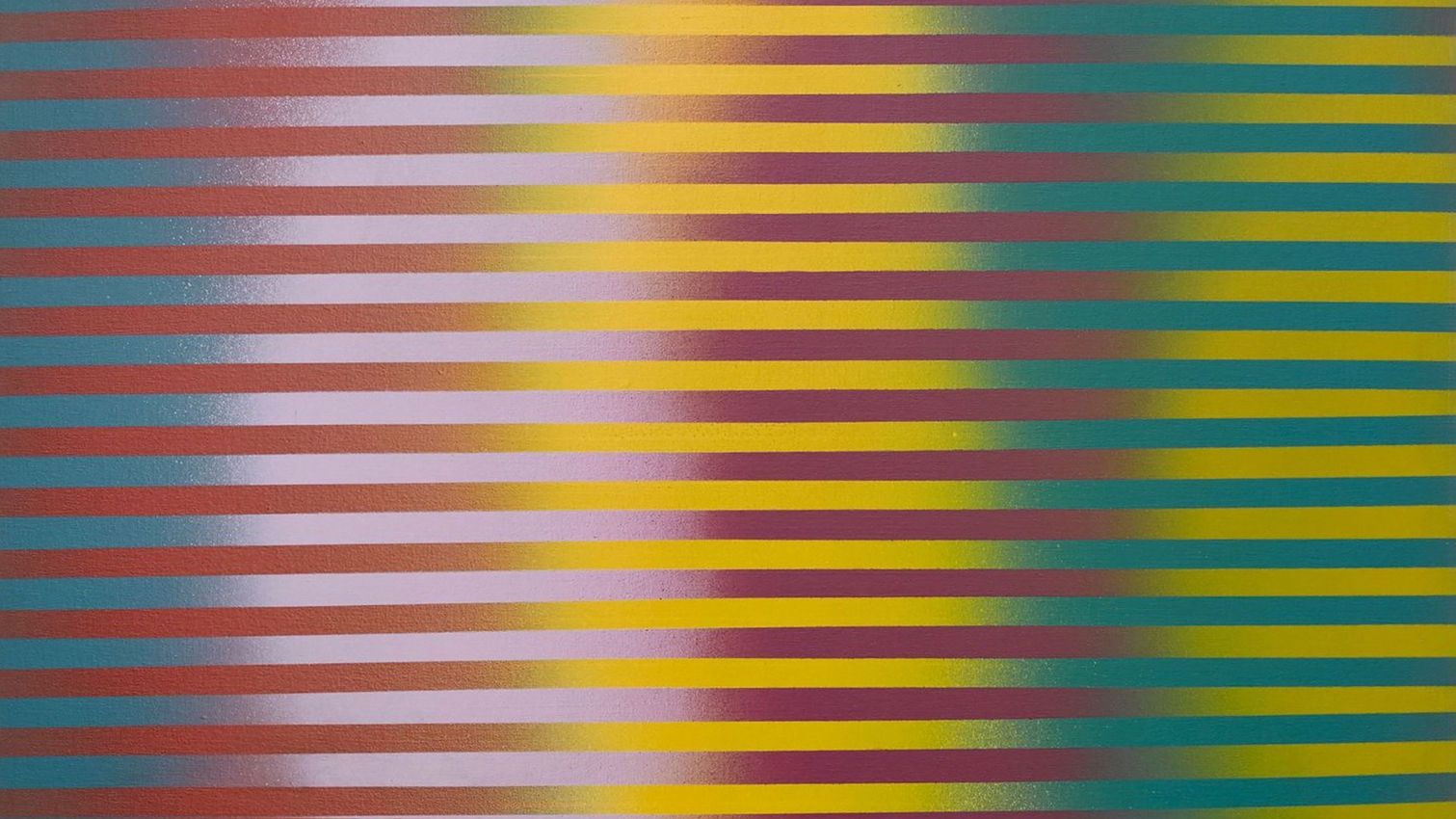
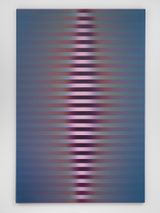
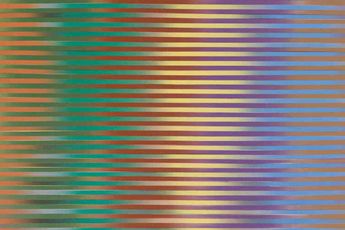
Colmer’s early work in New York involved experimental, shifting colour-field paintings composed of horizontal bands or scanlines. The artist used spray paint to create the glowy, hazy, vertical mandorla-like effects, informed by CRT monitors, video, and the sense of sublime sought after by the Abstract Expressionists like Barnett Newman.
‘Doors, NYC’ (1975–1976)
From November 1975 to September 1976, Colmer photographed more than 3,000 doors on 120 intersections and streets of Manhattan, from Wall Street to Fort Washington. This act of conceptual art, titled ‘Doors, NYC’, has become well-regarded, and the New York Public Library acquired a full edition for its archives in 2005.
Photo collage
Colmer’s collage work emerged as a synthesis of his interest in repetition, layering, and visual systems. Stripes return to Colmer’s work in many of his collages, featuring repetitive images of red subway columns, tree trunks, or street poles arranged in grids. These works demonstrate a meticulous compositional logic and a disruptive linear narrative, serving as visual studies in fragmentation and multiplicity, echoing the procedural strategies found in his photographic and film-based practices.
Exhibitions
Roy Colmer has been the subject of both solo and group exhibitions.
Solo Exhibitions
- Roy Colmer, Lisson Gallery, London (2021)
- Roy Colmer: Doors, Lisson Gallery, New York (2020)
- Roy Colmer: An Optical Haze of Colour, Firstsite, Colchester (2019)
- Mitchell Algus Gallery, New York (2007)
- Queens Museum of Art At Bulova Corporate Center, New York (1993)
- P.S.1. Museum, Institute for Contemporary Art, Long Island City, New York (1978)
Group Exhibitions
- Reconstructing Horizons, Shijiazhuang Art Museum and Academy, Shijiazhuang (2024)
- The Living End: Painting and Other Technologies, 1970–2020, Museum of Contemporary Art Chicago, Chicago (2024)
- Peinture: obsolescence déprogrammée, Musee d’art Moderne Abbaye SainteCroix (MASC) (2021)
- Spectrum, Lisson Gallery, New York (2020)
- Greater New York, Museum of Modern Art/ MoMA PS1, New York (2015)
Website and Instagram
Roy Colmer does not have a website or an Instagram account. The artist’s estate is represented by Lisson Gallery.
Roy Colmer FAQs
Where can I view Roy Colmer’s artworks?
Colmer’s works are held in major public collections, including the Museum of Modern Art, New York; the Museum of Fine Arts, Houston; the Centre Georges Pompidou, Paris; and the Brooklyn Museum. His estate is represented by Lisson Gallery, which has locations in London, New York, Los Angeles, Shanghai, and Beijing.
What themes did Roy Colmer explore in his art?
Colmer’s work is informed by the intersection of visual art and electronic media, using techniques that suggested movement, flicker, and distortion. His ‘Doors, NYC’ project documented the architectural diversity of Manhattan, reflecting on themes of urban life and repetition.
What materials and techniques did he use?
Colmer employed spray techniques in his paintings to create colour-intensive works that suggested filmic effects. He later incorporated video and photography into his practice, exploring electronic signals and feedback.
Has Colmer received any notable recognitions?
Yes, Colmer was a recipient of the John Simon Guggenheim Fellowship in 1988 and received a grant from the Foundation for Contemporary Performance Art in 1990.
How has Colmer’s work influenced contemporary art?
Colmer’s integration of electronic media into visual art practices has influenced contemporary artists exploring the convergence of technology and art. His innovative techniques and thematic explorations continue to resonate in discussions of conceptual and media art.
Ocula | 2025


102 x 105 cm
Lisson Gallery USD 50,000 - 100,000 Check Availability


127 x 127 cm
Lisson Gallery USD 50,000 - 100,000 Check Availability

Explore Roy Colmer's Exhibitions




Explore and Follow Artists Shaping Contemporary Art
A respected voice in contemporary art discourse.
Focusing on ambitious storytelling and insightful art-world commentary. Ocula Magazine publishes in-depth interviews, critical essays and timely analysis on the artists, exhibitions and ideas driving the global art world.
Learn more about Ocula Magazine
Showcasing the best of the art world.
Ocula partners with galleries from around the world to highlight their artists, artworks and exhibitions. Gallery membership is by application and invitation, with each member vetted by an independent panel.
Learn more about Ocula Membership
Specialises in the sale of major artworks.
Led by a team with deep ties to the world’s leading auction houses, galleries and collectors. Ocula’s advisory team offers bespoke services to high-net-worth clients from around the world who are looking to acquire the best of contemporary and modern art.
Learn more about our team and services