





SHO SHIBUYA
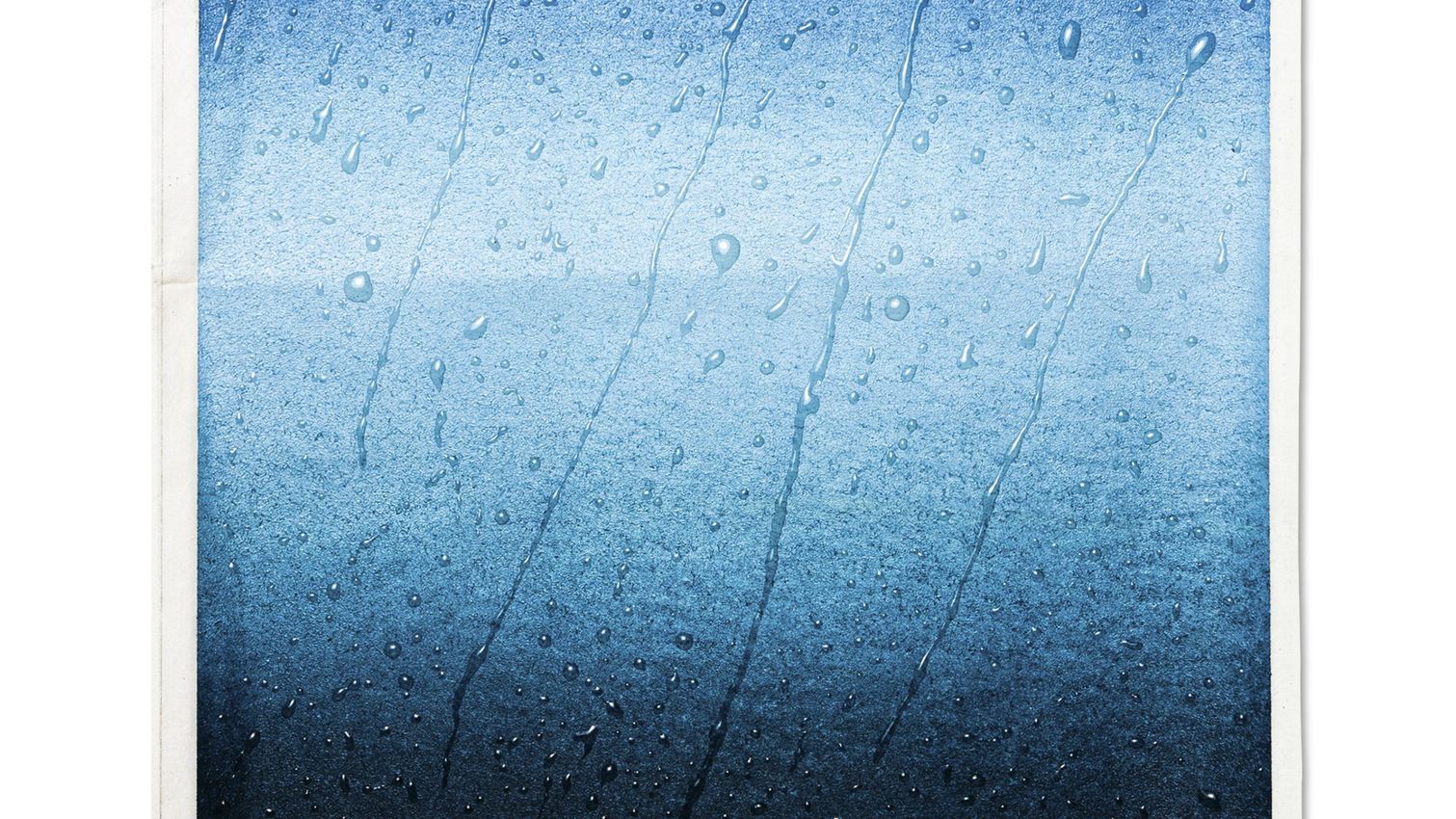
b. 1984, JapanSho Shibuya (b. 1984) is a Japanese artist and designer based in Brooklyn, New York, whose daily practice of painting on newspaper front pages has become a quietly iconic record of early 21st-century life. Each day, in his ongoing series Sunrise from a Small Window (begun in 2020), Shibuya collects the morning’s paper and paints a distilled image of that day’s weather over the front page, lifting his palette directly from the sky outside his window. By overlaying bands and gradients of light on the day’s headlines, he turns disposable newsprint into a meditation on time, creating an emotional record of contemporary life that tracks political and social upheaval.
Shibuya’s sunrise paintings have been shown internationally, including at Art Basel Miami with Saint Laurent, in presentations in Milan and at Tokyo National Museum hosted by Fondation Cartier; and at PODO Museum, in Korea (2025-2026). His work is also held in in the permanent collections of the Fondation Cartier pour l’Art Contemporain, Paris, France; the 9/11 Memorial & Museum, New York, USA; and DIB Bangkok Museum, Bangkok, Thailand.
Early life and Career
Born in Japan and trained as a graphic designer, Shibuya began his career in visual communication before turning fully to painting. He moved to New York City in 2011 and founded the creative studio Placeholder, a background that resonates with his precise sense of layout, typography, colour and the use of grids, and margins.
The turning point in Shibuya’s practice came in the early months of the Covid-19 pandemic, when the stillness of lockdown led him to photograph the sunrise from his apartment window each morning. That habit soon migrated onto the front page of The New York Times, where he began painting gradated skies over the day’s headlines, a gesture he has described as a way of ‘erasing the news with nature’ to stay sane amid mounting catastrophes. What began as a private ritual became a public project once he started sharing the works on Instagram, where their calm, serial format resonated with a global audience.
Works, Series and Methods
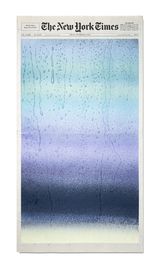
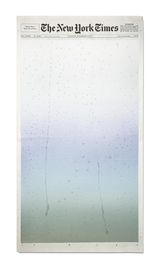
Sunrise from a Small Window is Shibuya’s best-known body of work, a daily painting practice in which he covers newspaper front pages with bands of colour corresponding to that morning’s sky. The format is simple but strict: a fixed rectangle of newsprint, thin layers of paint, and a gradient that subtly tracks shifts in weather, season, and light. Over time, the series becomes a calendar—each page a discrete, abstracted sunrise, collectively a visual archive of days lived under heightened anxiety.
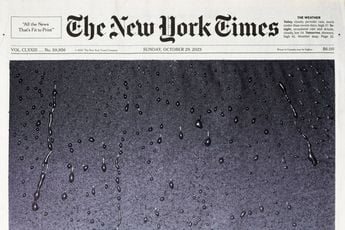
Within that discipline, Shibuya periodically interrupts the sky with stark monochromes and headline-based compositions that register specific political and social events. In June 2020, following the murder of George Floyd, he substituted the sunrise with a single black field, a gesture of mourning and solidarity with the Black Lives Matter movement. He has painted rainbow stripes for Pride, blank expanses that echo front pages listing Covid-19 deaths and works where only a strip of headline is left exposed at the bottom of the page. These pieces preserve fragments of text while asserting colour as a counterpoint to the density of the news cycle.
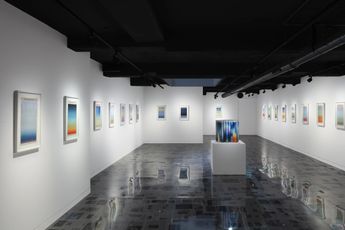
Shibuya’s more recent paintings expand the sunrise concept beyond a single window, translating variations in weather and atmosphere from cities around the world into vertically stacked gradients. Large-scale installations, including mural-like adaptations of Sunrise from a Small Window, transpose the intimacy of newsprint to architectural scale, inviting viewers to stand inside what amounts to an enlarged diary page. Across these formats, his methods remain deliberately pared back: repeated formats, modest materials, and a serial accumulation that privileges duration over spectacle.
Themes and Context
Time is the central subject of Shibuya’s work, which treats newspapers—ordinary objects meant to be discarded—as supports for slow, daily looking. His sunrise paintings regard each front page as both a record of the day’s events and a marker of a single morning, when the colour of the sky and the news briefly share the same surface. By covering, obscuring, or leaving fragments of text visible, he responds to information overload and media anxiety while carving out a measure of calm within a continuous stream of crisis.
Shibuya’s practice sits between conceptual painting, graphic design, and a serial mode shaped by online circulation, drawing on earlier uses of newsprint in art while speaking in the visual language of the smartphone era. His works travel widely as images on social media, yet their creased paper, printer’s ink, and layers of paint insist on the physical act of reading and the vulnerability of the document itself. The project becomes a meditation on how attention is spent, hovering between the private ritual of watching the sky from a window and the global circuits of news, protest, and catastrophe that his painted pages quietly fold together.
Sho Shibuya’s daily paintings also echo the serial rigor of On Kawara‘s Today (Date) Paintings, which he has cited as a key reference for his own routine. Like Kawara, who inscribed each canvas with the date it was made and linked it to that day’s newspaper, Shibuya works within a fixed, self-imposed structure, producing one work per day and anchoring it to a specific moment in time. Where Kawara reduced each day to a monochrome field and a line of typography, Shibuya substitutes the date with the colour of the sky, painting directly over the front page instead of tucking it behind the canvas. In both practices, repetition of a simple format yields a durational portrait of life unfolding, but Shibuya’s atmospheric gradients admit weather and headline into the frame, translating Kawara’s conceptual discipline into a more openly sensory register.
Exhibitions and Recognition
Shibuya’s sunrise paintings have been the focus of solo presentations including SUNRISE FROM A SMALL WINDOW: A Selection from 2020 at Isetan the Space in Tokyo and 55 SUNRISES at Art Basel Miami in collaboration with Saint Laurent, as well as Falling from the Sky at Unit London, which expanded the project into large-scale canvases that stack skies from cities around the world. His work has appeared in group exhibitions such as HEADLINES: Mondo Reale, part of the 23rd International Exhibition at Triennale Milano hosted by Fondation Cartier, and E/Motion. Fashion in Transition at MOMU, Antwerp. More recent projects include large-scale installations for institutions in Asia and Europe, as well as participation in exhibitions that consider fashion, media, and contemporary image culture. Shibuya’s paintings are held in public collections including the Fondation Cartier pour l’art contemporain in Paris, underscoring the extent to which a solitary daily ritual has entered an international institutional frame.
Sho Shibuya FAQs
What is Sho Shibuya best known for?
Sho Shibuya is best known for his ongoing series Sunrise from a Small Window, in which he paints the colours of the morning sky over the front page of newspapers such as The New York Times. These works have made him a key figure in contemporary painting that engages directly with media and the passage of time.
Why does Sho Shibuya paint over newspapers?
Sho Shibuya began painting over newspapers during the Covid-19 lockdown to counterbalance alarming headlines with the steadiness of the sunrise outside his window. He has described the act as ‘erasing the news with nature’, transforming a disposable object into a meditative record of each day.
What themes does Sho Shibuya explore in his work?
Sho Shibuya’s work explores time, routine, and the psychological impact of the news cycle, using serial sunrise paintings to track days through colour rather than text. His occasional monochrome and headline-focused works address specific political and social events, from racial justice protests to public health crises and LGBTQ+ visibility.
Where can I see Sho Shibuya’s work?
Sho Shibuya’s paintings have been exhibited at venues including Isetan the Space in Tokyo, Art Basel Miami with Saint Laurent, Triennale Milano with Fondation Cartier, MOMU Antwerp, and institutions in Korea and Japan. His work is also part of the collection of the Fondation Cartier pour l’art contemporain in Paris, and he continues to share new pieces regularly via his online platforms, including with Unit in London.
How did Sho Shibuya’s daily practice develop over time?
Starting with small paintings based on photographs of the sunrise taken from his Brooklyn apartment, Shibuya shifted to newspapers as a way to bind personal routine to public events. Since then, the project has expanded to include large-scale installations, site-specific commissions, and variations that chart skies from cities around the world, while retaining the core rhythm of a painting made each morning.
Ocula | 2026








Explore and Follow Artists Shaping Contemporary Art
A respected voice in contemporary art discourse.
Focusing on ambitious storytelling and insightful art-world commentary. Ocula Magazine publishes in-depth interviews, critical essays and timely analysis on the artists, exhibitions and ideas driving the global art world.
Learn more about Ocula Magazine
Showcasing the best of the art world.
Ocula partners with galleries from around the world to highlight their artists, artworks and exhibitions. Gallery membership is by application and invitation, with each member vetted by an independent panel.
Learn more about Ocula Membership
Specialises in the sale of major artworks.
Led by a team with deep ties to the world’s leading auction houses, galleries and collectors. Ocula’s advisory team offers bespoke services to high-net-worth clients from around the world who are looking to acquire the best of contemporary and modern art.
Learn more about our team and services