






At Basel Social Club, an Artist-Led Group Is Challenging the Established Gallery Model

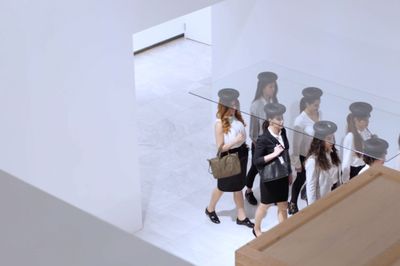
Lito Kattou. Purposes: Nights and Days (2026). Performed at Basel Social Club

A new artist-run organisation, launched this week in Basel, is hoping to challenge the established gallery model seen at the city’s nearby mega-fair and replace it with a collaborative approach centred on solidarity, transparency and shared resources.
or Associations brings together seven established, international artists under an extensive set of rules and regulations which, in their printed form, appear as part of the group’s first-ever exhibition at the office-themed pop-up event, Basel Social Club. The show, Office Hours, transforms a glass meeting room into a temporary headquarters, making visible the often obscured organisational processes that sustain collective cultural work: administration, redistribution, maintenance, and mutual support.
Discussing how the collective began, founding artist Eglė Kulbokaitė told Ocula: “We started talking about our dissatisfaction with the very passive role you take as an artist when you work with galleries.
“We started sharing our experiences, which sometimes are positive and sometimes are that you don’t really know what you’re doing—you don’t know how you got there, who selected you, and you start thinking: ‘Is there some agenda here?’ It was the lack of transparency that made us think maybe we can do something collaboratively, but also work within the market.”
The launch of the small-scale project comes amid much bigger changes in the commercial gallery ecosystem. Just a week ago, Brussel-based and famously artist-focused Dépendance gallery announced its closure. And, earlier this month, Pace announced large cuts to artists and staff, with chief executive Marc Glimcher describing a “broken” and “unfixable” mega-gallery model.
In proposing its own, alternative structure, or Associations focuses on solidarity. Across a two-year trial, the group’s artists plan to share knowledge, contacts, space and skills, and will continue to organise both group and solo exhibitions for each other in project spaces similar to the Basel pop-up, beginning in Athens later this year.
Profits from all works sold during the trial period will be split 50/50 between the exhibiting artist and the association. Fees held by the group will be used to support all its artists through what Kulbokaitė’s long-time collaborator Dorota Gawęda described as the “ups and downs” of an often precarious career.
The duo, who together work across installation, performance, video and painting, often drawing on feminist theory and Eastern European mythology, are represented by Amanda Wilkinson Gallery in London. They have exhibited widely, including at the Pompidou Centre, Paris; the Julia Stoschek Collection, Dusseldorf, and at Thaddeus Ropac’s Paris gallery.
“It’s over a decade since our collaboration began between the two of us,” Gawęda said. “And even though we are progressively getting more high-profile exhibitions and invitations and funding, we are still always on the verge of struggling.”
The group also includes time-based artist alfatih; New York-based Shuyi Cao, whose work was recently on show at London’s Gathering gallery; Athens-based Lito Kattou; French-Palestinian artist Gaby Sahhar, whose practice explores representations of queerness, and “living sculpture” maker Jenna Sutela, whose work is currently on show in the Finnish pavilion at the Venice Biennale.
Kulbokaitė and Gawęda hope that by working alongside artists who are diverse both in their practices and locations, they can create a model that offers not just financial, but practical and emotional support. Their goal is to reintroduce the collegiate spirit that is often developed at art schools, but is then replaced, post-graduation, by the competition of the market.
“In a gallery you often don’t know the other artists, you don’t know what they earn through the gallery and you don’t know if they’re preferred by the gallery,” Kulbokaitė said. “It creates a lot of tension.”
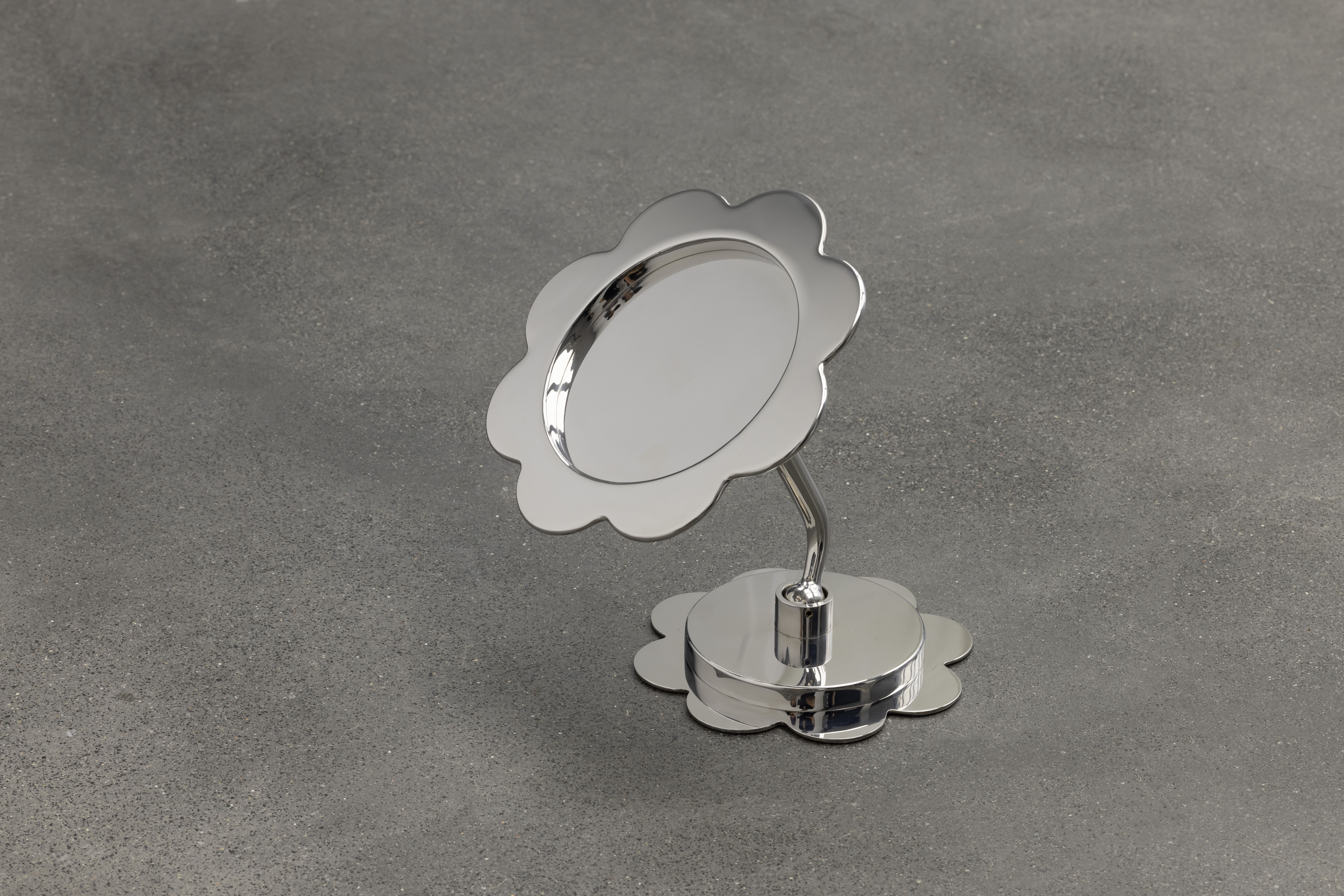
Office Hours takes place amid the sprawling, multi-storey 2026 edition of Basel Social Club, which this year explores the workplace not as a site of production, but of critical reflection. or Associations’ show presents one work from each of the group’s artists, including Kulbokaitė and Gawęda’s mirrored, industrial flowers, Yield (twinning) (2025), which explore how everyday objects carry complex political and economic implications.





A respected voice in contemporary art discourse.
Focusing on ambitious storytelling and insightful art-world commentary. Ocula Magazine publishes in-depth interviews, critical essays and timely analysis on the artists, exhibitions and ideas driving the global art world.
Learn more about Ocula Magazine
Showcasing the best of the art world.
Ocula partners with galleries from around the world to highlight their artists, artworks and exhibitions. Gallery membership is by application and invitation, with each member vetted by an independent panel.
Learn more about Ocula Membership
Specialises in the sale of major artworks.
Led by a team with deep ties to the world’s leading auction houses, galleries and collectors. Ocula’s advisory team offers bespoke services to high-net-worth clients from around the world who are looking to acquire the best of contemporary and modern art.
Learn more about our team and services