





Christie’s Contested AI Sale Reels in a Younger Crowd
Alexander Reben’s Untitled Robot Painting (2025), which was estimated between 100 and 1.7 million USD, well captured the house’s optimistic but cautious ambition for AI art. Save to My Ocula
Christie’s Augmented Intelligence sale, which closed Wednesday after two weeks of online bidding, brought in a total of $728,784 (all prices USD) with fees, and a sellthrough rate of 82 percent, outperforming expectations, the auction house said.
First-time registrations accounted for 37 percent of total participation, with close to half of bidders from millennial and ‘Gen Z’ demographics. This first major auction dedicated to digital artists and AI works saw 28 of 34 lots finding buyers.
Nicole Sales Giles, VP and director of digital art sales at Christie’s, said that the sale was partly a test of recognition, to see whether collectors and the industry would acknowledge digital artists’ ‘influence and significance’ in today’s art landscape.
‘The results of this sale confirmed that they did.’
The expanded buyer’s pool is arguably correlated with the wide-ranging price points—from $1,764 on the low end for Vanessa Rosa’s sculpture and NFT Little Martians & Abraham (2024) to Refik Anadol‘s six-figure data painting collating images of space using AI, which led the sale at $277,200.
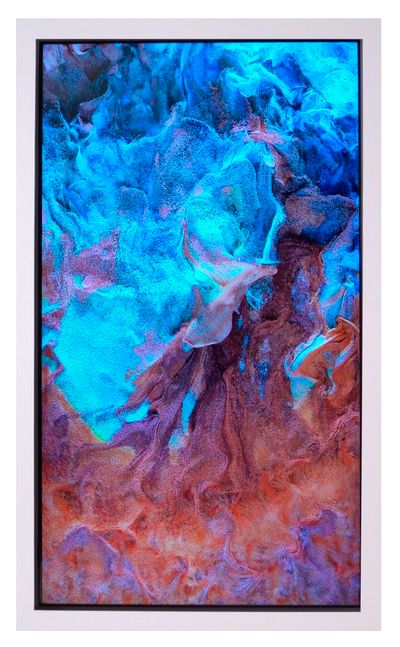
Anadol’s Machine Hallucinations - ISS Dreams – A (2022) was the only lot in the six-figure range to find a buyer, hammering above its high estimate of $200,000 at $277,200.
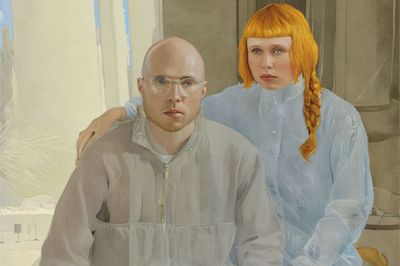
Meanwhile, Holly Herndon and Mat Dryhurst‘s Embedding Study #1 and #2 (2024), two photo-transfer prints of an AI-generated person modelled after Herndon that featured at the 2024 Whitney Biennial, came in second in terms of price at $94,500 (high estimate of $90,000).
Alexander Reben‘s Untitled Robot Painting (2025), which was estimated between $100 and $1,728,000, well captured the house’s optimistic, but cautious ambition for AI art.
Reben’s AI-generated painting, which was rendered in real time during the auction’s run in proportion to bid increases, attracted the most interest—counting some 33 bidders the day before the sale’s conclusion on 4 March—but only achieved $8,190.
Likewise, 15 bidders competed to take home ‘AI artist’ Deepblack’s oil landscape, DeepBlack #100 (2020), which saw the second most interest at the time of browsing. But the work only surpassed its predicted ceiling by 16 dollars, estimated between $1,000 and $2,000.
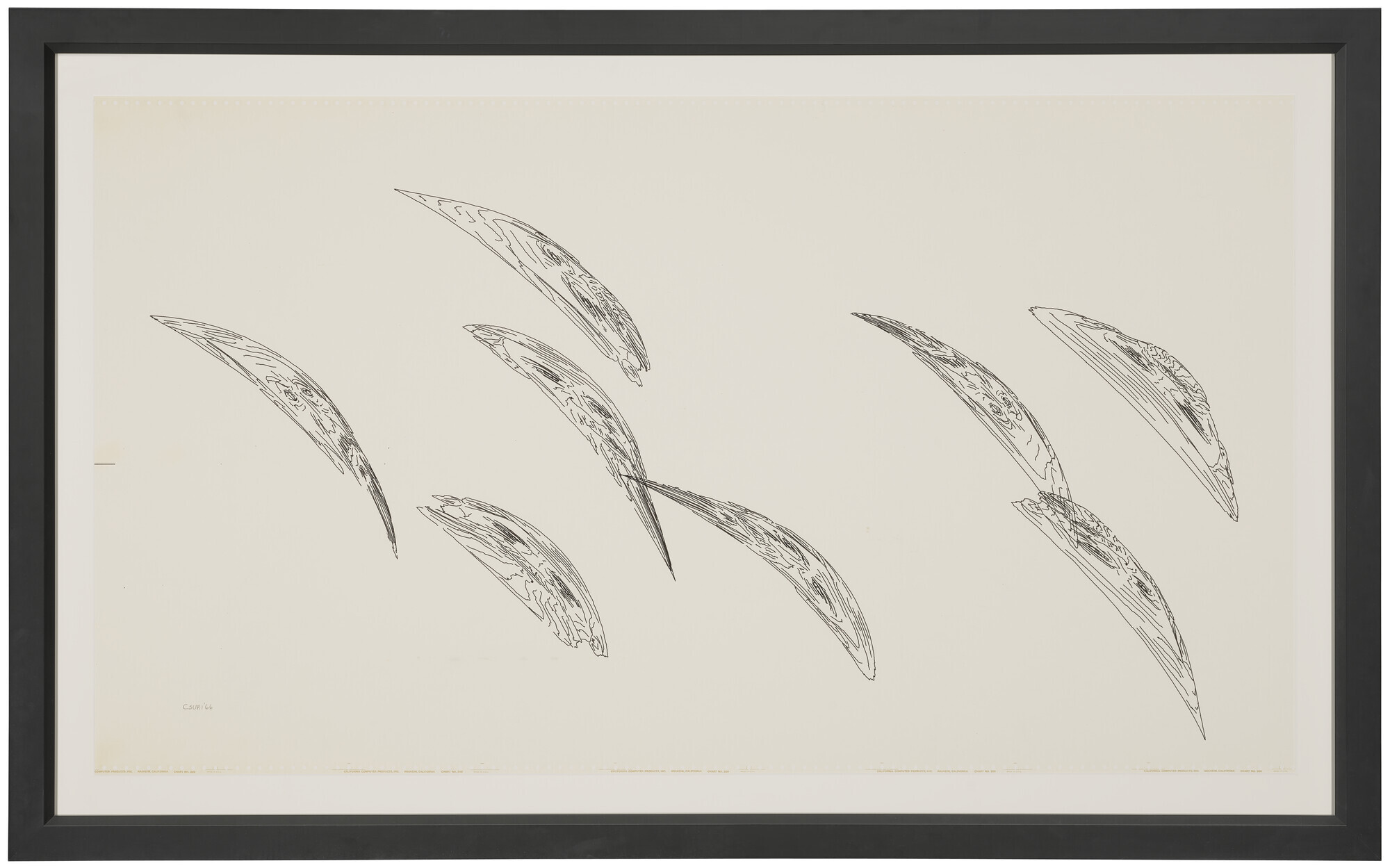
Artists who have long experimented with digital tools saw mixed results despite higher overall price points. Computer art pioneer Charles Csuri’s Bspline Men (1966) ranked third in terms of price at $50,400, but fell short of a low estimate of $55,000.
Last month, over 6,000 artists petitioned Christie’s to stop the auction, citing works made using AI models that have been trained on copyrighted material without a license. —[O]
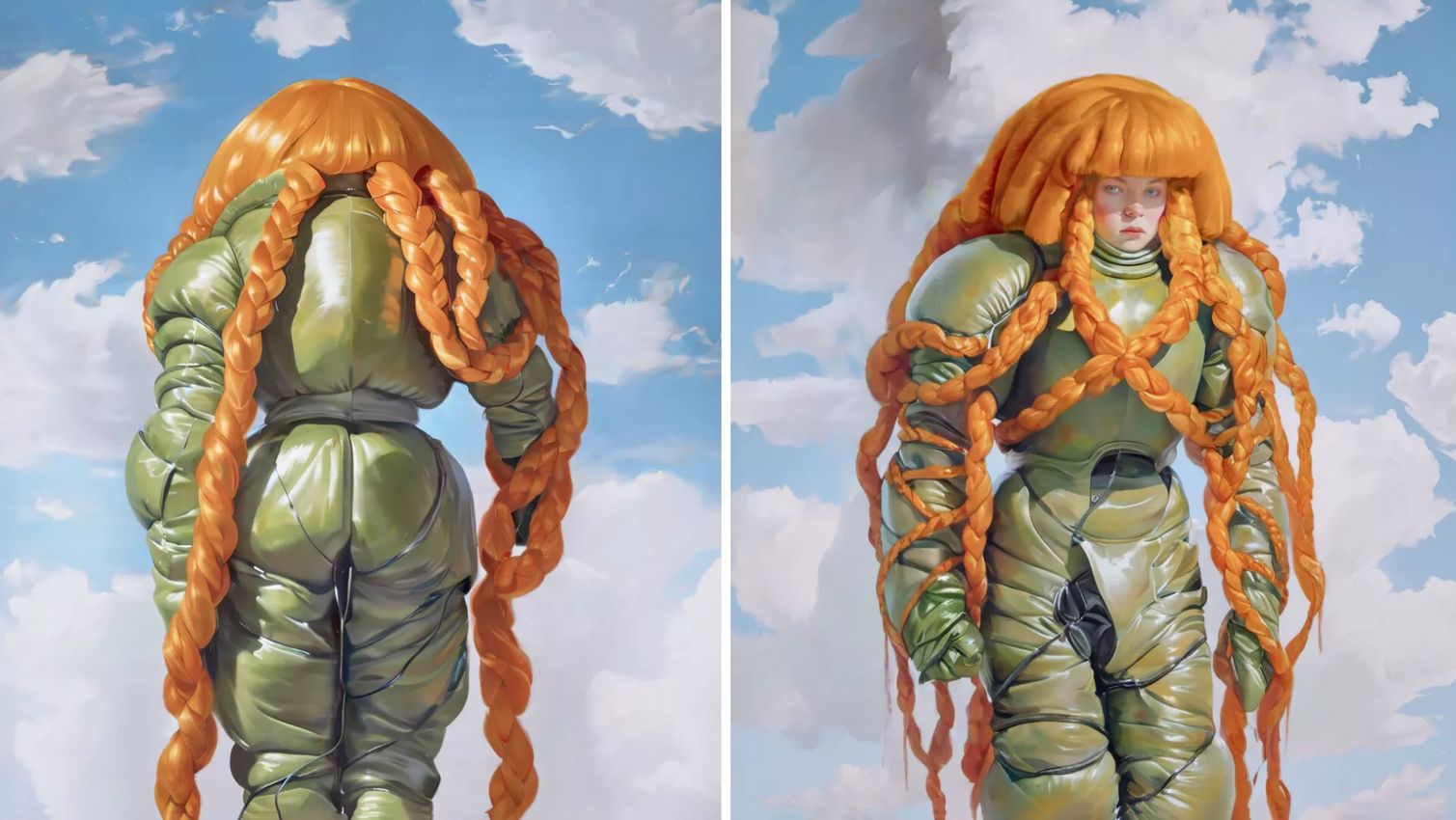
Main image: Holly Herndon and Mat Dryhurst, Embedding Study 1 & 2 (2024). From the 'xhairymutantx' series. Courtesy Christie's.




A respected voice in contemporary art discourse.
Focusing on ambitious storytelling and insightful art-world commentary. Ocula Magazine publishes in-depth interviews, critical essays and timely analysis on the artists, exhibitions and ideas driving the global art world.
Learn more about Ocula Magazine
Showcasing the best of the art world.
Ocula partners with galleries from around the world to highlight their artists, artworks and exhibitions. Gallery membership is by application and invitation, with each member vetted by an independent panel.
Learn more about Ocula Membership
Specialises in the sale of major artworks.
Led by a team with deep ties to the world’s leading auction houses, galleries and collectors. Ocula’s advisory team offers bespoke services to high-net-worth clients from around the world who are looking to acquire the best of contemporary and modern art.
Learn more about our team and services