





Francis Bacon’s Large-Scale, Fleshy Forms Unite for the First Time in Paris

Francis Bacon in his studio on rue de Birague, Paris, 1979. Photo: Edward Quinn, © edwardquinn.com. Courtesy Gagosian.

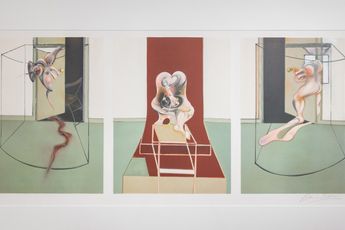
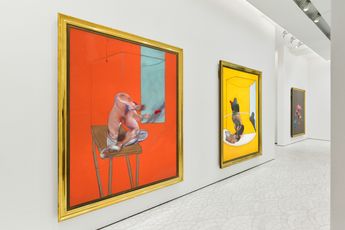
Three large-scale Francis Bacon works will go on show together for the first time at Gagosian’s Paris space from tomorrow.
The works, all from the latter part of Bacon’s career, will be displayed to mark the 30th anniversary of the artist’s major 1996 retrospective at the Pompidou Centre.
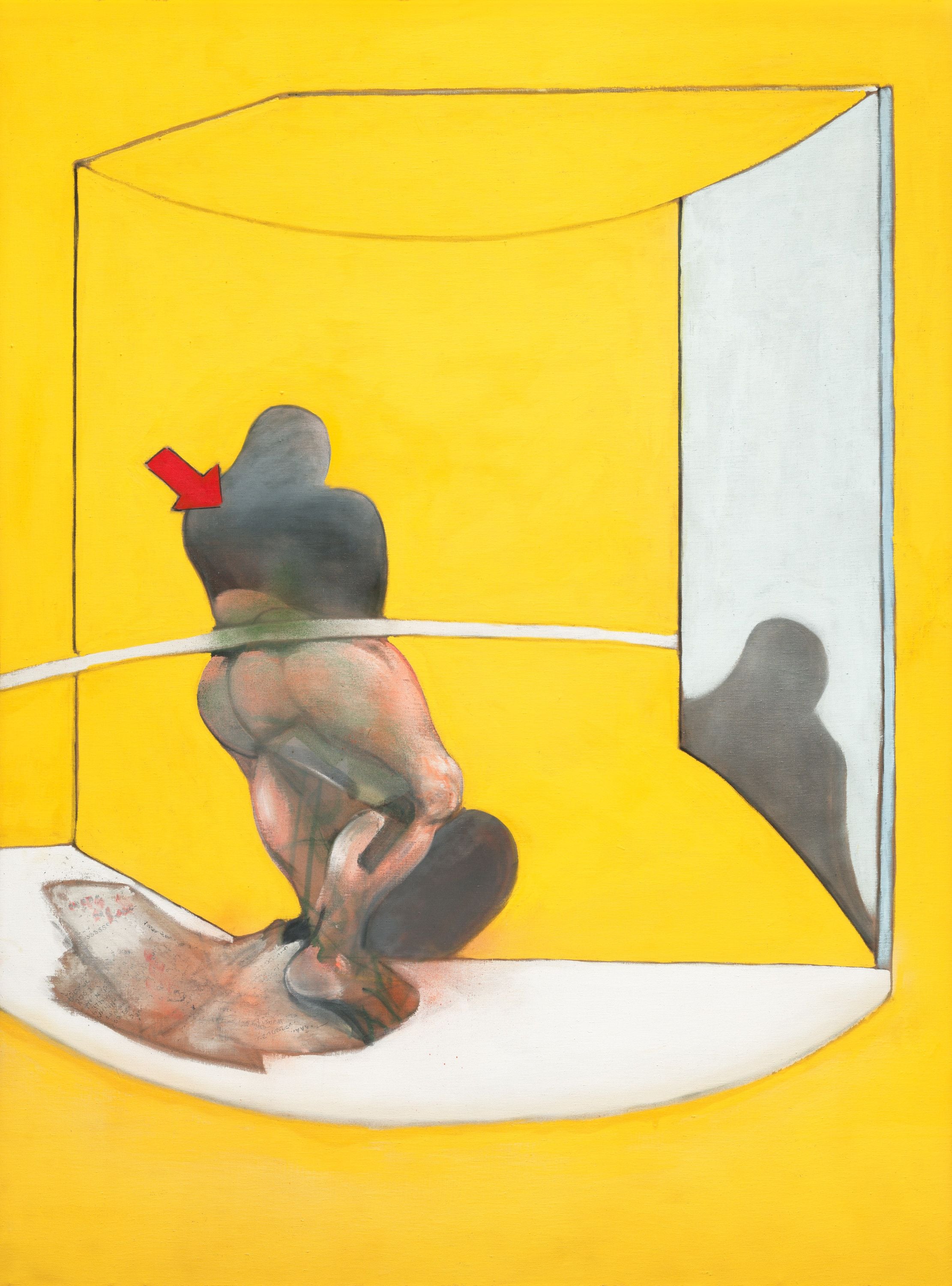
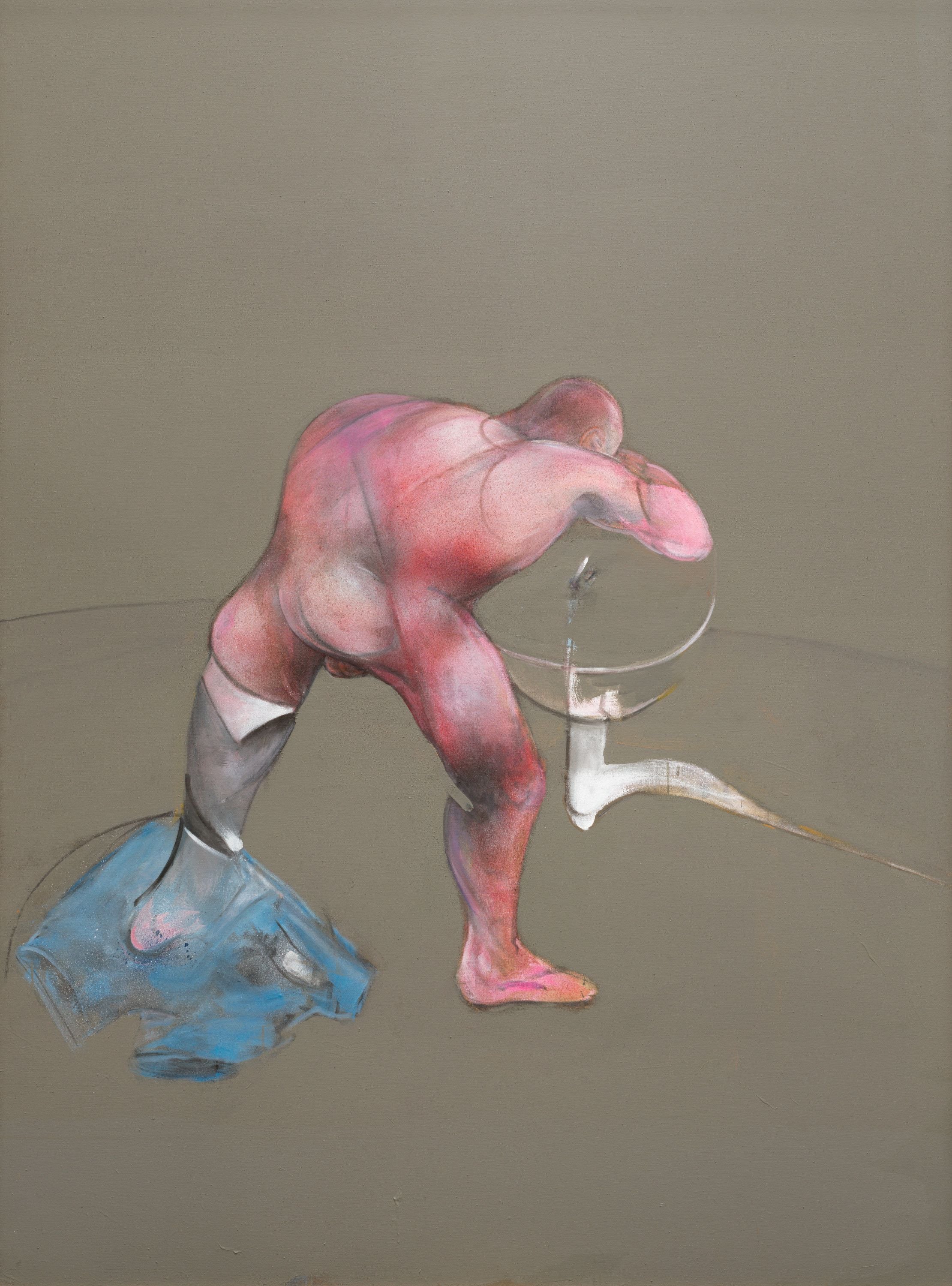
On view until 30 May, the canvases—Study from the Human Body–Figure in Movement (1982), Study from the Human Body (1986), and Man at a Washbasin (1989–90)—will form a trilogy indicative of Bacon’s creative spurt later in his career.

As art historian and Gagosian curator Richard Calvocoressi observed, this period was marked by re-invention, “as if the artist’s imagination, far from drying up, had been stimulated to create new and ever more intense combinations of colour, structure and form”.
Bacon had a long, if tortured, relationship with Paris. In 1971, two nights before the opening of his landmark retrospective at the Grand Palais, his partner, George Dyer, was found dead in a hotel room in the French capital.
Man at a Washbasin (1989–90), which imbues a subject first explored by the artist in 1954 with a darker tone, is perhaps an example of Bacon’s treatment of this most personal matter.
Despite its association with the death of Dyer, Bacon went on to maintain a studio in Paris from 1975–1987.
The earlier works on display at Gagosian are notable for the artist’s use of colour. Study from the Human Body–Figure in Movement (1982) uses Cadmium orange paint, a hue indicative of his practice during the early 1980s.
Meanwhile, Study from the Human Body (1986) was painted concurrently with the latter stages of the post-structuralist movement. As post-structuralist thinker Gilles Deleuze observed, Bacon’s painting “does not represent violence, it makes visible the violence of the forces exerted on the body”.
All three works depict the human figure with Bacon’s characteristically abstract, yet disturbing, fleshy forms.





A respected voice in contemporary art discourse.
Focusing on ambitious storytelling and insightful art-world commentary. Ocula Magazine publishes in-depth interviews, critical essays and timely analysis on the artists, exhibitions and ideas driving the global art world.
Learn more about Ocula Magazine
Showcasing the best of the art world.
Ocula partners with galleries from around the world to highlight their artists, artworks and exhibitions. Gallery membership is by application and invitation, with each member vetted by an independent panel.
Learn more about Ocula Membership
Specialises in the sale of major artworks.
Led by a team with deep ties to the world’s leading auction houses, galleries and collectors. Ocula’s advisory team offers bespoke services to high-net-worth clients from around the world who are looking to acquire the best of contemporary and modern art.
Learn more about our team and services