






‘When Crises Happen, That’s When the Arts Get To Work’: Inside the Dubai Gallery on a War Footing
As conflict in the Middle East comes to a unsteady pause, Antonia Carver, director of the Jameel Arts Centre, reflects on the space’s role in “solace and gathering”. Save to My OculaAt large art institutions around the world, crisis response plans are not unusual. Staff are trained to evacuate visitors in the event of a fire, or to protect artworks from extreme weather conditions. Anyone working in a museum or gallery during the Covid-19 pandemic will remember the endless drafting and re-drafting of safety protocols—accompanied, of course, by the constant worry.
For staff at Dubai’s Jameel Arts Centre, in recent weeks these plans have taken on a whole new meaning. Much as the expression “social distancing” entered the common vernacular seemingly overnight in 2020, since the United States and Israel launched wide-ranging strikes against Iran on 28 February, “shelter in place” has become a common refrain for the organisation’s director, Antonia Carver. So much so, she tells Ocula, that the phrase now “rolls off the tongue”.
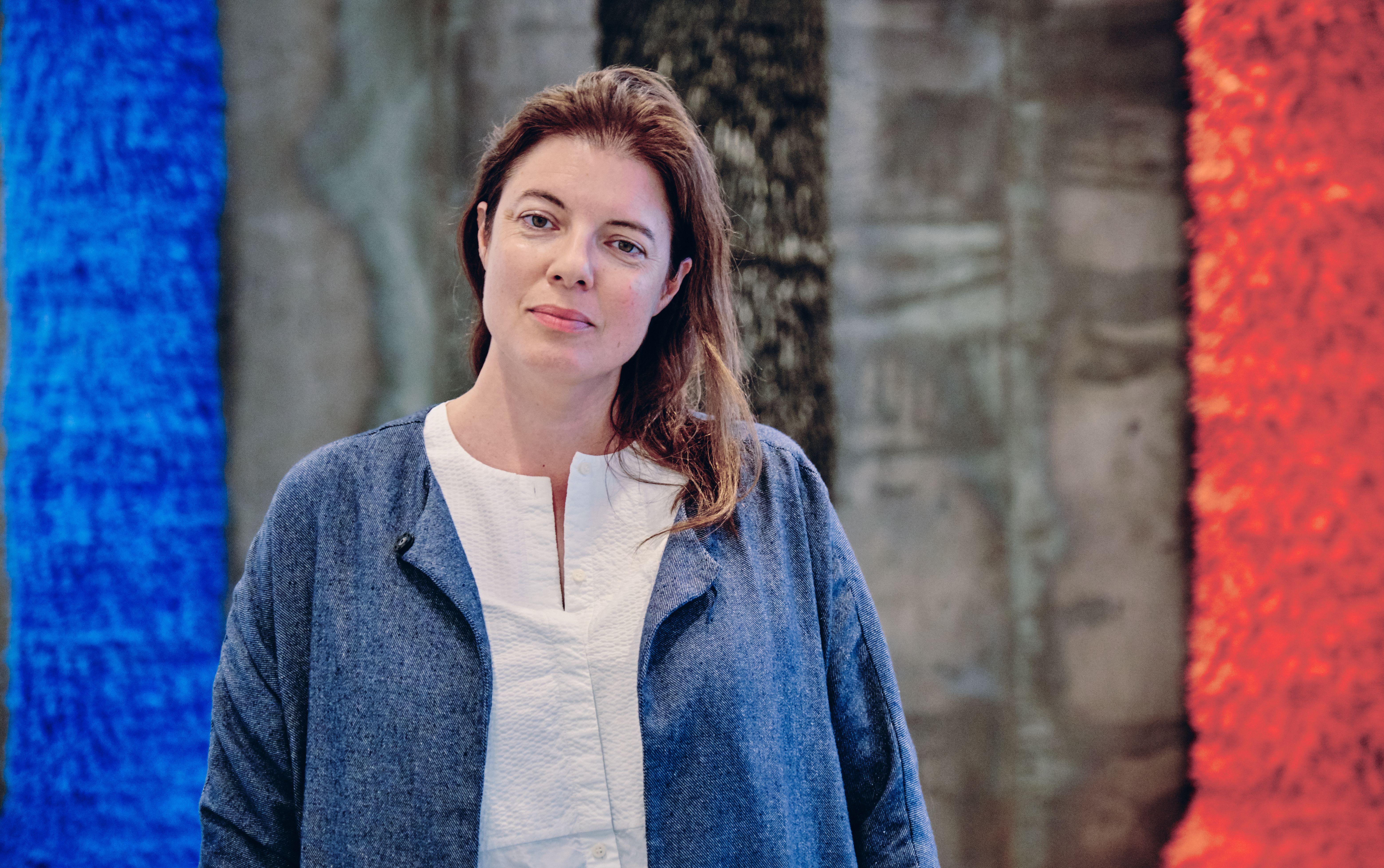
However, on 7 April, the US and Iran announced a conditional two-week ceasefire, bringing temporary respite to a war that has caused the deaths of thousands of people across the Middle East. In Dubai, reports indicate that some missile and drone activity has continued, but has become less intensive. For Carver, the pause has offered an opportunity to reflect on the experiences of Jameel Arts Centre’s staff, artists and visitors.
“We’ve been trying to think of those three different demographics and how we can make sure that everybody is staying safe and calm and knows what to do in the event of any kind of emergency,” she says of her focus in recent weeks. “While also being really mindful of this role that arts organisations have in terms of being spaces of solace and gathering.” There is, she says, a phrase for moments such as this: “When crises happen, that’s when the arts get to work.”
Confronting uncertainty
Despite this resolute outlook, Carver and her team have approached gathering with caution—since the war began, 13 people have been killed by Iranian strikes across the United Arab Emirates (UAE), while a further 217 have been injured by falling debris from intercepted drones and missiles. Amid each of these attacks, residents’ phones lit up with the now-familiar message: seek shelter. The centre’s staff have had to adapt quickly to this new reality, shepherding visitors calmly into the building’s basement until the government-issued all-clear arrives, and closing the space early to allow guests to return home safely before dark.
“An enormous number of people in the UAE have family in places that are undergoing far worse bombardment.”
For much of the war, Carver was overseeing these changes from a distance. She left Dubai for the UK in February, intending to spend time with family during Ramadan, but as the situation worsened throughout the region, found herself unable to return to the position she has held for more than a decade. She is, however, now back at Art Jameel, which encompasses the 10,000 square-metre Dubai centre and the Hayy Jameel arts complex in Jeddah. She joined the privately funded organisation following six years as director of the recently re-scheduled Art Dubai, and earlier this year, was appointed to curate the Saudi Arabian pavilion at the Venice Biennale, which will draw on Islamic and Arab art-making traditions to explore themes of care, fragility, time and continuity.
In her current role, even while working from afar, Carver has been moved by her team’s ability to confront uncertainty, which she describes as part of a culture of resilience common among the organisation’s community, and across the wider region. “An enormous number of people in the UAE, and this obviously includes the Jameel team, have family in Iran and Lebanon and Palestine and Sudan and other places that are undergoing far worse bombardment than the UAE,” she explains. “So it’s this double whammy of ‘I left somewhere that was unsafe in order to go to somewhere that was safe, and now I find myself in a situation where my family back in my home country is undergoing extreme suffering, and there’s uncertainty where I am as well’.”
Recovery and community support
Despite this resilience, from a business perspective Jameel Arts Centre will inevitably suffer from the effects on the conflict—even if the current ceasefire holds. In 2025 the Gulf city of Dubai was visited by almost 19.6 million people, up five percent on the previous year. More than 1.4 million of these people were from the UK, where the government has advised against all but essential travel to the UAE—at the time of writing, the pause in hostilities had not changed this advice.
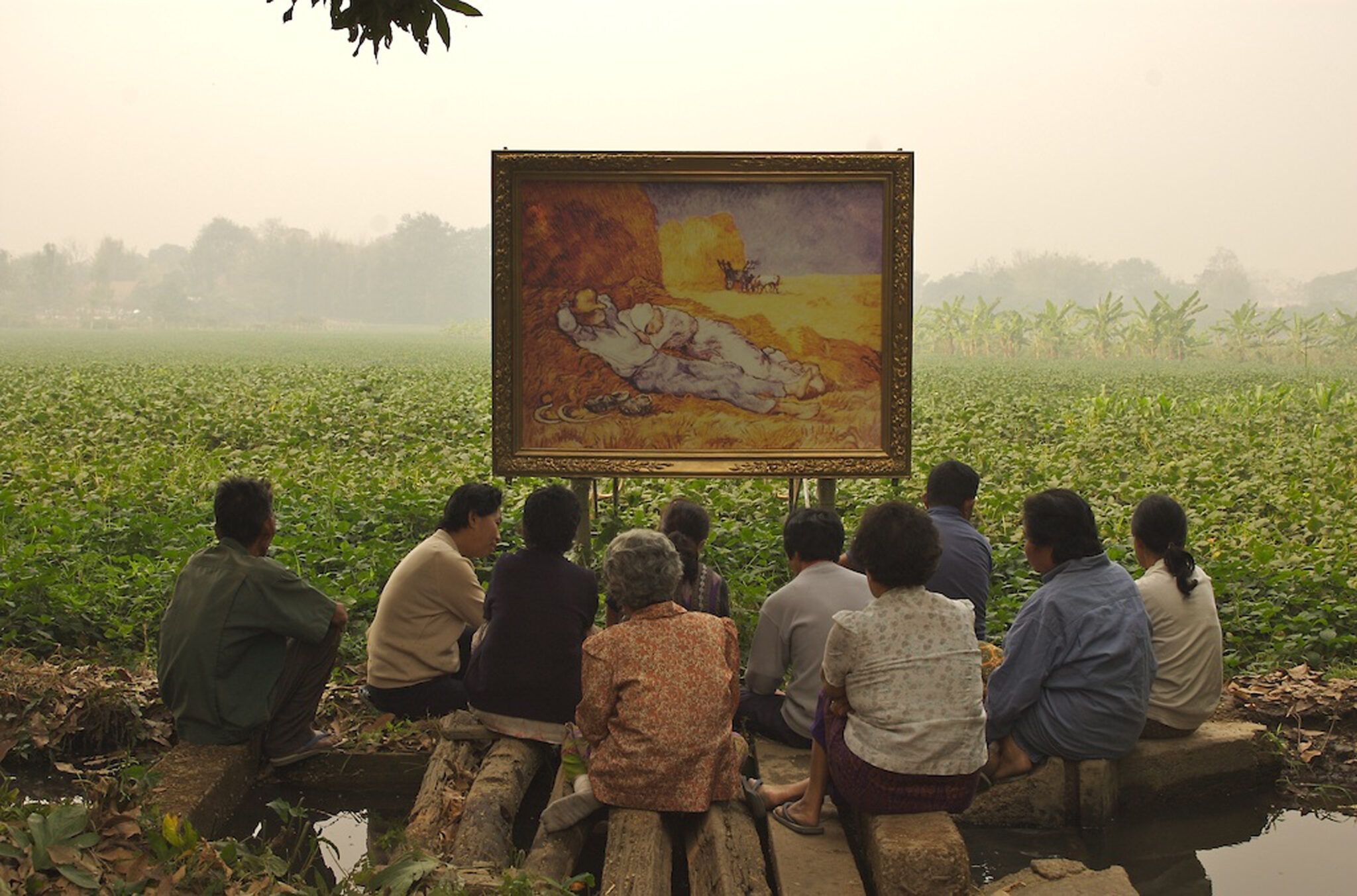
Carver understands that some tourists are still visiting the space’s five current exhibitions, but acknowledges a marked drop in holidaymakers over the recent Easter period, with visitor numbers at around only 50 percent of what would be expected. Local visitors, however, have remained loyal. In the week following the outbreak of war, when the decision was made to close the art centre briefly, the organisation received messages from those desperate to return—and when they did, Carver describes responses as emotional.
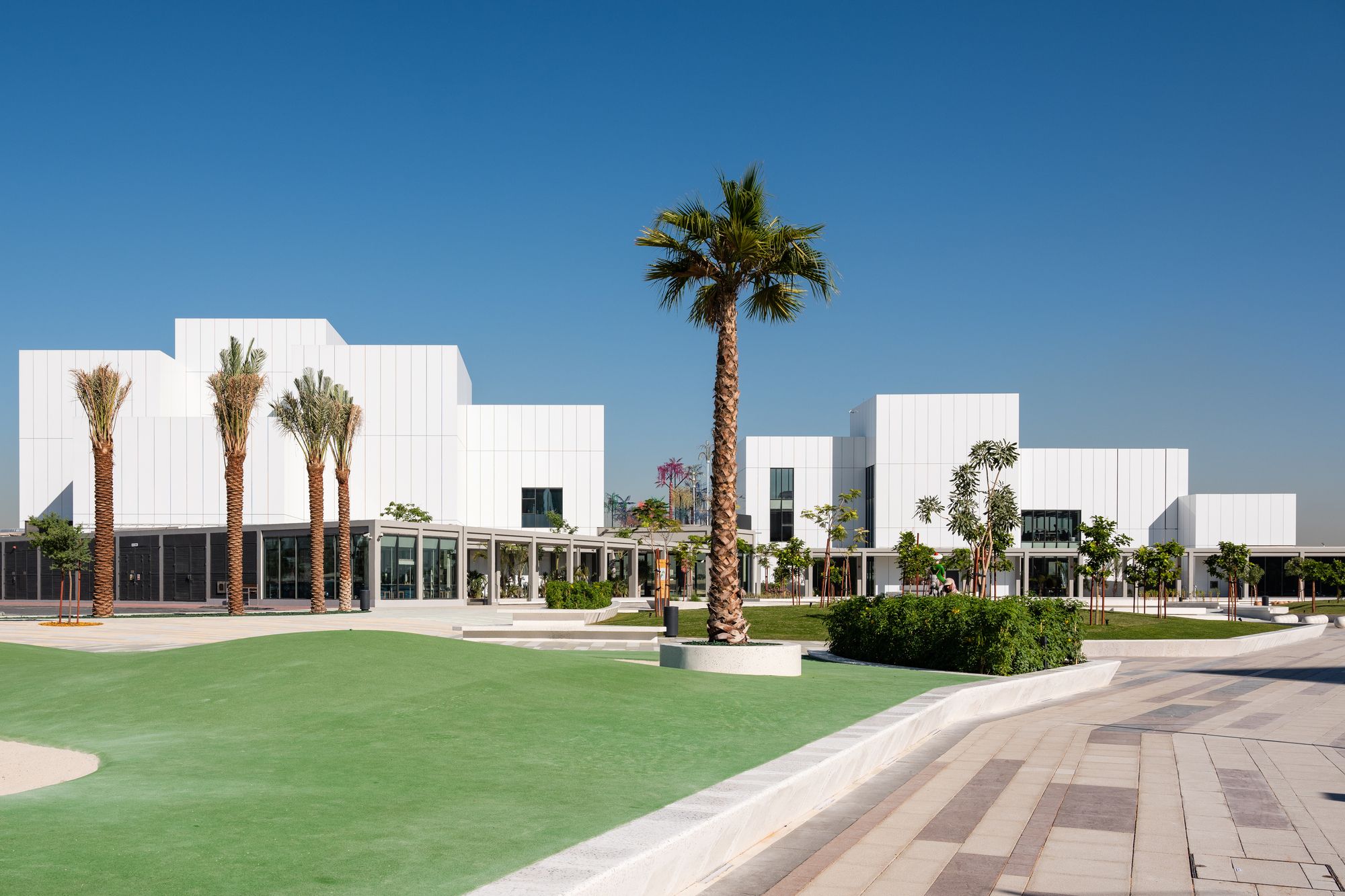
“People were saying: ‘Oh, thank God, I really wanted to get out of the house. I really want to be somewhere where I find it safe and consoling. I don’t want to be in a mall or somewhere commercial. I want to be in a space like this,’” she recalls. A surprising change, she says, has been the increase in visitors making use of the centre’s surrounding park each evening—seeking a local, outdoor space where they can have a break from home-based working and schooling. “So that’s been really heartwarming,” she says, “and it also reinforces that belief that the arts have a very particular role to play at this time.”
Though grateful for community support, Carver is realistic about longer-term recovery. While there are similarities between the centre’s response to the recent conflict and to the Covid-19 pandemic, there are also very different forces at play. Yesterday, as Israeli bombs continued to fall on Lebanon, US vice-president JD Vance described the ceasefire as a “fragile truce” and insisted that Iran must negotiate “in good faith”. “Not to get too political,” Carver says, “[but] you’re dealing with completely unknown quantities who chop and change their minds, and it’s that uncertainty that’s really debilitating.”
“All these forces of war could very easily breed a sense of inertia, but actually, it’s been the opposite.”
Yet, Carver has a great deal of faith in her fellow cultural leaders across the Gulf, who she says have already begun asking what recovery may look like, and how it can be achieved. “All these forces of war, and the precarity and the uncertainty, could very easily breed a sense of inertia,” she says, “but actually, it’s been the opposite.” She details how regional organisations have done away with any sense of competition, and have instead turned outwards to support each other, as well as their communities.
Complexity, reflection and refuge
This characterisation—of the Gulf as a place of opportunity and, in due course, of stability—may, Carver acknowledges, challenge the perceptions of Western audiences. While the launch of Art Basel Qatar, the opening of various mega-museums in Abu Dhabi and Design Miami’s proposed 2027 expansion to Dubai have all brought a certain cultural legitimacy to the region, the art world remains sceptical in parts. And these concerns are not without merit.
Across the UAE, strict laws prohibit actual or perceived criticism of the country’s government, alongside the publishing or sharing of material that could disturb public security. According to the organisation Detained in Dubai, these laws have led to widespread arrests, detentions and prosecutions throughout the war, related to the filming and discussion of drone and missile activity. In a statement last month, the British embassy warned that “photographing, posting, or sharing images of incident sites or projectile damage as well as government buildings and diplomatic missions” may lead to “fines, imprisonment, or deportation”.
For her part, Carver says neither she nor her team have had any direct experience of this legislation—she sees conversations around the Gulf as an opportunity to explore a broad range of emotions. “It’s something that we talk about a lot in the arts in general: how can you maintain a position of complexity and think about lots of different things at once?” she asks. “It’s possible to be positive and resilient, while utterly depressed and under attack all at the same time.”
Carver describes this need for understanding as key to the Jameel Arts Centre’s mission and programming—and as a core value of the arts more broadly, particularly in moments of trauma. At a time in which cultural spaces around the world find themselves under increasing political pressure, economic strain and—in the case of spaces across the Middle East—existential threat, she says such moments underline the ability of art to provide spaces for learning, reflection and refuge.
“We can’t only be fair-weather curators,” she explains. “We’re here for people all the time, whatever is happening around us, or maybe particularly when things are happening around us. That’s the only mentality we can adopt, otherwise we’re saying ‘we’re here for decoration’, and we’re not—the arts are fundamental to how people live.”
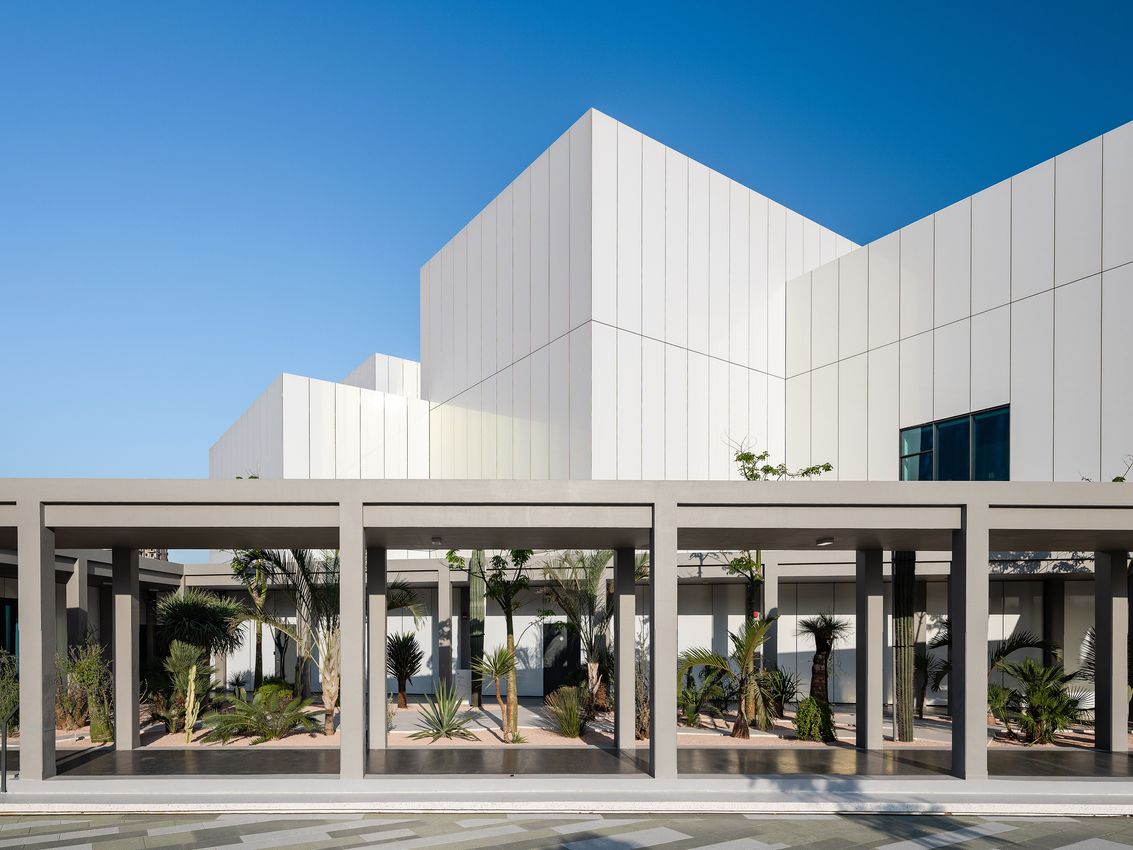
Main image: Unusually for the UAE, the centre, which opened in November 2018, is not financed or run by the state, but by the private Saudi Arabian organisation, Art Jameel. Courtesy Art Jameel. Photo by Mohamed Somji.





A respected voice in contemporary art discourse.
Focusing on ambitious storytelling and insightful art-world commentary. Ocula Magazine publishes in-depth interviews, critical essays and timely analysis on the artists, exhibitions and ideas driving the global art world.
Learn more about Ocula Magazine
Showcasing the best of the art world.
Ocula partners with galleries from around the world to highlight their artists, artworks and exhibitions. Gallery membership is by application and invitation, with each member vetted by an independent panel.
Learn more about Ocula Membership
Specialises in the sale of major artworks.
Led by a team with deep ties to the world’s leading auction houses, galleries and collectors. Ocula’s advisory team offers bespoke services to high-net-worth clients from around the world who are looking to acquire the best of contemporary and modern art.
Learn more about our team and services