






Pat Oleszko: ‘I Take My Art Very Seriously, Even Though I Am Seriously Amused’
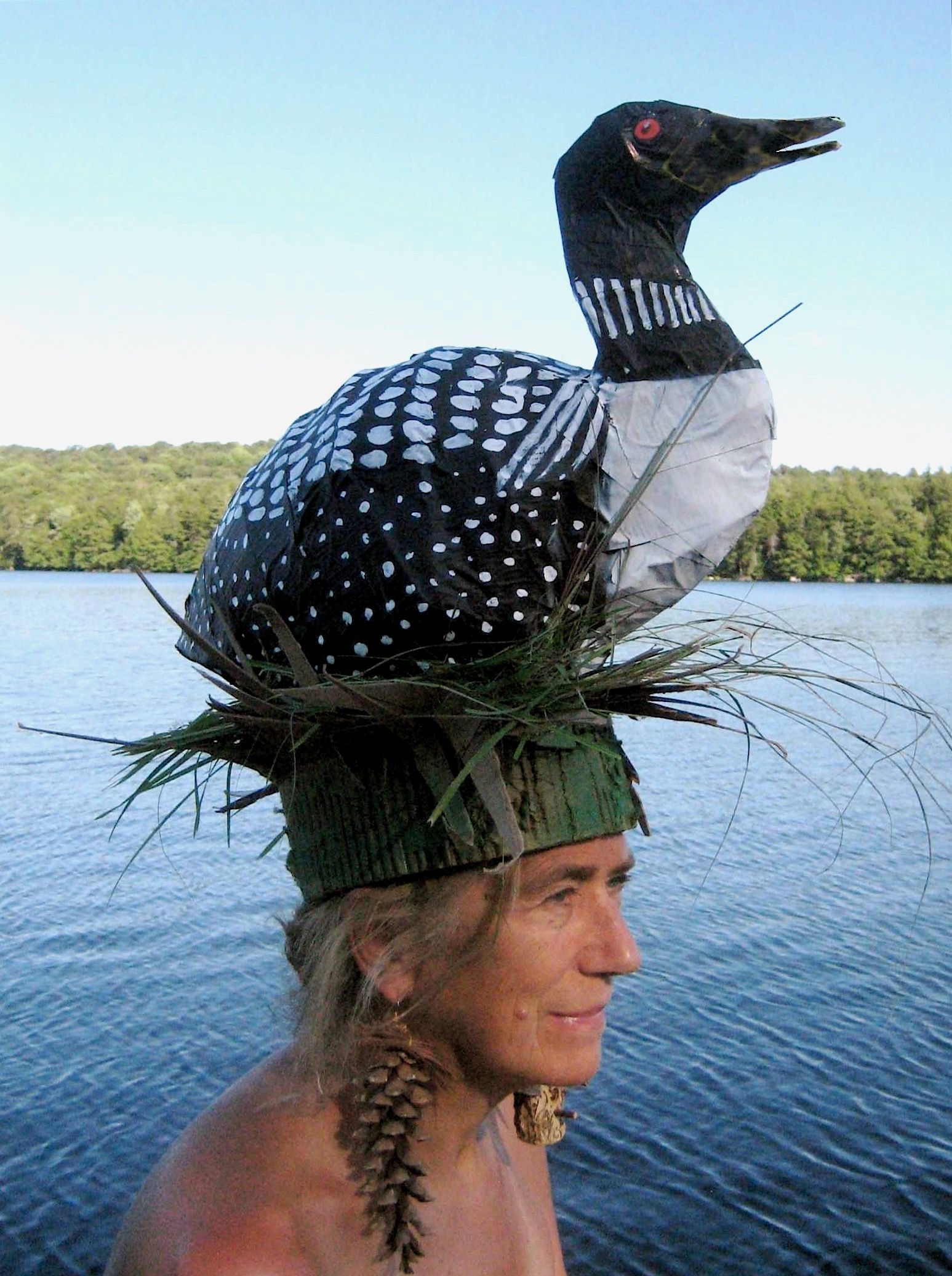
Radical artist Pat Oleszko’s gaudy inflatables bring humour to an often politically bleak world, although she admits she once considered throwing away all her creations. Save to My Ocula‘The world is going to hell, and I have never been in such a great position with my work. What the fuck?’ Pat Oleszko’s dangling homemade earrings—one a badminton shuttlecock, the other a long stack of ping-pong balls—sway as she shakes her head in disbelief.
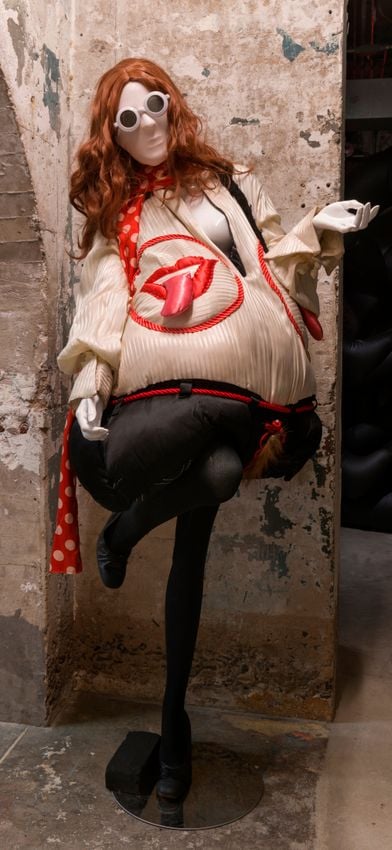
‘What the fuck?’ is right. Throughout her career, Oleszko has worn many hats—and not just her expansive collection of inventive sculptural headwear, often donned at protests such as the recent No Kings march. She has been a visual and performance artist, a sculptress of inflatable objects, a burlesque dancer, a personality-switching server at the storied art hangout Max’s Kansas City, and Ms. magazine’s cover star as a clumsy Lady Liberty in 1976. Her latest role, though, surprises even her: institutional darling. Since her first solo exhibition in New York since 1990 in 2024, the 79-year-old artist is riding a newfound career high.
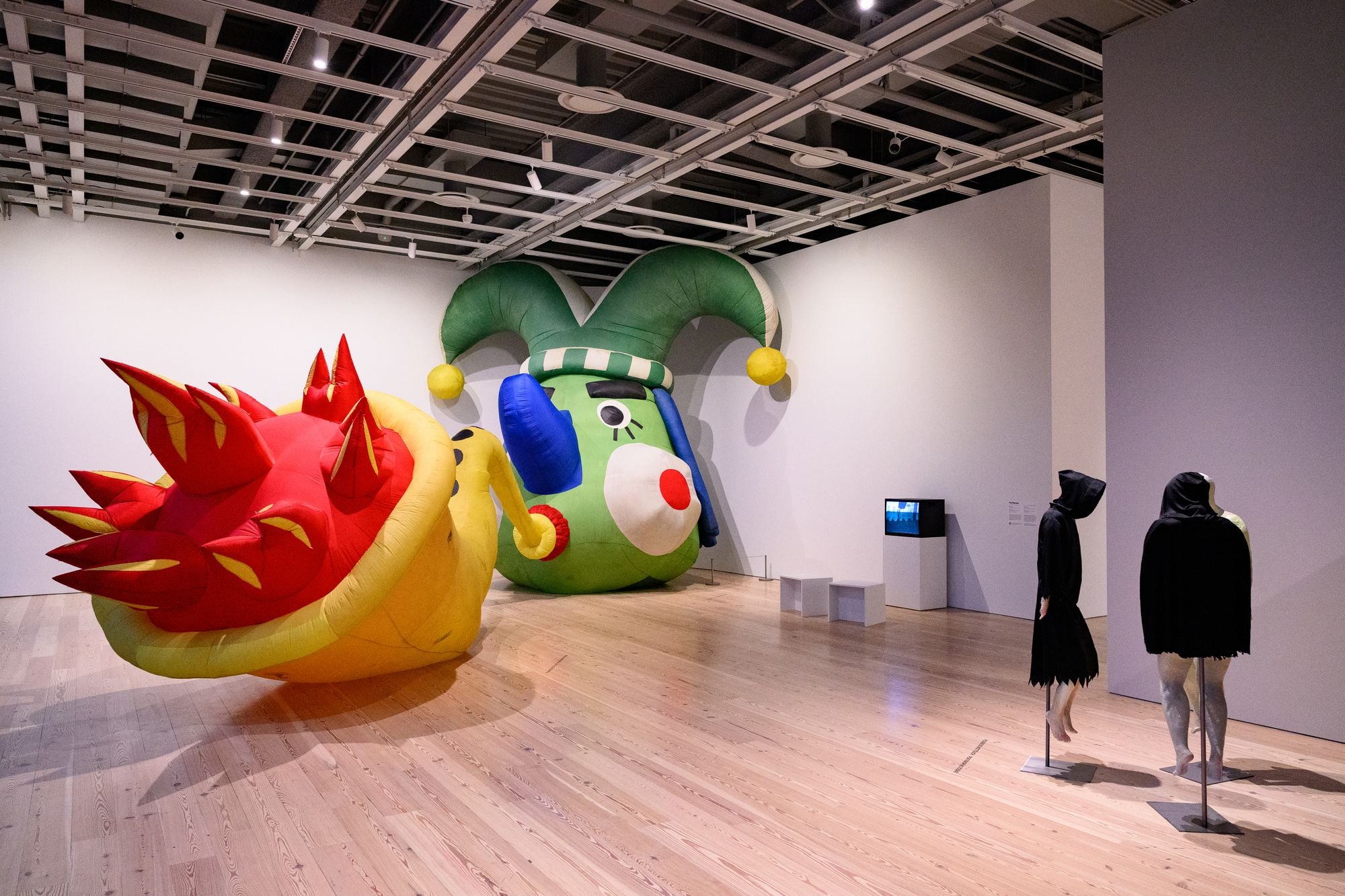
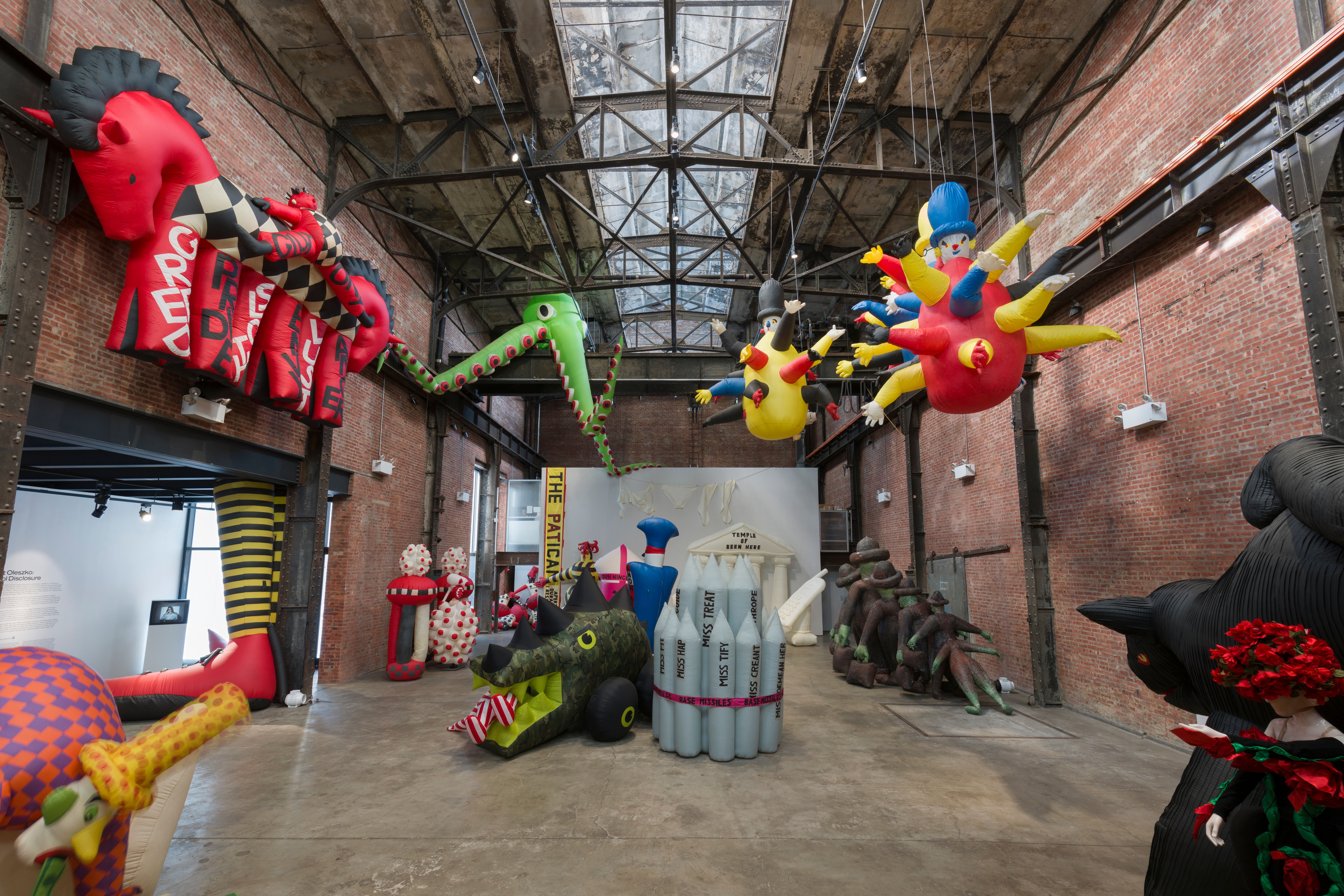
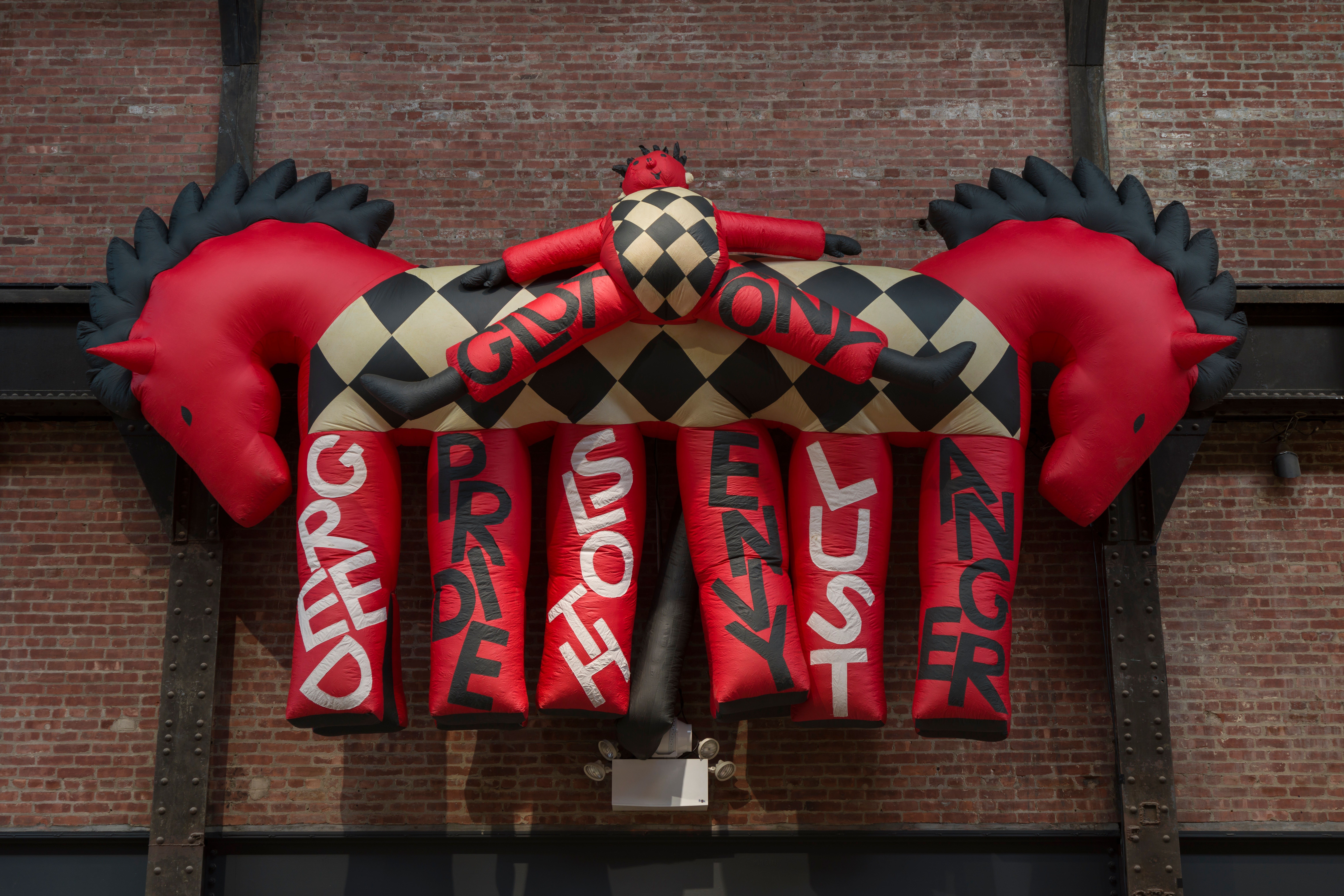
This, as she calls it, ‘rollercoaster ride of thrills and chills’ includes her current expansive carnivalesque survey, Fool Disclosure, at SculptureCenter in Queens, New York, which spans more than five decades of her work and ephemera, from ginormous inflatables to surrealistic costumes to guerilla-style street performance videos. Oleszko also has two pieces in the 2026 Whitney Biennial: one a huge inflatable clown—Blowhard (1995)—that dwarfs a relatively tiny television monitor showing a five-minute video titled Footsi (1975)—the ‘largest and smallest’ works in the exhibition.
Though she may marvel at her fortuitous position during a time of crisis, Oleszko is the right artist for the moment. Her art fearlessly addresses the dual horror and absurdity that continues to surround us—forever wars, climate change, gentrification, repressive gender roles and organised religion—in an uproarious and maximalist fashion. Candid, witty, and whip-smart, Oleszko spoke with me over tea and Girl Scout cookies (purchased from her niece) at her colourful Tribeca apartment, which has served double duty as her home and studio since 1972.


EC: I’ve recently been frustrated because so much art I see feels either disconnected from current geopolitical chaos or completely stale, which made Fool Disclosure feel like a relief. Finally! A show that’s politically engaged, but also fun. Why do you think fun and political critique can co-exist in art?
PO: An artist only has so much agency. They’re only able to express their imagination or interest in a certain way. I’ve never been able to do anything else but deal with the absurdity and humour of a situation. God knows, I’ve done respectful pieces dealing with very serious subjects. But I can only respond to what’s around me and, Jesus fucking Christ, we’re living in the worst nightmarish times. The norm is this wacko situation that, for some reason, people see as acceptable. It invigorates me to put out work that has the potential for two or three different responses. People have a huge regard for tragedy, so they traditionally disregard humour. I see myself in a lineage of gods like Lewis Carroll, Buster Keaton and Danny Kaye, who were able to involve people in their own universe and approach to ordinary life and absurdity. I take my art very seriously, even though I am seriously amused.
“I see myself in a lineage of gods like Lewis Carroll and Buster Keaton”
EC: I also think a lot about the difficulty of making art during dark times. Did you ever struggle with responding artistically?
PO: When September 11 happened in New York, there were other artists in the neighbourhood who just went back to their studios. I could not do it. I ran this re-supply place where people would go before they went to the pile [at Ground Zero]. I would talk to the people with the dogs and cops. One time, I said to a cop: ‘I don’t think I can make art anymore.’ It was too much, given the nature of my work. He said, ‘You can. I know you will,’ and put his arms around me. I’m hugging him, but—I’m from the 1960s—I realised: I’m hugging a pig! [Laughs]. At that moment, I laughed at myself and said: ‘Oh God, if my friends could see me now!’ So, during 9/11, I thought, how am I going to do this? But then, I realised they were making art in the sewers and camps during the Holocaust; who am I to be a delicate flower?
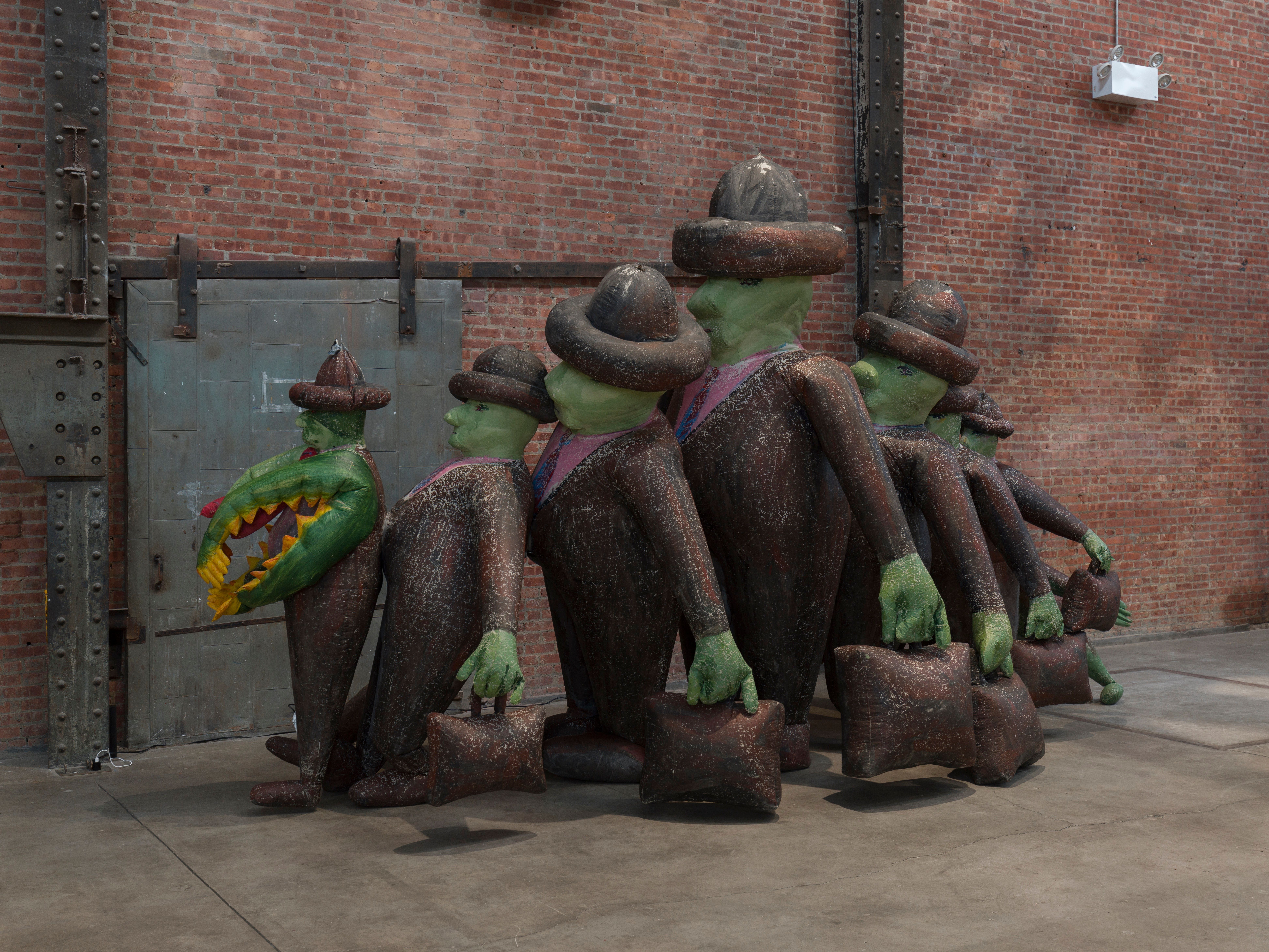

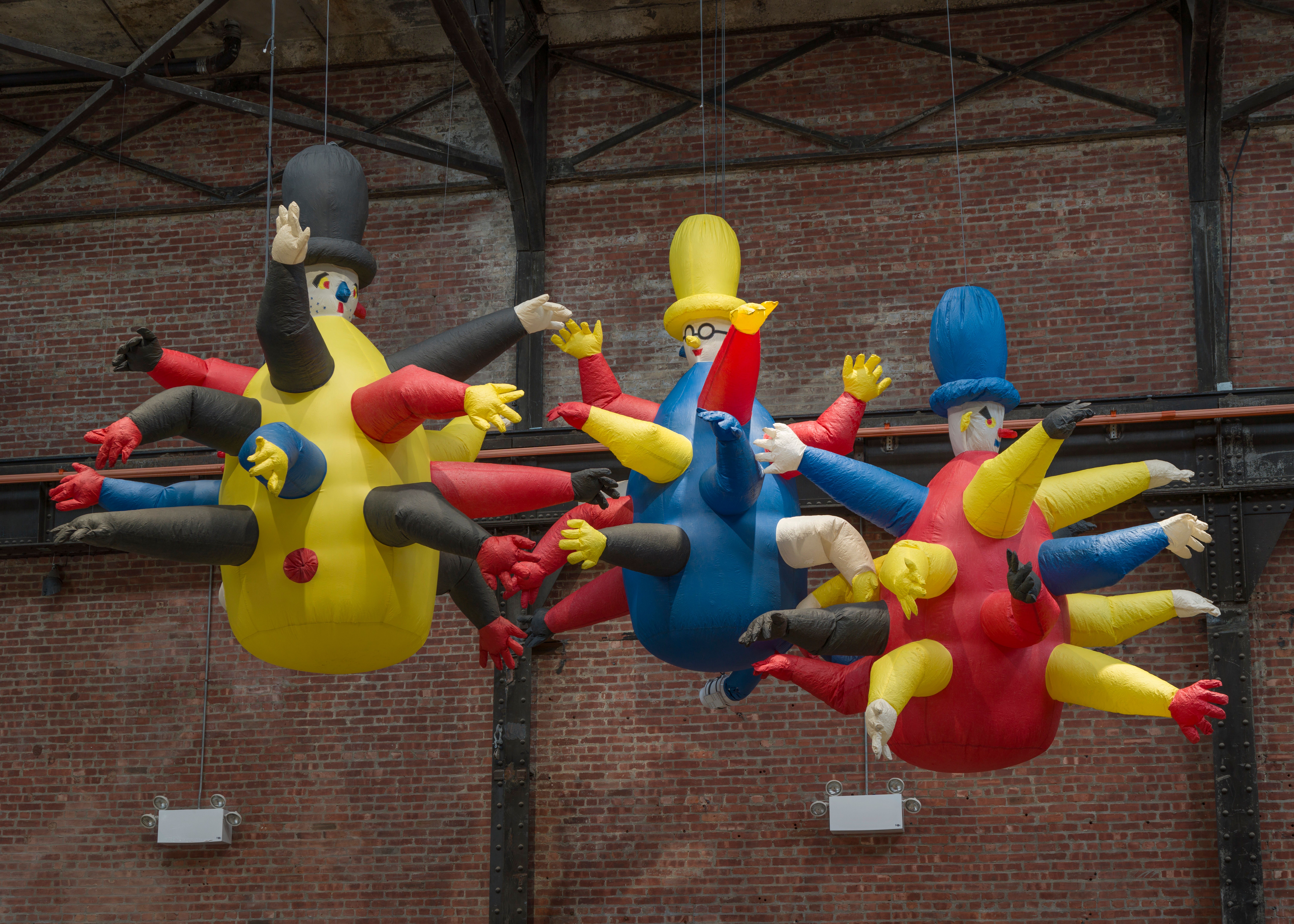
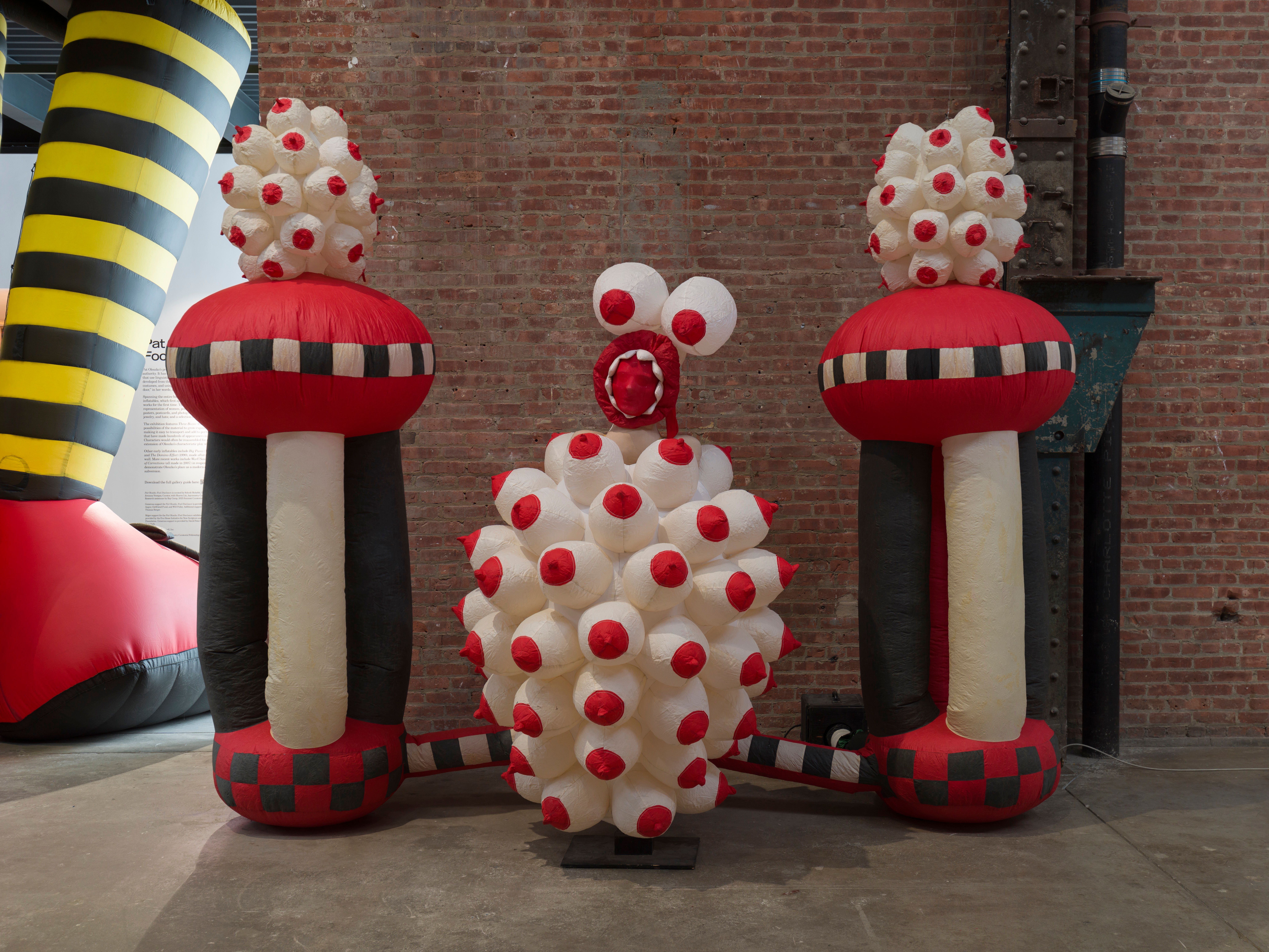
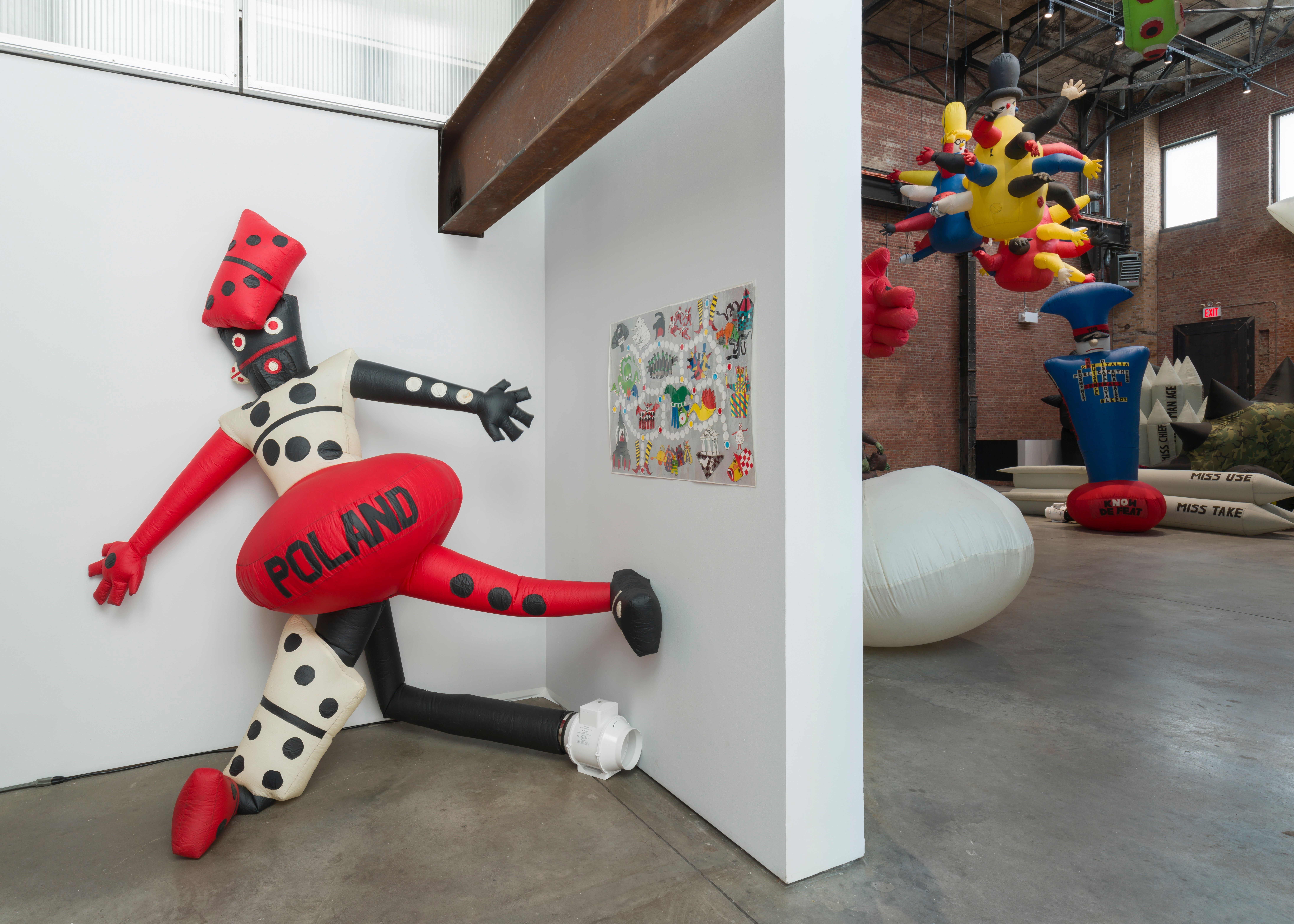
EC: Your art pokes fun at many forms of authority but, as you noted, you can engage with the work on various levels. When I was at SculptureCenter, children were running around the inflatables. They’re just joyful objects; I think of suburban Christmas displays.
PO: That’s what got me out of the business. One time in suburbia, there were six or seven inflated elves, Santa Claus and snowmen within a couple of blocks. I said, ‘OK, China’s doing that for $200 or something. I guess I have to move on.’ My inflatables fulfilled a need for my stage shows. They would rise up, and the audience wouldn’t know what was going on. I would interact with them, and then unzip. [Oleszko uses the inflatables in various unexpected and zany ways in her performances, whether as props, costumes, or set pieces that she inhabits.] Bingo! They’re gone. It was a fab effect, and I could also travel with them.
“Words are no different than ready-made clothes”
I was actually at the brink of throwing them all away. Not that they take up that much space, no more than a walk-in closet, but the material breaks down a bit. I burn my old stuff, but even I know you don’t burn nylon. I was looking for a dumpster place near my storage unit in New Jersey. I went through the phone book and found a place called Bin There, Dump That. I called them because I thought: ‘Oh well, my muse is amusing me in this terrible journey.’ But I could never make the follow-up call. Thank God I didn’t.
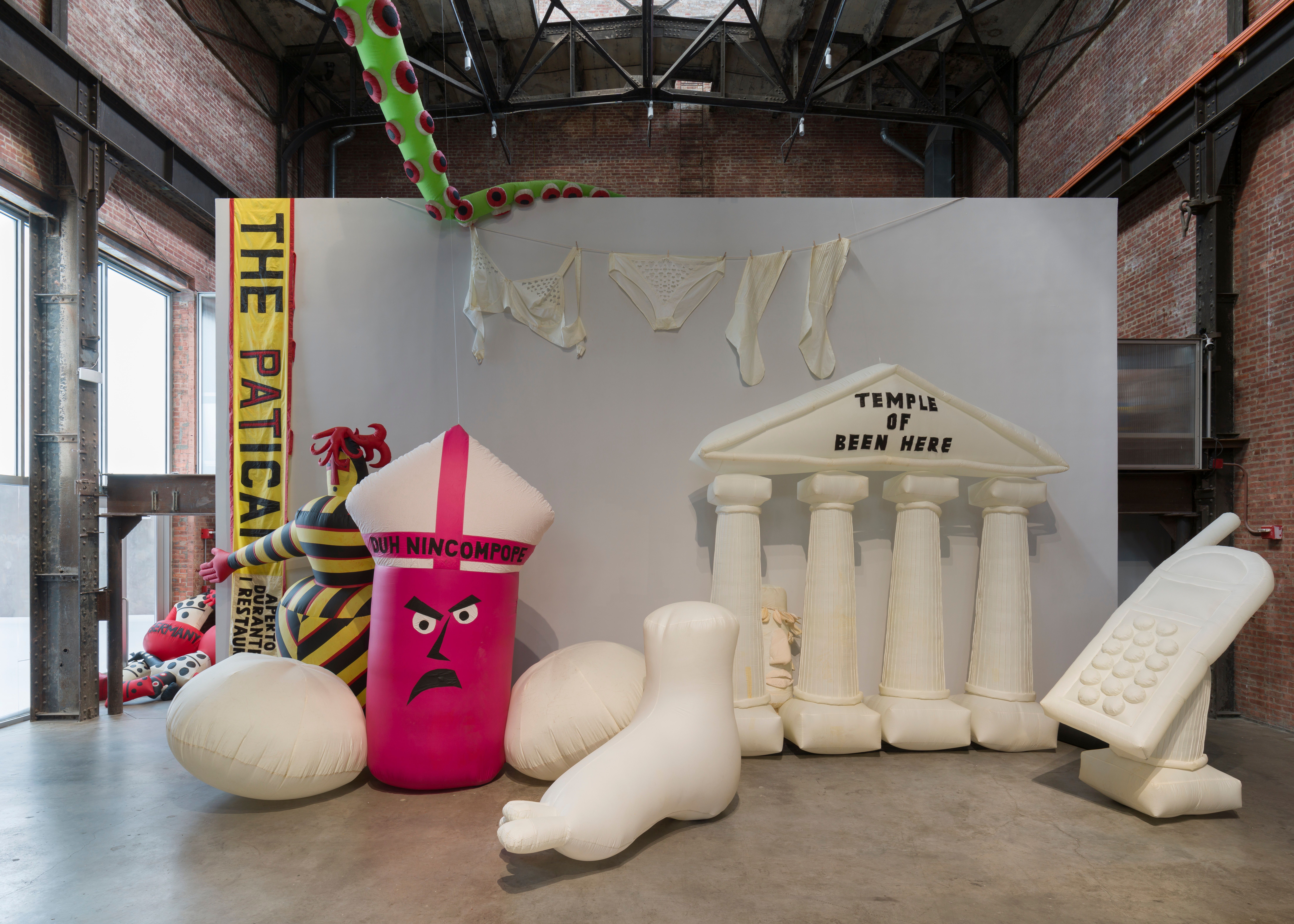
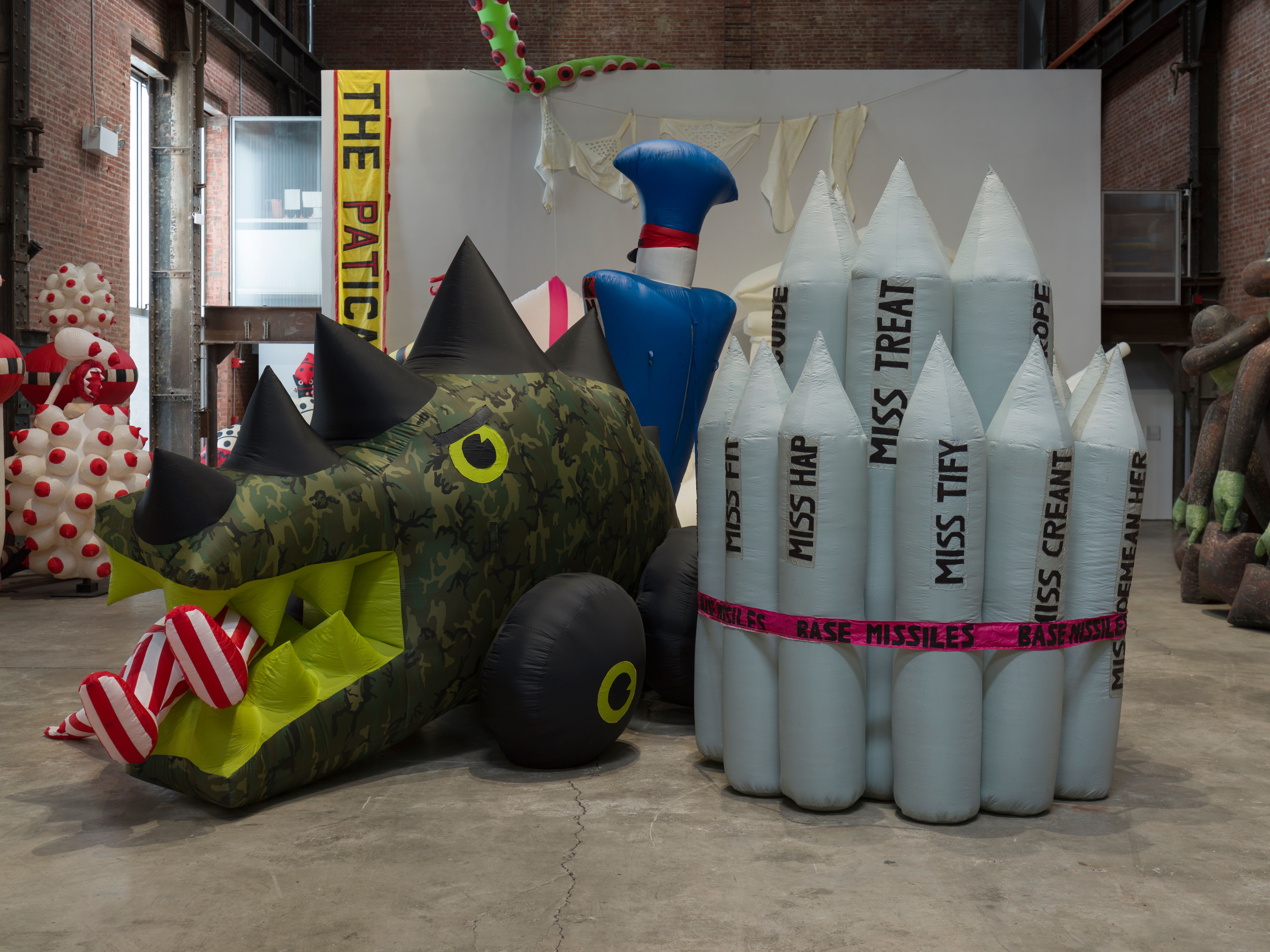
EC: Bin There, Dump That is perfect because puns are everywhere in your work and writing, as seen in 3 Miss Ills (2007), inflatable missiles emblazoned with puns like Miss Deed, Miss Fit, and Miss Hap. What interests you about puns?
PO: I believe I came by it honestly. My father was a linguist. He spoke six or seven languages, and he would drop words into the common parlance. We didn’t know what it meant, and it was just like… OK. My dad had a sense of humour, also. Words are no different than ready-made clothes. They fit a general idea, but then you alter them. Plus, puns catch people off-guard. I know that sometimes I go too far…
EC: When?
PO: I’ve been doing this for a very long time, and I’ve read things and later thought, scale it back, Pat! A grant committee reads someone else’s application, and it’s simple. But with mine, they’re saying: ‘What the fuck is she talking about?’ There are certain moments when I’ve obfuscated to my detriment. I have a better understanding of how much the public can take.
“Puns catch people off-guard. Sometimes I go too far…”

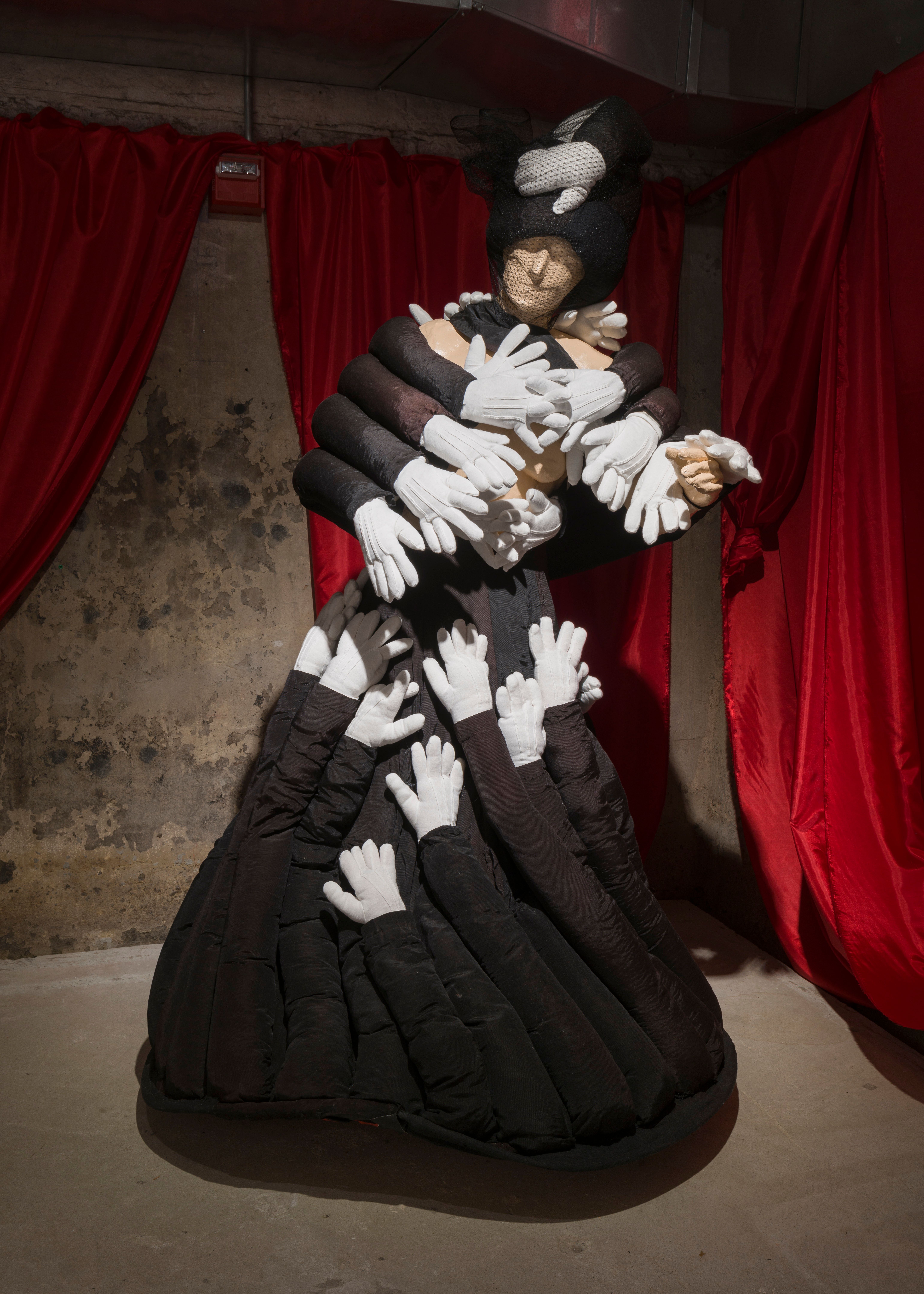
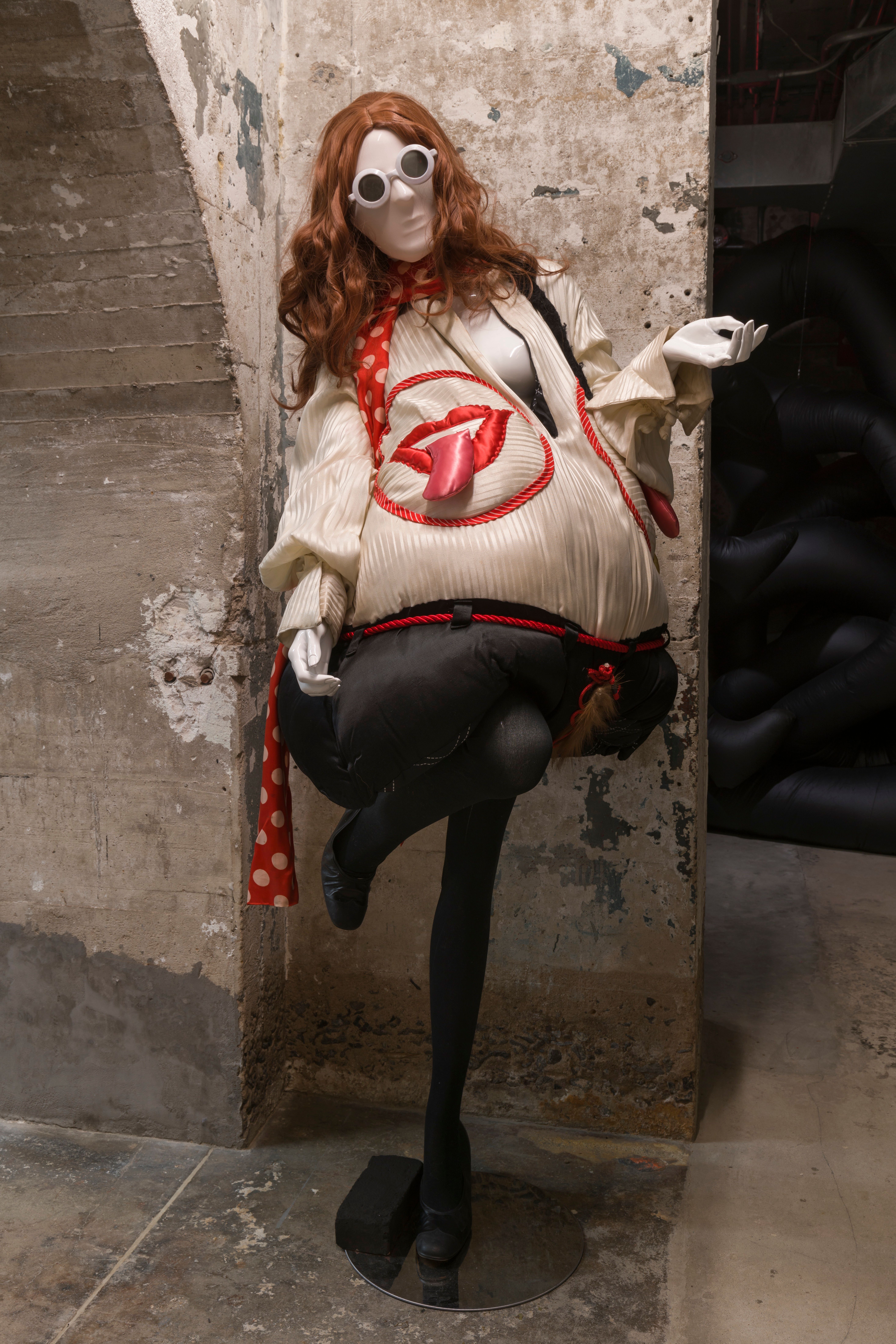
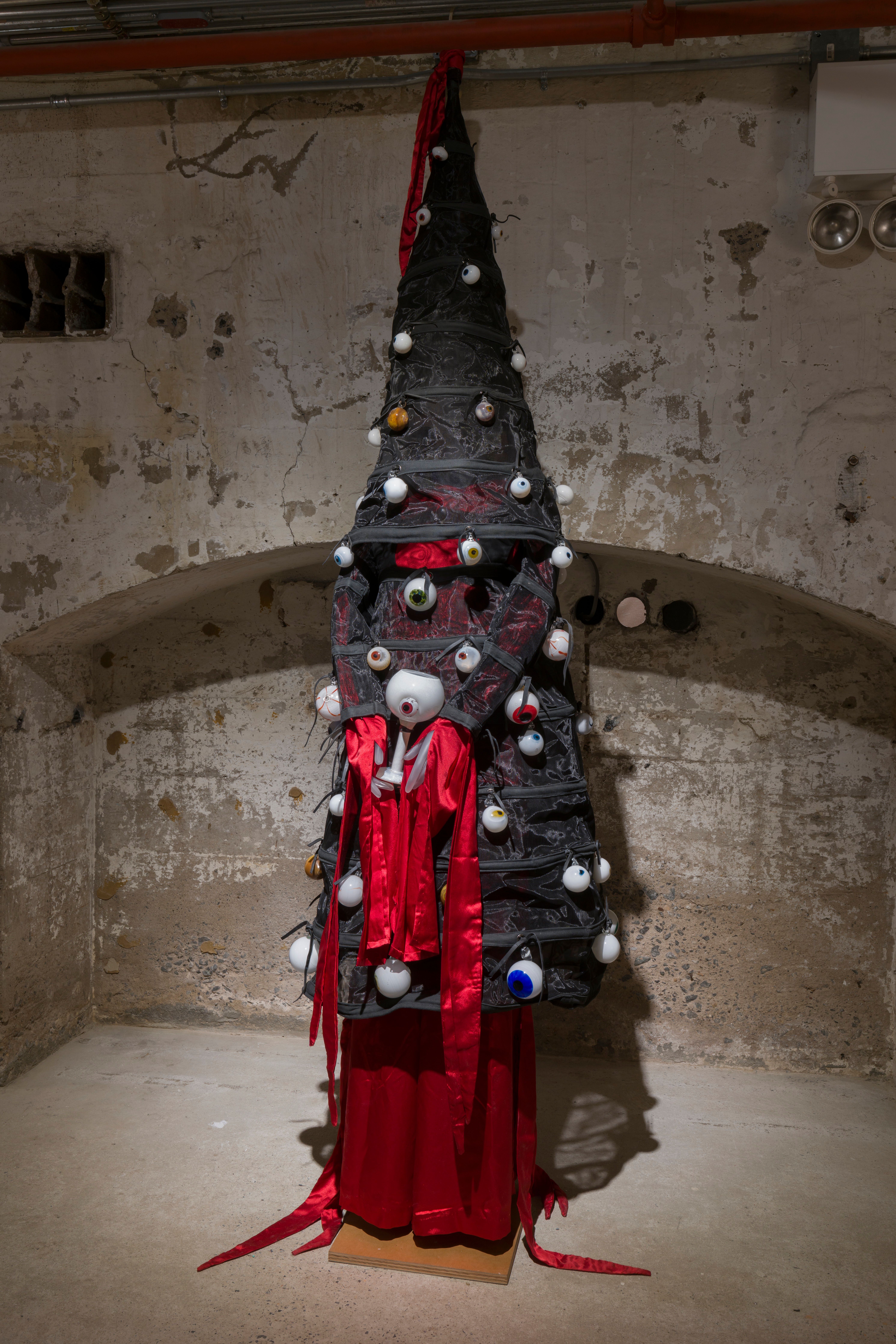
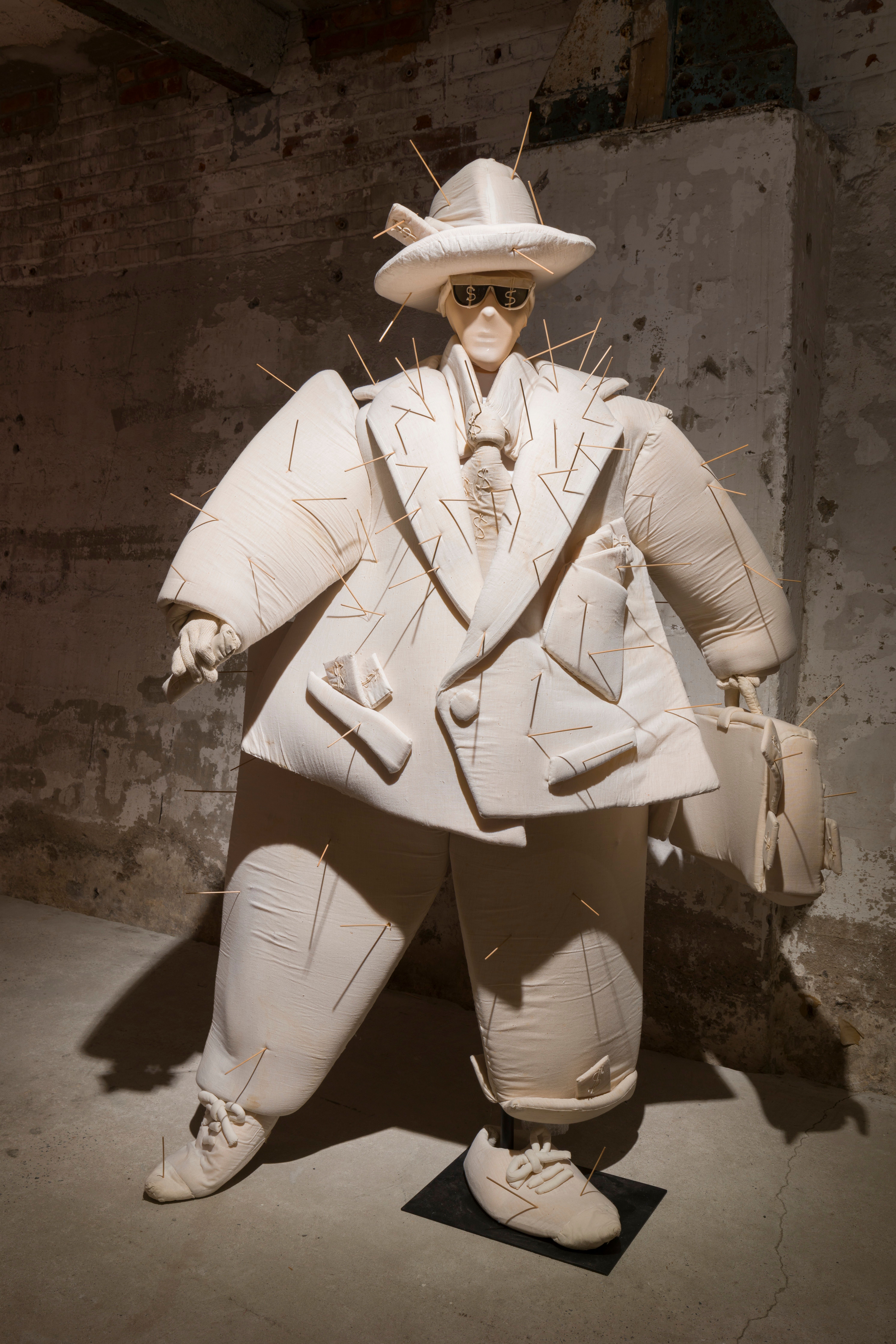
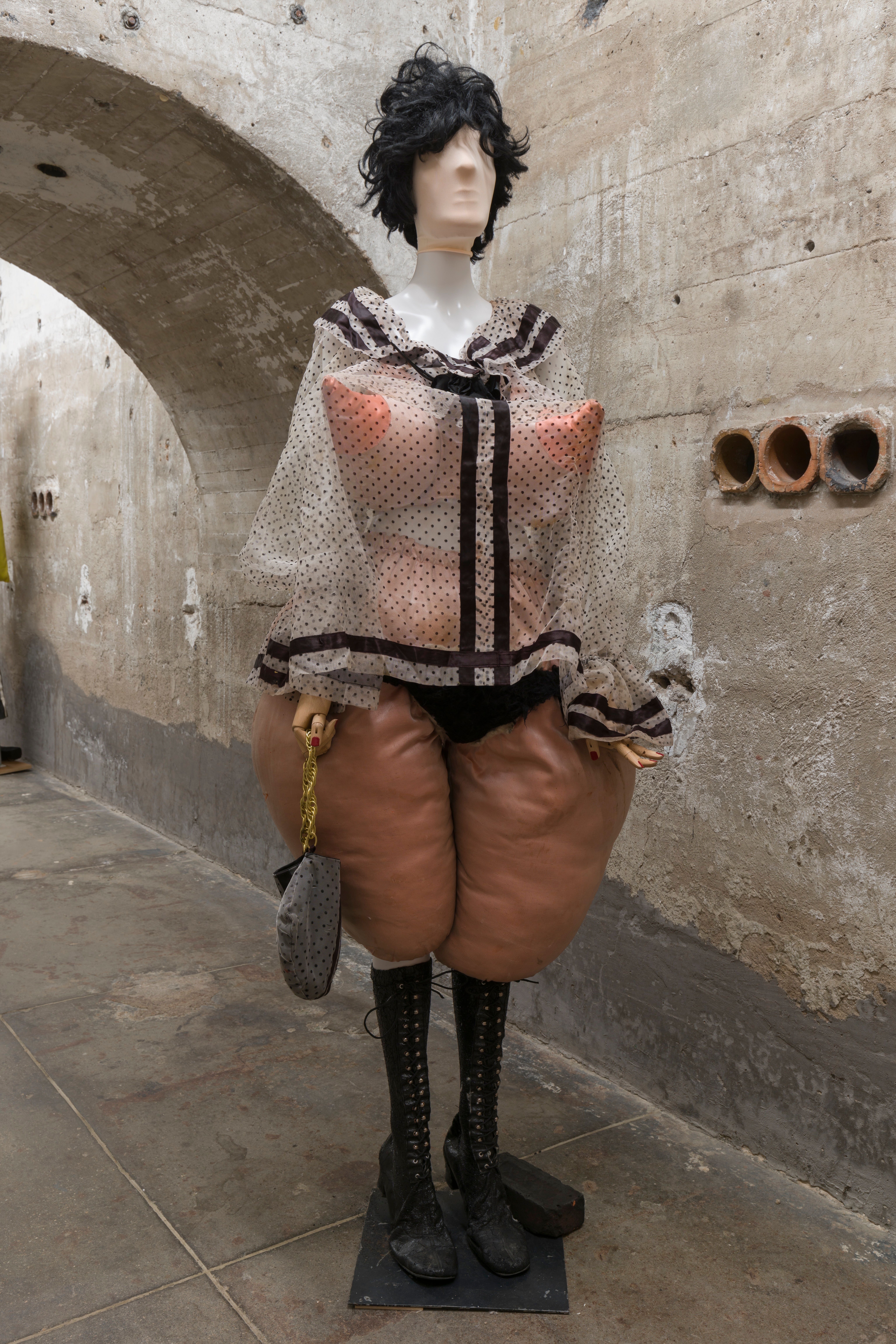
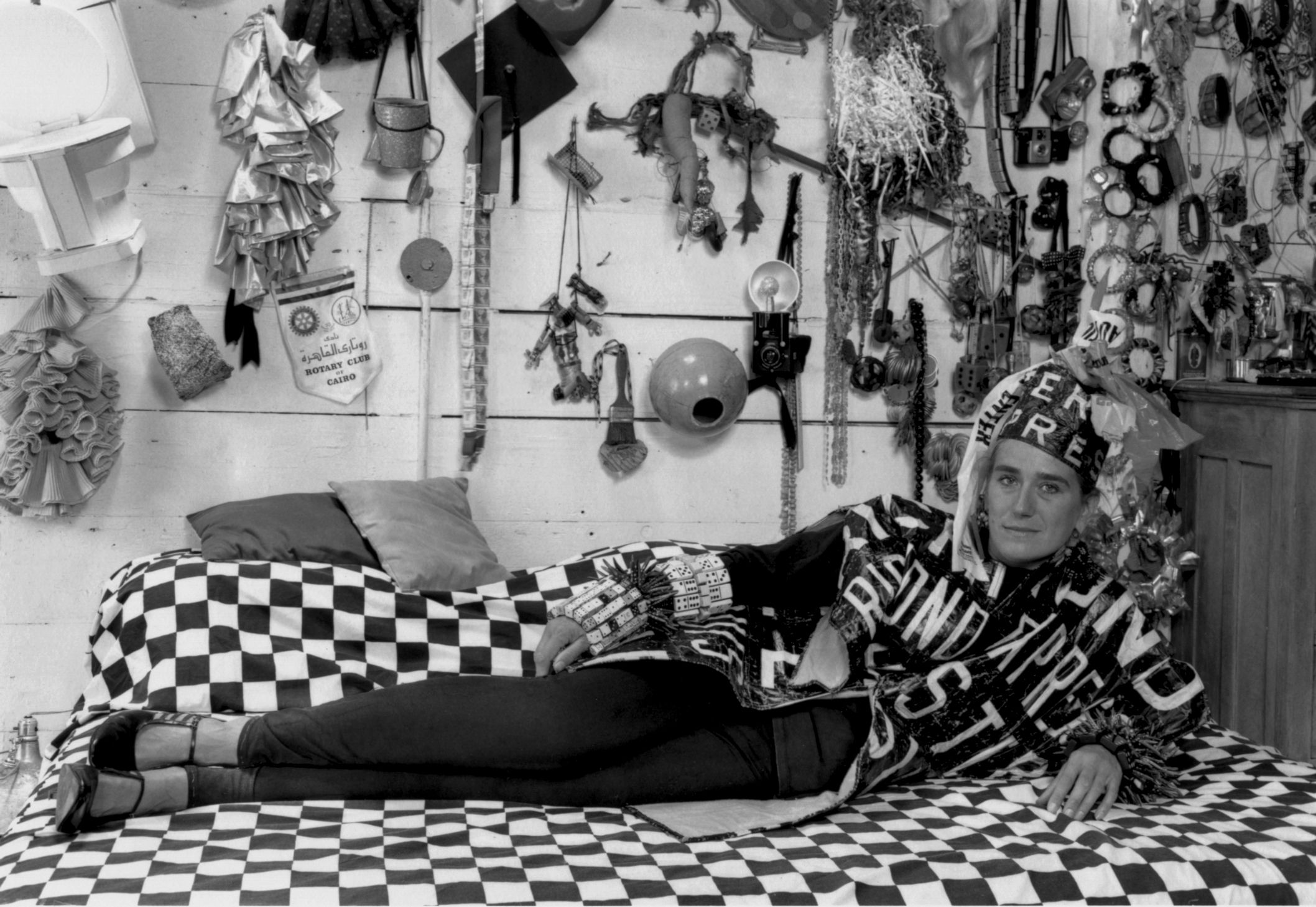
EC: Along with your father, who were your early inspirations, or, I prefer John Waters’s term, ‘filth elders’? In the SculptureCenter’s gallery guide, you mention latter-day saints like Bette Midler and John Cage.
PO: Danny Kaye was a huge influence when I was a kid. When I was in art school at the University of Michigan, my teachers knew everybody and brought people to the visiting artist programme: Oldenburg, Rauschenberg, Morton Feldman, Bucky Fuller, and Marisol. Warhol and The Velvet Underground came to Ann Arbor for their first gig out of New York. These were big names, and how they responded to students was very revelatory and influential. At a party for Warhol and The Velvet Underground at one of the professors’ houses, I made and wore this Hell’s Angels belt that had a really lethal-looking chain, whips, and 10-penny nails sticking out. I encountered Andy, who goes: ‘Oh… wow…’
EC: Best compliment ever.
PO: I couldn’t have got any better than that. Plus, [burlesque dancer] Rose La Rose. At that point, I had never met any woman like that. She was the smartest woman—savvy, clever, controlling and fierce. All these people, in some way, changed my life. I absorbed some aspect of them, as so often happens at that wonderful time when you leave home and are so impressionable.
EC: If you’re lucky.
PO: If you’re lucky. —[O]
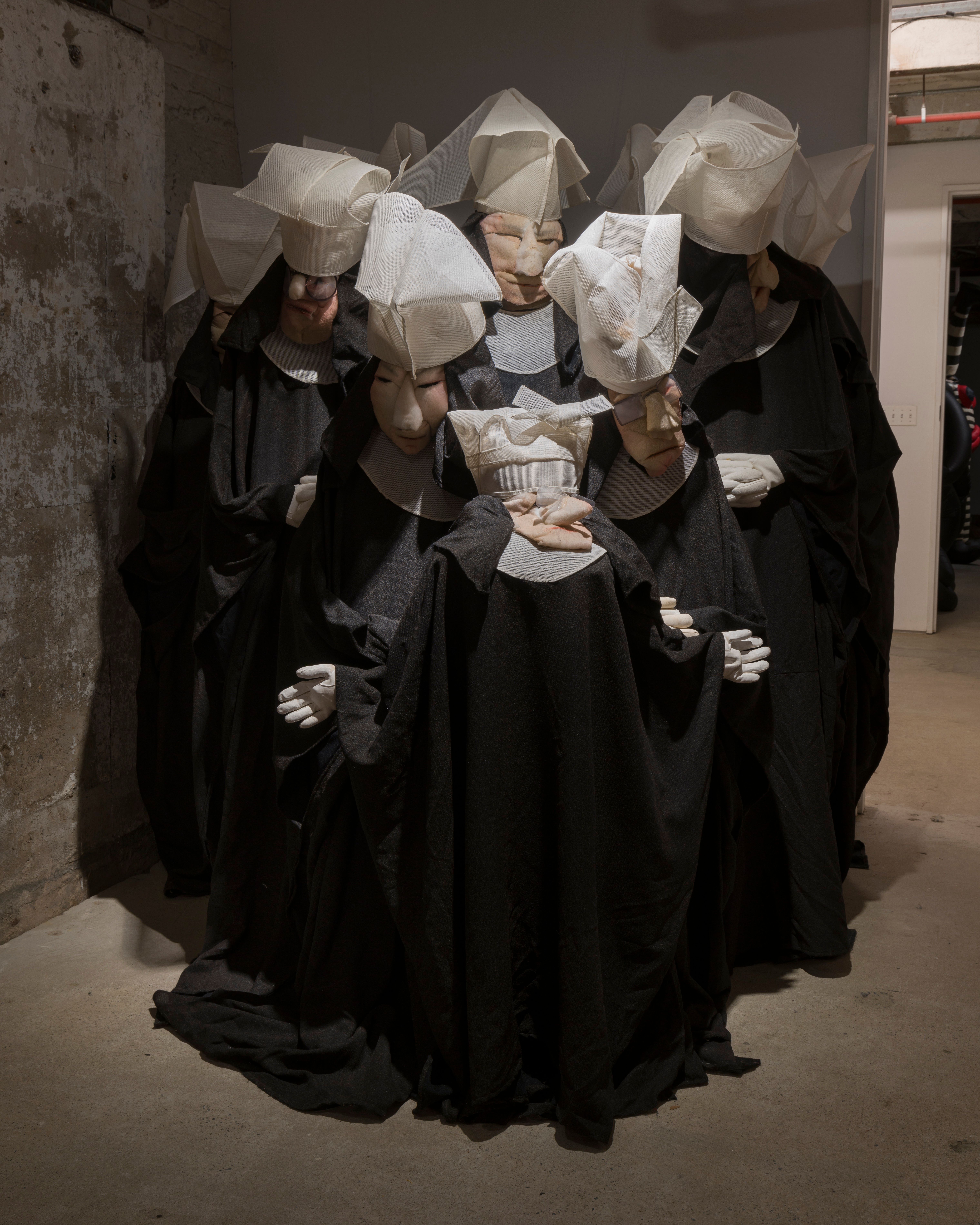
Main image: Exhibition view: Pat Oleszko, Fool Disclosure, SculptureCenter, New York (2026). Courtesy the artist, SculptureCenter, and David Peter Francis, New York. Photo: Charles Benton.






A respected voice in contemporary art discourse.
Focusing on ambitious storytelling and insightful art-world commentary. Ocula Magazine publishes in-depth interviews, critical essays and timely analysis on the artists, exhibitions and ideas driving the global art world.
Learn more about Ocula Magazine
Showcasing the best of the art world.
Ocula partners with galleries from around the world to highlight their artists, artworks and exhibitions. Gallery membership is by application and invitation, with each member vetted by an independent panel.
Learn more about Ocula Membership
Specialises in the sale of major artworks.
Led by a team with deep ties to the world’s leading auction houses, galleries and collectors. Ocula’s advisory team offers bespoke services to high-net-worth clients from around the world who are looking to acquire the best of contemporary and modern art.
Learn more about our team and services