




Break the Internet
It may have seemed as if social media had subsumed the art world’s role in signalling cultural trends, but this year’s Whitney Biennial feels reinvigorated, relevant and exciting. Save to My Ocula
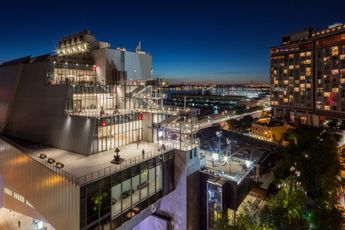
The catalogue for this year’s Whitney Biennial, the longest-running survey of contemporary art in the United States, features conversations between the exhibiting artists and an interlocutor of their choosing. In one exchange, Joshua Citaralla—whose contribution will comprise a series of podcast episodes live-recorded at the museum during the run of the exhibition—speaks with fellow artist Josh Kline. Detailing his evolution from art-world “gallery artist” to political podcaster (Doomscroll, the influential podcast exploring online culture and politics launched by Citarella in 2024, now has more than 100,000 subscribers), Citarella reflects upon a comparable shift in the cultural landscape at large. “I always think of Ryan Trecartin’s work as a powerful example of how the art world used to lead culture… He anticipated the style of TikTok and YouTube 10 – 15 years early,” he says, pointing to the frenetic editing style, self-referential theatrics and frantic pace of the films released by the US video artist in the late aughts. “Now it feels like social media is leading culture, and the art world merely responds to it.”
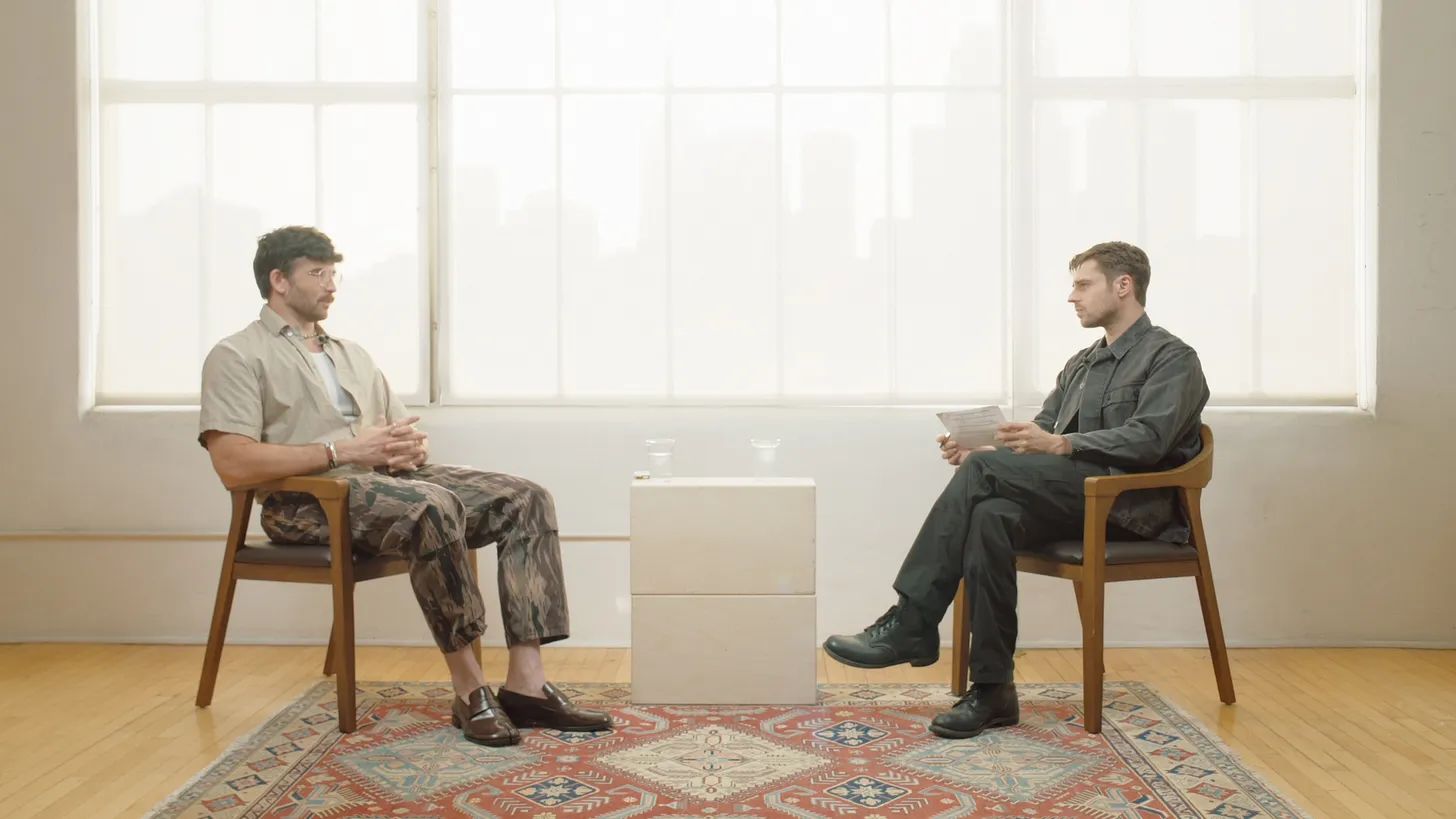
I’m reminded of a story from popular science writer Malcolm Gladwell’s book The Tipping Point (2000), in which he examines social trends as a form of contagion. As Gladwell tells it, between 1994 and 1995 Hush Puppies shoes went from geek to chic, with annual sales increasing from around 30,000 pairs to around 450,000 pairs (and even more in subsequent years). Why? Because a few kids in downtown Manhattan started wearing them to clubs. New York fashion designers took note and began featuring them on runways, which sponsored a cascade of coolness that spread across the world.
Since the end of the Second World War, New York artists have been tasked, metaphorically speaking, with making Hush Puppies cool. For decades, they influenced a world that could seemingly look nowhere else for inspiration—well before the prevalence of digital influencers even became a thing. Trecartin is himself a 2006 Whitney Biennial alum, and could be considered both the tipping point and the prototype for what Citarella identifies as the diversion of the avant-garde out of the gallery and on to social media. Trecartin may have predicted TikTok but, like any good influencer, he was also famously “discovered” on an early social networking site, Friendster.
“The internet has rung the death knell for contemporary art’s global relevance”
Where once those searching for the cutting edge looked to the art world for cultural trends to bubble up, and the Whitney Biennial could “set the tone” for the coming years, they now look to social media. Influence has become decentralised. And yet here I am, hopping on the subway and trudging to the 82nd edition of the biennial in the cold pouring rain. Gleefully writing a boots-on-the-ground analysis of the show, which I found charming, meaningful, and as benevolently forward-looking as anything could be in this fractious time.
So why does the biennial suddenly feel exciting and important again? What stands out to me most is that this exhibition does not attempt to compete for views, likes, subs and clicks. It is not loud, didactic, reactionary, or filled with guilt, shock, or complaint. It’s really not like the internet at all. Rather than seeking to influence, which often feels like petty manipulation, the overall spirit here seems to be about people actually trying to understand one another. To actively engage, rather than to “increase engagement”.

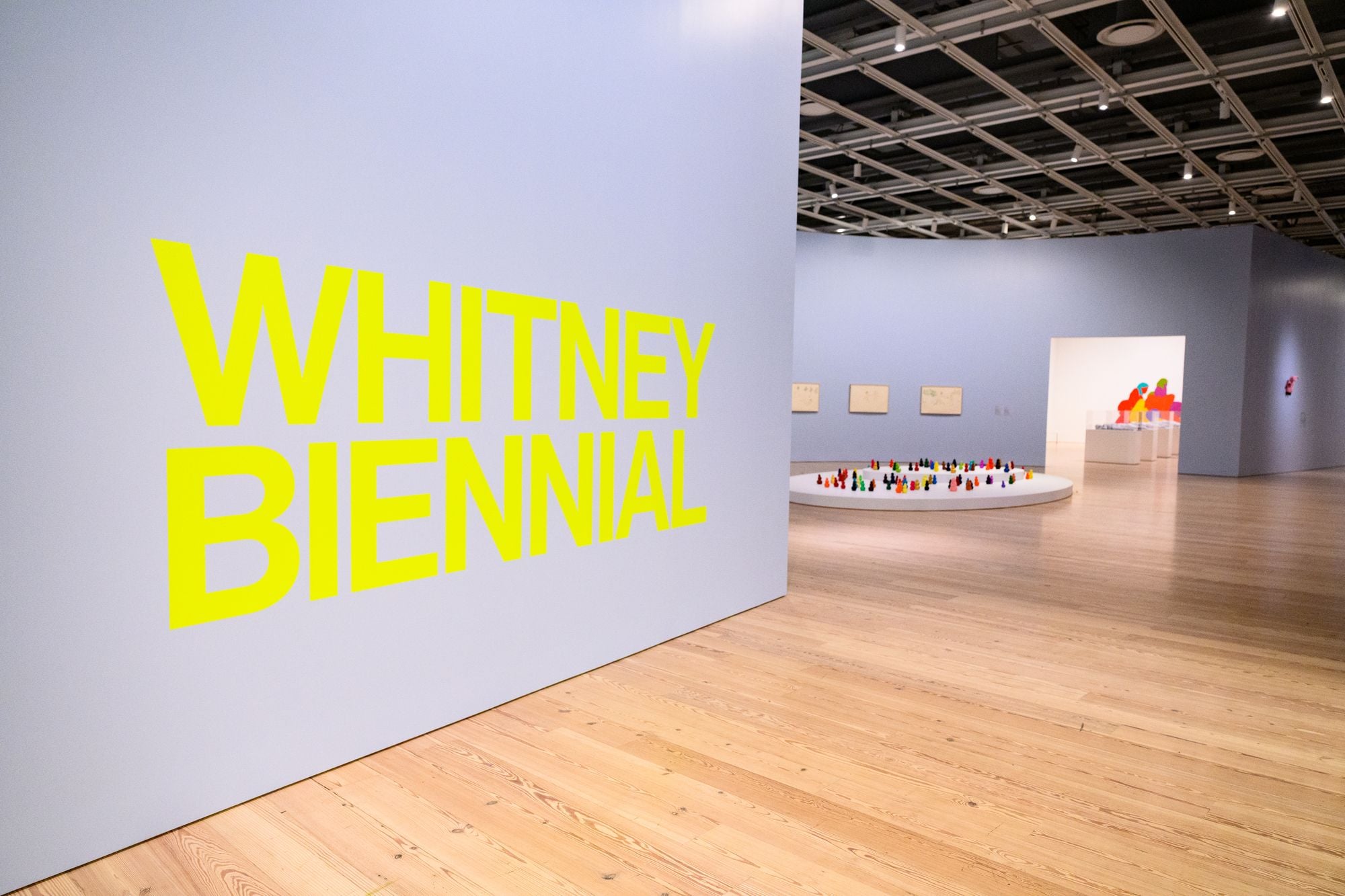
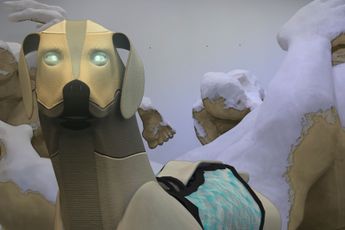
The exhibition opens with Emilie Louise Gossiaux’s canine heaven-on-earth Kong Play (2025), a grouping of brightly coloured floor sculptures that mimic Kong dog toys (which are shaped in such a way that they can be filled with peanut butter and then licked clean). “These little Kong sculptures are too minimalist and museum-y to truly make you feel the love, IMO—though, what do I know, I’m not a dog guy,” wrote critic Ben Davis in his review of the show. I think this misses the point, and speaks to how often we seek not to understand what is meaningful to those whose interests or behaviours lie outside our fields of comfort, a condition exacerbated by the echo chambers generated by social media algorithms designed to feed us more and more of the same.
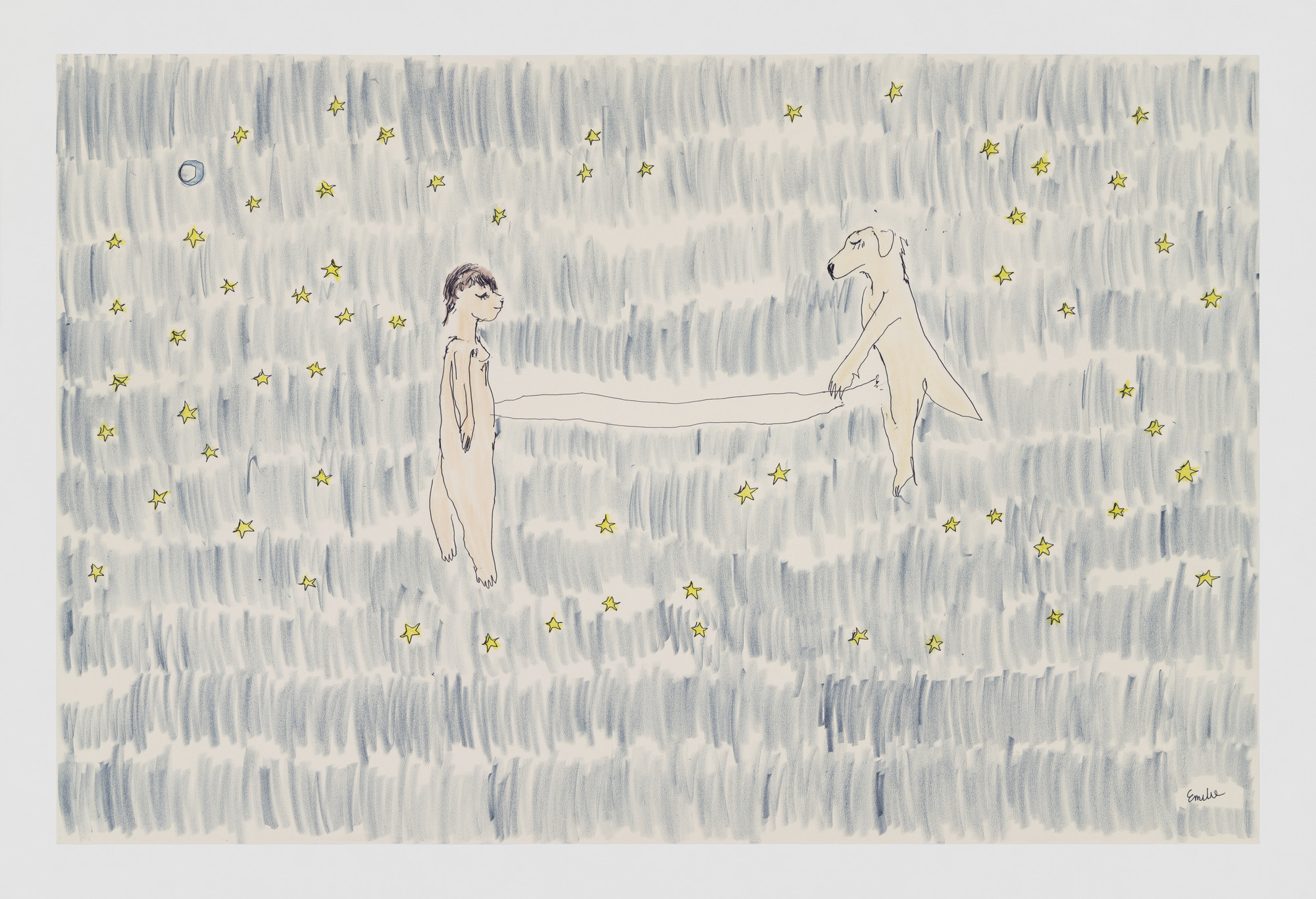
Gossiaux’s sculptures are augmented with a series of sweet and somewhat bananas drawings of the artist and her now-deceased service dog, named London. One drawing that I love, The Marriage of Hand and Paw (2025), depicts the artist and her dog with their breasts and genitals inverted; another, Co-Shaping One Another with the Moon (2025), features them bound by a cord, navel to navel. For some, anthropocentric distinctions between human and animal are not licit or viable. I’m guessing that, for Gossieaux, London wasn’t “just a dog”. Her symbolic inversion of their organs explicates that idea to its conclusion.
![kekahi wahi (Sancia Miala Shiba Nash and Drew K. Broderick) and Bradley Capello, 20-minute workout [WIP] (2023/2026).](https://files.ocula.com/rf/c4/c4b6f4f1-cb76-4754-8f9d-9bd66df0e121/wmaa98097kekahiwahi01lpr.jpg)
“Art should be something completely unexpected and quietly profound”
Another work that uses humour to draw viewers into a realm of atunement is 20-minute workout [WIP] (2023/2026) by the Honolulu-based ‘film initiative’ duo kekahi wahi. Shown on a large screen, this video has all the hyper-pop hallmarks of what might be termed an analogue TikTok video (day-glo stickers of dolphins, dinosaurs and smiling cherries bounce on the screen), and documents a daffily horny satirical training workout on the shore at Kealakekua Bay on the Island of Hawai‘i. In between crotch shots (with a few retro pubes poking out) and the slow massage of a miniaturised phallic obelisk monument to Captain Cook, a tale of indigenous resistance is outlined—one that matches the experience of Hawai‘i in and beyond the tourist zones, and a native culture that doesn’t suffer haole invaders gladly.
Citarella argues that the internet has rung the death knell for contemporary art’s global relevance. For a litmus test of what is new and what’s next, we are now more likely to load up a social media feed than visit a museum exhibition. Others locate the diminished impact of contemporary art in a shift away from artists “workshopping new cultural forms for a new millennium”, as critic Dean Kissick wrote in his 2024 Harper’s essay The Painted Protest, and towards them either choosing to, or being coerced into, creating formally generic, politically attenuated work rooted in the specifics of their own identity. Art that can (politically speaking) read the room but can’t move the dial.
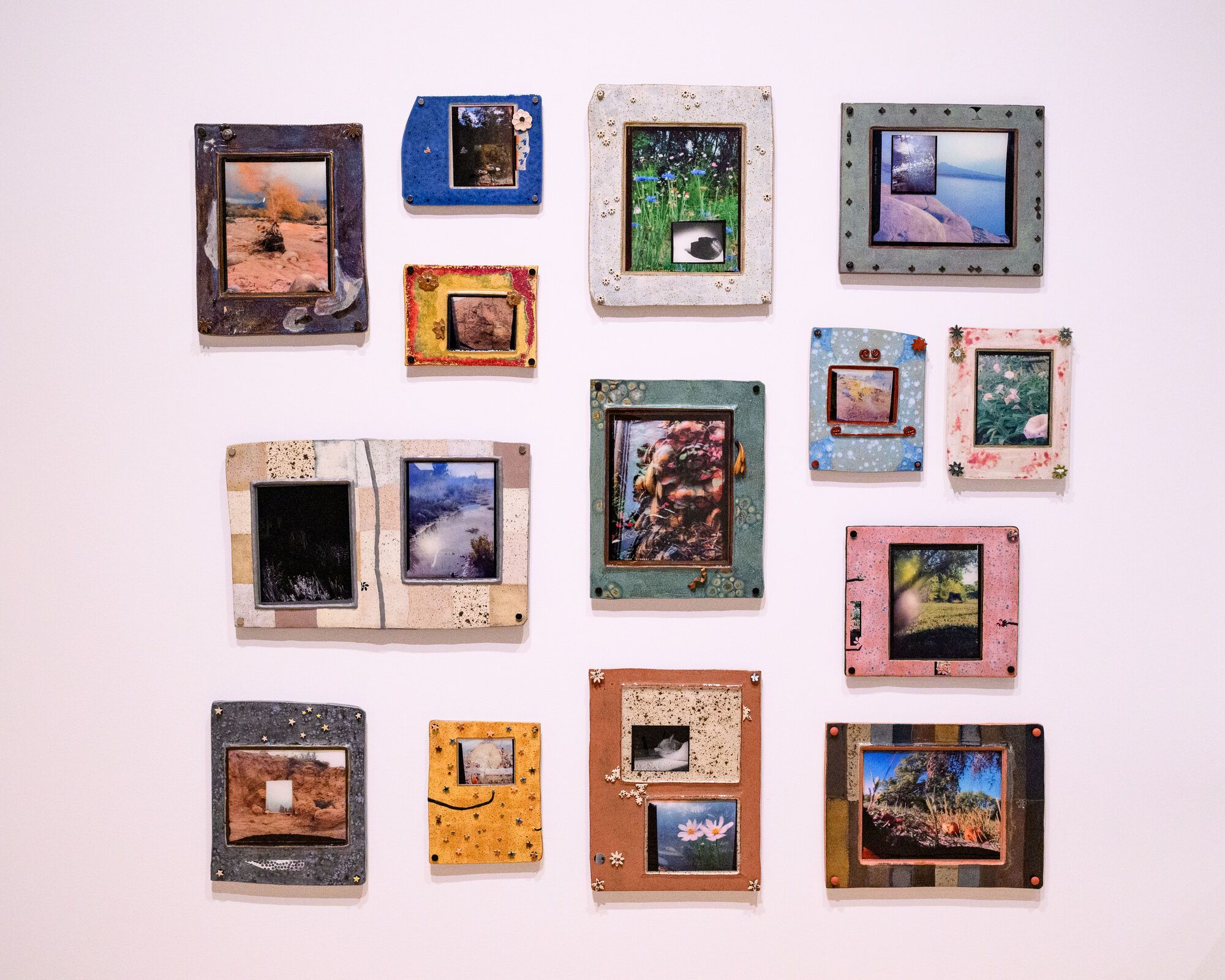
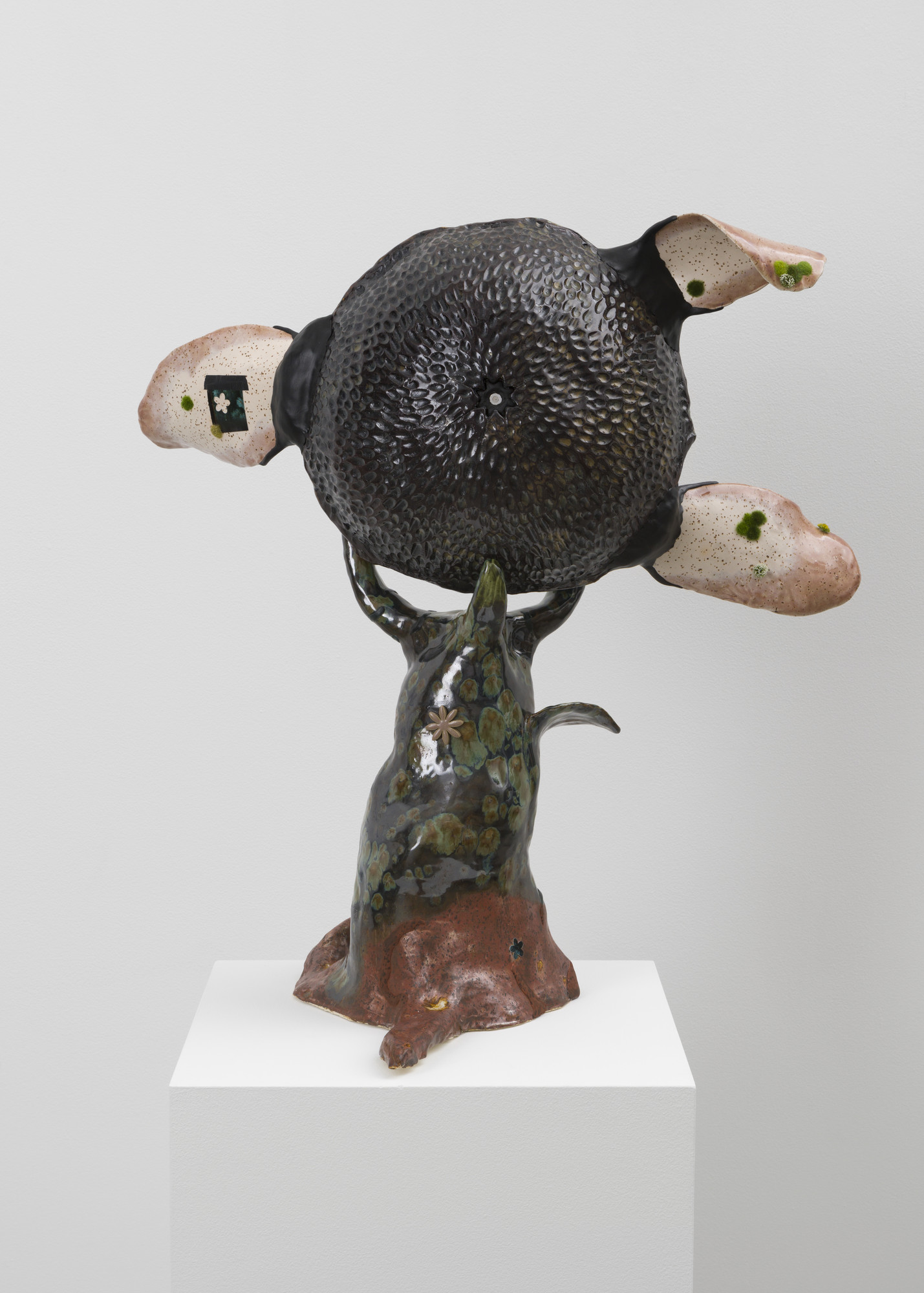
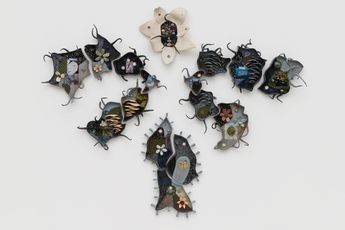
In fact, I found a great deal of novel formal experimentation at the biennial, not the least of which was New Mexico-based artist Erin Jane Nelson’s pinhole camera ceramic sculptures rendered in different figurative possibilities, including plants in Sunflower Cam (2025) and animals in Bunny Cam (2024). Displayed with photographs of the desert taken by the artist using these rudimentary, fully-functioning cameras fashioned from clay, these works are what art should be: something completely unexpected and quietly profound. Something that puts me in awe of the human species and its limitless ability to create anew.
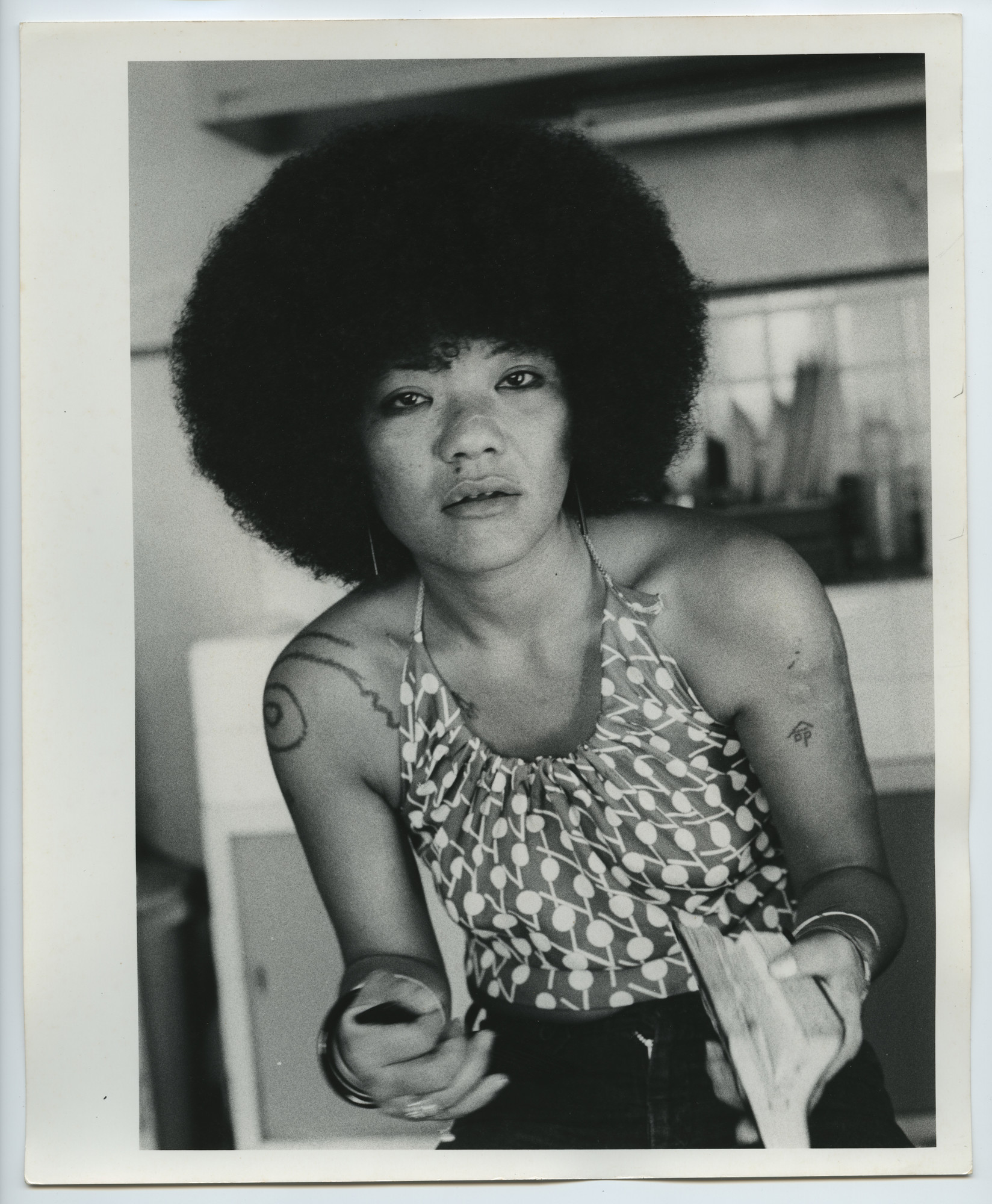
Marcela Guerrero and Drew Sawyer, the curators of the Whitney Biennial (with assistance from Beatriz Cifuentes and Carina Martinez), deliberately cast a wide net for their selection of artists, considering an American art far beyond the New York scene. I especially liked Mao Ishikawa’s historic gelatin silver prints, including Untitled, 1975–77 From the series Red Flower (Akabanaa) (1975–77), which the artist made in the Japanese island Okinawa, which since the end of the Second World War II has been the unwilling host of a major US military presence, with more than 30 facilities covering roughly 25 percent of the main island’s land area.
“This is the first show I’ve seen in many years that feels ahead of the curve rather than behind it”
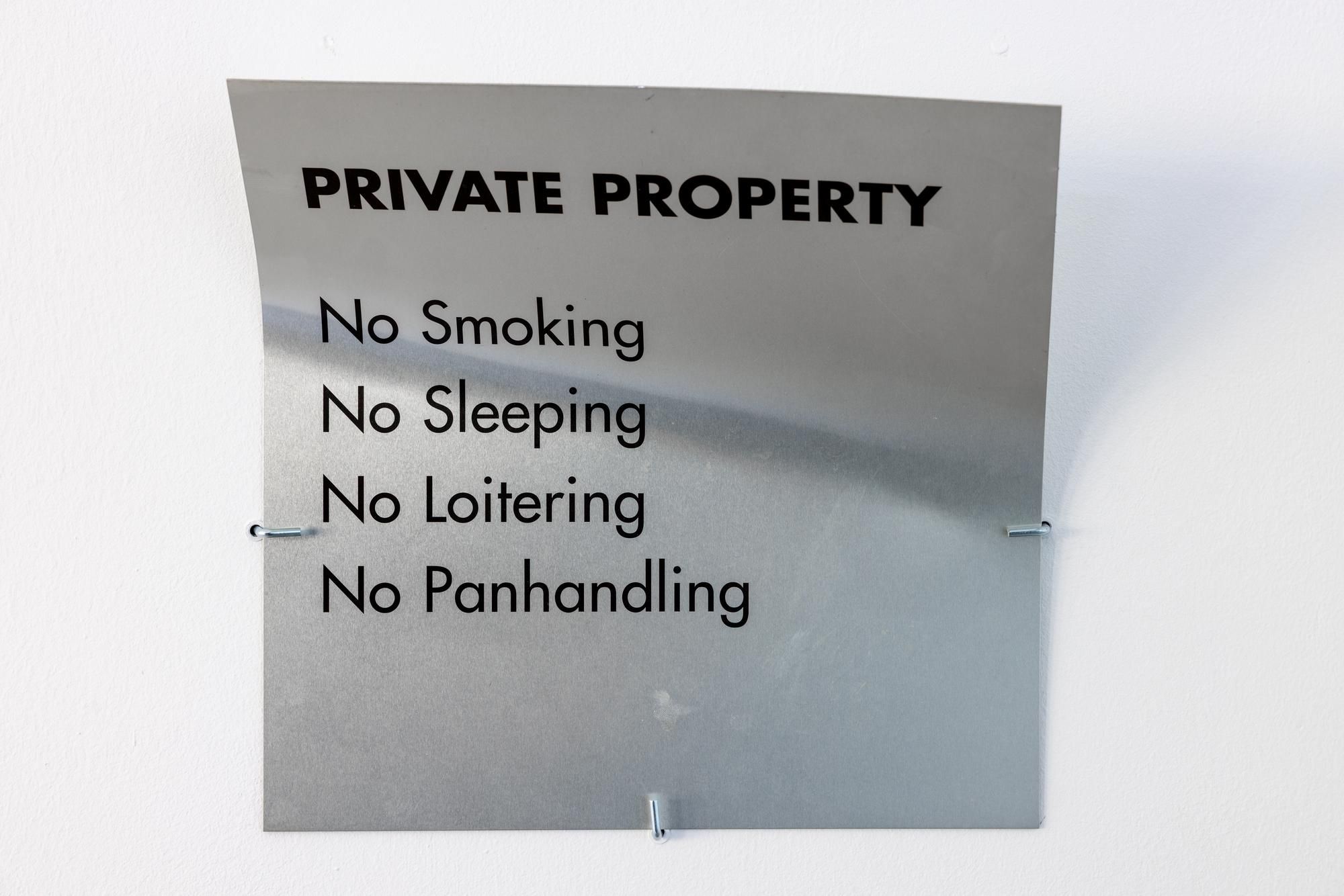
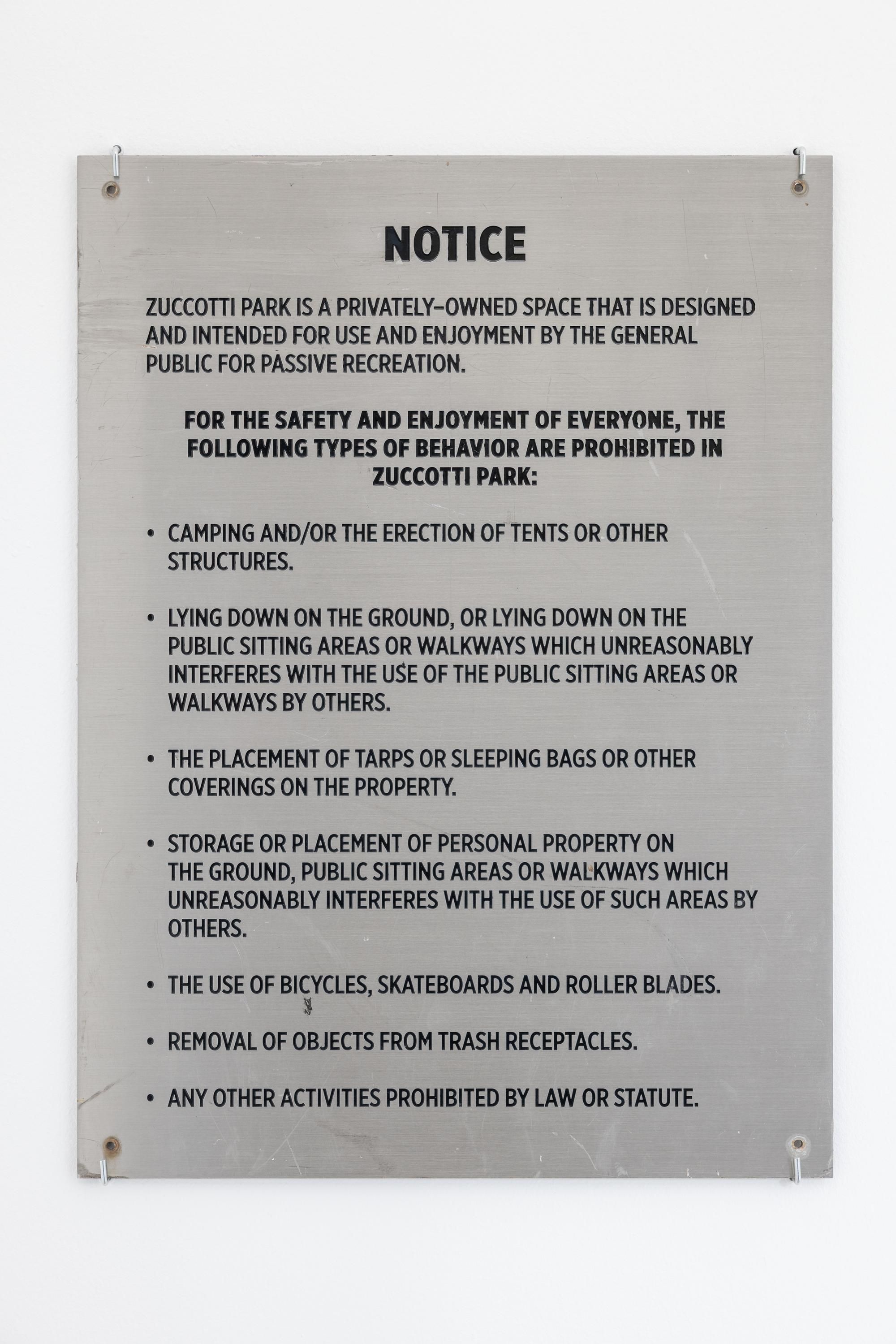
Alongside the welcome inclusion of this broader horizon, several featured New York-based contributors successfully reinforced the idea that the city remains fertile ground to grow the practices of artists. Not least class warrior David L Johnson, whose renegade Rule (2024–ongoing) consists of the ongoing removal of codes-of-conduct signs from privately owned public spaces, with these stolen signs now displayed on the gallery walls alongside an accompanying video and sound installation.
Taken together, this year’s Whitney Biennial presents a recalibration of the tides turning against the art world as it lags ever further behind. This is the first show I’ve seen in many years that feels ahead of the curve rather than behind it. And I can’t help but feel like, for all the turmoil in the world right now, these artists are doing both “politics” and “influence” exactly right—by thinking and creating for a world that lies beyond what is right in front of us now. —[O]
Main image: kekahi wahi (Sancia Miala Shiba Nash and Drew K. Broderick) and Bradley Capello, 20-minute workout [WIP] (2023/2026). Courtesy the artists.









A respected voice in contemporary art discourse.
Focusing on ambitious storytelling and insightful art-world commentary. Ocula Magazine publishes in-depth interviews, critical essays and timely analysis on the artists, exhibitions and ideas driving the global art world.
Learn more about Ocula Magazine
Showcasing the best of the art world.
Ocula partners with galleries from around the world to highlight their artists, artworks and exhibitions. Gallery membership is by application and invitation, with each member vetted by an independent panel.
Learn more about Ocula Membership
Specialises in the sale of major artworks.
Led by a team with deep ties to the world’s leading auction houses, galleries and collectors. Ocula’s advisory team offers bespoke services to high-net-worth clients from around the world who are looking to acquire the best of contemporary and modern art.
Learn more about our team and services