





Sasaoka Yuriko: ‘Art Is a Means of Saving Myself’
The multidisciplinary Japanese artist uses video, puppetry and catchy music to create a world ‘that feels like it’s expanding infinitely outward’. Save to My Ocula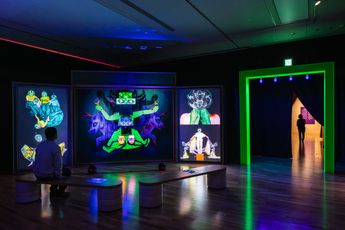
A short train ride from Kyoto on a warm January day brought me to Ōtsu, the capital of Shiga Prefecture on the shore of Lake Biwa. From a distance, outside the Shiga Museum of Art, I caught a glimpse of neon lights flickering on a wheel—almost provocatively kitschy against the serious modernist architecture. Across video, installation and drawing, Sasaoka Yuriko’s aesthetic invades your mind the moment you see it: crudely edited footage full of ‘goofs’, awkwardly moving puppets with the artist’s own eyes and mouth, and virally repetitive songs.
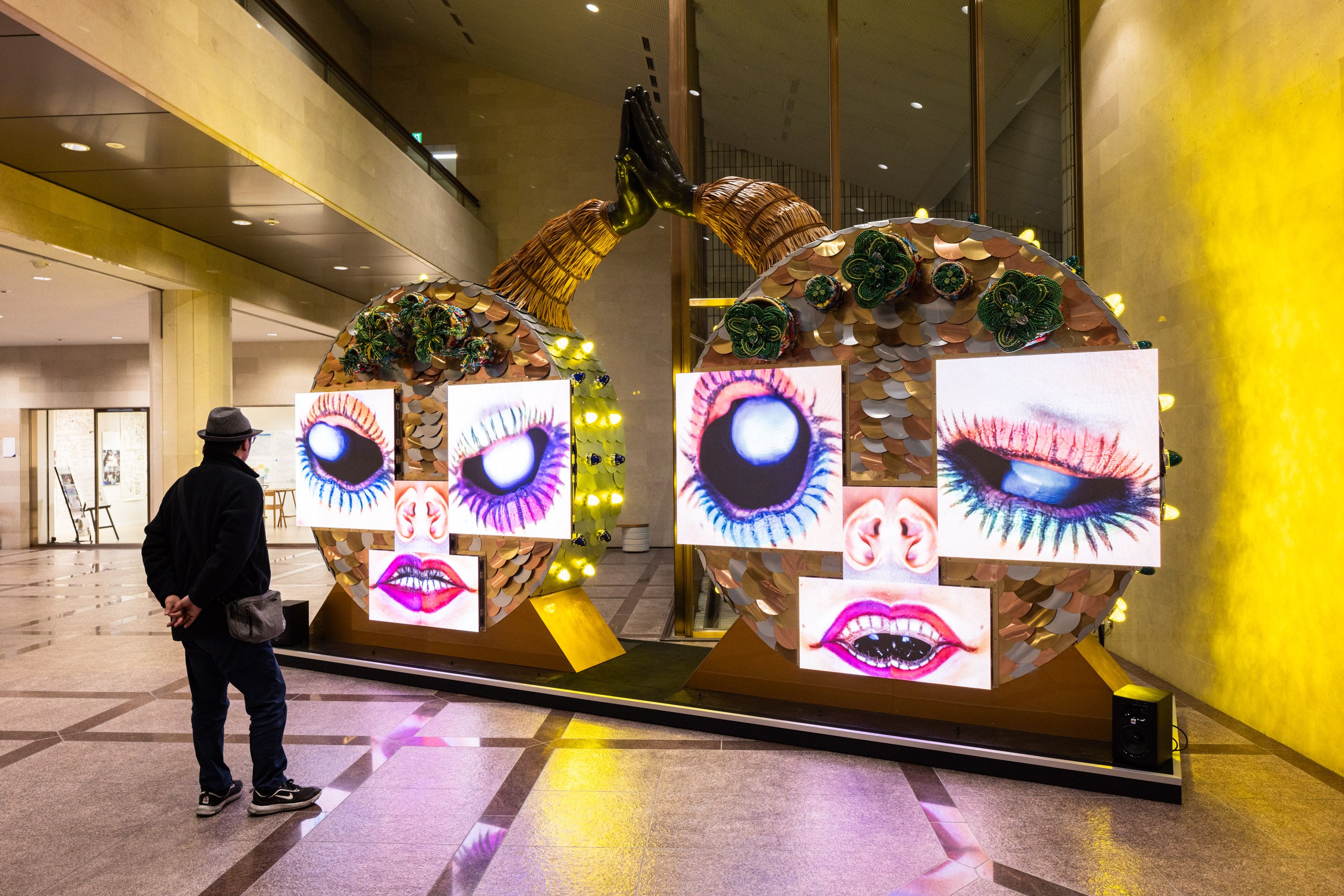
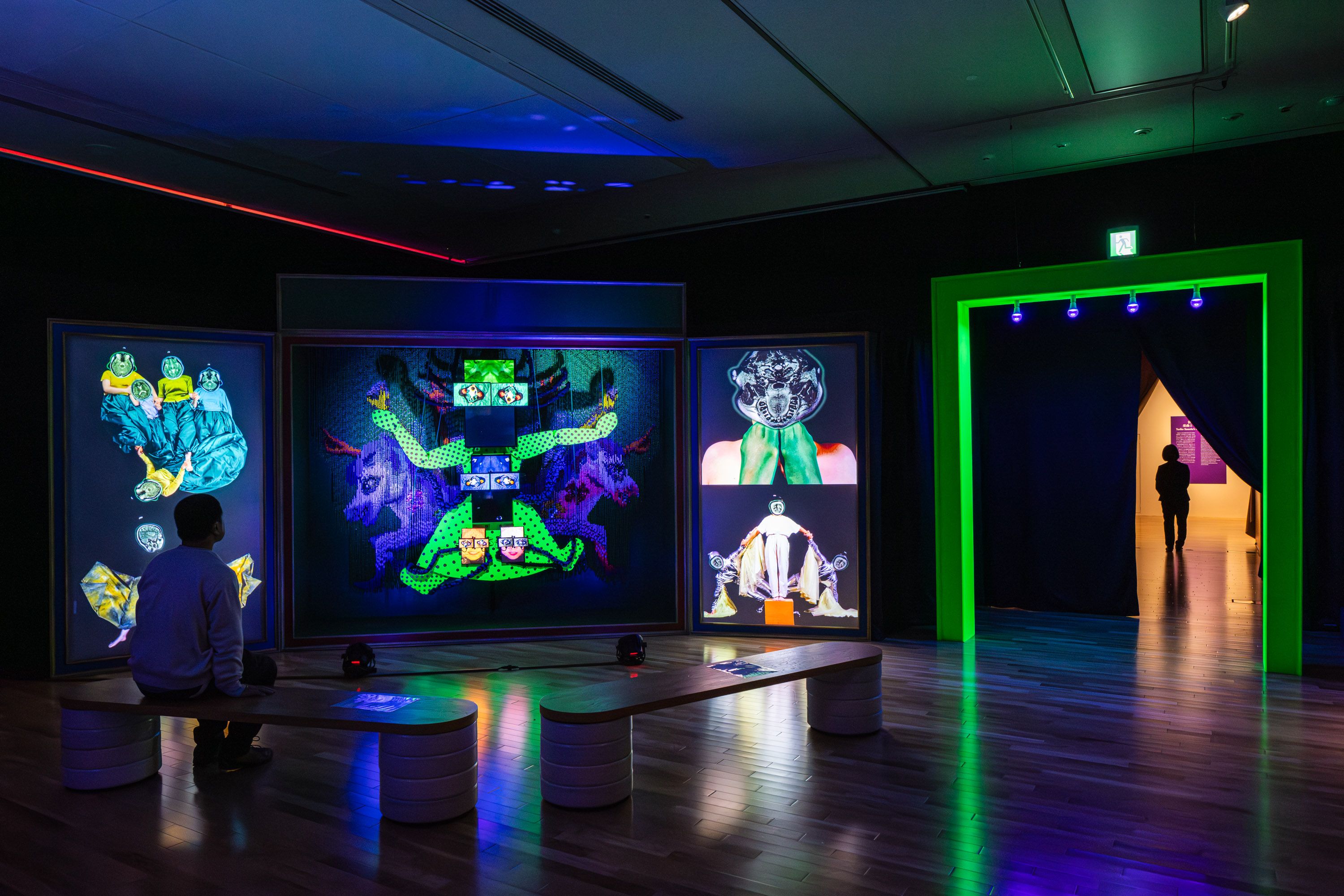
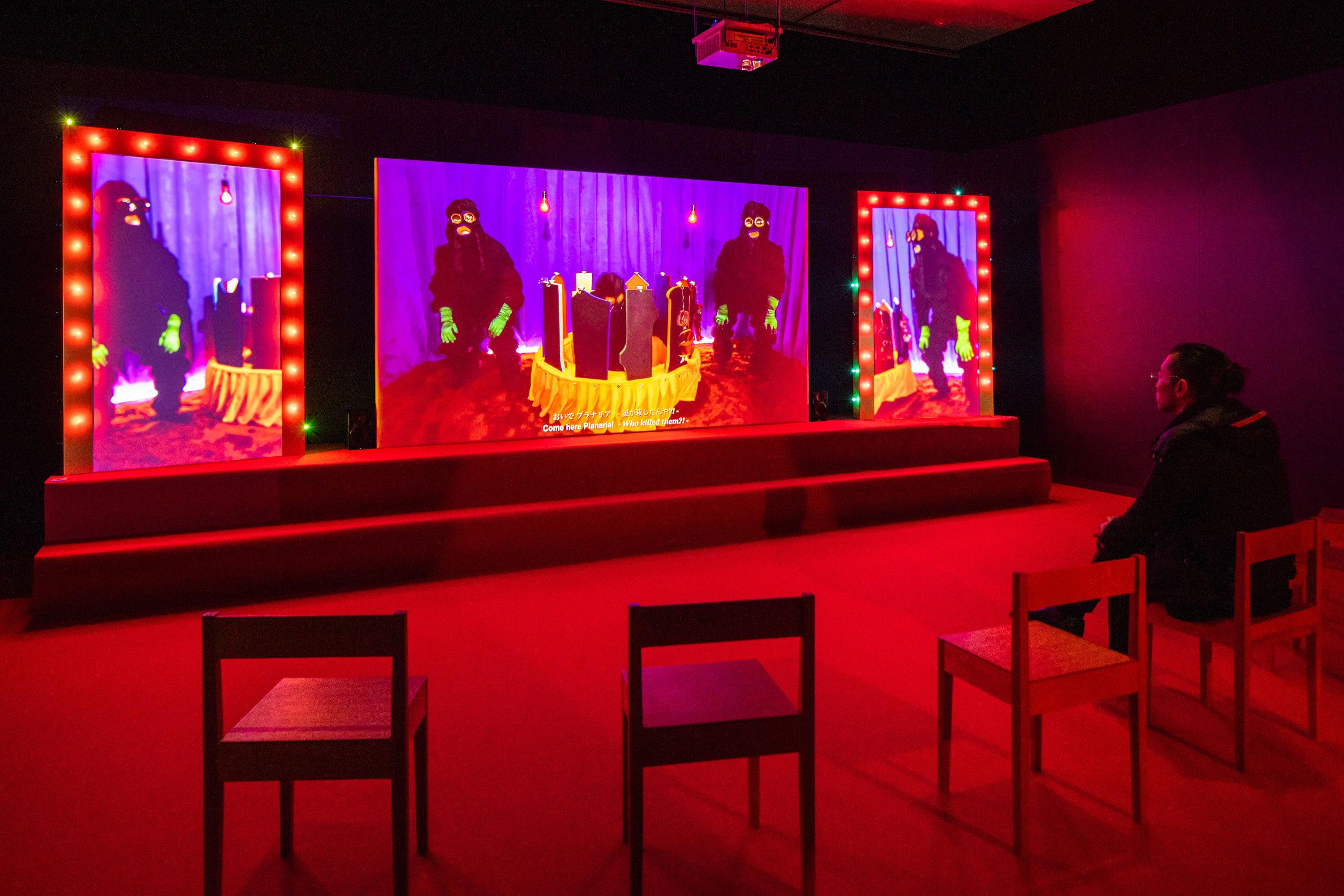
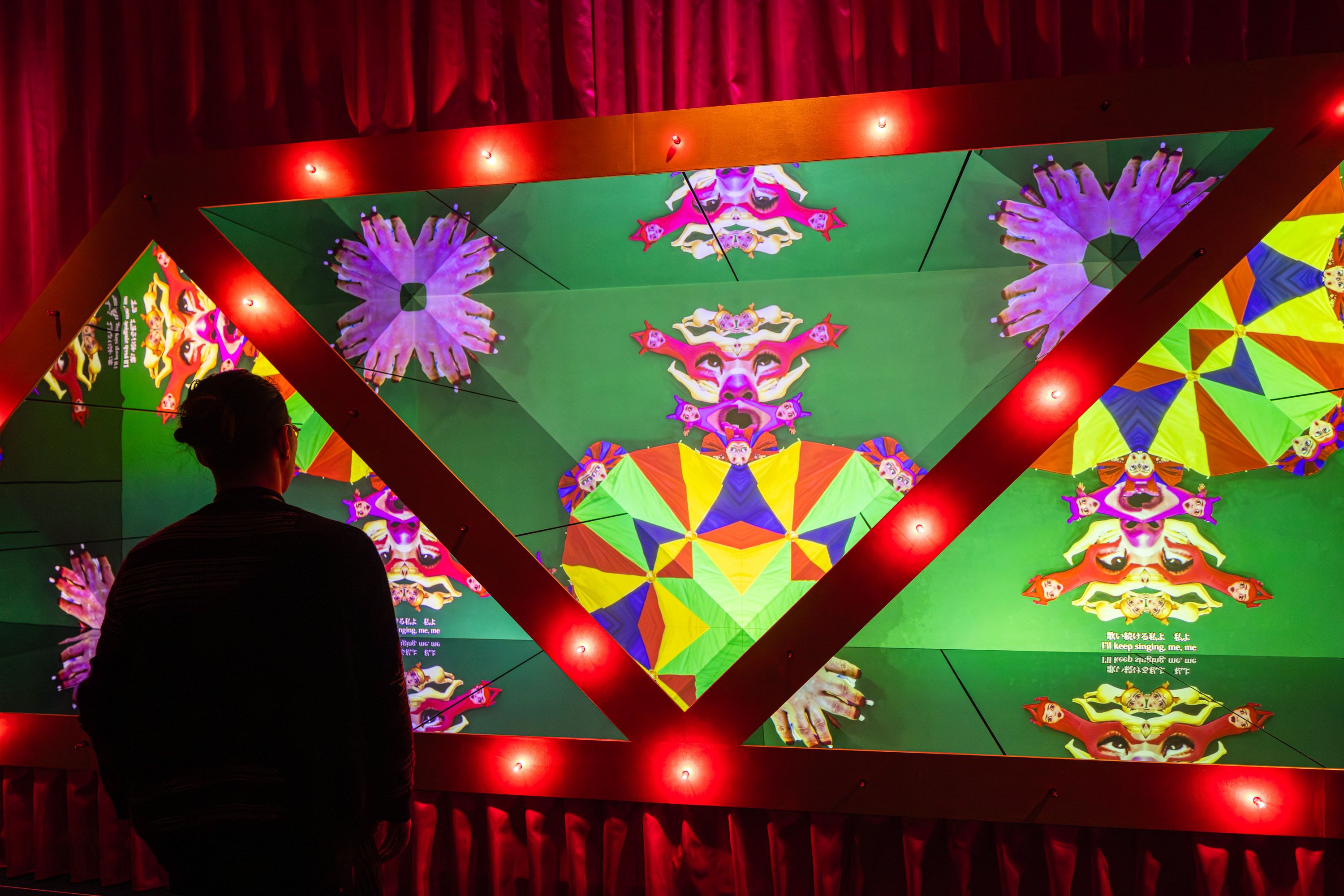
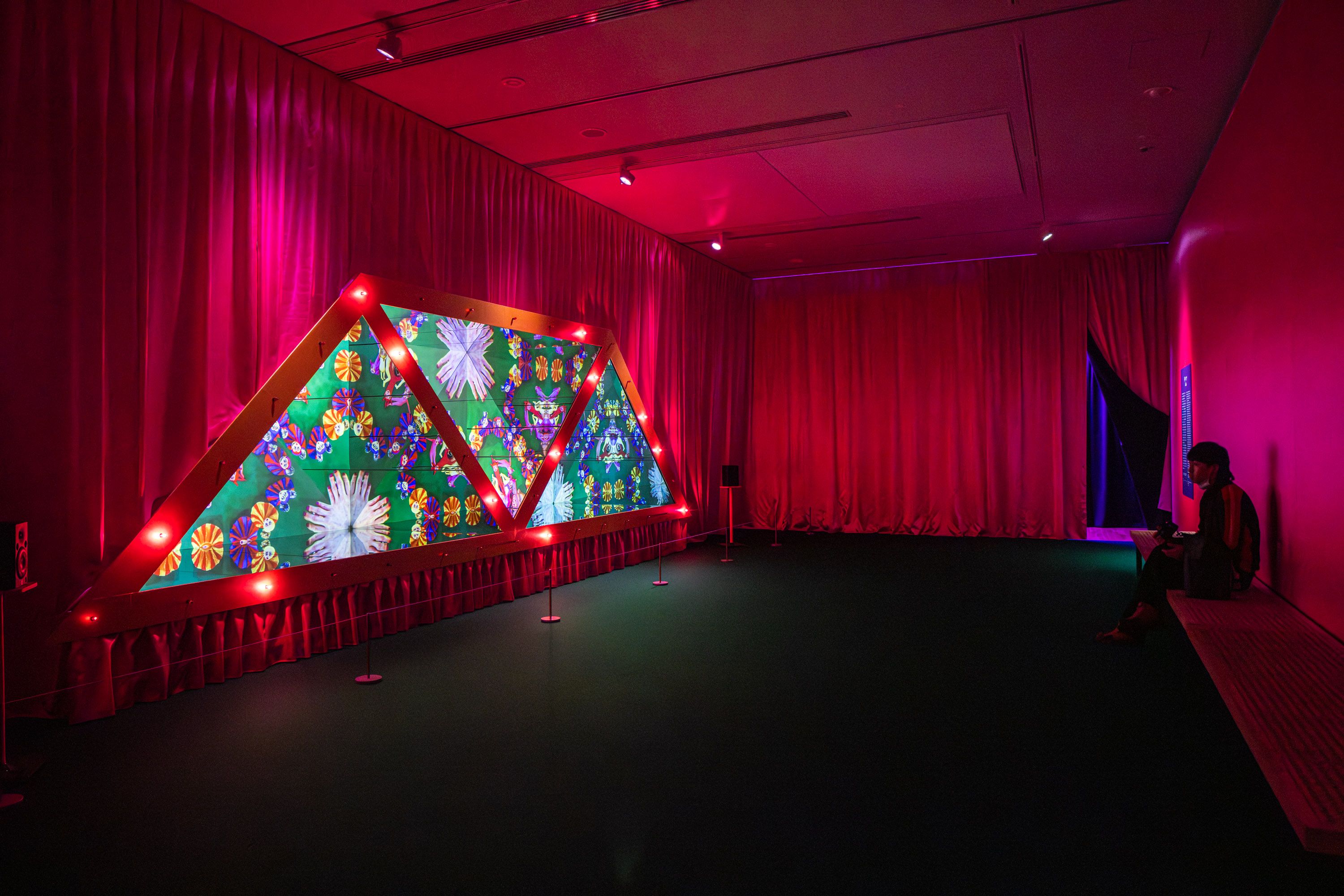
A two-second clip of the Osaka-born artist transformed via animation into an awkward puppet opens her latest exhibition, Sasaoka Yuriko’s Paradise Dungeon (17 January–22 March 2026). From there, the narrative unfolds through a series of quirky, unsettling rituals depicted in video installations: fluffy characters dance with fish heads encased in resin, singing their terror of suicide (Planaria, 2020–2021). Such animal-like figures later reappear as physical, totemic installations assembled from second-hand fabric, instruments and LED lights in Animale (2024–2025). The exhibition closes with Torch (2026), a new video work in which Sasaoka constructs a triangular mirror structure and choreographs performers’ bodies into a grotesque face, recounting the story of a celebratory pork dish that only becomes ‘acceptable’ through the fire of the grill—a process the artist uses as a metaphor for her own practice.
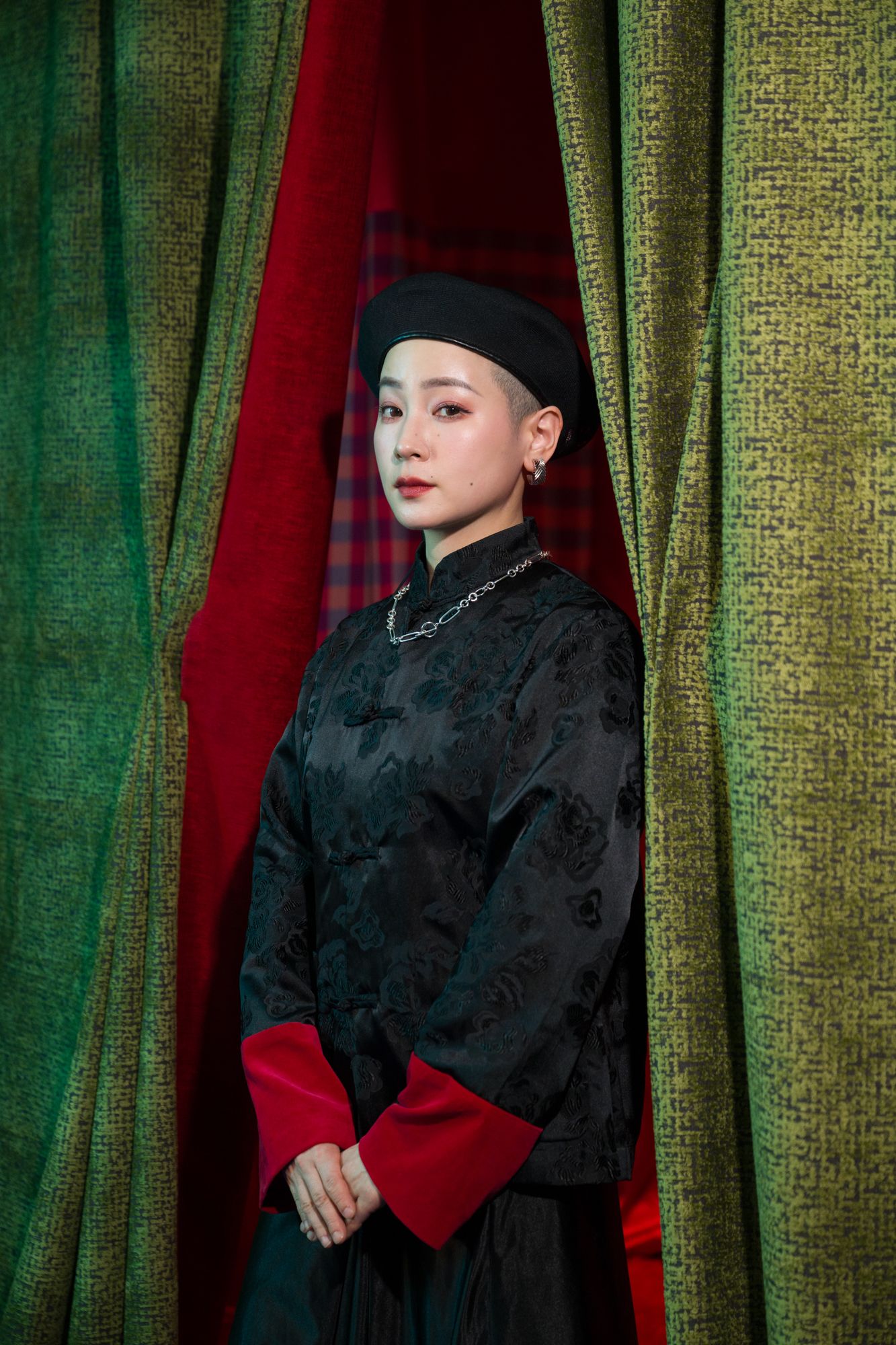
I sat down with the artist—her head recently shaved, dressed in a costume-like black robe—after the opening, as the ironic lines from Animale lingered in my head: ‘Hello! From today on, you’re my father. Teach me, labor / doo doo, doo doo, doo doo…’ Sasaoka’s art responds to patriarchy, Western art history, and inner psychic struggles through sharp, self-deprecating humour—a gesture that appears submissive and vulnerable, yet slyly plots a revolution.
SZ: What’s the story you’re telling through Sasaoka Yuriko’s Paradise Dungeon?
SY: The exhibition is about the growth of the doll character who has appeared in my work since 2011. Originally, she lived exclusively inside a monitor; then, in later works, she stepped out into the physical world. Towards the end of the exhibition, in Torch, she is trapped again—this time inside a triple triangle, inspired by my visit to the Kaleidoscope Museum of Kyoto. It reminds me of Sadako from the movie Ring (1998), evoking that eerie, desperate feeling of a character trying to crawl out of the screen but remaining stuck. I chose this kaleidoscope structure because I was tired of being bound by the 16:9 frame. I wanted to liberate myself and the viewer, creating a world that feels like it’s expanding infinitely outward, eventually overrunning the entire room.
SZ: You are clearly drawn to themes of disaster, death and tragedy. Why are you attracted to these seemingly ‘negative’ topics?
SY: It goes back to a habit I developed in elementary school. When kids were mean to me, I’d go home and draw their faces, exaggerating them into hideous monsters with bad noses. But the next day at school, I’d look at them and think: ‘Actually, they aren’t nearly as scary as my drawing.’ The problem would just dissolve in my head. I make art to process ‘accidents’ or traumas that are hard to accept. It starts with anger or sadness, but through the act of production, it becomes fun. It’s a means of saving myself; if others happen to be saved as a byproduct, that’s just a lucky coincidence.
SZ: What were your childhood nightmares?
SY: I was terrified of Shoko Asahara of the Aum Shinrikyo cult, who led the Tokyo subway Sarin attack in 1995. Growing up in 1990s Japan was incredibly chaotic. You had the rise of Visual Kei bands, Yamanba girls with their dark skin and white eyeliner, and this looming doomsday cult. It felt like the end of the world was always just around the corner. That fin de siècle atmosphere, where even something as extreme and ‘ugly’ as Yamanba was considered cute, is exactly what made me the artist I am today.
“Language can be a bottleneck for inspiration; silence and mystery are much more productive”
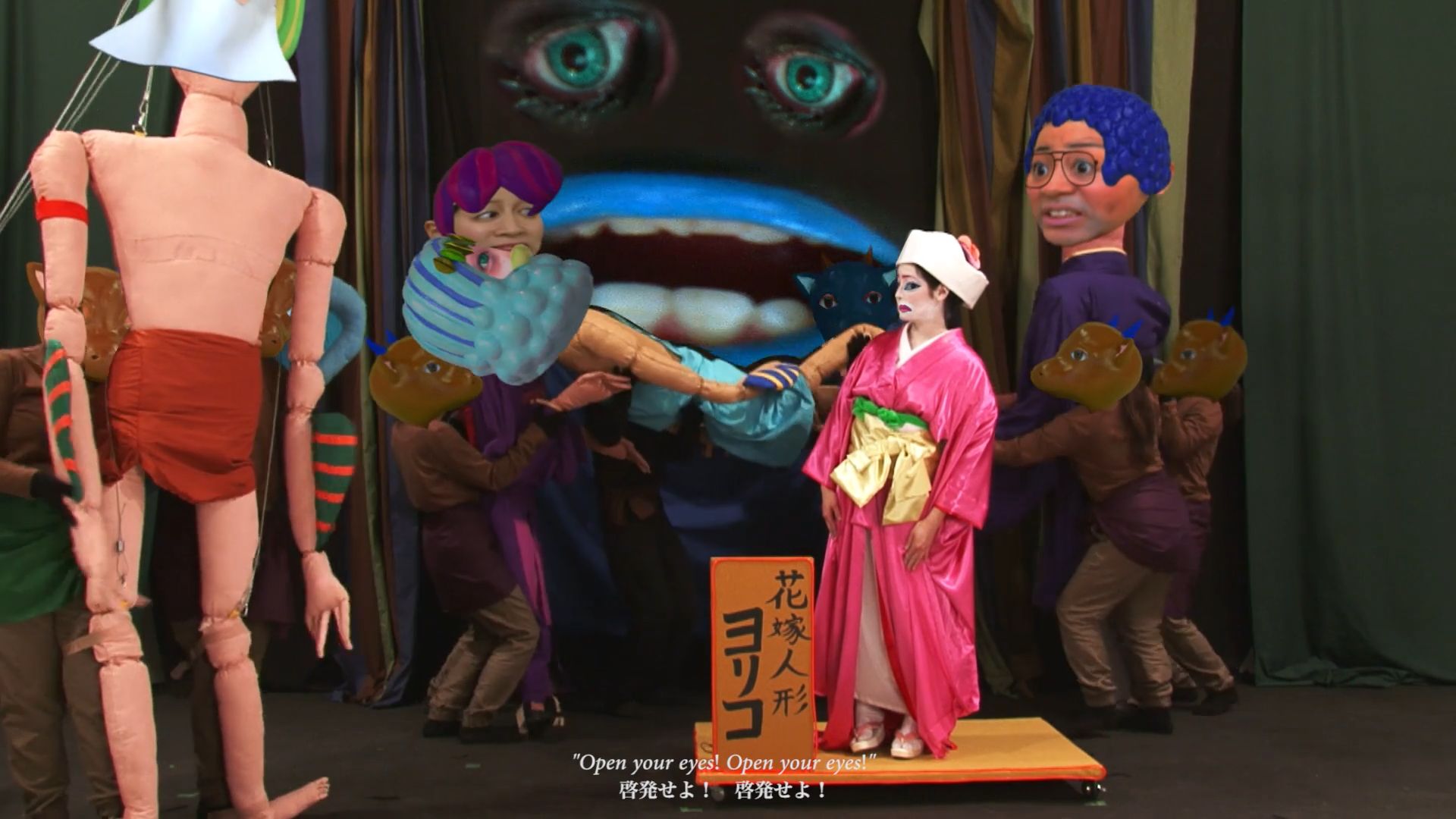
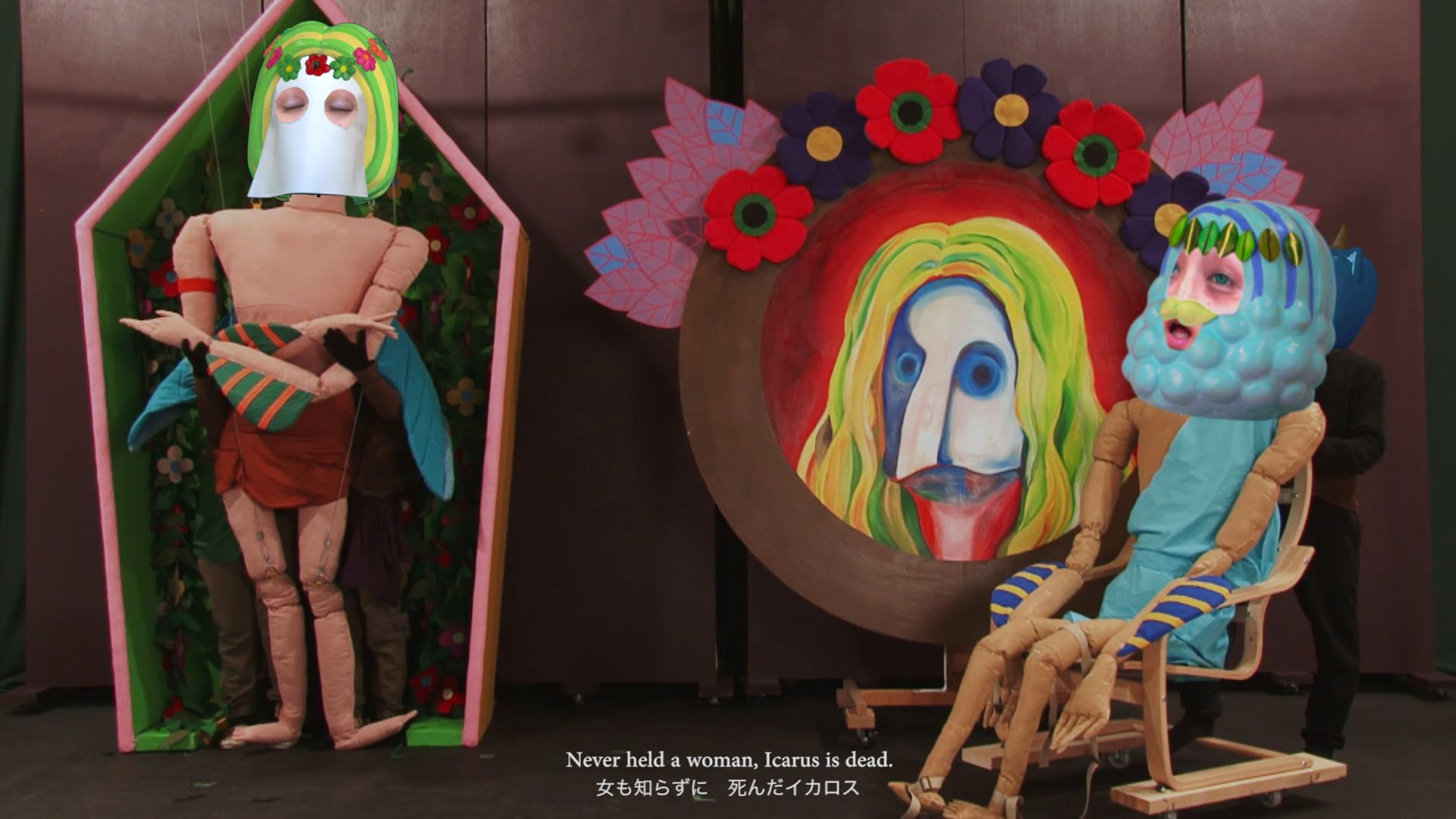
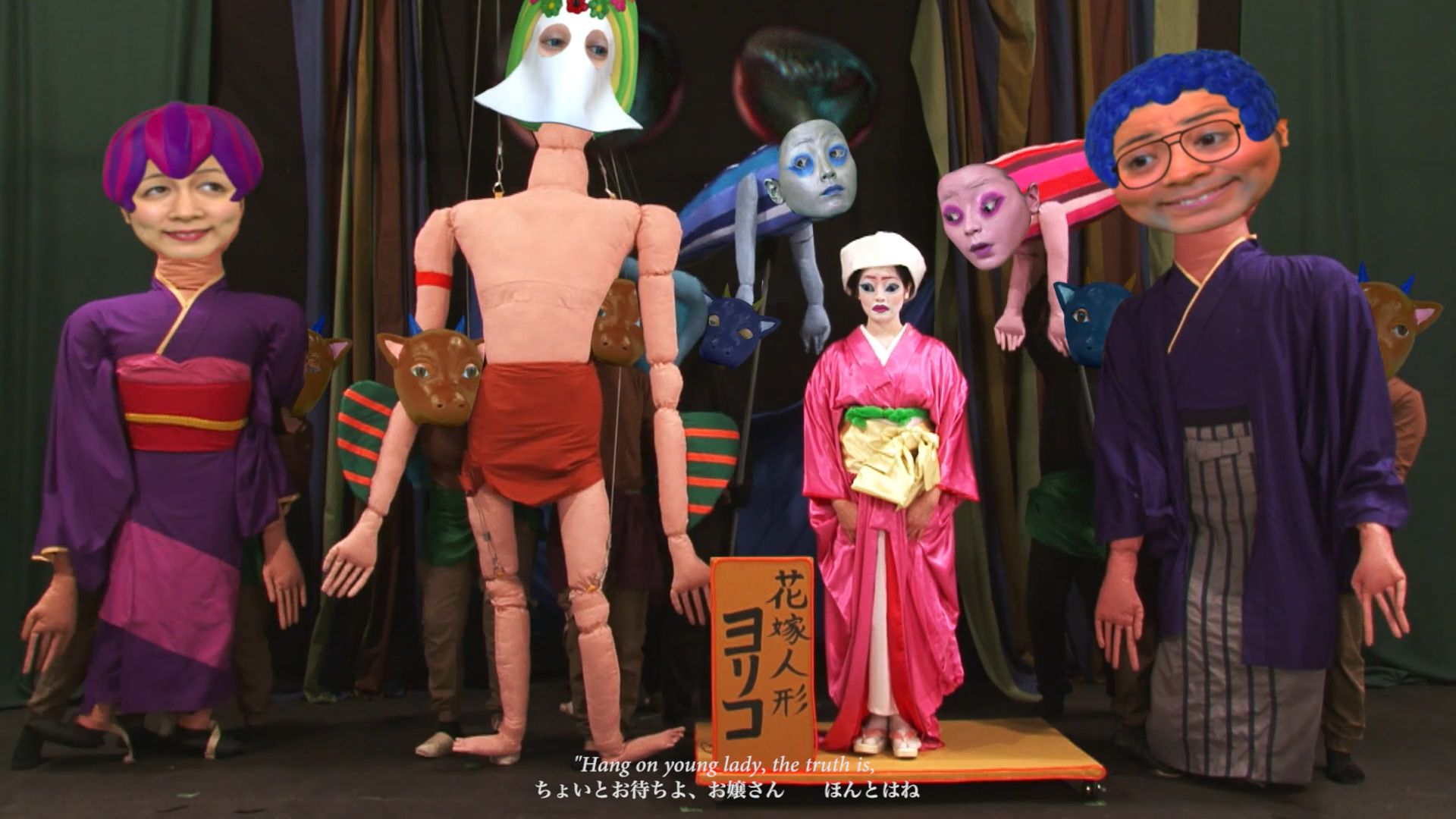
SZ: I was fascinated by your video installation Icarus’s Bride (2015–2016) when it was shown in Beijing last year. You draw on Greek mythology in the work to reflect on your current context in Japan—what prompted the decision?
SY: When I studied Western art history at university, I was struck by how male-centred it all was. And modern and contemporary art in Japan is often taught as a translation of Western information; artists had to adopt a certain ‘crazy’ persona just to enter that history. I wanted to cause a bit of a revolution.
In the original myth, Icarus and Daedalus are the central heroes, but I cast myself as Yoriko, the bride doll. This is a reference to a WWII Japanese custom: if a young soldier died as a virgin, his family would bury a bride doll with him so he wouldn’t be lonely in heaven. By adopting the form of this doll—the weakest, most submissive position possible—and then giving orders to a Western god to fly close to the sun, I’m flipping the power dynamic. It’s my revenge or answer to the fact that Asian women have been treated as outsiders in that history for so long.
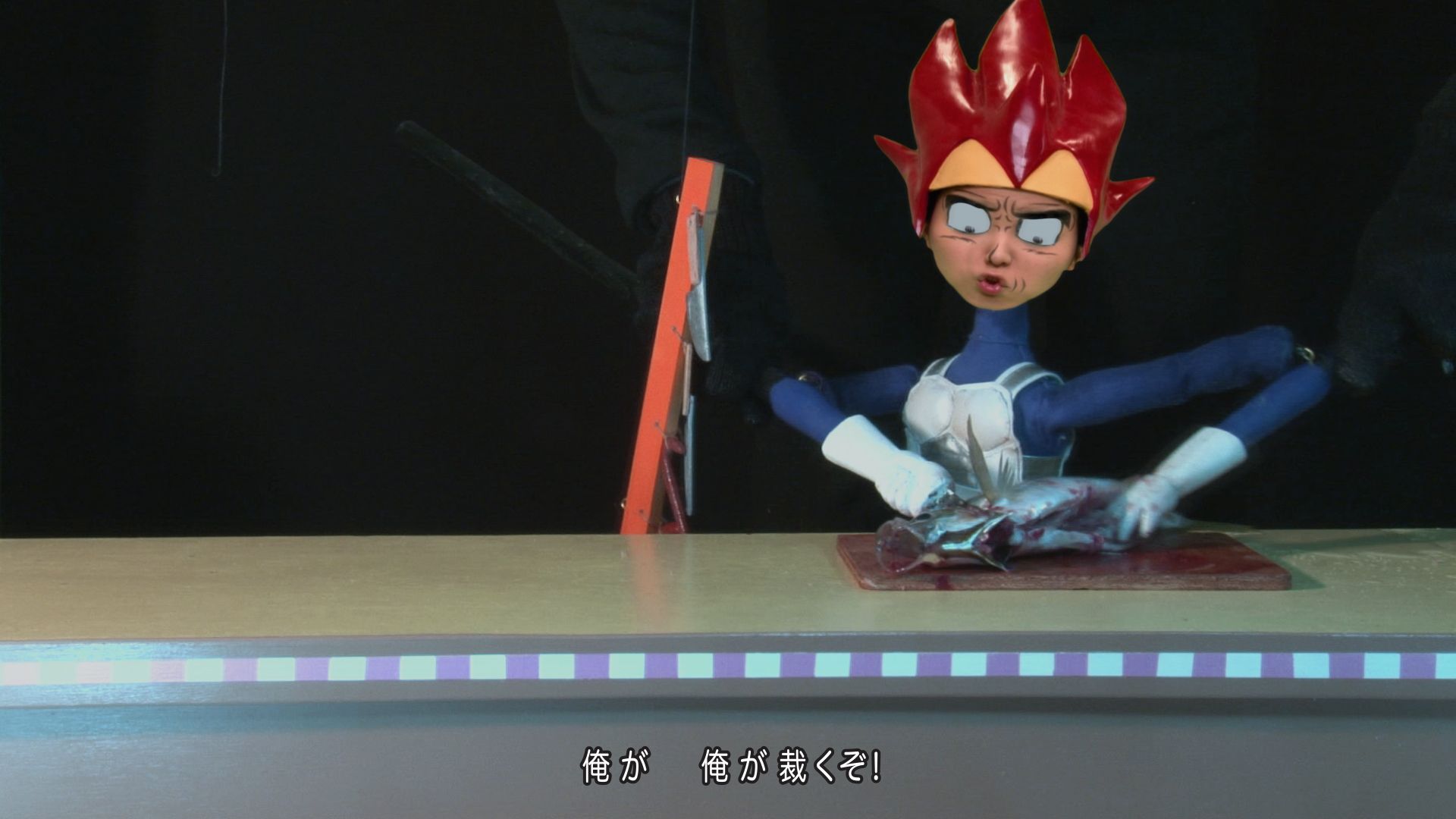
SZ: Could you talk more about ‘Yoriko’, the character who constantly appears in your work. Is she an alter ego of Yuriko?
SY: She’s like my ‘inner child’, but she sits just outside my own skin. I chose the name ‘Yoriko’ specifically so I don’t have to say ‘it’s me’. For instance, in my early work Anima (2013-2014), the character struggles just to be noticed by her father and then pathetically leaves everything to the male characters she likes. I don’t want to admit those emotions are mine, but they definitely exist within me. Yoriko allows me to explore those layers of submission and desire without the embarrassment of total self-exposure.
SZ: Infectious music is at the core of each of your works. You are a self-taught composer, aren’t you?
SY: I played piano as a child, but I’ve lost the skill; I can’t even play with both hands any more. I just hunt-and-peck notes into the keyboard with one hand, as phrases just drop into my head like rain. I’m obsessed with the repetitive jingles you hear in Japanese drugstores. I intentionally use a tiny melodic range like Do-Re-Mi-Fa—I want my music to function like those commercial songs: simple, catchy, and slightly invasive.
“When you don’t understand, you stay open and feel everything with a pure, unfiltered mind”
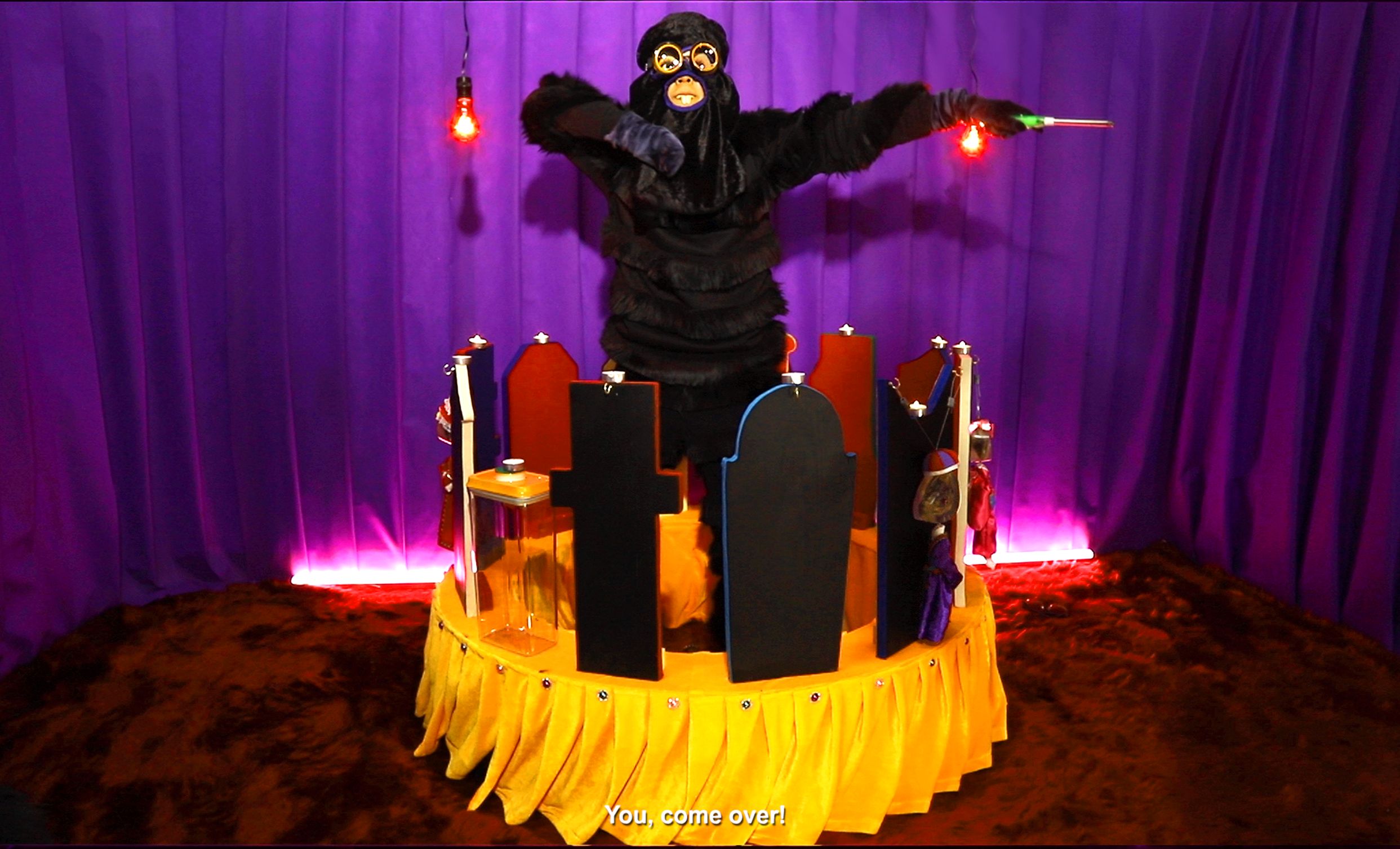
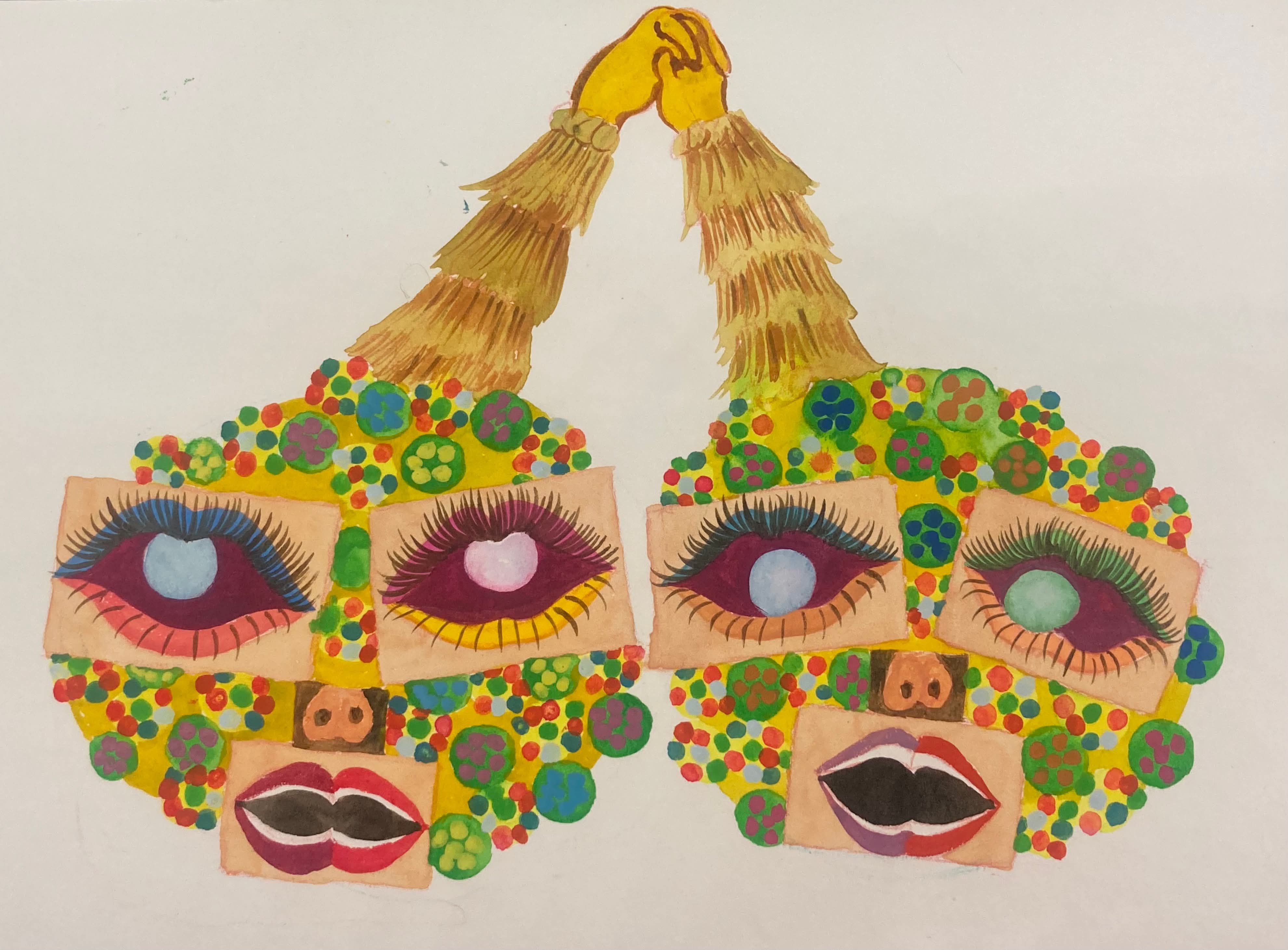
SZ: You now work primarily in video and installation, but you have a background in oil painting. Would you still choose to study painting if you had a second chance?
SY: I love the semiotics of painting—the way a fly symbolises death or how specific arrangements of objects create a secret language. Drawing is still the starting point of my work; it is tedious and exhausting, but that’s why it works as a filter. If I feel the urge to draw a motif despite how much I hate the effort, it means I really need it for the work. Honestly, I don’t have the technical skill for traditional painting, but I’m already painting on the computer by layering images and sound. If I went back, I’d study the history of those symbols, not the technique of the brush.
SZ: What makes a story or image interesting to you when you travel?
SY: I love countries where I don’t speak the language. The words just sound like music, and I’m forced to imagine the meaning behind the sounds. When you understand a language, your ‘channels’ close and you stop truly observing because you think you already know what’s happening. When you don’t understand, you stay open and feel everything with a pure, unfiltered mind. For me, language can be a bottleneck for inspiration; silence and mystery are much more productive. —[O]
Palette Cleanser is a weekly interview series with the artists you need to watch, as selected by our editors.
Main image: Sasaoka Yuriko, Icarus’s Bride (2015–2016) (still). Single-channel video installation with colour and sound. 7 min, 43 sec. Courtesy the artist, PHD Group, and Shiga Museum of Art.




A respected voice in contemporary art discourse.
Focusing on ambitious storytelling and insightful art-world commentary. Ocula Magazine publishes in-depth interviews, critical essays and timely analysis on the artists, exhibitions and ideas driving the global art world.
Learn more about Ocula Magazine
Showcasing the best of the art world.
Ocula partners with galleries from around the world to highlight their artists, artworks and exhibitions. Gallery membership is by application and invitation, with each member vetted by an independent panel.
Learn more about Ocula Membership
Specialises in the sale of major artworks.
Led by a team with deep ties to the world’s leading auction houses, galleries and collectors. Ocula’s advisory team offers bespoke services to high-net-worth clients from around the world who are looking to acquire the best of contemporary and modern art.
Learn more about our team and services