





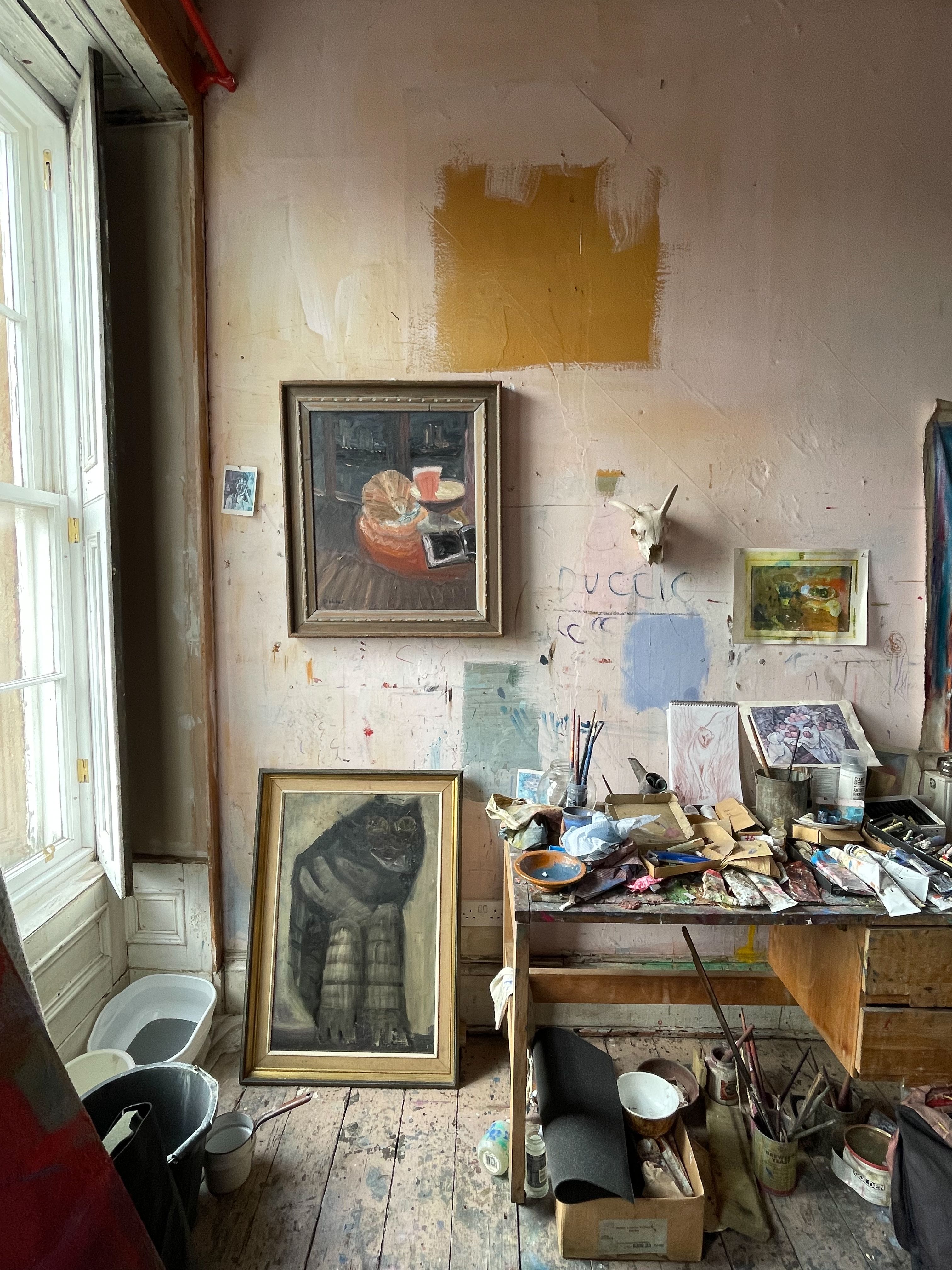
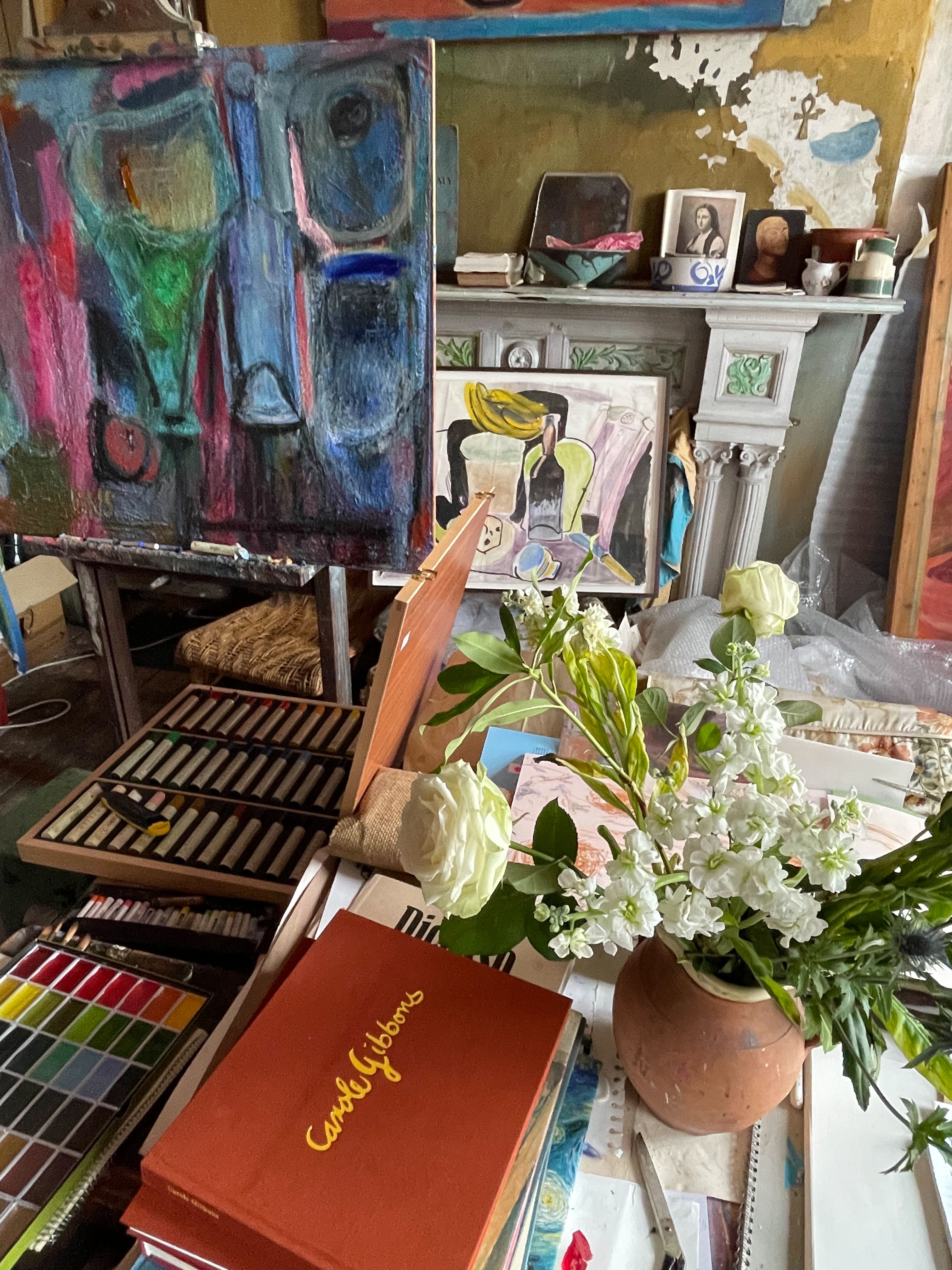
Carole Gibbons' home/studio, Glasgow, 2023. Photo credit: Matthew Higgs.
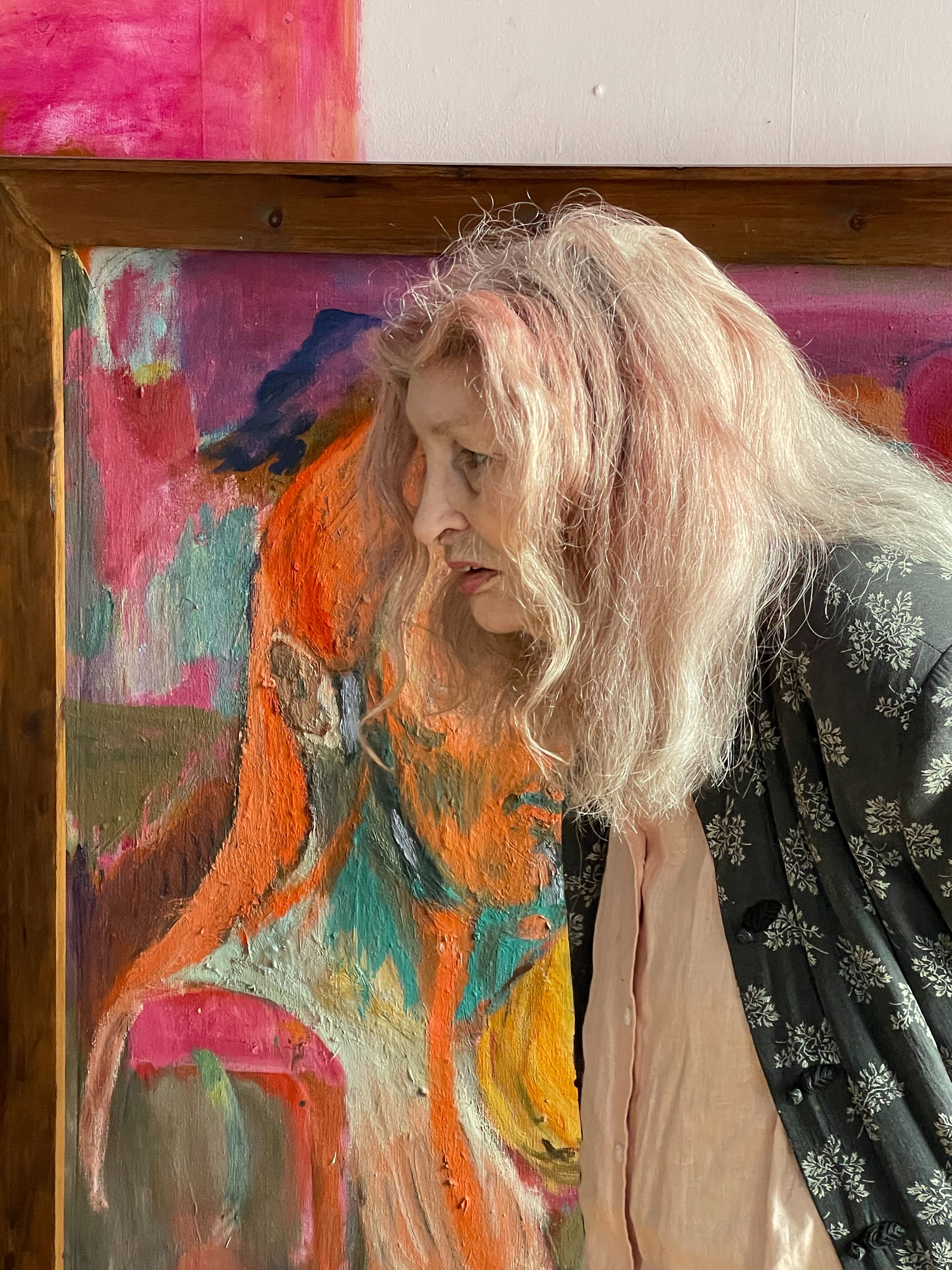
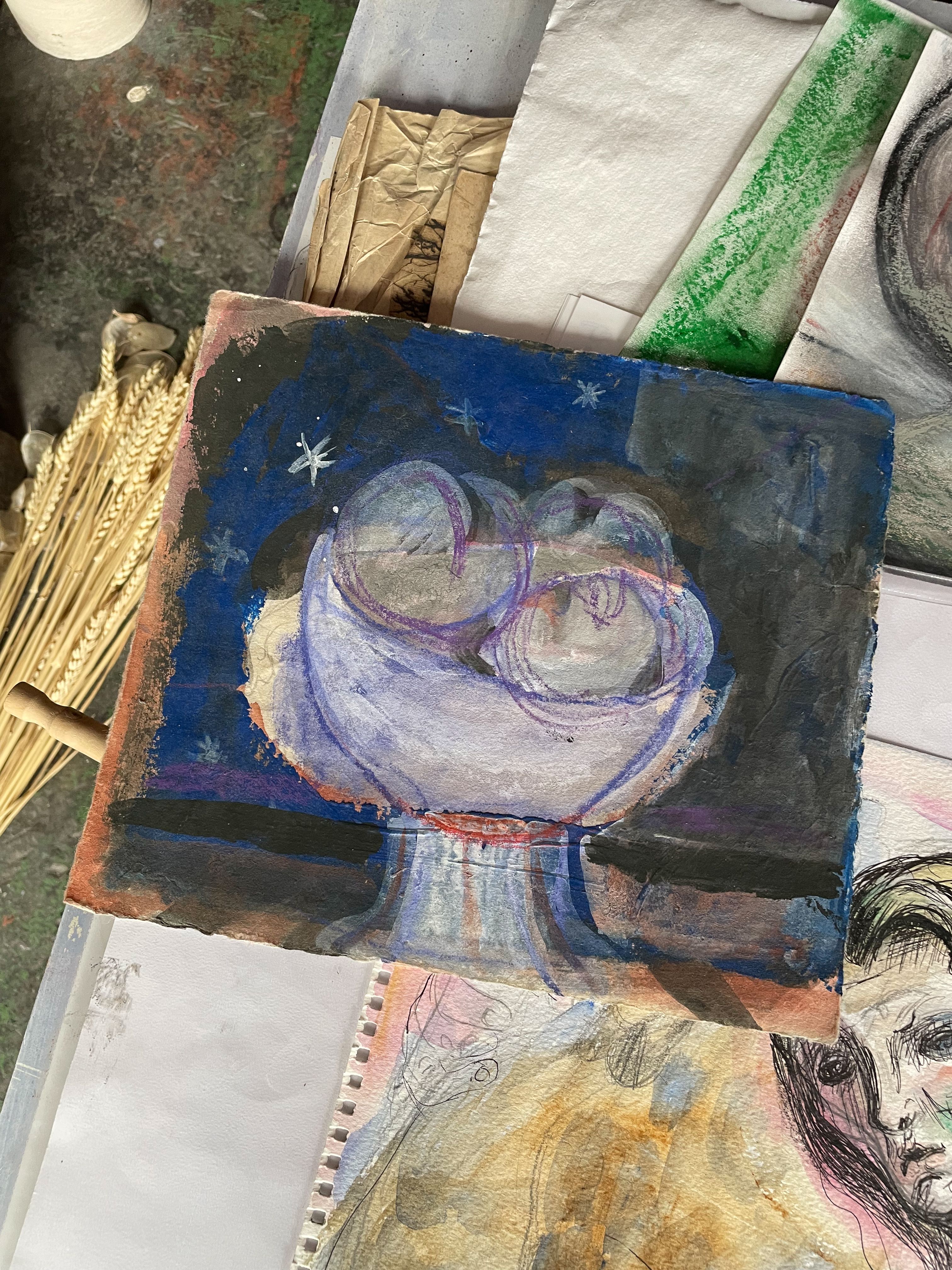
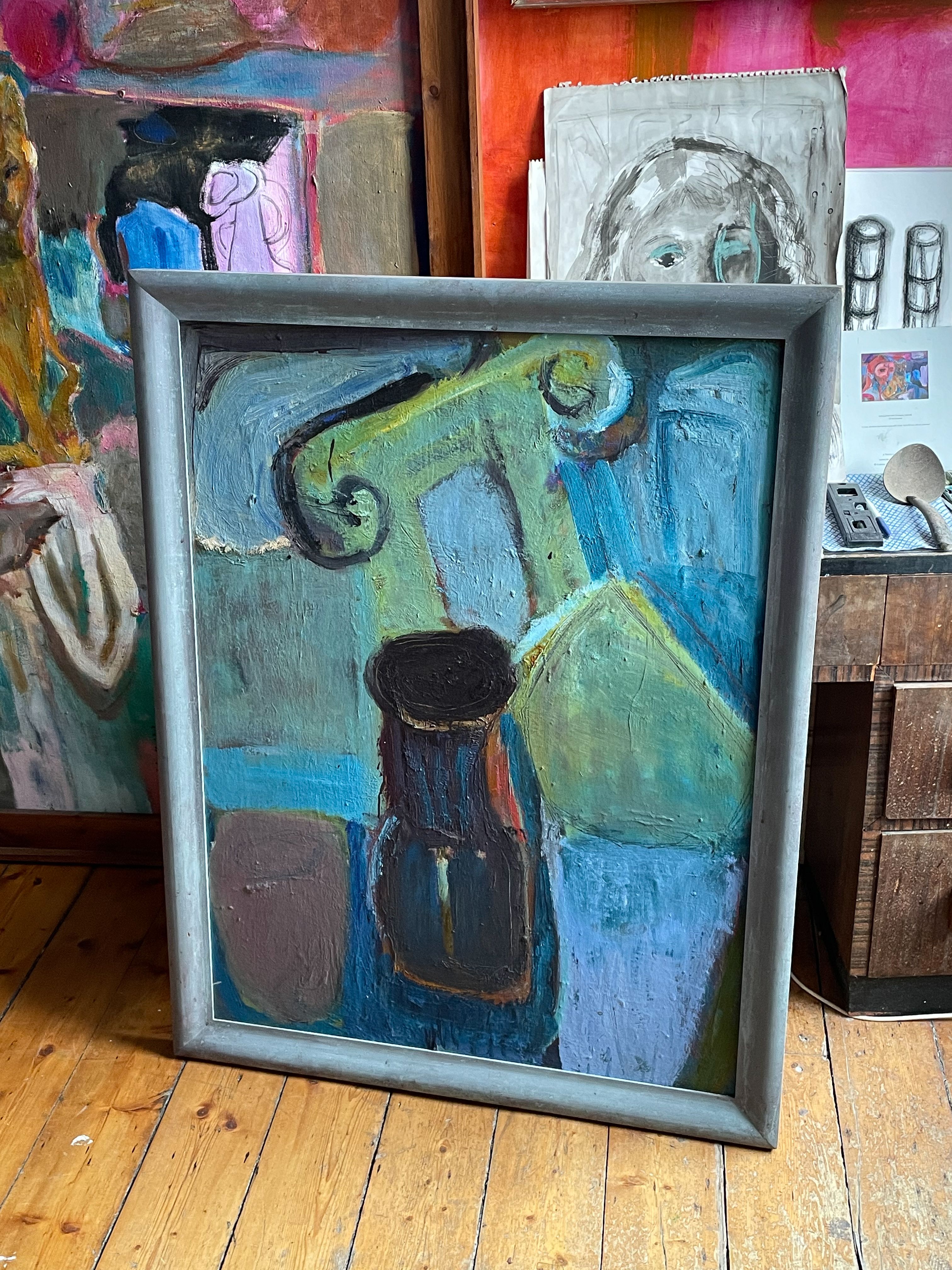
‘Carole Gibbons became an artist when nearly all Scottish painters either supported themselves by teaching or emigrated,’ said Alasdair Gray, the Scottish artist and author of Poor Things (1992).
‘The only exceptions were those who inherited money or resigned themselves to poverty and neglect,’ he continued. ‘Of the latter group some died early. Thank goodness Carole and her talent have survived.’
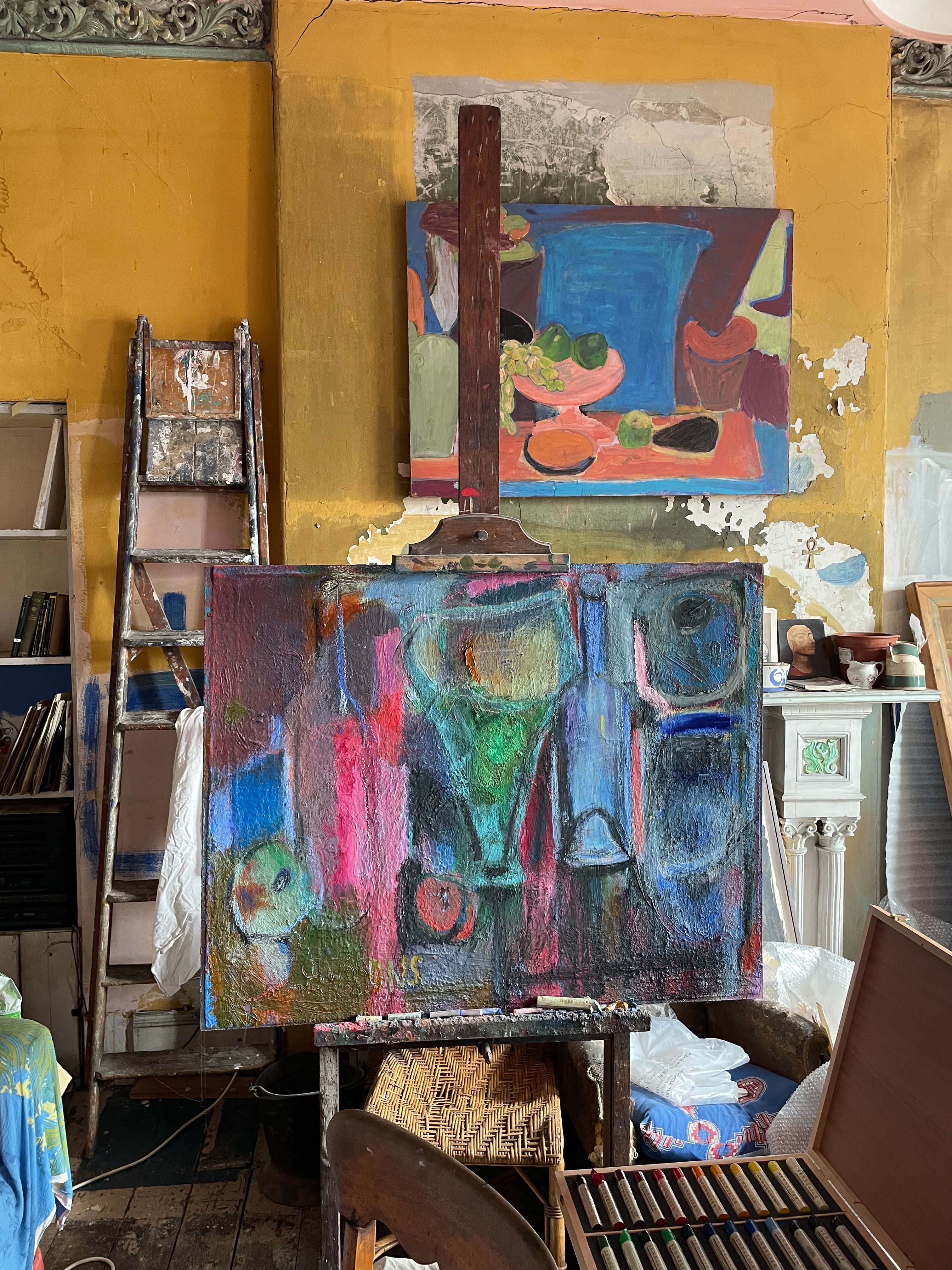
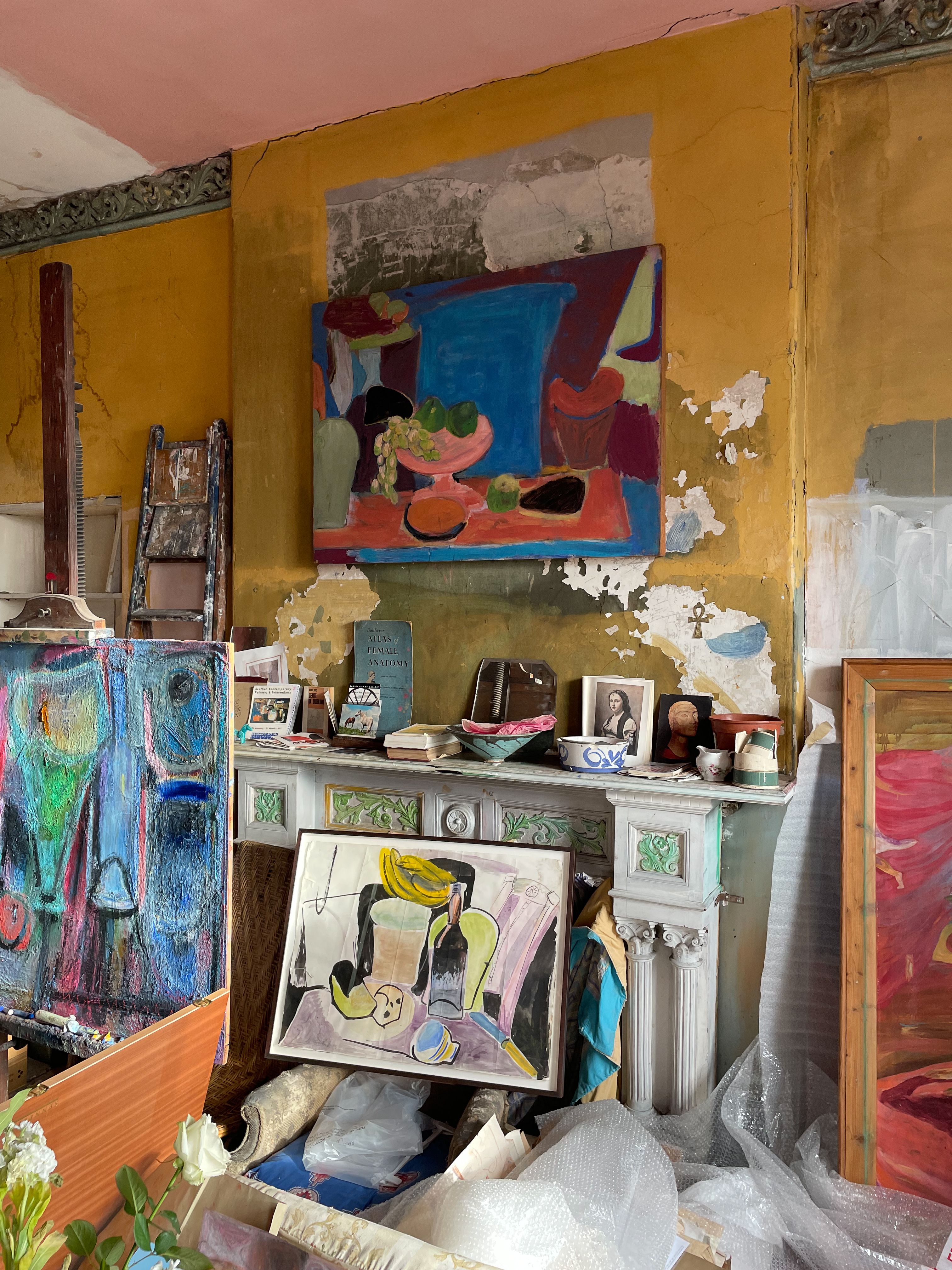
At age 88, Gibbons will present her first U.S. exhibition at White Columns in New York (22 March–4 May 2024). Jewels have been cherry-picked from her Glasgow home studio, where she has lived and worked for 50 years.
Folkloric themes dominated her work up until the 1970s, at which point she swung to more figurative, quotidian subjects—cats or still lifes—yet the feeling of the mythic still persists.
When tracing the eye around Gibbons’ eccentric handcrafted frames dotted around her studio, then over the acid-washed walls and cluttered mantlepiece, one is reminded of the decorative finesse and distinctive chalky palettes of Charleston House, the East Sussex farmhouse lived in by Bloomsbury Group’s Vanessa Bell and Duncan Grant.
While she has had considerable attention in Glasgow—notably, she was the first living woman to have a solo exhibition at Glasgow’s Third Eye Centre in 1975—it is only now that she is receiving significant international attention.
Running concurrently to the New York show is the group exhibition, Women in Revolt! Art and Activism in the UK 1970-1990 (8 November 2023–7 April 2024), at Tate Britain, which includes a work by Gibbons. The show will later tour to Edinburgh and Manchester. Earlier this year, the London-based Hales Gallery announced representation of Gibbons, presenting her first solo show in May.
This transatlantic reappraisal can be credited to a generation of Glasgow artists, notably Andrew Cranston who, along with Lucy Stein, wrote the foreword for her first monograph that was published by 5b last year.
‘She sees things that are there and dreams, too, of things that are not there,’ Cranston writes.
‘It is thought made into paint. Invention, too, comes from the brush, the paint.’
Glasgow and its artists have been a font of creativity in the U.K., no doubt helped by the artists who have passed through its eponymous art school—of which both Gibbons and Alasdair Gray are alumni.
Turner Prize winners from the Glasgow School of Art include Douglas Gordon, Christine Borland, Martin Boyce., Other alumni include art stars David Shrigley, Nicolas Party, and Jenny Saville.
Galleries like The Modern Institute, which was established in Glasgow in 1997, have helped reinvigorate the city’s art scene, allowing artists to remain, survive, and thrive.
Main image: Carole Gibbons' home/studio, Glasgow, 2023. Photo credit: Matthew Higgs.


A respected voice in contemporary art discourse.
Focusing on ambitious storytelling and insightful art-world commentary. Ocula Magazine publishes in-depth interviews, critical essays and timely analysis on the artists, exhibitions and ideas driving the global art world.
Learn more about Ocula Magazine
Showcasing the best of the art world.
Ocula partners with galleries from around the world to highlight their artists, artworks and exhibitions. Gallery membership is by application and invitation, with each member vetted by an independent panel.
Learn more about Ocula Membership
Specialises in the sale of major artworks.
Led by a team with deep ties to the world’s leading auction houses, galleries and collectors. Ocula’s advisory team offers bespoke services to high-net-worth clients from around the world who are looking to acquire the best of contemporary and modern art.
Learn more about our team and services