





Bedtime Story
Pop Art was about depicting standardised, mass‑produced commodities. By contrast, the Italian artist’s paintings show a highly private world. Save to My Ocula
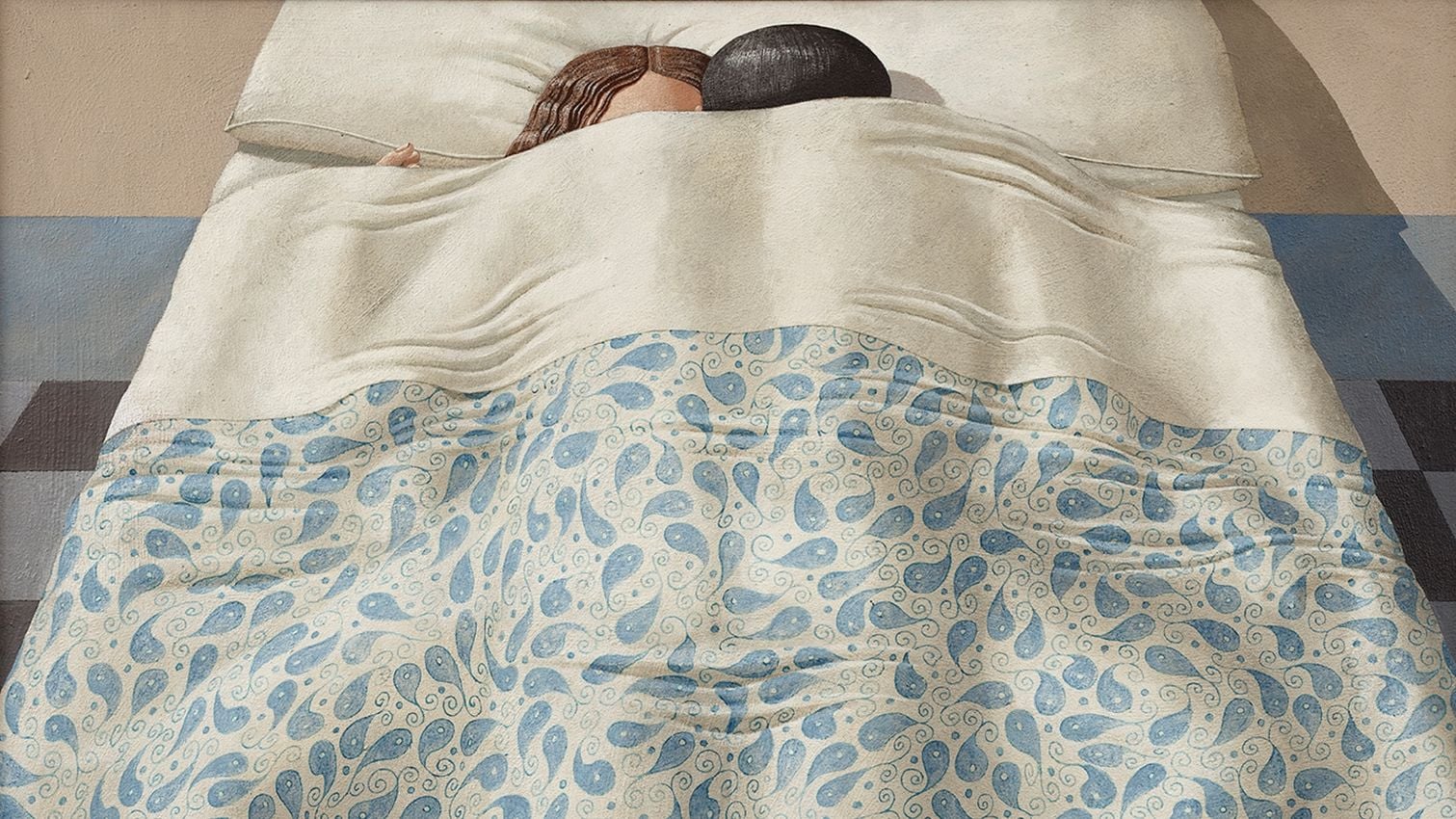
In Domenico Gnoli’s 1967 painting L’inverno (Couple au lit), a couple lie together under the sheets. The bedspread bears a light blue motif—half-Paisley pattern, half faux-naïf fish design—and a white sheet has been folded neatly over the top. Only the couple’s hair shows, but the rumples in the sheets suggest that their bodies are facing away from each other.
The scene is recognisable enough: a couple wake on a cold morning and decide to sleep in a little longer (the title translates from its Italian/French hybrid to “Winter (Couple in Bed) in English). But there are a few strange elements. The figures are turned away from one another but, from the positions of their heads and the way the woman’s fingers peek out, languidly, on the left side of the composition, we intuit that the man is leaning over and starting to kiss the woman as she slowly abandons herself to his embrace. There’s something unnatural about the entanglement: the man seems to be craning his head back over his own shoulder to kiss his partner. The oddness is heightened by the neatness of the bed, with its pastel covers. It’s almost childish, as if in a storybook. We might wonder if we are simply witnessing a mundane moment of intimacy or whether there is something illicit about the scene.

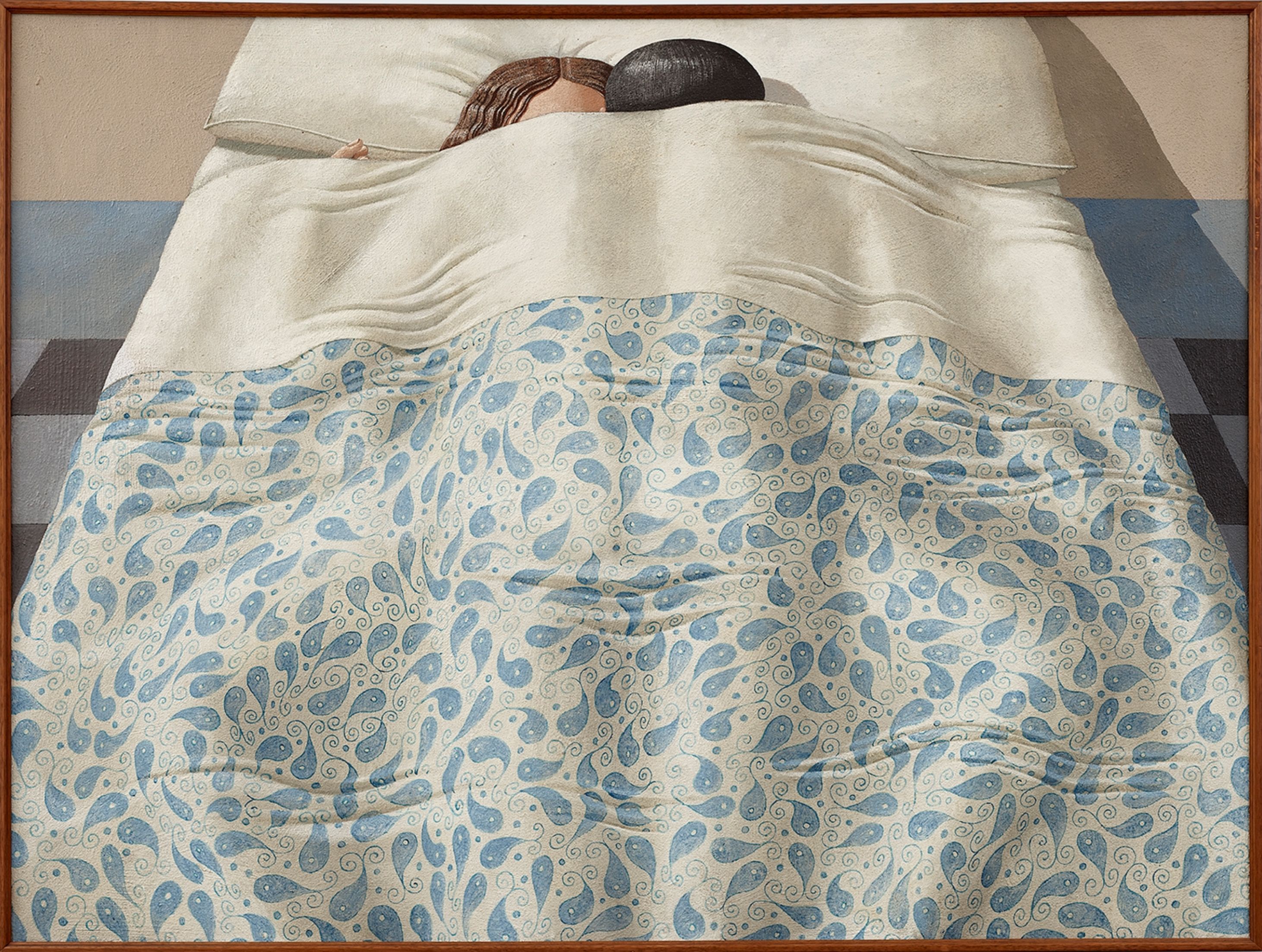
“There’s something unnatural about the entanglement”
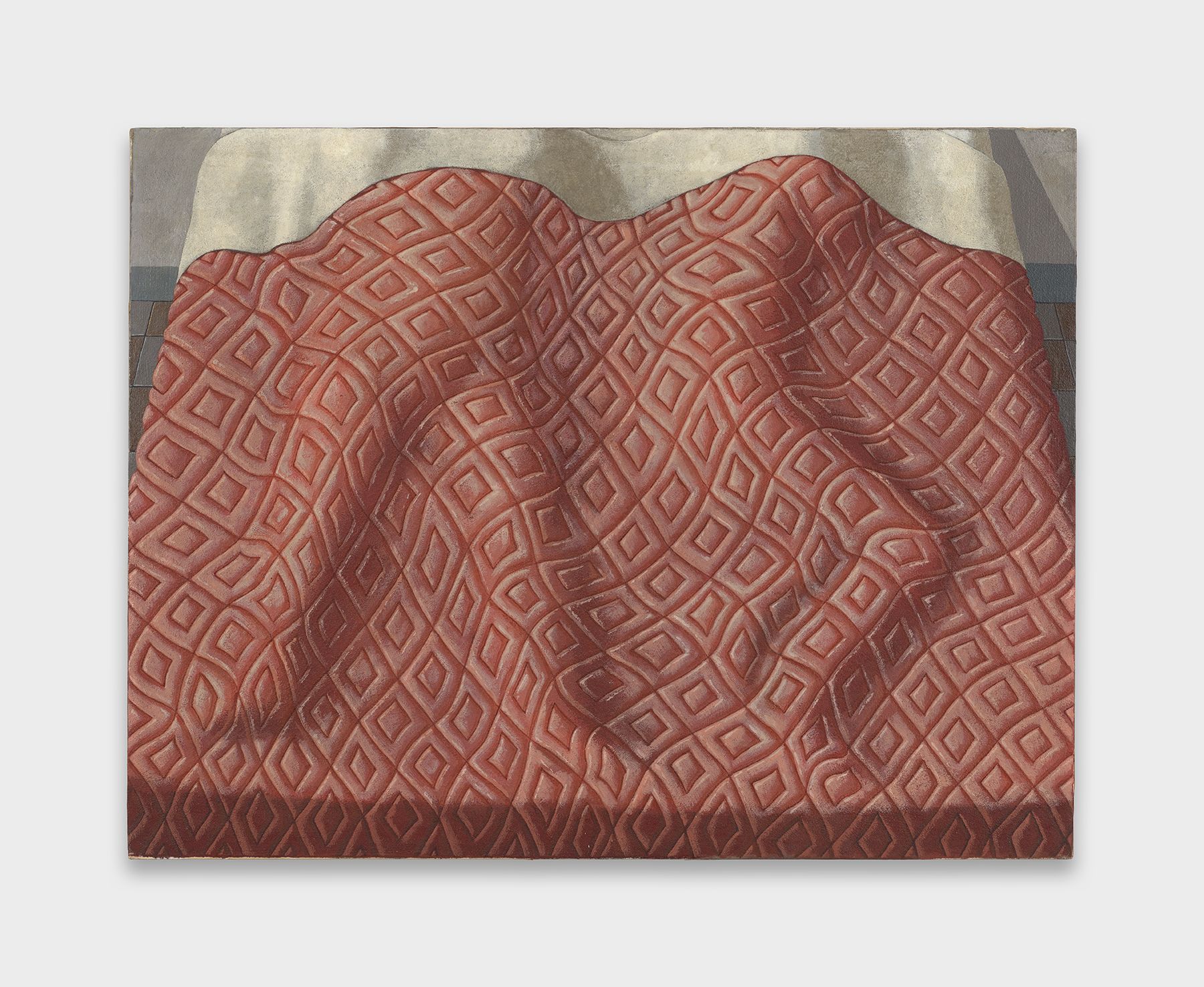
The atmosphere is familiar from other pillowy paintings by Gnoli which, along with L’inverno, make up the bulk of The Adventure of Domenico Gnoli, a retrospective at Lévy Gorvy Dayan in New York. These canvases often feature embroidered fabrics, perfectly or half-made beds, and cropped women’s body parts clad in voluptuous, velvety red fabric. In these works, we are close enough to his subjects to be able to imagine the feel of the cloth, the presence of the figure. He puts us face to face with the object of our longing; we wish we could wrap ourselves in those blankets to feel their softness—or, perhaps, do as we did when we were children and bury our heads in our mothers’ skirts after something made us cry. It makes me think of the Italian architect and designer Alessandro Mendini, who was similarly obsessed with surfaces and decor. He wrote that “a world entirely made of cloth wouldn’t be cruel, as fabric softens life’s hardness, cushions the interiors of a house, brings us back to the maternal womb.”
Domenico Gnoli (1933–1970) was born into a wealthy, cultured family, the only child of the renowned art historian Umberto Gnoli and the ceramicist and painter Annie de Garrou. Though Gnoli grew up surrounded by the books and ideas of early Renaissance painters, his work is often placed in the context of Pop Art—his previous solo US exhibition took place in New York City in 1969, when Pop Art still had huge influence. I think this association is misleading, particularly in the context of the paintings on view at Lévy Gorvy Dayan. The subject of Pop Art is the standardised, mass-produced world of commodities, accessible and available for consumption. By contrast, Gnoli’s paintings depict a highly private world. We see single shards or flashes of an object or encounter, as if we’re being shown childhood memories that have been blown up and deformed by time: a huge, perfect red apple, the collar of a shirt or the crotch of a man standing in suit trousers, as if seen through the eyes of a small child. Is it the lost Arcadia of the artist’s bourgeois childhood?
“Gnoli’s paintings depict a highly private world”
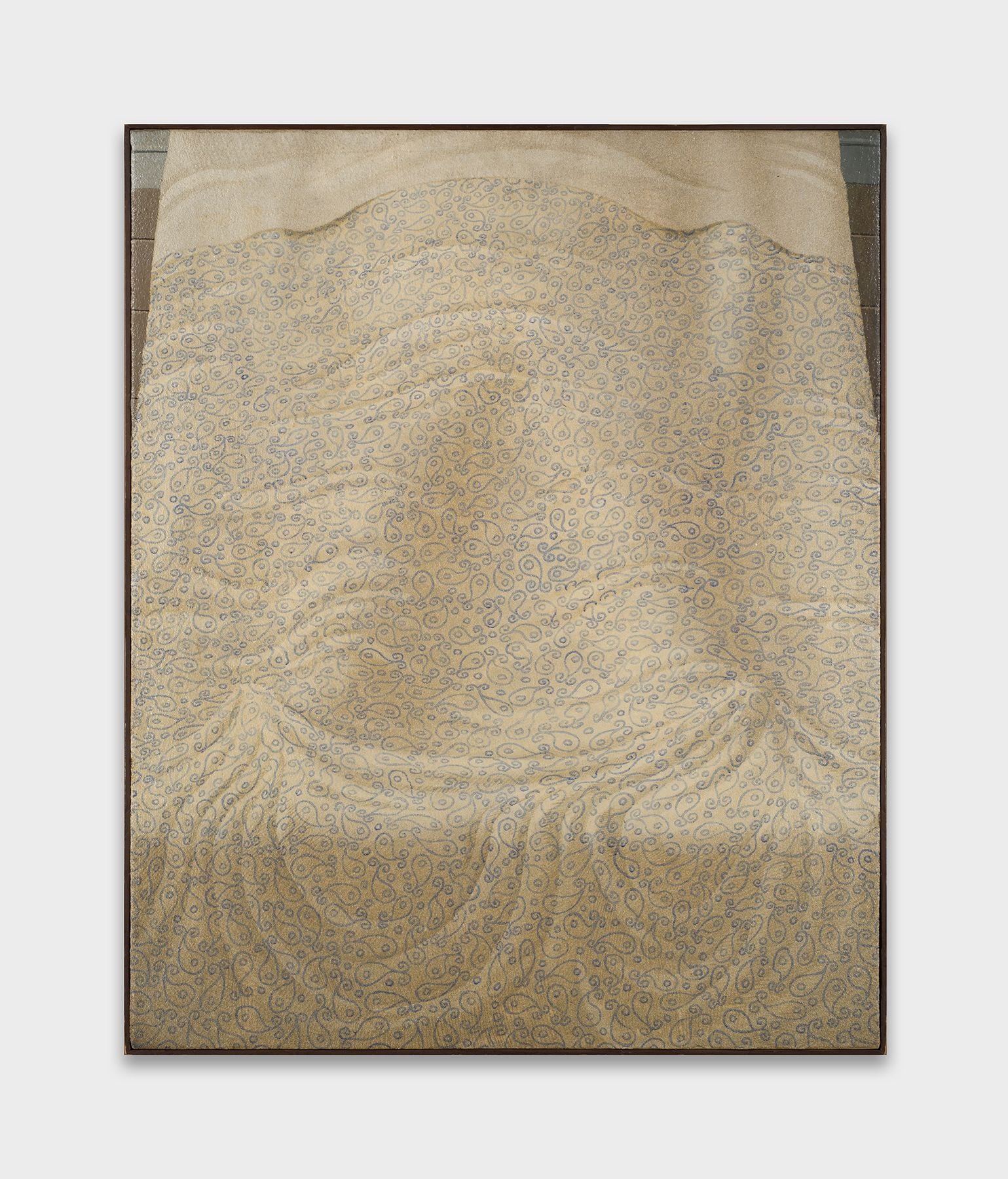
Seen in this context, the idea of the lovers cocooning themselves under the covers in L’inverno (Couple au lit) expresses a powerful desire to regress. When reality inevitably intrudes into our carefully arranged private worlds, we can claim the luxury, or the excuse, of turning to the other side and saying: “Five more minutes.” —[O]
Domenico Gnoli, The Adventure of Domenico Gnoli (until 23 May 2026) at Lévy Gorvy Dayan, New York City
Main image: Domenico Gnoli, L’inverno (Couple au Lit), (1967). Acrylic and sand on canvas. Courtesy of Lévy Gorvy Dayan.








A respected voice in contemporary art discourse.
Focusing on ambitious storytelling and insightful art-world commentary. Ocula Magazine publishes in-depth interviews, critical essays and timely analysis on the artists, exhibitions and ideas driving the global art world.
Learn more about Ocula Magazine
Showcasing the best of the art world.
Ocula partners with galleries from around the world to highlight their artists, artworks and exhibitions. Gallery membership is by application and invitation, with each member vetted by an independent panel.
Learn more about Ocula Membership
Specialises in the sale of major artworks.
Led by a team with deep ties to the world’s leading auction houses, galleries and collectors. Ocula’s advisory team offers bespoke services to high-net-worth clients from around the world who are looking to acquire the best of contemporary and modern art.
Learn more about our team and services