






‘A Strong Sense of Play’: The Beautiful and the Ugly at Art Basel
While the big spenders fly their private jets into Art Basel, the alternative events are the place to find the fun, Lydia Eliza Trail reflects in a new diary. Save to My Ocula
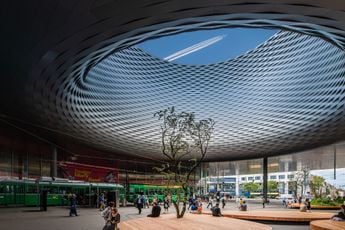
Basel is not obviously a city that caters to the young. It is rich to its core, a quaint tax haven, and a place with little to no edge. The original Swiss edition of the Art Basel fair, or “Basel, Basel” as people call it, is where the biggest galleries save their works to sell, and where the spenders land their jets, wear shiny silver suits, admire the well-preserved medievalism and drink at the stately Three Kings Hotel. The main fair is exhilarating for its air of exclusivity of money (a Picasso sold for $35 million USD), but it does bring to mind a premier section of purgatory: grey carpets, white wall-dividers, clocks showing the time in Dubai, Hong Kong and London.
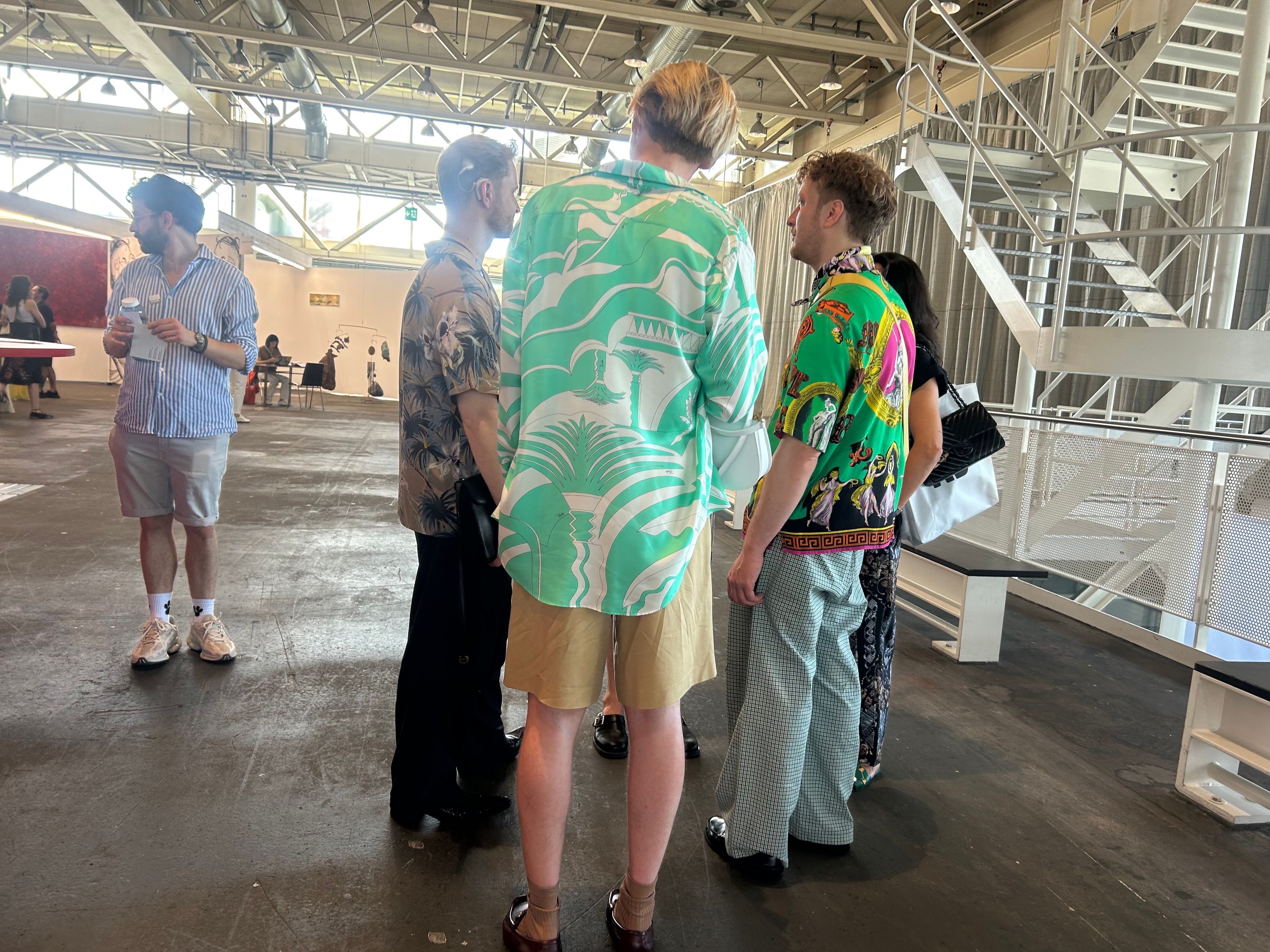
But the big spenders also generate a reaction in the city’s art ecosystem: off-spaces, broke artists, project-sites, ancillary fairs, performance curation, activations and euro-trash club nights. It leads to a strange sartorial mix on show in Basel’s streets during fair week, most visible on the central Mezzeplatz square: women with beautiful, perfect blowouts, carrying, variously bags by Chanel, Balenciaga city bags and (unusually for Basel) some Michael Kors. Old men in grey suits and tech bros in Hawaiian shirts with white chinos stood by and art school students with 2007-inflected emo make-up.

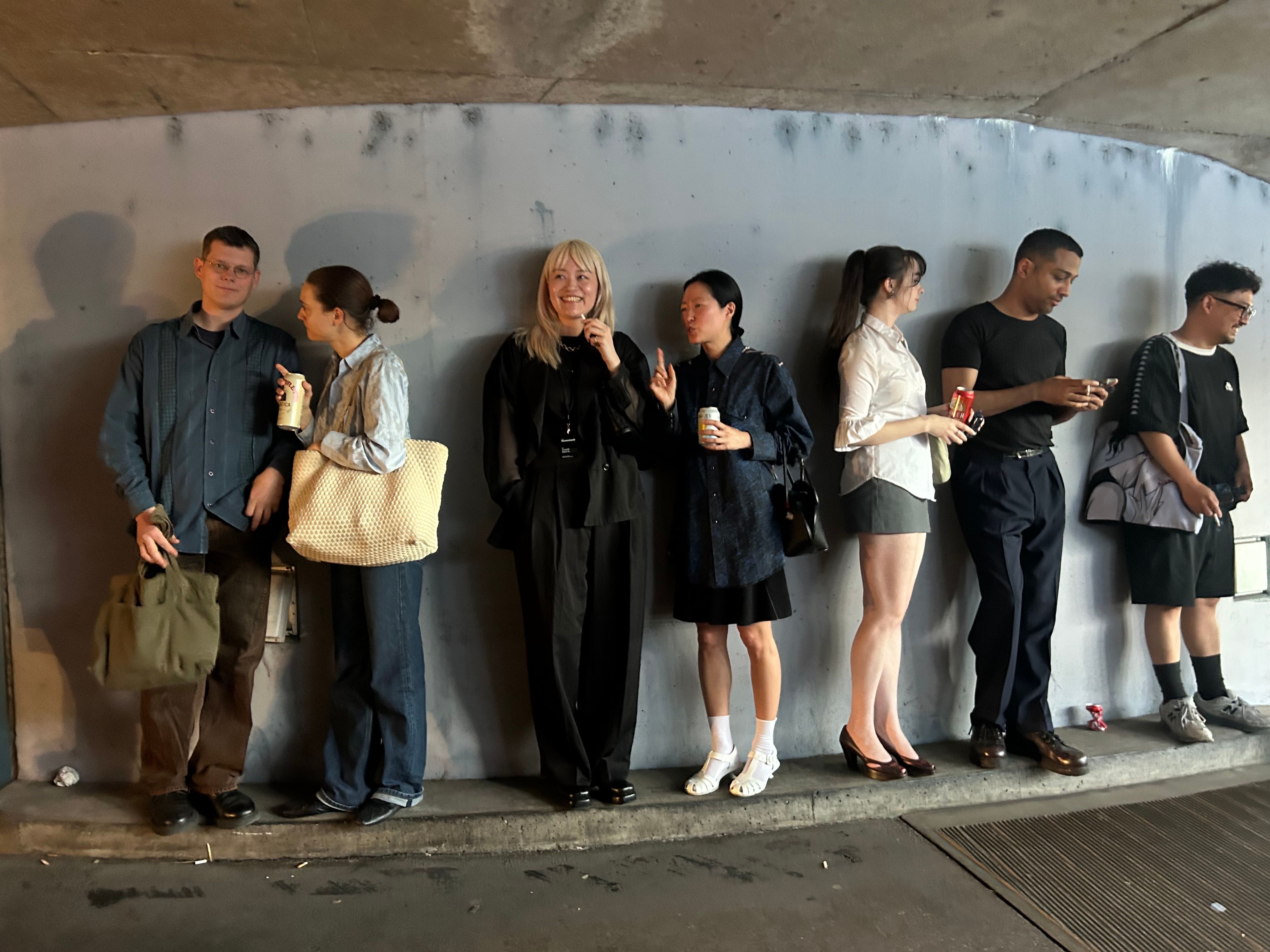
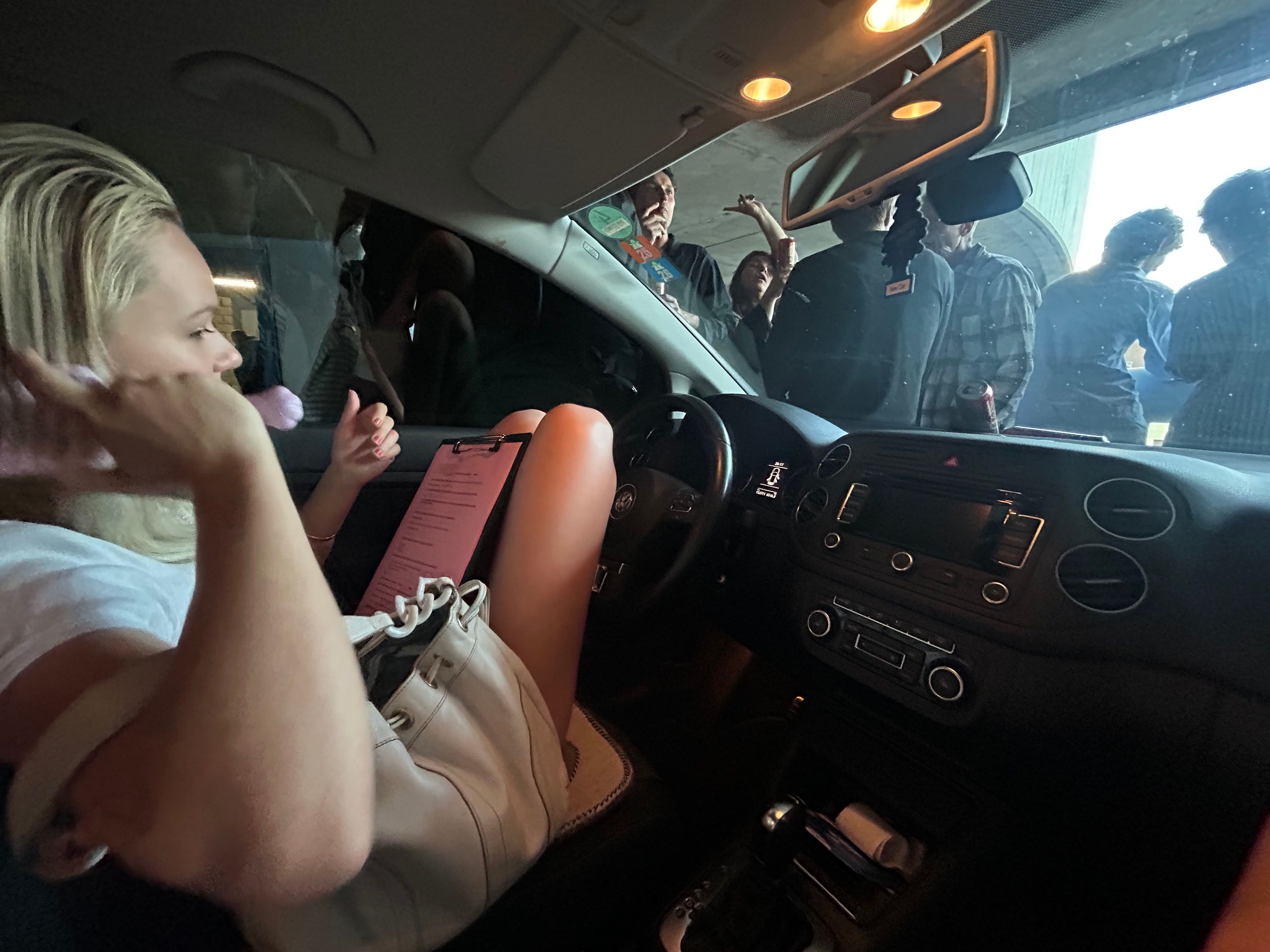

“The main fair is exhilarating for its air of exclusivity of money”
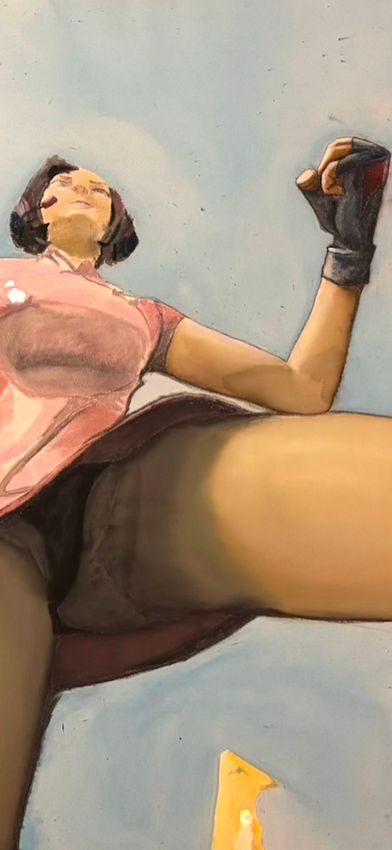
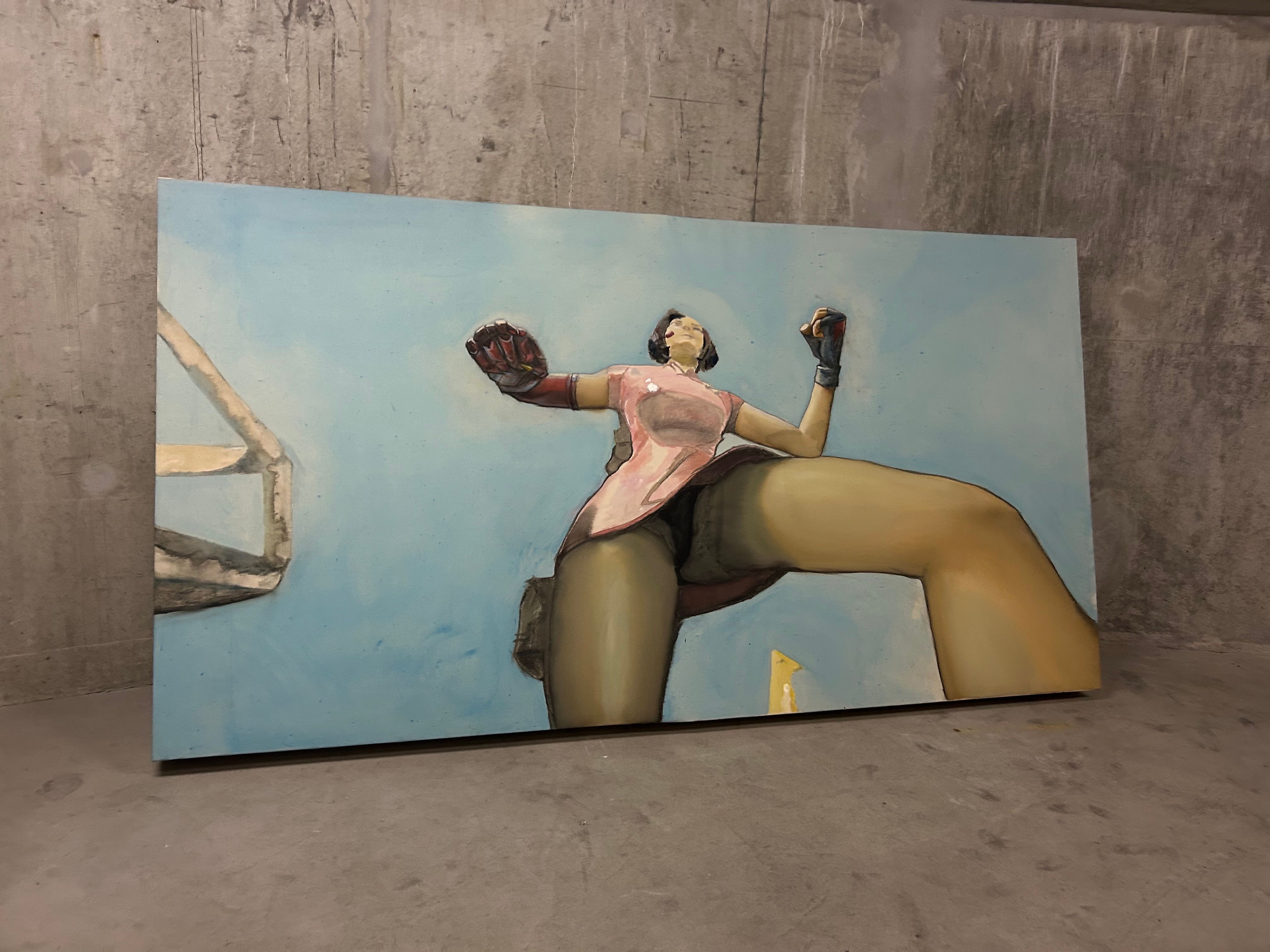
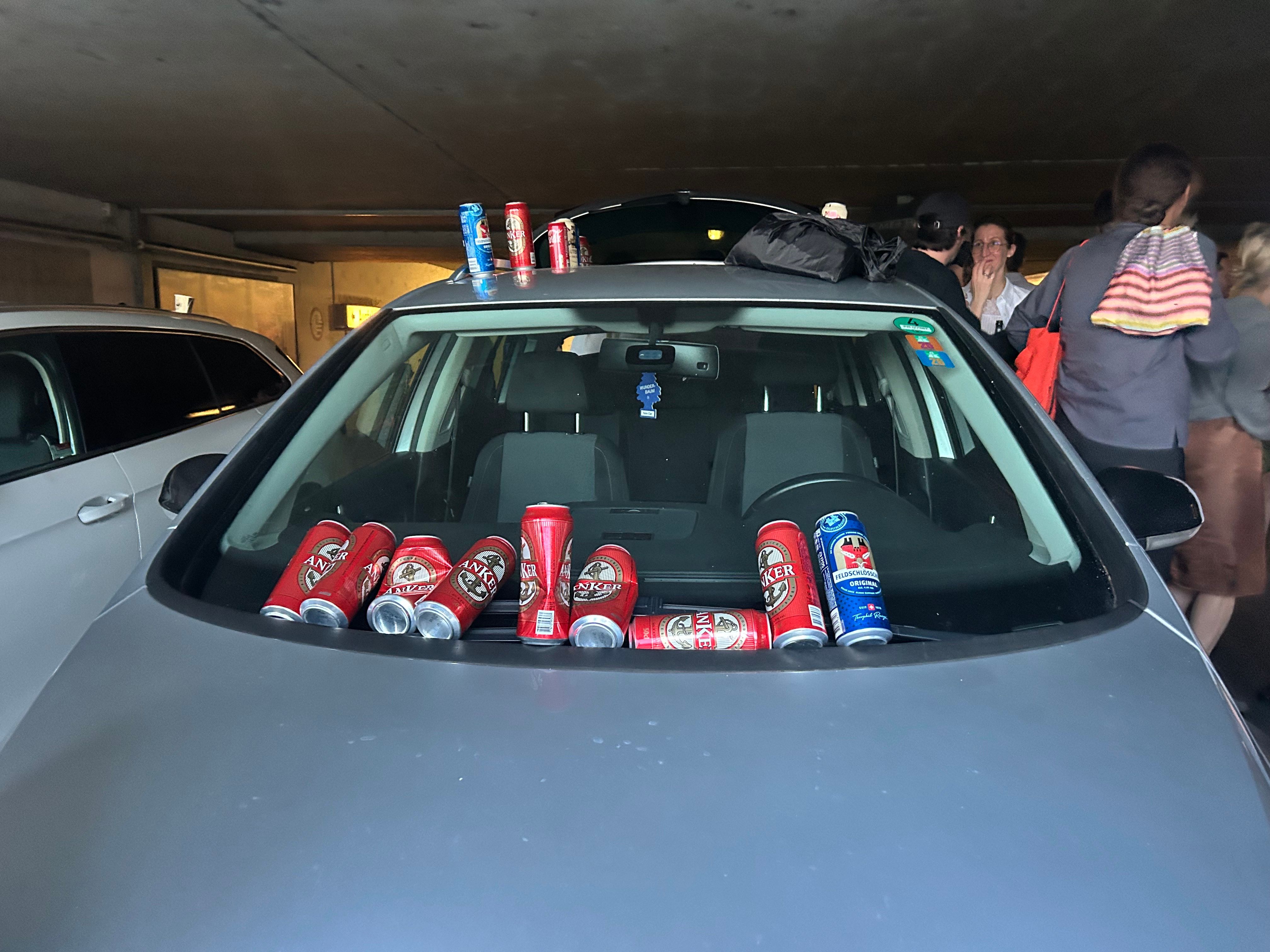
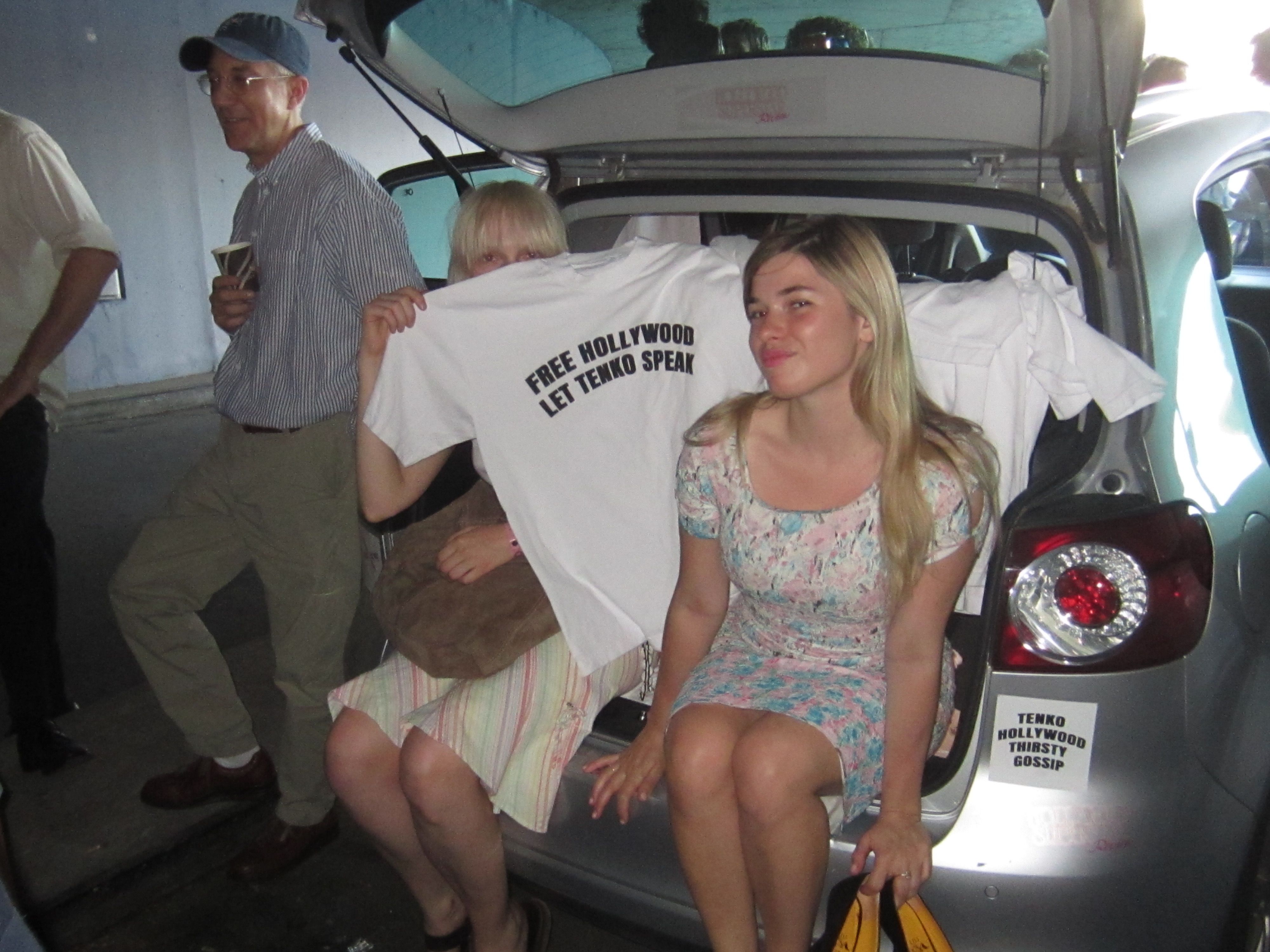
You Wouldn’t Steal a Car opened on the fifth floor of the car park belonging to alternative art fair Liste. Hosted by the nomadic project space Galerie Tenko Presents in Daisy Chain Space, the exhibition borrowed its title from the 2004 anti-film-piracy campaign, which had no relevance to the canvases on show, but instead related to its parking-garage location. Works hung along the concave wall ranged from a giant canvas by Magnus Peterson Horner called Upskirting, which showed an anime-style woman stepping across the viewer’s gaze, and twee, Paul Klee-like landscapes of Basel’s cutesy churches. A form, printed on pink paper, was passed around on a clipboard as onlookers stood pinned to the car park walls. Handed out by a blonde woman who resembled an employee of Vivienne Westwood’s 1980s Sex store, the form asked visitors to “review” the paintings as a piece of participatory art criticism. It included questions such as: “How much money do you have?” and “If you definitely would not buy any of them, please tell us why?”. Jeeps, SUVs and BMWs of collectors drove past, slowing to glimpse the spectacle of the highly impractical spectacle.
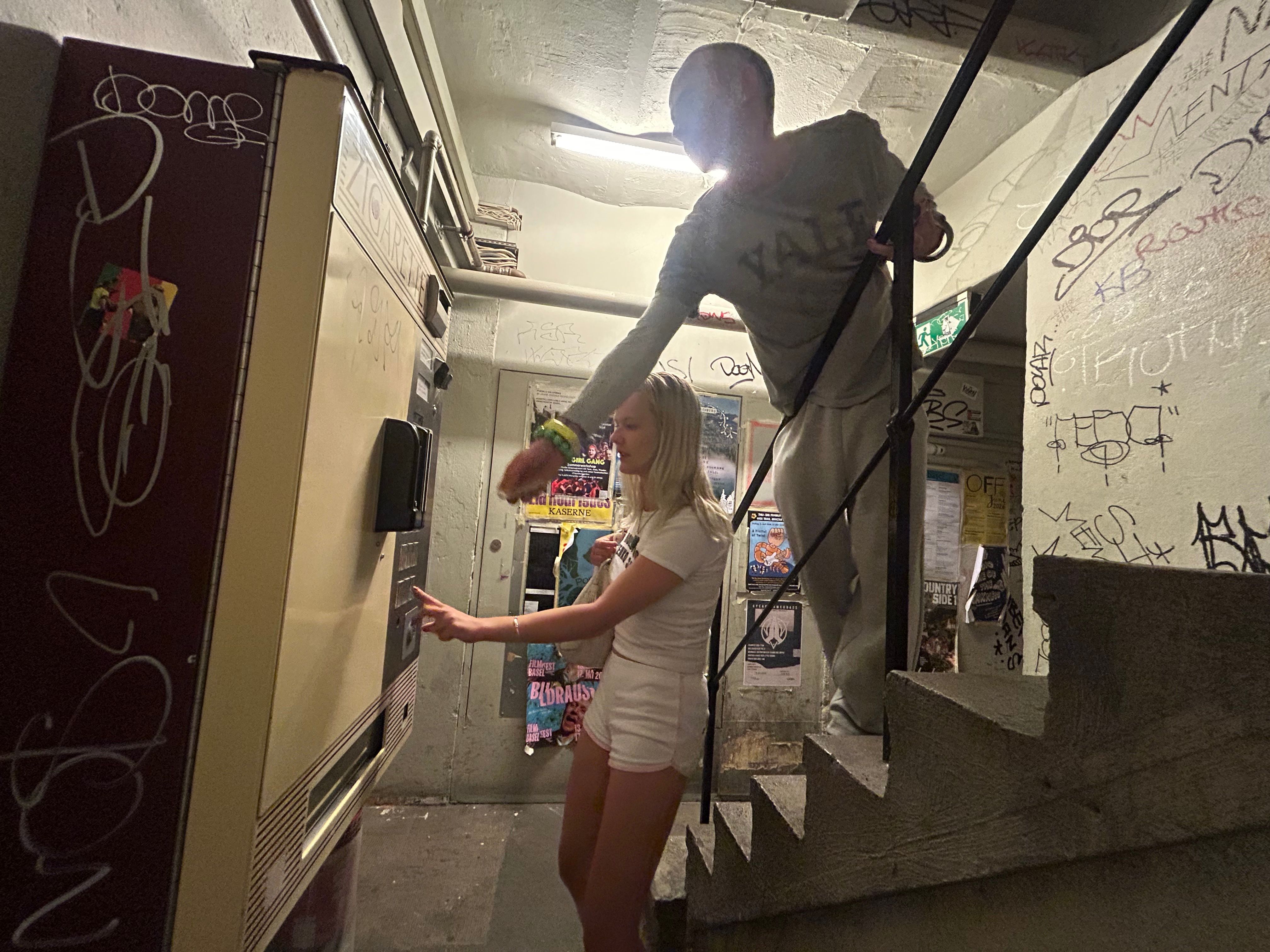
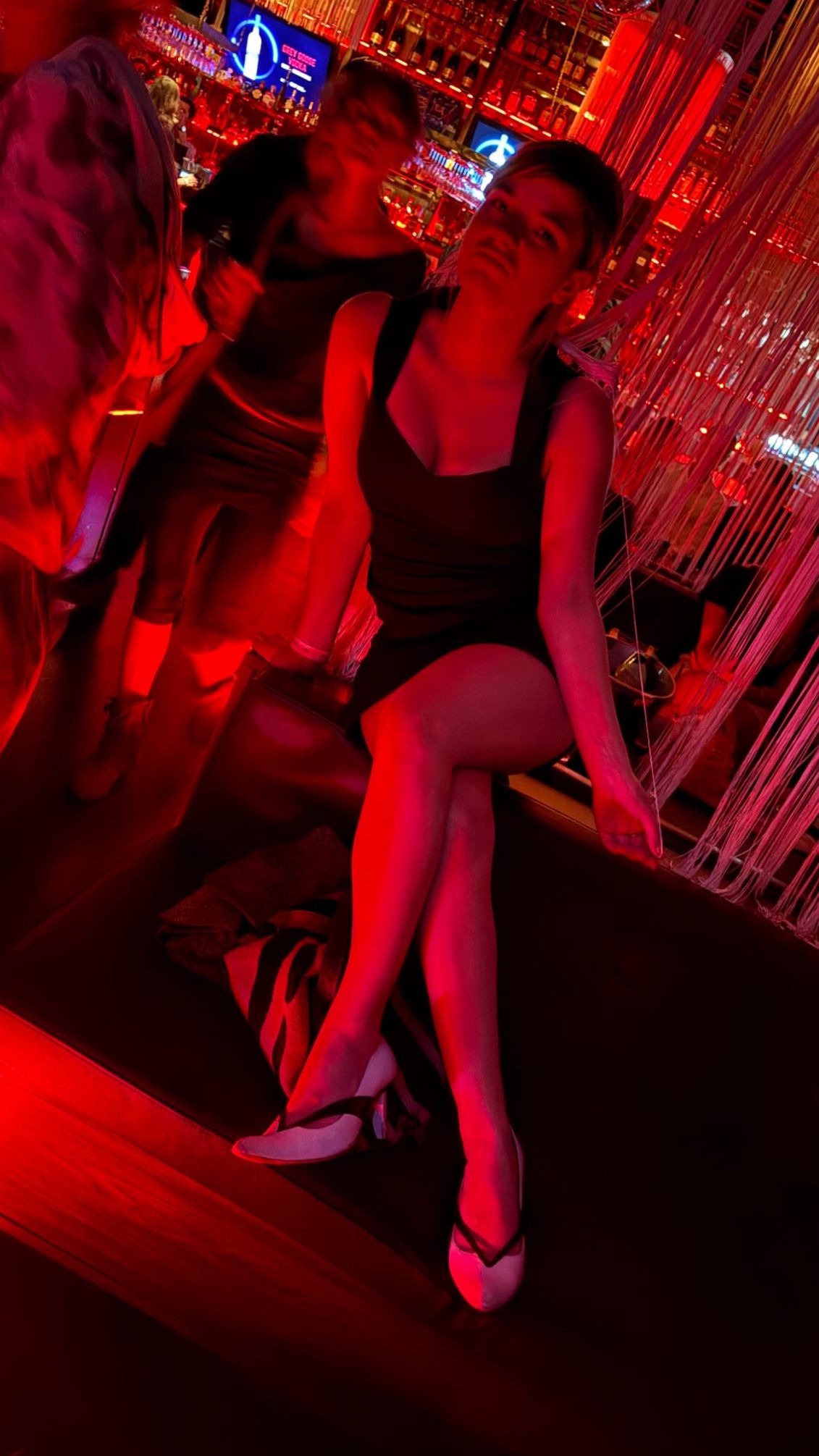
From the car park to Renée’s bar, one of the few spots (unofficially) open until 6am—a relief, since Basel by day has the ambience of a retirement home for gnomes. It’s dimly lit and has one of those old cigarette machines whose buttons have worn to a fleshy, medical beige. Renée’s is a venue synonymous with faded celebrity glamour (the owners “were once artists, and are now jaded”, someone tells me) and actual faded celebrity: Ye (formerly known as Kanye West), his wife (the Australian architect and performance artist Bianca Censori) and the artist Vanessa Beecroft were all present. I squatted by Censori, who was wearing a nude bodysuit and rhinestone thong, and asked how working with Beecroft had been. “A great experience, but I save my voice for my work,” she said, more Australian-sounding than I’d imagined because, truth be told, I’d never heard her speak. Ye stood looking at his diamanté watch with an awkward bodyguard in tow. The bar largely ignored him—too drunk, or too online, to register that his presence wasn’t simply another performance.
“Basel Social Club has expanded well beyond outsider status. If anything, it’s now an insider event”
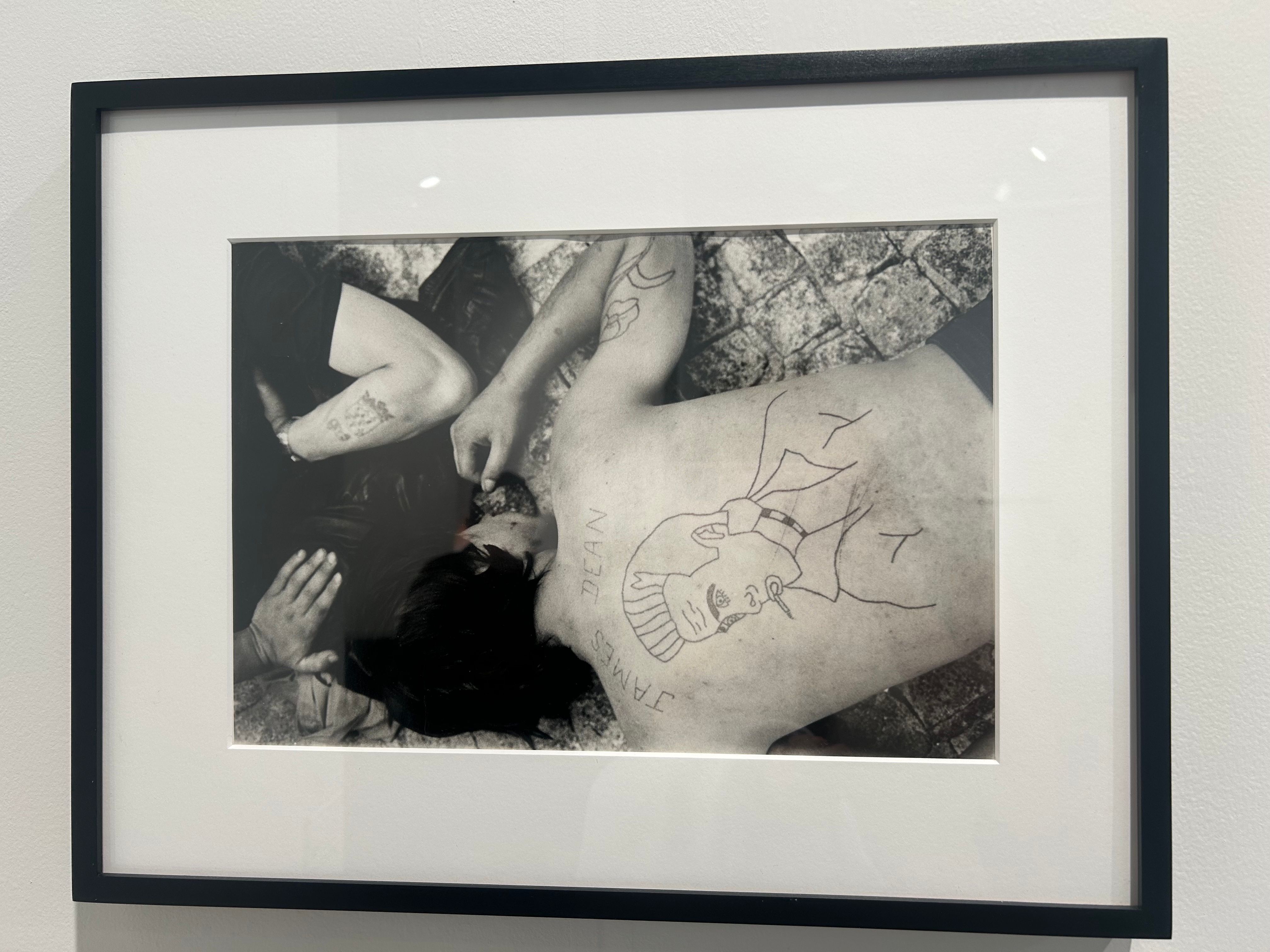
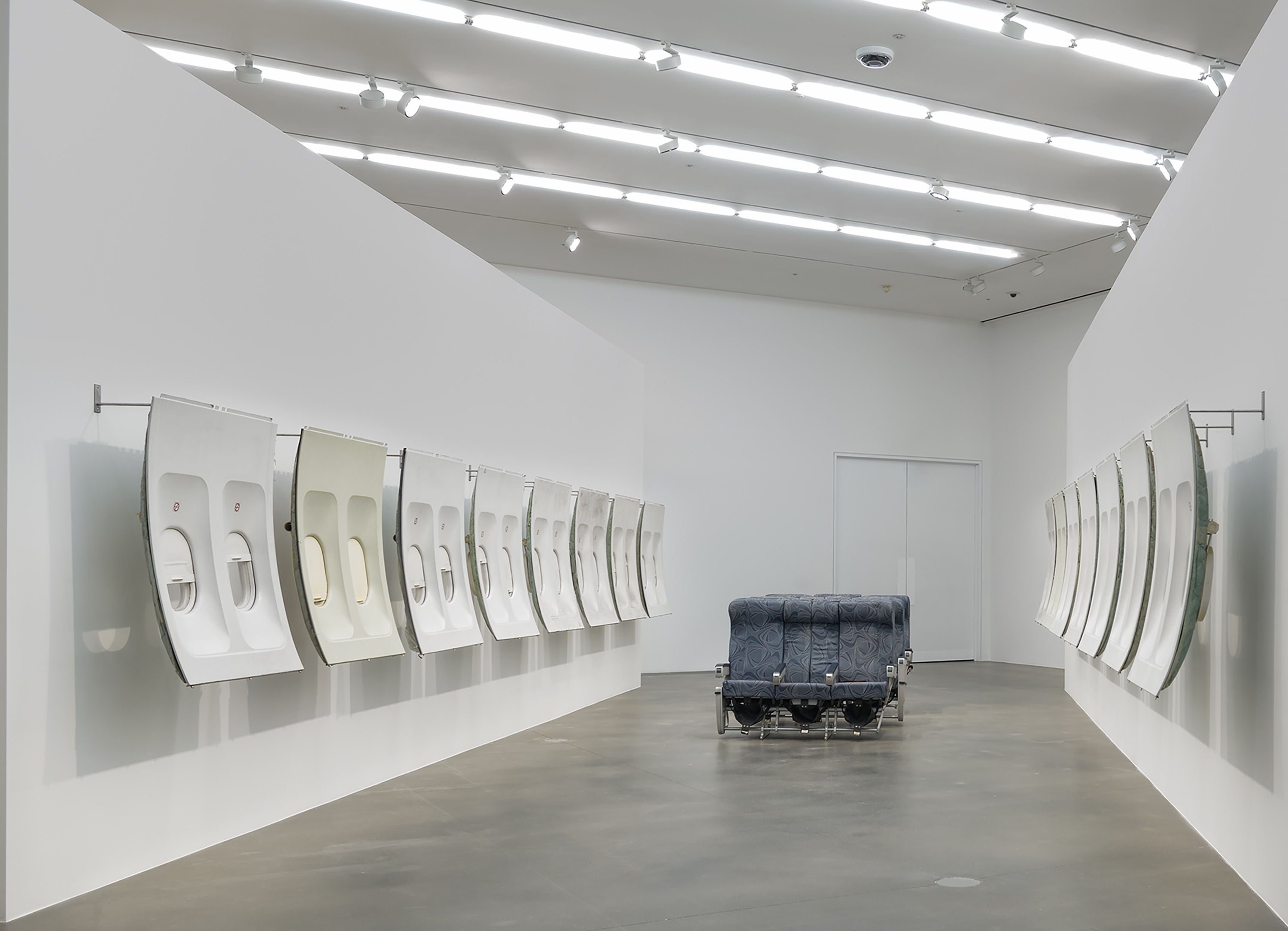
The next day at the two main fairs, I saw a running theme of craftwork, doodle drawing and a strong sense of play. London based gallery Galerina had graduated from a wall at Liste to a full booth, and it was proving popular: sewn sculptures by Stuart McKenzie featuring recycled Vivienne Westwood fabrics. In the Unlimited section of Art Basel, German artist Iza Genzken’s huge installation Untitled (2018)—comprising three rows of three-abreast aeroplane seats in the middle of two lines of aeroplane windows that are variously open and closed, like eyes, evoking vacuity and pareidolia—sold to an unnamed European institution. At Art Basel, Greene Naftali’s multi-coloured punk-infused pencil drawings by Rachel Harrison were next to The Modern Institute’s presentation of a 1980 David Wojnarowicz photograph of a man with a terribly drawn James Dean tattoo on his back.
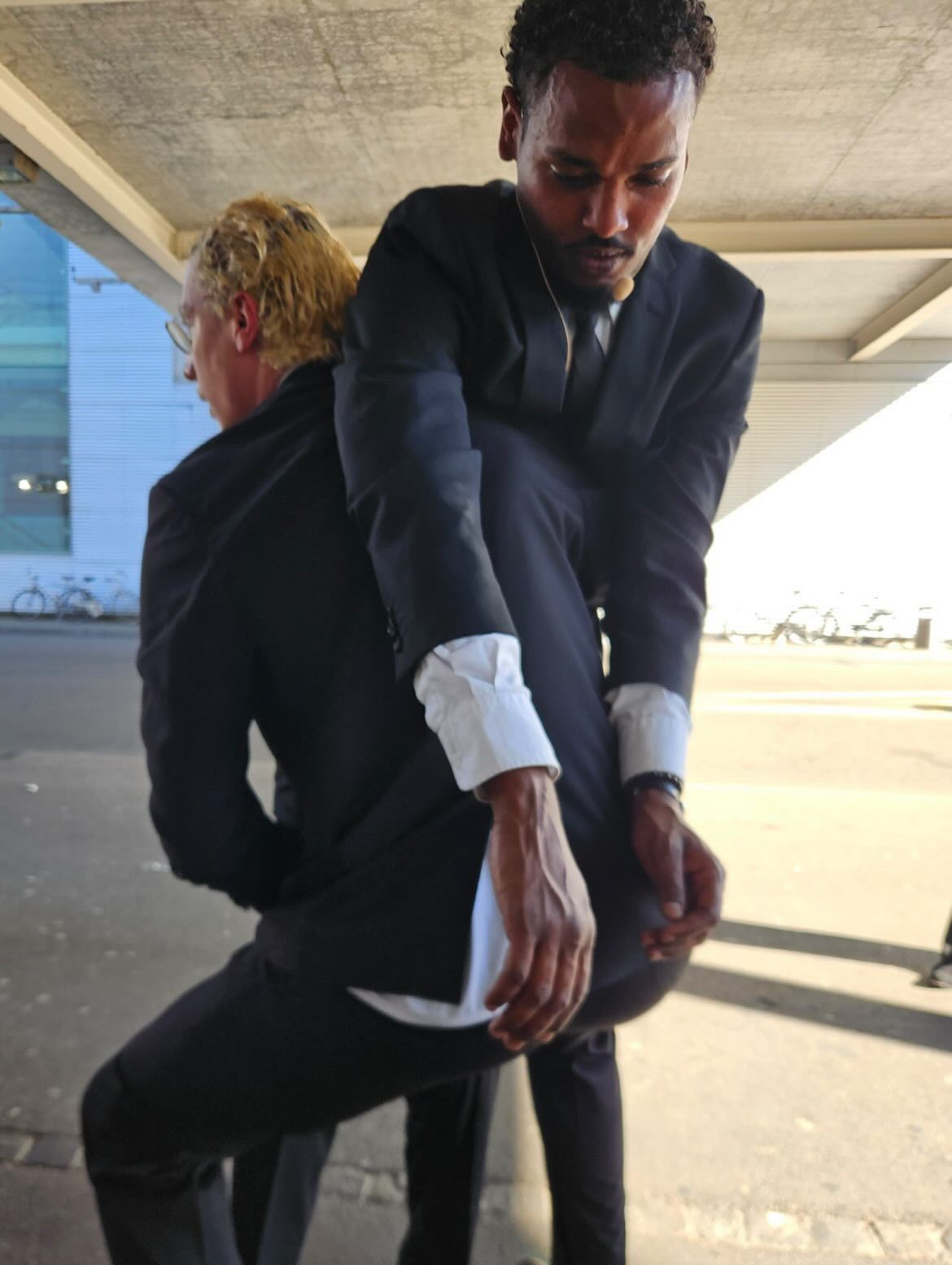
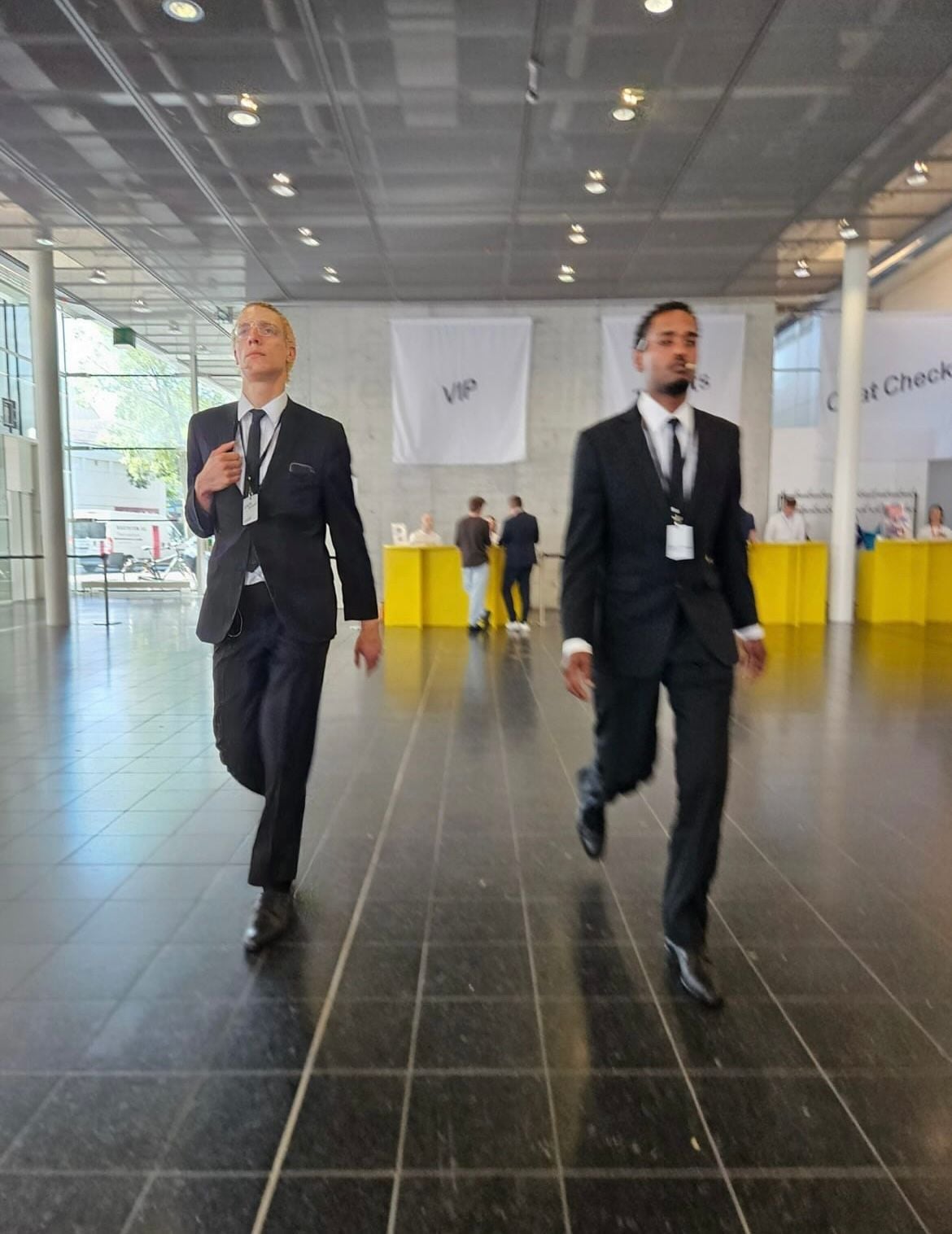
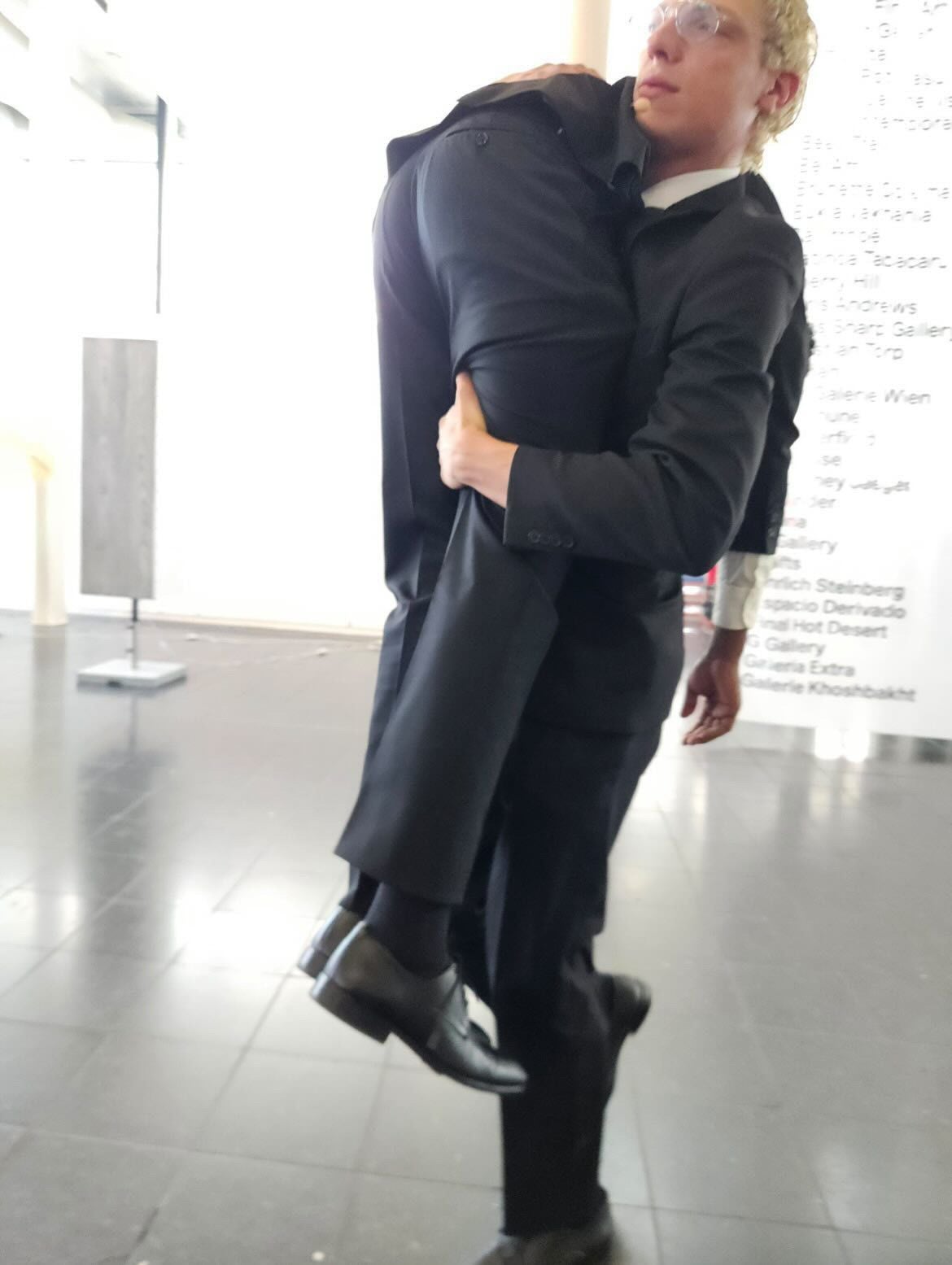

Gear, a six-hour performance by Solomon Garçon outside the Liste entrance saw two tall, incredibly toned, besuited security guards, mic’d-up and talking to each other in an ongoing, rambling conversation that ranged from moments of obviously forced improvisation (a product of hours of performance) to off-the-cuff comments, jabs or interactions. “The only condition,” Garçon told me, “is that they have to get on their knees every five minutes” and they are “not allowed to stop talking”. It was a simulation of courtship, the comic-failure of their rising and falling echoing the movements in a Charlie Chaplin silent film. This seems a good moment to acknowledge that “a younger, more global world of collectors that is very female-driven” is at Basel this year, according to an interview with Basel chief executive Noah Horowitz on a podcast.
“Ye stood looking at his diamanté watch with an awkward bodyguard in tow”
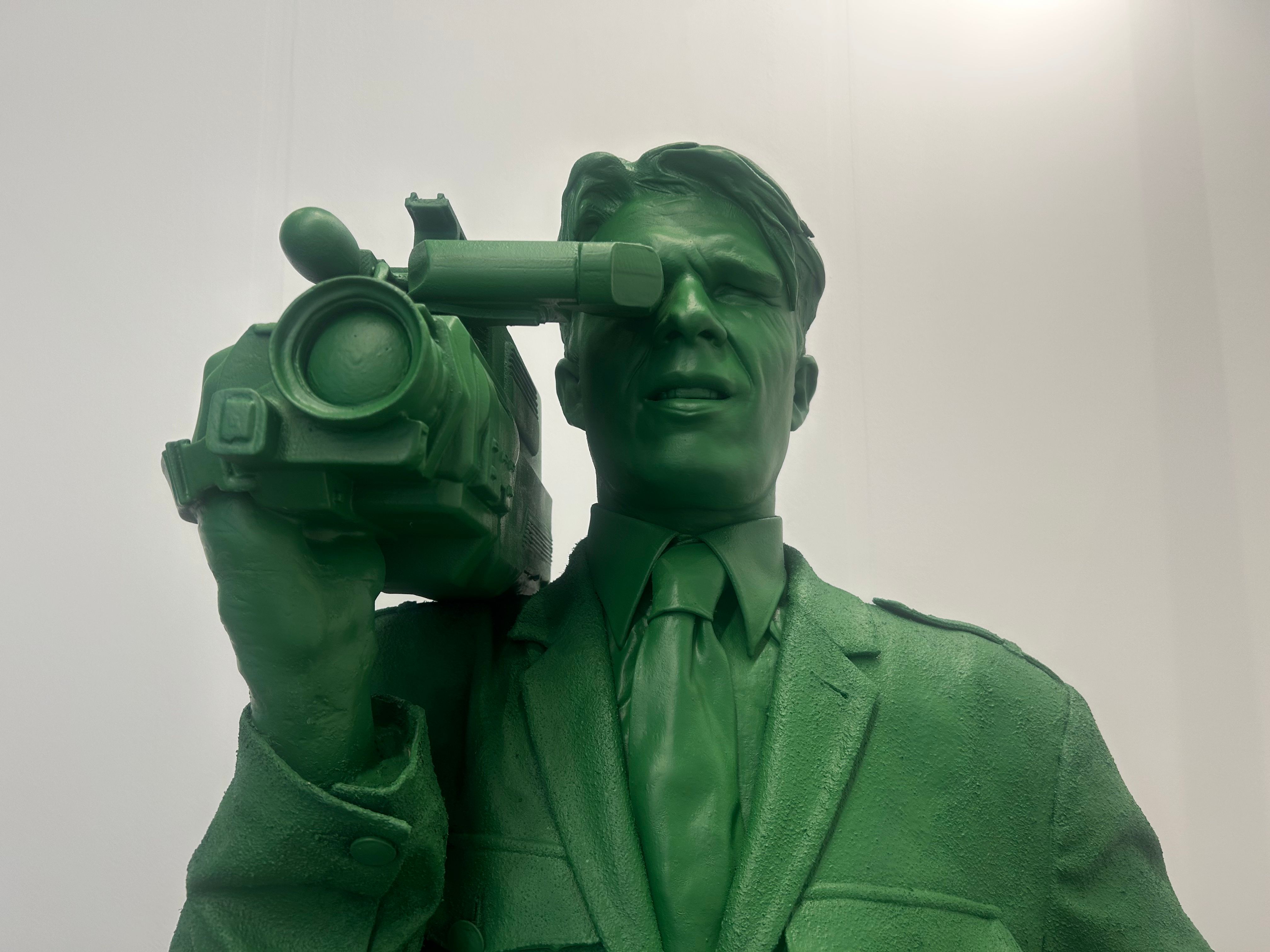
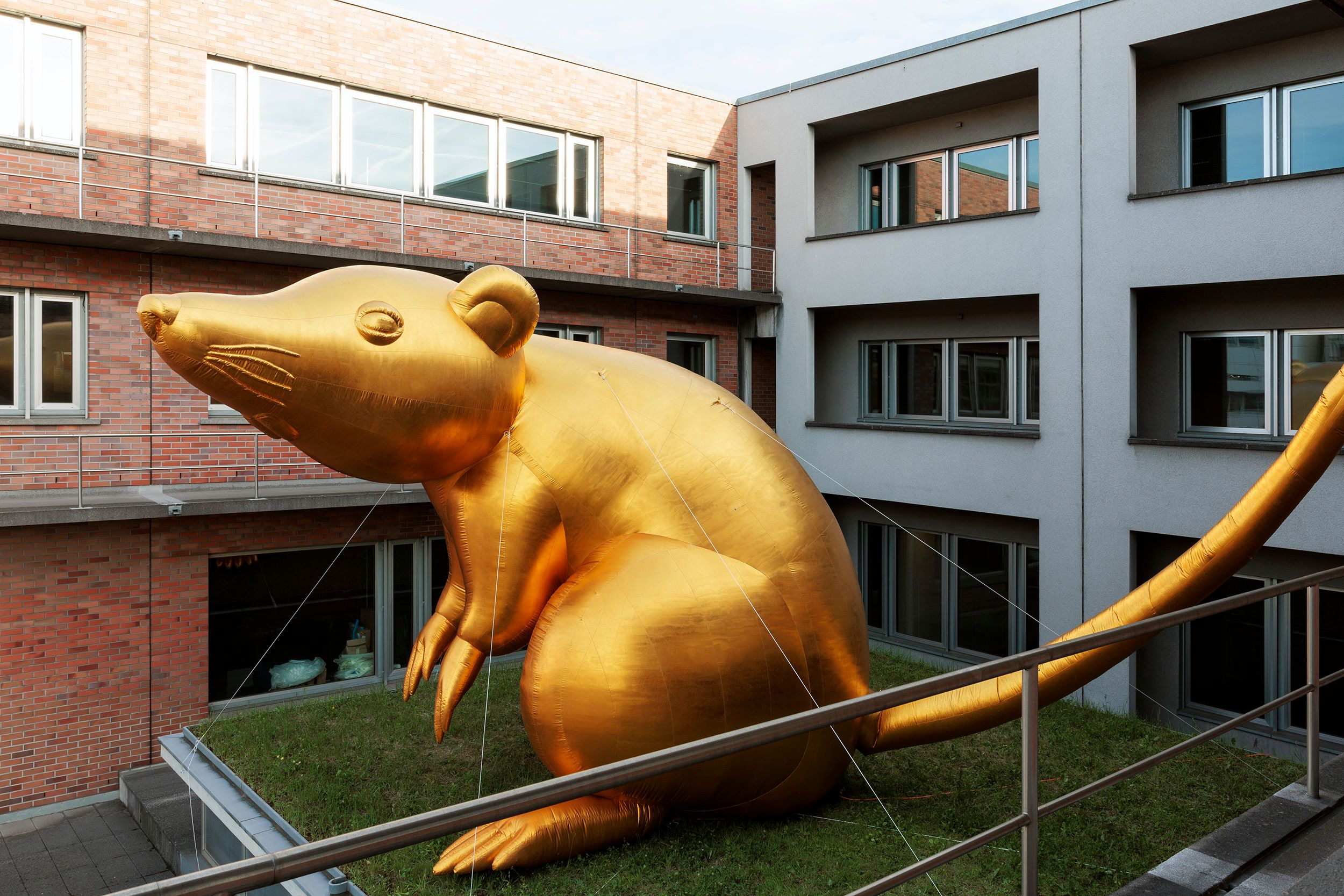
Basel Social Club, the alternative fair space now in its fifth year, asked galleries to address the theme of corporate conformity, modern labour and productivity. Is it better to work alone, or together? Set in a vacant former office building, I wondered whether the adopted aesthetic of a work environment, even an artificial one, overshadowed the efforts of the individual artists. There was a running theme of rats: rodents captured by the Japanese collective Chim↑Pom from the Tokyo subway, and a huge, site-specific gilded inflatable super-rat installation by Esben Weile Kjær occupying the central courtyard, tied down by metal cables, so as not to blow away. Pascale Birchler’s sculpture of a green-tinged, eyeless mannequin slouched in an office chair facing a two-way mirror looking on to Bernat Daviu’s waiting-room installation of dated plastic chairs, was, I thought, the most successful at capturing the ennui (save for the ‘office siren’ trend) of office life.
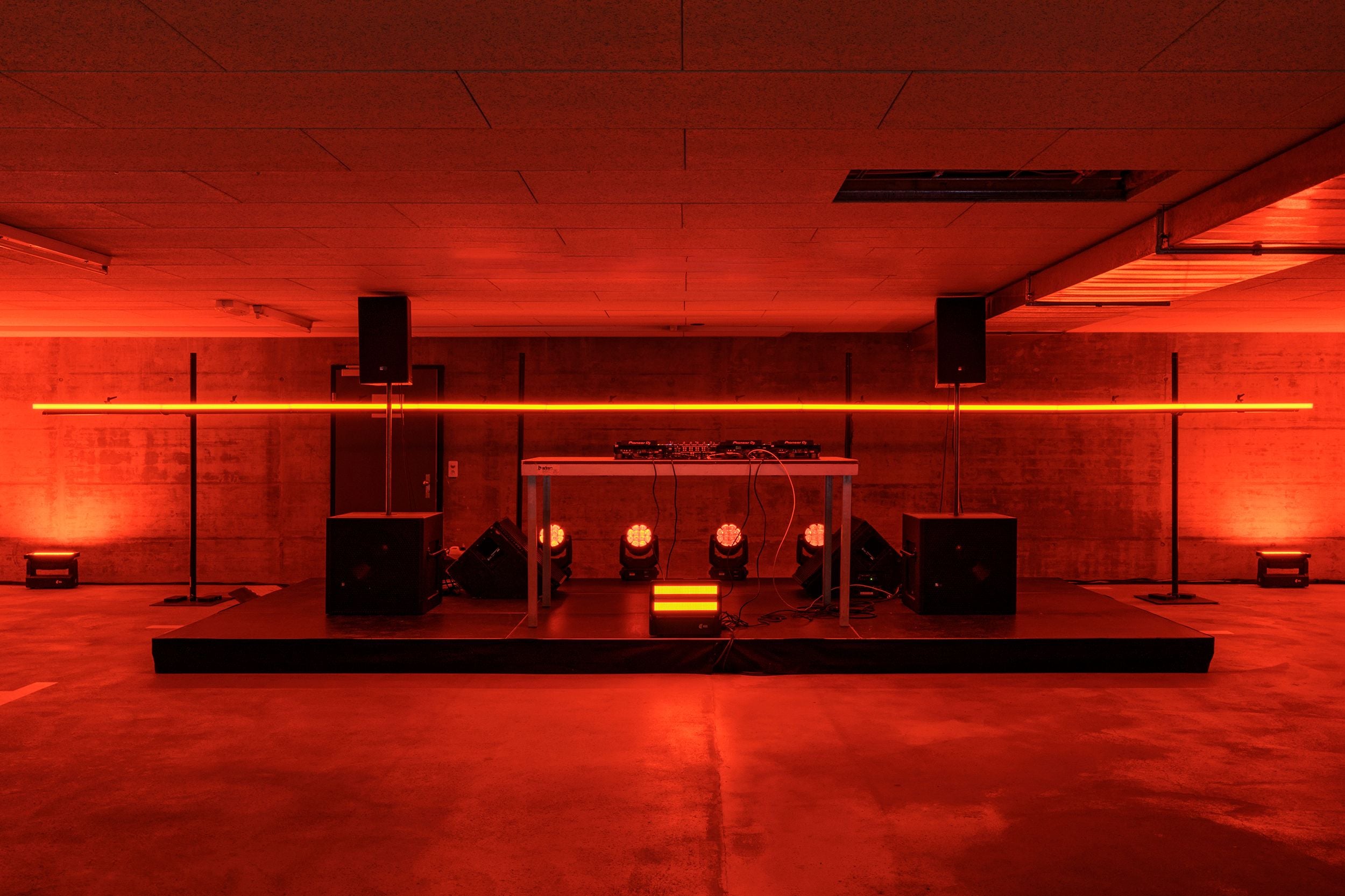

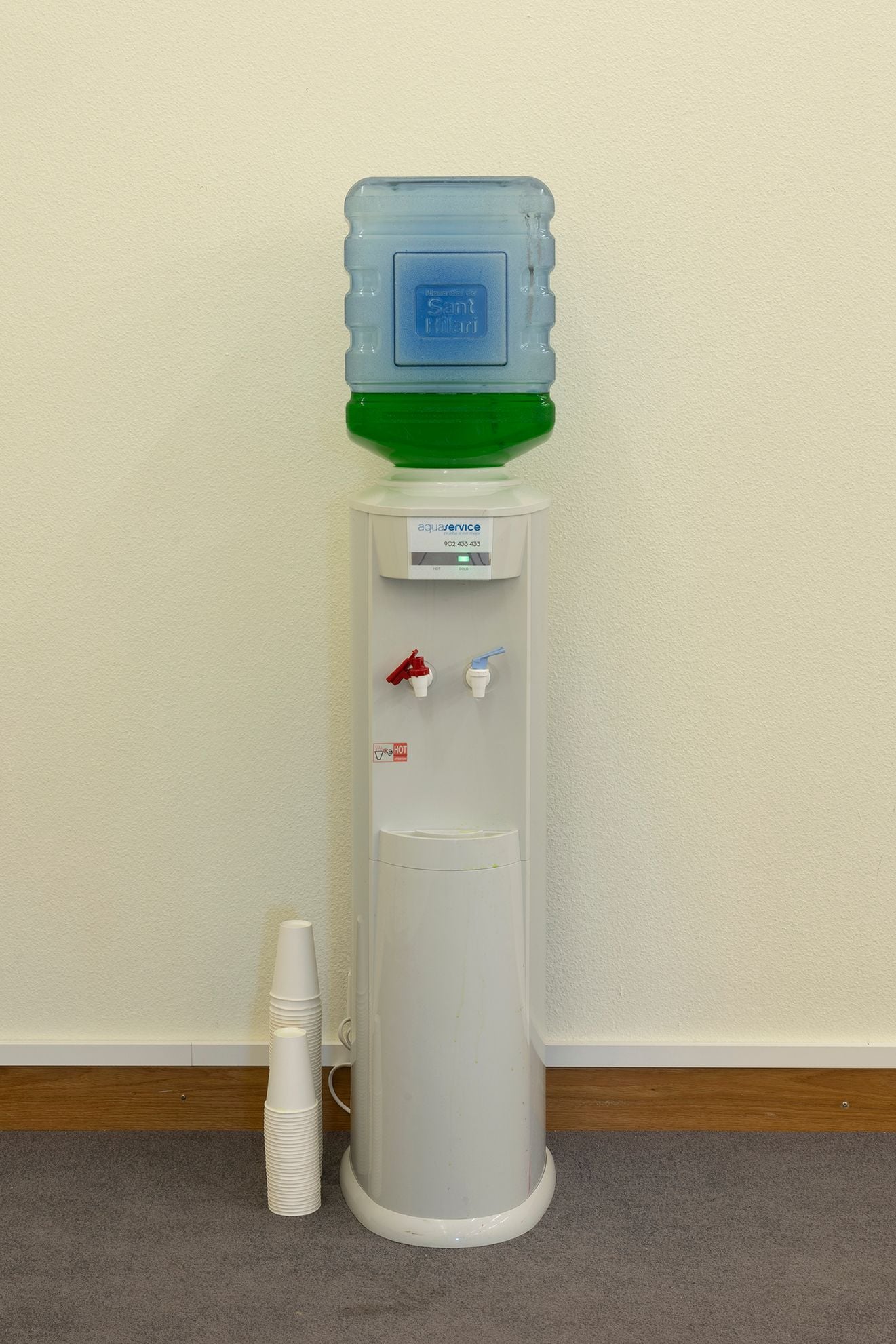
Since 2022, Basel Social Club has expanded well beyond outsider status. If anything, it’s now an insider event, with presence from established galleries such as Sadie Coles and large-scale installations rivalling those of Art Basel’s Unlimited section, which houses works too big for a traditional booth (save for the lower price points, which suggest it’s courting a younger kind of collector who wants scale but has less cash). Silvio Lorusso’s ongoing text installation and collaboration with Basel Social Club, Shouldn’t You Be Working? felt despotic rather than sardonic, hinting at the degree of endurance the smaller galleries showing at it must feel after allegedly paying more than 3,000 CHF to be there. The Social Club’s parody of the traditional art fair, inverting the boring white cube in favour of a cabaret-style immersion, was lost on me this time.
On my final night, I went to Kascheme, an event that has a reputation for being the rave where everyone lets loose, which turned out to resemble a large tiki bar. Dealer Daniel Buchholz gestured at his jeans. “See these?” he said. “They’re leather!” They reminded me of the delicately painted canvases by Lucy McKenzie on show at Cabinet Gallery’s booth at Art Basel, whose oil renderings of found objects (vintage magazines, photographs of Lee Miller in Hitler’s bath) suggest the fact that a replica can never quite be a perfect copy. Not unlike the effect of a tiki-themed bar.
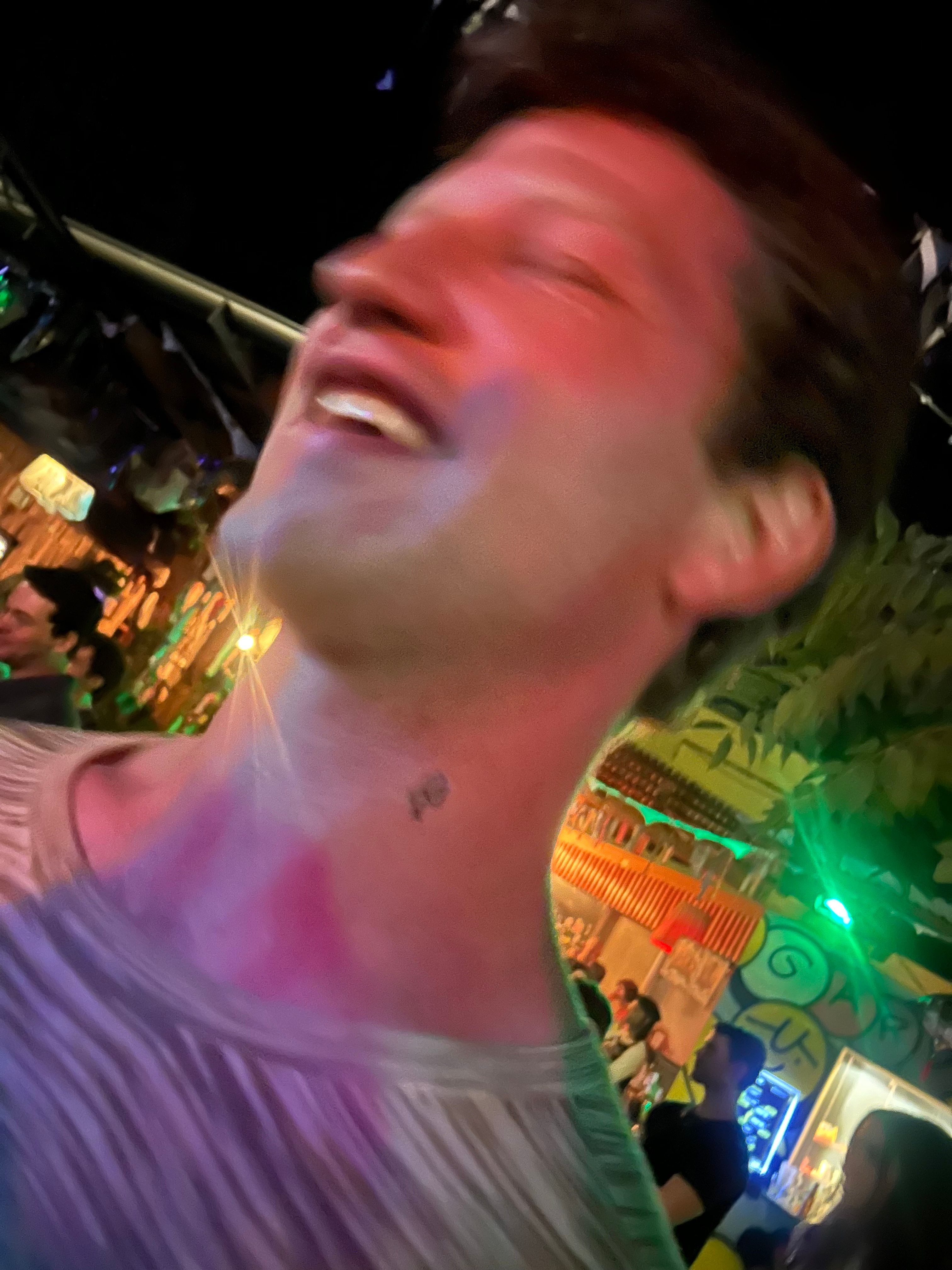
I left with a transferable tattoo saying “curator” on my neck, which I realised recalled Wojnarowicz’s photograph of the bad James Dean tattoo, and thought that there’s something essential when artists capture a moment of beauty from what is categorically ugly. Among its groomed streets, prestige and wealth, Basel is also home to ugliness. And it can be refreshing, experimental, and a lot of fun—if you don’t mind hanging out in car parks. —[O]
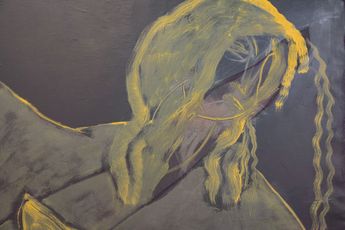
Main image: Magnus Peterson Horner, Upskirt (2026).










A respected voice in contemporary art discourse.
Focusing on ambitious storytelling and insightful art-world commentary. Ocula Magazine publishes in-depth interviews, critical essays and timely analysis on the artists, exhibitions and ideas driving the global art world.
Learn more about Ocula Magazine
Showcasing the best of the art world.
Ocula partners with galleries from around the world to highlight their artists, artworks and exhibitions. Gallery membership is by application and invitation, with each member vetted by an independent panel.
Learn more about Ocula Membership
Specialises in the sale of major artworks.
Led by a team with deep ties to the world’s leading auction houses, galleries and collectors. Ocula’s advisory team offers bespoke services to high-net-worth clients from around the world who are looking to acquire the best of contemporary and modern art.
Learn more about our team and services