The art world in focus
Subscribe to our newsletter for news and insights on artists, galleries and exhibitions.

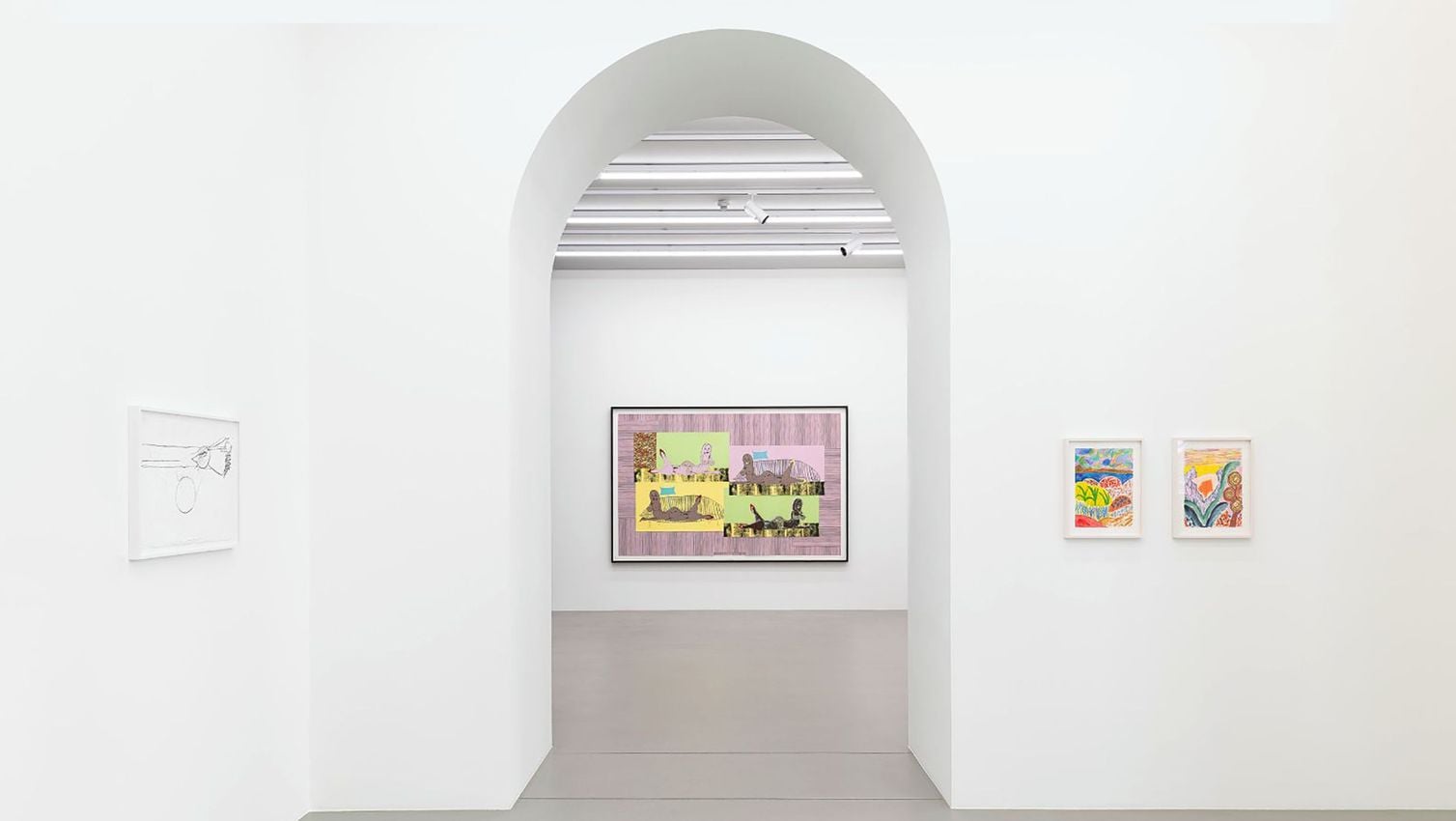
Two concurrent group exhibitions at Galerie Eva Presenhuber contemplate the myriad of approaches undertaken by contemporary artists to drawing, printmaking, painting, and sculpture.
Between Zeichnungen und Drucke / Drawings and Prints at the gallery’s Vienna space and Wall Works & Sculptures at Waldmannstrasse, Zurich, the exhibitions feature works by 19 gallery and invited artists. These include Angela Bulloch, Carroll Dunham, John Giorno, Alex Hank, Shara Hughes, and Steven Shearer, whose solo exhibition at the gallery’s Maag Areal space closes on 16 May.
Invited by Ocula Magazine, Brit Barton introduces a selection of works from the exhibitions, from Tschabalala Self‘s silkscreened, prostrating lonely girls to Liam Gillick‘s powder-coated aluminium curtains, a sequel to one of her favourite artworks of all time.
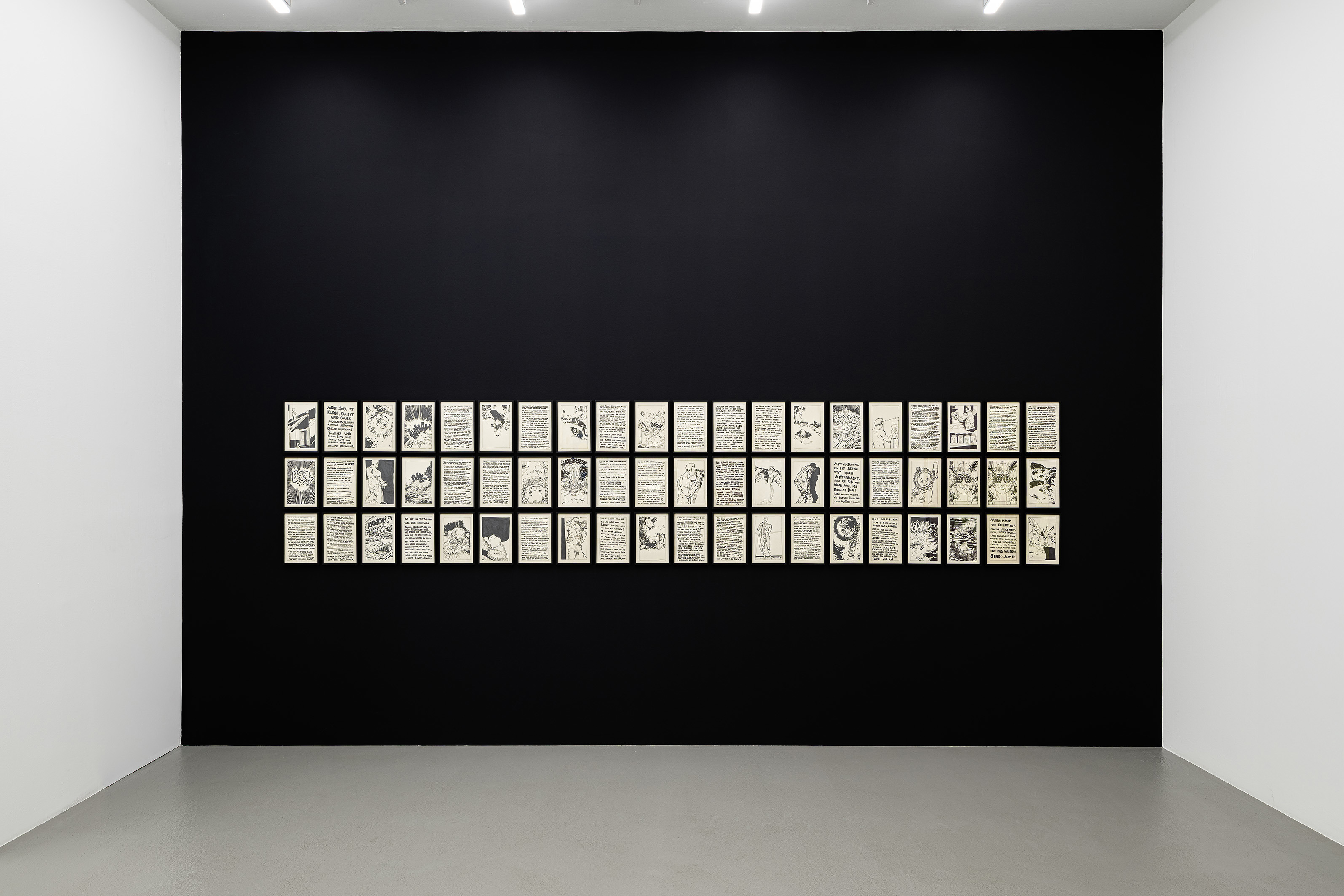
Ugo Rondinone’s work is often characterised by vibrant and monumental site-specific installations laced with an eliciting iconography simultaneously teetering on innocent or slightly sinister. So seeing 1993 is quite the surprise, as a collection of sixty black-and-white ink drawings in one work feels like the exact opposite of what I thought I knew of Rondinone. Its modest scale and text-based aesthetic create an intimate invitation to the viewer, giving room to decipher a wide-ranging narrative recalling the alienation of adolescent eroticism met by the free association of a therapy session.
At first glance, the visual rhetoric has a low-brow comic book or post-war pulp appeal, driven by the heavy illustrative quality and onomatopoeic graphics. But the mix of text and image offers a generous unfolding to the viewer-turned-reader, allowing for an attachment and interpretation not normally given to the sculptural works Rondinone is known for.
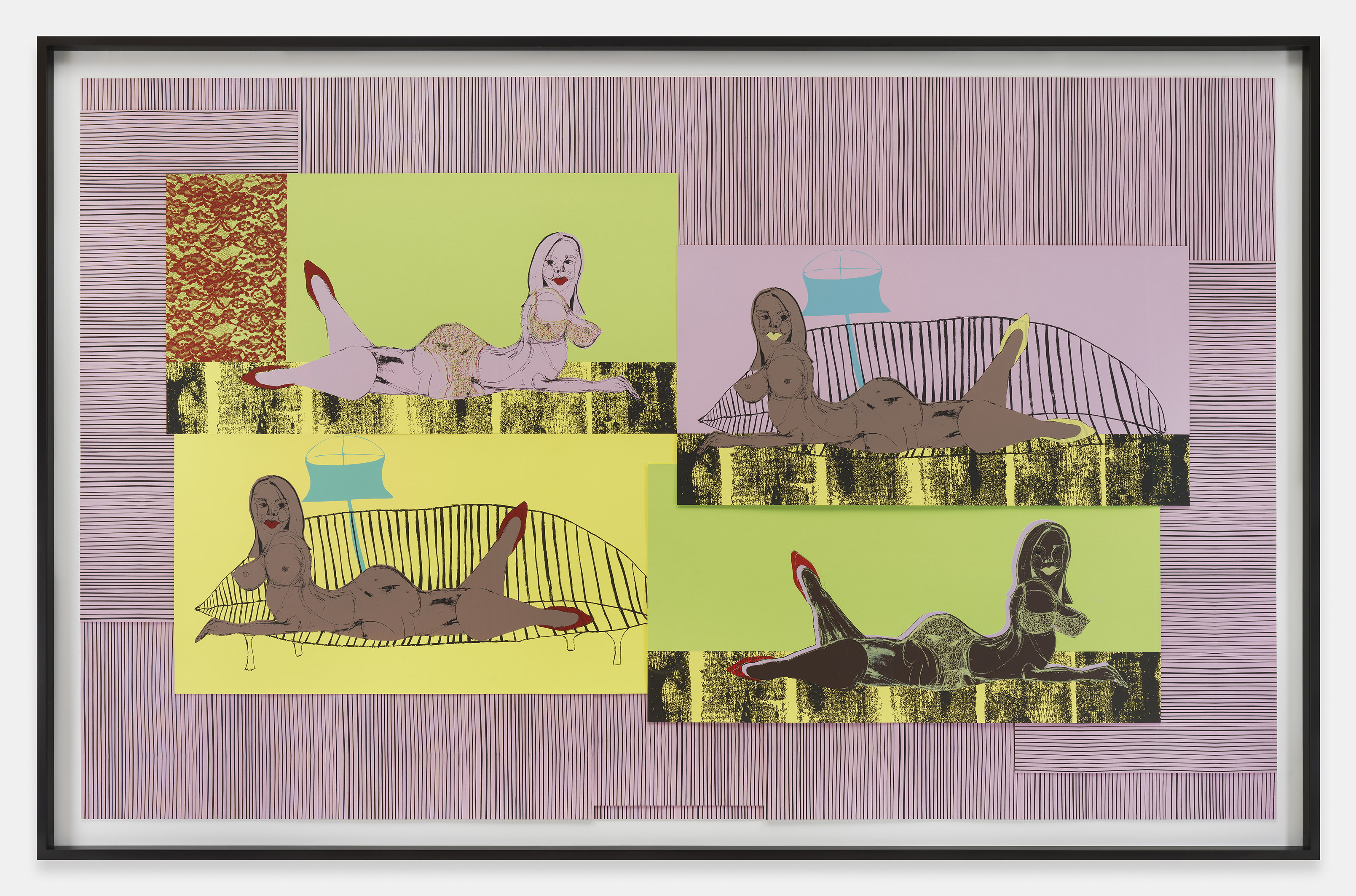
Tschabalala Self’s vivid, expressive works are influenced by the artist’s lived experience, in addition to the informed references of art history and artistic production. The silkscreen Lonely Girls #2 gives way to the gesture of repetition that inevitably creates the meditative quality the medium is known for. As each colour on the surface composes its own individual layer, the act of building up or adding to becomes a kind of dimensional poem in its precision and spareness.
Within the work, four women are centered in their own square of domestic space, alike but entirely different, in varying stages of dress or undress and directional pull. To the viewer, theirs is an aware and alluring gaze that looks out of frame, begging the age-old question–what is she looking at while I look at her?
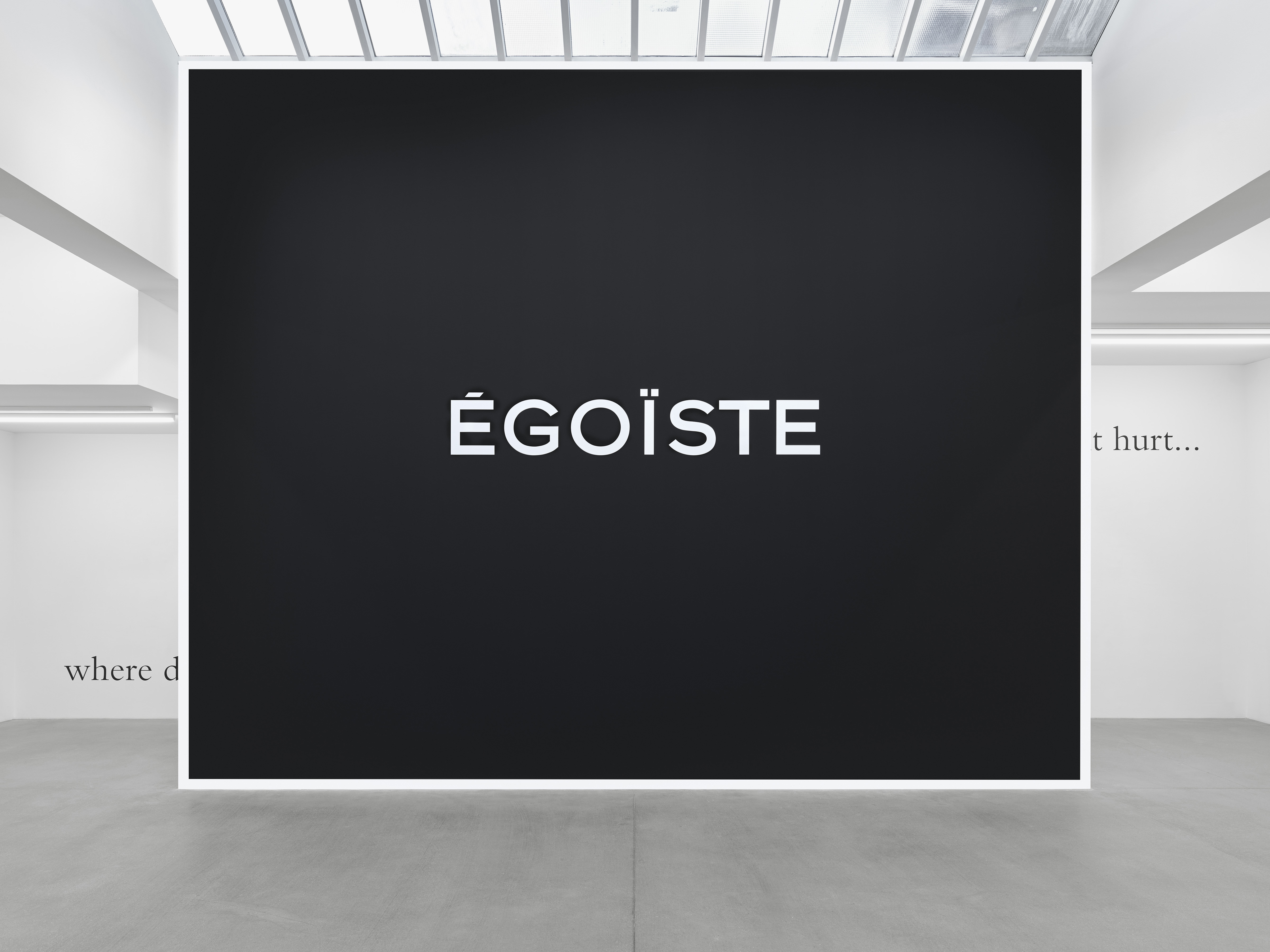
One of Sylvie Fleury’s foundational and most formal works, the painting Égoïste establishes the many iterations that came after it: wall installations, shopping bags, neon signs, and so forth. Taking the text and type from Chanel’s then-recently released perfume for men, the word becomes embedded with the multivalence of Fleury’s practice, drawing on the psychology of desire and consumerism within luxury shopping and art world critique.
Branding as both a commodity and an identity marker underpins Fleury’s well-established practice that recalls Minimalist and Pop Art approaches with a feminist bent. Just over thirty years after its making, the contemporaneous concerns of the artist—backdropped by the culture wars of the 1990s—are all the more relevant to the here and now.
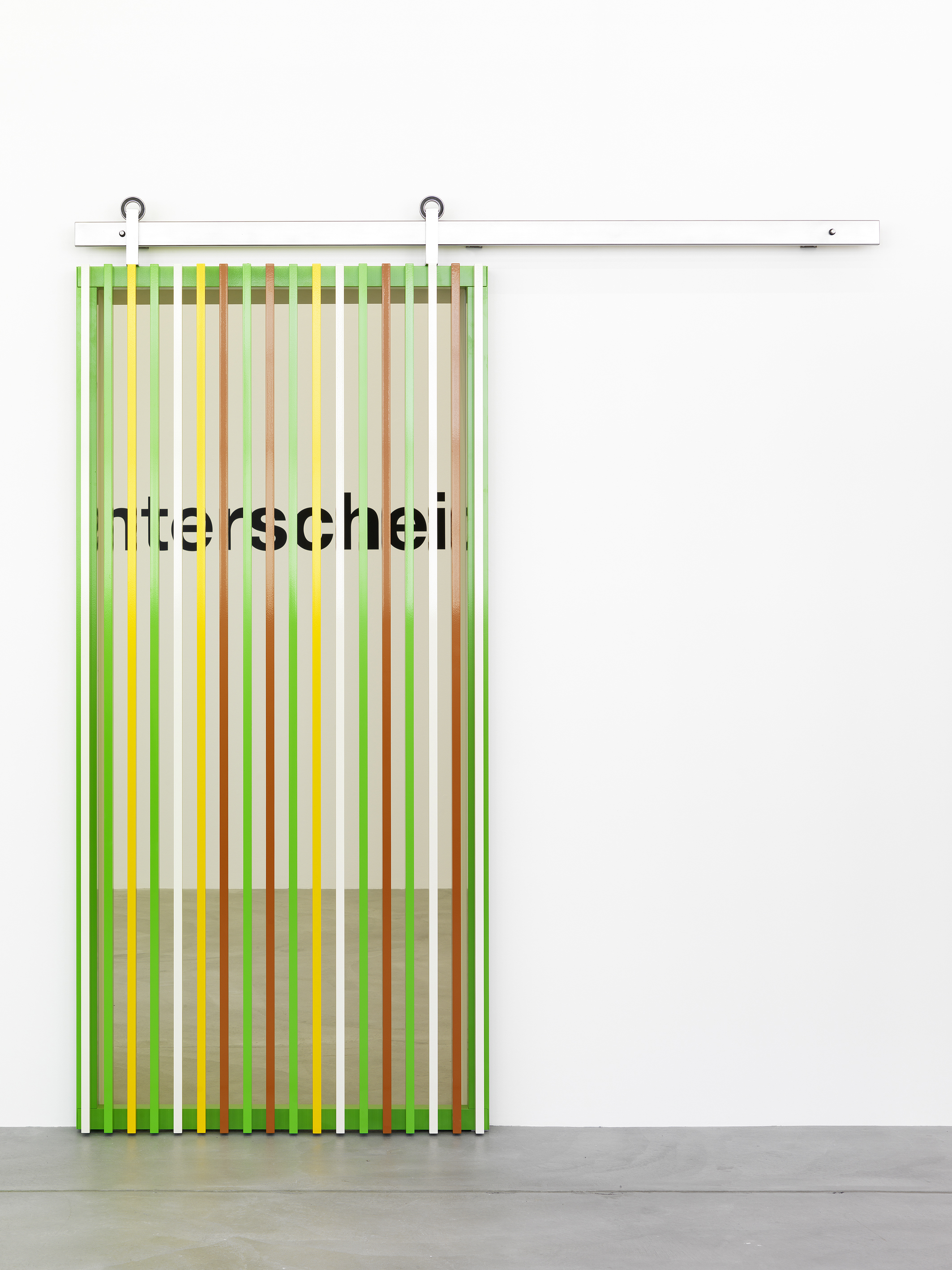
Liam Gillick’s installation for the German Pavilion at the Venice Biennale, How are you going to behave? A kitchen cat speaks (2009), remains one of my favourite works of all time. It is easy to remember the massive modular kitchen construction and the animatronic and all-knowing cat, but the multi-coloured sheets of plastic hanging in every doorway stick with me the most. Meant to mimic the anti-insect curtains that demarcate a porous and possibly threatening barrier from one space to another, they were clever, acerbic, and a little nefarious within the context.
As an obvious antecedent to Scorpion when Felix, the plastic curtains are now a classed-up powder-coated aluminium form, and their rigidity works with rather than against the space. The work beckons the layered connotations of transitory spaces, theatricality, and haptic interpretation that Gillick is known for.
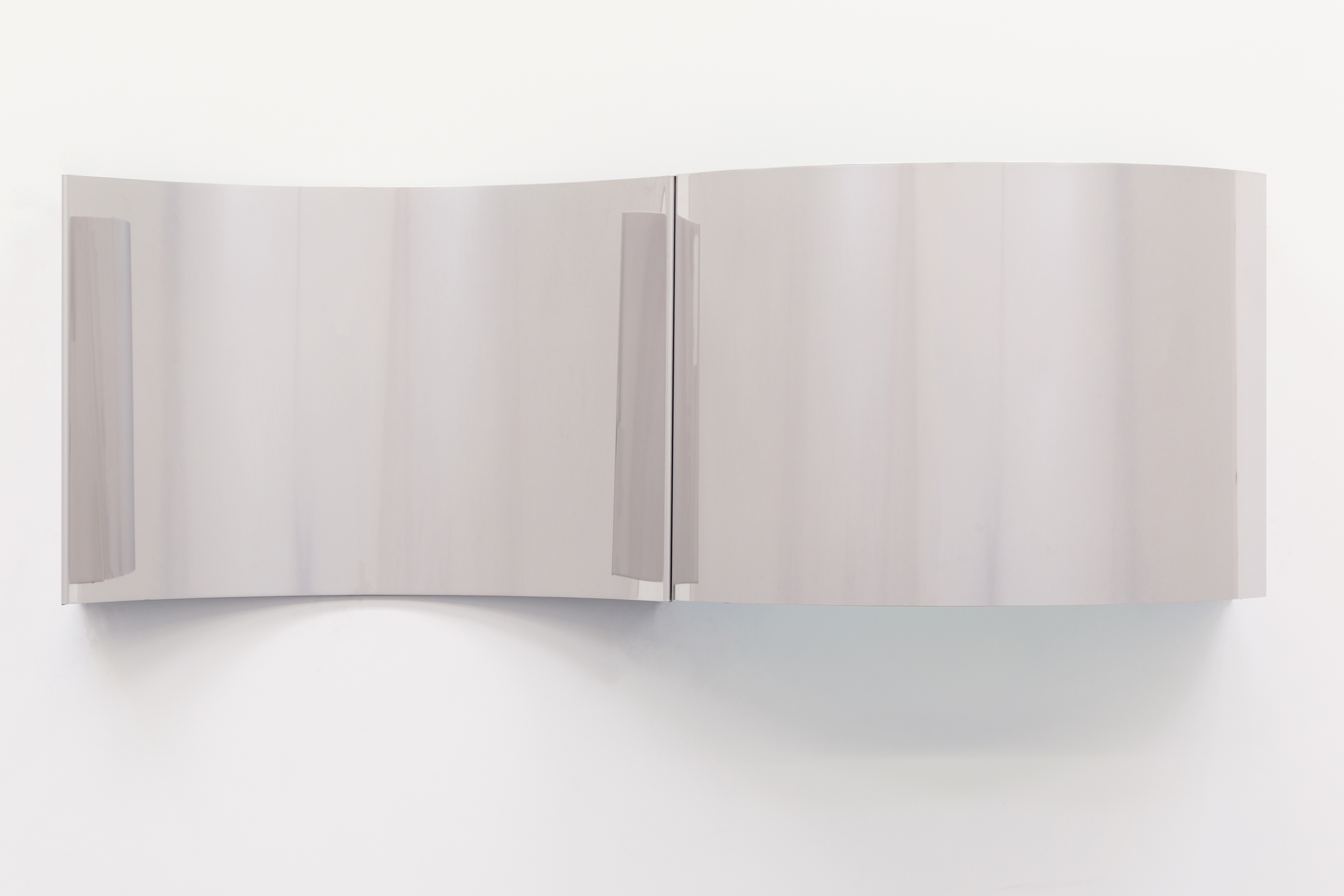
I think of the artist Walead Beshty as someone steeped in the systems of everyday life, with his conceptually driven practice that is informed by traces of technologies, chance, and perception. His tendency for the multiple, like his well-known and on-going Fed-Ex Works (2007–ongoing), aims to establish a series of objects manifested over a length of given time, which are created under a matrix of material uniformity and pre-set conditions like travel routes or art handling protocols. The slight variations in their final outcome by way of their aesthetic appearance becomes a collection of works that have a rhythm to their repetition and beget a pleasure in detailed difference.
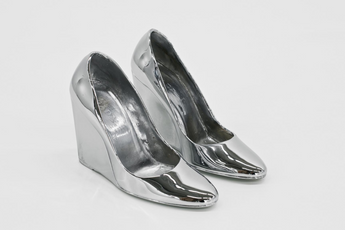
As such, Beshty has relied on modularity throughout his work, and it is no different within his Surrogate Works (2008–ongoing). Here, a Steel Surrogate is portrayed in the seductive finish of well-polished and reflective steel curving at a 120-degree arc—the human eye’s field of vision. As each surrogate has multiples meant to go together or separate, the configuration of the work is often left to curatorial interpretation, creating the opportunity to encounter the work differently each time. —[O]
A respected voice in contemporary art discourse.
Focusing on ambitious storytelling and insightful art-world commentary. Ocula Magazine publishes in-depth interviews, critical essays and timely analysis on the artists, exhibitions and ideas driving the global art world.
Learn more about Ocula Magazine
Showcasing the best of the art world.
Ocula partners with galleries from around the world to highlight their artists, artworks and exhibitions. Gallery membership is by application and invitation, with each member vetted by an independent panel.
Learn more about Ocula Membership
Specialises in the sale of major artworks.
Led by a team with deep ties to the world’s leading auction houses, galleries and collectors. Ocula’s advisory team offers bespoke services to high-net-worth clients from around the world who are looking to acquire the best of contemporary and modern art.
Learn more about our team and services