





Abraham Cruzvillegas is Ready to Work ‘Without Resources’
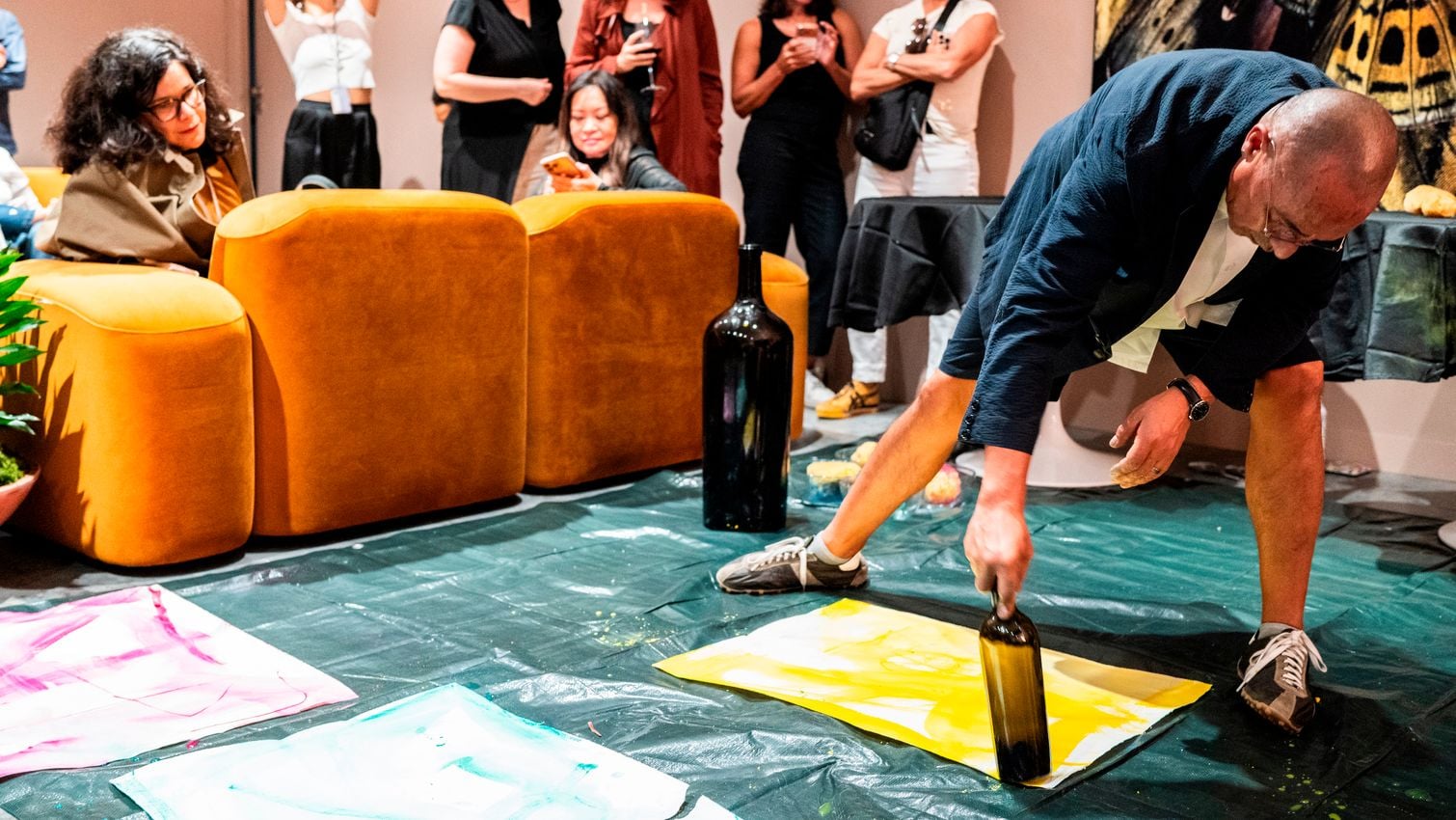
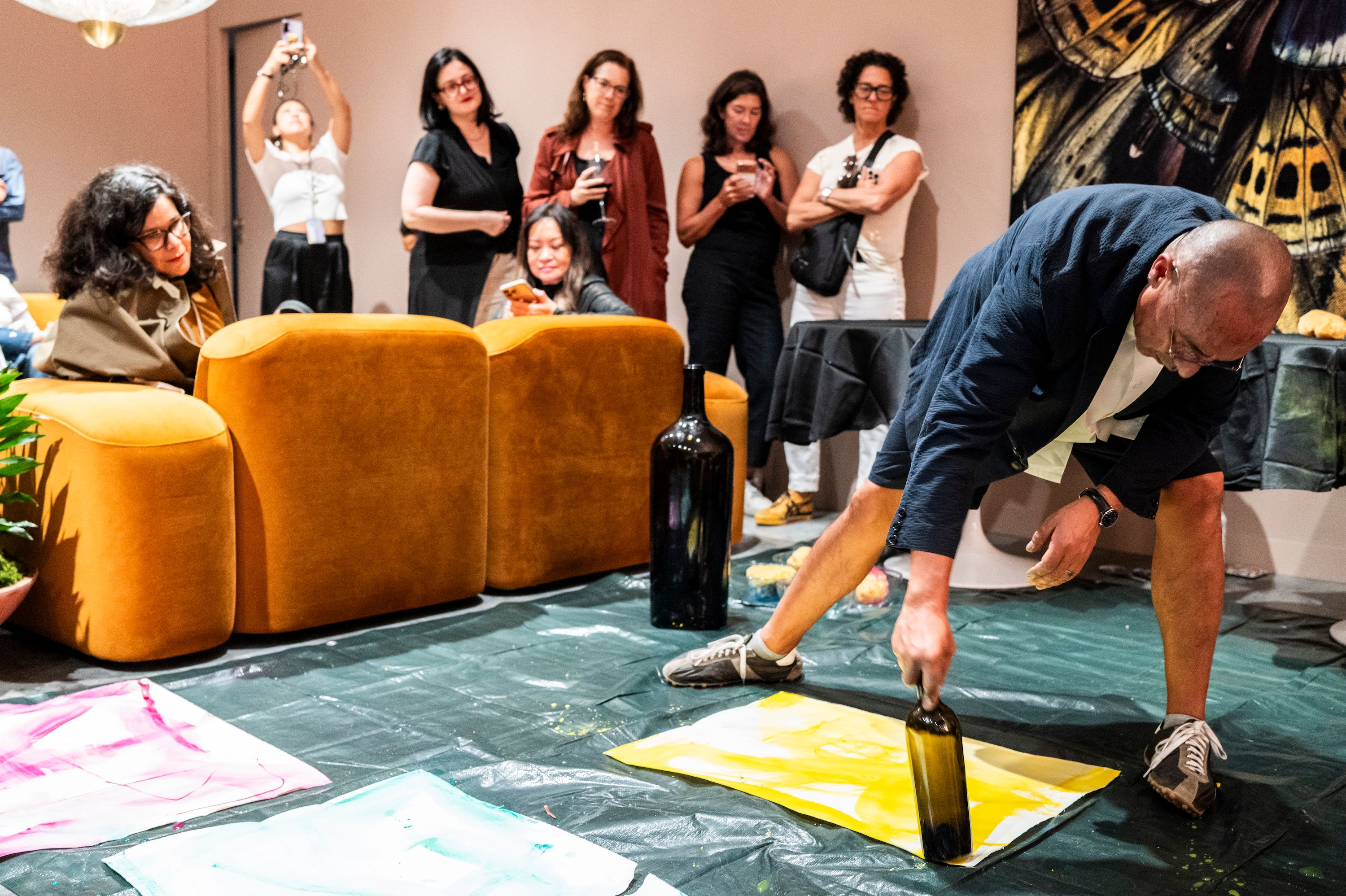
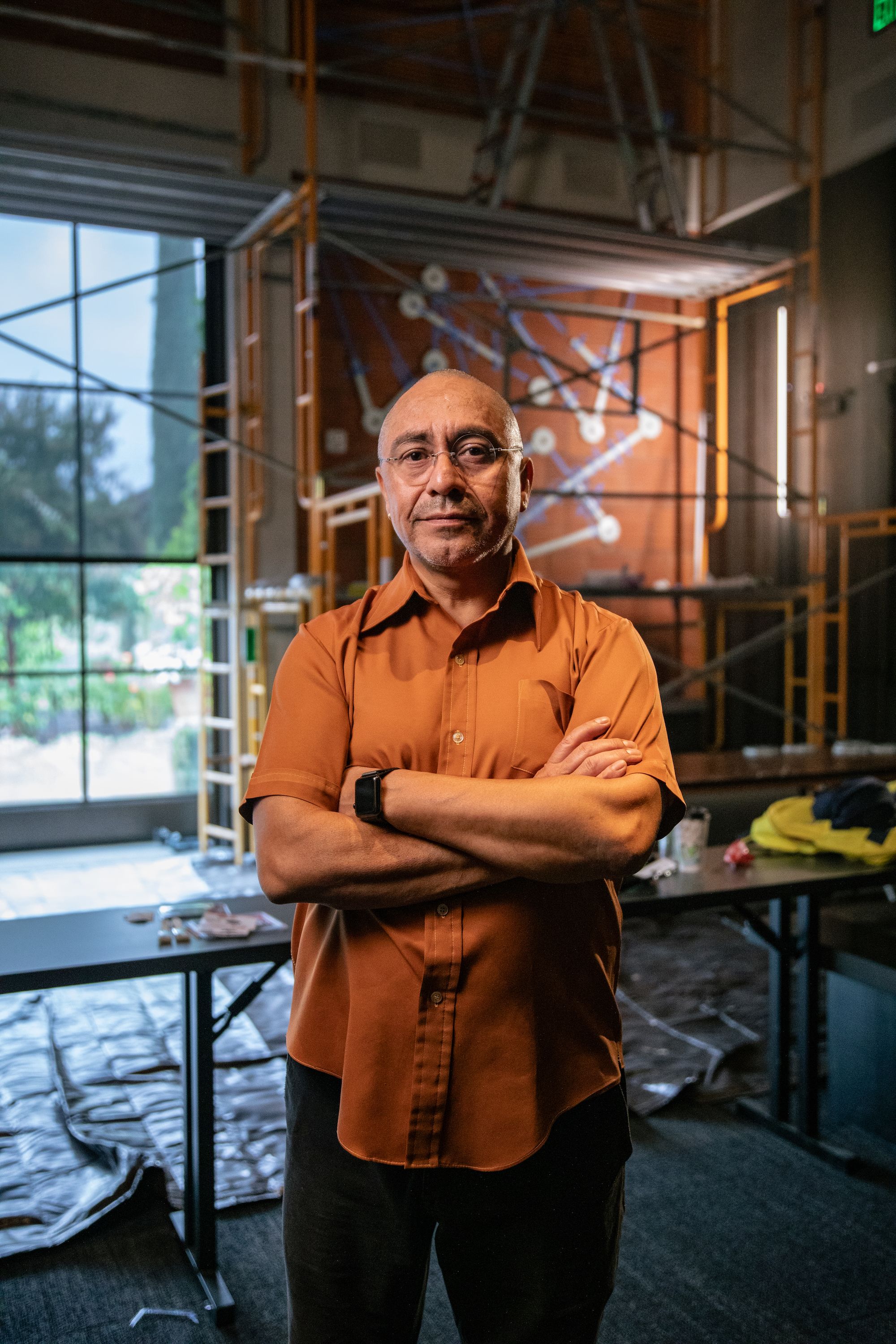
Following his live improvised performance at Art Basel Miami Beach, the Mexican conceptual artist suggests we should rethink how we consume art. Save to My OculaIn early December, a small crowd gathered as Mexico City-based conceptual artist Abraham Cruzvillegas crushed pigmented chalks into dust with the base of a wine bottle at Art Basel Miami Beach, dipped them into water and began to paint. The live drawing performance, commissioned by the Napa Valley-based Louis M. Martini winery, was staged in the heart of the fair. The artist’s starting point was a handful of requested materials: four small bowls of water, four sponges, pigmented chalks, paper, and one enormous, novelty-sized bottle of wine. From there, he improvised the rest, rhythmically crushing the chalks and using the pigmented dust to mix watercolours that he applied with the sponges. He produced a series of gestural, monochromatic drawings that he tore into pieces and fixed on to the bottle as a collage, which he presented to his rapt audience as the label for the vineyard’s newest wine.
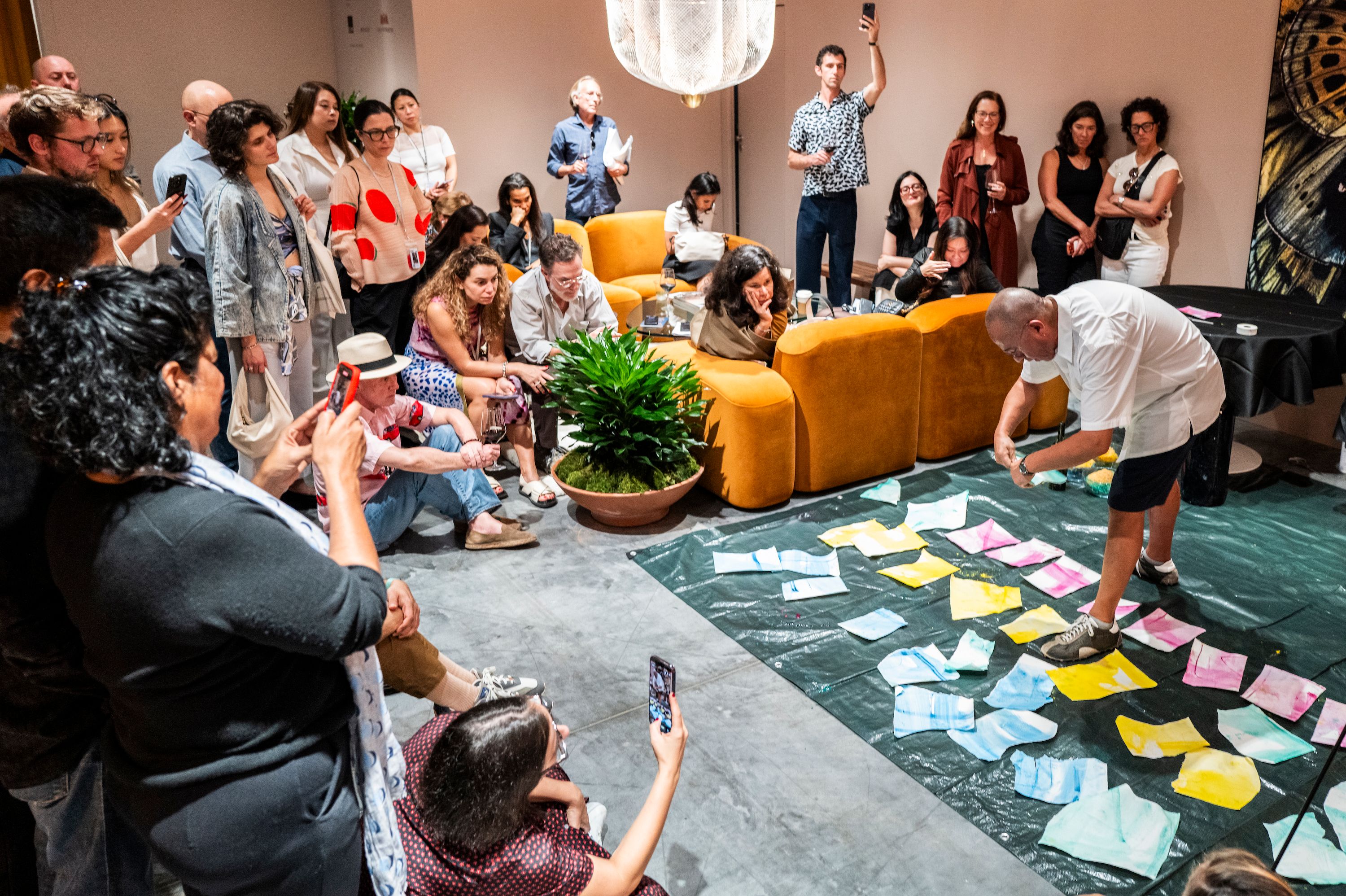

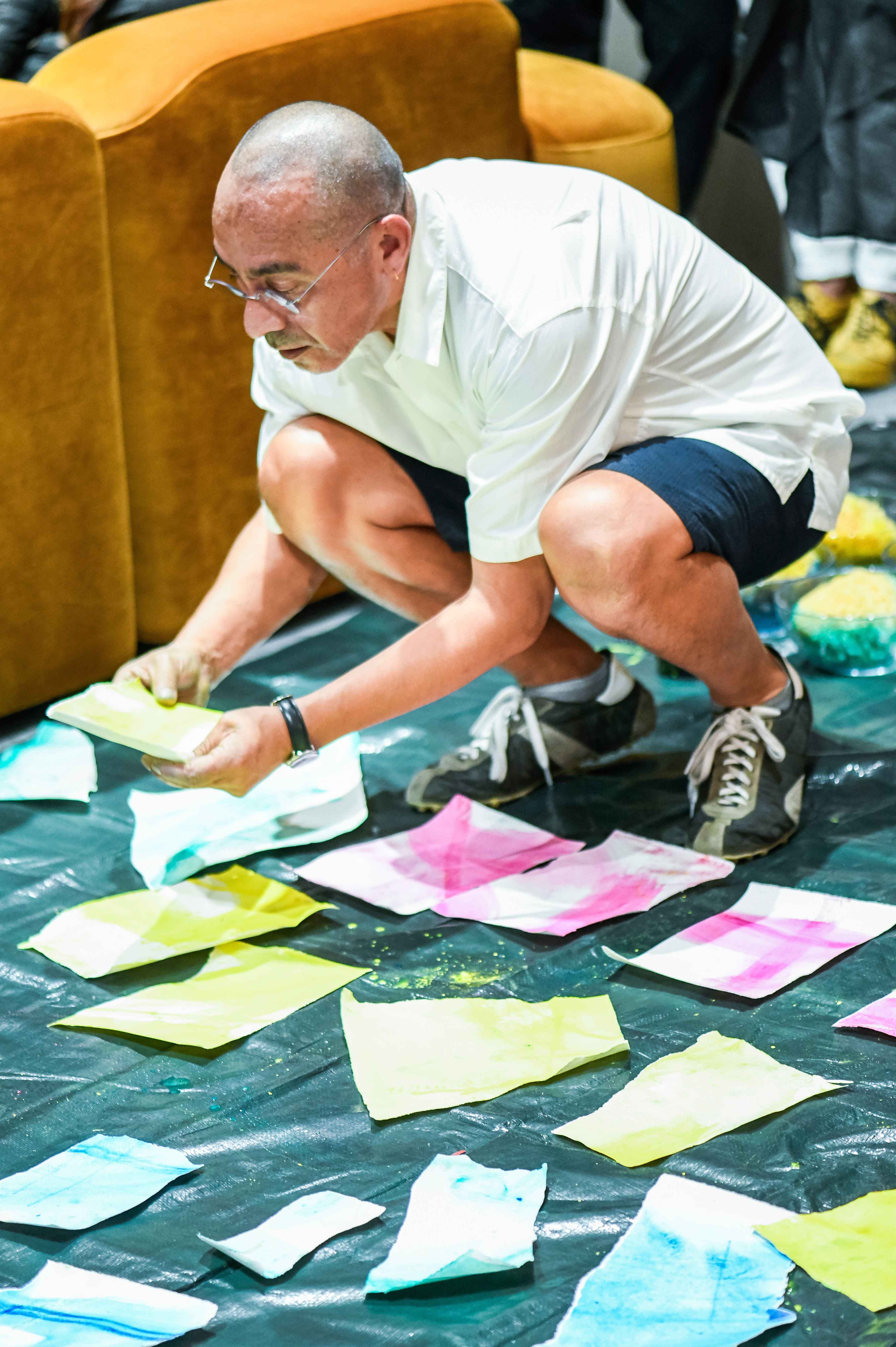
‘I grew up doing things without resources,’ Cruzvillegas tells me the next morning over coffee, explaining the origins of his improvisational performance in the ideas of autoconstrucción. From his childhood home in Mexico City to the shanty towns of Jamaica or the bidonvilles of France, the word describes a resourcefulness born of scarcity: ‘You make your home with whatever is at hand. You improvise, and then you recycle, and then you collaborate.’
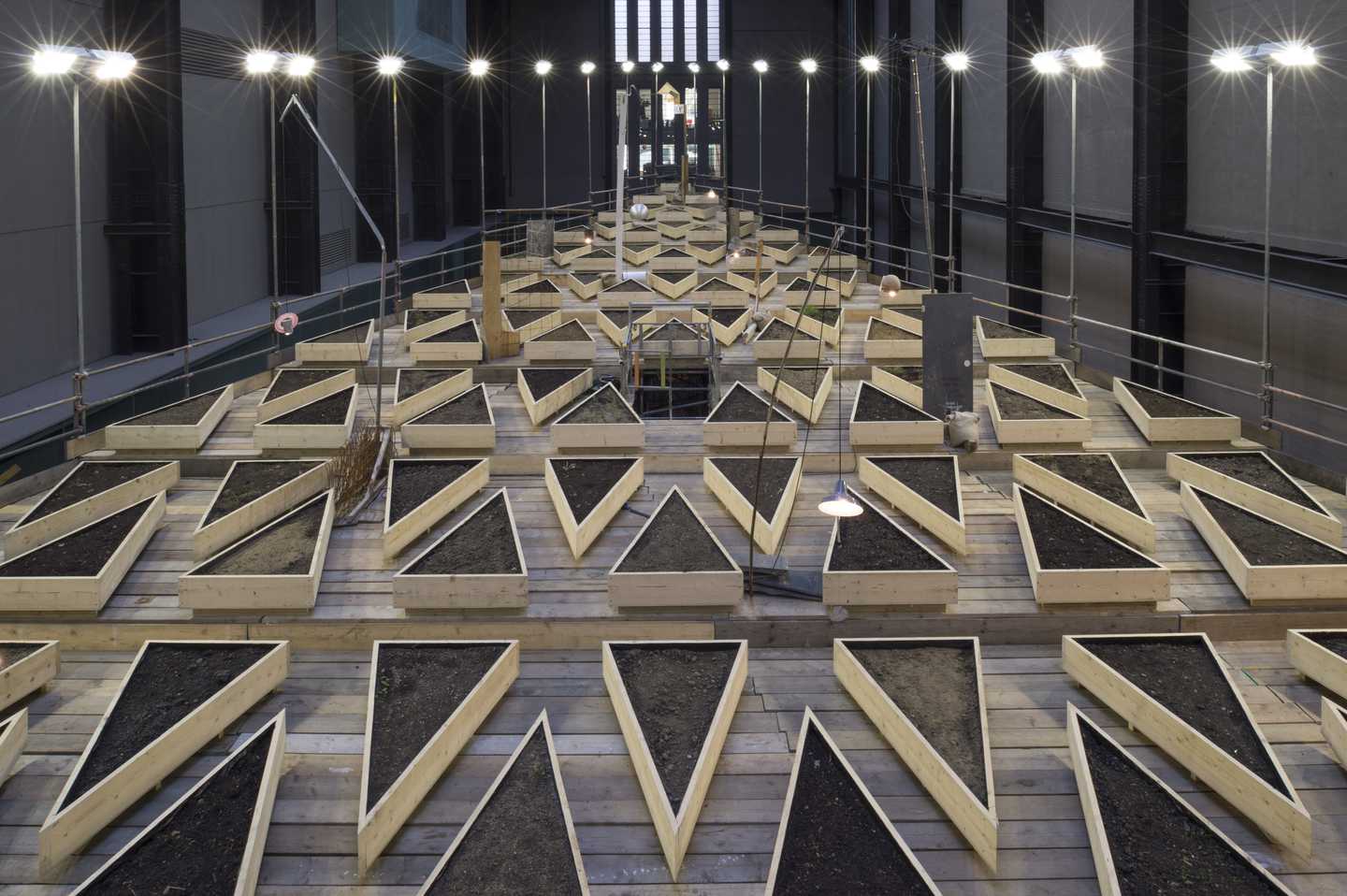
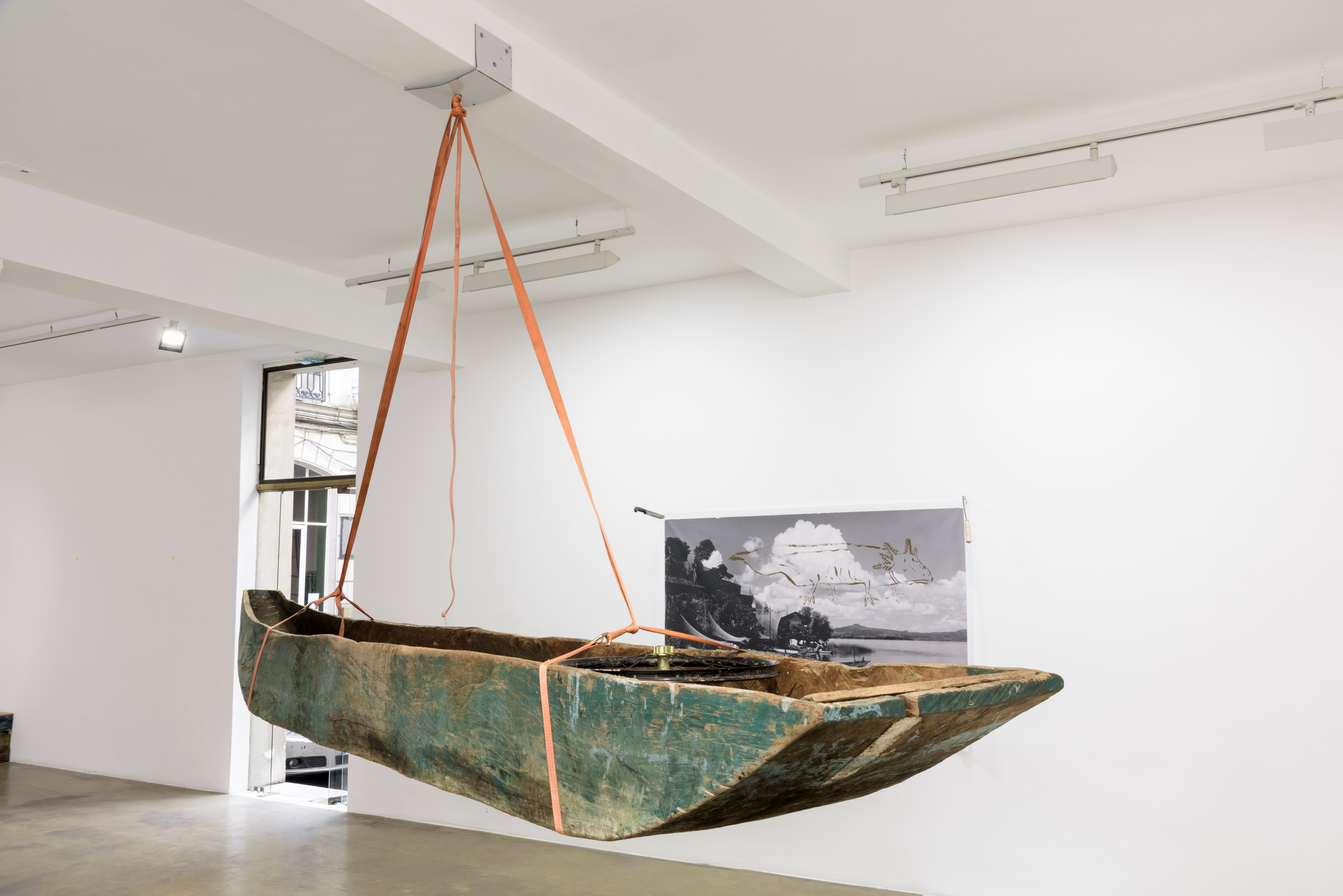
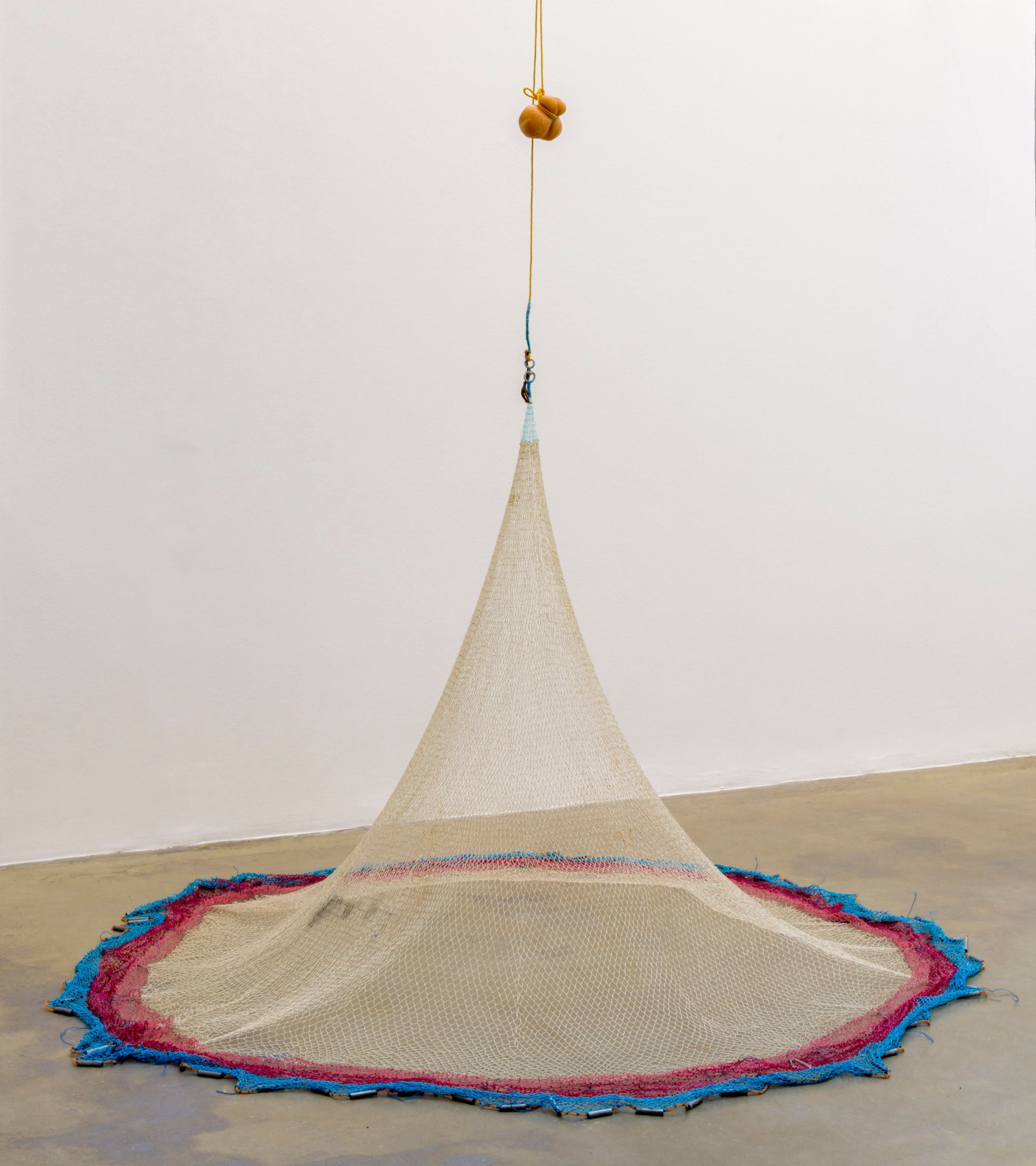
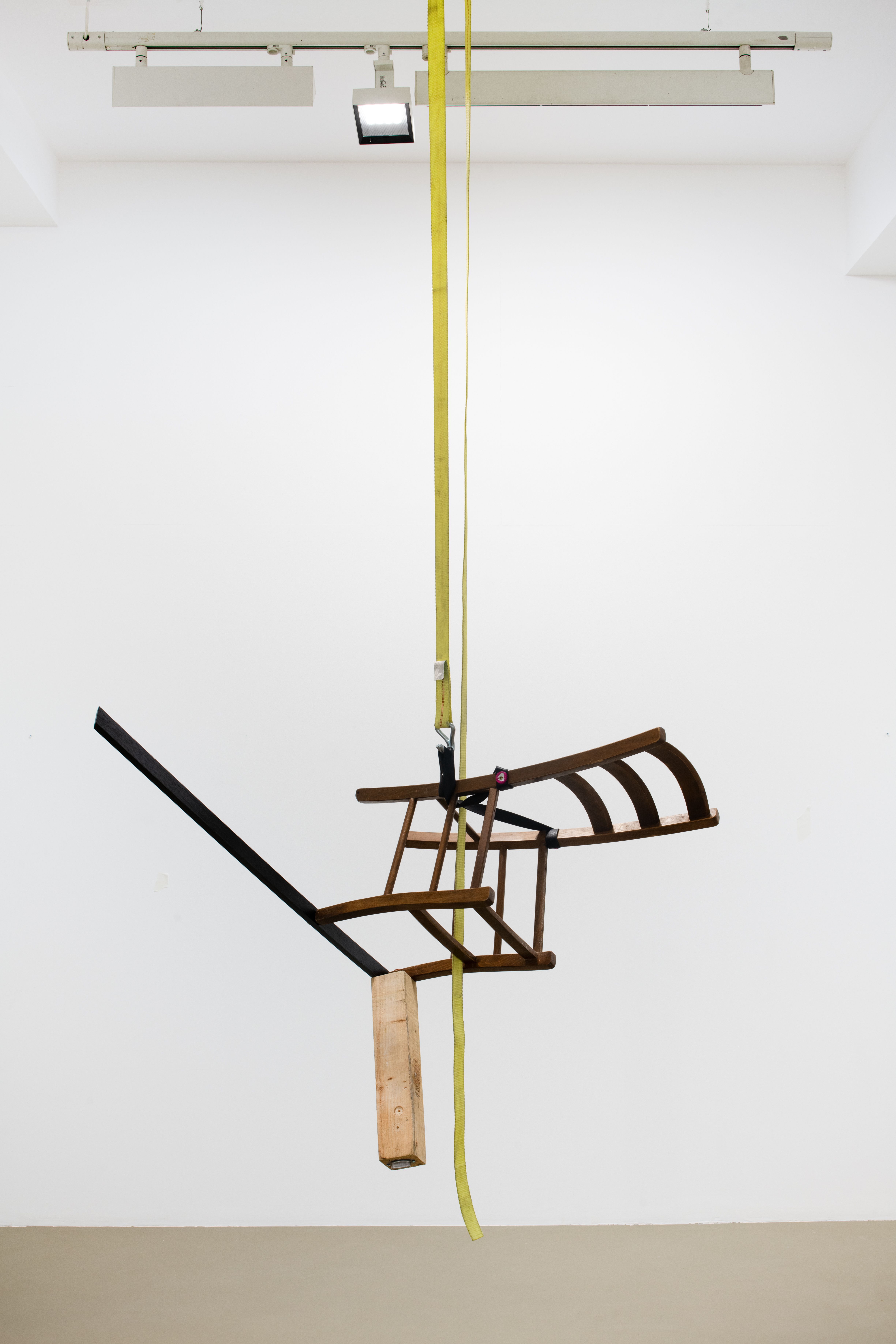
As a methodology, autoconstrucción embraces the imperfections of unpredictability, inefficiency and the perpetually unfinished. Since the early 1990s, these features have been central to Cruzvillegas’ practice, manifesting as installations of disparate found objects, assembled in unexpected and often humorous ways: knives and machetes stuck into a butcher’s block resembled a plume of feathers in Aeropuerto Alterno (2002) at the 2003 Venice Biennale; planters filled with London soil were watered and allowed to germinate in Empty Lot (2015) in Tate Modern’s Turbine Hall. Although the details are still in their early stages, lately he’s been thinking of how to apply the tenets of autoconstrucción in his role as the artistic director of the forthcoming inaugural Bienal de Yucatán (26 November 2026–28 February 2027). The resources at hand apply not only to the materials and artists of the region, but what can be borrowed through ‘relationships of work and collaboration with friends from abroad’.

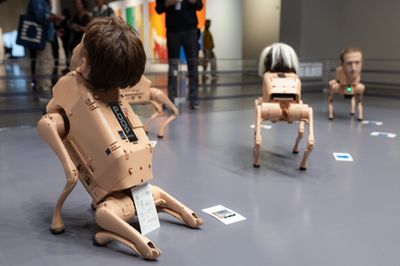
Reflecting on the latest edition of Art Basel Miami Beach, I ask Cruzvillegas for his take on Regular Animals (2025), Beeple’s AI-powered robotic dogs that grabbed headlines worldwide. The artist declines to comment on that work directly, but does express an ambivalence about the use of AI: ‘I don’t think I need it for what I do in general, like writing, educating, curating or making sculptures or drawings. But if I need it, why not?’ Despite his performance in Miami, Cruzvillegas adds: ‘I try to avoid the art fair environment.’ Although he has nothing against art fairs, and feels the utmost gratitude for everyone who’s supported his practice by buying his work, his stance is that: ‘We need to consume art, but we don’t really need to buy art.’ Having never bought a work of art himself—‘not once’—the art he owns is as a result of gifts and trades with other artists. ‘What I buy is books,’ he says.
When I ask Cruzvillegas how his success as an artist has changed his relationship to scarcity, he answers with words from his father, which he says have often been repeated: ‘We have to do things without resources, with resources and despite resources.’ Continued success is also never guaranteed, he adds, citing recent contractions in the market. ‘I’ve been very, very privileged in different ways, showing and sharing my work in big institutions with fantastic people in a very beautiful window of opportunities, but that’s also changing. The collapse of the market is a big opportunity now to challenge ourselves to do things without resources. I’m ready. I was born in that context myself.’ —[O]
Main image: Abraham Cruzvillegas for Louis M. Martini at Art Basel Miami Beach (5–7 December 2025). Courtesy the artist and kurimanzutto, Mexico City/New York. Photo: Zack Paris.









A respected voice in contemporary art discourse.
Focusing on ambitious storytelling and insightful art-world commentary. Ocula Magazine publishes in-depth interviews, critical essays and timely analysis on the artists, exhibitions and ideas driving the global art world.
Learn more about Ocula Magazine
Showcasing the best of the art world.
Ocula partners with galleries from around the world to highlight their artists, artworks and exhibitions. Gallery membership is by application and invitation, with each member vetted by an independent panel.
Learn more about Ocula Membership
Specialises in the sale of major artworks.
Led by a team with deep ties to the world’s leading auction houses, galleries and collectors. Ocula’s advisory team offers bespoke services to high-net-worth clients from around the world who are looking to acquire the best of contemporary and modern art.
Learn more about our team and services