The art world in focus
Subscribe to our newsletter for news and insights on artists, galleries and exhibitions.


In a cavernous art space on the Lower East Side, a voiceover is barking orders, urging increased efficiency. ‘Your rating is at risk.’ ‘You have just gotten into this level.’ ‘Go ahead and feel at one with your bike.’ It is an imperative to optimise, reminiscent of news stories of Amazon drivers peeing in bottles in a desperate attempt to keep delivering and make quota, or the DoorDash driver who was recently shot multiple times in Texas while on a delivery run.
Imagine a future where the streets are populated solely by an army of imperilled delivery drivers on the move between takeout kitchens and the homes of screen-addled users of the platform economy. Ayoung Kim’s performance Body^n is the latest in a series of works by the Seoul-based artist that feature delivery drivers and pose questions around speculative futures, as well as love and desire in a time of non-stop productivity. Kim creates a world that may feel fantastical—borrowing from the aesthetics of anime and online gaming—but her inspiration is the real-world dynamics of late-stage capitalism, wherein aggression and debasement are the norm.
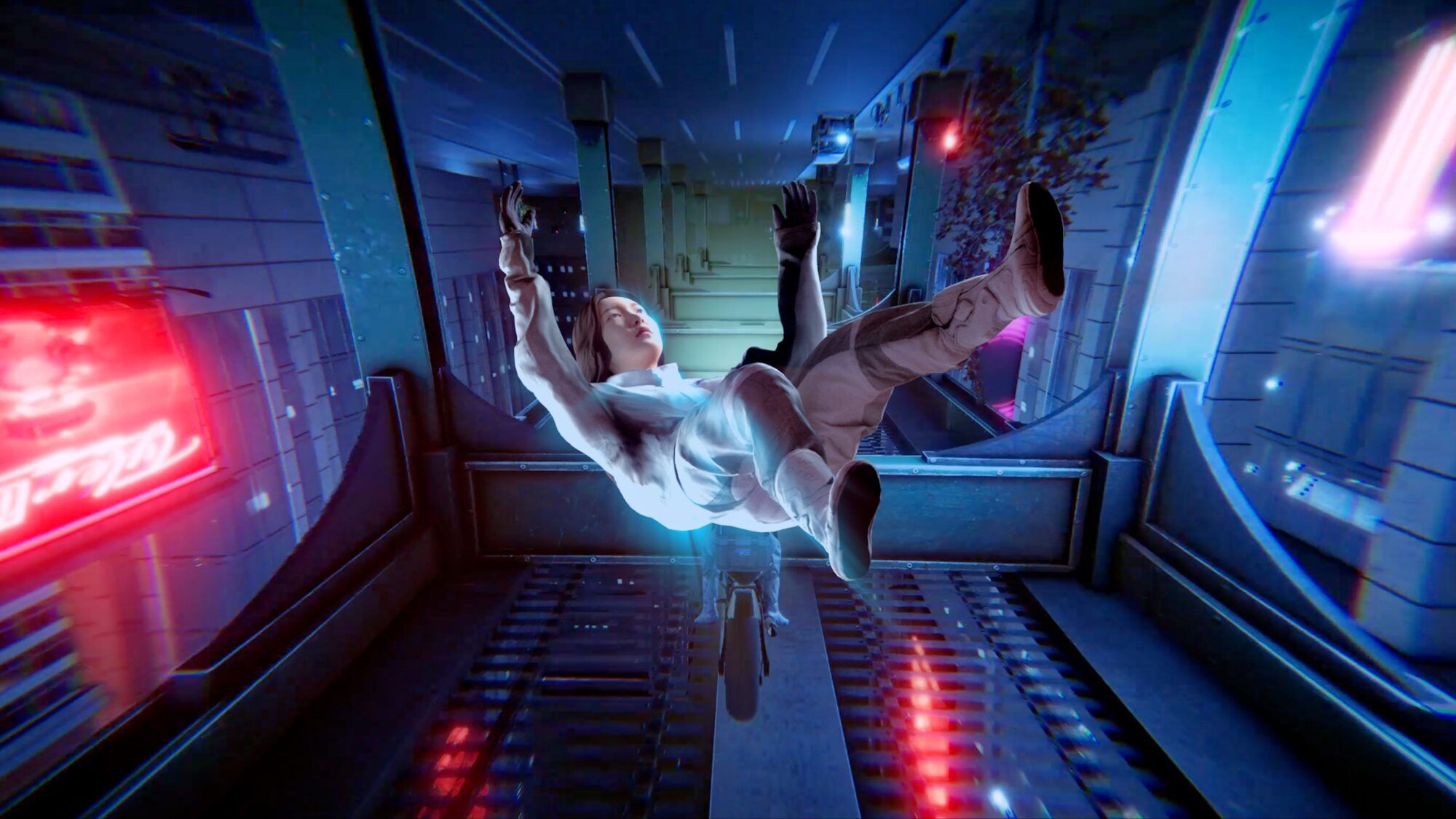
The performance, commissioned for Performa’s 2025 Biennial (the festival of performance art that stages events at venues and institutions across New York City), takes place in the cavernous lower level of Canyon, a new, 40,000-square-foot cultural venue for video, sound, and other durational artist works on the Lower East Side. The choice of venue offers an early preview of the space—founded by financier Robert Rosenkranz and led by former Mass MoCA director Joseph C. Thompson and scheduled to open to the public in 2026—as well as inviting a more immersive experience with Kim’s work. Body^n centres the same themes and characters—female delivery drivers locked in a battle to survive a dangerous and ultra-competitive landscape of gig work—as Delivery Dancer Codex, part of Kim’s sprawling multi-media Delivery Dancer series, which debuted in the U.S. in early November in a new solo presentation at MoMA PS1.
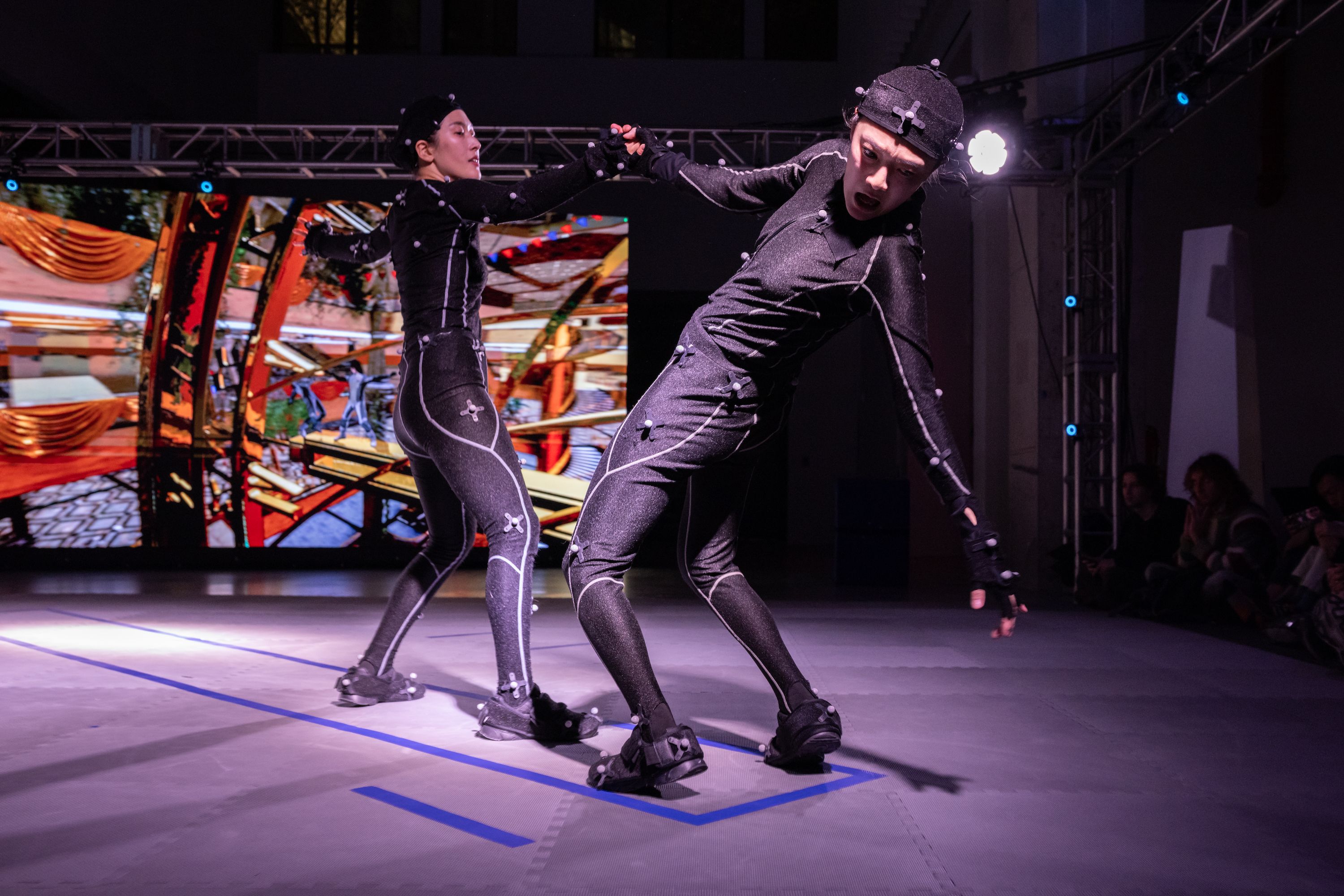
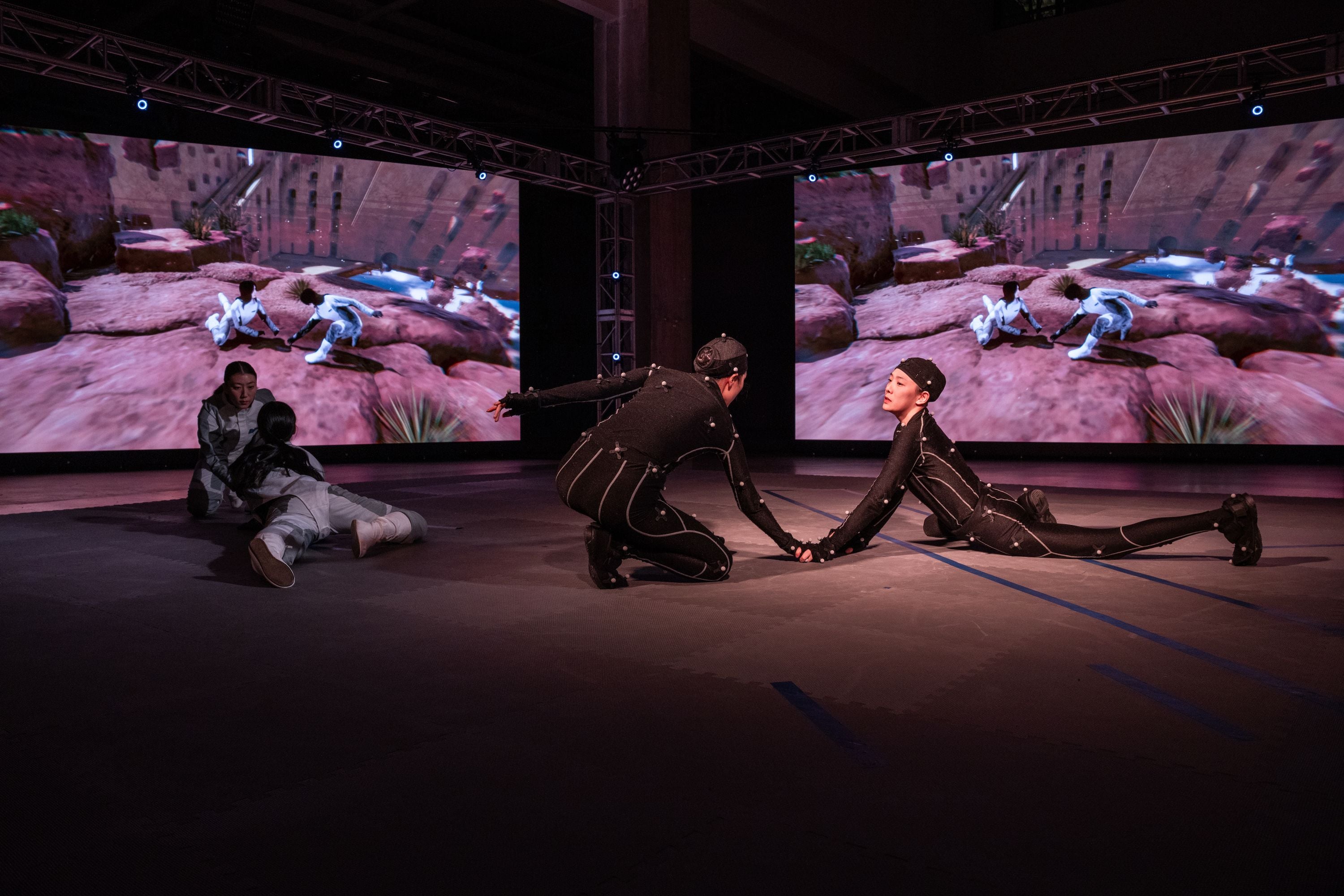
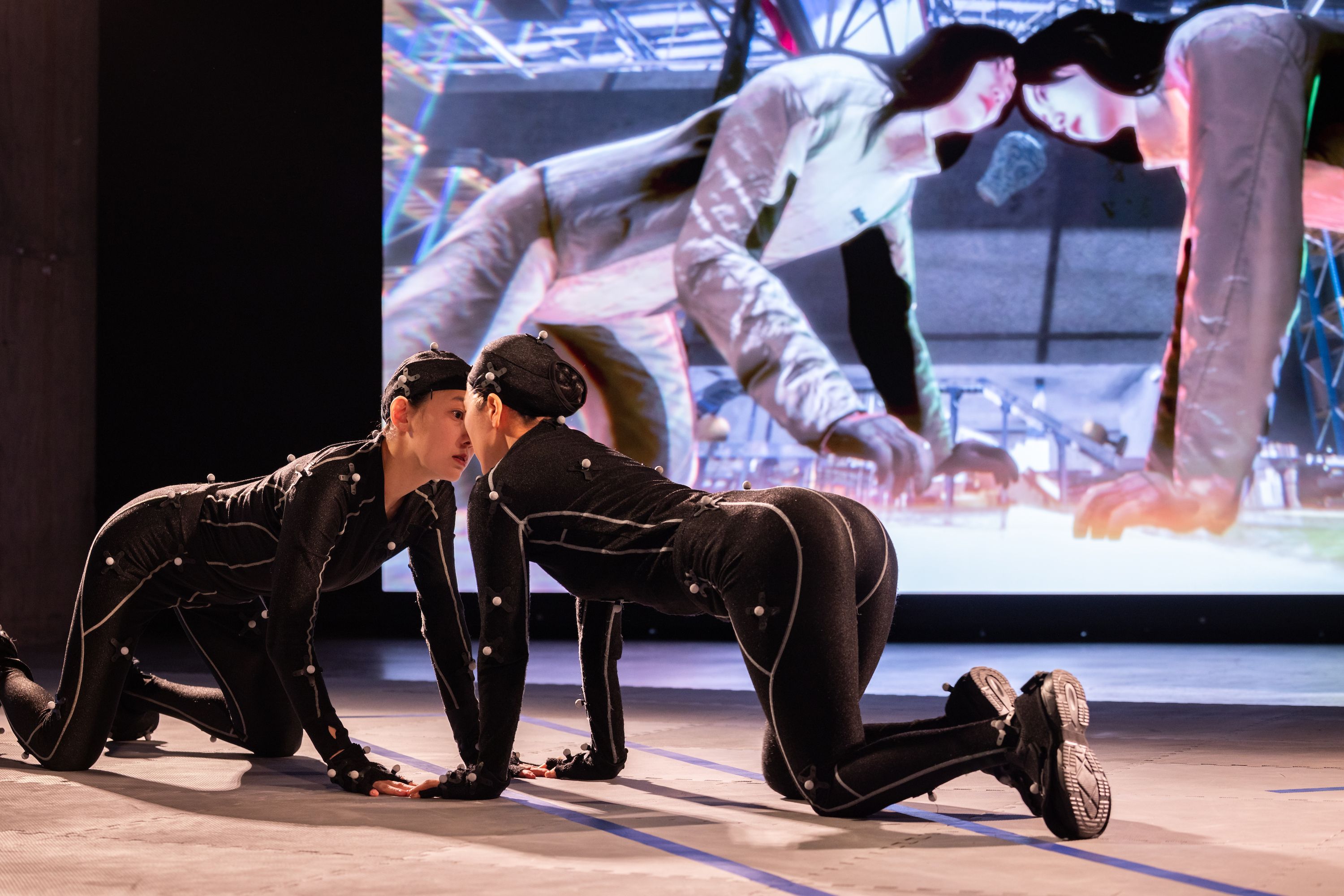
Body^n gathers the audience within the bounds of two large screens that unite to create a kind of corner. Nestled beneath the impossibly tall ceilings of Canyon’s central hall—the space’s name was coined by artist Ian Cheng (an advisor for the project), and partially alludes to its 60-foot-tall ceilings (as well as the feeling of walking through New York’s mountainous skyscrapers)—motion capture cameras mounted on scaffolding peer over and around the entire stage, offering a complete view of the action down below. Martial arts mats are spread out for floor seating, diagonal to the screens. From this vantage point, the intricately choreographed dance battle—set to electronic music deliberately infused with Asian instruments by Kim’s longtime collaborator D.K. aka Dang Khoa Chau—performed by the live actors looks even more dramatic, with each blow seeming to come within millimetres of making physical contact.
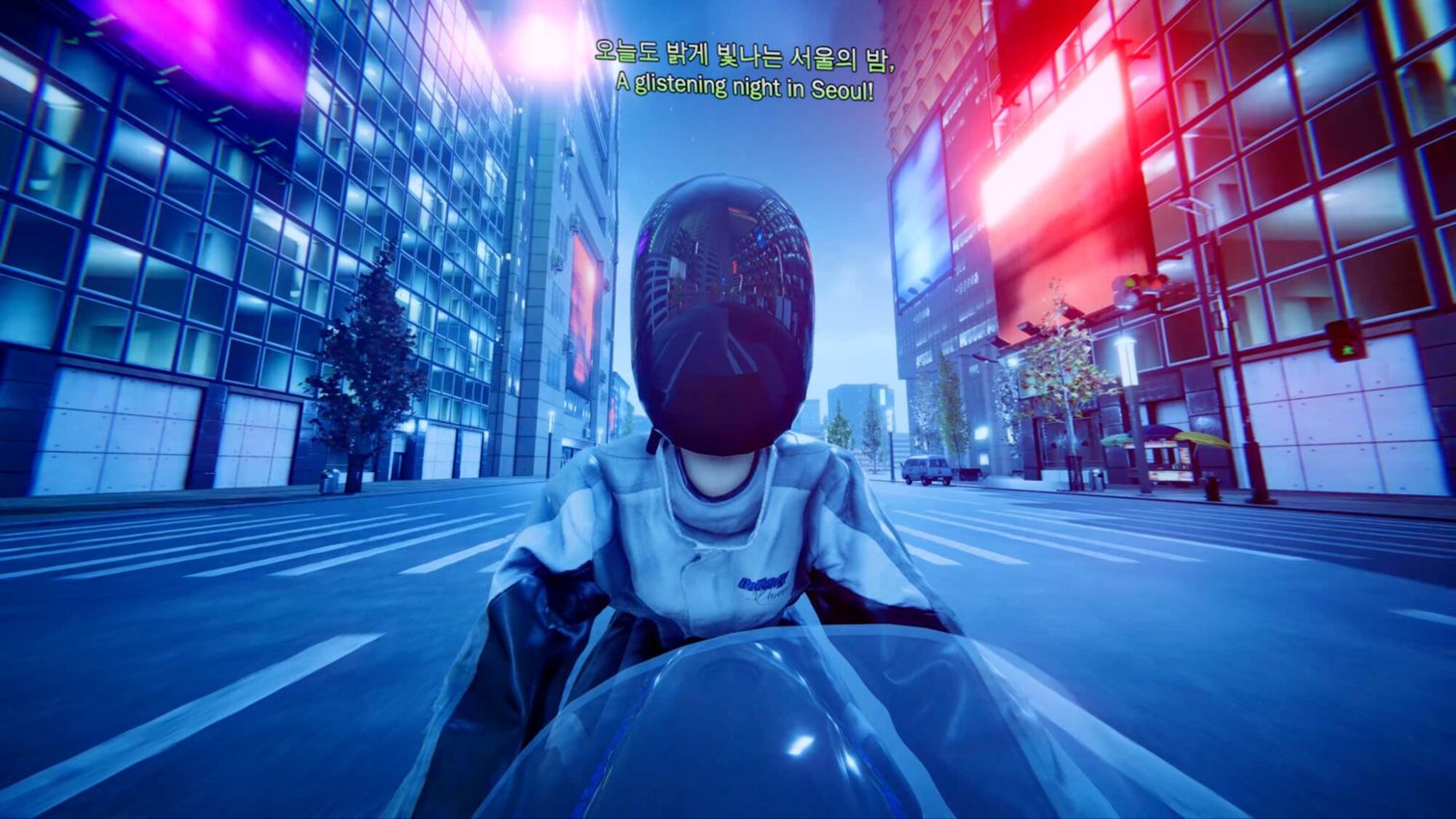
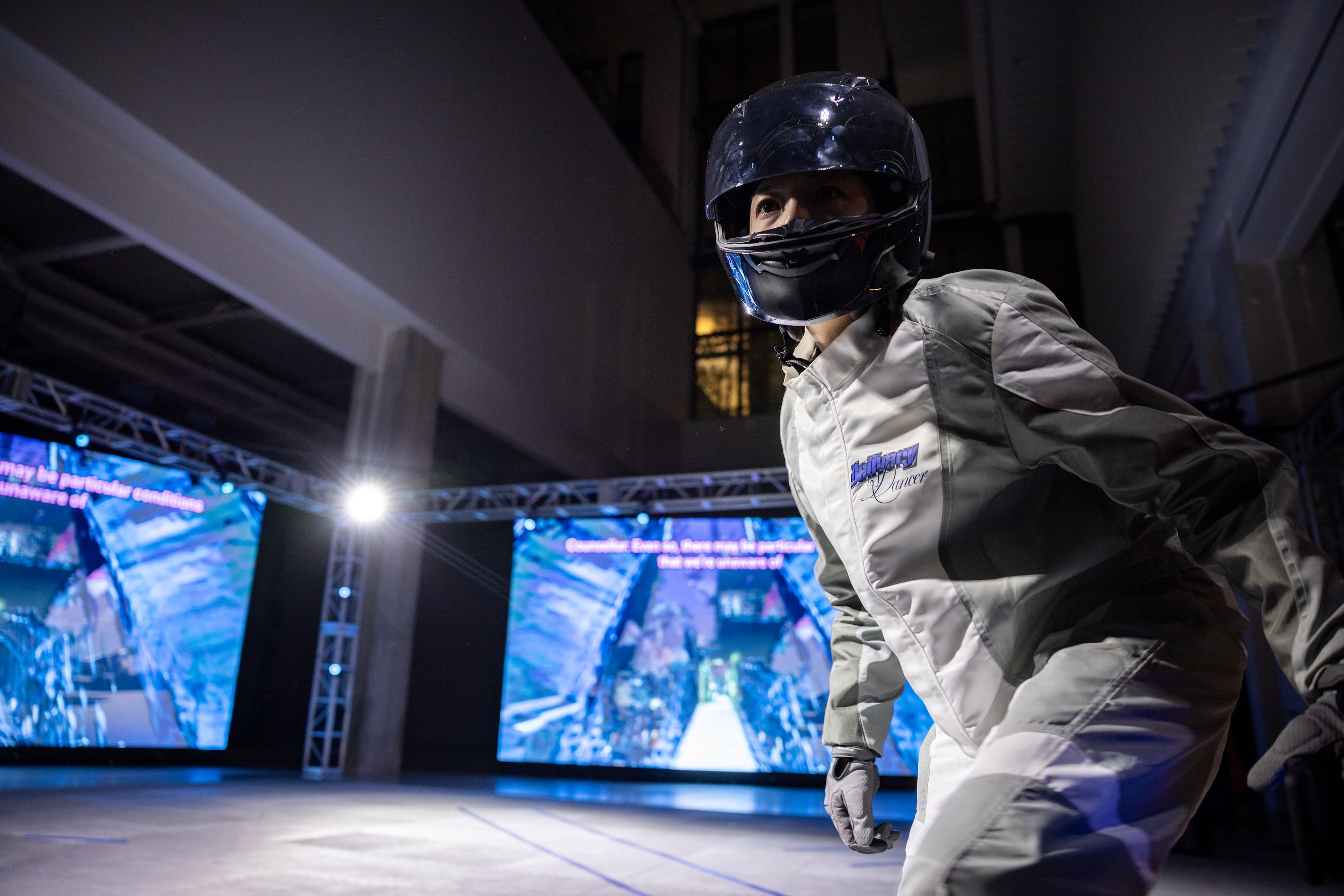
Kim uses moving image, video, VR, performance, motion capture and game simulation to examine the relationships between the body and self-optimisation within the ever-changing, impossible standards of performance. Body^n begins with the appearance of one breathless female actor in a white motorcycle racing suit, crouched low and glancing around the room furtively. She runs offstage, then returns with her doppelgänger, then another figure, then another, totalling four performers. Two of the actors strip down and suit up in motion capture gear—they are transformed on-screen into the two delivery driver characters, Ernst Mo and En Storm. We hear their names as they speak to each other in the piece’s voiceover narrative, and can identify them as ongoing characters from Kim’s Delivery Dancer series. The other two performers don attire fit for a motorbike race; at times, their movements mirror not just each other but also those of the characters appearing in real-time on the screens behind them via motion capture.
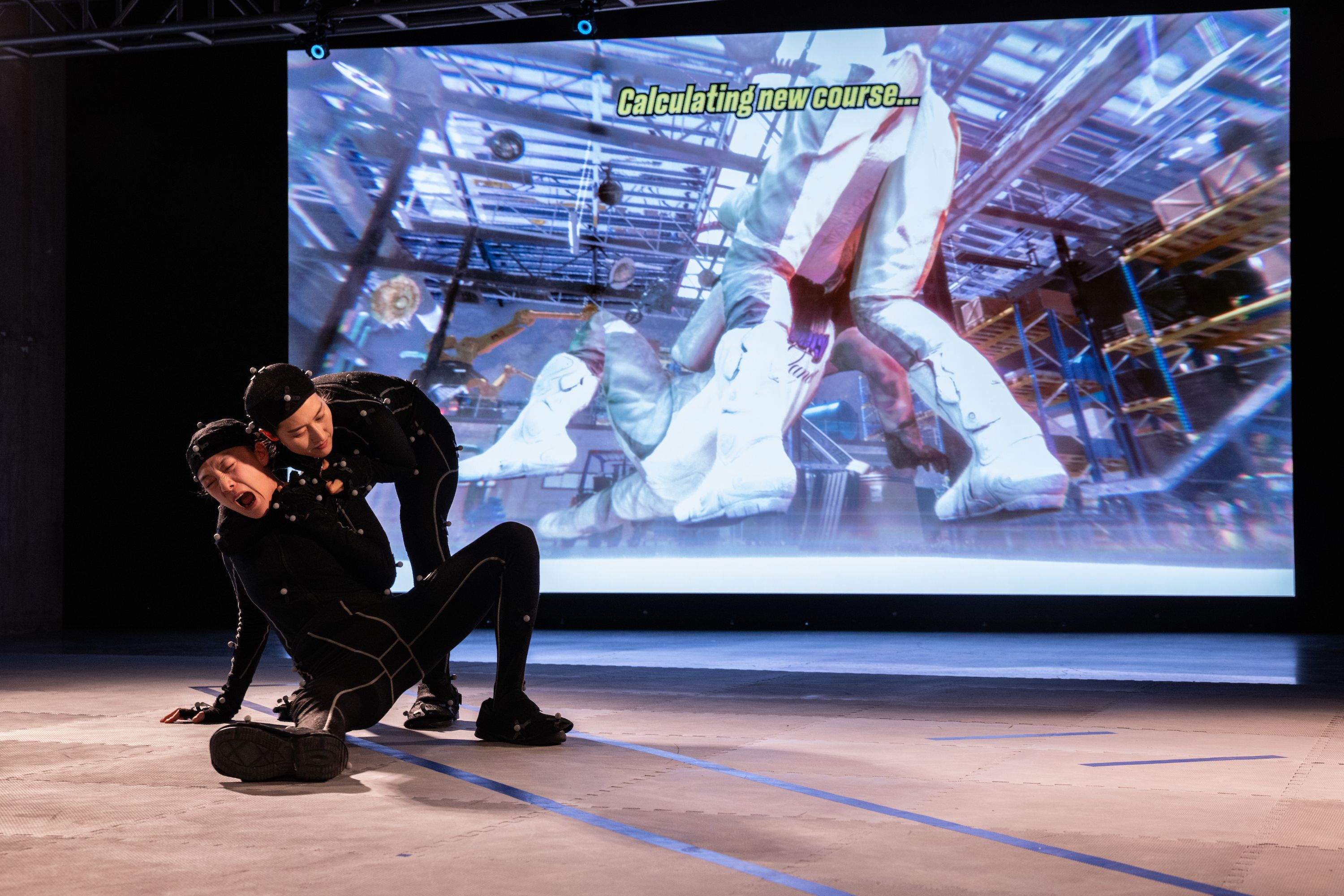
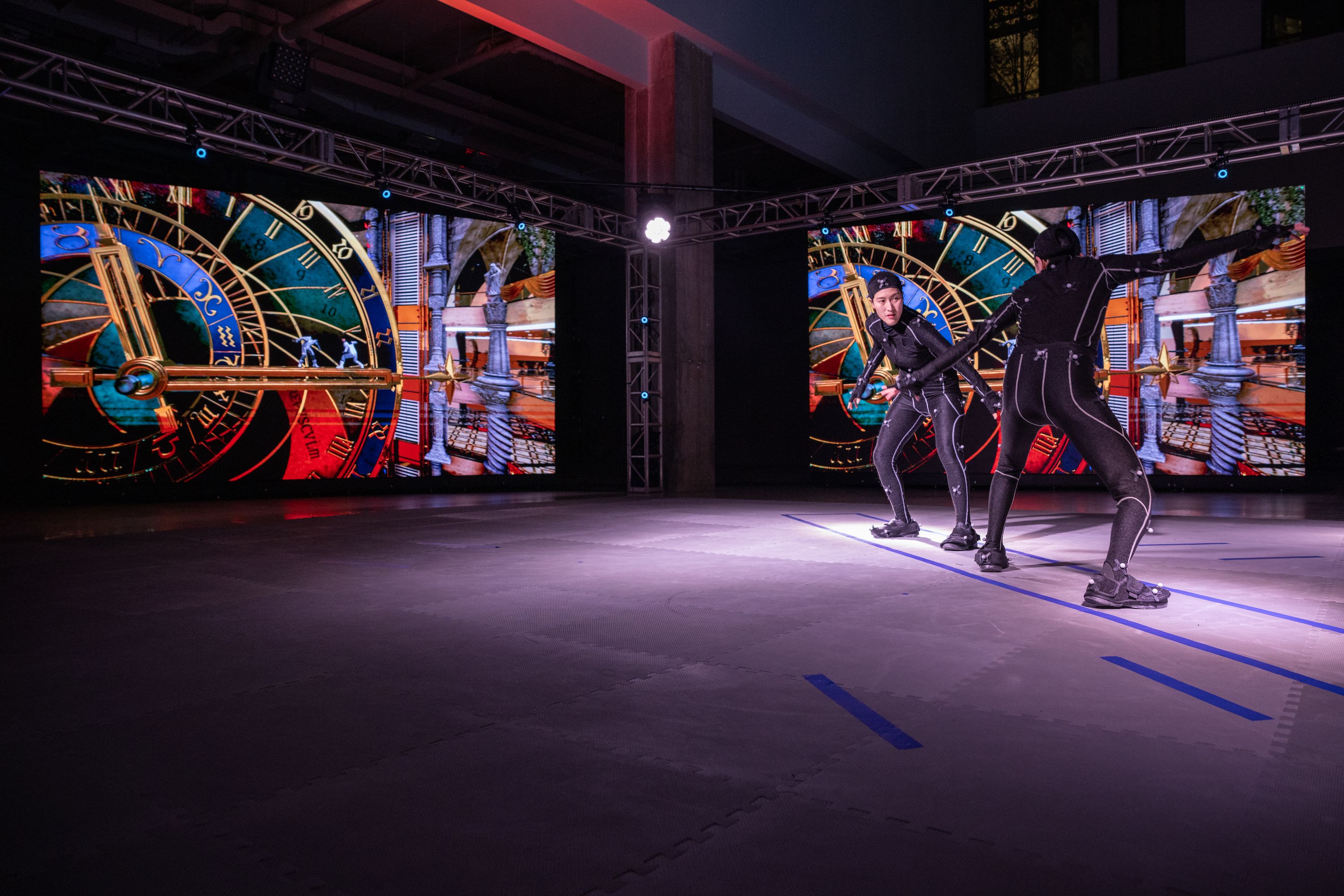
The screens depict a winding, ever-growing maze of concrete, metal, air and glass. A female voiceover alludes to a city full of ‘antidepressants, antihistamines [and] antibiotics’, a city designed to capture one primary commodity: time. Throughout the 50-minute performance, Ernst Mo and En Storm are in a perpetual chase. They first meet in what appears as a desire not to be touched, moving in orbit as if threatened by the other. They later forge a dance of sapphic aggression as the thrum of electronic music pulses around the room, occasionally taking turns choking one another, throwing kicks and punches, and overpowering each other both on the screen and onstage. Body^n plays openly with the tropes Kim culls from a genre of Korean anime known as GL or Girls’ Love, where female friendships take on erotic undercurrents.
This is most palpable during the times when all four women are onstage, enacting a breathless choreography of twinned exertion, of battles lost and won in the span of a few moments. Just before the antagonism reaches its apex, the narrative resets and so do the ‘dancers’, their digital counterparts on the surrounding screens flying through a decaying cityscape.
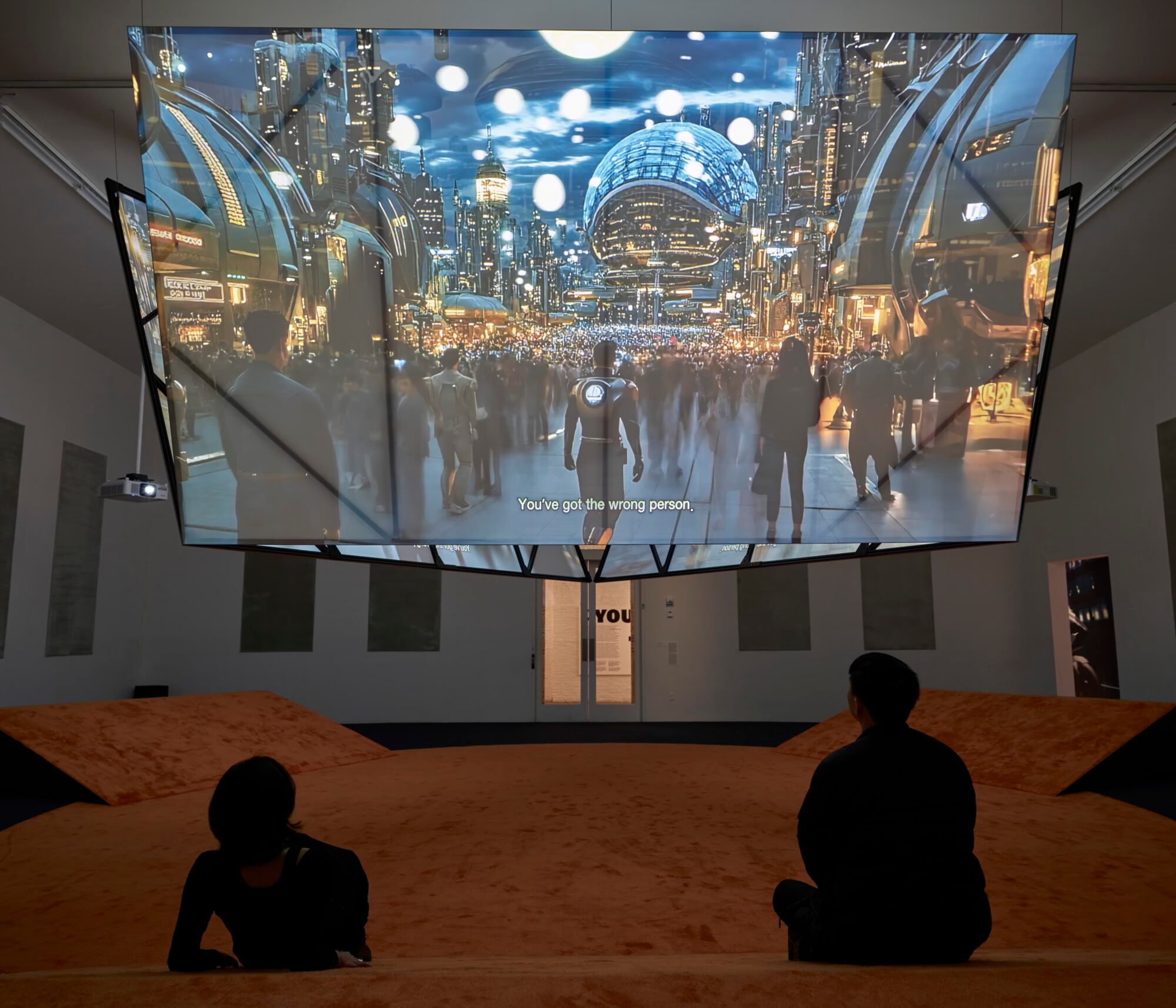
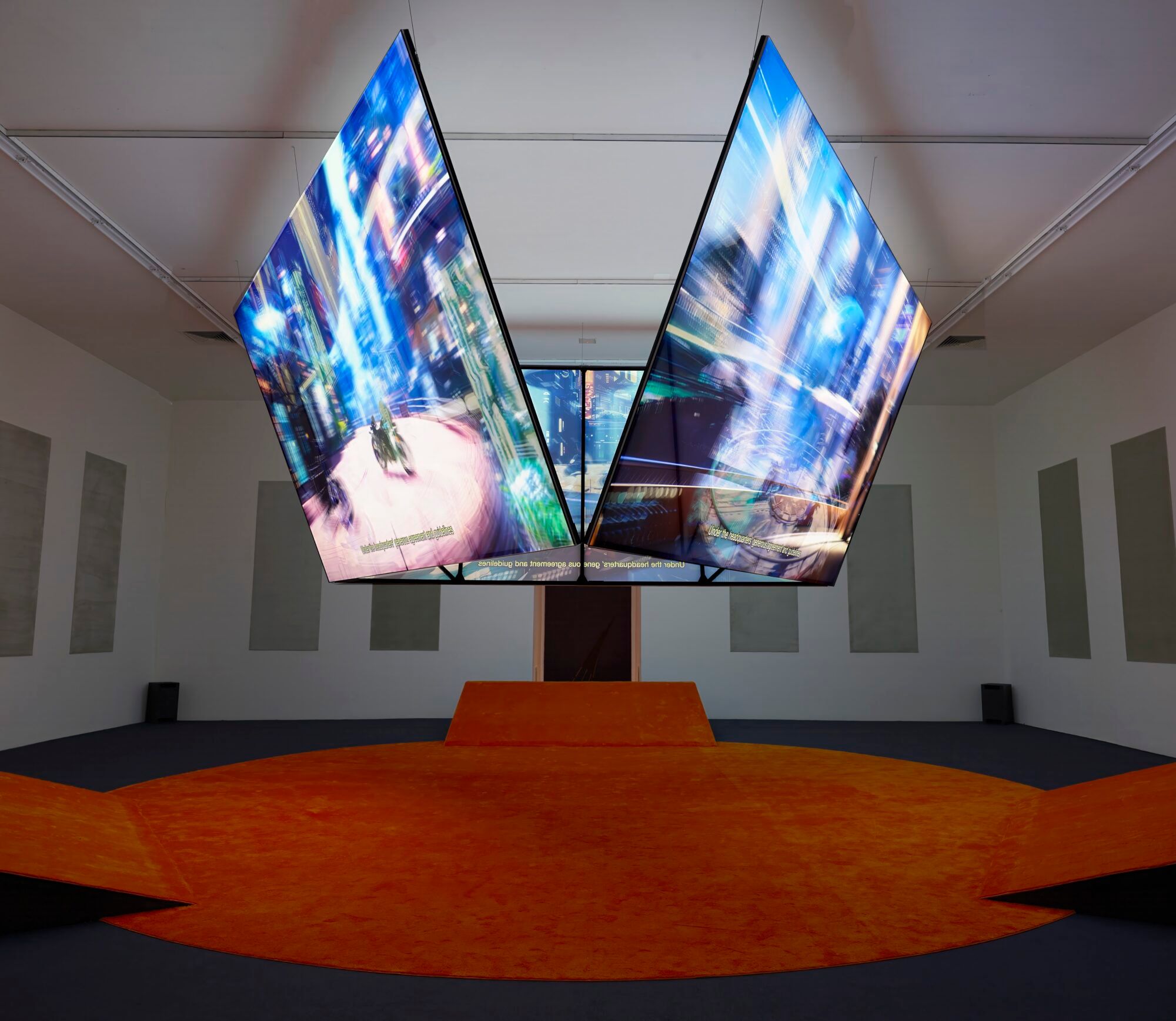
Speed and motion are crucial to the figures, in an app-driven world where everything is or can be commodified—and gamified. The piece as a whole uses the visual language of online gaming as a means of communicating the power plays of capitalism, with the voiceover often offering warnings about the characters’ ratings slipping below a certain threshold. The delivery dancers must follow the routes recommended by the disembodied voice of ‘Dancemaster’, and occupy levels such as ‘Ghost Dancer’, and ‘Power Dancer’. Meanwhile, ‘Dancemaster’ tilts space itself, creating unrealistic delivery routes that have nothing to do with the actual city.
At times, the figures on the screen morph into humanised objects, shapeshifting from a fight between dancers to a struggle between a ladder and a bicycle, one choking the other, locked in a territorial embrace. Perhaps in Kim’s world, as in our own, the best body isn’t a body at all, but simply a perfected conduit for capital itself. —[O]
A respected voice in contemporary art discourse.
Focusing on ambitious storytelling and insightful art-world commentary. Ocula Magazine publishes in-depth interviews, critical essays and timely analysis on the artists, exhibitions and ideas driving the global art world.
Learn more about Ocula Magazine
Showcasing the best of the art world.
Ocula partners with galleries from around the world to highlight their artists, artworks and exhibitions. Gallery membership is by application and invitation, with each member vetted by an independent panel.
Learn more about Ocula Membership
Specialises in the sale of major artworks.
Led by a team with deep ties to the world’s leading auction houses, galleries and collectors. Ocula’s advisory team offers bespoke services to high-net-worth clients from around the world who are looking to acquire the best of contemporary and modern art.
Learn more about our team and services