





Becoming Li Binyuan: Portrait of a Heiqiao Performance Artist
Shanyu Zhong walks us through Song Art Museum in Beijing, where the largest‑ever solo exhibition of Berlin‑based artist Li Binyuan explores how one body can mark, mirror, and resist the forces that shape it. Save to My Ocula
The outskirts of Beijing are sites to test the limits of reality. From 2011 to 2017, Li Binyuan lived in the eastern village Heiqiao, home to an unsanctioned cluster of makeshift studios that offered low rent to young artists with practices outside the mainstream. It was here that Li began to stage a series of performances, distancing himself from the city’s rapid transformations.
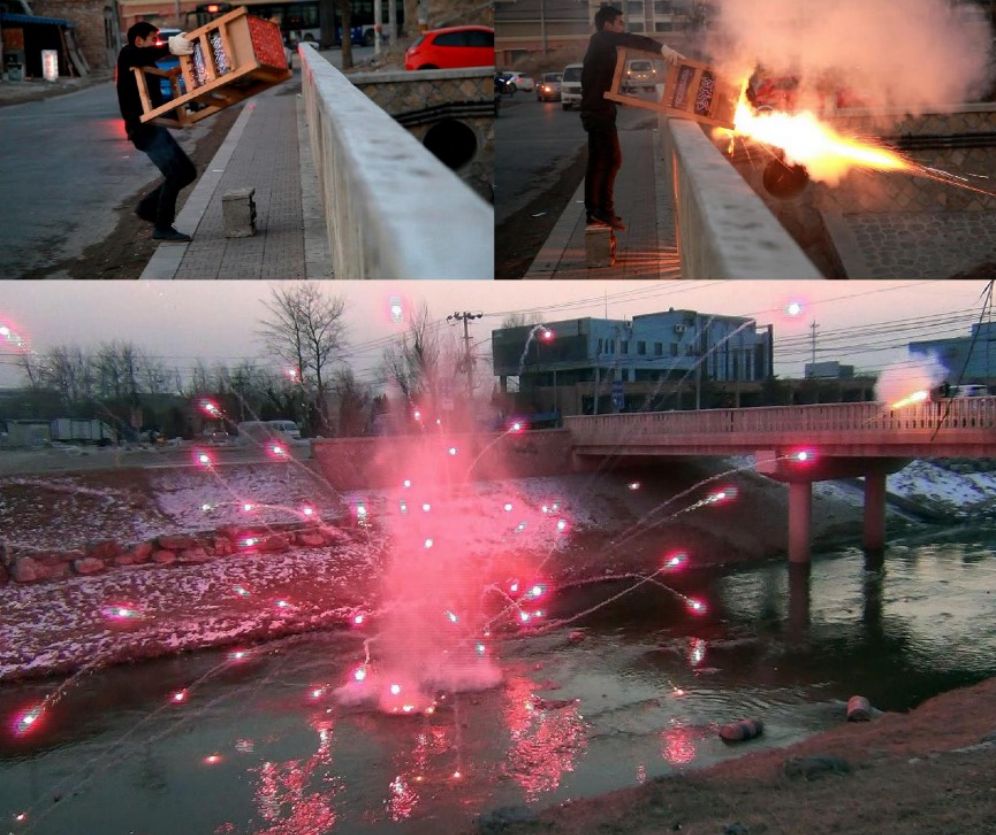
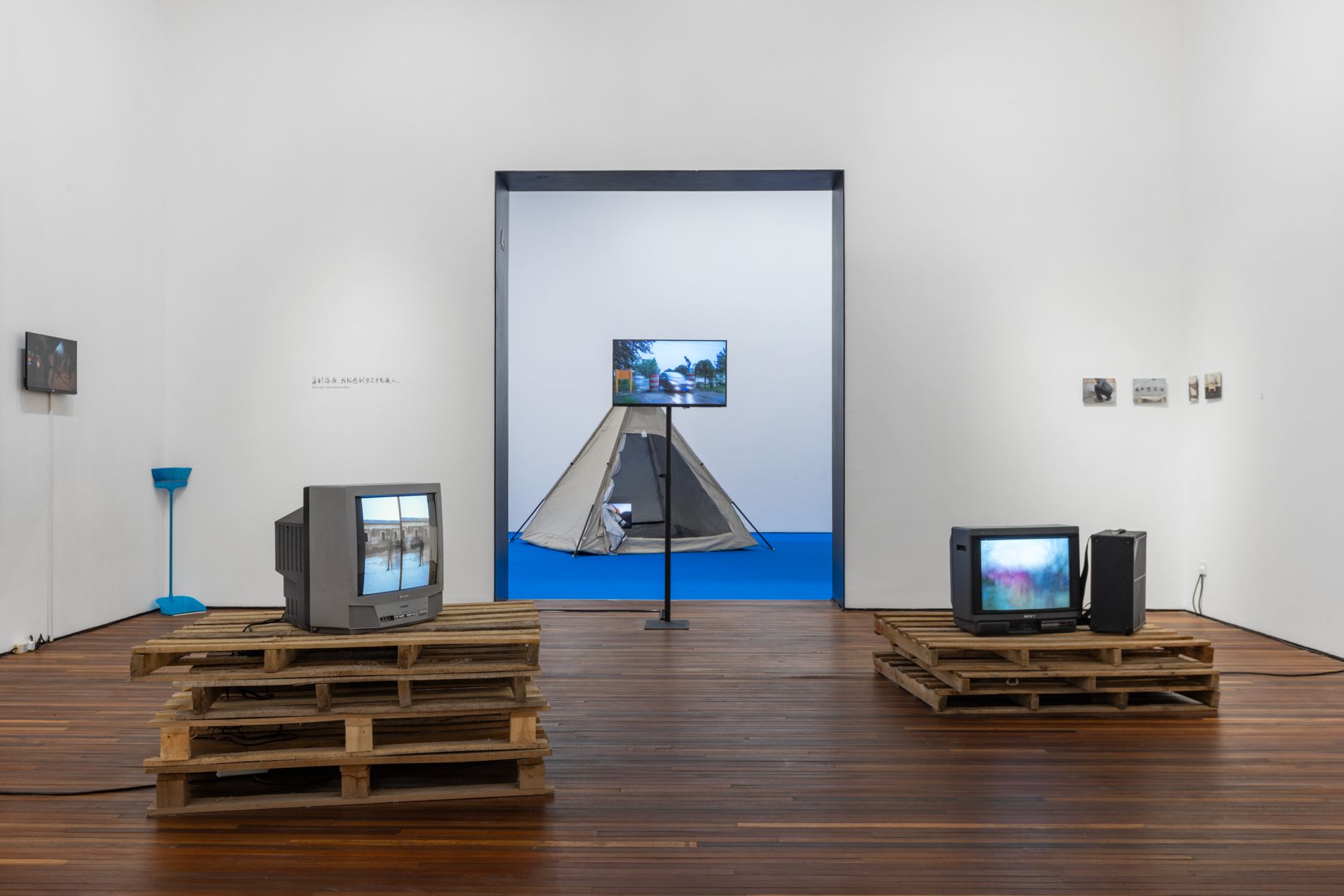
The term Heiqiao—once merely geographical—has come to represent a generation of Chinese artists who remained on the periphery of official narratives. Heiqiao not only shaped Li’s artistic language, but acted as a collaborator. Its precarious state permitted him to launch fireworks into a sewer or cycle with kitchen knives strapped to his shoes, sending sparks flying across asphalt. Each gesture is charged with the violence and vulnerability of a body mapping contested public space. At Song Art Museum in Beijing, documentation of these performances are displayed on vintage televisions balanced on worn wooden pallets and surrounded by the props used in their production, lending the installation a raw, tactile immediacy.
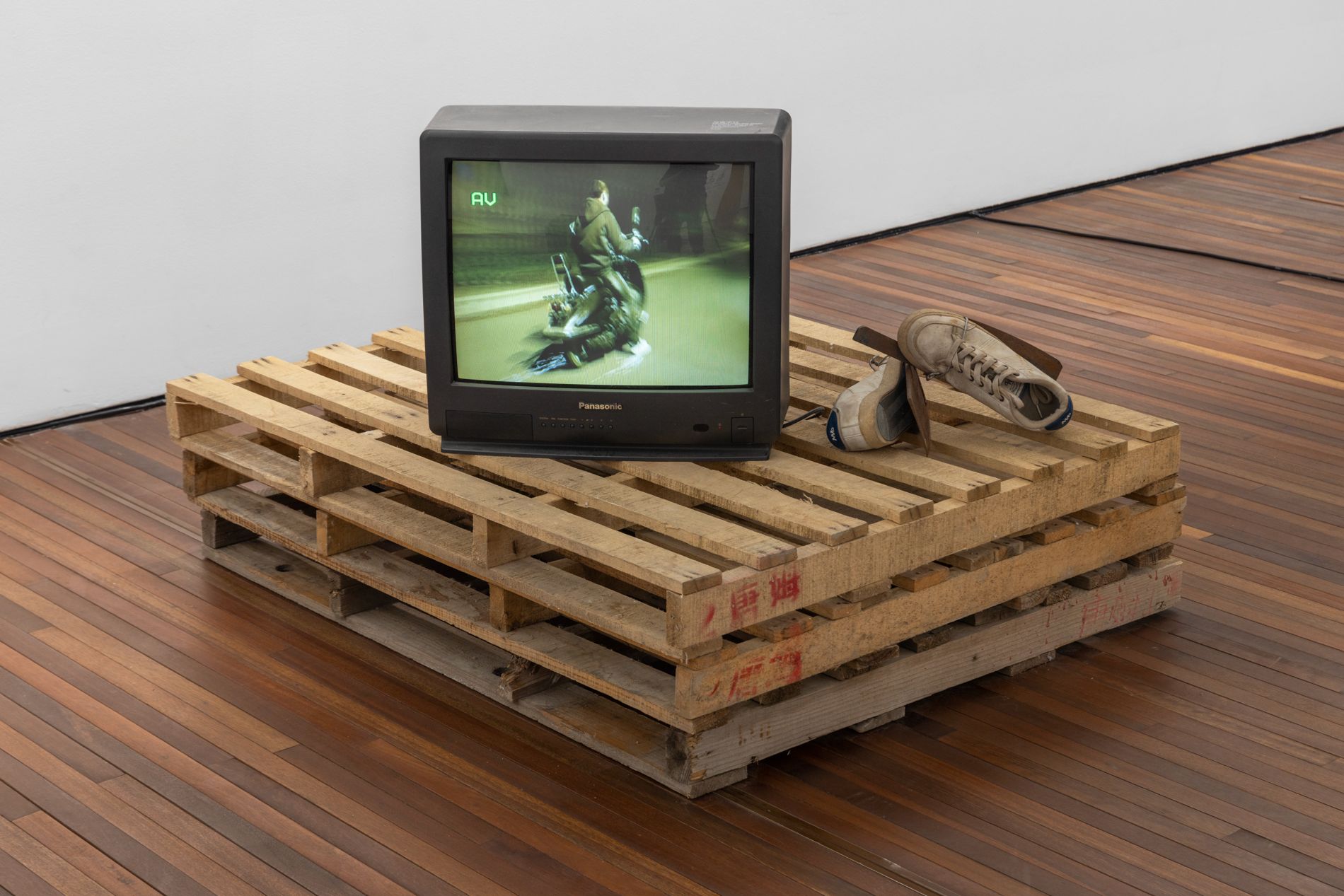
Becoming Li Binyuan is a survey exhibition of more than 60 works by the artist, made from 2007 to the present. Marked by physical endurance, sociopolitical commentary, and intimate reckonings with land and memory, the exhibition unfolds across a series of gallery spaces accompanied by the artist’s handwritten wall texts. Here, the viewer navigates a landscape of performance remnants, in which Li’s body is both subject and medium—one that absorbs, resists, or dissolves in the rhythm of contemporary China.
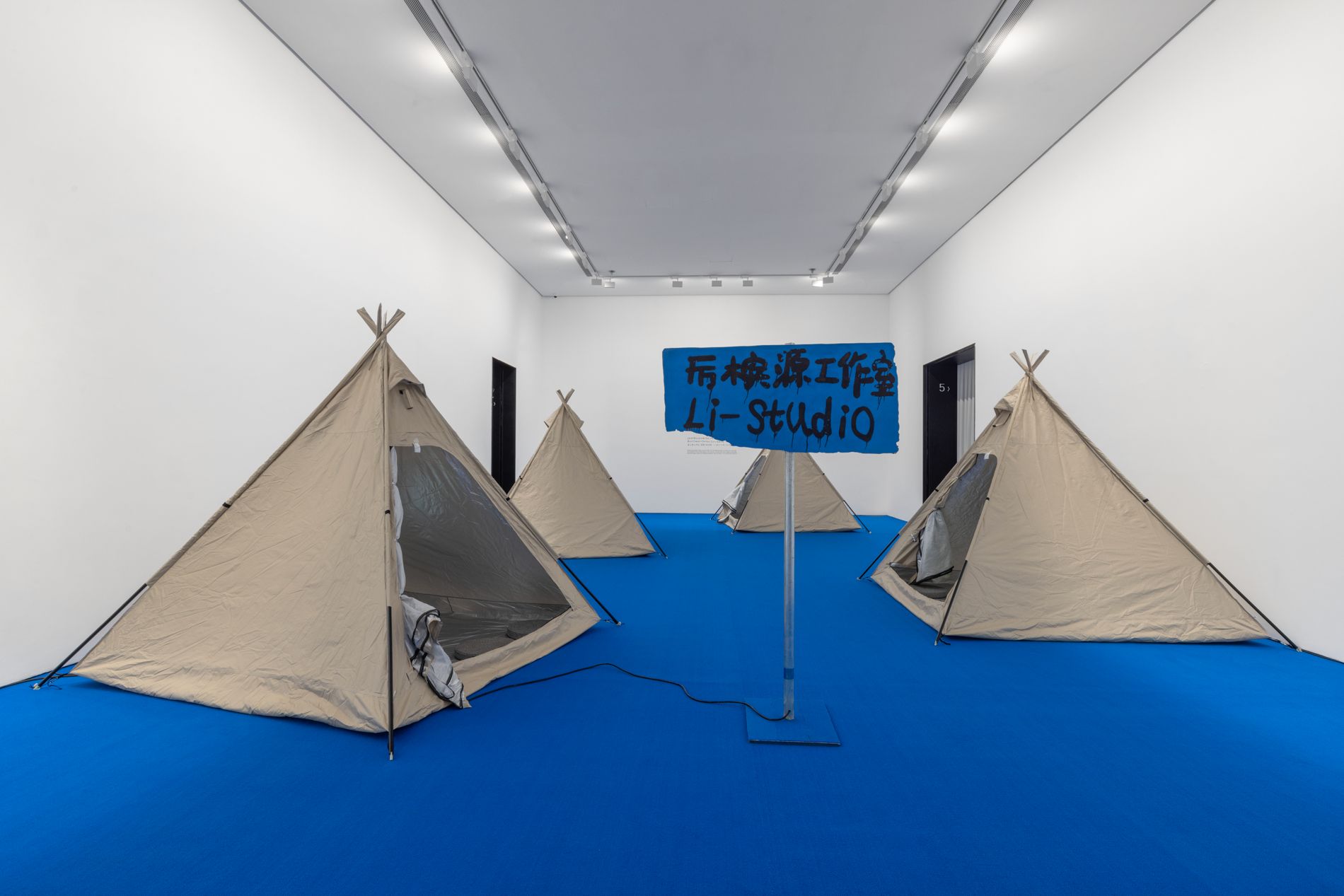
After Li lost his space in 2016, when the government demolished the artist studios in Heiqiao, he walked to central Beijing carrying a blue, handwritten sign reading ‘Li–Studio’. That sign now stands at the centre of one gallery, its floor padded with blue and filled with tents. Inside each tent, a different video plays: one shows Li bouncing beneath a railway in sync with passing trains (Resonate, 2012); another shows him lighting a flame across Victoria Bay in response to a flickering light on the opposite shore (Signal, 2014).
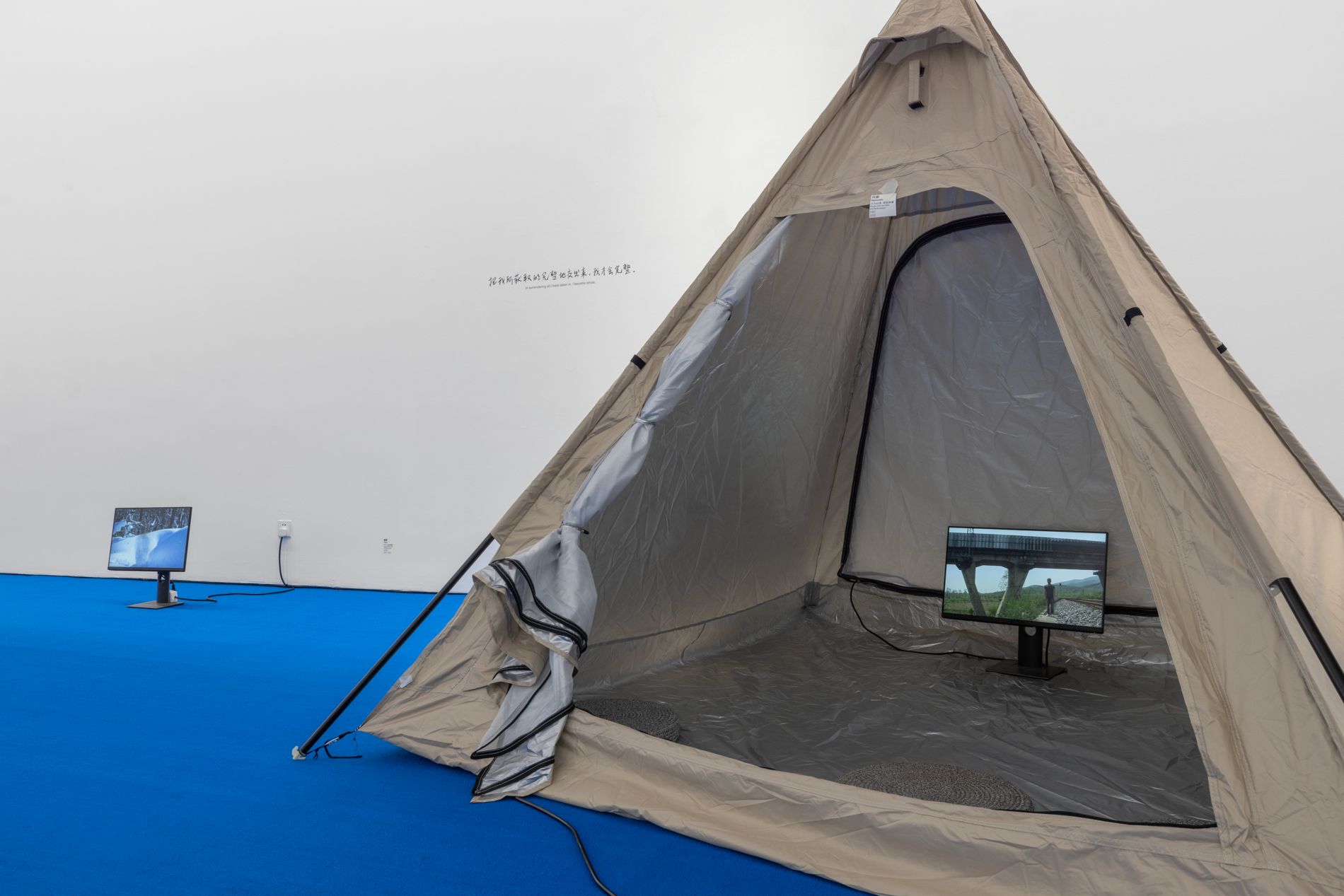
These performances recall the absurdist repetition found in the work of Bruce Nauman or Francis Alÿs, but are also rooted in China’s own performance art lineage—particularly the 1990s Beijing East Village artists such as Zhang Huan and Ma Liuming, who used the body to express a dissonant relationship with surveillance, collectivity, and survival.
The exhibition includes works predating Li’s formal art career. Trained as a sculptor at Beijing’s Central Academy of Fine Arts, he was an eccentric presence in a system bound by convention. His graduate work, The More It Shakes, the Bigger It Gets (2011), features a balloon slowly deflating atop a Coke bottle—a satirical jab at the academy’s rigid figurative tradition. Since then, Li has described his performances as ‘sculptural self-portraits’, unfolding in an immaterial space shaped by time, sensation, and affect.
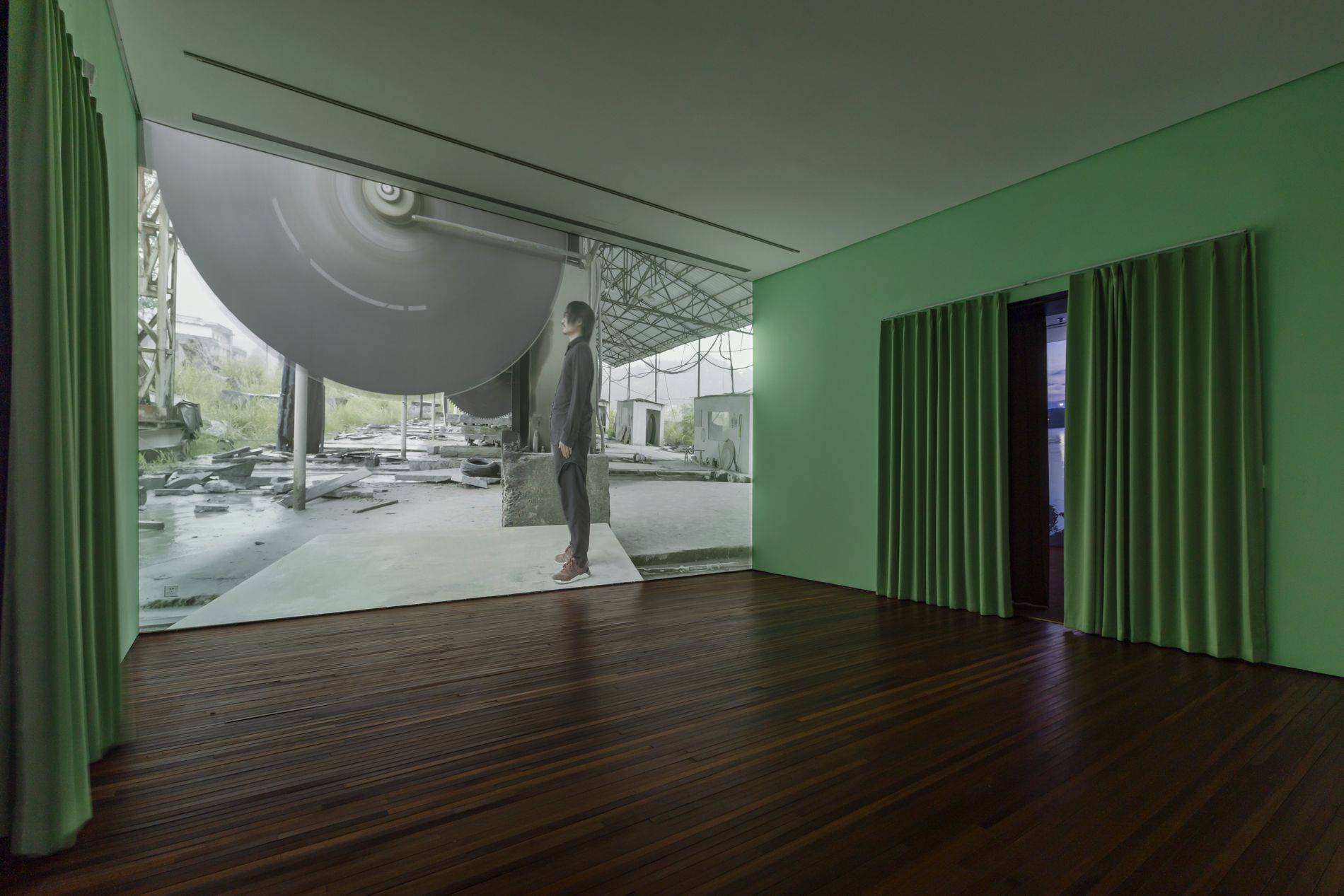
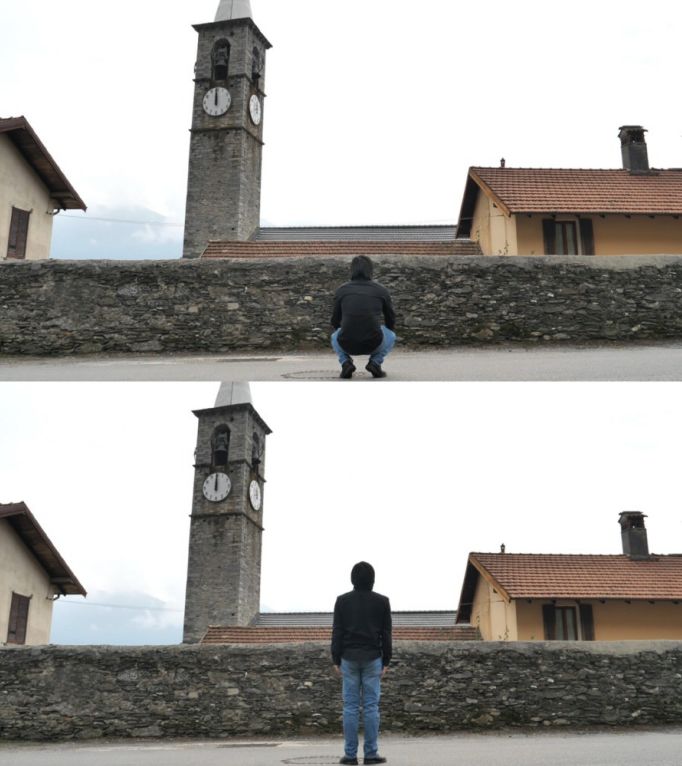
In the iconic performance 2cm (2017), Li stands completely still as a giant industrial blade spins just centimetres from his face. It’s a tense choreography of risk, evoking the Chinese idiom ‘蚍蜉撼树’ (‘an ant trying to shake a tree’): offering not resignation, but a quiet defiance. In another video filmed in Italy, titled Stand Up When the Bell Rings (2017), the artist springs upright at the chime of a distant bell—his body becoming a disciplined monument against the landscape.
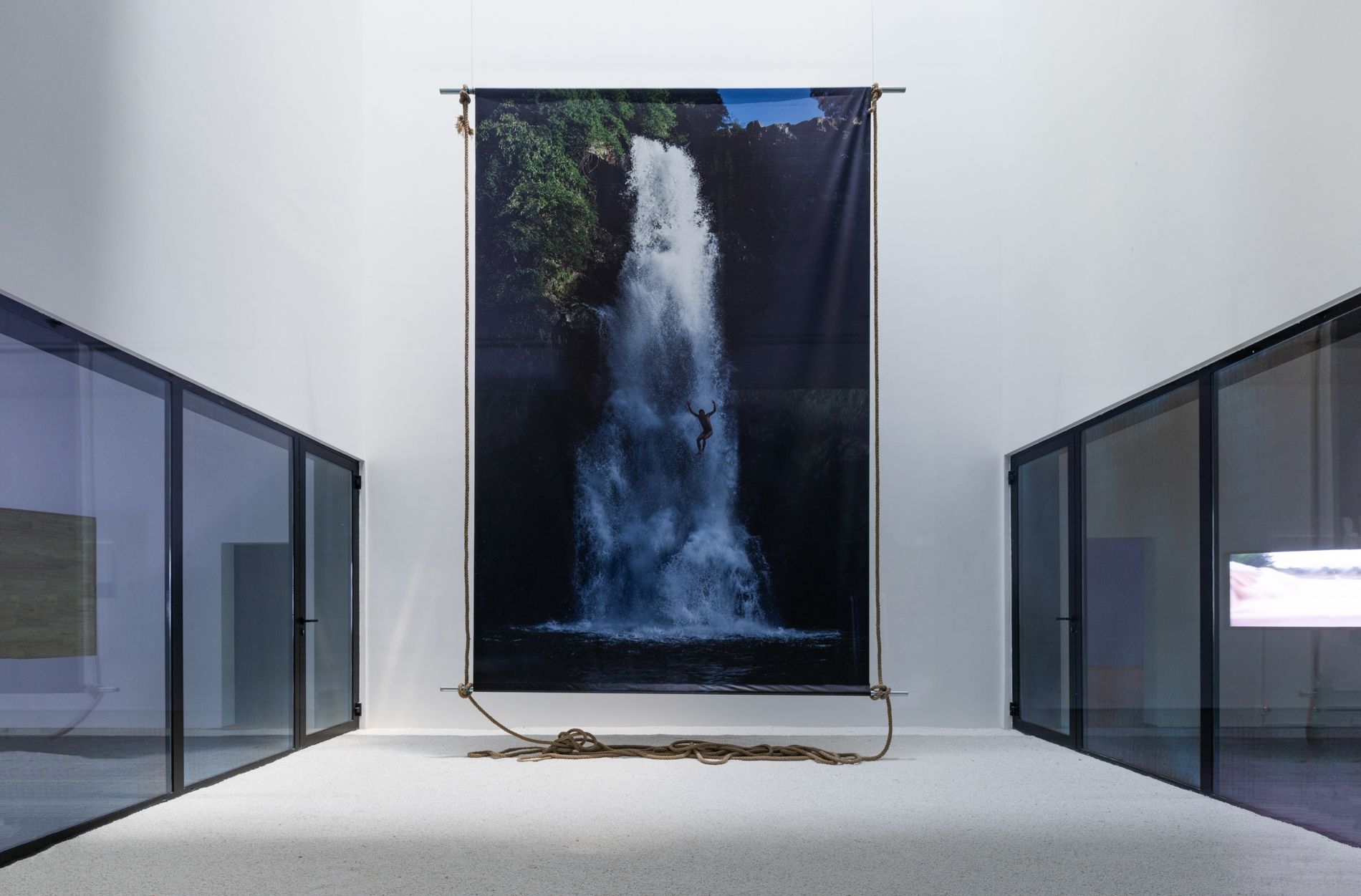
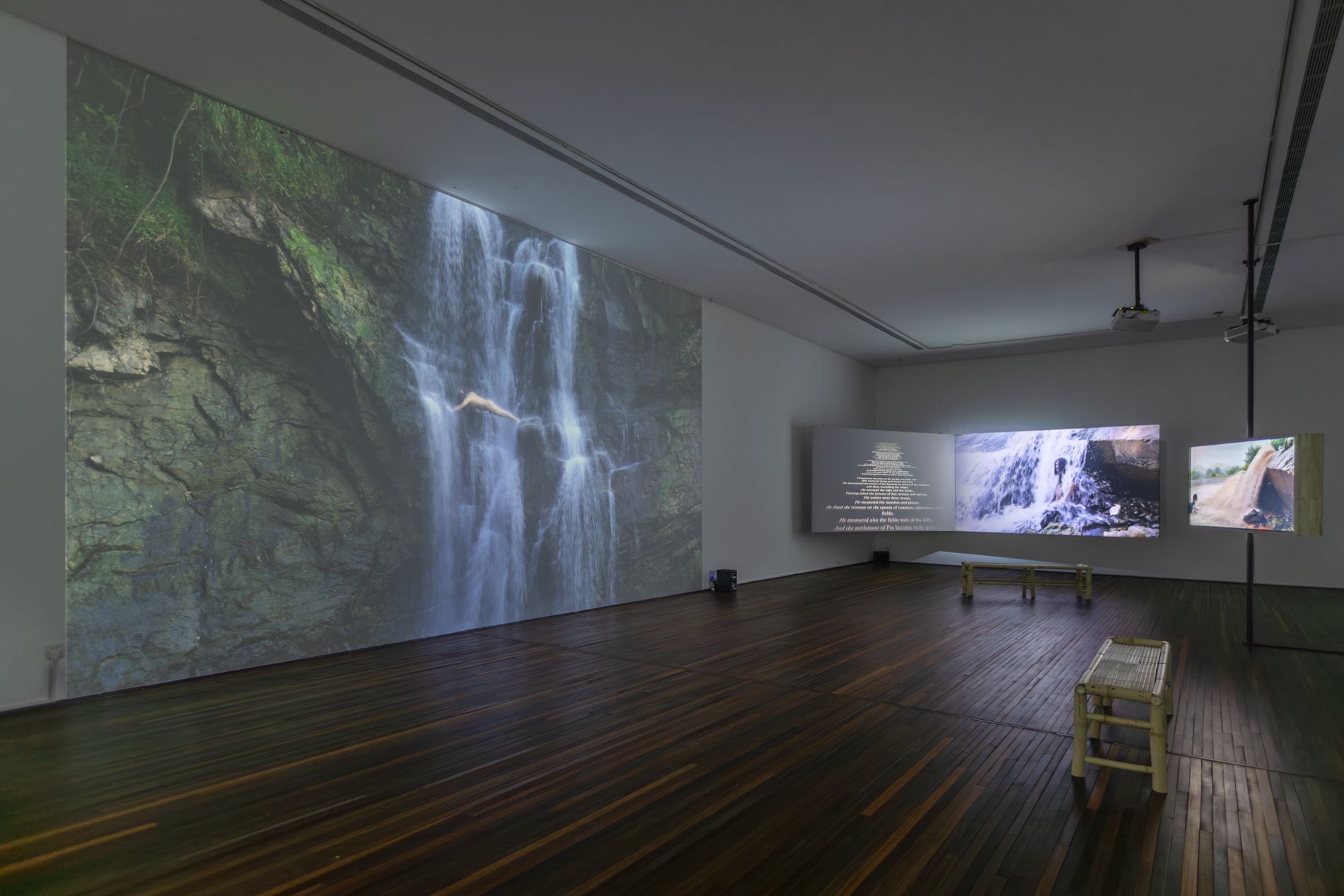
At times, Li’s use of the body approaches heroism. Large-scale projections show the artist bracing himself against a waterfall (Blocking, 2019–2021), or standing motionless as water from a ruptured dam crashes over him (Rapids, 2017). These images evoke performance art’s longstanding flirtation with the masculine sublime: muscular, stoic, and, in moments, narcissistic.
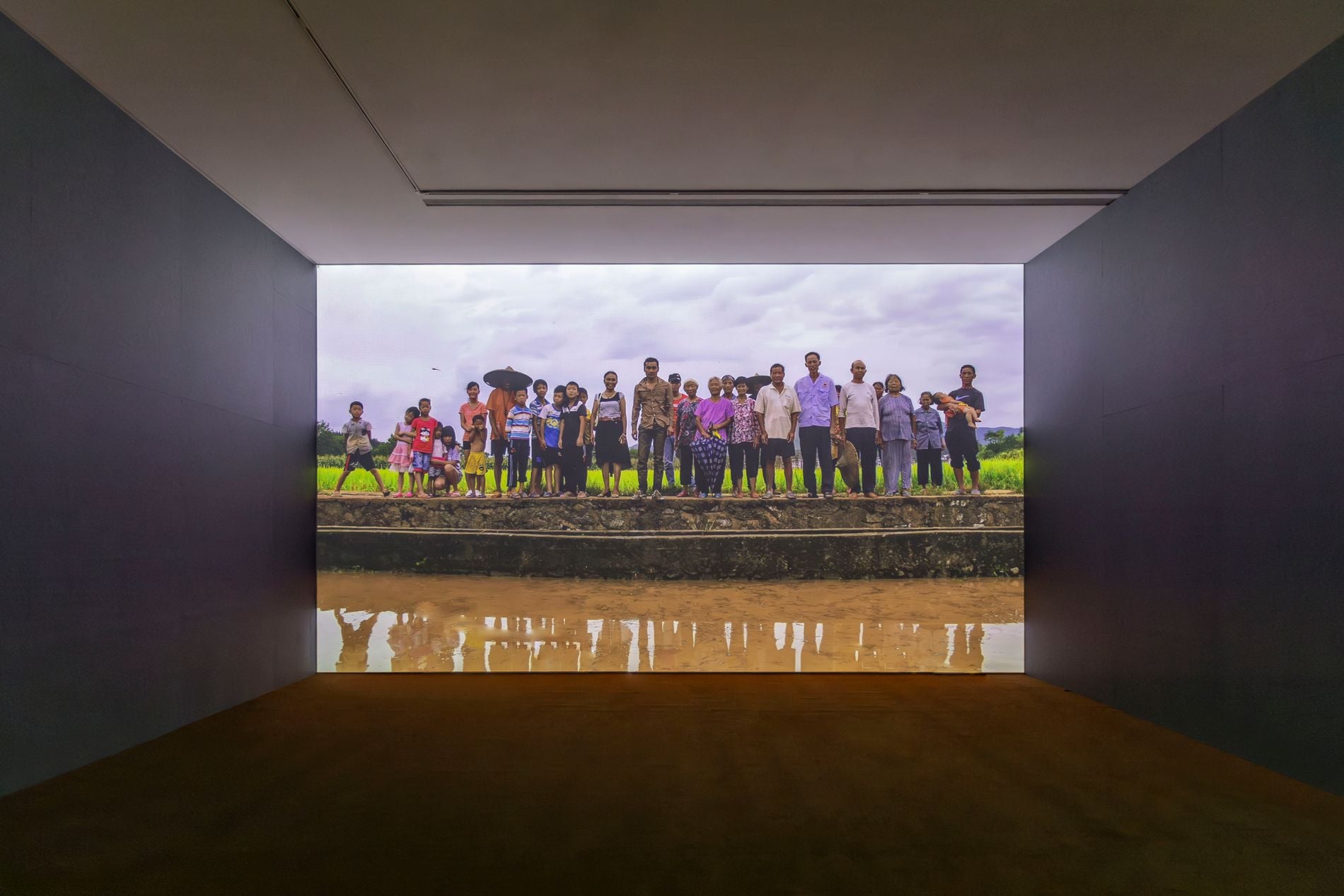
Yet the tone shifts, with works in the following galleries drawing from personal memory and rural life, adopting a more introspective register. Freedom Farming (2014), a two-hour endurance performance, shows one of Li’s most visceral engagements with land. After inheriting a 67-metres-squared plot of farmland following his father’s death—in line with China’s 1983 rural land reform—Li repeatedly hurls himself into the field’s muddy surface until he collapses from exhaustion as bemused villagers watch on. The desperate, self-abandoning movement posits land as both a legacy and site of alienation: the tiny plot is freed from agricultural duty, but the body is not liberated in return.
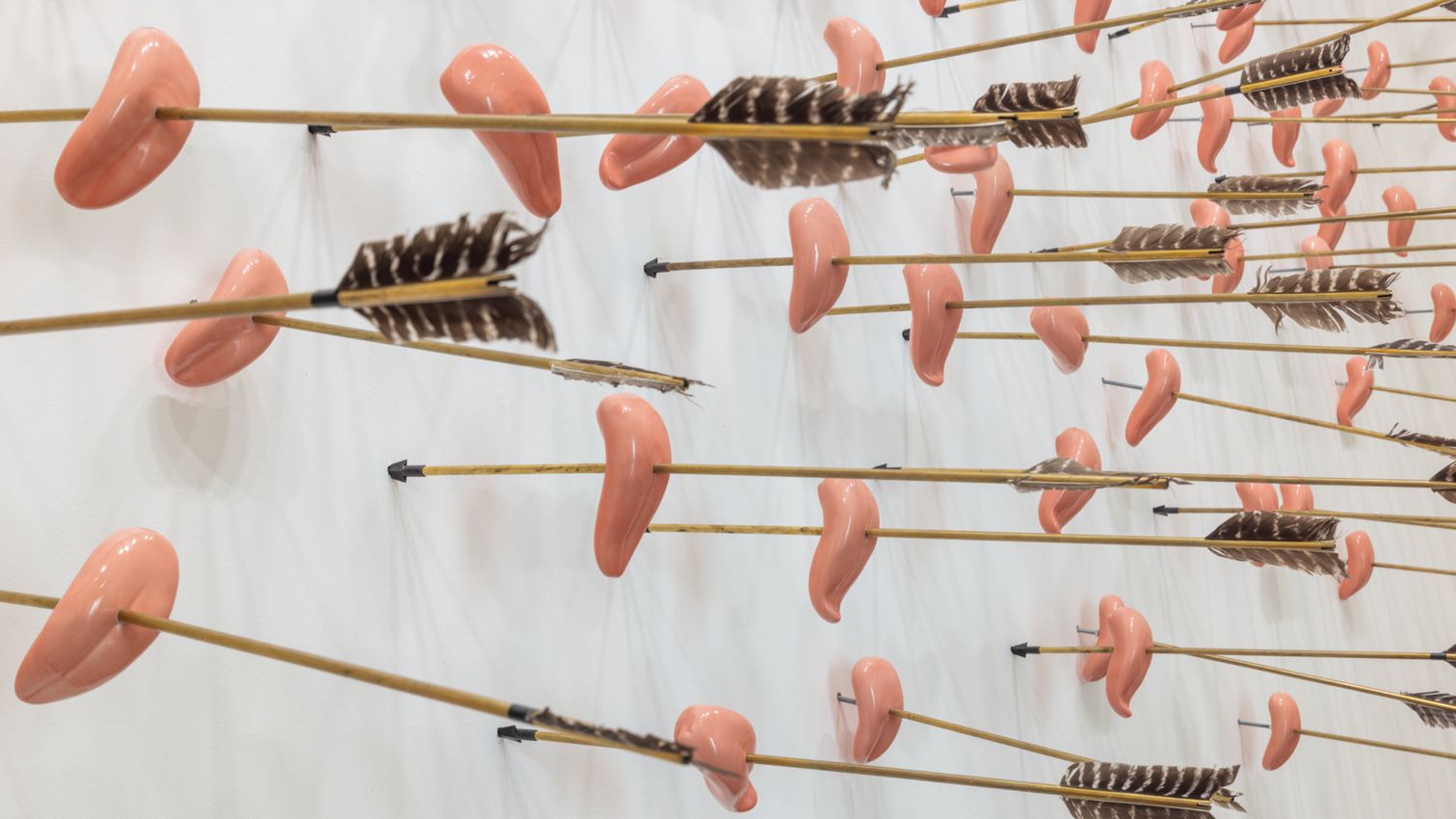
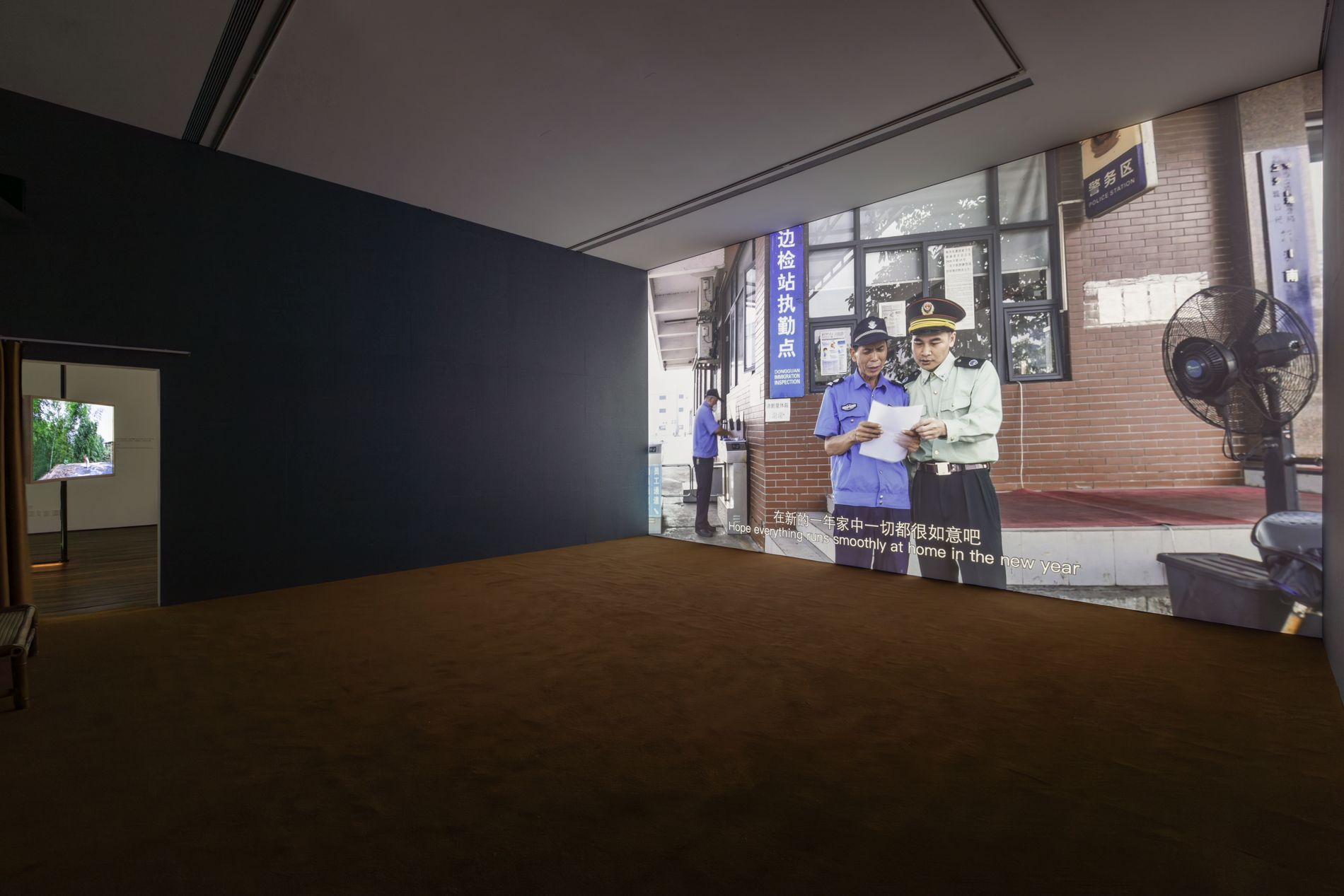
It’s a reckoning that culminates in The Last Letter (2020), an intimate reflection on the artist’s family history. Li travels to the southern city of Dongguan, where his father worked as a security guard until his death at age 36, and invites 36 local guards to read his father’s final letter aloud in Cantonese—a language Li does not speak. Beginning with imitating their accents, Li learns the text and eventually recites it in full. Here, the tongue stands in for the body, with Li’s performance shifting from an act of endurance to one of articulation. The hero dissolves into the crowd, his singular identity swallowed into a shared moment of mourning and linguistic intimacy. —[O]
Main image: Li Binyuan, Untitled (2019) (detail). Ceramic, cast bronze, and feathers. Exhibition view: Becoming Li Binyuan, Song Art Museum, Beijing (14 June–14 August 2025). Courtesy the artist and Song Art Museum.




A respected voice in contemporary art discourse.
Focusing on ambitious storytelling and insightful art-world commentary. Ocula Magazine publishes in-depth interviews, critical essays and timely analysis on the artists, exhibitions and ideas driving the global art world.
Learn more about Ocula Magazine
Showcasing the best of the art world.
Ocula partners with galleries from around the world to highlight their artists, artworks and exhibitions. Gallery membership is by application and invitation, with each member vetted by an independent panel.
Learn more about Ocula Membership
Specialises in the sale of major artworks.
Led by a team with deep ties to the world’s leading auction houses, galleries and collectors. Ocula’s advisory team offers bespoke services to high-net-worth clients from around the world who are looking to acquire the best of contemporary and modern art.
Learn more about our team and services