





The art world in focus
Subscribe to our newsletter for news and insights on artists, galleries and exhibitions.
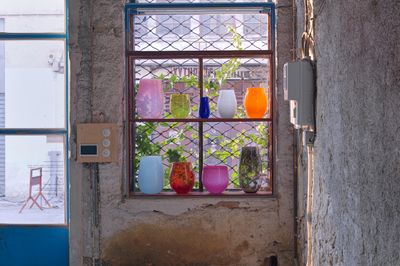
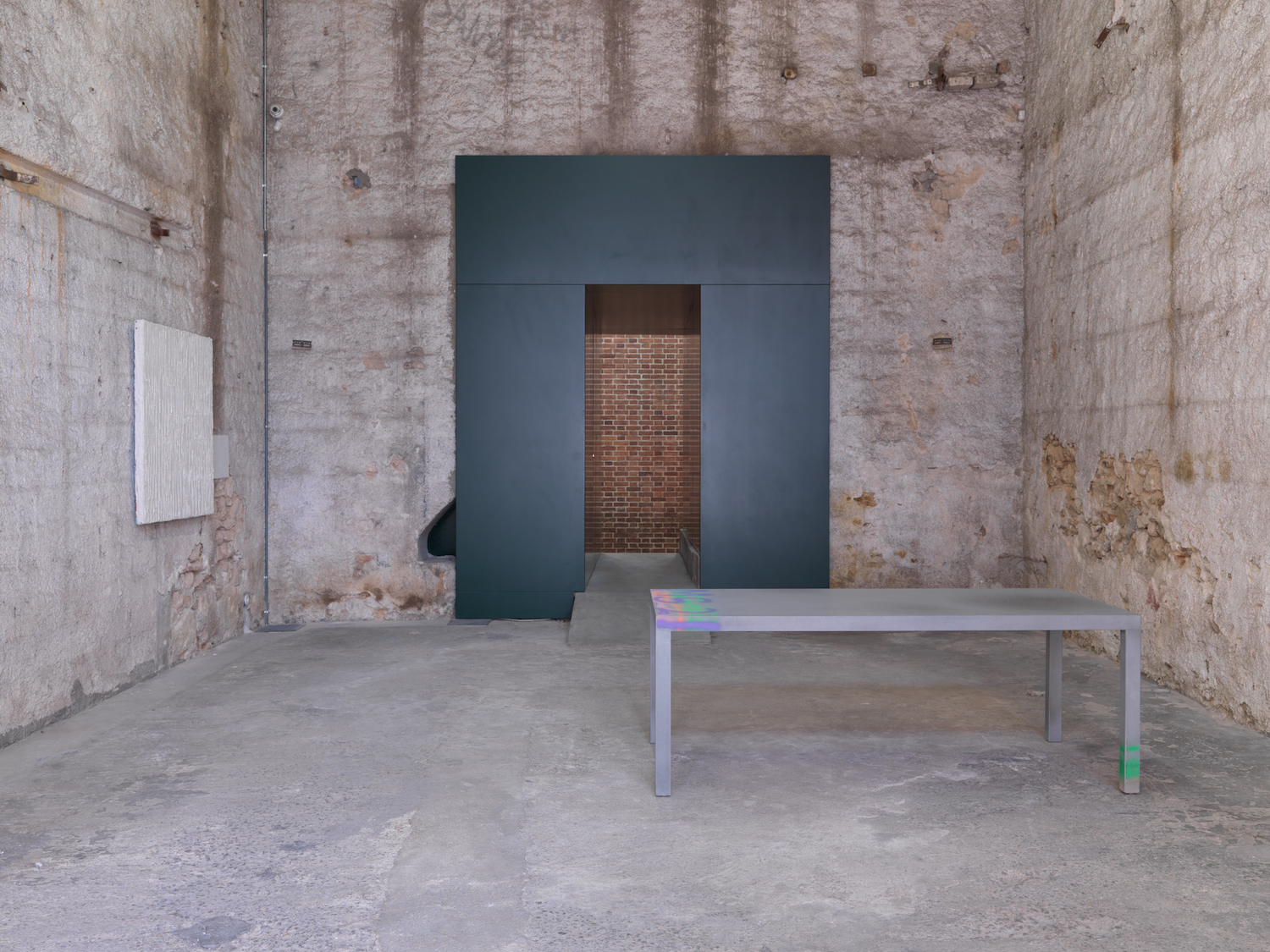
Exhibition view: Christodoulos Panayiotou, January, February, May, June, July, August, September, October, December, Rodeo, Piraeus (8 July–25 September 2021). Courtesy Rodeo. Photo: Stathis Mamalakis.
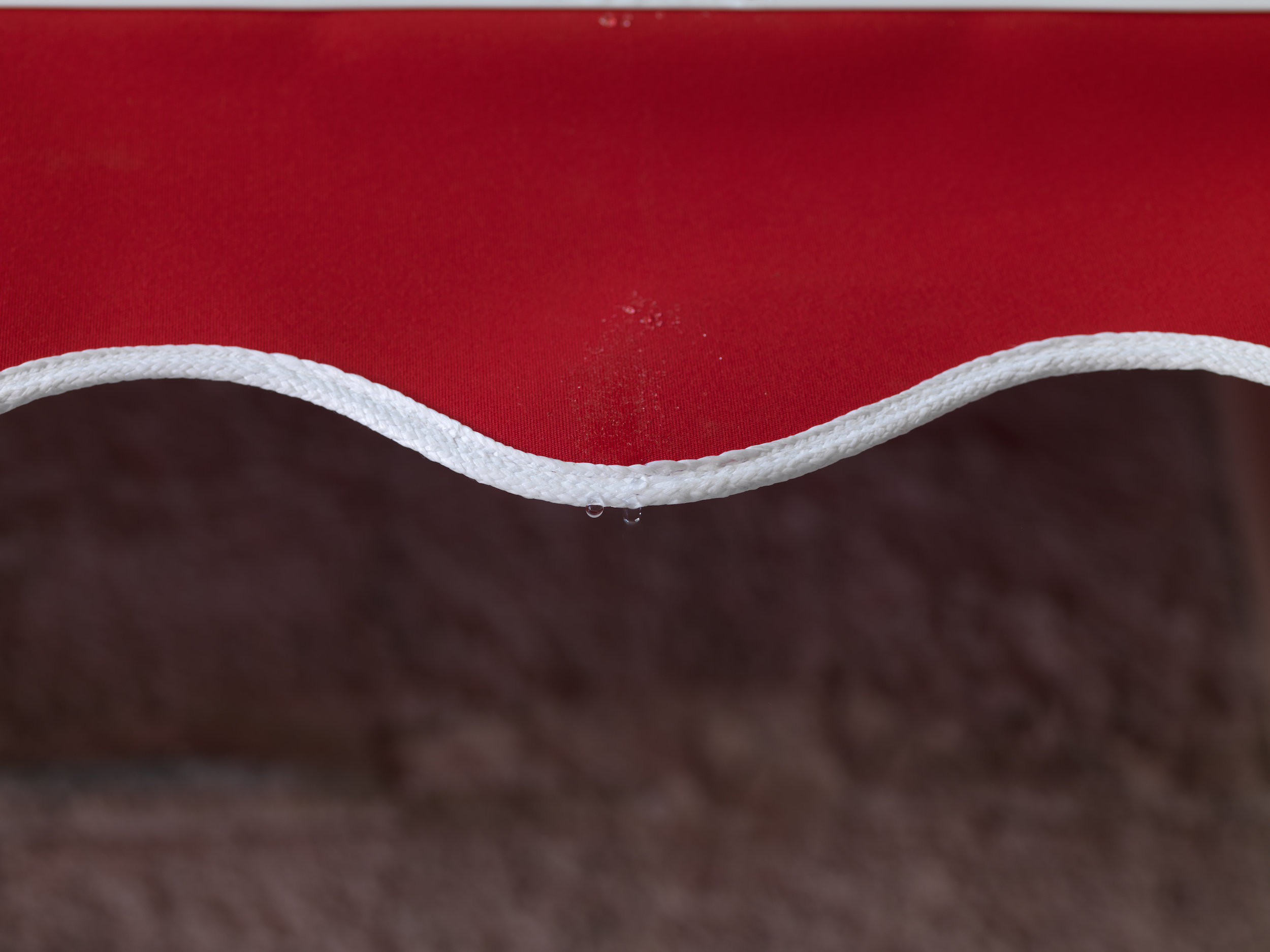
Entering the space a bit later, I noticed water under that awning (Αwning, 2021). Then I noticed the awning was dripping. I wondered whether this was accidental or staged. Reading Panayiotou’s letter in the press release to gallery owner Sylvia Kouvali, I assumed the latter.
Across the exhibition, craftsmanship, tradition, labour, and raw material have been put in the services of illusion.
A set of colourful handmade vases, one for each month in the title of the show—January, February, May, June, July, August, September, October, December in Athens, and March, April, November in London—have been made in collaboration with CIRVA, the International Glass and Visual Arts Research Centre in Marseille. They share the same space with a painting mimicking the effect of rust on a piece of copper—a metal that cannot be oxidised (Untitled, 2021).
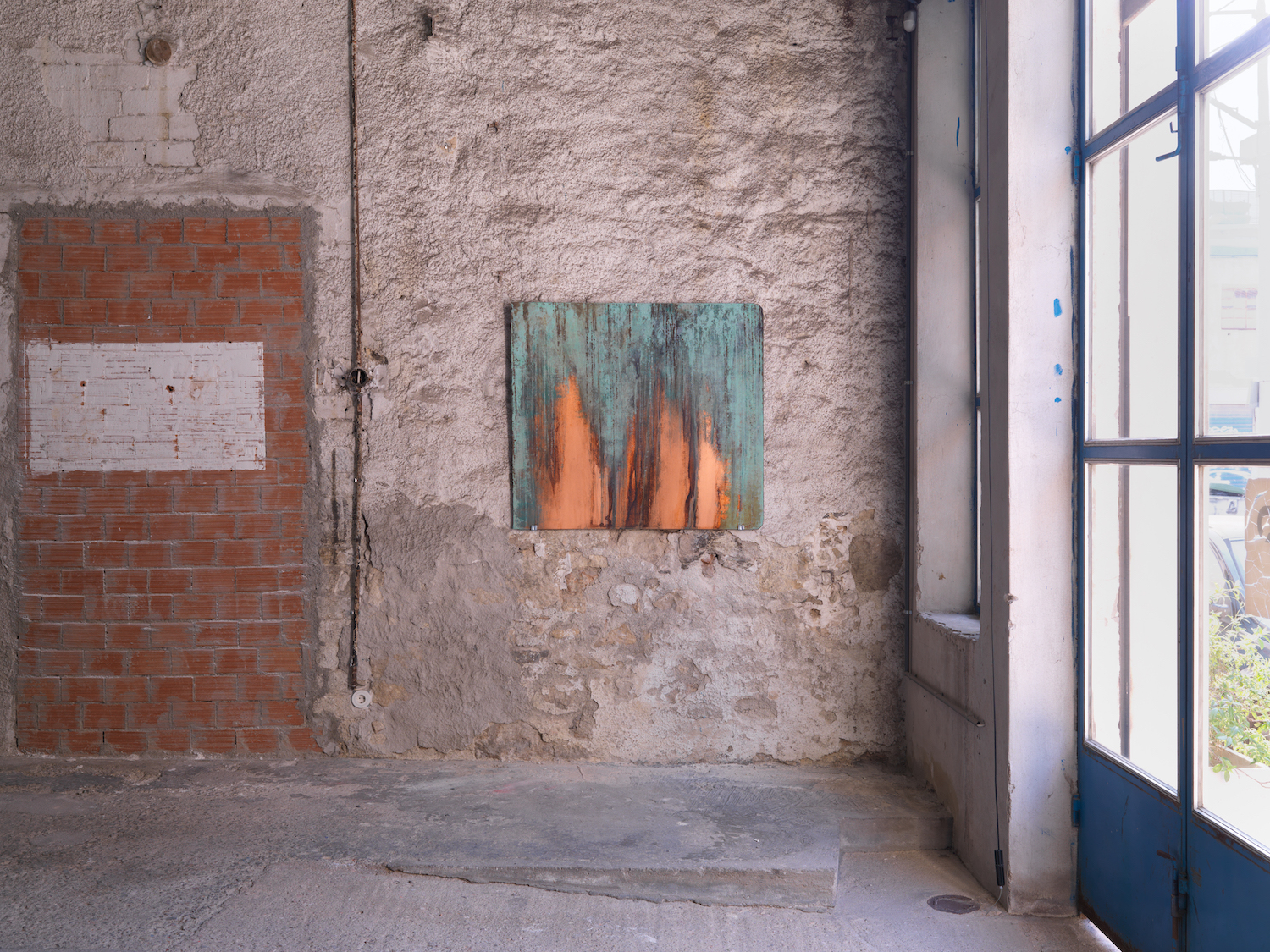
Another painting, Untitled, Sagre (2021) is reminiscent of a traditional plaster technique covering walls of buildings around the artist’s studio in Cyprus. It is a celebration of a craft that may well vanish along with the last craftsmen who understand its secrets.
A minimalistic table (Untitled, 2021), bearing the marks used by quarry workers to tag raw marble blocks, is puzzling in terms of locating their origins and scope—you would never guess it is a quasi-found object.
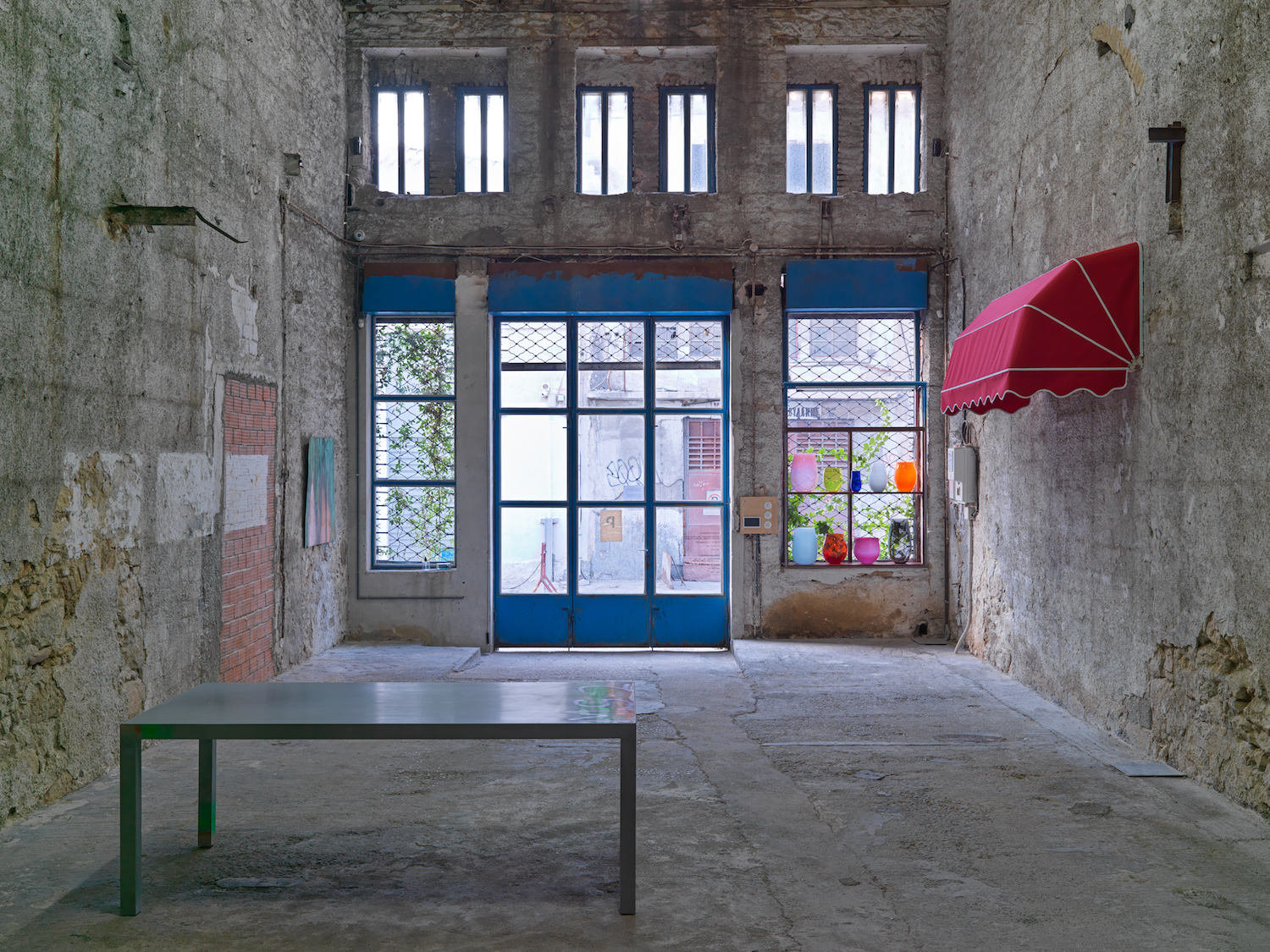
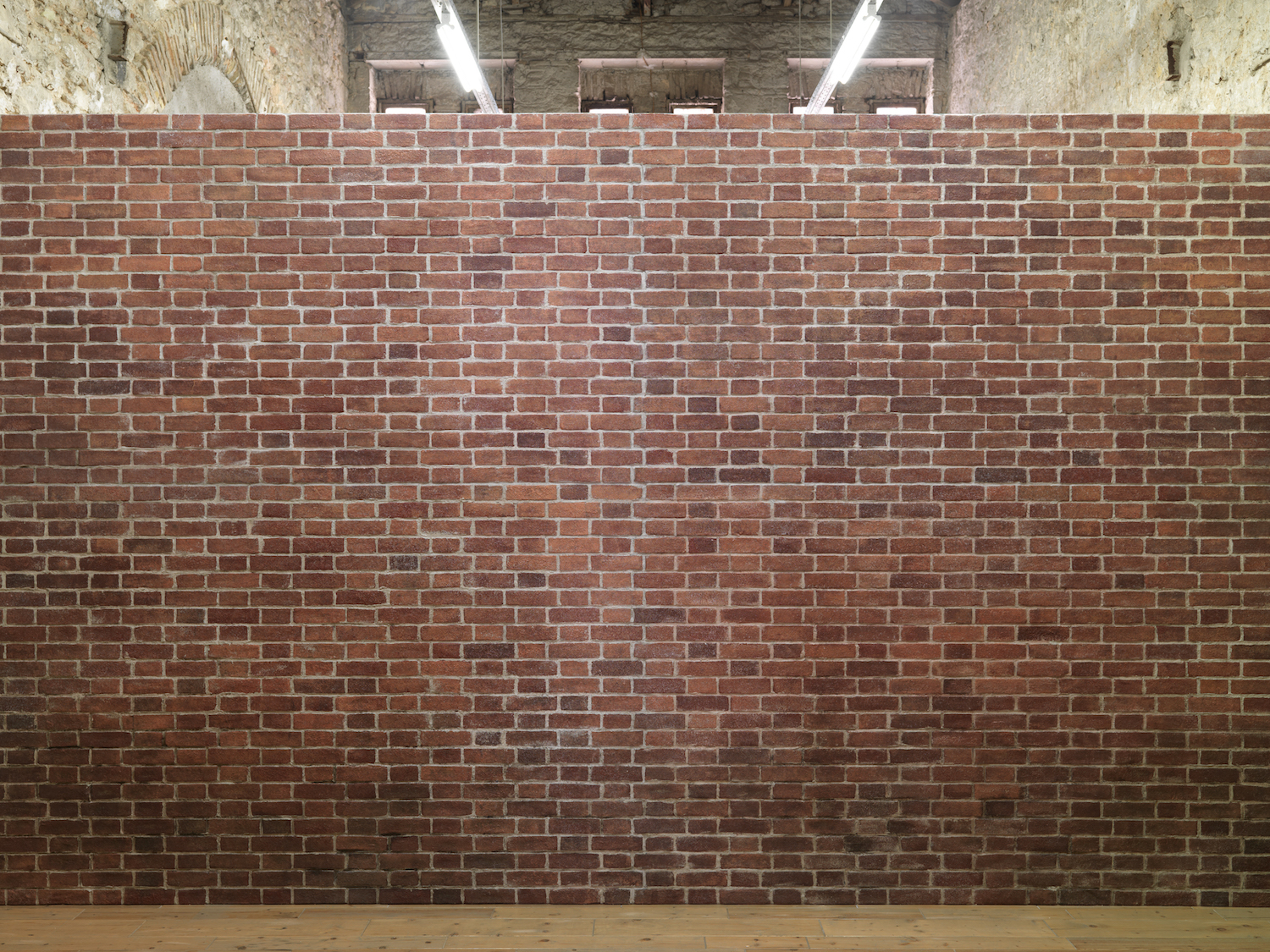
References to the world of theatre abound. Cutting the back space of the gallery is The Fourth Wall (2021)—a giant wall that blocks my route. One might recognise this wall to be the façade from Rodeo’s gallery in London: an exact replica made by a set designer.
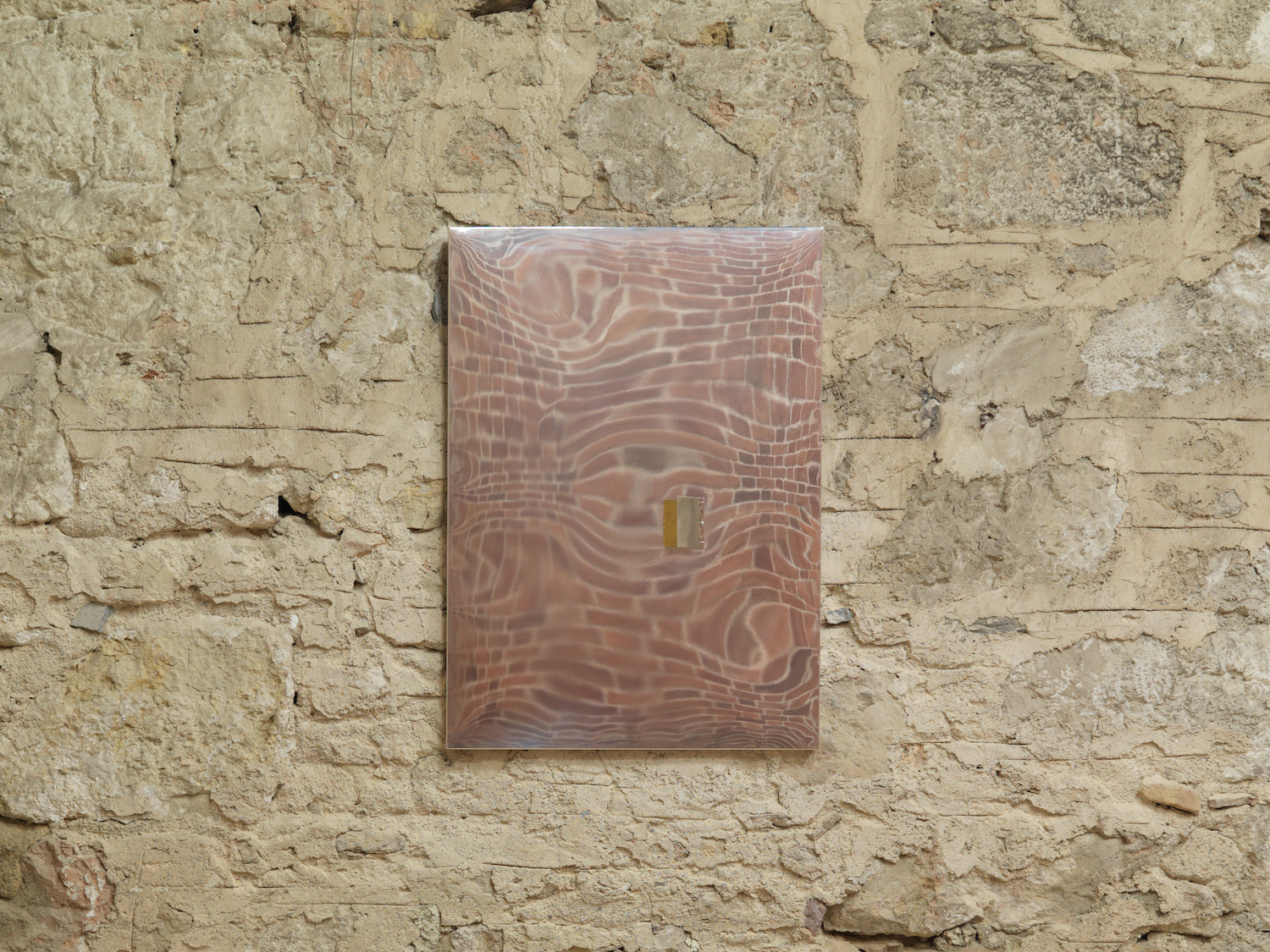
I observe this fake wall through the silver mirror (Untitled, 2021), which stands opposite, on which a small golden door invites more perspectives. (In his letter, the artist asks, ‘Shall we try to dig deeper than the eye approves?’)
It comes as no surprise to learn that this work was inspired by a visit to the Monastery of Kykkos in Cyprus, where the icon of the Holy Virgin painted by Apostle Luke is half covered and never looked at, as it is said that whoever looks at it will be blinded.
“In his work, Panayiotou manages to conjure those rare moments where conceptual art comes close to the unbearable lightness of being.
Like entering the hall of mirrors in Orson Welles’ landmark film Citizen Kane, I give up trying to put the fragments together. Sometimes meaning can be found in fragments themselves—that is, if this exhibition is about finding meaning at all.
This is not the first time that Panayiotou, an artist with a background in the performing arts, has used props to recreate a feeling of what might have taken place. In this deserted hall of wonders, I long for human presence.
Maybe that’s why the most powerful work in the exhibition for me is the black and white portrait of the actor Christopher Atkins (The Portrait of Christopher Atkins, 2021), which hides in the gallery’s office.
The forever teen icon, best known for his debut in the 1980 film The Blue Lagoon, stares at me like a stranger: quiet, but with a lot to say on the possibilities of fame, oblivion, life.
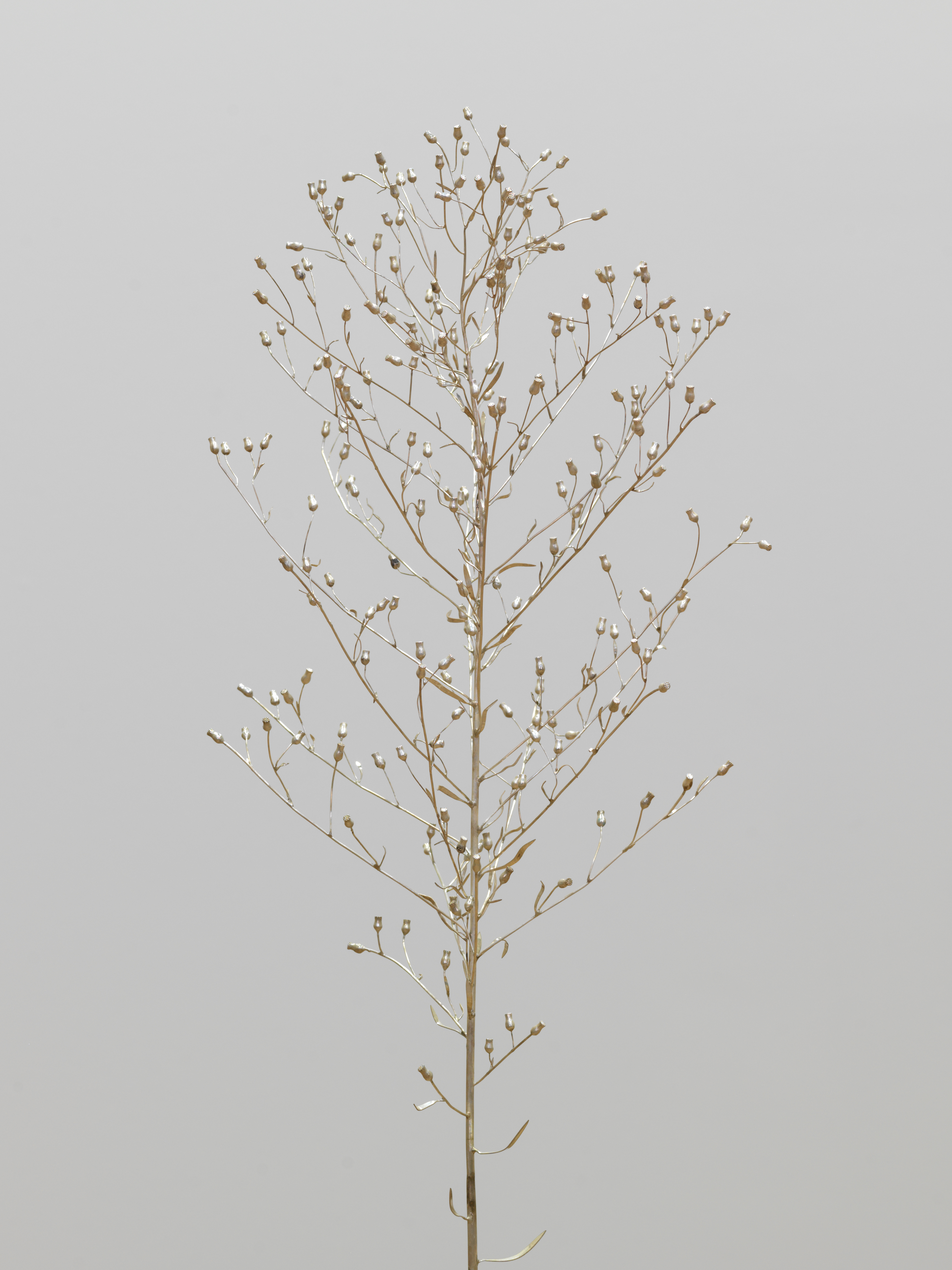
Atkins stays in my mind as I walk by the old industrial spaces that turn into galleries, wine bars, and patisseries so as to re-enter the gallery from behind the copy of Rodeo London’s wall. Here, a replica of a plant from the artist’s studio made out of silver stands fragile and alone (Horseweed, 2021).
In his work, Panayiotou manages to conjure those rare moments where conceptual art comes close to the unbearable lightness of being.
Magic is the word that best describes this exhibition. It reminds me of the awe I felt when encountering the first work by the artist that I ever saw: Truly (2005) a video choreography of fireworks—or perhaps illuminated fountains—for which he won the 4th Deste Prize in 2005. Only now, it took a lot more props to achieve that feeling. —[O]
A respected voice in contemporary art discourse.
Focusing on ambitious storytelling and insightful art-world commentary. Ocula Magazine publishes in-depth interviews, critical essays and timely analysis on the artists, exhibitions and ideas driving the global art world.
Learn more about Ocula Magazine
Showcasing the best of the art world.
Ocula partners with galleries from around the world to highlight their artists, artworks and exhibitions. Gallery membership is by application and invitation, with each member vetted by an independent panel.
Learn more about Ocula Membership
Specialises in the sale of major artworks.
Led by a team with deep ties to the world’s leading auction houses, galleries and collectors. Ocula’s advisory team offers bespoke services to high-net-worth clients from around the world who are looking to acquire the best of contemporary and modern art.
Learn more about our team and services