





Source Material
The softness of the materials on display in group exhibition Threading Inwards at Hong Kong’s Centre for Heritage, Arts and Textile belies the hard truth of the stories told by the works themselves. Save to My Ocula
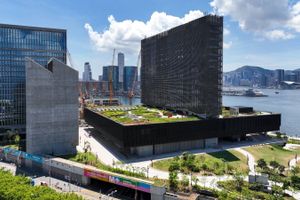
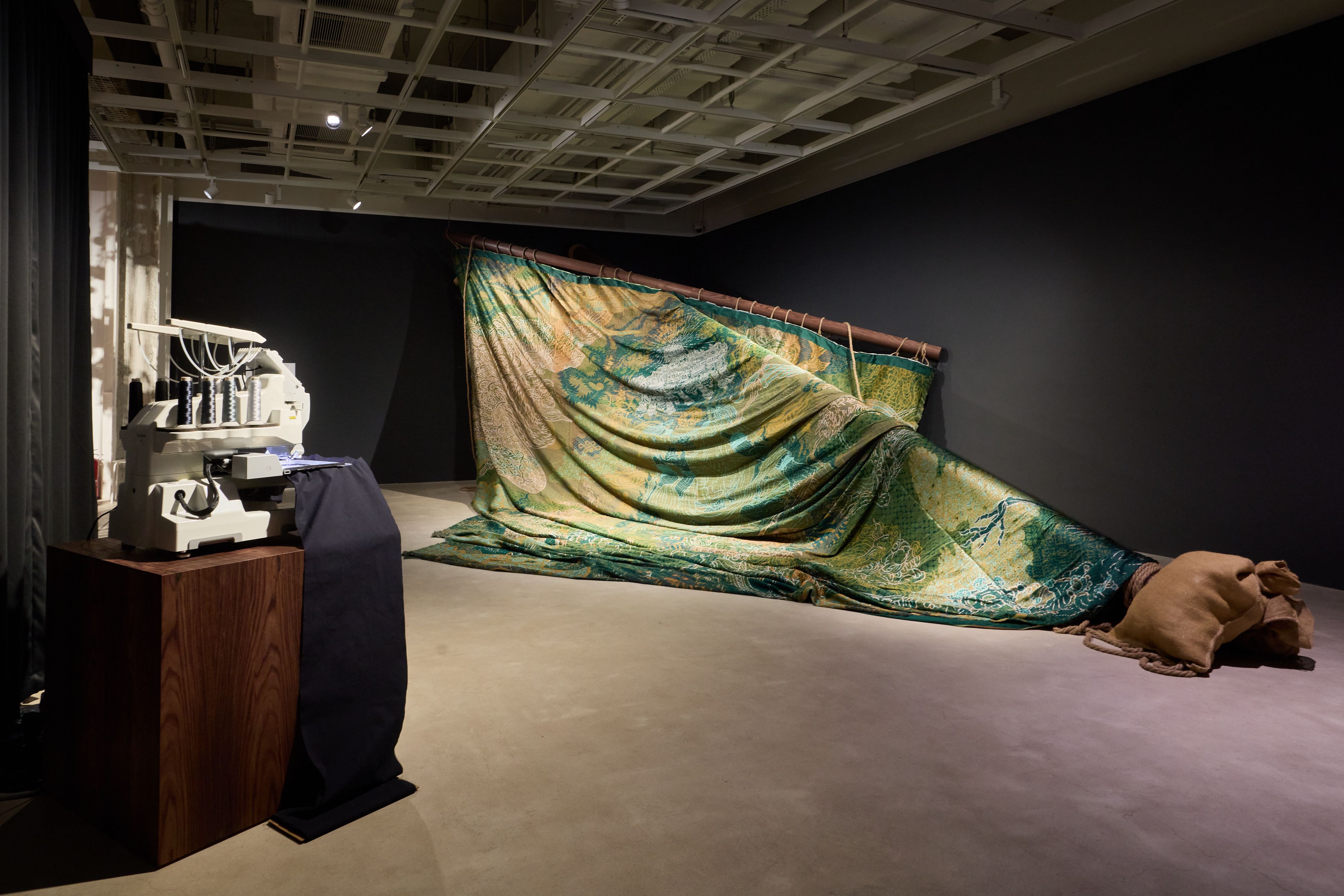
“Can something we’ve thrown away or left behind take on a new life—and become something we care about again?” asks Korean art collective ikkibawiKrrr in a questionnaire handed out to visitors at the Centre for Heritage, Arts and Textile (CHAT), Hong Kong. The question sets the tone for Threading Inwards: textile, the material closest to our bodies since the beginning of human civilisation, is treated here not as mere medium but as a living repository of personal, cultural and ritual memory—one that demands to be summoned, recollected and recycled.
The exhibition’s four curators are all currently active in Asia: Wang Weiwei is part of CHAT, Hong Kong; Eugene Hannah Park works in Seoul; Kurosawa Seiha is based in Tokyo, and Wang Huan is in Beijing. Threading Inwards brings together 14 artists from across the region around a loose theme of spirituality, with textile as both subject and method.
“Textile is treated here not as mere medium but as a living repository of personal, cultural and ritual memory”
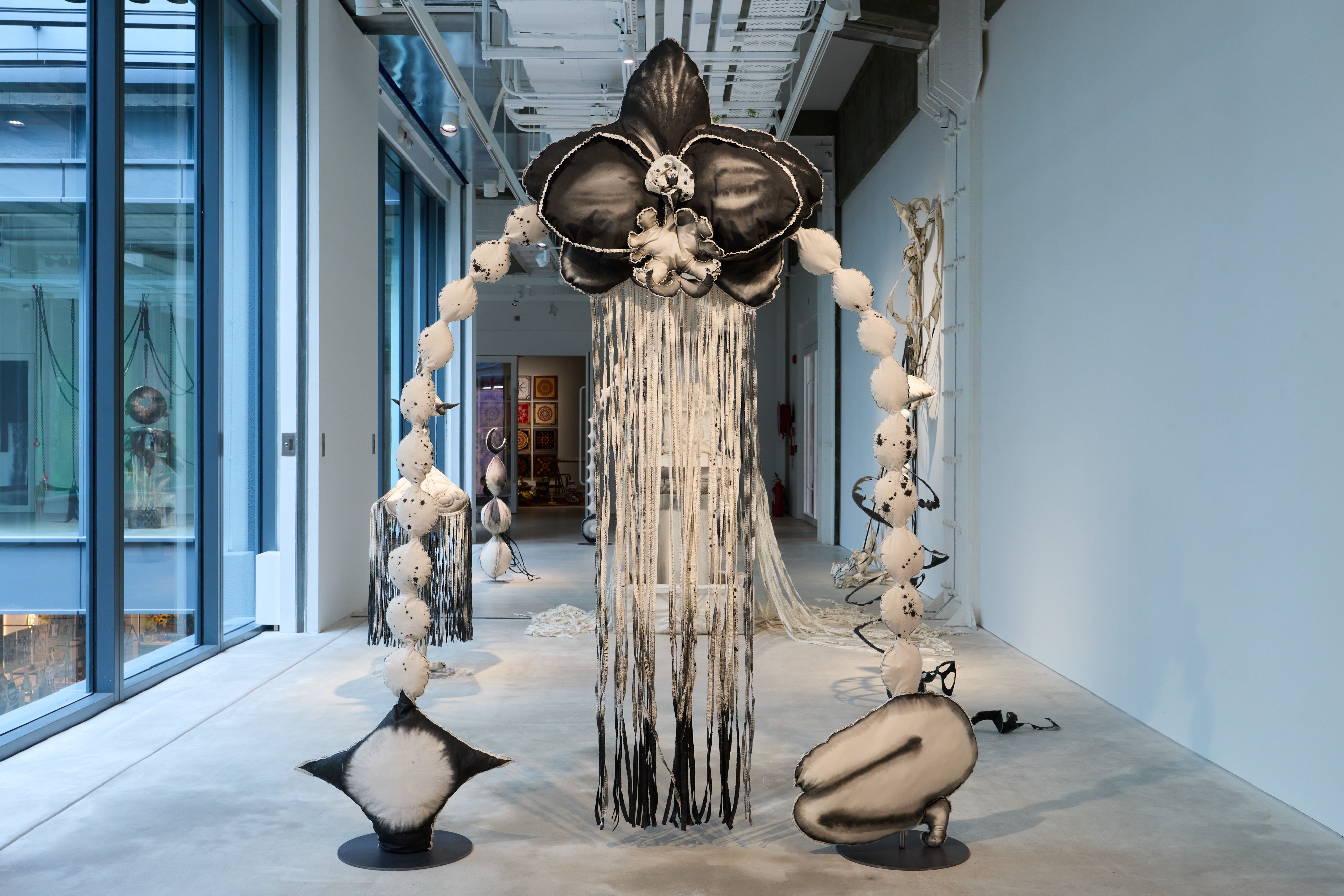
Overturning the architectural function of the passageway, Han Sang A’s Threshold series welcomes the audience by treating the corridor as a spiritual medium connecting inner and outer, the dead and the living. Borrowing the Buddhist term for the wooden beam at the temple entrance that marks the crossing from the secular world into the sacred, the artist renders this transitory state as something tactile and homelike. In Threshold 1 (2024), under an overarching structure decorated with a large flower, a Brâncuşi-style bird and a spine-like arch, hangs a simple curtain of black-and-white threads, dissolving the sacred into a daily gesture of crossing any threshold in our lives.
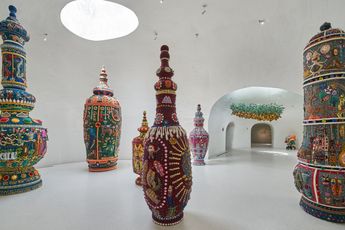
This intimate connection between textiles and everyday life softens the solemn topics embedded in many works, turning the painful into the playful. In Beijing-based artist Hu Yinping’s soft sculpture project the Soul Bottle series (2025), she invites women from her hometown in south-west China—most of whom have never left—to imagine the titular traditional ceramic vessel (believed to hold a person’s soul after the body has passed away) through the act of knitting. Combining secular forms drawn from everyday domestic labour, including hot water bottles and pickle jars, with folk stories the artist shares with her collaborators, the results embody a grassroots creativity anchored in what these women know best and can undertake with skill.
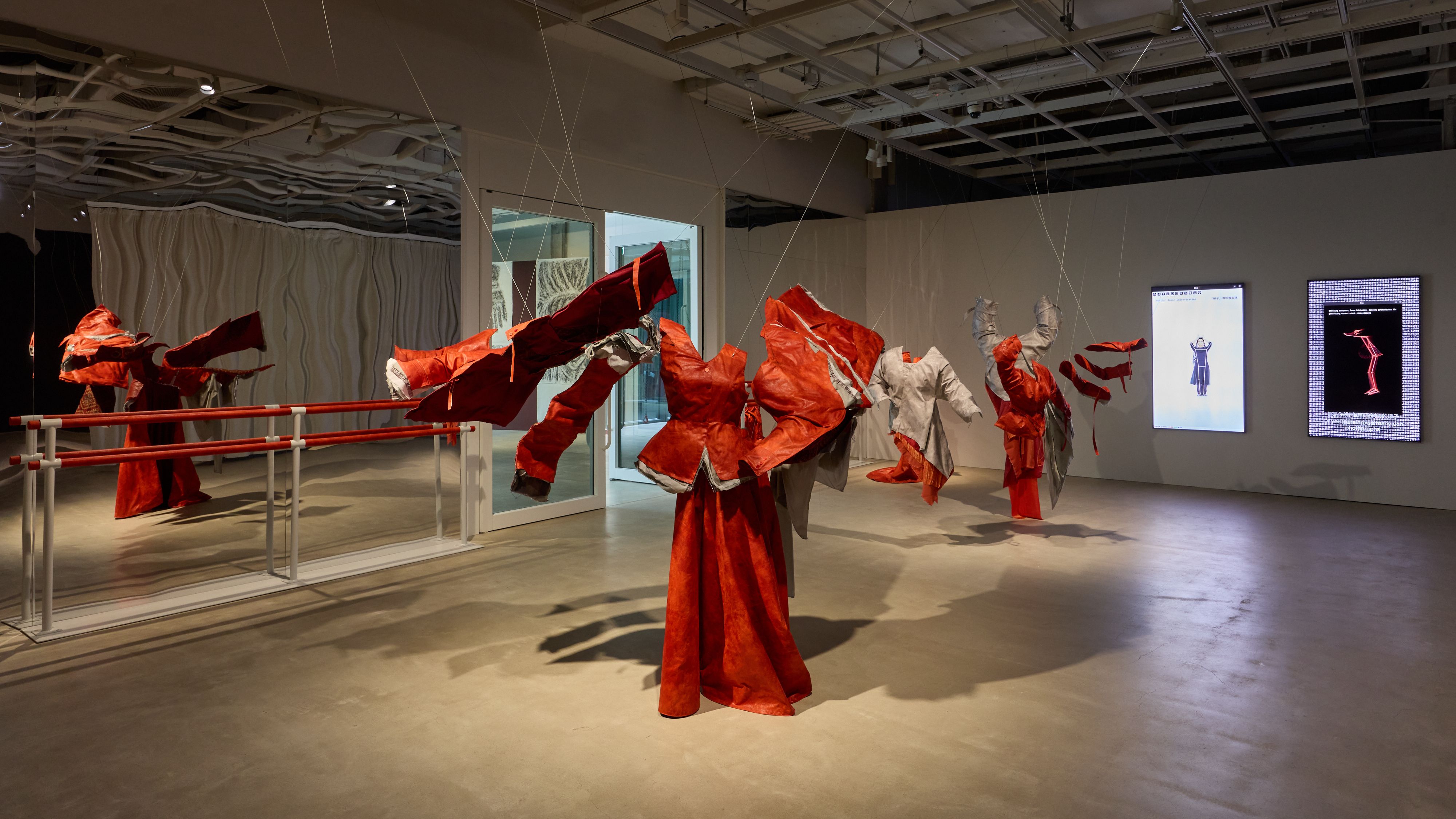
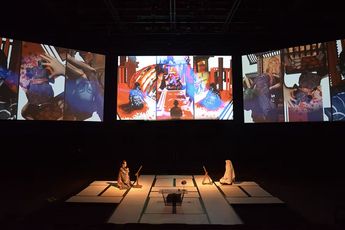
A matrilineal or sisterhood thread runs across many of the works, with an effort to preserve disappearing legacies while forging new forms of creative expression. Aziza Kadyri’s Her Stage (IV) (2024–present) sets up a theatre with fragments of red Uzbek dance costumes installed in postures that invite the audience to inhabit them and participate in choreography the artist’s grandmother was never able to realise (she sacrificed her dream of becoming a folk dancer to meet society’s expectations).
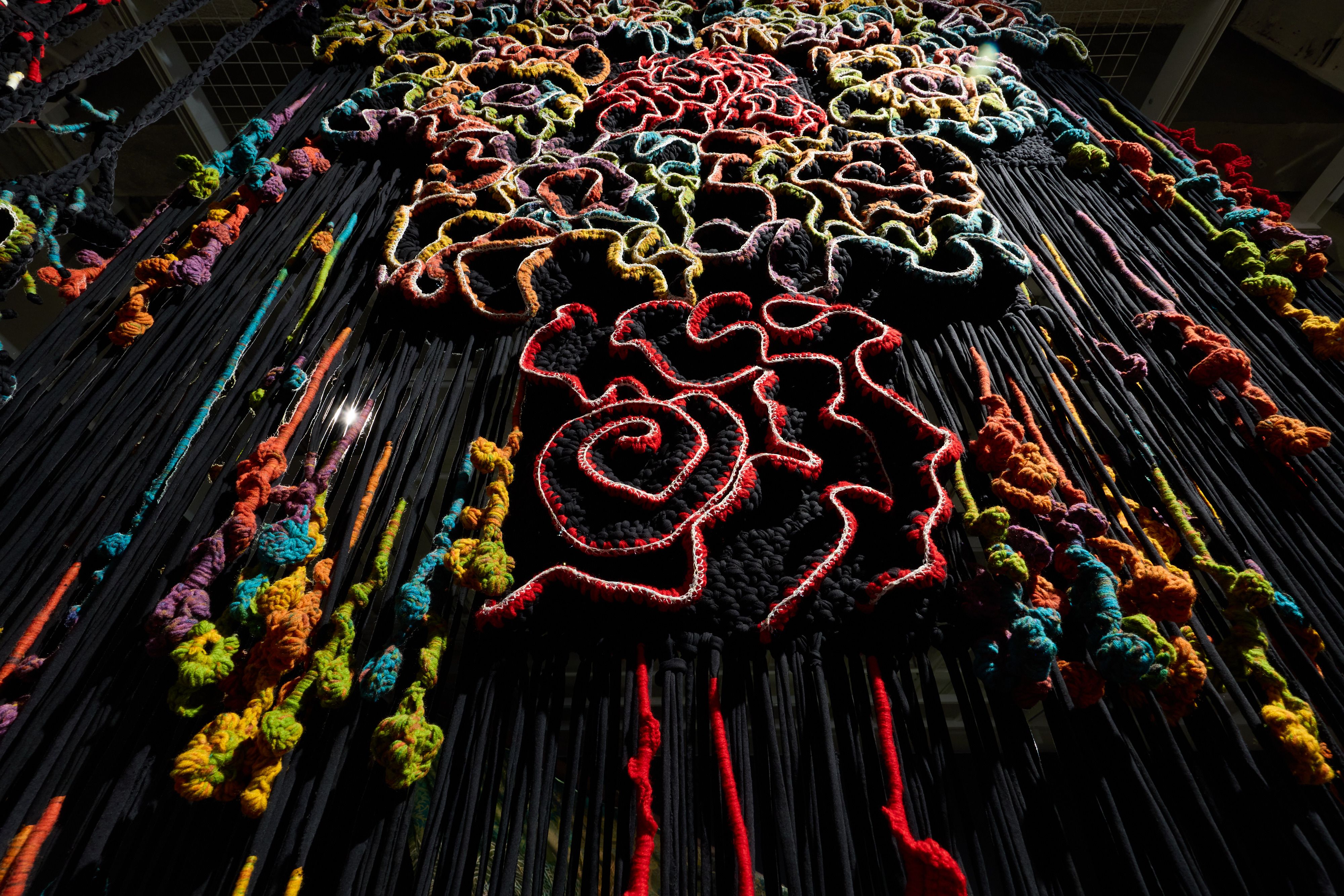
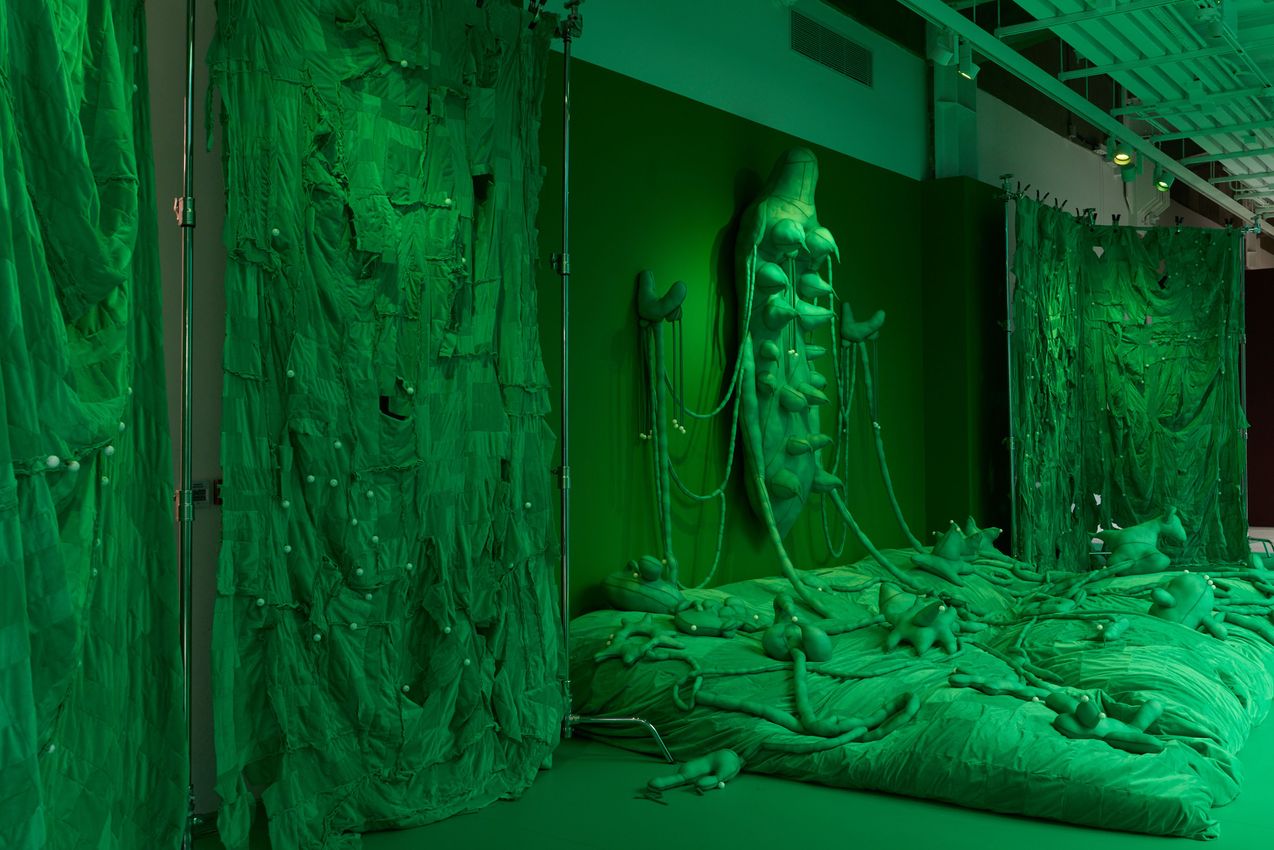
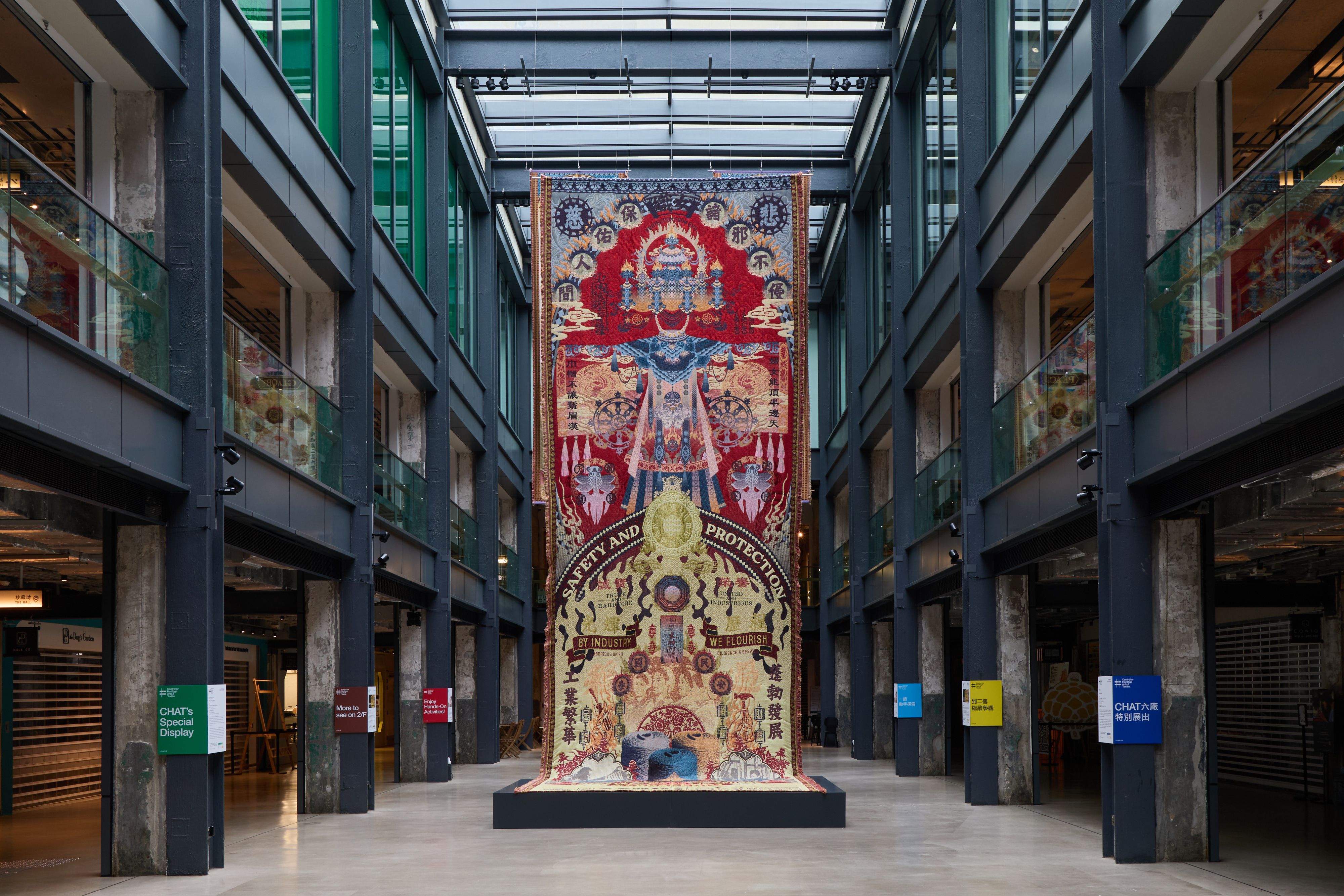
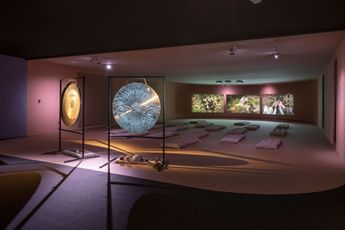
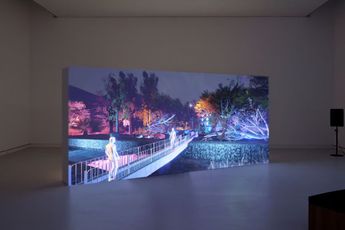
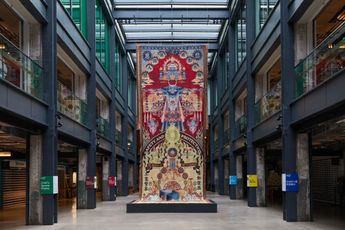
Berlin-based artist Mooni Perry’s video The Oracle (2026) traces the celebration of the legend of the Seventh Sister, passed across generations among communities of women in Hong Kong and southern China. Elsewhere, however, the female lineage surfaces in the exhibition more obliquely through symbolic imagery: Citra Sasmita’s monumental fabric piece Sky River in the Fountain of Amygdala (2026), co-created with the Tumanggal weaving community, reimagines the goddess Draupadi from Balinese and Hindu mythology; and closing the exhibition is IV Chan’s Chloronest (2026): illuminated in green light, the installation carpets the floor with stuffed forms connected by ropes—suggestive of umbilical cords—to a goddess-like torso above, where the body itself becomes mythological terrain.
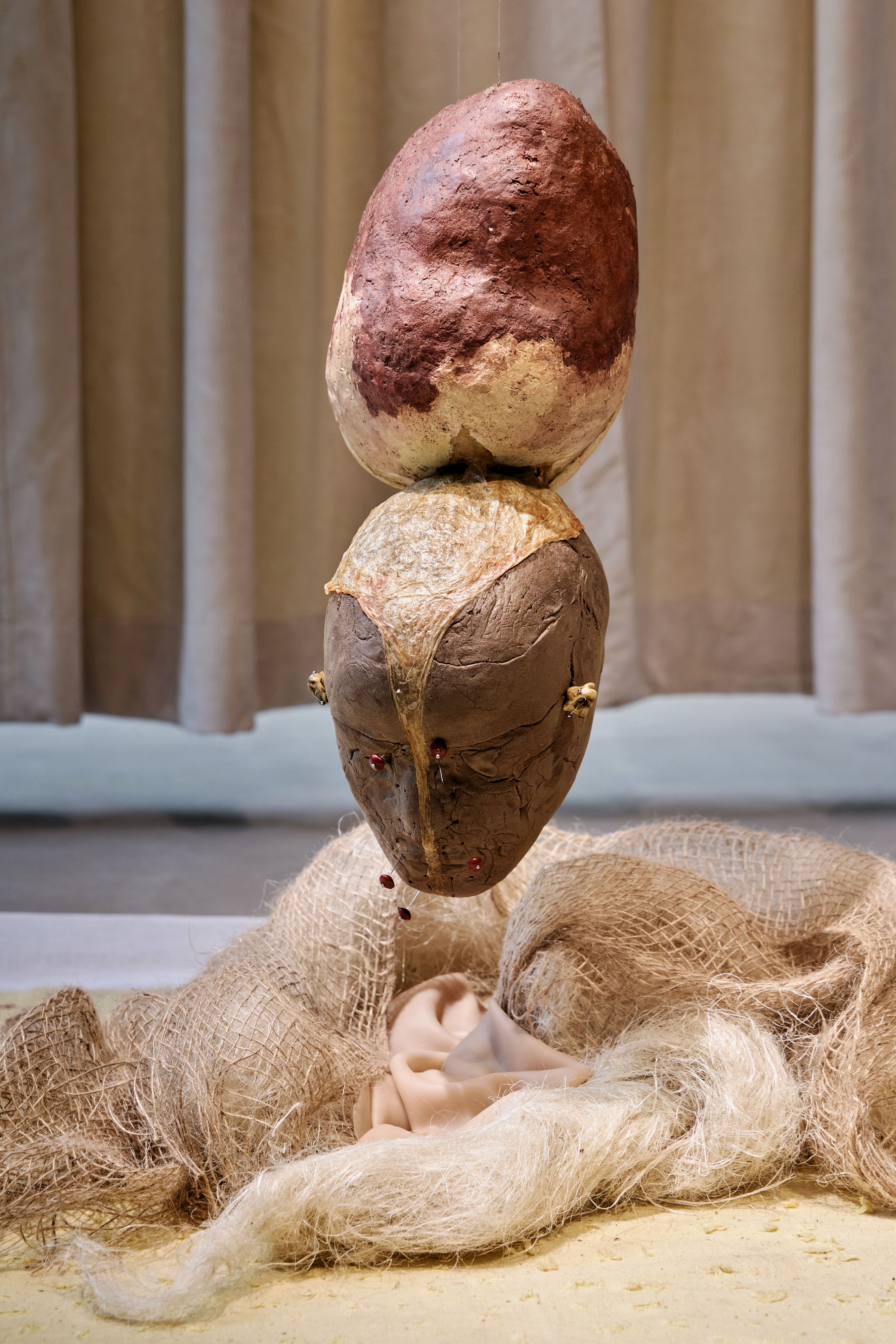
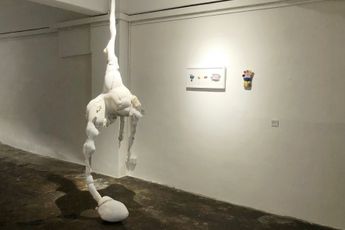
The soft thread morphs into a line that moves through the body in Chen Zhe’s Meeting I (2025–2026), which explores the fontanelle—the fissure in the skull that is said in folklore to open supernatural vision in children and closes around 18 months. Hovering low above a mass of linen and cotton cloth that evokes warm intimacy, two skulls are joined at the fontanelle, bringing the enigmatic into the visible and suggesting how a negative space might reactivate long-lost perception.

“The intimate connection between textiles and everyday life softens the solemn topics embedded in many works”
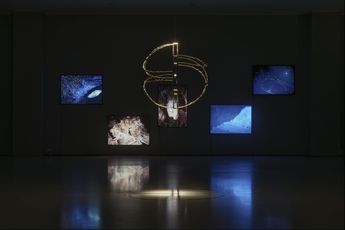
This idea of threading as both movement and metaphor continues in Himali Singh Soin’s ongoing Static Range project (2020–present), an exploration of the entanglements between nuclear plants, landscape and inner trauma. In Allegory of the Atoll (2024), the New Delhi-born artist dyes silk in red and orange to evoke the nuclear history and ongoing climatic catastrophe of the Marshall Islands in the Pacific, where the US established a nuclear testing site in 1946. Soin’s 15-minute video An Affirmation (2022), filmed at Sellafield, a decommissioned nuclear plant in the Lake District in north-west England, adds surreal—even campy—effects of radiation to the landscape, while the artist reads a letter written by “the mountain” addressed to “the atom”. “Poetry itself is speechless before you,” the mountain laments. Yet the possibility of dialogue suggested in the video, alongside the healing herbs smeared into the textile in Allegory of the Atoll, points to an optimism in confronting what haunts us.

The exhibition foregrounds softness and care, while the subtle violence implied in its title—“threading inwards” does sound like a stitching surgery—remains largely absent. While most of the fabric works invite rather than repel, the one exception is Liu Xuan’s Lilayati (2025), a grotesque, kinetic totem hanging from the ceiling, bound in thick dangling chains. Composed of beige tassels forming torso and legs, it invites the viewer to pull a ring and activate the bound figure, which then bounces and dances violently, releasing a burst of chaotic noise. Here, the flexibility of fabric is transformed into a symbol of challenge directed at the divine—a reminder of the confrontational energy the exhibition otherwise keeps carefully at bay.
Threading Inwards opened to coincide with Hong Kong Art Week, and the spiritual and the haunting were also explored in the concurrent exhibition Ghostly, Godly by Octone Foundation, curated by Chris Wan (21 March–8 April 2026), and in a conversation between artists Angela Su and Zheng Mahler’s Royce Ng, On Ghosts and Monsters, at Art Basel Hong Kong. It felt to me less like a coincidence than a symptom. Could it be that the city, uncertain about its political—and thus cultural—future, is turning towards meditation on its past, unearthing memories, reaching for something invisible but transmittable? —[O]
Threading Inwards, Centre for Heritage, Arts and Textile, Hong Kong, until 28 June 2026.
Main image: Exhibition view: Group Exhibition, Threading Inwards, CHAT (Centre for Heritage, Arts and Textile), Hong Kong (21 March–28 June 2026). Courtesy CHAT.















A respected voice in contemporary art discourse.
Focusing on ambitious storytelling and insightful art-world commentary. Ocula Magazine publishes in-depth interviews, critical essays and timely analysis on the artists, exhibitions and ideas driving the global art world.
Learn more about Ocula Magazine
Showcasing the best of the art world.
Ocula partners with galleries from around the world to highlight their artists, artworks and exhibitions. Gallery membership is by application and invitation, with each member vetted by an independent panel.
Learn more about Ocula Membership
Specialises in the sale of major artworks.
Led by a team with deep ties to the world’s leading auction houses, galleries and collectors. Ocula’s advisory team offers bespoke services to high-net-worth clients from around the world who are looking to acquire the best of contemporary and modern art.
Learn more about our team and services