





Isaac Julien’s Homage to Lina Bo Bardi
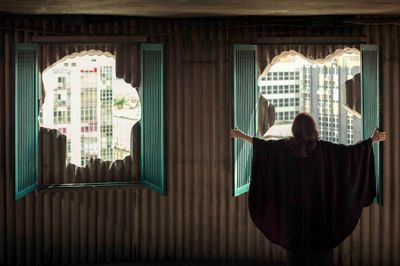
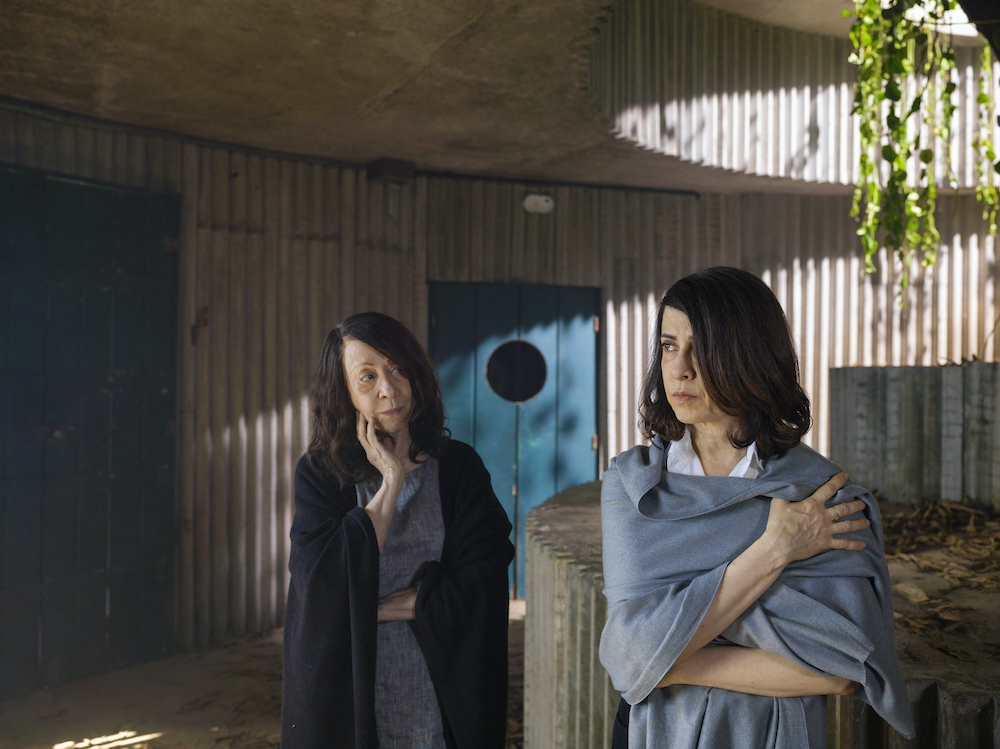
Isaac Julien, Tecnologia pré-histórica / Prehistoric Technology (Lina Bo Bardi – A Marvellous Entanglement) (2019). Endura Ultra photograph facemounted. 180 x 240 cm. Courtesy Victoria Miro.


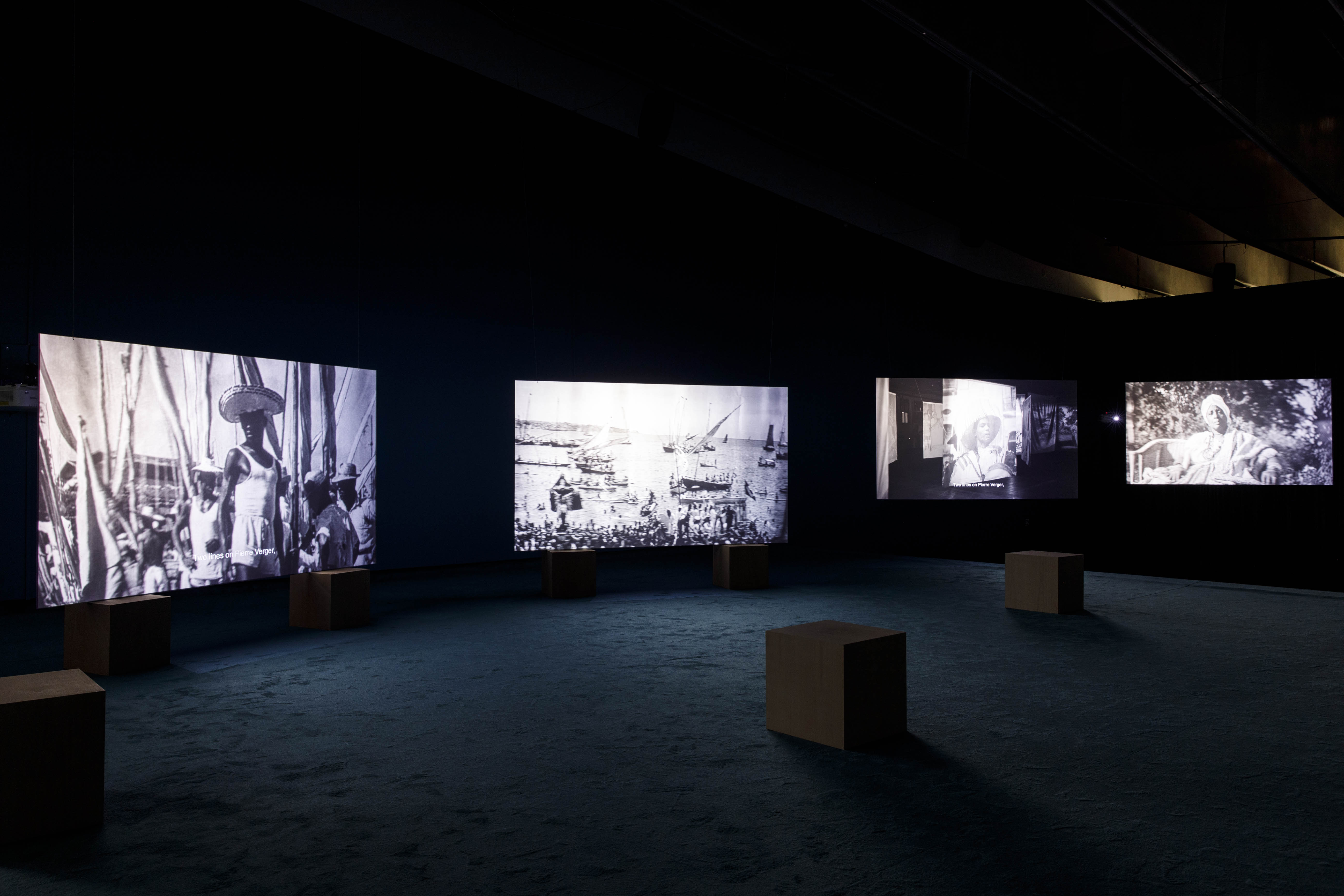
In Salvador, Bo Bardi resisted gentrifying the historic centre into a ‘Disneyfied’ tourist zone.1 She conceived of the museum as a place for community, where art and craft intermingled, in her role as MAM-BA’s first director from 1960 to 1964, the year a military coup reduced Brazil, Bo Bardi wrote, to a near 20-year silence.3
Returning to São Paulo, she oversaw the completion of the Museu de Arte de São Paulo (MASP) in 1968: a dramatic structure she designed to seemingly levitate over Paulista Avenue to form a sheltered, public plaza overlooking a dramatic swathe of the city, whose modernist form echoes the Glass House, the home she designed in 1951 complete with iconic bowl chair.
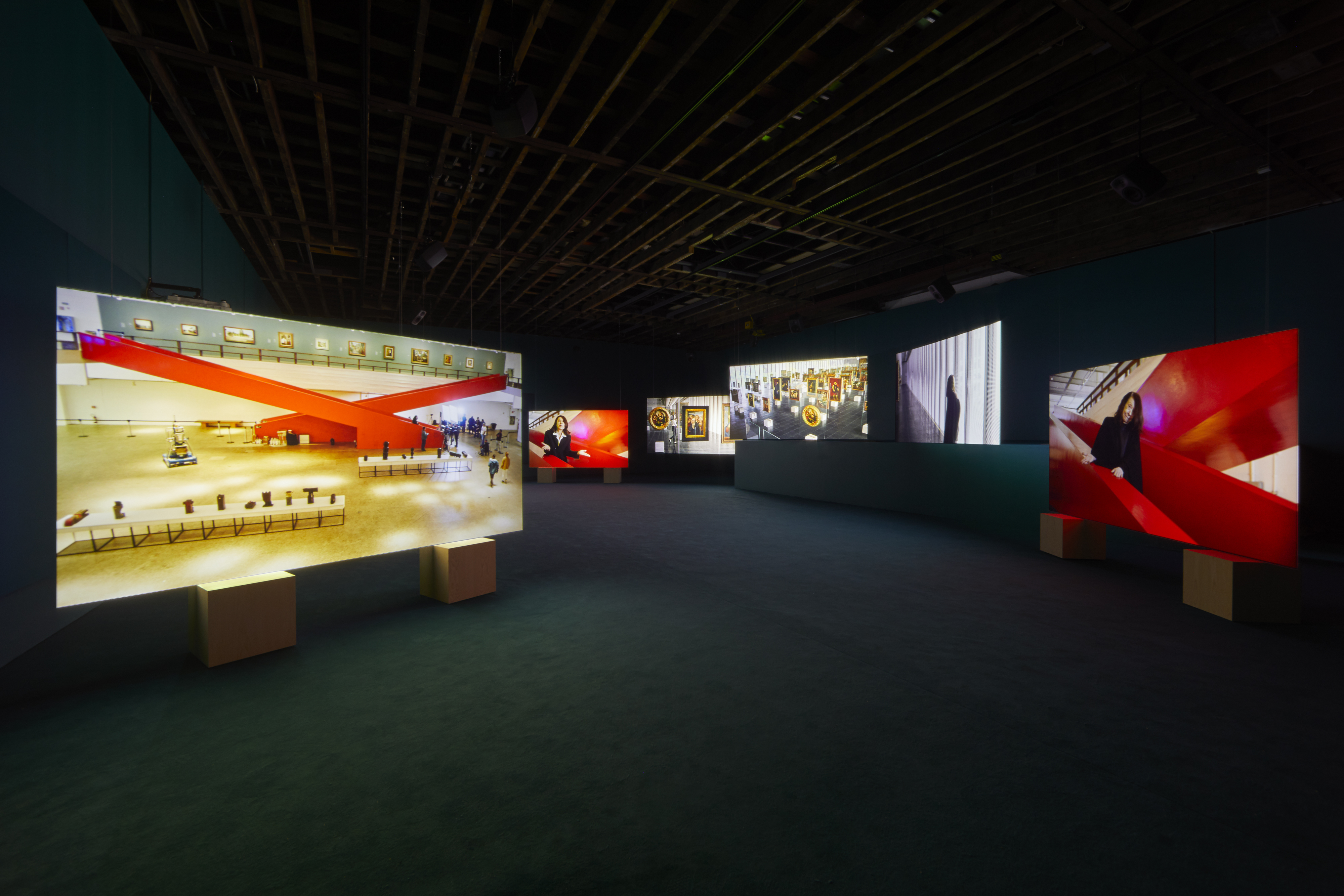
Bo Bardi was appointed architect of MASP and her husband Pietro Maria Bardi its director in 1947, just one year after the couple arrived in Brazil from Italy.
“To animate Bo Bardi, to make her personality tangible in what she left behind, is a current that charges A Marvellous Entanglement...
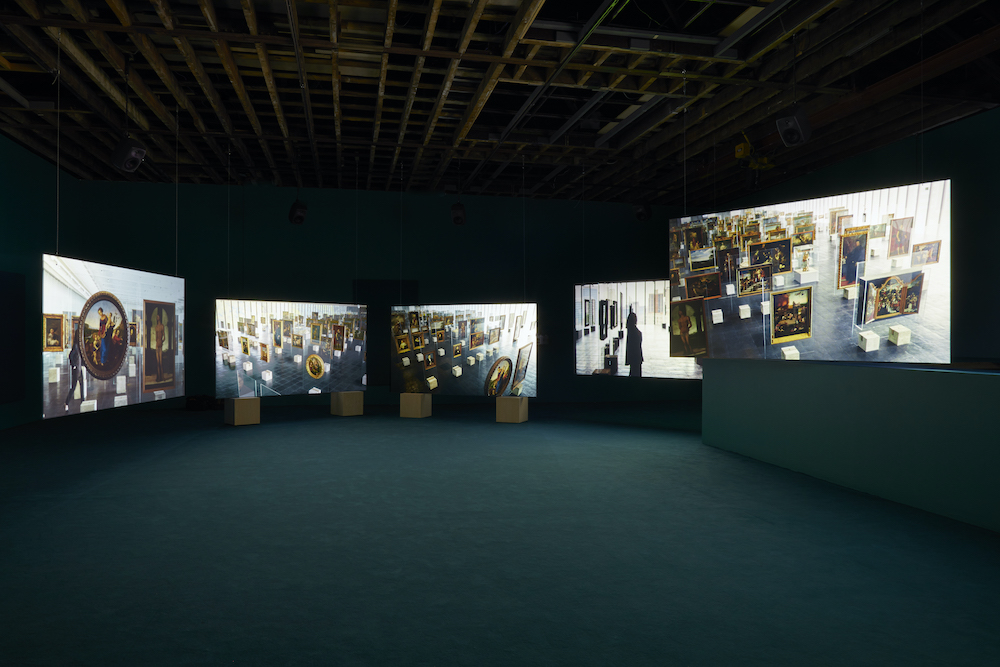
As academic Adrian Anagnost writes in an essay that traces P.M. Bardi’s complicated political trajectory, the couple wanted the museum to resonate beyond the upper and bourgeois classes. Lina designed metal structures and glass easels to expand sight lines among works, mixing contemporary with classical, originals with reproductions, and industrial design with commercial culture and fine art.4
In 2012, Julien encountered Bo Bardi again when installing his solo show Geopoetics at the community centre SESC Pompéia in São Paulo, her great masterpiece. Developed between 1977 and 1986, this renovated industrial complex of open and closed spaces connected by a central pebbled thoroughfare—a converted riverbed known as ‘the beach’—hosts exhibitions, performances, concerts, sports events, and an open canteen.
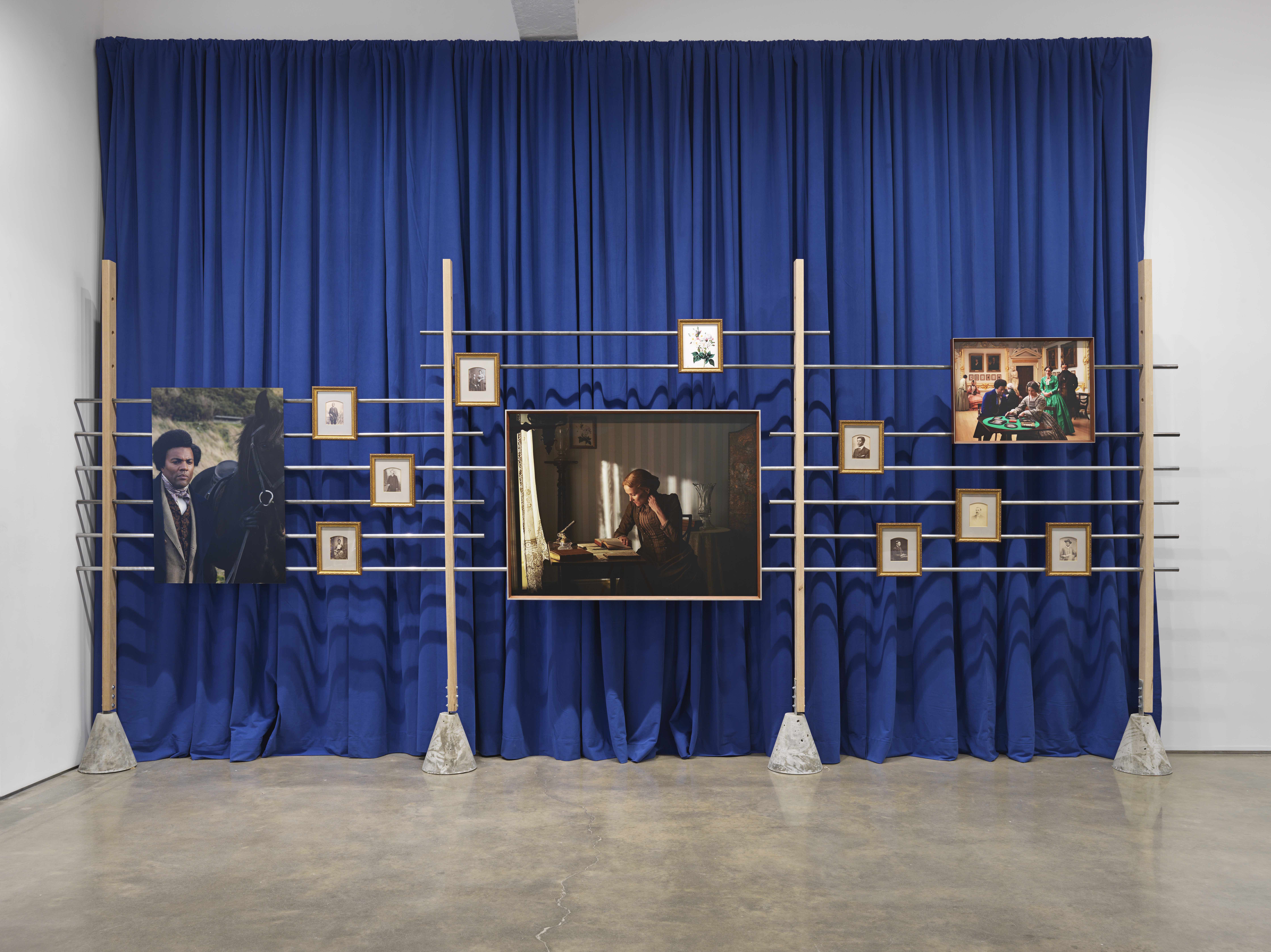
Julien learned about Bo Bardi’s display strategies from architect André Vainer, who worked with Bo Bardi on the SESC project, even creating easels based on those Bo Bardi designed for MASP and SESC for his 2019 Metro Pictures show, Lessons of the Hour—Frederick Douglass.5

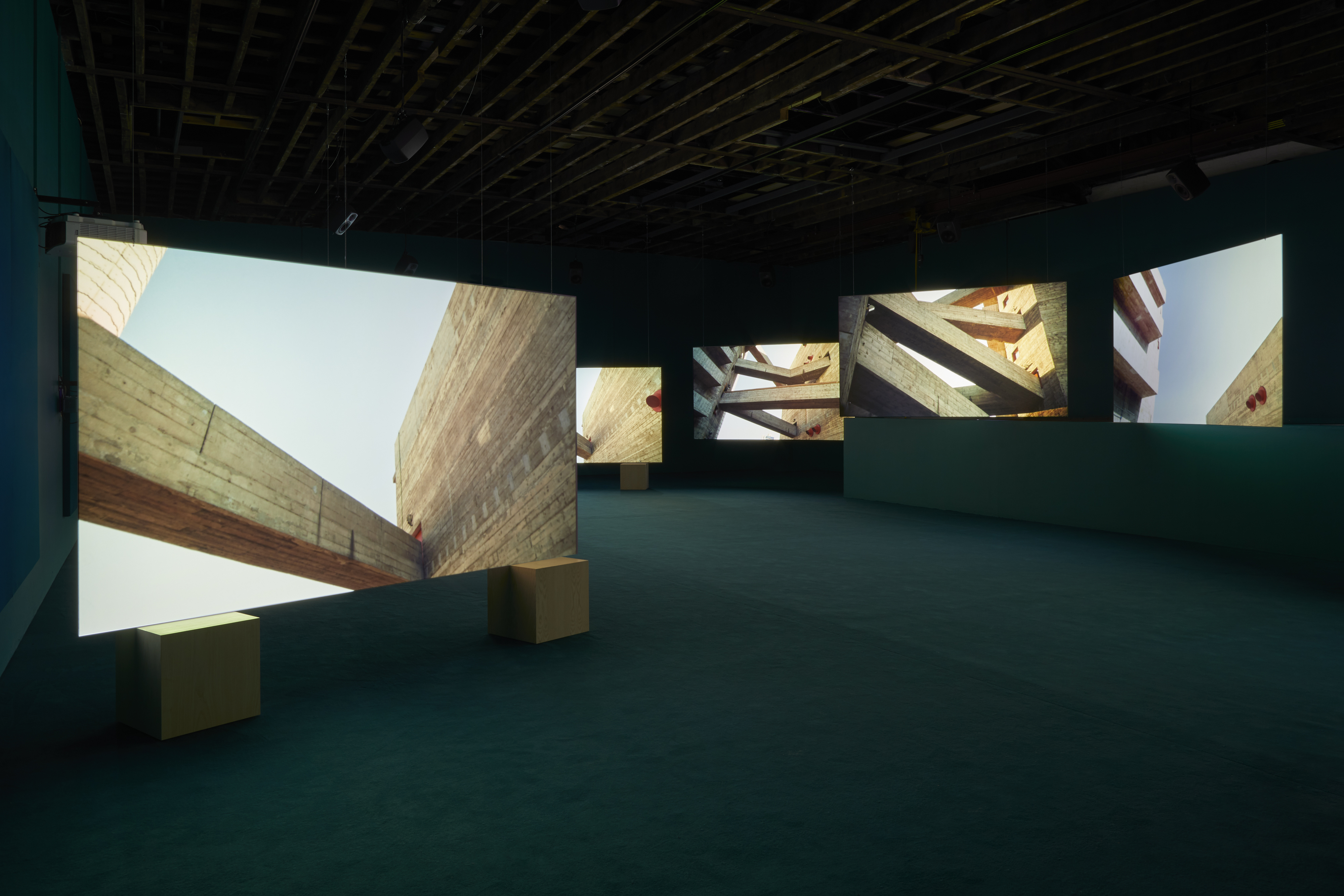
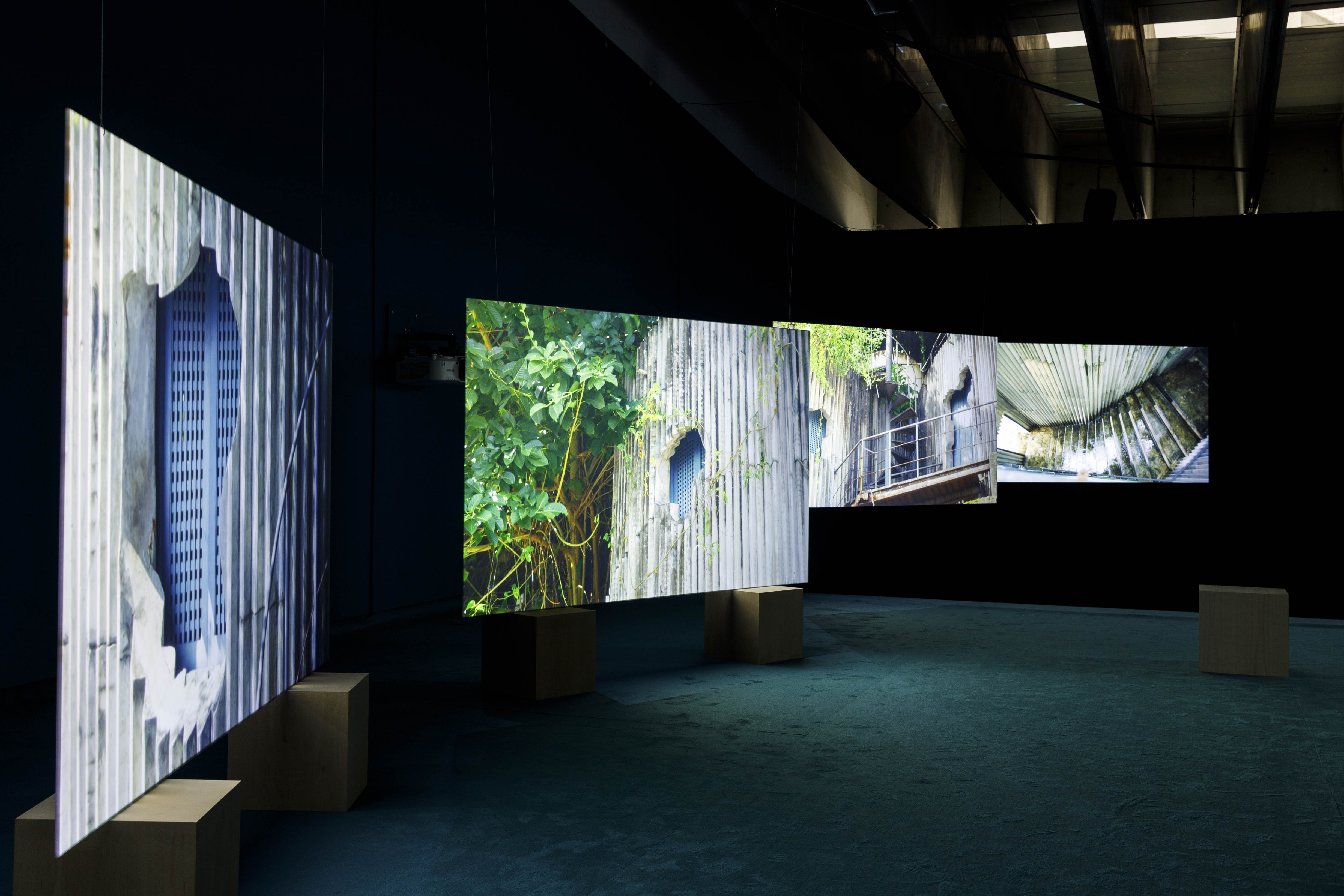
SESC Pompéia is among the architectures featured in Julien’s nine-channel moving image portrait of Bo Bardi, A Marvellous Entanglement. Some six years in the making, the film premiered at Victoria Miro in London in 2019. It is now showing amid photographic collages, timelines, and archival displays at MAXXI — National Museum of 21st Century Art in Rome to 17 January 2021, where Bo Bardi graduated from the Sapienza University just before World War Two.6
Like Julien’s evocative studies of Harlem Renaissance giant Langston Hughes and revolutionary psychoanalyst Frantz Fanon, A Marvellous Engagement is a rich saturation of audio-visual echoes and projections: a multi-layered expression of a creator’s essence infused with the textures of their time and resonances in the present.
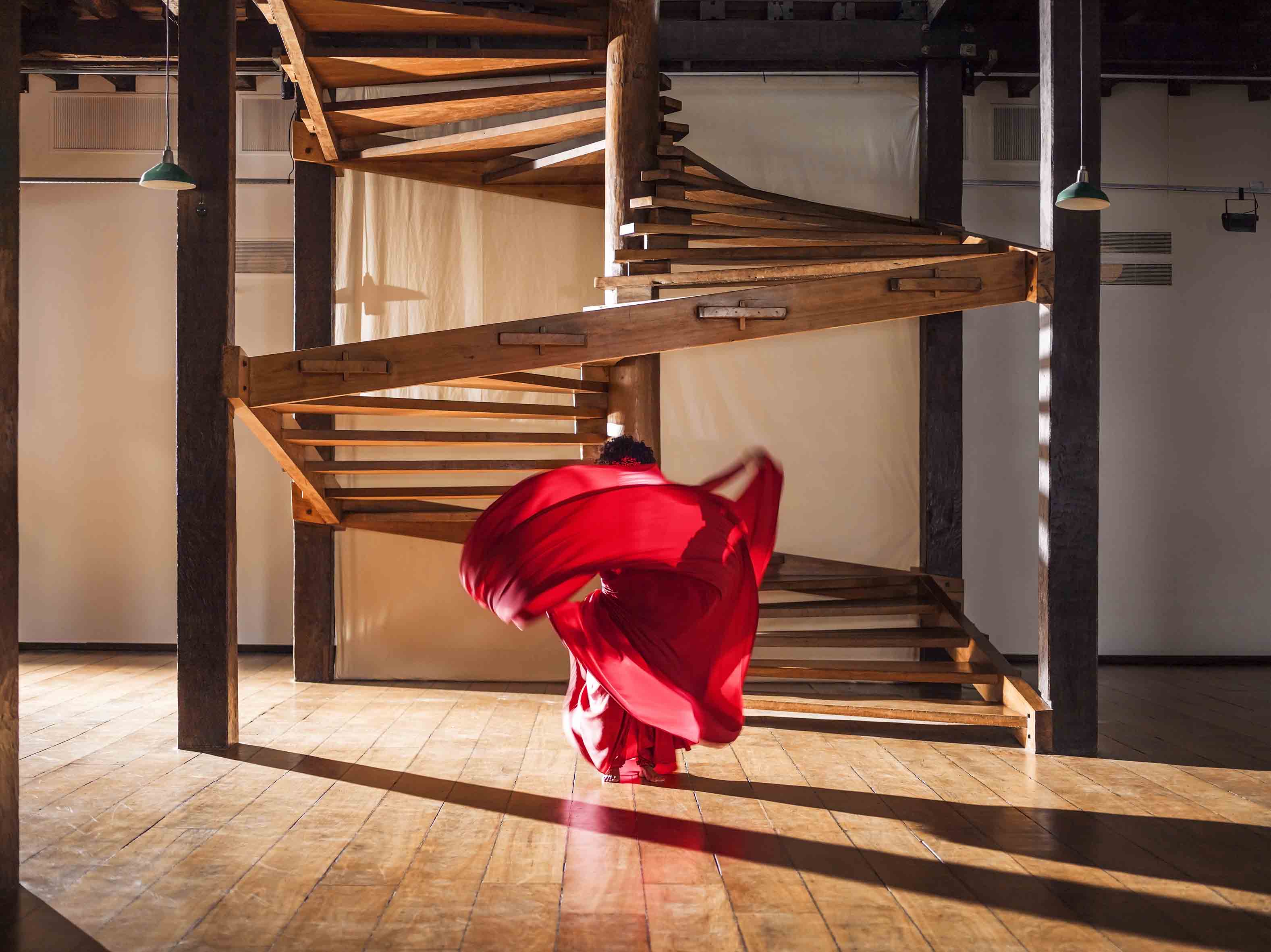
Bo Bardi’s spatial poetics are invoked in a mesh of acted scenes, excerpts from Bo Bardi’s texts (she was also a critic and editor, once directing Domus), documents from French ethnographer Pierre Verger’s archive (whose collection is housed at Casa do Benin), and performative interventions like those around Coaty by Bahian dancer Diego Pinheiro and art collective ARAKÁ, and a choreography by Zebrinha for the Balé Folclórico de Bahia on Solar do Unhão’s spiral staircase.
Throughout the film, one quote is repeated that describes linear time as a Western invention constraining time’s true nature as non-linear: a ‘marvellous entanglement, where at any moment points can be chosen and solutions invented without beginning or end.’
Famed Brazilian actress Fernanda Montenegro, who plays an elder Bo Bardi to her daughter Fernanda Torres’ younger portrayal, repeats that line in a scene with Zé Celso, co-founder of São Paulo’s Teatro Oficina, which Bo Bardi redesigned with Edison Elito. In this moment of tender play, Bo Bardi is resurrected by someone who knew her as they affectionately interact with her dramatic embodiment.
To animate Bo Bardi, to make her personality tangible in what she left behind, is a current that charges A Marvellous Entanglement: an intention that honours the architect’s treatment of space as a vital engagement with everything that gives it life.
When the camera hovers over SESC Pompéia’s pebbled thoroughfare in Julien’s film, we hear Bo Bardi’s words recalling her initial encounters with the space. After noting the rational European design, she remembers the laughter of boys playing football in the rain that changed everything. ‘All of this must continue, just like this’, she thought; ‘all this joy.’—[O]
1 Angela Starita, ‘Lina Bo Bardi’s return to Salvador, The Architectural League of New York, 21 January 2008, https://archleague.org/article/lina-bo-bardis-return-to-salvador/
2 Carla Zollinger, ‘Lina Bo Bardi and the Bahian Modern Art Museum: museum-school, museum in progress’, Lina Bo Bardi: Together, 2016, https://linabobarditogether.com/2012/09/02/lina-bo-bardi-and-the-bahian-modern-art-museum-museum-school-museum-in-progress/
3 As narrated in A Marvellous Entanglement.
4 Adrian Anagnost, ‘Limitless Museum: P.M. Bardi’s Aesthetic Reeducation’, John Hopkins University Press, Volume 26, (November 2019), John Hopkins University Press, https://modernismmodernity.org/articles/anagnost-limitless-museum
5 Nick Compton, ‘Artist Isaac Julien celebrates Brazilian architect Lina Bo Bardi on film’, Wallpaper, 21 June 2019, https://www.wallpaper.com/art/isaac-julien-lina-bo-bardi-on-film-victoria-miro-london
6 The work is preceded by a 10-screen installation, Stones Against Diamonds (2015), which draws on a letter from Bo Bardi describing a preference for semi-precious stones over diamonds.
Main image: Isaac Julien, Tecnologia pré-histórica / Prehistoric Technology (Lina Bo Bardi – A Marvellous Entanglement) (2019). Endura Ultra photograph facemounted. 180 x 240 cm. Courtesy Victoria Miro.




A respected voice in contemporary art discourse.
Focusing on ambitious storytelling and insightful art-world commentary. Ocula Magazine publishes in-depth interviews, critical essays and timely analysis on the artists, exhibitions and ideas driving the global art world.
Learn more about Ocula Magazine
Showcasing the best of the art world.
Ocula partners with galleries from around the world to highlight their artists, artworks and exhibitions. Gallery membership is by application and invitation, with each member vetted by an independent panel.
Learn more about Ocula Membership
Specialises in the sale of major artworks.
Led by a team with deep ties to the world’s leading auction houses, galleries and collectors. Ocula’s advisory team offers bespoke services to high-net-worth clients from around the world who are looking to acquire the best of contemporary and modern art.
Learn more about our team and services