




Radiant Decay in Salzburger Kunstverein Show
Writer‑in‑residence Žanete Liekīte reflects on The Color of Energy at Salzburger Kunstverein, curated by Mirela Baciak. Save to My Ocula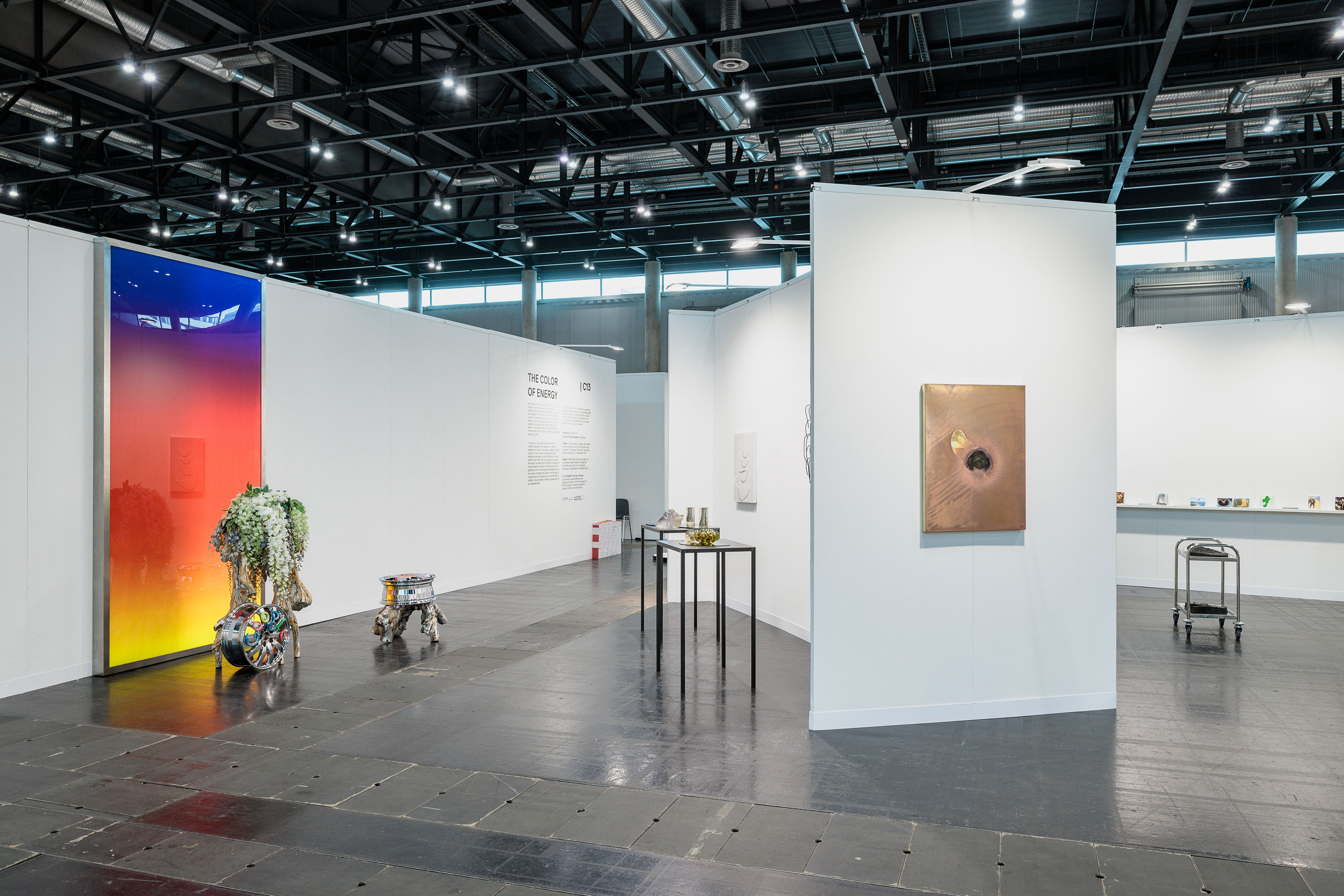
In her video introduction to the show on the Salzburger Kunstverein website, Baciak mentions that seeing the spectrum of colours in an oil spill partly inspired the show. However, as she proceeds to clarify, the true ‘colours’ of energy are far less literal: namely, ‘technology, geopolitics, people and money’. Ultimately, despite its title, the central focus of the exhibition was not the colour of energy, but the metaphorical pigments of power and peril linked to its extraction.
Featuring artists Bertille Bak, Sophie Jung, Edson Luli, Ursula Mayer, Oleksiy Radynski, Shubigi Rao, Emilija Škarnulytė, and Guan Xiao, The Color of Energy: Chapter II confronts humanity’s lack of ecological awareness and impact. Here, decay trumps progress, leaving behind an expanse of industrial desolation in a post-human landscape. The artists, working across diverse media, dig into the residues of present and past to expose the slow disintegration of our world.
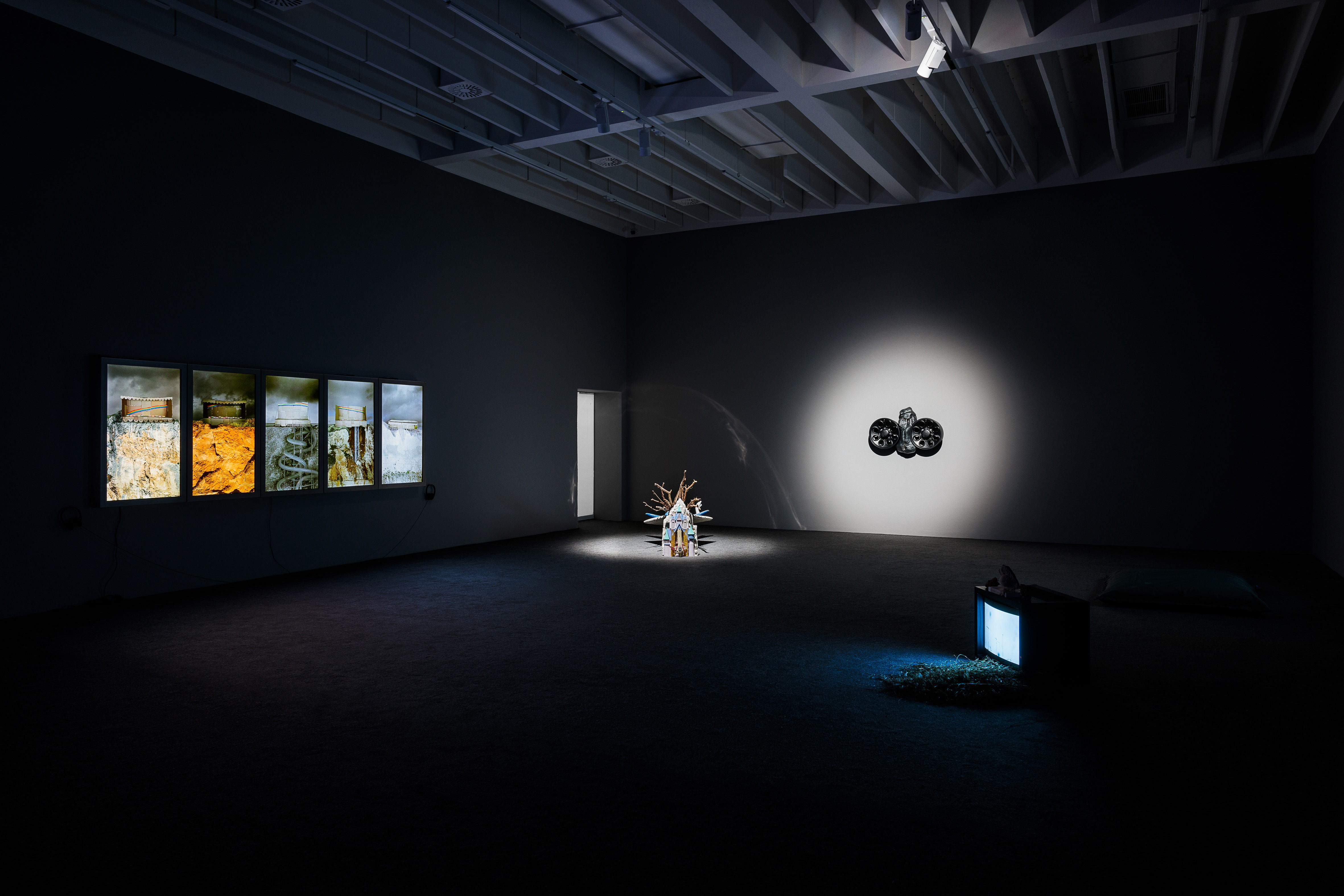
As the exhibition literature attests, the colours in these works invite us to reflect on how energy shapes our environment: ‘The amber of smog-filled skies, the toxic yellow of acid rains, the rusty orange of oil spills in the ocean, the searing red of wildfires, the blue hue of solar panels, the white of melting glaciers, the gleaming silver of technological advancements, the neon green of radioactive uranium, the blue glow of nuclear reactors, the stark grey of concrete fallout shelters, the lurid greens of money, the pale white of an exhausted face.’ This is the vivid mood board of a slowly dying Earth, whose striking visual language exposes the dark underbelly of capitalism, war, oppression, and the depletion of natural resources.
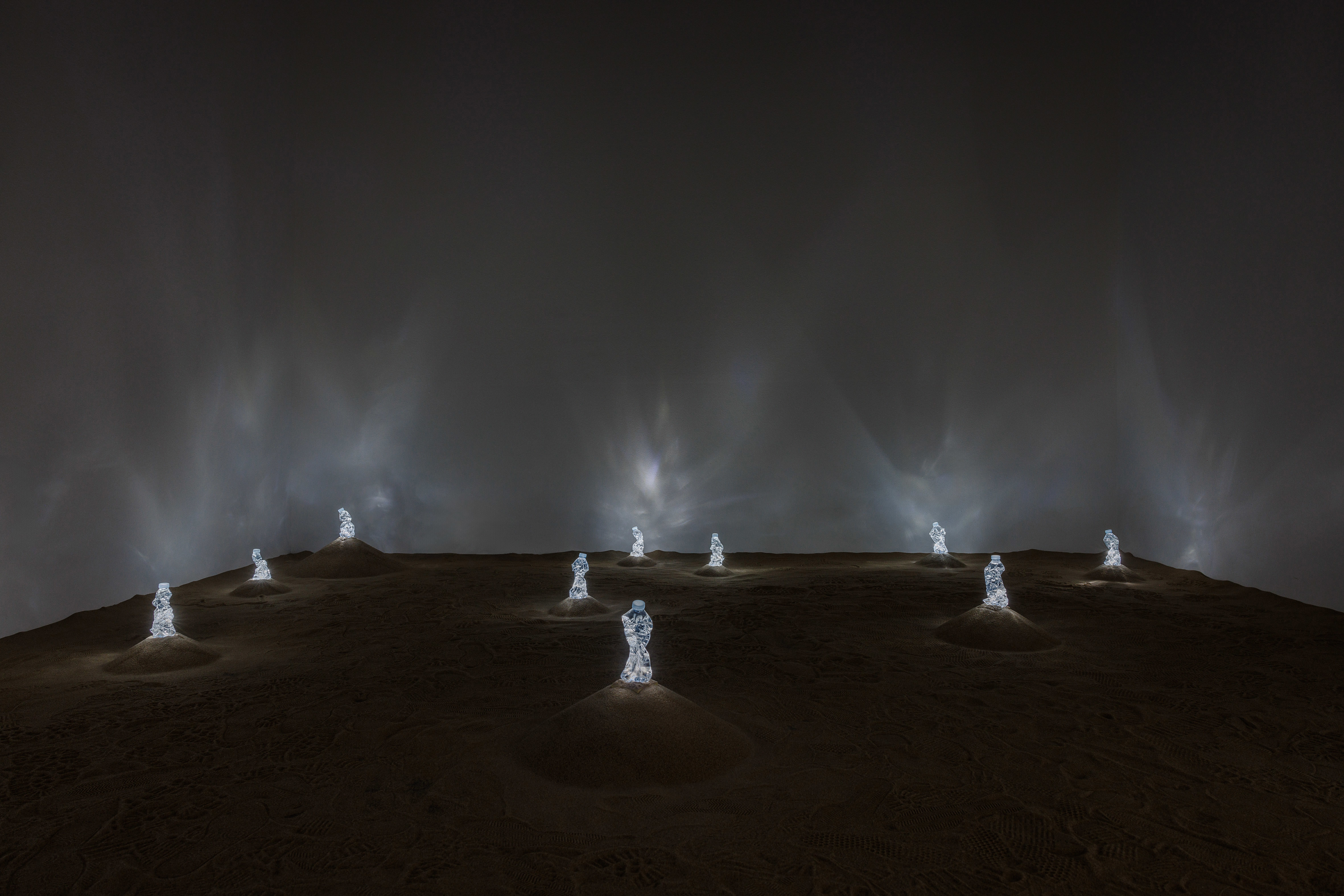
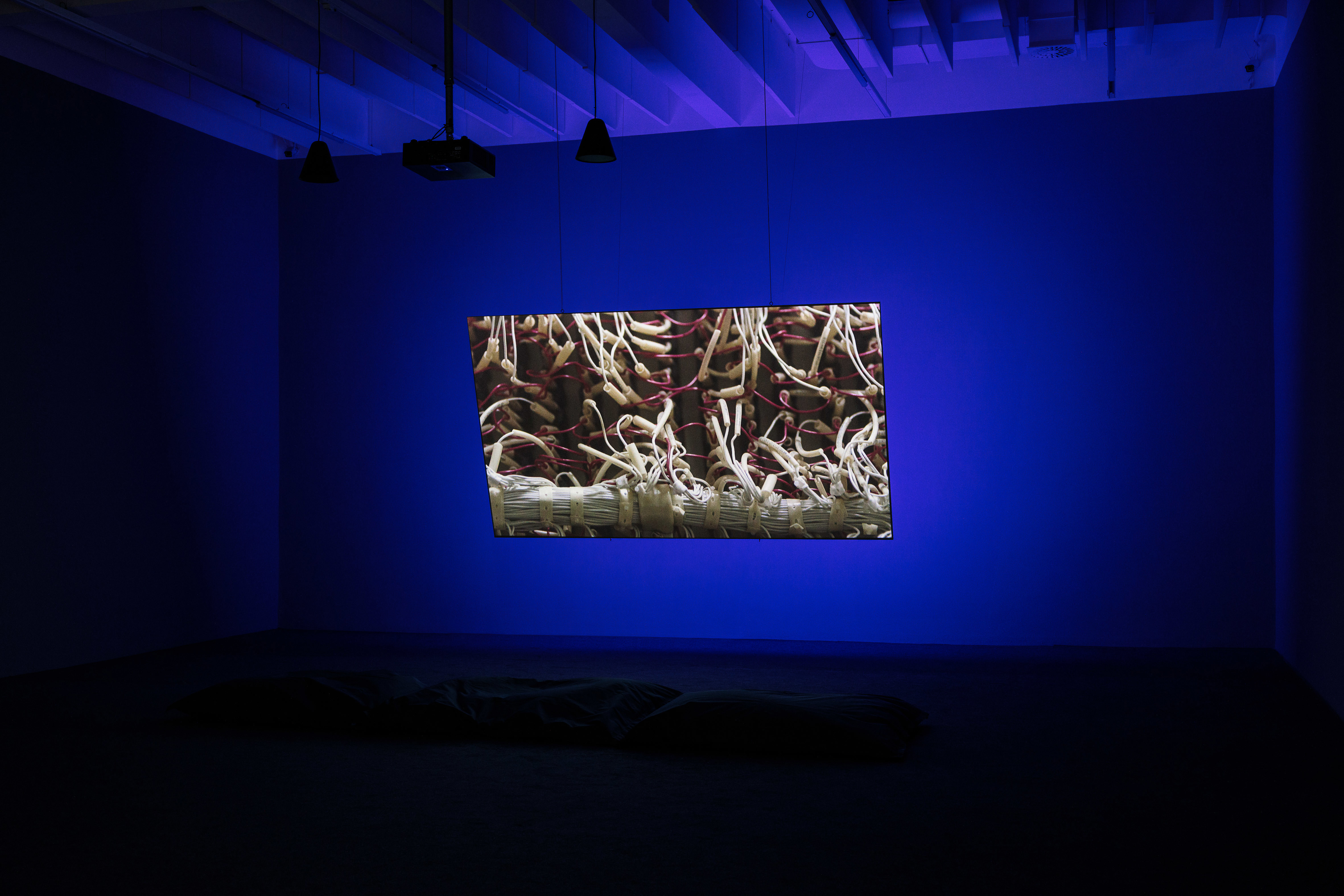
The featured works share a cohesive tonal range, yet vary in intensity: some flirt with levity, while others plunge into the darker, more elusive depths of the subject. At first glance, Edson Luli’s installation Footsteps Towards the Future (2023) seems to mimic the glow of bioluminescent beaches. These ‘fen-fires’ lure viewers in with their mesmerising light beams, only to reveal their true nature on closer inspection: discarded plastic bottles in the sand—forcing a reflection on our environmental carelessness. In a different register, Lithuanian artist Emilija Škarnulytė’s film t ½ (2019) combines 3D renders and filmed footage to guide us through a spectral afterworld. In the film, while swimming with a glowing siren’s tail, the artist shows the decaying remnants of the decommissioned Ignalina nuclear power plant, Etruscan tombs, a neutrino observatory, and a Cold War-era submarine base to reveal, in the words of the artist, ‘scars left on Earth’.1
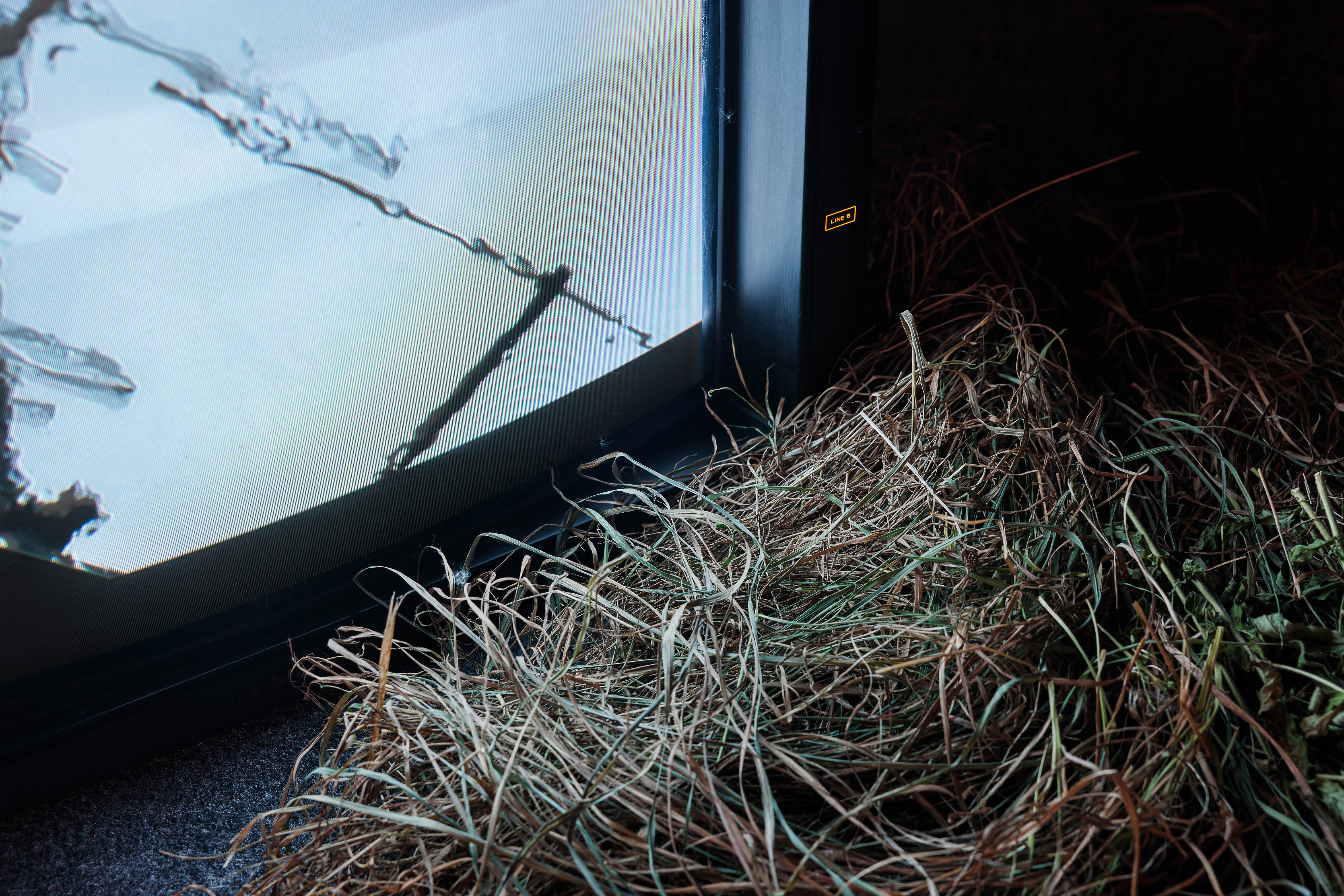
Ukrainian director Oleksiy Radynski’s film Where Russia Ends (2024) opens with a story of an encounter of the Evenki, the original inhabitants of the Siberian Taiga, and the Cossacks, who were sent there on the tsar’s orders. It recounts the indigenous wisdom: the land belongs to no one and everyone who inhabits it—humans, animals, spirits. But this delicate balance is swiftly broken by the logic of imperialistic entitlement: if it belongs to no one, it belongs to the tsar. Borrowing its title from Vladimir Putin’s chilling quip—‘Russia’s border doesn’t end anywhere’—the film frames the restoration of a collective memory versus the imperialistic erasure and environmental drainage. The sweeping beauty of the Baikal Mountains in Where Russia Ends contrasts starkly to the barren landscapes of Shubigi Rao’s These Petrified Paths (2023). Here, even grass refuses to grow—a grim testament to the relentless resource extraction and the tangled geopolitical and environmental aftermath of the Armenia-Azerbaijan conflict.
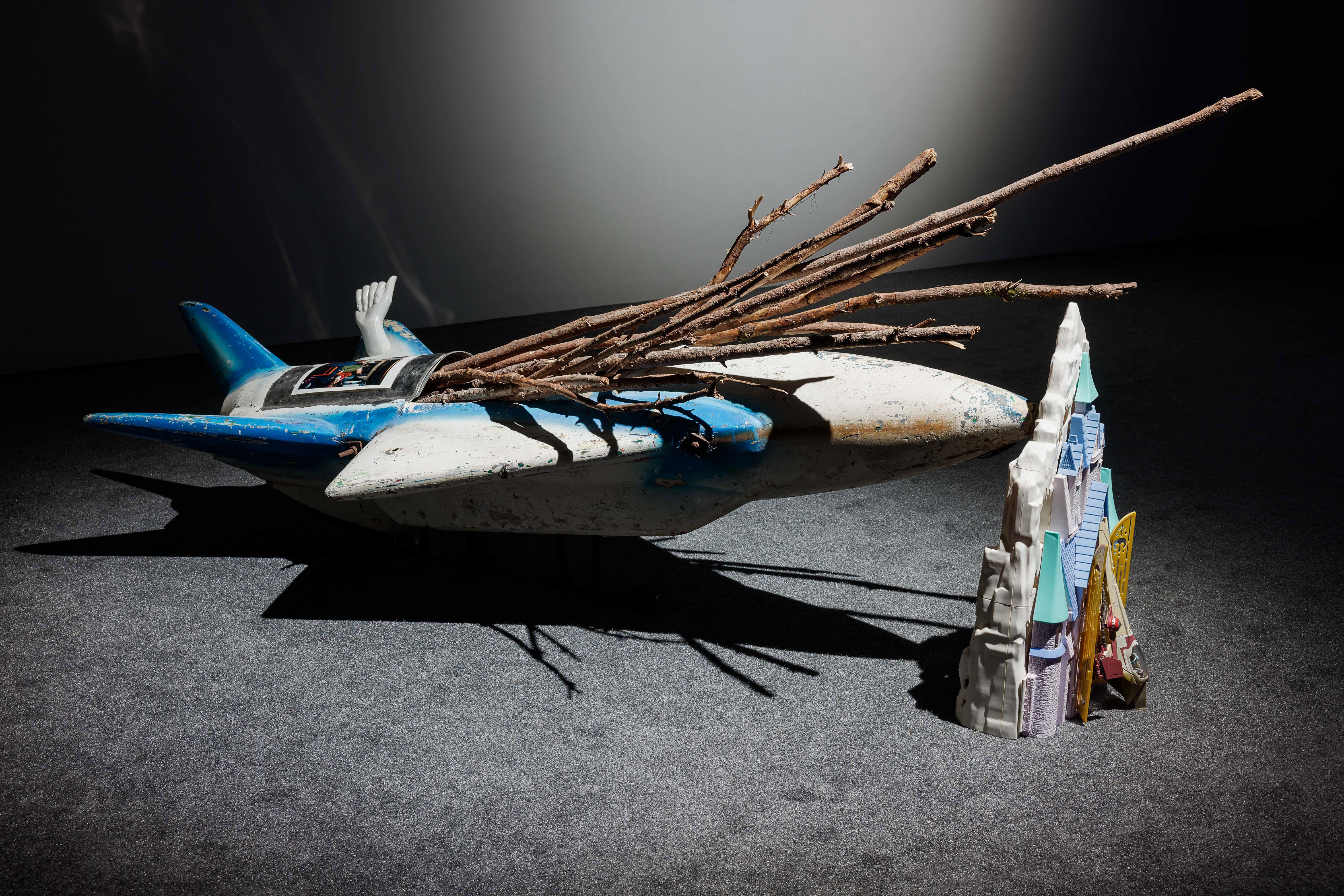
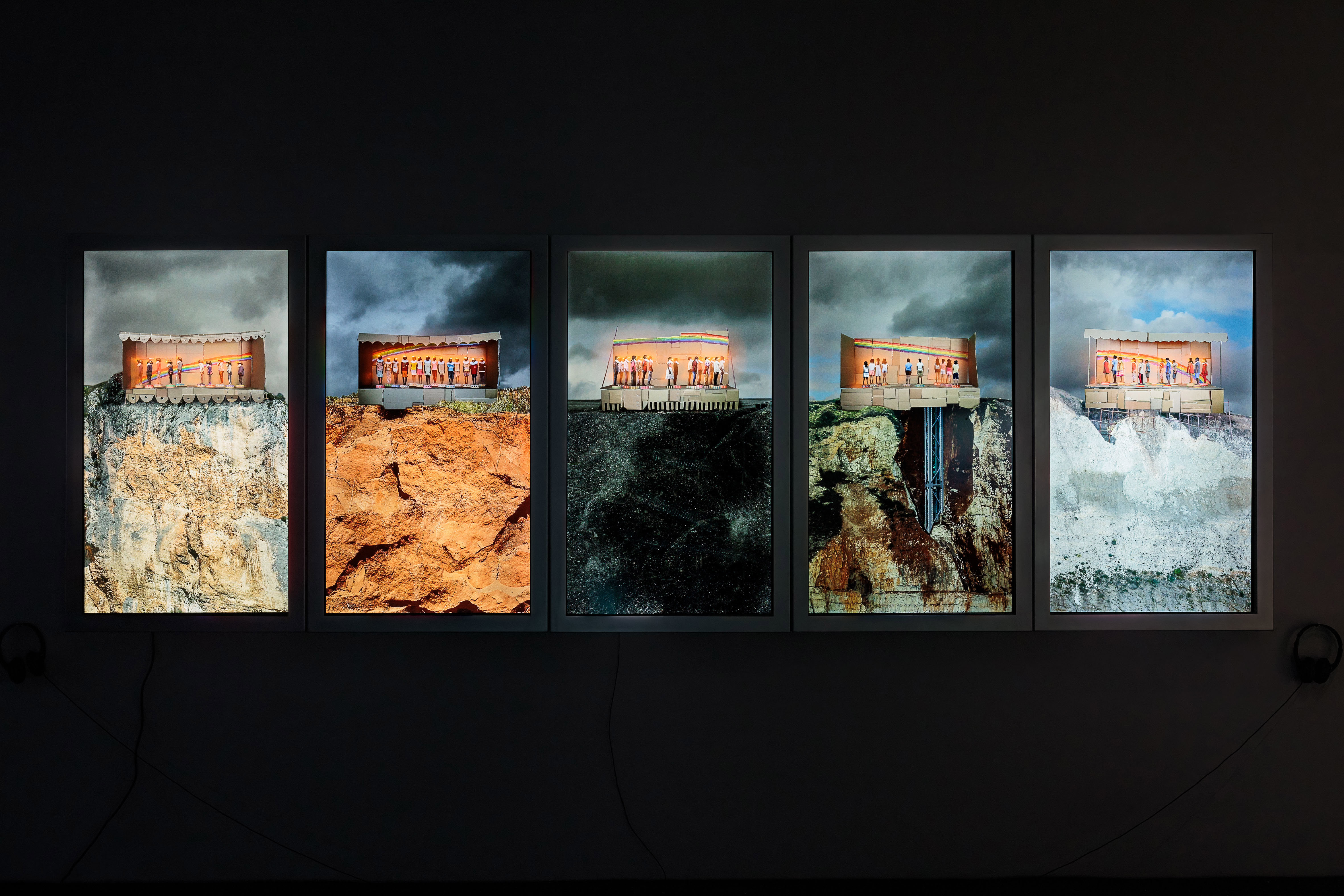
Elsewhere, Sophie Jung’s meditation on childhood and environmental collapse, The Beckoning (2023)—featuring a crashed plane, splintered tree branches, and a dollhouse—has the look of a post-apocalyptic toybox, couching serious commentary in playful guise. This sculpture is a tangible remnant of her spoken-word performance, capturing the anxieties surrounding climate and societal responsibilities. Meanwhile in Bertille Bak’s installation Mineur Mineur (Minor Miner, 2022), five vibrant screens show children navigating dark tunnels, initially appearing hypnotic and almost playful. The sugarcoating quickly turns bitter, however, to reveal the harsh reality of child labour and the global mining industry. These works balance on the knife-edge of beauty and brutality, using visual appeal to force us to confront uncomfortable underlying truths.
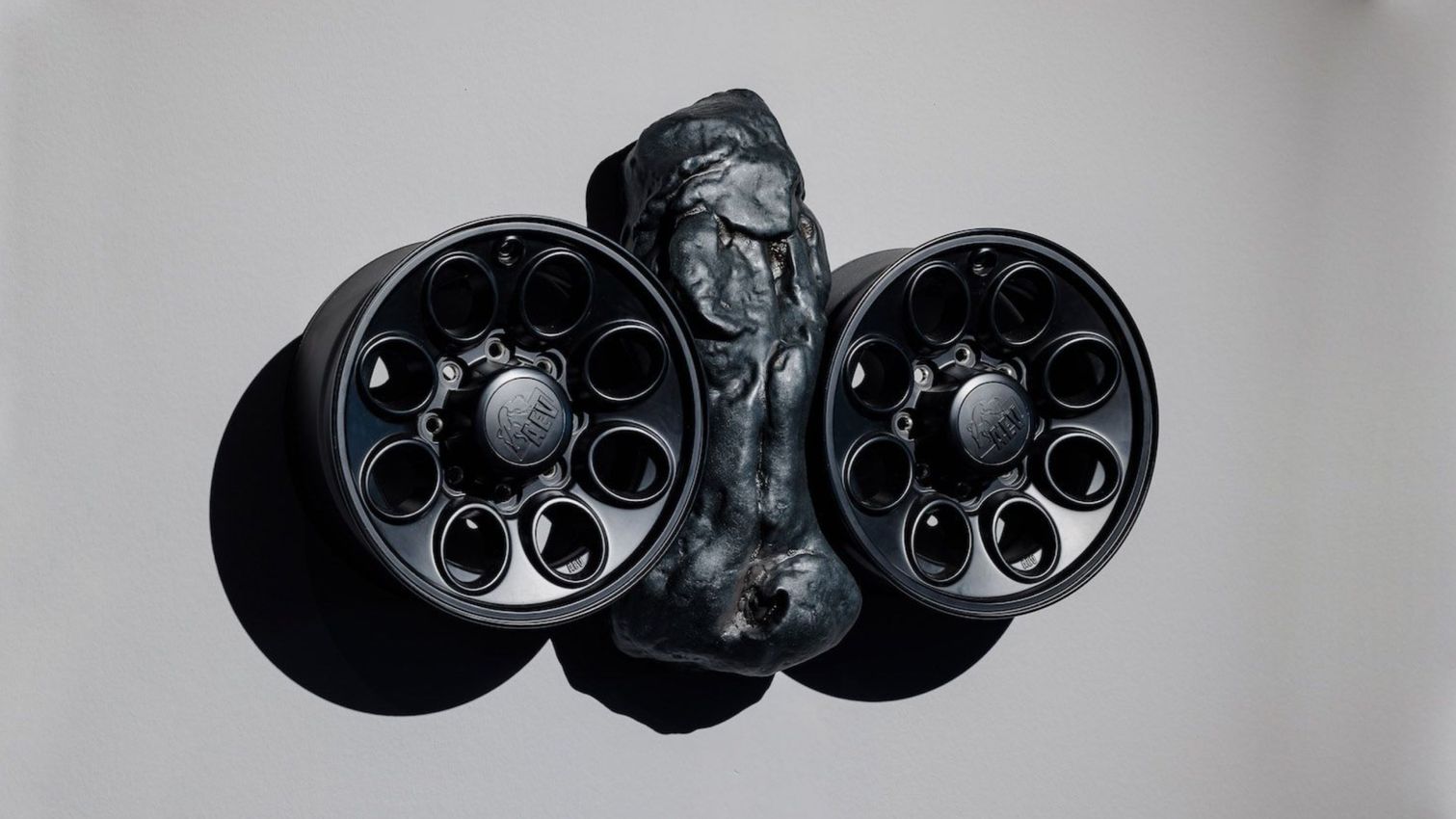
Tucked away on the ceiling is Ursula Mayer’s hologram of an exploding heart, Pound of Flesh (2022)—a hidden find that rewards those who look up. In contrast to Guan Xiao’s Dark eyes as dark as the eyes (2021)—a dark, sprawling, wall-mounted steel sculpture with the appearance of an industrial, phallic monolith—Mayer’s work operates in whispers. Its cyclical nature of explosion and regeneration suggests an optimistic metaphor for healing—of trauma, bodies, and ecosystems. Yet, the work’s positivity is tinged with unease. Is it a glimmer of hope or a morbid commentary on humanity’s delusion that all damage can be reversed? It is this ambiguity that gives The Color of Energy its unsettling power. —[O]
1 Agnė Sadauskaitė, ’Invisible Structures. The cut of a stratosphere as a reflection of human values. An interview with the filmmaker Emilija Škarnulytė’, echo gone wrong (11 June 2018).
The two-part exhibition The Color of Energy was co-produced by viennacontemporary and Salzburger Kunstverein with the support from the Erste Foundation.
Žanete Liekīte was resident at Salzburger Kunstverein in 2024. She is one of five independent writers selected to participate in a writer’s residency conceived in a partnership between Ocula and Salzburger Kunstverein.
Main image: Guan Xiao, Dark Eyes as Dark as the Eyes (2021). Stainless steel, ceramic. 70 x 108 x 23 cm. Courtesy the artist and Kraupa-Tuskany Zeidler. Exhibition view: The Color of Energy, Salzburger Kunstverein, Salzburg (21 September–24 November 2024). Photo: kunst-dokumentation.












A respected voice in contemporary art discourse.
Focusing on ambitious storytelling and insightful art-world commentary. Ocula Magazine publishes in-depth interviews, critical essays and timely analysis on the artists, exhibitions and ideas driving the global art world.
Learn more about Ocula Magazine
Showcasing the best of the art world.
Ocula partners with galleries from around the world to highlight their artists, artworks and exhibitions. Gallery membership is by application and invitation, with each member vetted by an independent panel.
Learn more about Ocula Membership
Specialises in the sale of major artworks.
Led by a team with deep ties to the world’s leading auction houses, galleries and collectors. Ocula’s advisory team offers bespoke services to high-net-worth clients from around the world who are looking to acquire the best of contemporary and modern art.
Learn more about our team and services