






Wei Jia: Calligraphy as Way of Life
Wei Jia’s latest body of work explores collage as a means of aesthetic negotiation. Save to My Ocula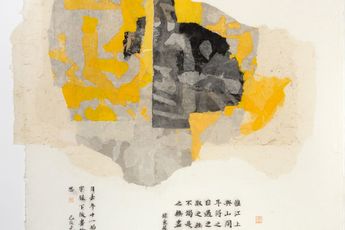
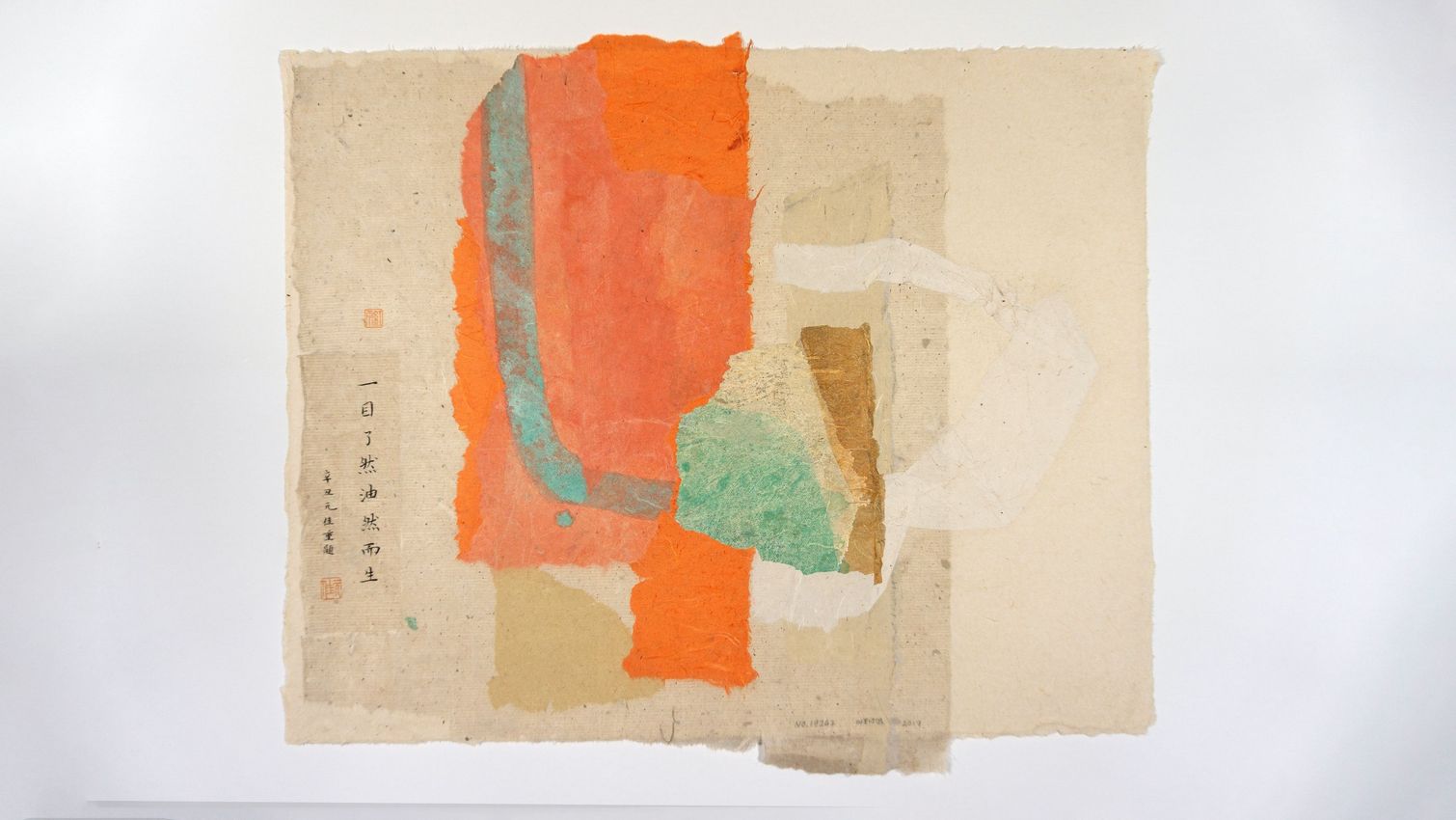
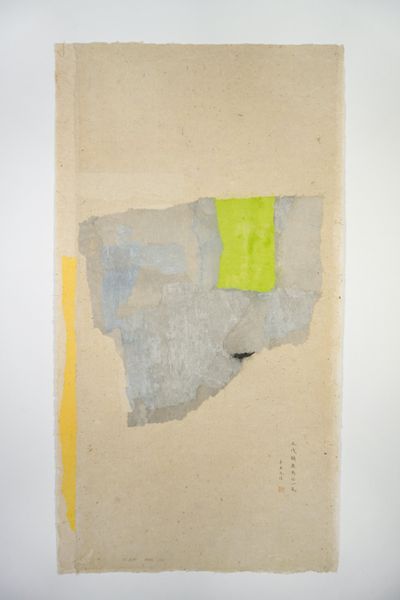
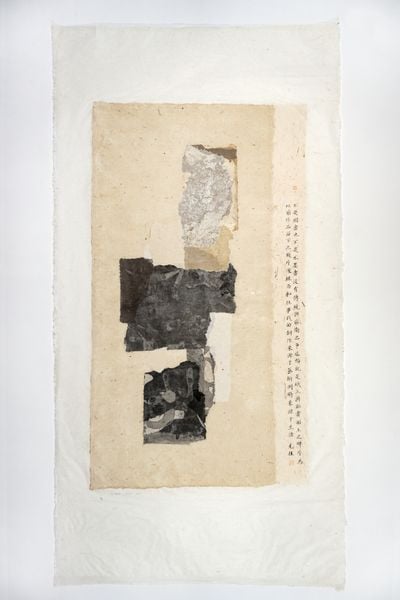
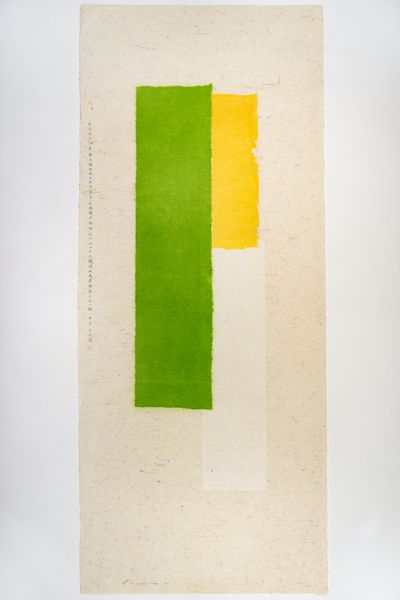
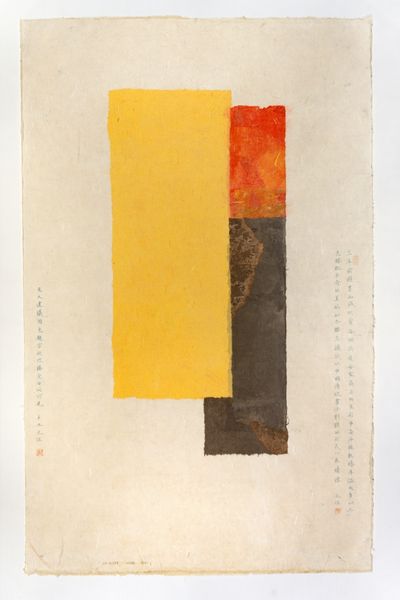
Known for its remarkable durability, Wei has been tearing, collaging, and deconstructing Xuan paper since 1991, a material that has witnessed and carried Chinese culture for millennia. No. 21290 (2021), a rectangular piece of green paper mounted on layered grey fragments, exemplifies Wei’s treatment of the paper’s fibrous quality to create depth and textural complexity out of a seemingly flattened surface.
Pasting paper fragments is ‘two-dimensional carpentry’, according to Harriet Janis and Rudi Blesh in their book Collage (1962)—an apt way to describe Wei’s collages.’
The visible pulp makes the grey fragment in No. 21290 look almost like a rock. The collage was inspired by the works of Qian Xuan (1239–1301), a Yuan dynasty scholar-painter who was one of the first to unite the three-fold essence of the Chinese literati—classical Chinese painting, poetry, and calligraphy—into a single work.
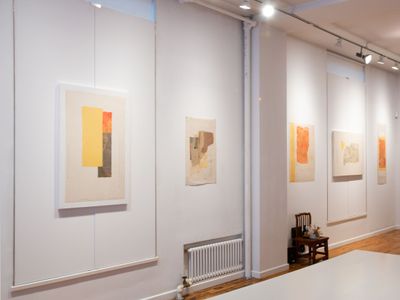
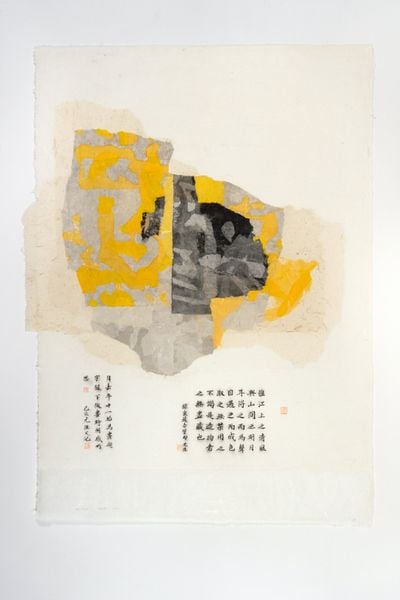
Qian Xuan is a fitting influence for Wei. Like the Chinese literati who inserted written poetry into their landscape paintings, Wei blends image and word, often incorporating short notes into the corners of his collages.
Some of these notes are light-hearted and self-deprecating thoughts, such as the inscription in the lower right corner of No. 21290 (2021): ‘Yuan dynasty artist Qian Xuan would laugh at my humble work.’
Rather than furnishing the works with definite meaning, these brief calligraphic notes provide an improvised, off-kilter portal into the artist’s thoughts and process.
“In lieu of psychologising collage as a fragmentary medium, Wei simply uses it as an aesthetic negotiation—what would look good together?”
In No. 21287 (2021), which features a horizontally scaled plane of mottled grey paper transposed over orange and black, the text reads: ‘I have copied Shu Su Tie by Mi Fei many times, and now select some fragments to collage with my old paintings, so that the past won’t fade like smoke or fog.’
As this line suggests, the works in this show were made from fragments taken from previous works and recontextualised: a literal incorporation of pieces of the past into the present so as to give them new meaning.
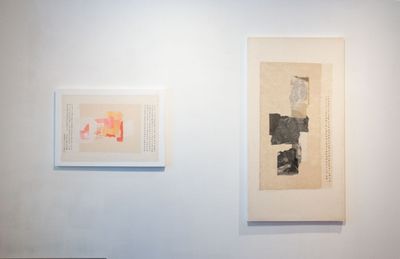
The results are tenderly imbued with inflections of the quiet, natural, and mundane. Take No. 20277 (2020), a collaged combination of soft peach and teal elements that bears the words ‘Nothing much, just like it’ in its lower left corner.
As Hai notes in the catalogue text, Wei ‘always denies that his works are obscure and intricate.’ His collages do not make any pretence of refinement or profundity, with their torn and irregular edges. In lieu of psychologising collage as a fragmentary medium, Wei simply uses it as an aesthetic negotiation—what would look good together?
The one anomaly in these two exhibitions is No. 20256, 1-8 (2020), a group of eight calligraphic sheets, each constituted by collaged geometric shapes containing calligraphic letters drawn from The Thousand Character Text (千字文), a classic Chinese essay that has been used as a prototype for teaching Chinese characters to children since the sixth century.
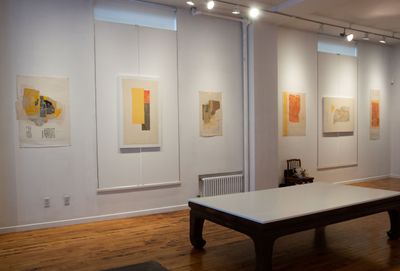
The essay is highly systematic: it contains exactly one thousand characters that are each used only once, arranged into 250 lines of four characters, and grouped into four-line rhyming stanzas for easy memorisation.
The ideograms contained in Wei’s eight calligraphic sheets function as visual rhythm. Chinese letters are untethered from their usual burden of conveying specific meaning, and instead form unexpected, collaged abstractions.
The fact that this work is derived from Wei’s ritual of beginning each day with a light breakfast followed by calligraphy sessions is telling. It speaks to his overarching artistic sensibility towards art as a means of abstracting the world through rituals, forms, and colours. —[O]
Main image: Wei Jia, No.19242 (2019). Gouache, ink and Xuan paper collage on paper. 41.2 x 48 cm. © Wei Jia. Courtesy Chambers Fine Art and Fou Gallery.



A respected voice in contemporary art discourse.
Focusing on ambitious storytelling and insightful art-world commentary. Ocula Magazine publishes in-depth interviews, critical essays and timely analysis on the artists, exhibitions and ideas driving the global art world.
Learn more about Ocula Magazine
Showcasing the best of the art world.
Ocula partners with galleries from around the world to highlight their artists, artworks and exhibitions. Gallery membership is by application and invitation, with each member vetted by an independent panel.
Learn more about Ocula Membership
Specialises in the sale of major artworks.
Led by a team with deep ties to the world’s leading auction houses, galleries and collectors. Ocula’s advisory team offers bespoke services to high-net-worth clients from around the world who are looking to acquire the best of contemporary and modern art.
Learn more about our team and services