




ALMA ALLEN
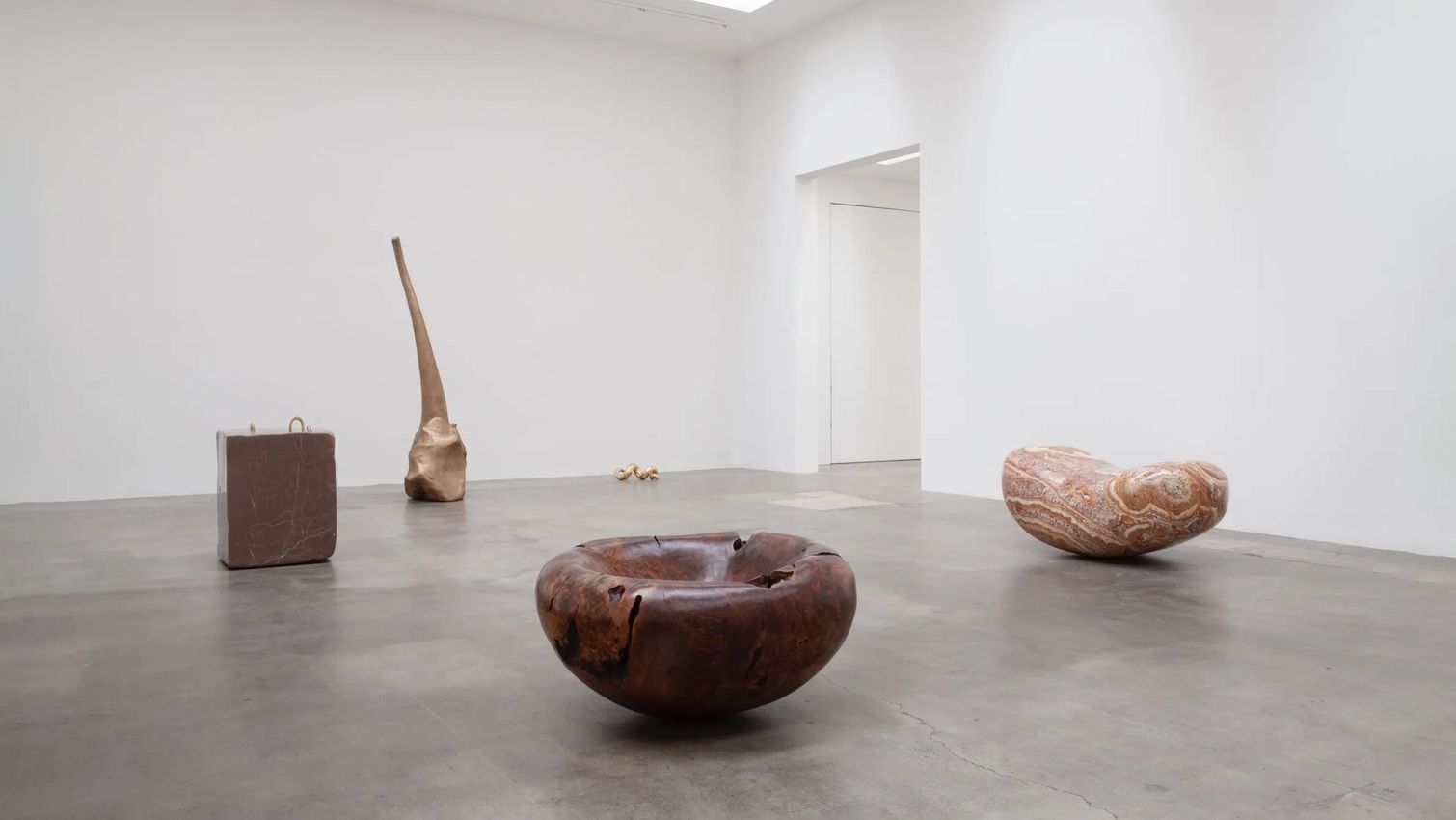
b. 1970, United StatesAlma Allen, a Utah-born, Mexico-based sculptor, selected to represent the United States at the 2026 Venice Biennale, is known for work characterised by fluid, biomorphic forms. Carved from natural materials such as wood, stone, and bronze, he merges traditional hand-carving techniques with advanced robotic technology to create works that feel both ancient and modern. Allen’s sculptures evoke a mysterious life force, blending tactile softness with monumental scale, exploring the intersection of material, form, and the intangible presence of objects.
Early Years and Background
Born in 1970 in Utah, Allen left home at 16 and is self-taught. He initially sold small sculptures made from found materials on the streets of New York. An accident that limited his physical capacity led him to innovate new ways of working, incorporating robotic arms to scale his hand-crafted models into larger works. He lived and worked in Joshua Tree, California, before relocating to Tepotzlán, Mexico, where he built a studio including a foundry to complete his sculptures on site.
Alma Allen Artworks
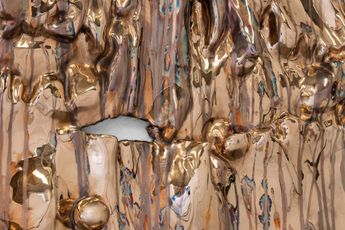
Allen’s work is defined by a dynamic tension between organic softness and lasting material solidity, with abstract talismanic shapes that evoke movement and transformation through their surfaces and silhouettes. He selects natural materials from local quarries near his studio, favoring spontaneous approaches to form that result in giant, lopsided tuber-like sculptures shaped by maquettes rather than preparatory drawings. Allen rarely gives his works titles, instead exploring a wide range of scales and finishes—from gleaming, reflective patinas to gritty, tactile textures—as seen in pieces such as Not Yet Titled (2014), Untitled (2013), and Not Yet Titled (2019.
To create larger forms, Allen leverages the sensitivity required for clay modeling—transferring pressure from his fingertips—and extends his reach in the studio through a self-designed robotic arm, compensating for physical limitations. The origins of his practice include smaller prototypes made during periods of homelessness, with his highly polished bronzes revealing both vulnerability and resilience, and carrying allusions to ancient shells, writhing pods, ossified viscera, and mental anguish.
Although primarily abstract, Allen’s sculptures are deeply allusive—appearing weightless yet charged with corporeal tension, setting his work apart from artists such as Constantin Brancusi or Isamu Noguchi, whose geometry is less bodily and more pristine. He also creates functional domestic objects alongside contemplative sculpture, each rendered with meticulous attention to surface detail.
Allen’s process remains instinctive, beginning with clay or wax maquettes before scanning and translating these models into monumental sculptures with a self-built robotic arm. This blend of handcraft and technology is central to his practice, drawing comparisons to Surrealist automatism and referencing canonical sculptors like Brancusi.
Seminal Works and Developments
- Early New York sculptures crafted from urban stone and marble debris
- Participation in the 2014 Whitney Biennial, marking his emergence on the global contemporary art scene
- Solo exhibition Nunca Solo (2023) at Museo Anahuacalli, Mexico City, intertwining ancient and contemporary sculptural traditions
- 2025 Park Avenue installation in New York featuring ten monumental sculptures across 20 blocks
- Multiple solo shows at Kasmin Gallery, New York, showcasing his evolving scale and range.
- 2025 announcement of his appointment to present the United States of America at the Venice Biennale.
Select Public Commissions
- Outdoor sculpture at Rockefeller Center Plaza, New York (2022)
- Installation at Van Buuren Museum & Gardens, Brussels (2022).
Alma Allen Exhibitions
Solo Exhibitions
- Alma Allen on Park Avenue, New York (2025)
- Nunca Solo, Museo Anahuacalli, Mexico City (2023)
- Kasmin Gallery, New York (2024, 2021)
- Van Buuren Museum & Gardens, Brussels (2022)
- Blum & Poe, Los Angeles (2019)
- Shane Campbell Gallery, Chicago (2016)
Group Exhibitions
- Whitney Biennial, Whitney Museum of American Art, New York (2014)
- Days of Inertia, Mendes Wood DM, Netherlands (2021)
- Handheld, Aldrich Contemporary Art Museum, Ridgefield (2018)
- Between the Earth and Sky, Kasmin Gallery, New York (2021)
- 5,471 miles, Blum & Poe, Los Angeles (2020).
Alma Allen FAQs
Who is Alma Allen?
Alma Allen is a self-taught sculptor known for biomorphic, tactile sculptures carved from wood, stone, and cast in bronze. In 2025, he was announced to represent the United States of America at the Venice Biennale.
What characterises Alma Allen’s artistic practice?
Alma Allen’s distinctive sculptural practice combines traditional hand-carving techniques with self-built robotic fabrication, resulting in fluid, tactile works that explore the tension between natural forms and material permanence.
What are Alma Allen’s most notable exhibitions?
Alma Allen’s most acclaimed shows include the Whitney Biennial (2014), multiple solo exhibitions at Kasmin Gallery in New York, the Park Avenue installation (2025), and Nunca Solo at Museo Anahuacalli in Mexico City (2023). In 2025, his appointment to represent the United States at the Venice Biennale was announced.
Where can I see work by Alma Allen?
Alma Allen’s sculptures are exhibited widely, including public installations like Park Avenue, Rockefeller Center, Museo Anahuacalli, and in institutional collections.
Are there lesser-known and interesting facts about Alma Allen?
Alma Allen’s path to art was unconventional—he left home at 16 and developed his practice through street sales and physical recovery from injury, which led to innovative embracing of technology.
Where does Alma Allen live and work?
Alms Allen is based in Tepotzlán, Mexico, where he maintains a home studio and foundry, but his career originated in the United States, notably in Joshua Tree, California.
How can I buy Alma Allen’s work or see it in museums?
Alma Allen’s sculptures are represented by galleries such as Kasmin in New York and are held in collections at institutions including the Los Angeles County Museum of Art and Palm Springs Art Museum. For current exhibitions and sales inquiries, follow the artist on Ocula.
Ocula | 2025






Explore Alma Allen's Exhibitions










Explore and Follow Artists Shaping Contemporary Art
A respected voice in contemporary art discourse.
Focusing on ambitious storytelling and insightful art-world commentary. Ocula Magazine publishes in-depth interviews, critical essays and timely analysis on the artists, exhibitions and ideas driving the global art world.
Learn more about Ocula Magazine
Showcasing the best of the art world.
Ocula partners with galleries from around the world to highlight their artists, artworks and exhibitions. Gallery membership is by application and invitation, with each member vetted by an independent panel.
Learn more about Ocula Membership
Specialises in the sale of major artworks.
Led by a team with deep ties to the world’s leading auction houses, galleries and collectors. Ocula’s advisory team offers bespoke services to high-net-worth clients from around the world who are looking to acquire the best of contemporary and modern art.
Learn more about our team and services