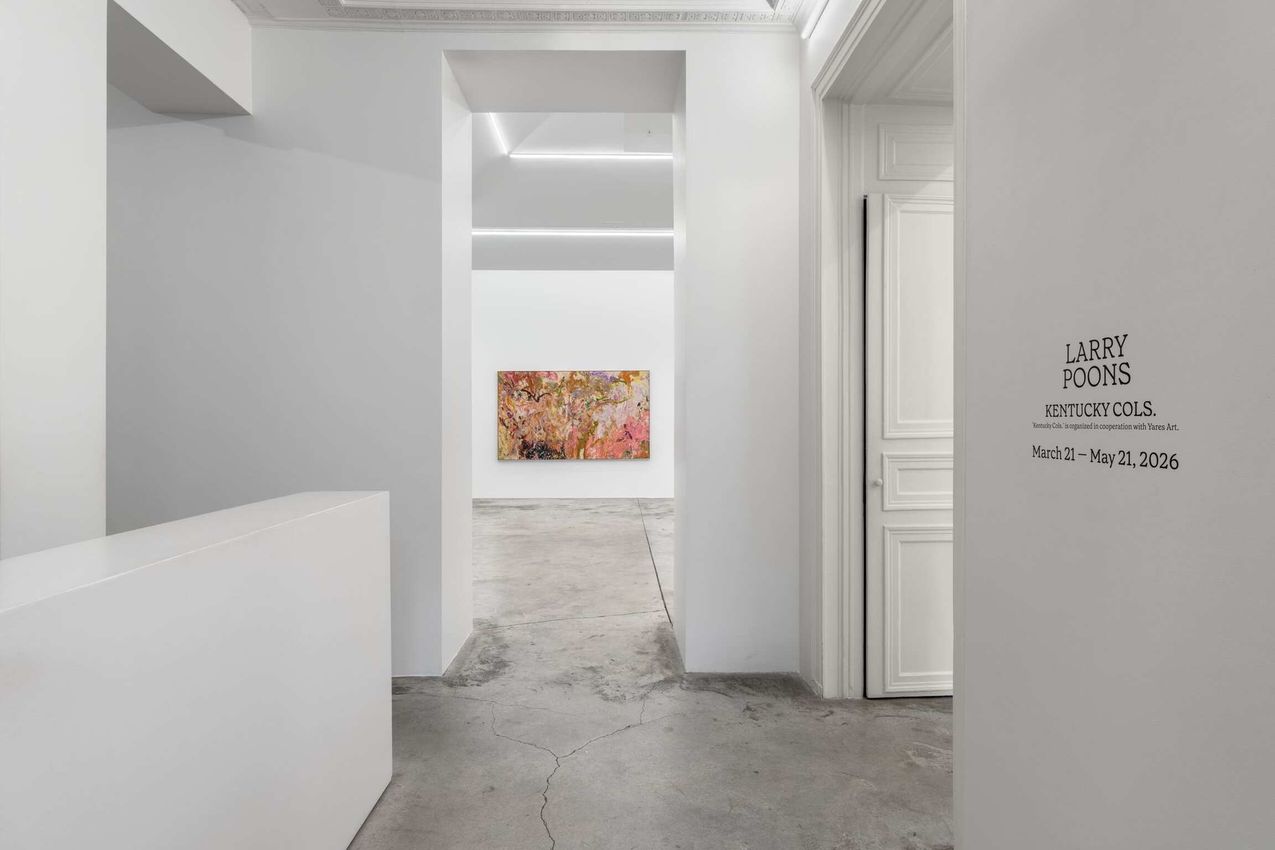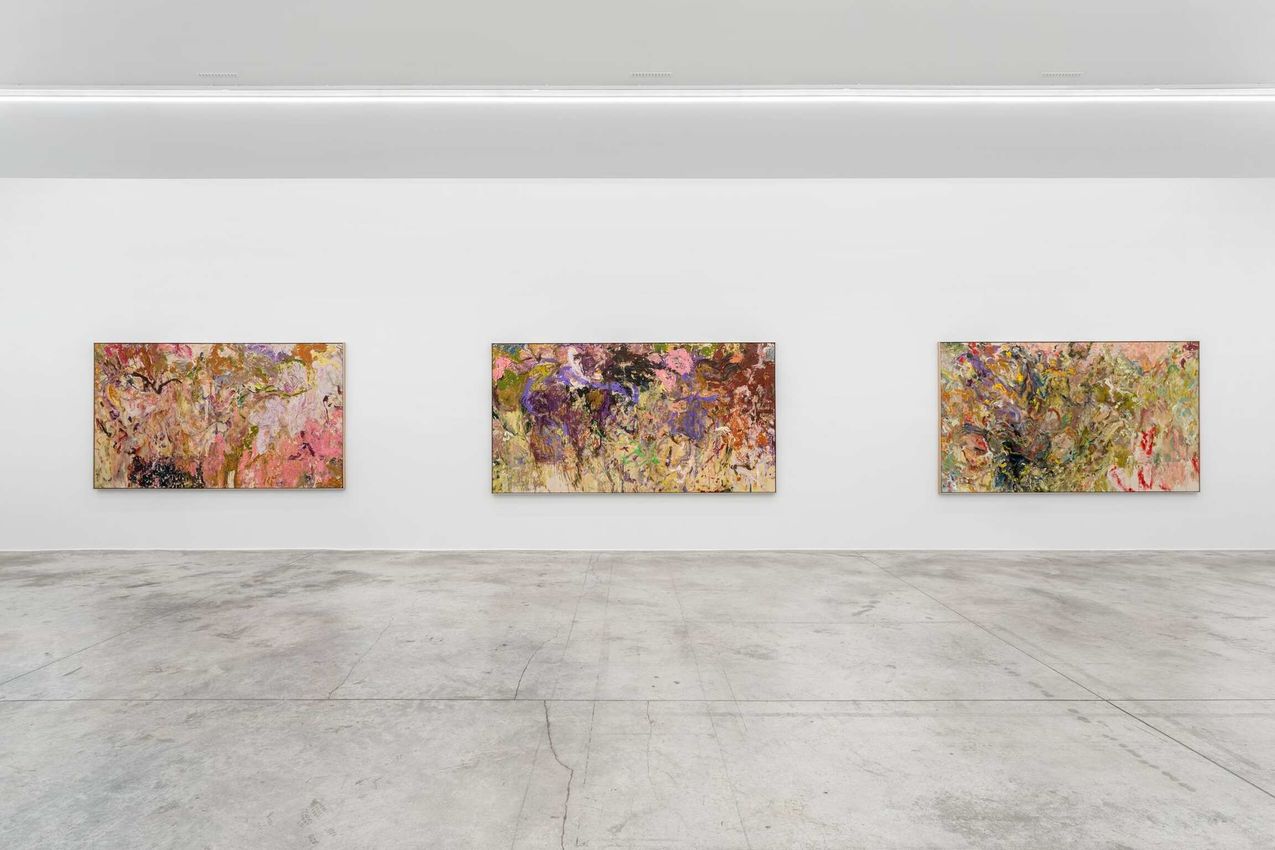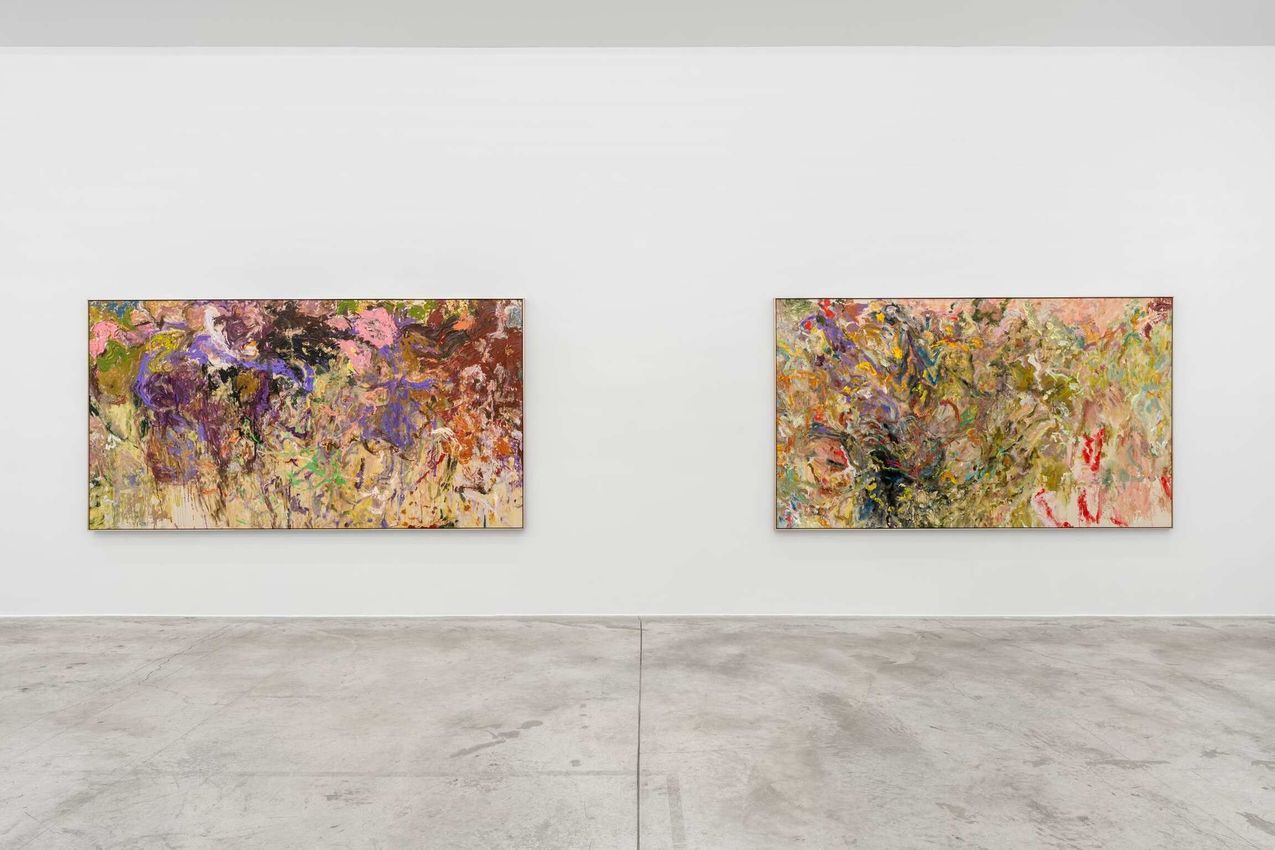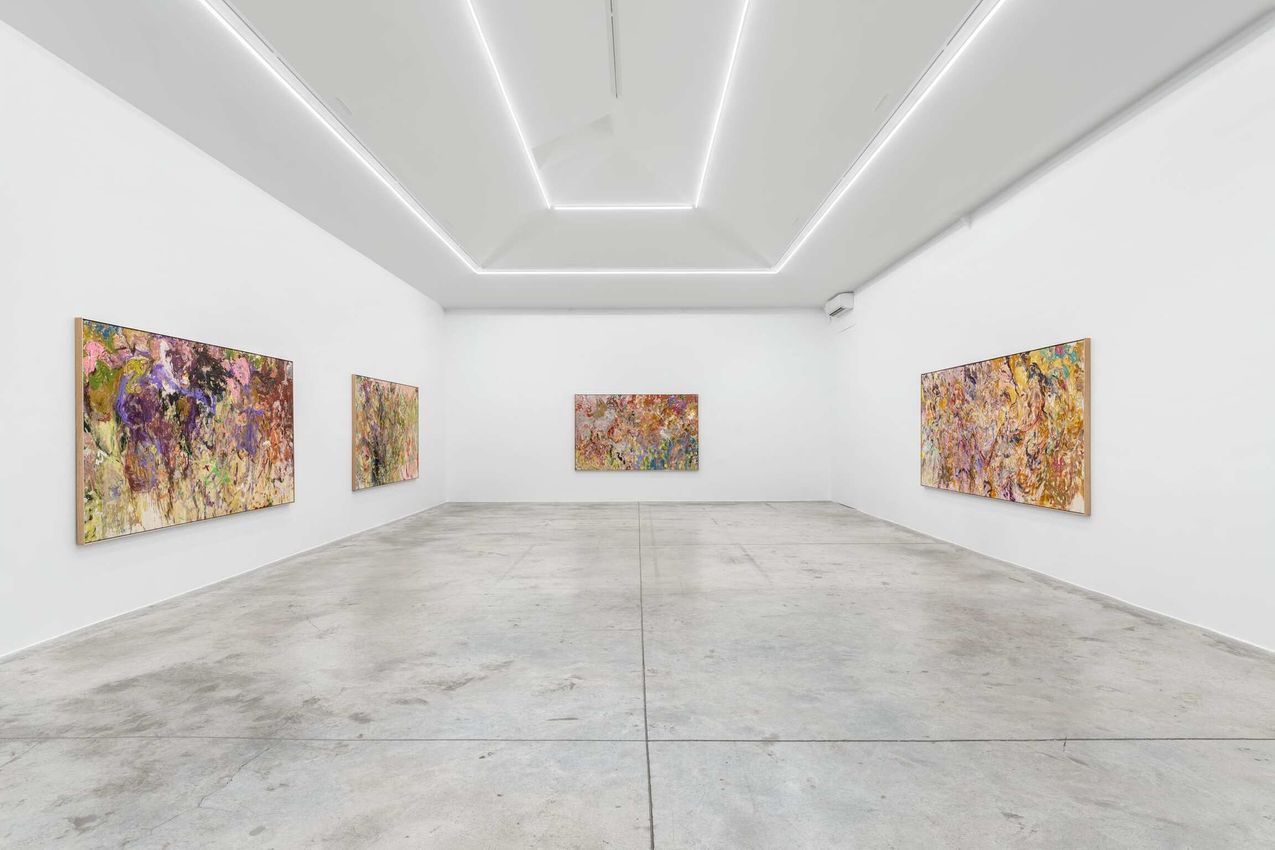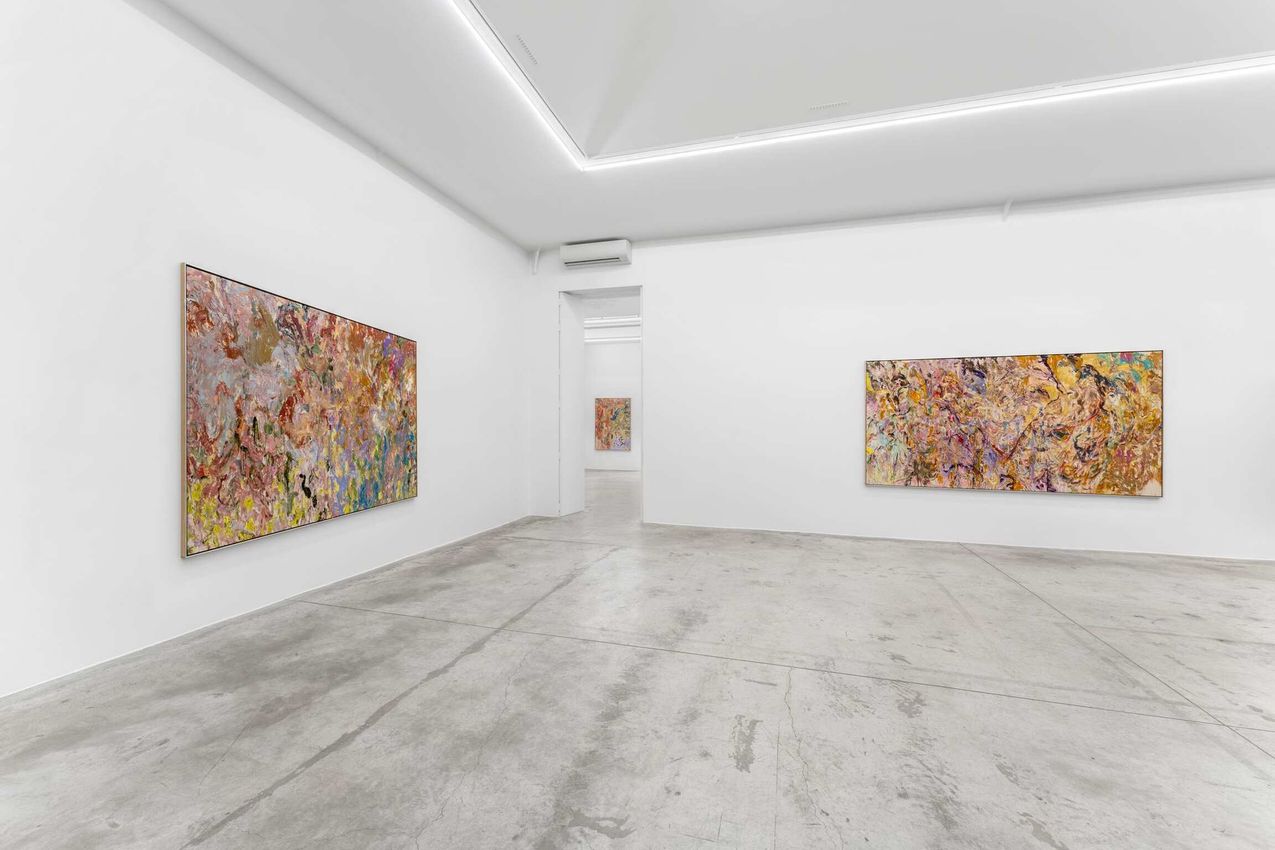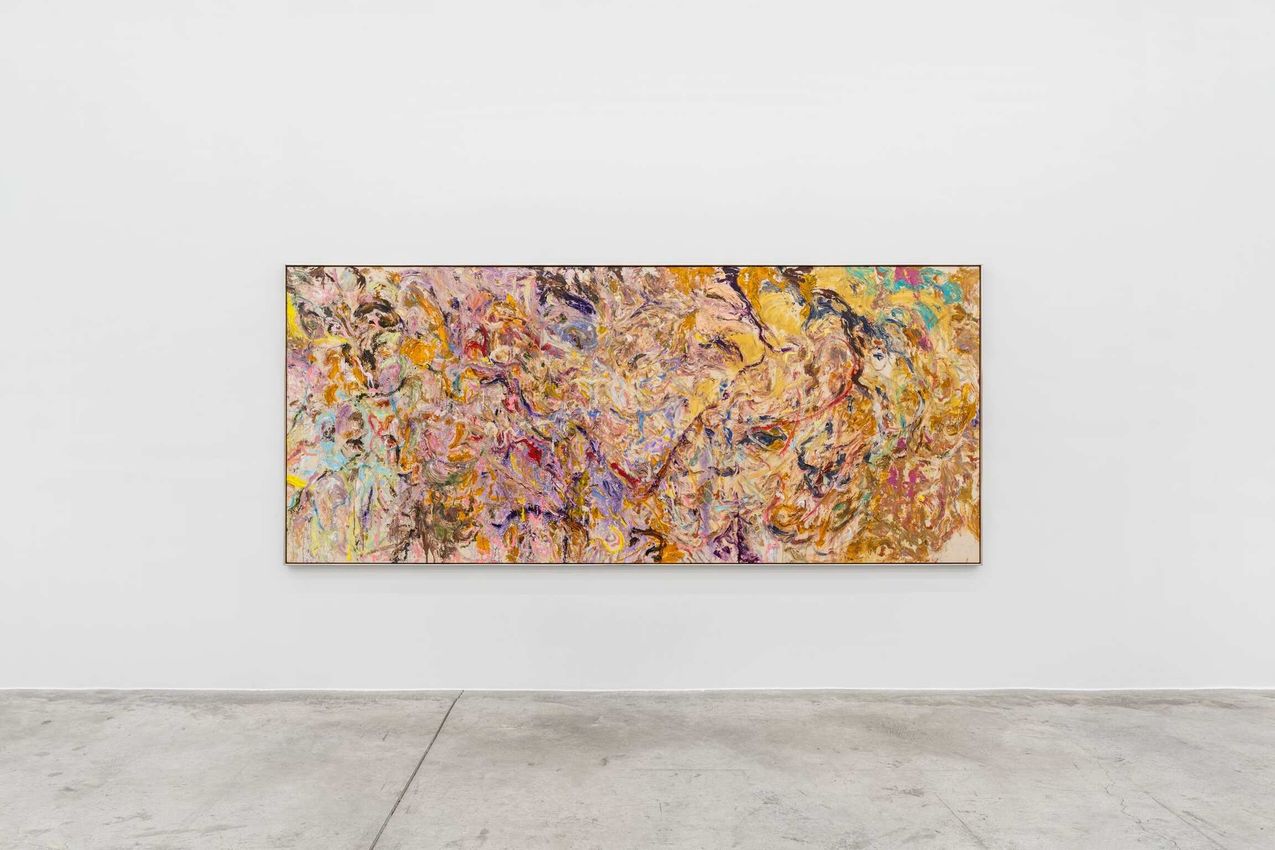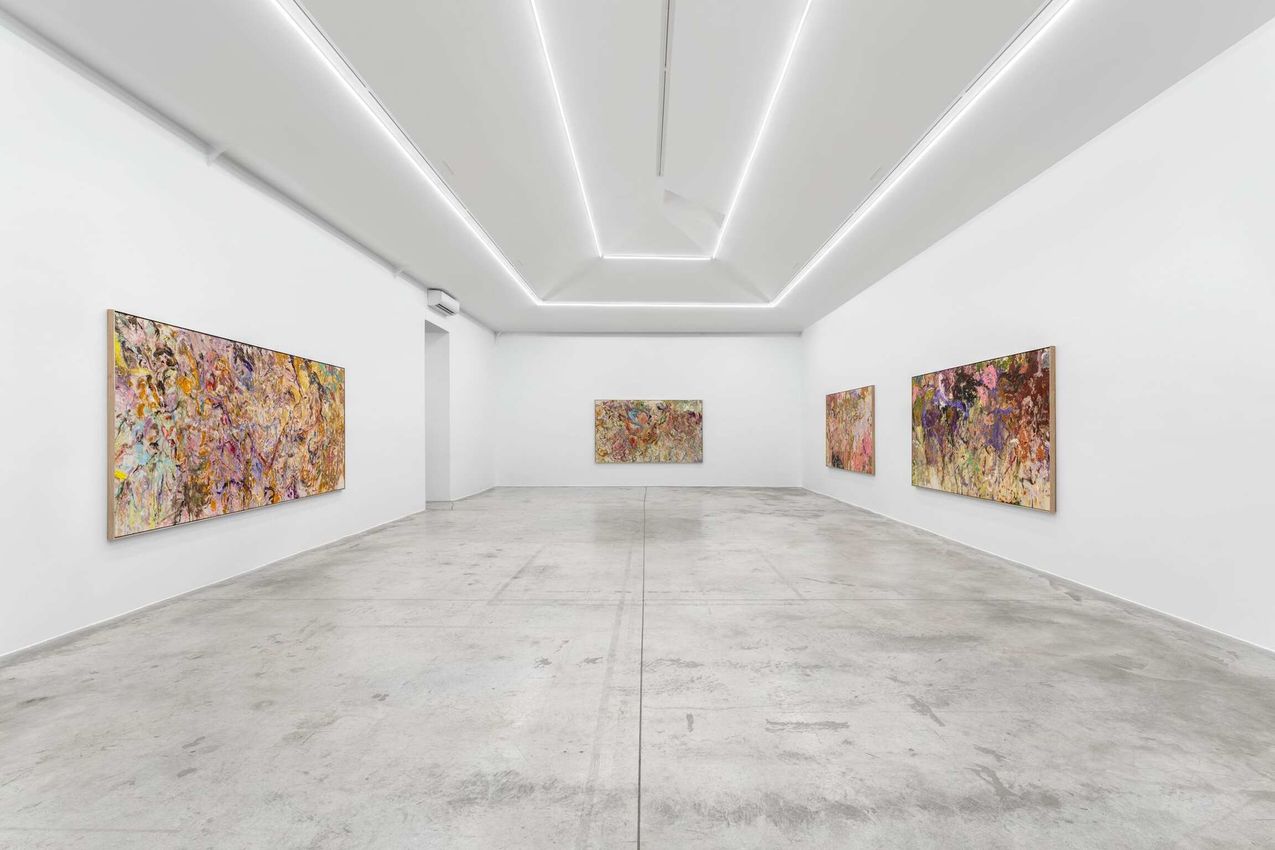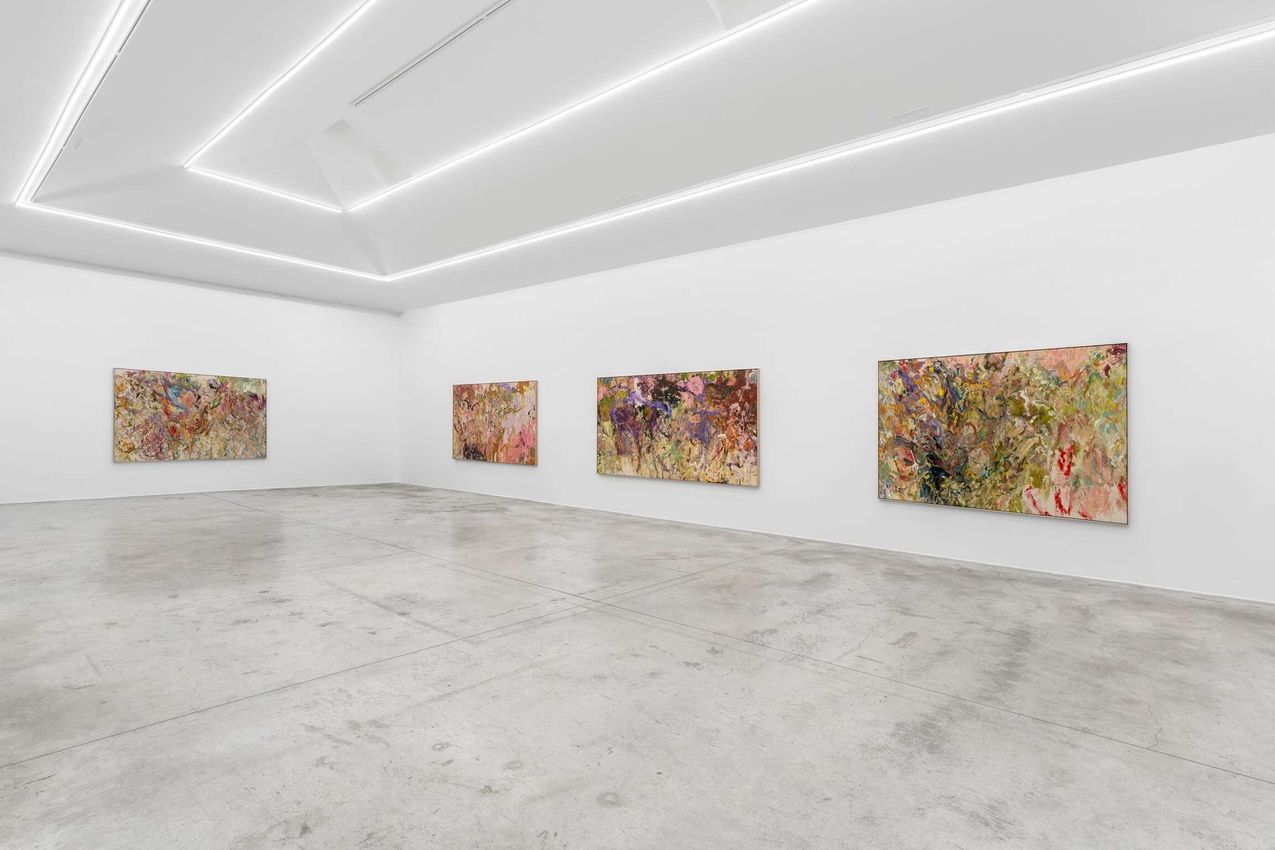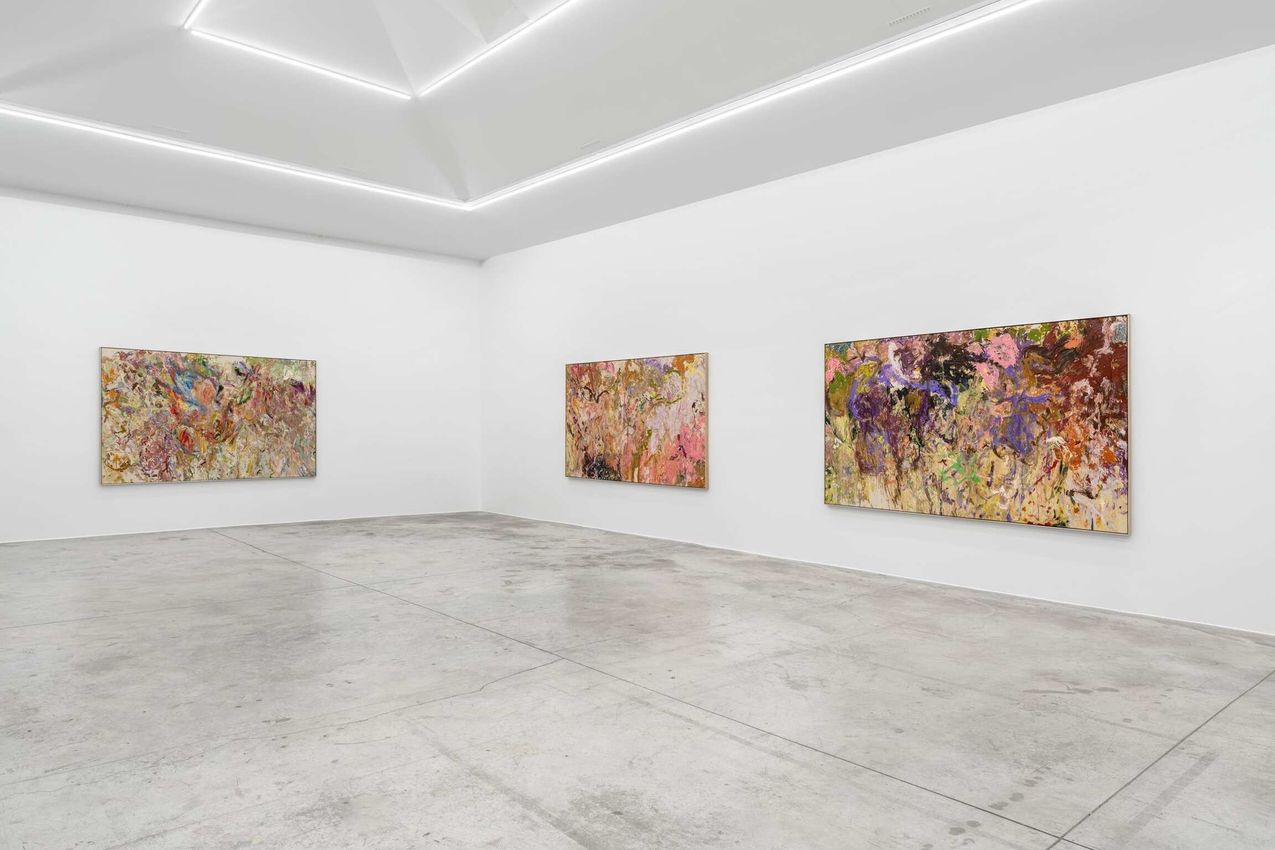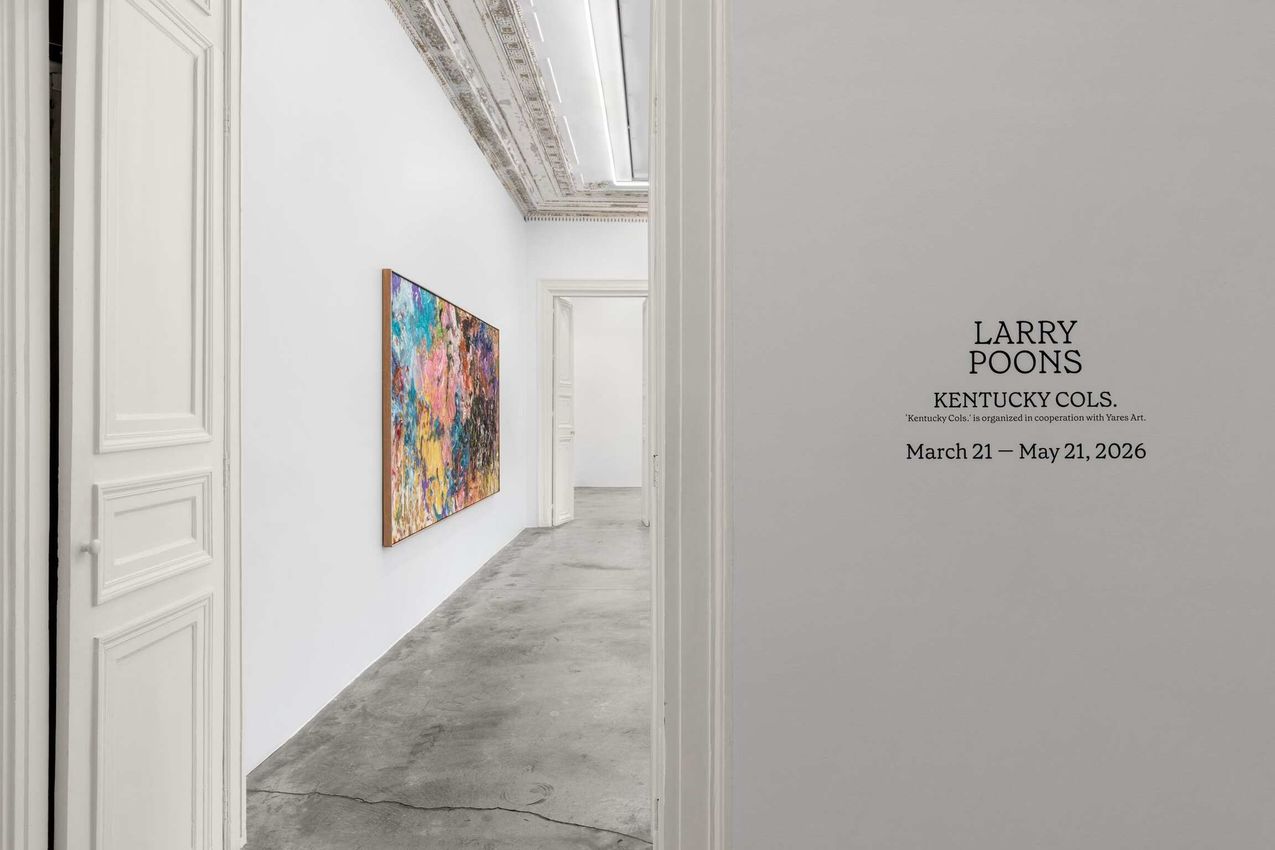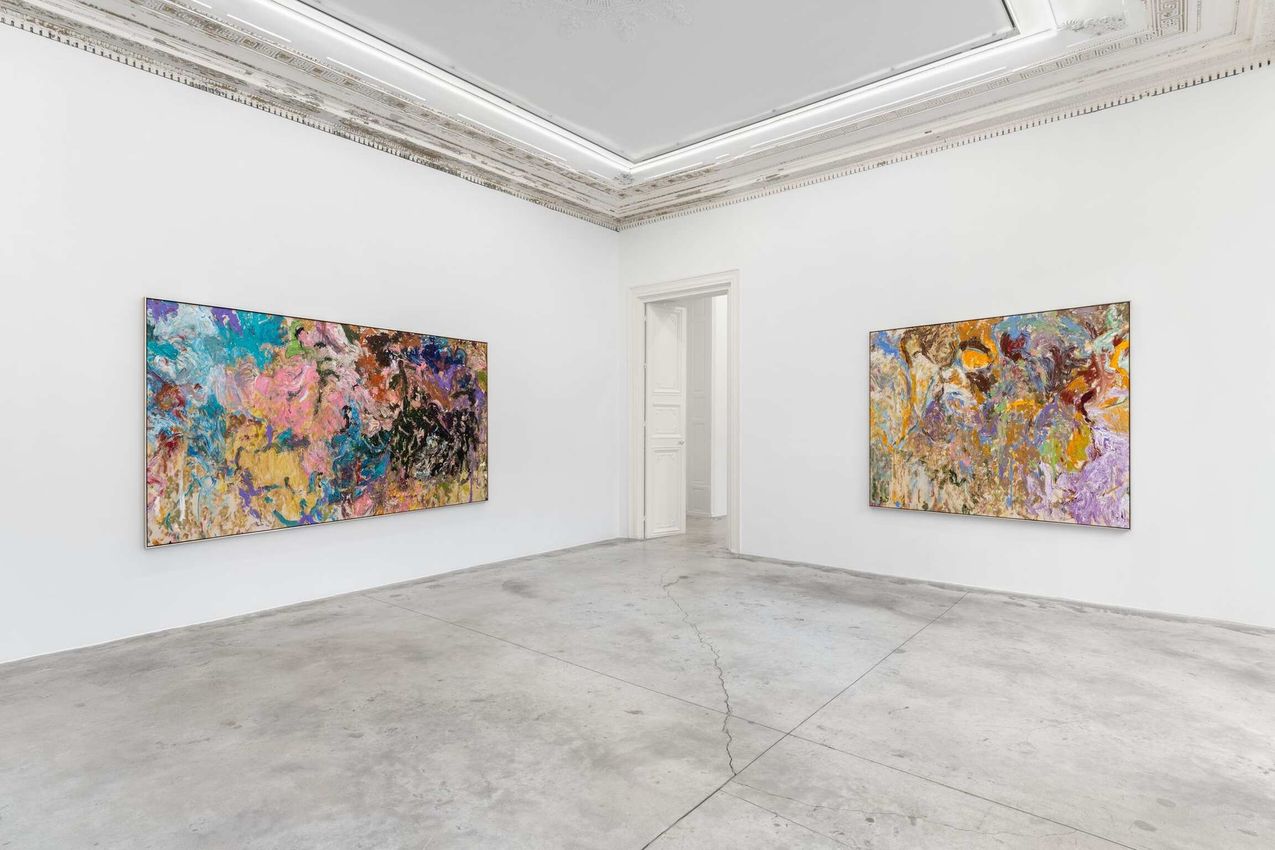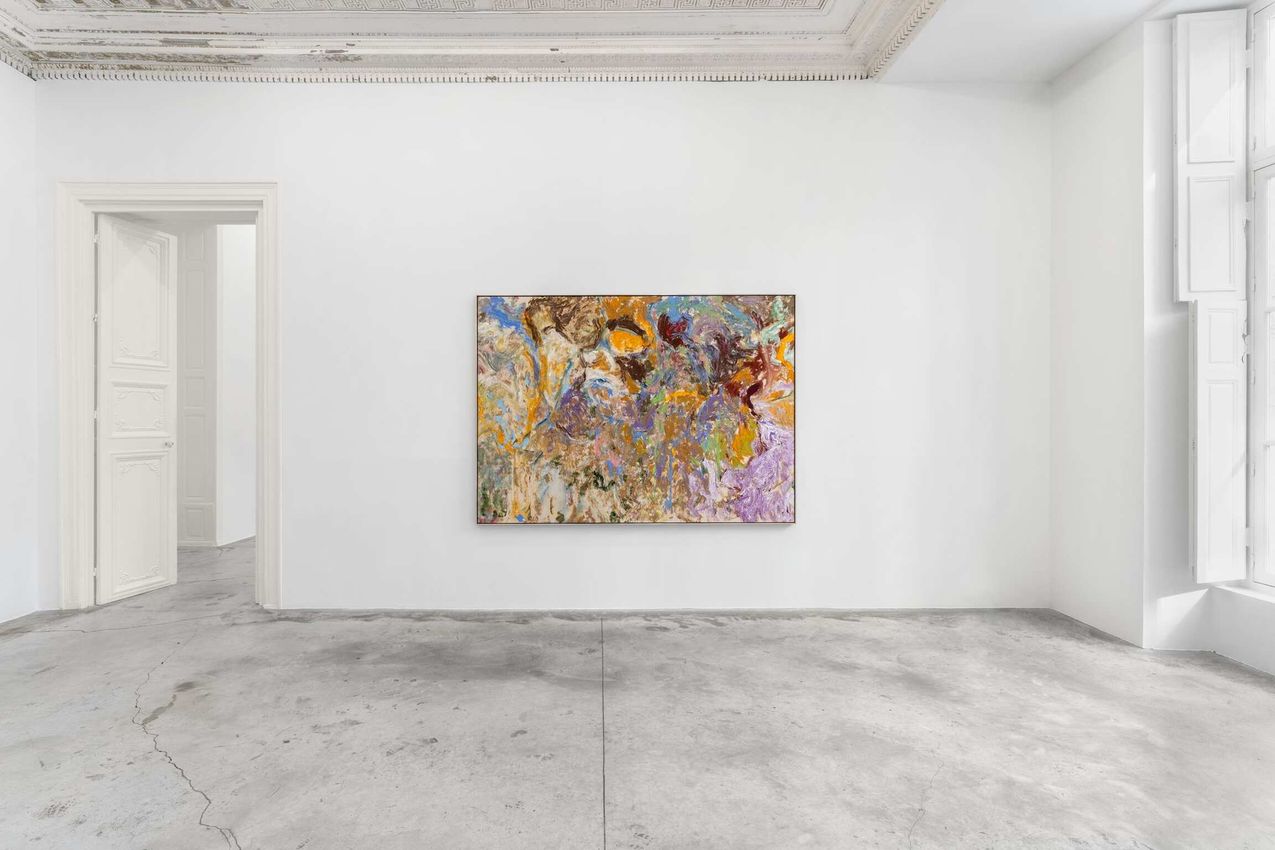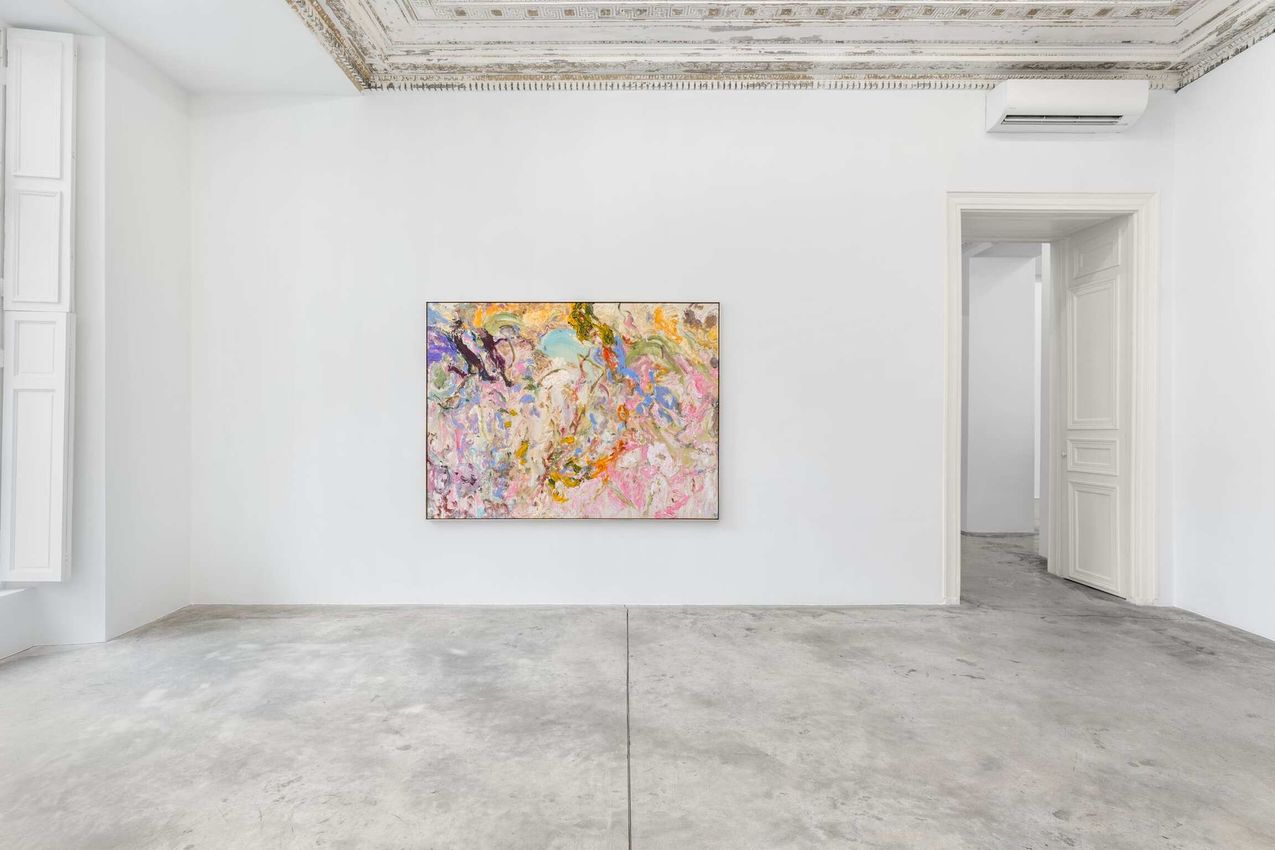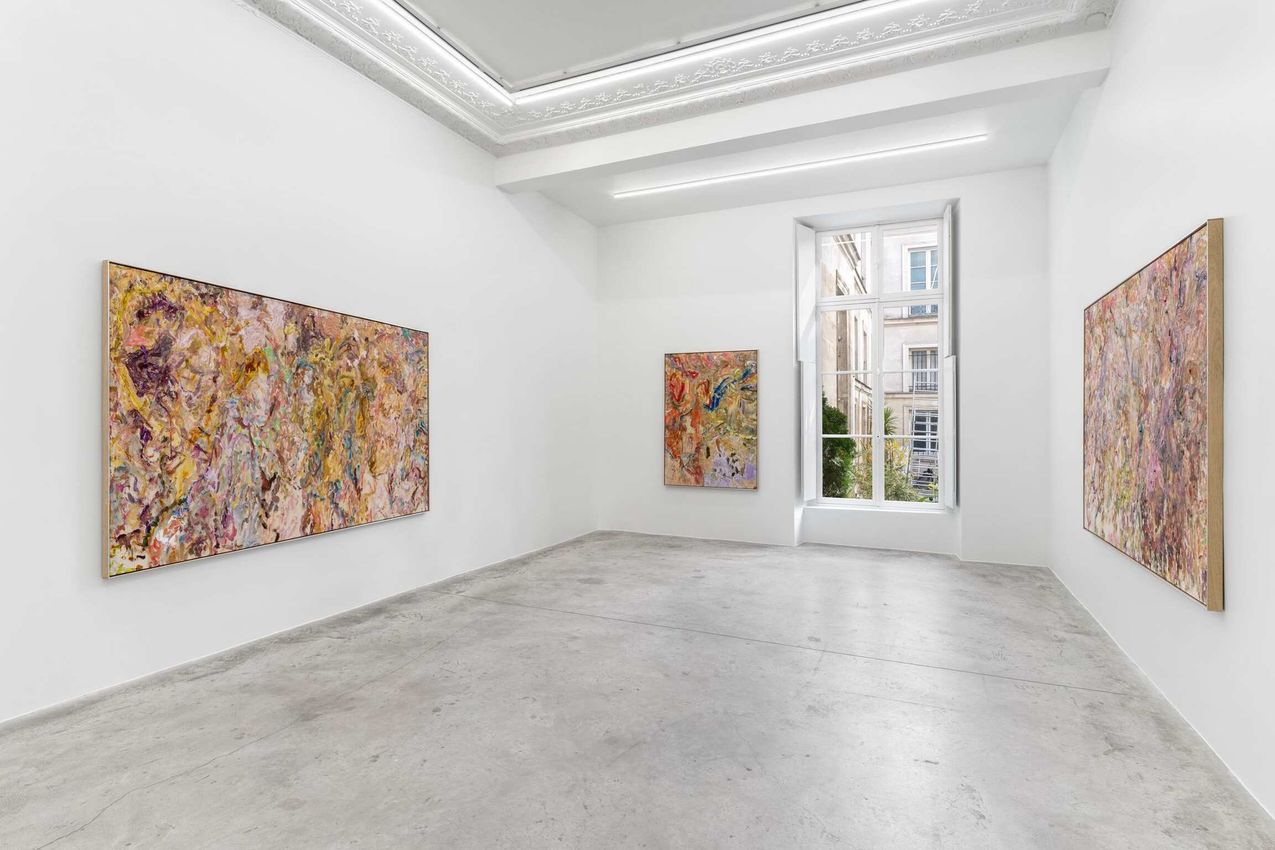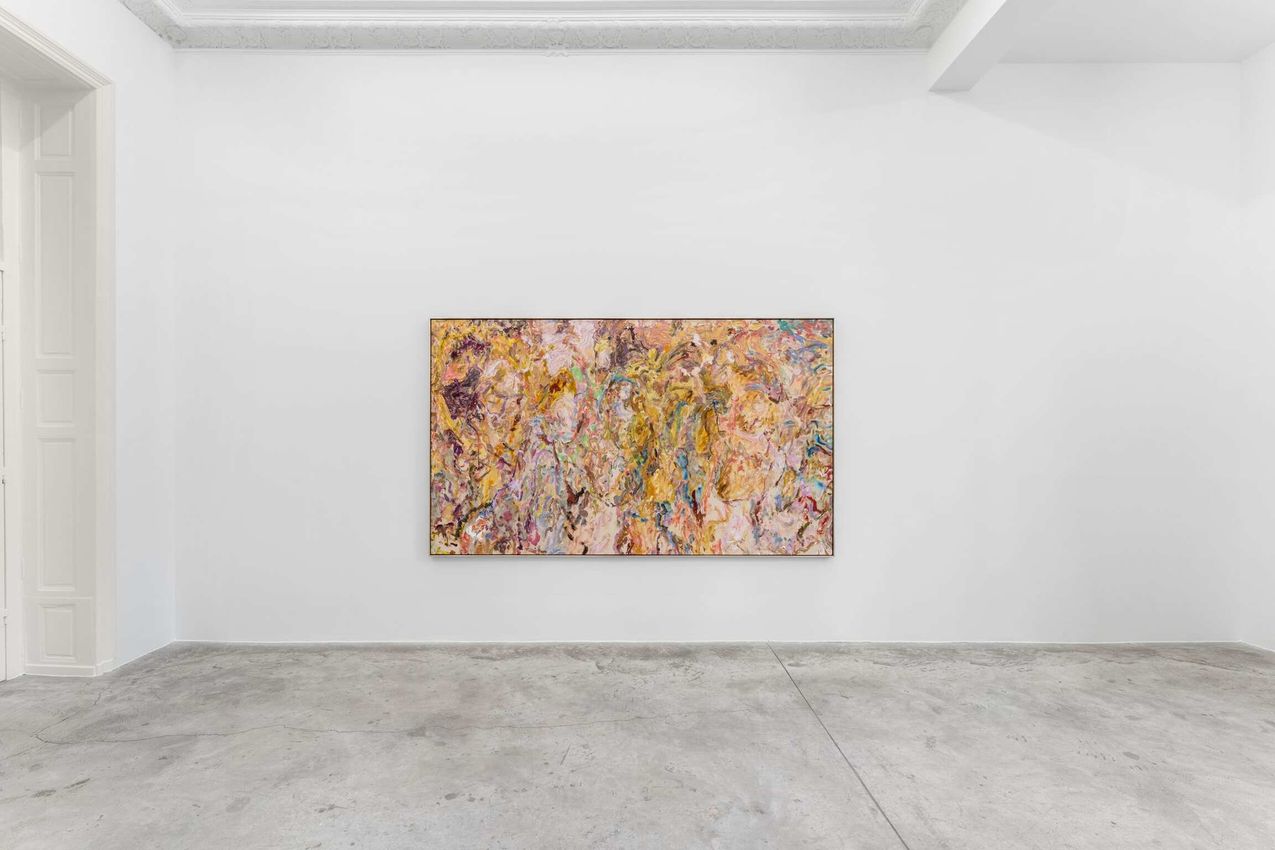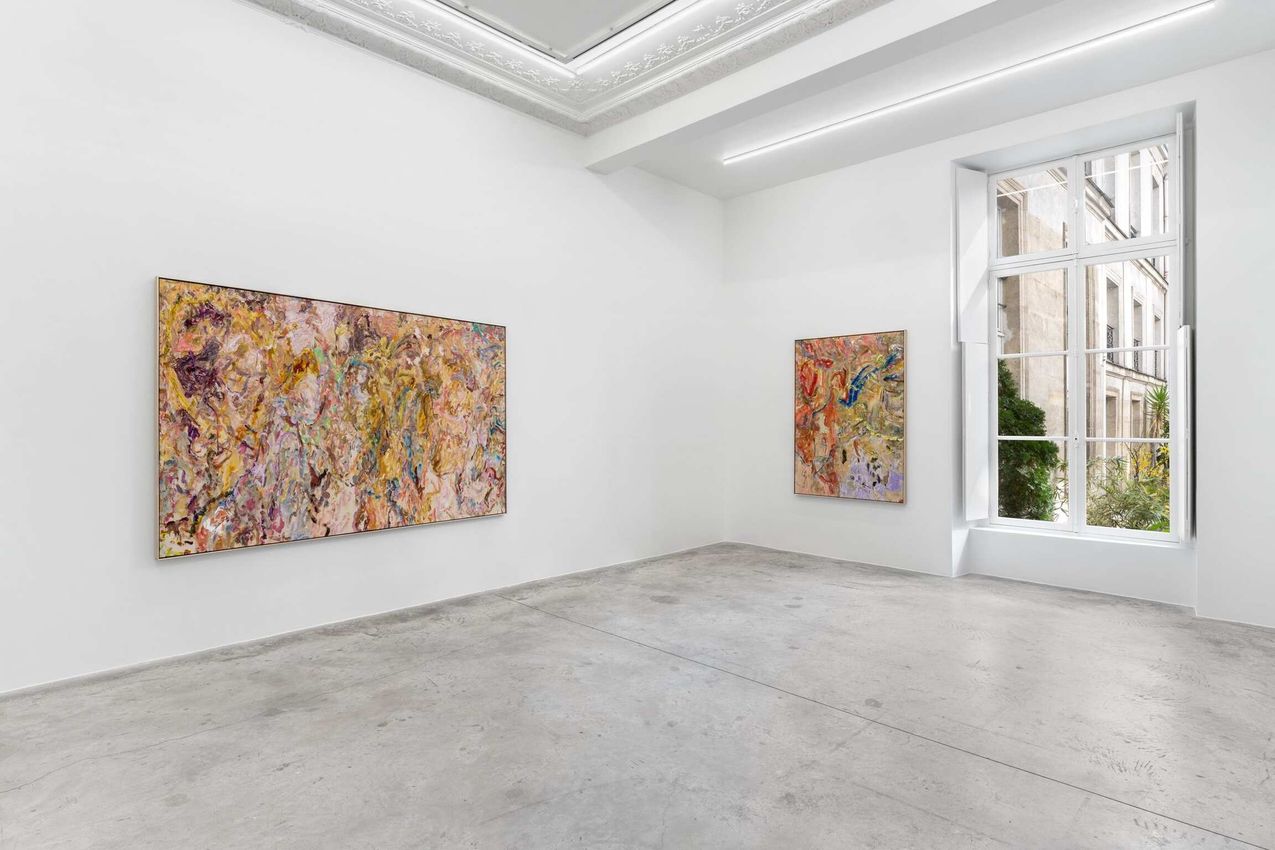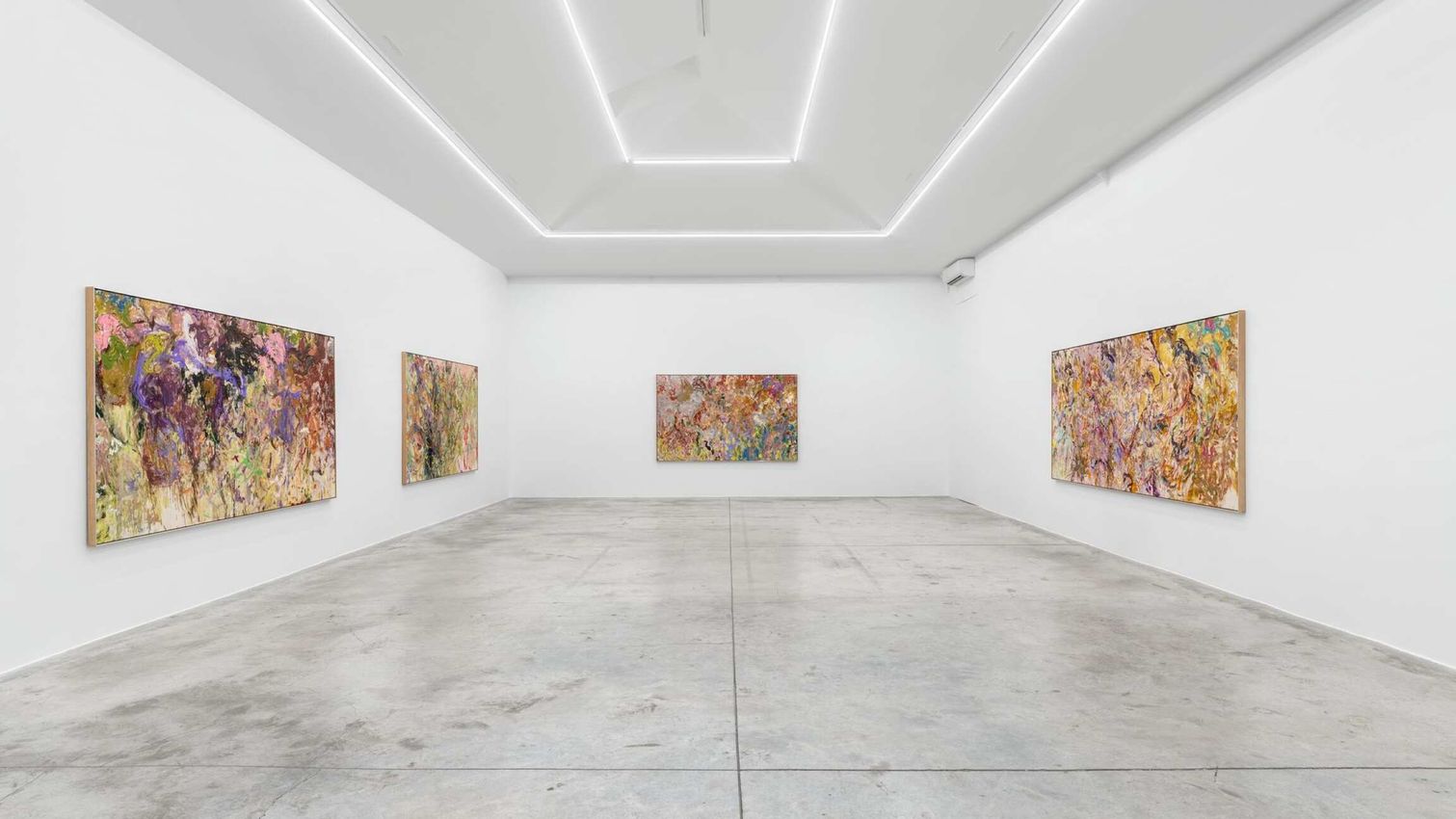
Almine Rech Paris, Turenne is pleased to present ‘Kentucky Cols.’, Larry Poons’ third solo exhibition with the gallery, on view from March 21 to May 21, 2026.
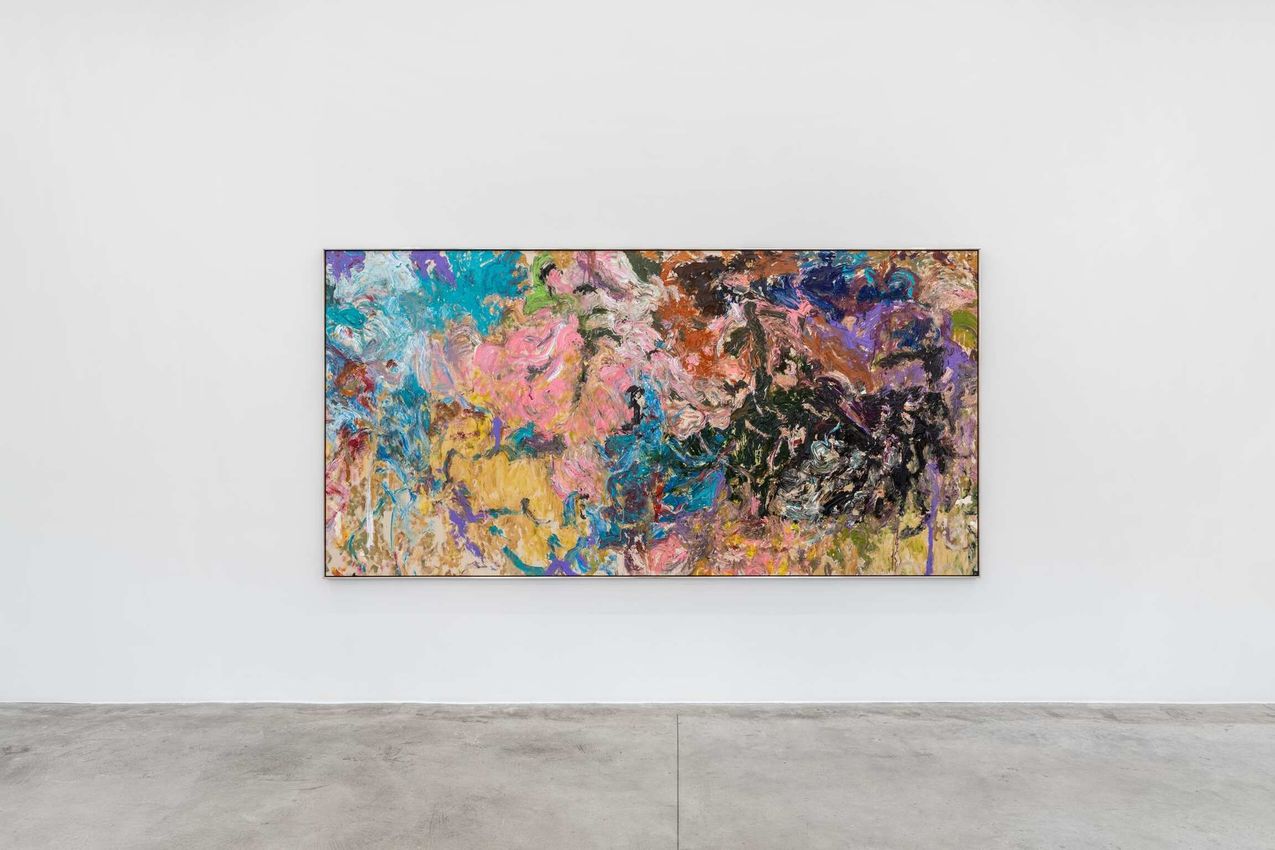
In the early 1950s, while he was still a teenager, Larry Poons1 heard a song on the radio by the famous country singer Hank Williams, who wrote Sing Me a Blue Song. The artist would later say that this was a revelation: “it was like smelling a flower for the first time.“2 Looking at Poons’ recent paintings in this exhibition, viewers experience a similar sensation, the feeling of smelling a flower for the first time. Ballroom Chassi, Untitled (025C-3), Untitled (025D-1), Untitled (025F-2)—these imposing canvases reveal chromatic fields whose energy is less a floral representation than an experience of blooming. They magnificently demonstrate the major place held by Poons in the history of color field painting.
Soon after his decisive musical experience, while still in high school, Poons fell in love with another student, and this experience inspired him to paint. Poons was a musician himself, and in 1961 he joined the group The Druds as a guitarist, with Walter de Maria on drums, La Monte Young on saxophone, and lyrics written by Jasper Johns. One of Poons’ first paintings, an abstract geometric work, was titled Rock and Roll (1958). His abstract approach soon began to flirt with Op art. Thus it is not surprising to see him among the artists featured in “The Responsive Eye” at MoMA in 1965, with Nixe’s Mate (1961) from his series of Dot Paintings. This exhibition played a key role in the international recognition of Op art, while also counterbalancing its influence by including works of post-painterly abstraction and color field painting.
Poons’ lush abstract fields took shape soon afterward, in the early 1970s, following a conversation with Clement Greenberg. The artist had started a series of large works by placing canvases on the floor and throwing buckets of paint on them, making big puddles of color. During a studio visit, Greenberg drew the painter’s attention to a detail: on the upper part of the canvas, the impact had created thinner splatters, which were almost weightless. It was like a light bulb went off. Poons recalls telling himself: “Yeah, I could draw that way, it’s something more discrete rather than the pools of color.“3 So he changed the way he worked: he extended a long roll of canvas around the walls of his studio and began throwing paint at it, letting momentum, gravity, and chance compose the surface. This is how Rail Road Horse(1971) came about, a work of acrylic on canvas that is almost eight meters long.
Over fifty years later, the paintings shown here come from the same process: a single giant roll, wide as a field, that Poons fills with free gestures of thick, energetic paint in an inexhaustible supply of color combinations. He then removes fragments, cut into independent pictorial units: these “moments” preserve the memory of the flow, while each still affirms its own intensity—that is why the painter has chosen them. This process—unrolling the canvas, covering it with acrylic paint, and then cutting it up—is not just a simple technique, but a conception of painting reduced to its most direct essence. As Poons puts it: “Let’s get the canvas up and throw some color.“4
After hearing those first banjo notes by Hank Williams, Poons unquestionably entered the history of American abstraction, but his work nevertheless remains dissident, gladly gazing across the Atlantic. This dissidence has to do with his process: painting by the meter. Each painting preserves the memory of a “before” and an “after” and is presented as a dual entity: both an independent composition and a fragment of a bigger whole. Dissidence is ultimately—and perhaps most importantly—located in the paint itself. Its heavy, thick, crusty application is a spectacle, a symbol of painting that acknowledges itself and displays itself as paint. While much contemporary American abstraction tends to have a smoother surface, Poons maintains (and he is almost the only one working at this scale to do so) a head-on approach to impasto and accumulation.
These paintings awaken the memory of Van Gogh’s fields and Bonnard’s gardens, where paint represents matter while also presenting itself as as matter, and where color rejoices in exhilaration. They also evoke Cézanne, whom Poons cites as a major threshold: “You understand, without the rigidity of what a painting is supposed to look like, it took a long time—until the twentieth century almost—when Cézanne would just do color. Everyone painted landscapes, why didn’t his look like everyone else’s?“5 In other words, Cézanne heralded the arrival of a surface where color no longer just describes, but exists for itself.
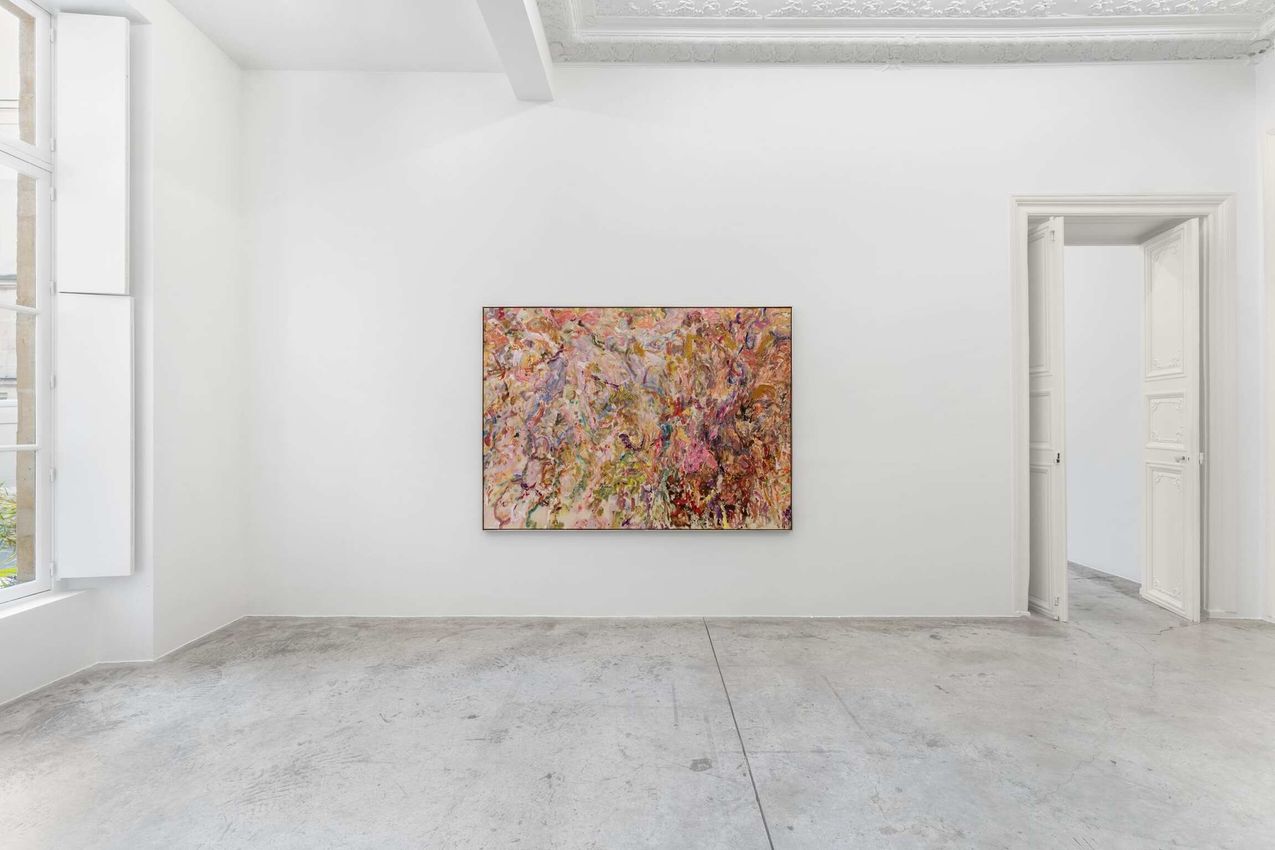
For Poons, painting—whether it flirts with figuration or is completely liberated from it—can be summed up in a single act: setting up the canvas and throwing color onto it. And perhaps this is where a new sensation appears for the viewer: not recognizing a form, but feeling, on the surface itself, the event of color—like smelling a flower for the first time. This exhibition creates something like that experience, like the first time we enter a garden.
— Marjolaine Lévy, critic and art historian
Larry Poons was born in 1937 in Tokyo. He lives and works in New York.
Quoted in Mark Myers, “A Crush that Led to a Brush,” Wall Street Journal, March 3, 2020.
Quoted in David Rhodes, “In Conversation with Larry Poons,” The Brooklyn Rail, October 2017.
Ibidem.
Ibidem.


Larry Poons has been at the forefront of Abstract American painting since the beginning of his career in the 1960s. Having moved to New York in 1959, Poons became known for his Op-Art paintings in 1962, with his monochrome spatial and chromatic experiments. In 1967, Poons abandoned these structural paintings and began a new epoch of ‘drip paintings’, in which lozenges of paint in varying colours are poured from above onto a vertical canvas, creating monumental and energetically charged and textured paintings, recalling the work of Willen de Kooning and Jackson Pollock. Larry Poons was born in 1937 in Tokyo, Japan and currently lives and works in New York City.


Almine Rech opened its doors on April 1st, 1997 in the 13th arrondissement in Paris. The gallery was founded on an axis of California Minimal, Perceptual art and Conceptual art, representing artists such as James Turrell, John McCracken and Joseph Kosuth.

A respected voice in contemporary art discourse.
Focusing on ambitious storytelling and insightful art-world commentary. Ocula Magazine publishes in-depth interviews, critical essays and timely analysis on the artists, exhibitions and ideas driving the global art world.
Learn more about Ocula Magazine
Showcasing the best of the art world.
Ocula partners with galleries from around the world to highlight their artists, artworks and exhibitions. Gallery membership is by application and invitation, with each member vetted by an independent panel.
Learn more about Ocula Membership

Specialises in the sale of major artworks.
Led by a team with deep ties to the world’s leading auction houses, galleries and collectors. Ocula’s advisory team offers bespoke services to high-net-worth clients from around the world who are looking to acquire the best of contemporary and modern art.
Learn more about our team and services