


Press Release

The rediscovery of the paintings of Vivian Springford (1913–2003) has introduced a wonderful new voice to the resounding chorus of the New York School of twentieth century painting. Daughter of a wealthy New York executive, Springford attended Manhattan’s elite Spence School. But instead of attending one of the prestigious colleges to receive an education in the liberal arts, or perhaps marrying into another kind of respectability, she went directly from Spence to the Art Students League. And thereafter, Springford never swerved from her commitment to her art, or to the world of Manhattan’s avantgarde. Her entire career unfolded in the very centre of the bohemian scene of the 1950s into the 1980s.

Springford’s important abstract work commenced relatively late in her life—she was in her forties when her ‘early,’ Chinese calligraphy-inspired work was shown at the downtown Great Jones Gallery in 1960. By then she was firmly entrenched in the circle of artists that included her longtime studio-mate, mentor and lover Walasse Ting; both she and Ting knew such artists as Franz Kline (whose work directly influenced her), and they were close to Sam Francis and the European abstract painters Pierre Alechinsky and Karel Appel. Though Springford always shied away from taking advantage of art world contacts, she did gain the admiration and friendship of some of New York’s art world luminaries, and it may have been the critic Harold Rosenberg who helped facilitate the important Great Jones Gallery exhibition. During her early career she only had one more important solo show, at the midtown Preston Gallery, in 1963.

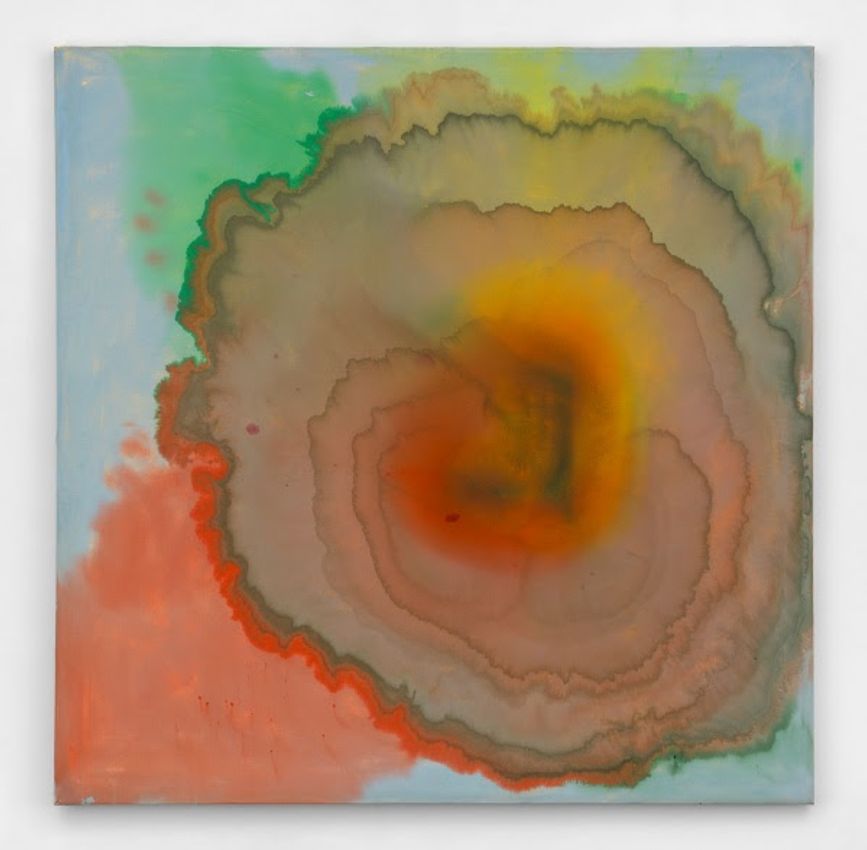
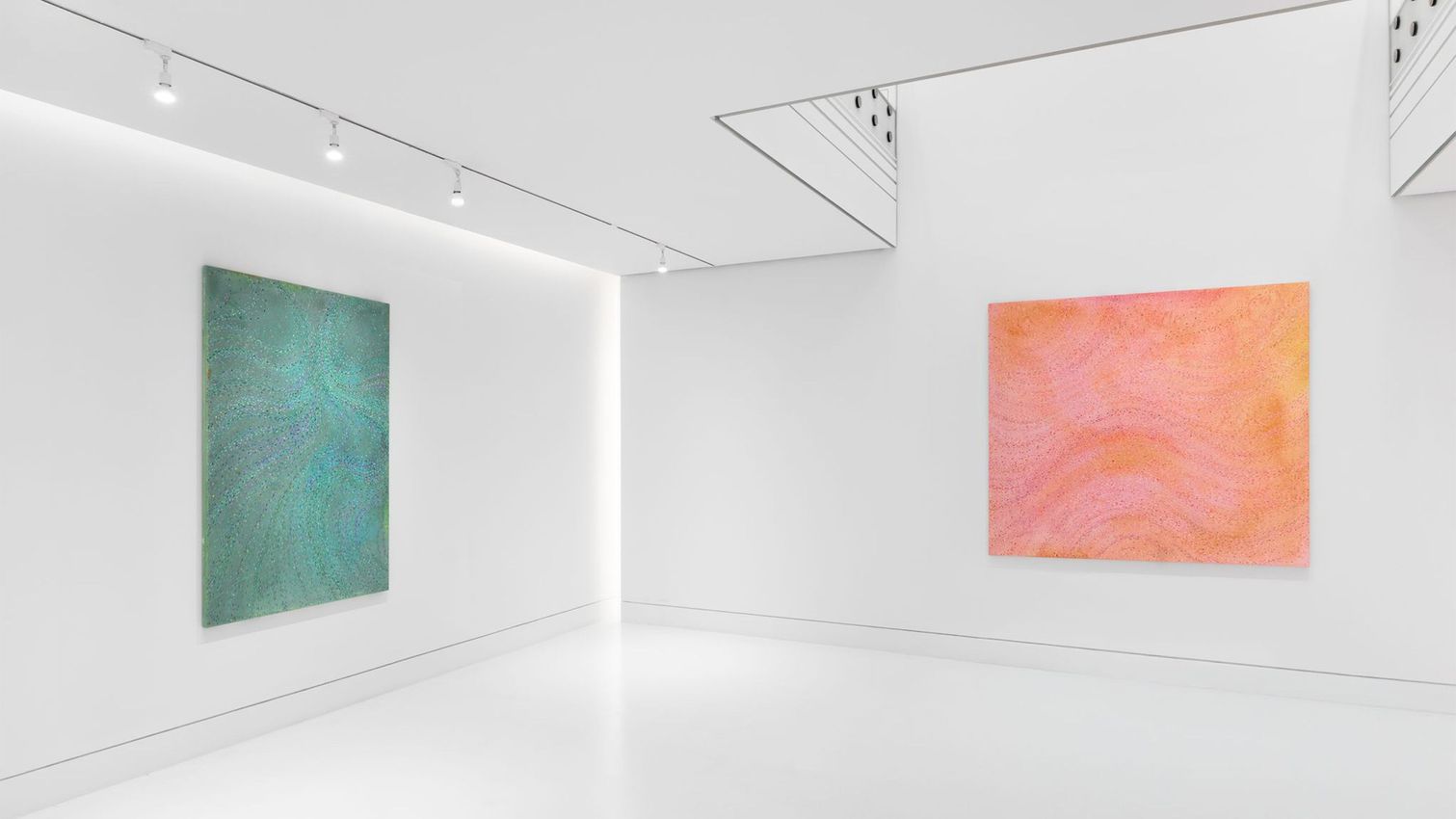
From an active, thinly painted, ‘one shot’ gestural imagery, Springford’s painting metamorphosed into a style seemingly influenced primarily by Helen Frankenthaler and Morris Louis. These so-called stain paintings would become the body of work most decisively original to her, and most startling to the audience seeing them forty and more years after their creation. She continued to make ambitious, often remarkably large, stained paintings until, due to the macular degeneration that rendered her increasingly blind in her later years, she settled into a rather reclusive life in a residential hotel.

Much remains to be learned about Springford’s artistic practice and life. Though she left behind a significant body of work, she had an inexplicably limited exhibition history. After her early recognition through the two commercial solo shows in the early 1960s, she never again had the ongoing support of a commercial gallery. To fill the gap, she became an early member of the various womens’ organisations and informal feminist movements, and was included in a few group exhibitions including the Women in the Arts show at the Brooklyn Museum in 1975. The ‘Washington Color School,’ led by Louis and Kenneth Noland, is credited with promulgating the painting techniques that Springford employed, and she is also unavoidably connected to the canvas-penetrating technique of Helen Frankenthaler. This mode relied on thinly applied oil or, more often, acrylic-based washes on linen or canvas, allowing the pigments to soak into the substrate, and bleed out from loci of applied paint. But Springford’s methodology was far more complex and difficult than it looks, and her mastery of it will be the subject of analysis for years to come.

Though Springford lived in New York for many years after her main body of paintings was completed, she somehow escaped the notice of the art world. Even in the 1990s, when the gallerist Gary Snyder befriended and supported her, the quality and distinctiveness of her art remained obscure. It would take the efforts of the Almine Rech Gallery, whose second major exhibition is presented here, to bring her contribution to the forefront of New York twentieth century abstract painting, where it belongs. As we continue to study and understand her great cycle of stain paintings, Springford will certainly enter the canon of the important and too often neglected women artists of her generation.

Text by Jane Livingston. Courtesy Almine Rech.

Read More
About the Artist

The American abstract painter Vivian Springford (1913-2003) provides a fascinating case study of a mid-century American woman artist. Working first in an Abstract Expressionist and then in a Colour Field vocabulary, she was active in multiple facets of the New York art world from the 1950s to 1970s, during which time she had solo and group exhibitions at the Great Jones Gallery, the Preston Gallery, Women in the Arts, and the Visual Arts Coalition.

View Artist Profile

Also Exhibiting at Almine Rech

About the Gallery

Almine Rech opened its doors on April 1st, 1997 in the 13th arrondissement in Paris. The gallery was founded on an axis of California Minimal, Perceptual art and Conceptual art, representing artists such as James Turrell, John McCracken and Joseph Kosuth.

View Gallery Profile
Address
39 East 78th Street, 2nd Floor
New York
United States
Opening Hours
Tuesday – Saturday
10am – 6pm
Appointments suggested
(1)
New York 39 East 78th Street, 2nd Floor
Almine Rech
39 East 78th Street, 2nd Floor, New York, United States
+1 212 804 8496
http://www.alminerech.com

Opening hours
Tuesday – Saturday
10am – 6pm
Appointments suggested
The art world in focus
